Updated
USE CASE · INSPECTION, R&D AND EDUCATION
ROS 2 mobile robots: SLAM and navigation in lab classes and research
Students map, localise and navigate a real robot. What worked in simulation meets reflections, noisy sensors and cluttered corridors.
IN BRIEF
Updated
A ROS 2 mobile robot supports lab classes and research in mobile robotics: mapping (SLAM), localisation, path planning and obstacle avoidance.
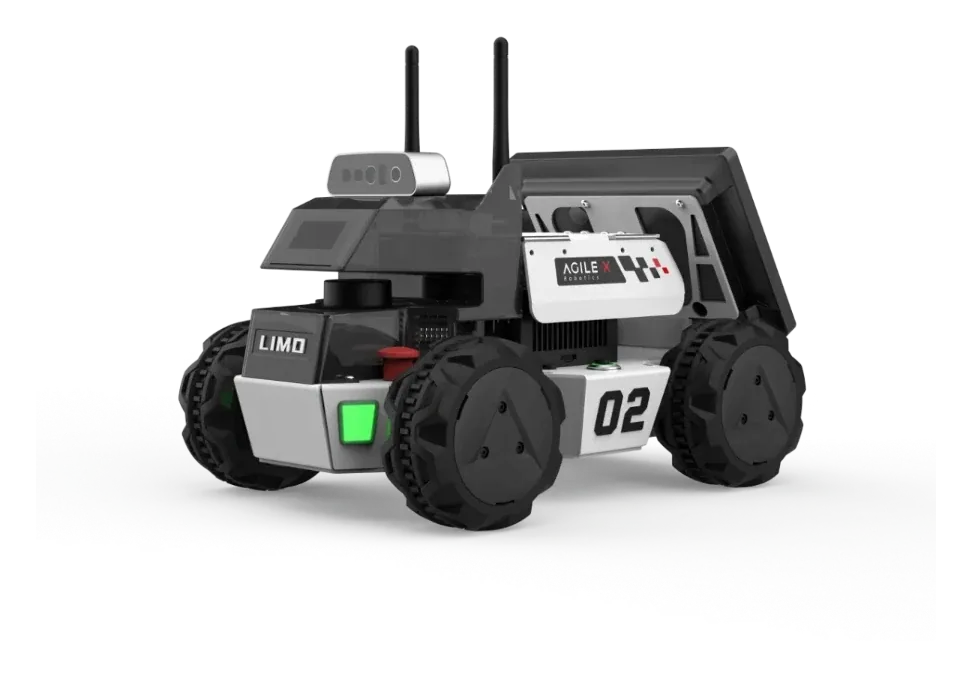
The AgileX LIMO PRO weighs 4.8 kg, drives at 1 m/s, runs 4 h and switches between four motion modes (tracked, mecanum, Ackermann, differential), according to its manufacturer.
Robot Distribution advises on the platform for your courses and projects, delivers it, commissions it with the teaching team and provides support.
WHY
Mobile robotics and ROS 2
Mobile robotics is hard to teach on a simulator alone: real sensors lie, wheels slip, and the map never quite matches the room. Students who have navigated a real robot understand why the algorithms are designed the way they are.
The ideal fleet combines many desktop robots for lab work in pairs, a fully equipped platform for projects, and an all-terrain chassis for outdoor research.
HOW IT RUNS
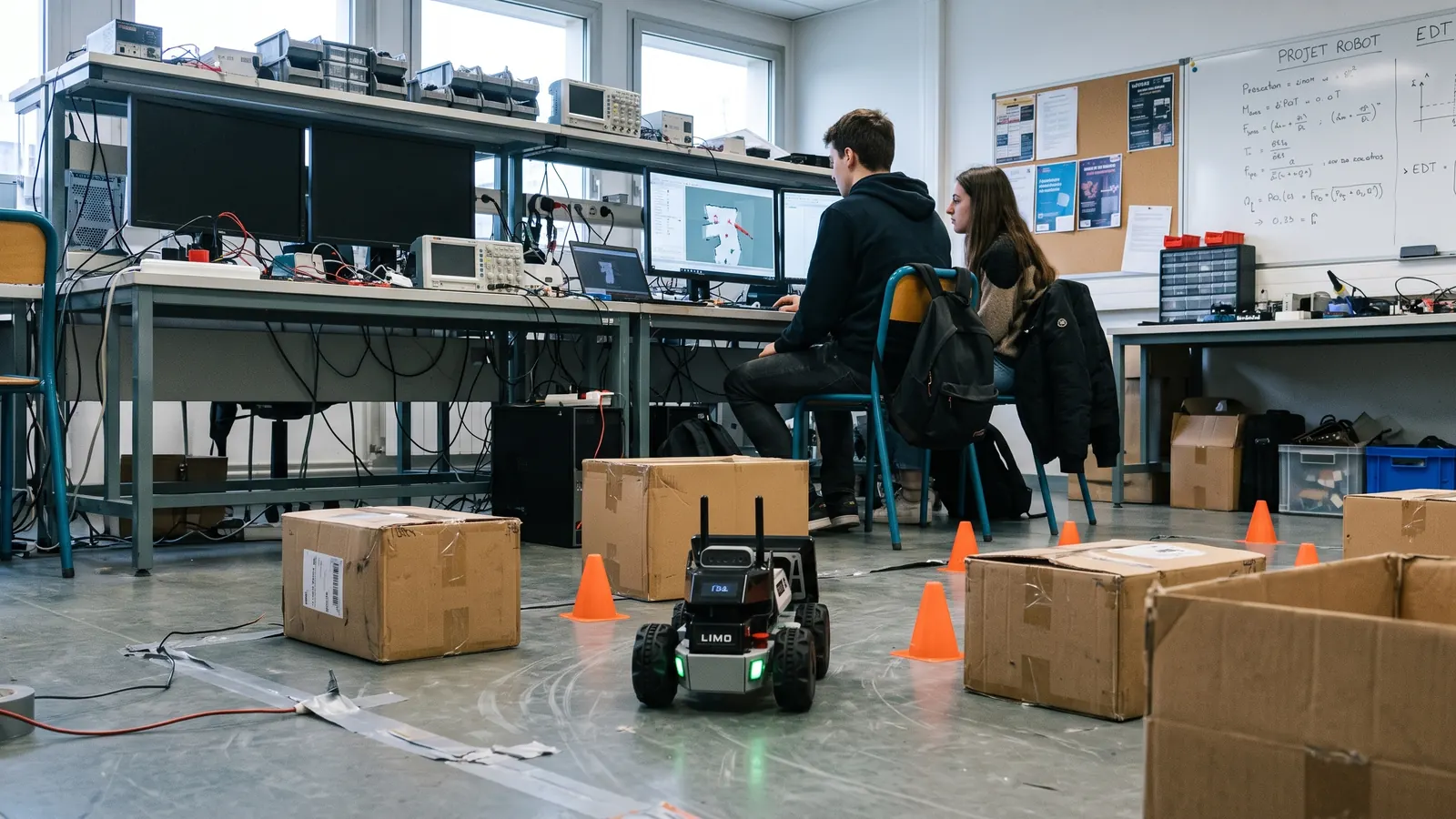
How a navigation lab runs with the robot.
Getting started in ROS 2
Students connect to the robot, read its sensors and drive it remotely to understand its topics and frames.
Mapping the room
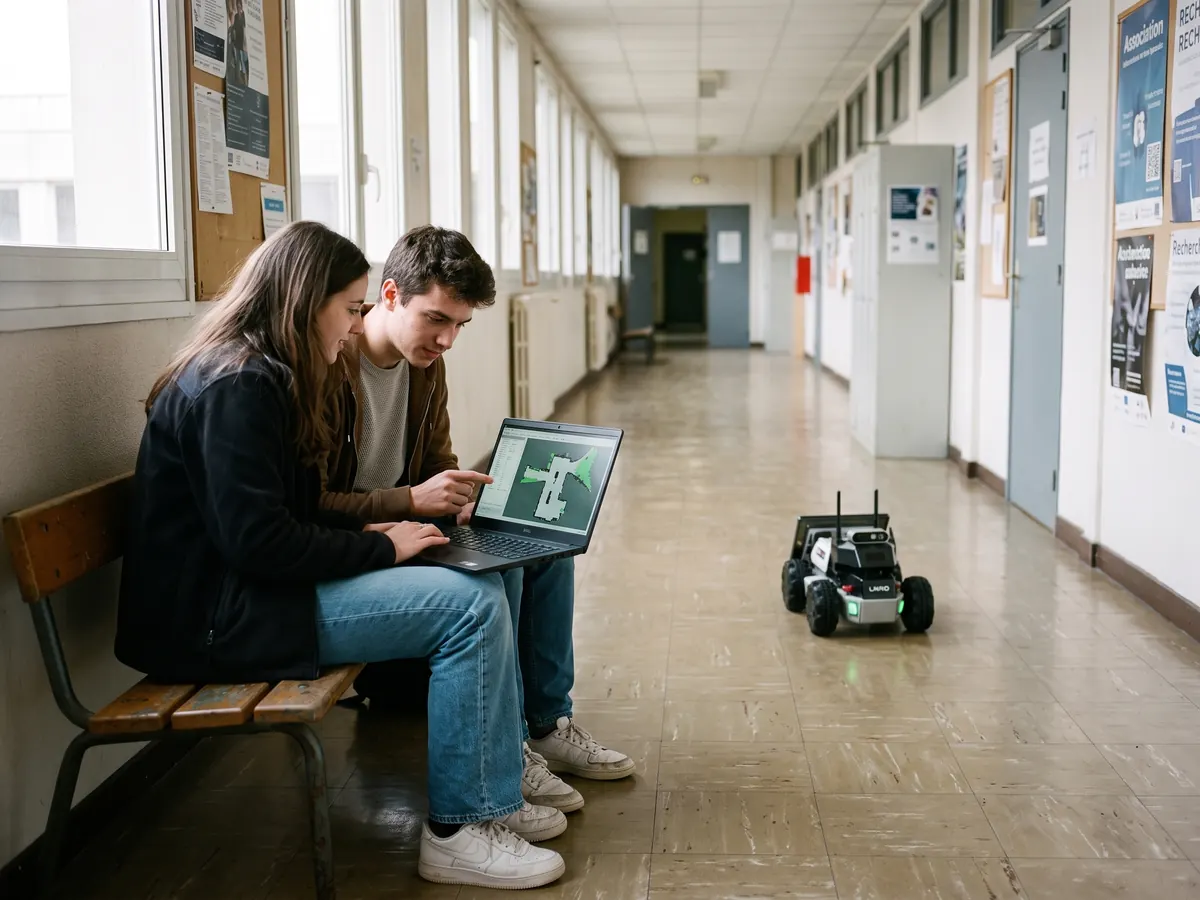
They run SLAM, drive through the room or corridor and save the map built from the LiDAR and camera.
Autonomous navigation
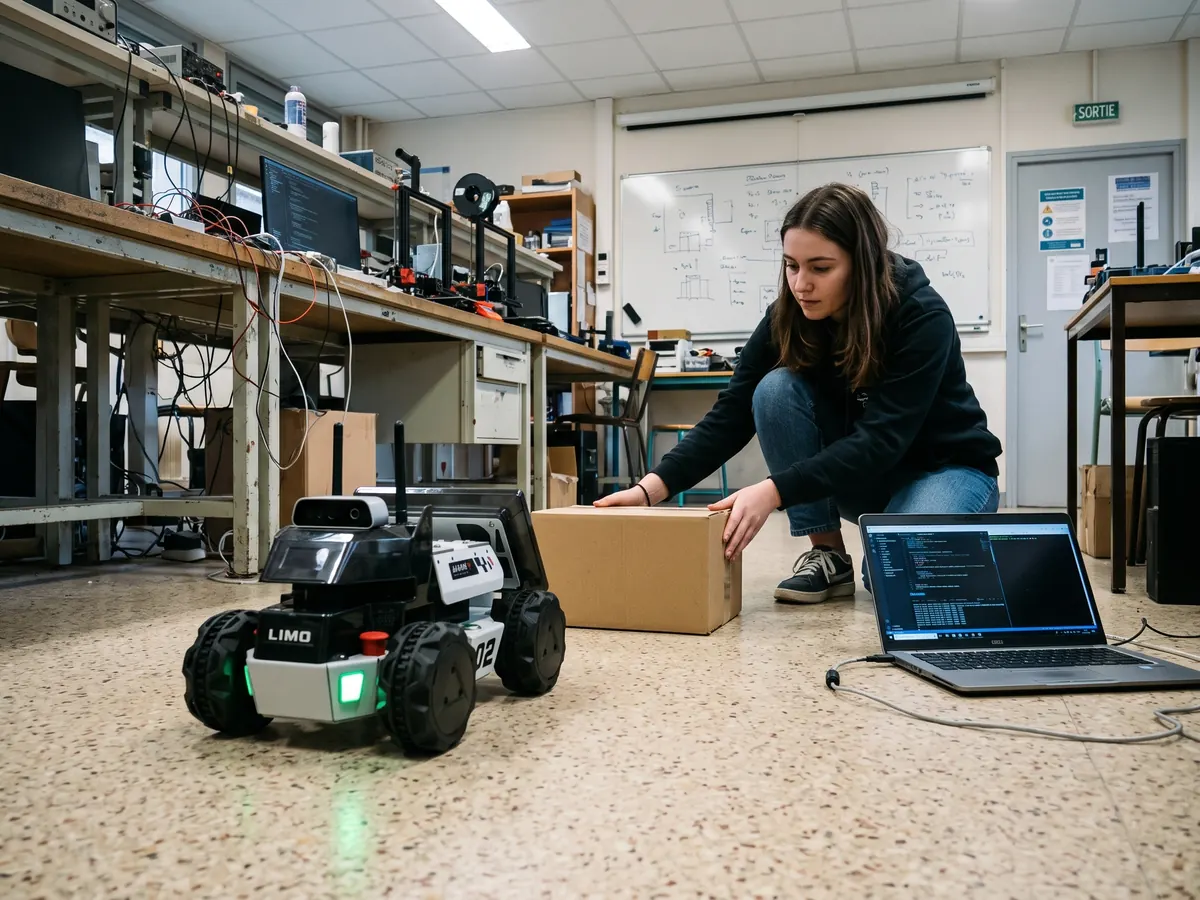
On that map they send goals, tune the planner and watch the robot avoid obstacles placed on its path.
Analysis and report
Groups compare trajectories, localisation errors and settings, then present their results.
THE ROBOTS
ROS 2 mobile robots in our catalogue.
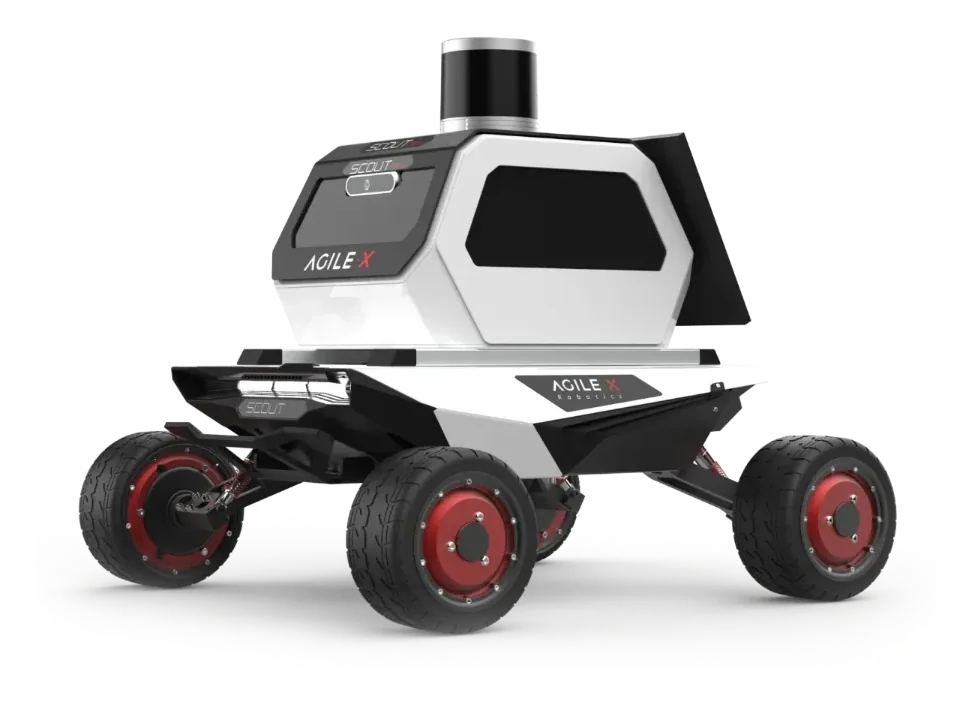
Education
- Key feature
- 16-line LiDAR
- Key feature
- ROS 2 courseware
- Key feature
- Lite and Pro
On orderFrom €5,990 ex VATor €199/month in RaaS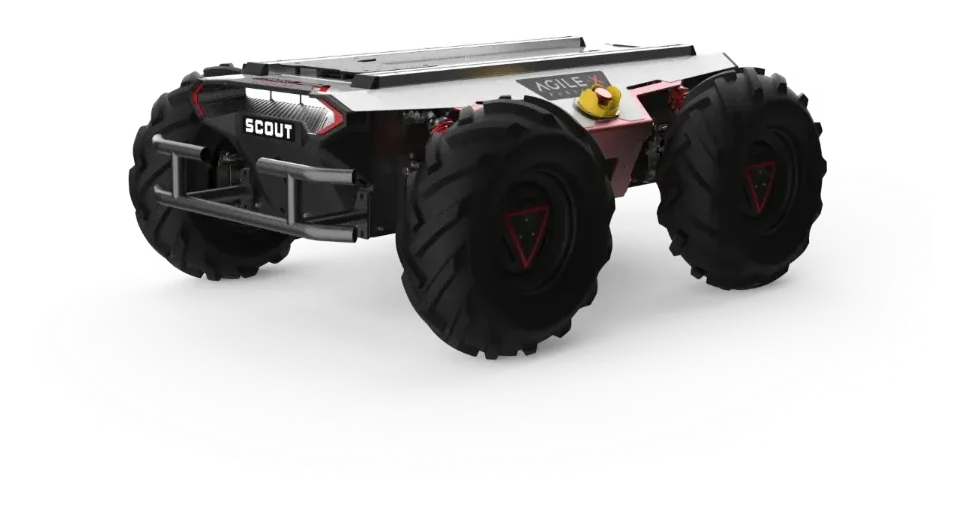
Mobile platforms
- Payload
- 50 kg
- Runtime
- 2.5–3.5 h
- Weight
- 67 kg
On orderFrom €13,790 ex VATor €469/month in RaaS
BEFORE INSTALLING
What we check with the teaching team before delivery.
Courses and projects
Bachelor labs, master's, final-year projects or research: the mix of desktop robots and platforms depends on it.
ROS version and workstations
The ROS 2 version supplied, and compatibility with the lab computers and students' virtual machines.
Test area
Room, corridor or outdoors: surface, available obstacles and traffic rules during sessions.
Network and charging
Lab Wi-Fi, robot addresses, spare batteries and storage between sessions.
RULES AND STANDARDS
Rules for a fleet of ROS 2 robots on campus
Connected robots, laser sensors and student modifications each bring a specific rule for teaching teams.
Wi-Fi robots and the radio cybersecurity rules
Since 1 August 2025, Delegated Regulation (EU) 2022/30 activates cybersecurity requirements of the Radio Equipment Directive 2014/53/EU for internet-connected radio equipment: network protection, and personal data protection where the device processes it. Robots that join the campus Wi-Fi are concerned. Ask the supplier for the declaration of conformity and check robot access with your IT department.
LiDAR and laser classes
IEC 60825-1:2014 classifies laser products by optical radiation hazard and requires warnings and user information. LiDAR sensors are laser products within its scope. Before a lab class, check the laser class on the sensor's label and documentation, and adapt instructions if students mount extra sensors at eye height.
When a student project becomes a substantial modification
Under Regulation (EU) 2023/1230, applicable from 20 January 2027, a modification not foreseen by the manufacturer that creates a new hazard or increases a risk can be a substantial modification. Article 18 then treats whoever made it as the manufacturer. Payloads, arms or new control software on a chassis deserve this check before the robot leaves the lab.
Official sources
- Commission Delegated Regulation (EU) 2022/30 supplementing Directive 2014/53/EU (Article 3(3)(d), (e) and (f)) · EUR-Lex · accessed
- Commission Delegated Regulation (EU) 2023/2444 amending Delegated Regulation (EU) 2022/30 (date of application) · EUR-Lex · accessed
- IEC 60825-1:2014 Safety of laser products — Part 1: Equipment classification and requirements · IEC · accessed
- Regulation (EU) 2023/1230 on machinery (Article 3(16) and Article 18) · EUR-Lex · accessed
General information, not legal advice.
FAQ
Lecturers' questions about ROS mobile robots.
Which robot for lab work in pairs?
The AgileX LIMO PRO: a 4.8 kg desktop robot supplied with a ready ROS navigation stack, 4 h runtime and a removable battery according to its manufacturer. Several units equip a lab room.
Is there a platform with courseware?
Yes: the AgileX SCOUT MINI ROS2 EDU Kit, in Lite and Pro versions, comes with courseware, documentation and example projects for SLAM, navigation and obstacle avoidance, with a 16-line LiDAR and stereo camera according to its manufacturer.
And for outdoor research?
The AgileX SCOUT 2.0 carries 50 kg, drives at 1.67 m/s, climbs 30° slopes and has ROS 1 and ROS 2 drivers according to its manufacturer. It is IP22 as standard: rain calls for suitable protection.
Which ROS version is supplied?
The SCOUT MINI ROS2 EDU Kit ships with ROS 2 Foxy according to its manufacturer. For the other platforms we confirm the version with you before delivery, based on your workstations.
USE CASES
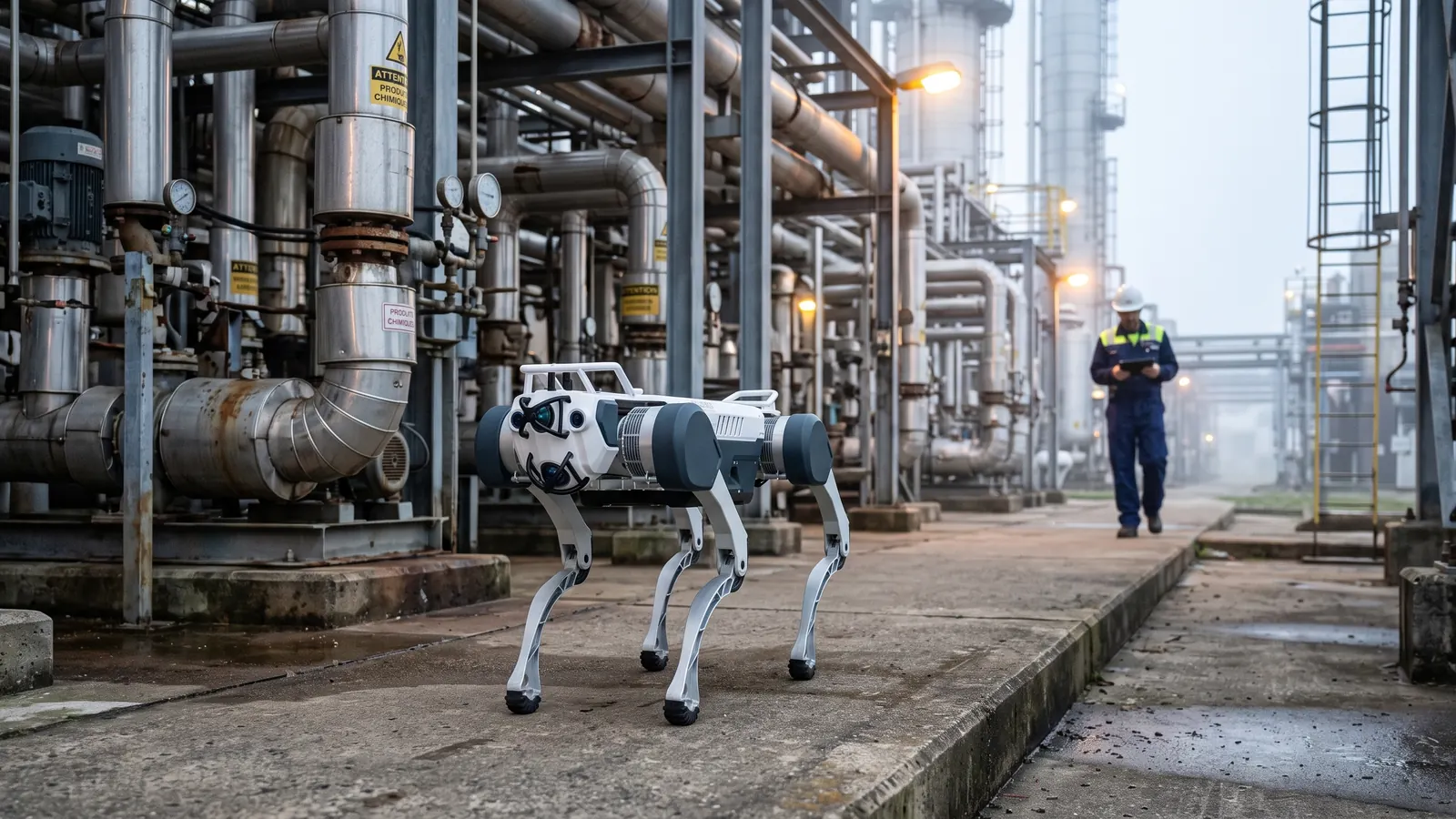 Industrial inspection roundsThe robot walks the same route every day, stops at the same points and records images, temperatures and readings. Technicians review the deviations and step in where needed.
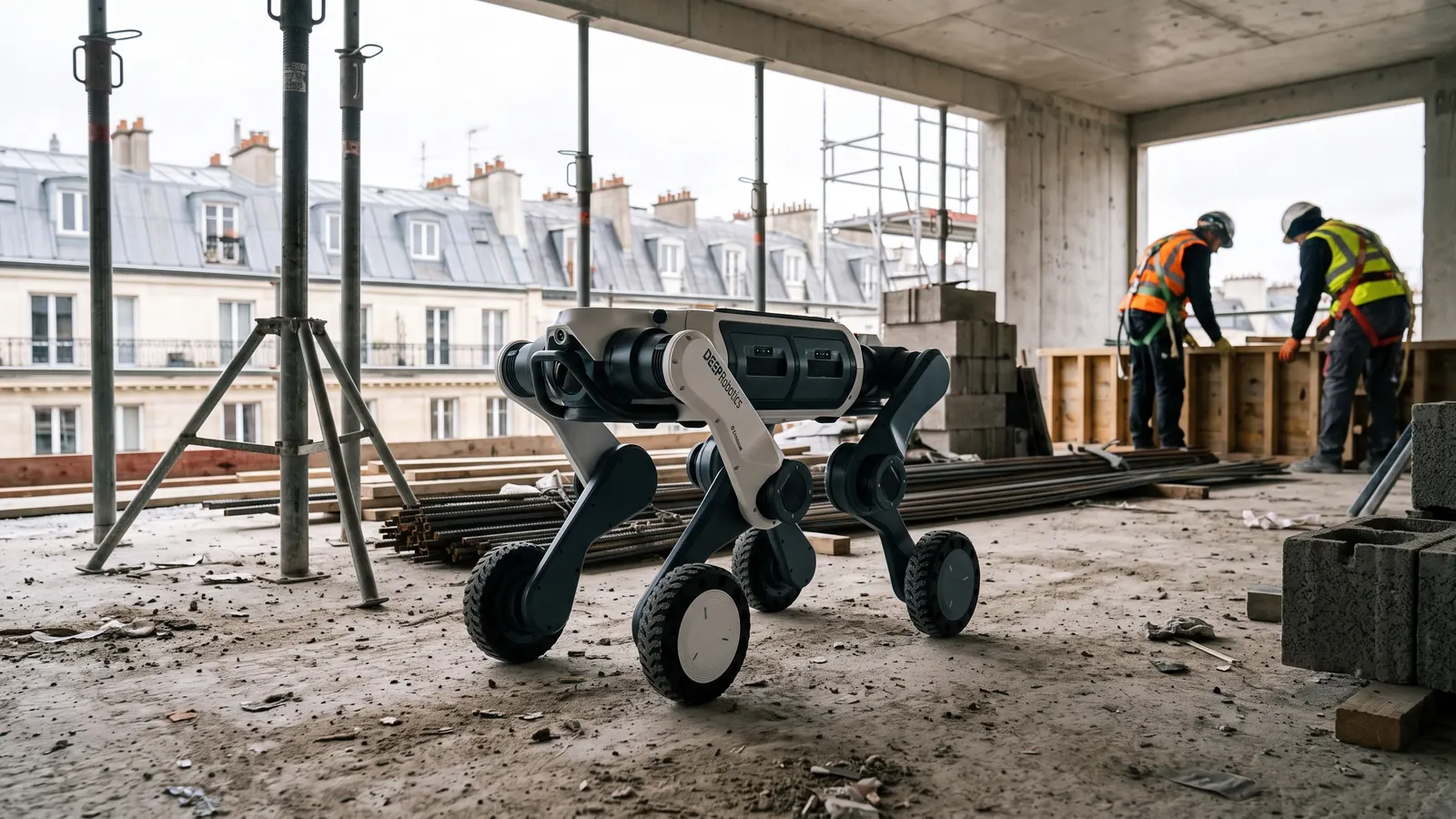 Construction site monitoringThe robot walks the site on a fixed route and brings back point clouds, photos and video. The site manager compares progress week by week without walking the whole site again.
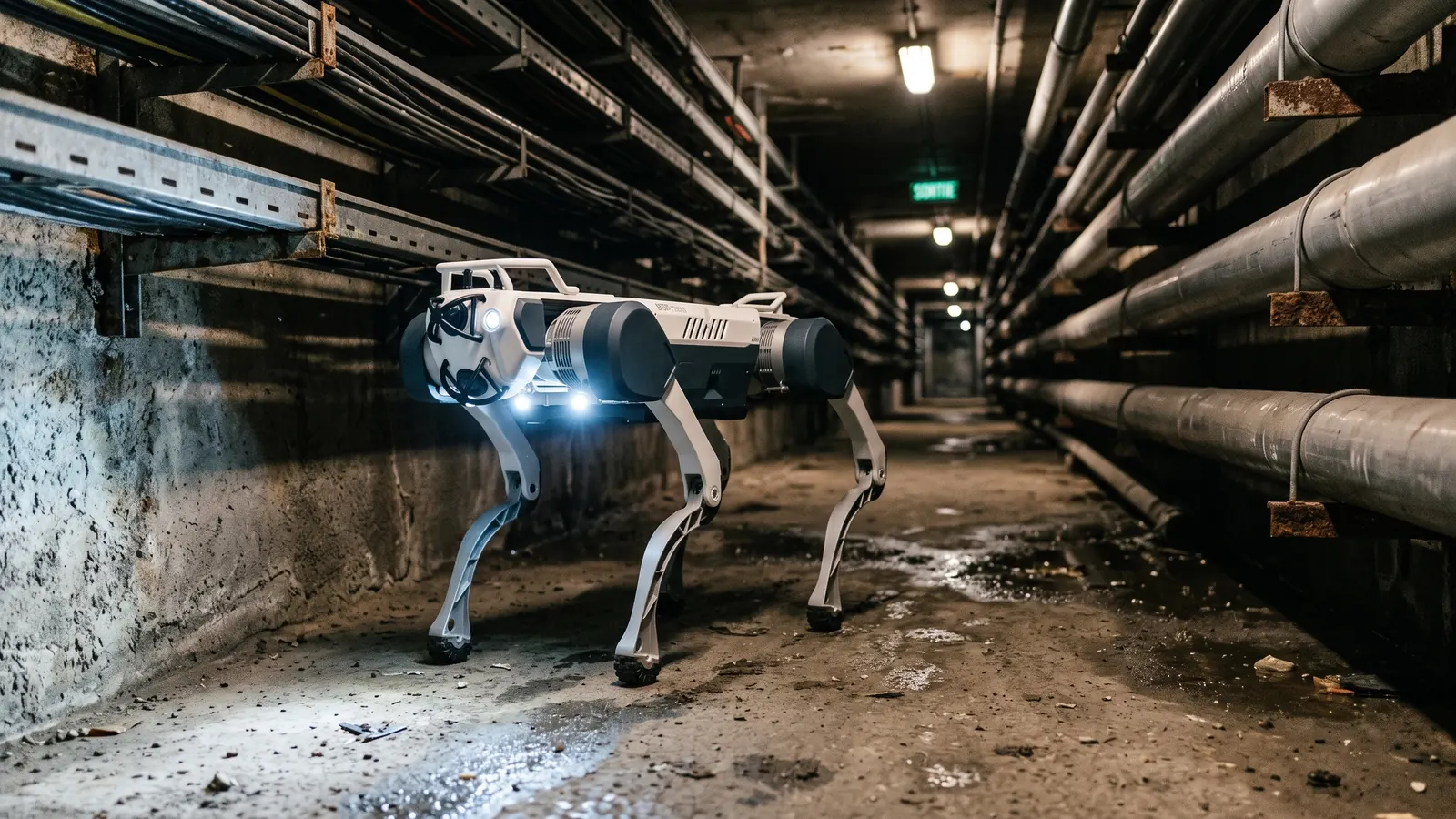 Tunnel and utility inspectionThe robot walks utility tunnels, road tunnels and underground car parks and brings back dated images and readings. Staff keep their descents for repairs.
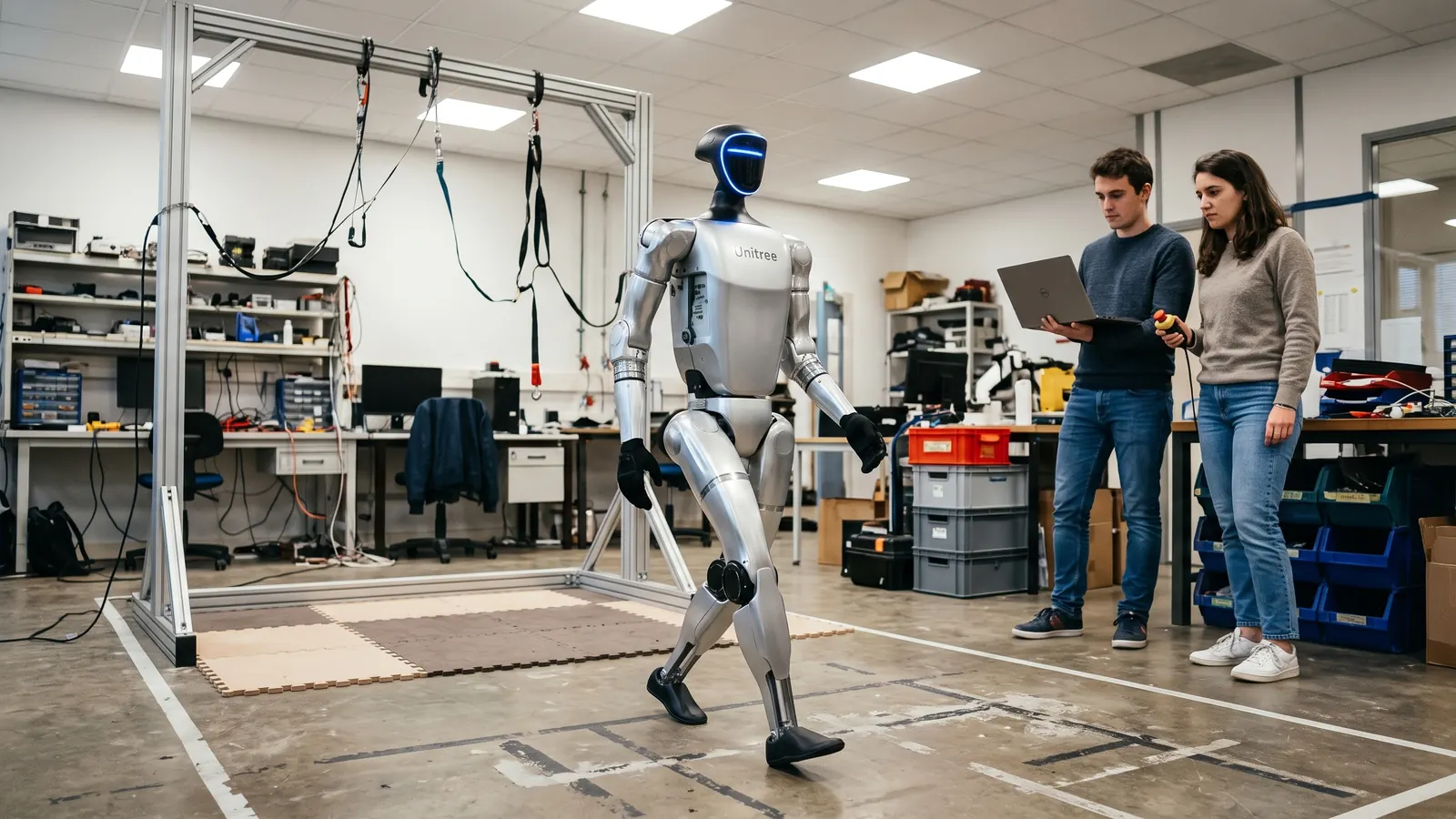 Humanoid researchThe lab works on a real humanoid body: it trains policies in simulation, transfers them to the robot and measures what holds up in the real world.
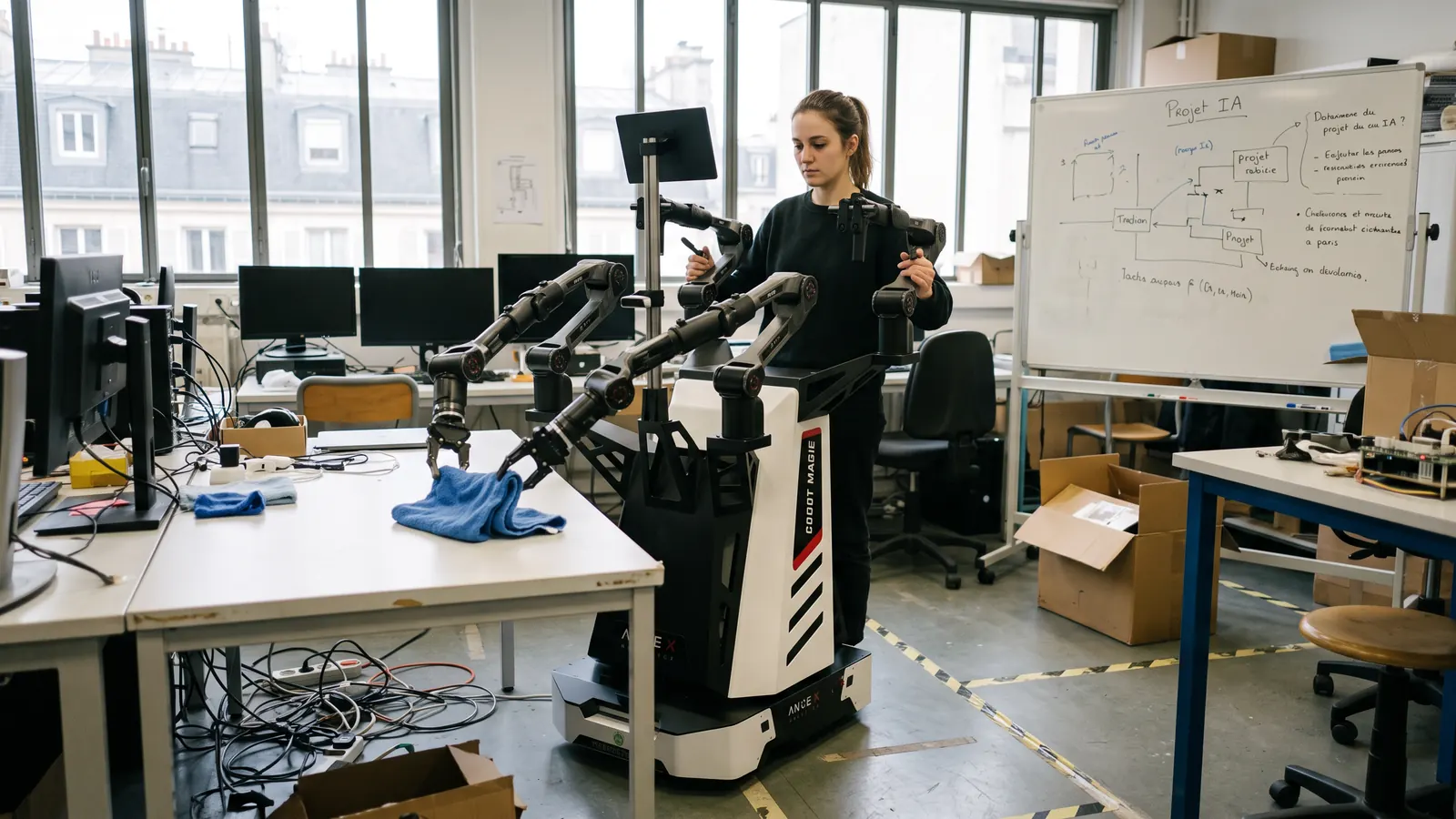 Teleoperation data collectionAn operator guides the robot's arms as if making the move by hand. Each demonstration records motion and images and becomes training data for the model.
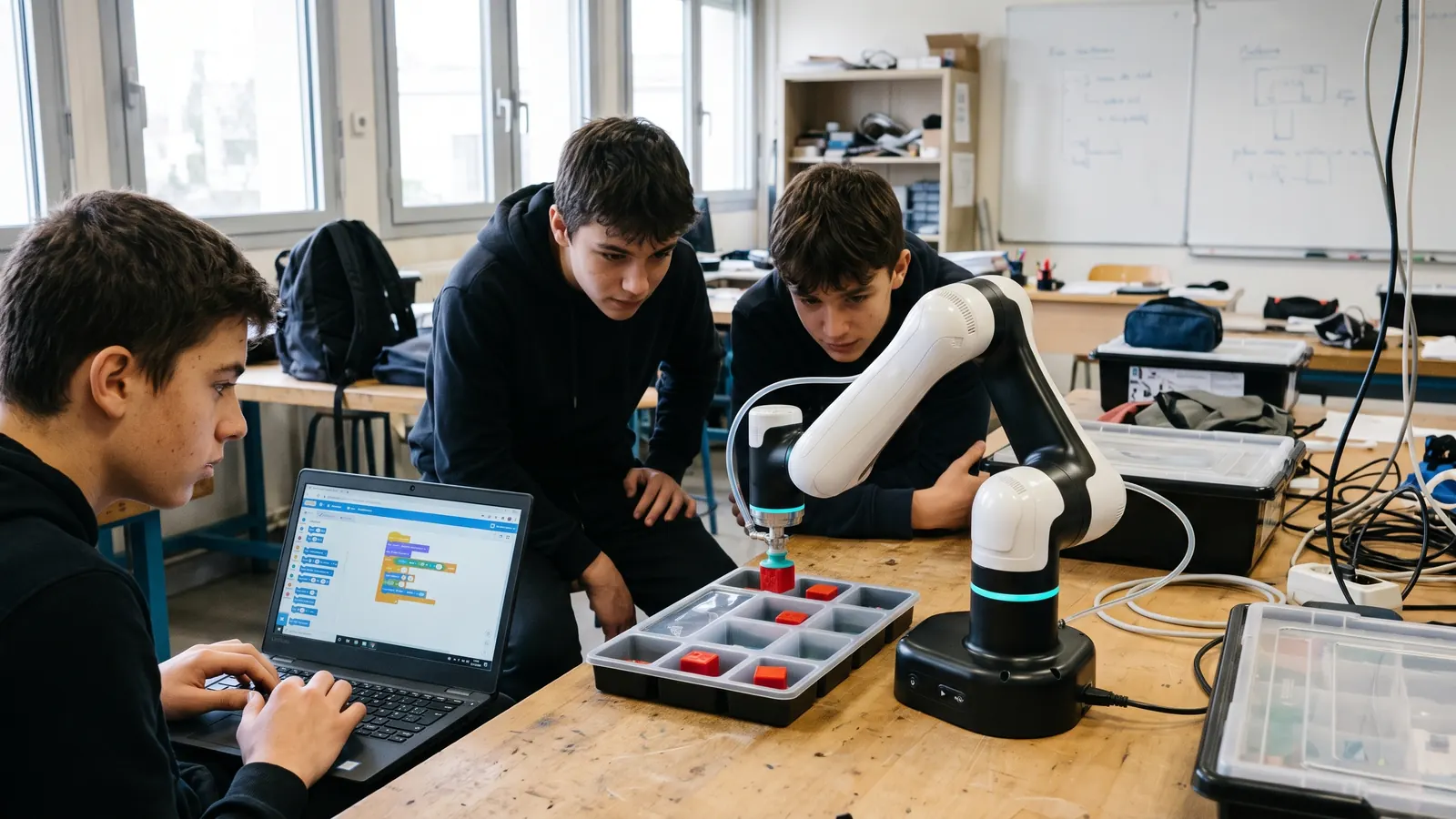 Robotics teachingStudents program a robot that moves in front of them. The abstract idea becomes a visible result, and mistakes show straight away.
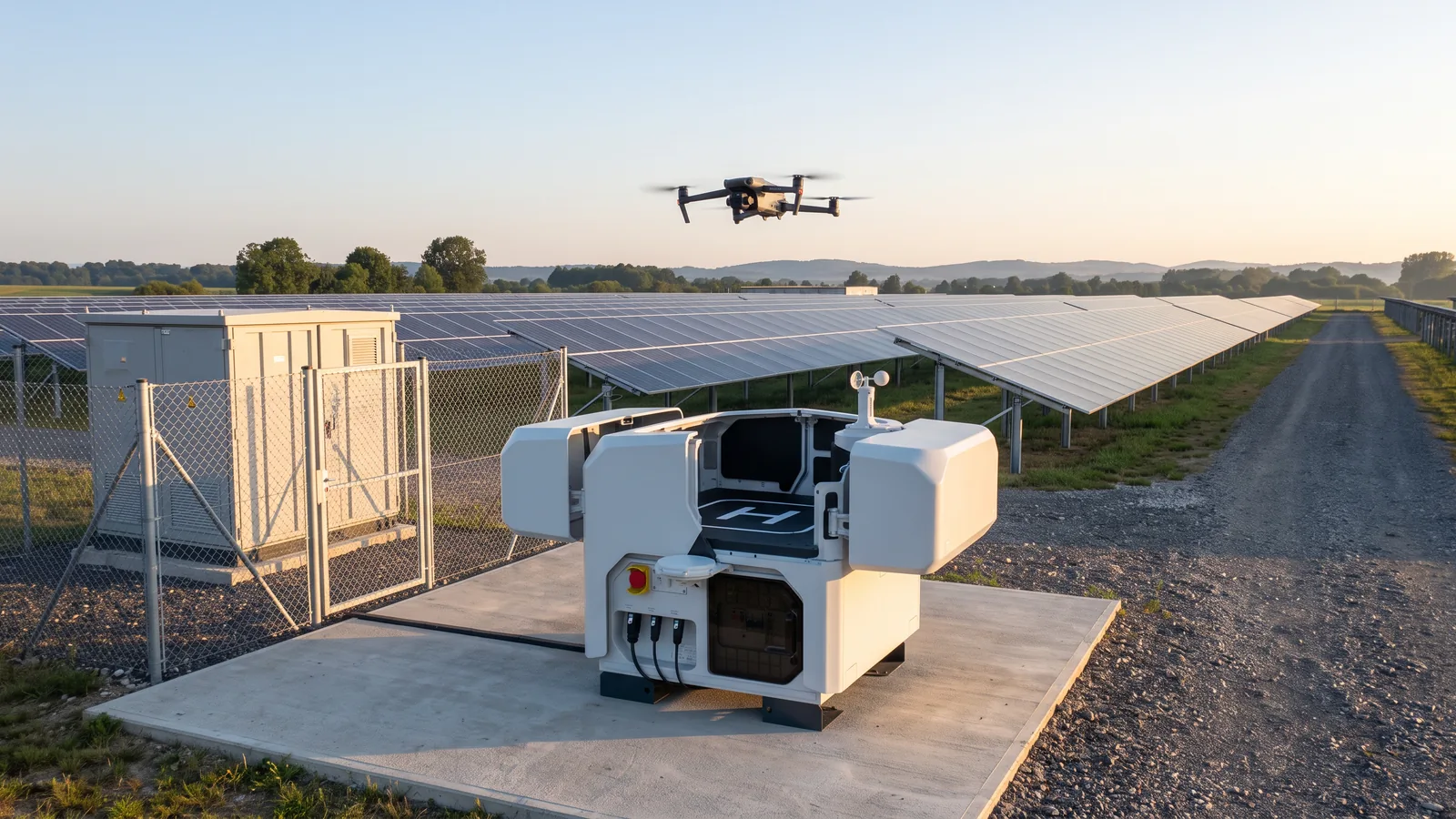 Drone inspection of solar and industrial sitesThe drone flies over modules, roofs, networks and equipment and brings back visible and thermal images, piloted on site or launched from an automated dock. Technicians keep the analysis, decisions and repairs.
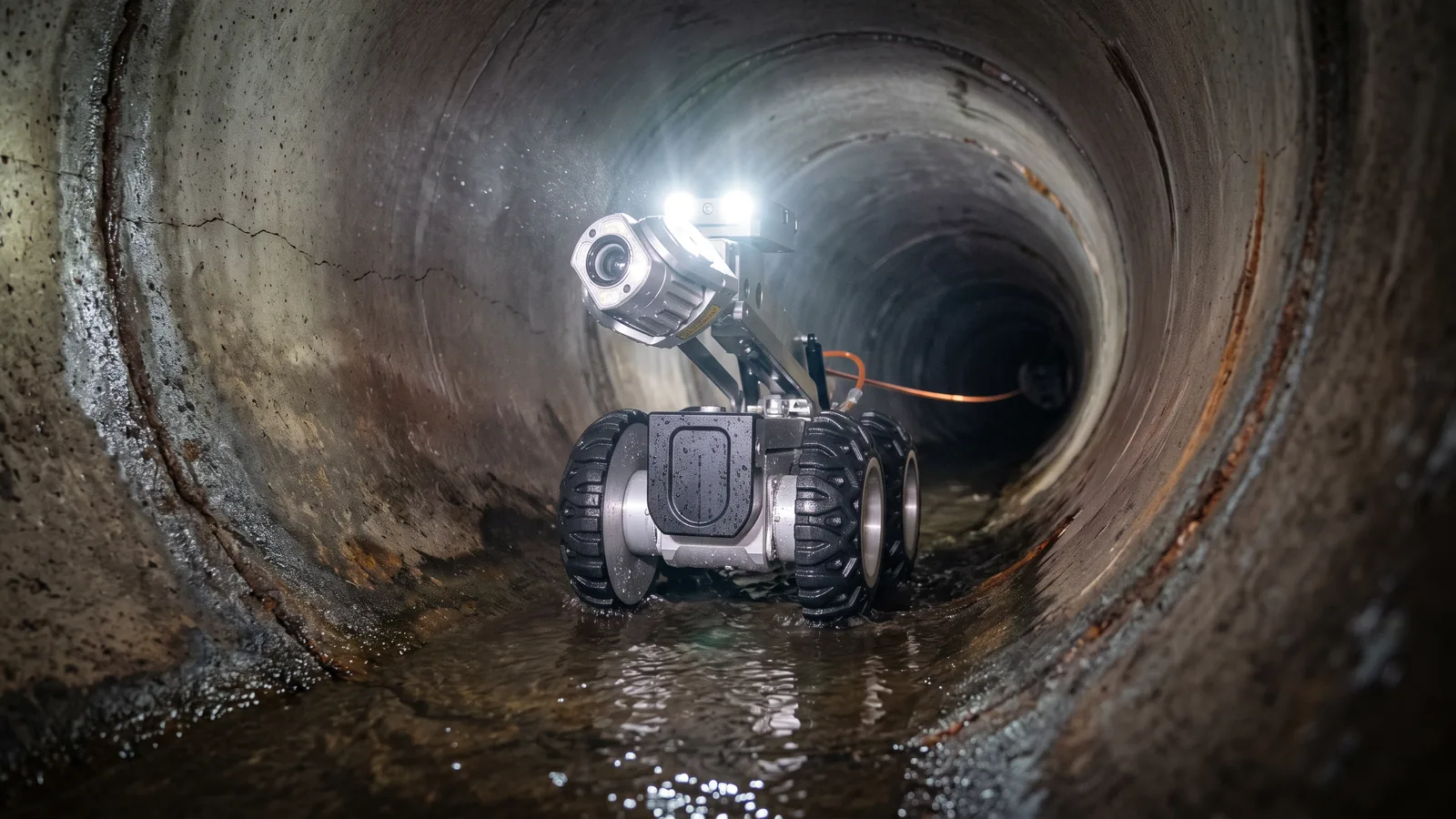 CCTV inspection of sewer pipesThe camera robot travels the sewer from the manhole and films the pipe wall, controlled from the surface. Technicians keep the diagnosis, defect coding and the choice of works.
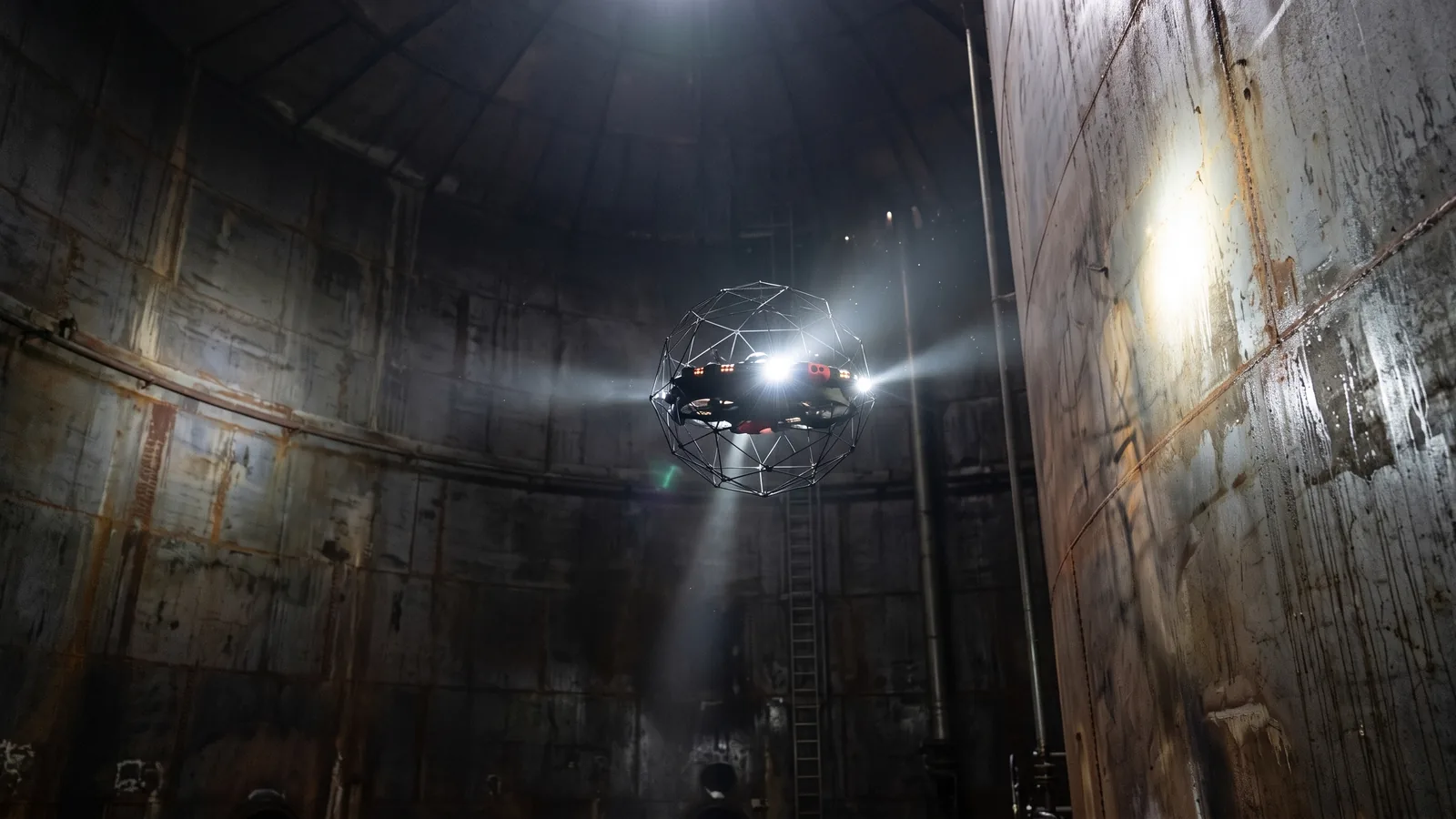 Confined-space drone inspectionThe drone goes into the tank, boiler or silo instead of the inspector and brings back images, video and 3D data. Inspectors keep the analysis, the regulatory measurements and the repair decisions.
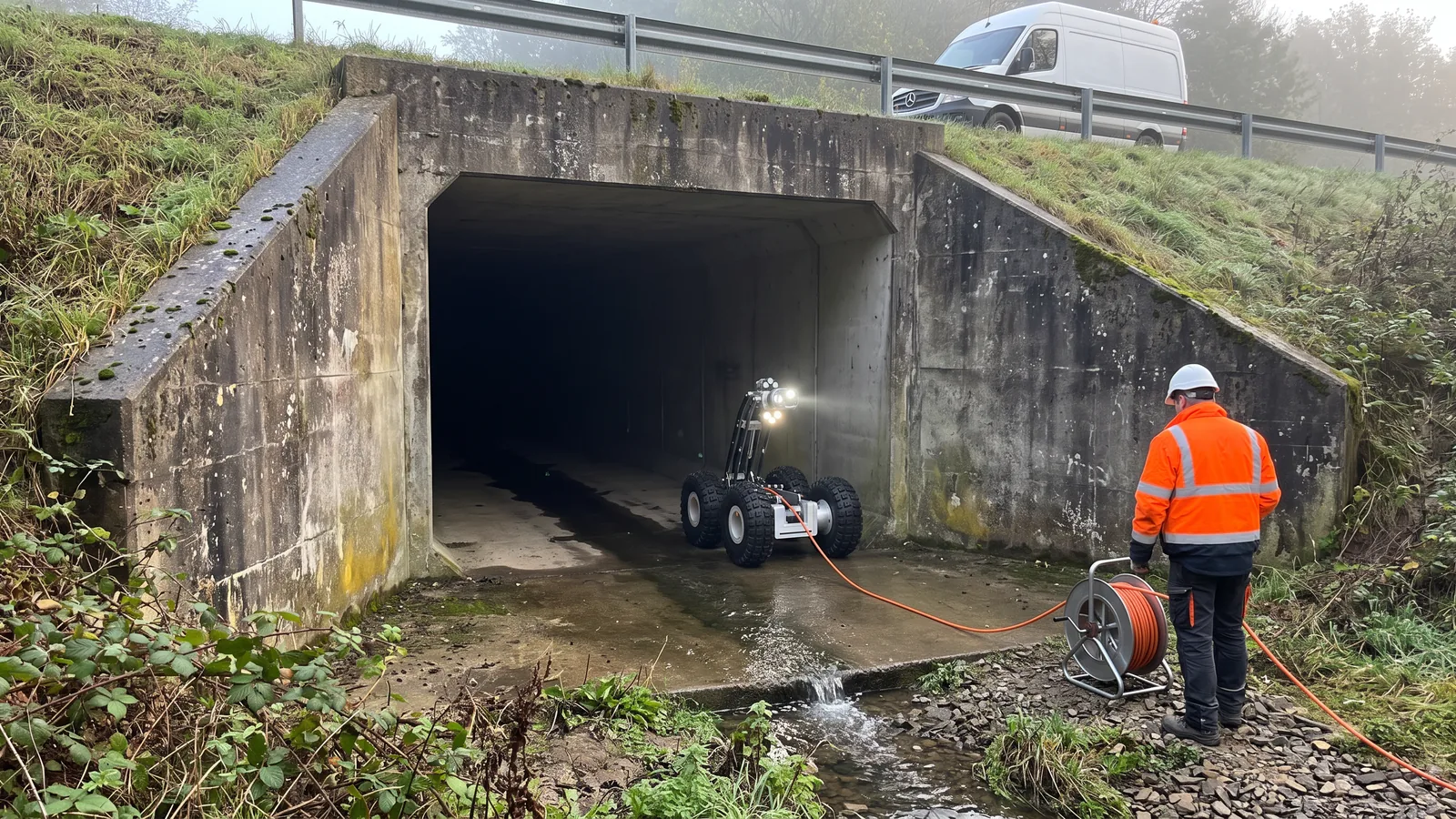 Large sewer and culvert inspectionThe robot travels through large trunk sewers, egg-shaped collectors and culverts under roads, camera centred in the section, driven from the surface. Sewer crews only go in to carry out work.
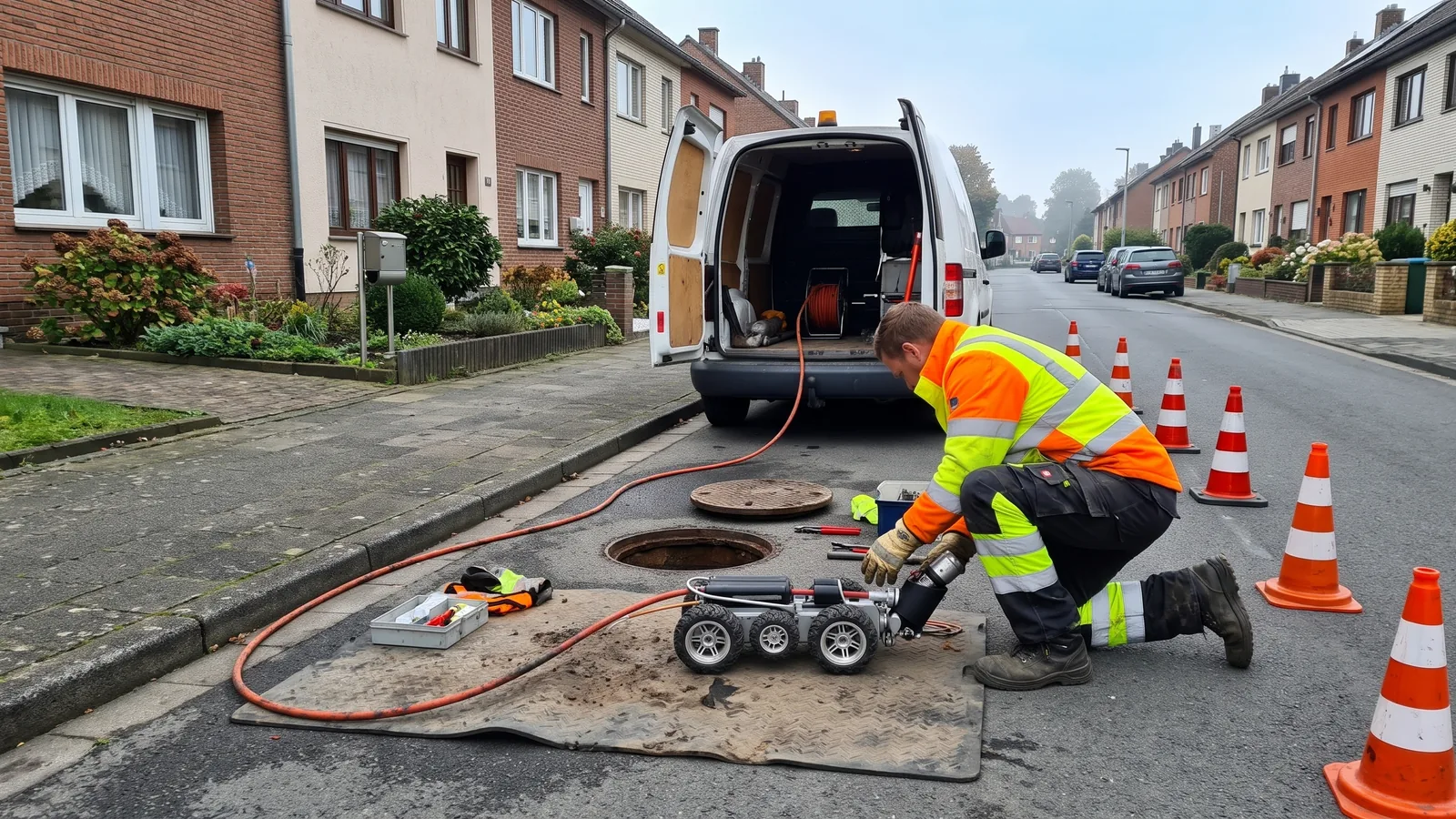 Sewer lateral inspection with a satellite cameraThe crawler drives along the main, stops at the connection and pushes a small pan-tilt camera into it. The building's lateral is inspected without opening the road or entering the property.
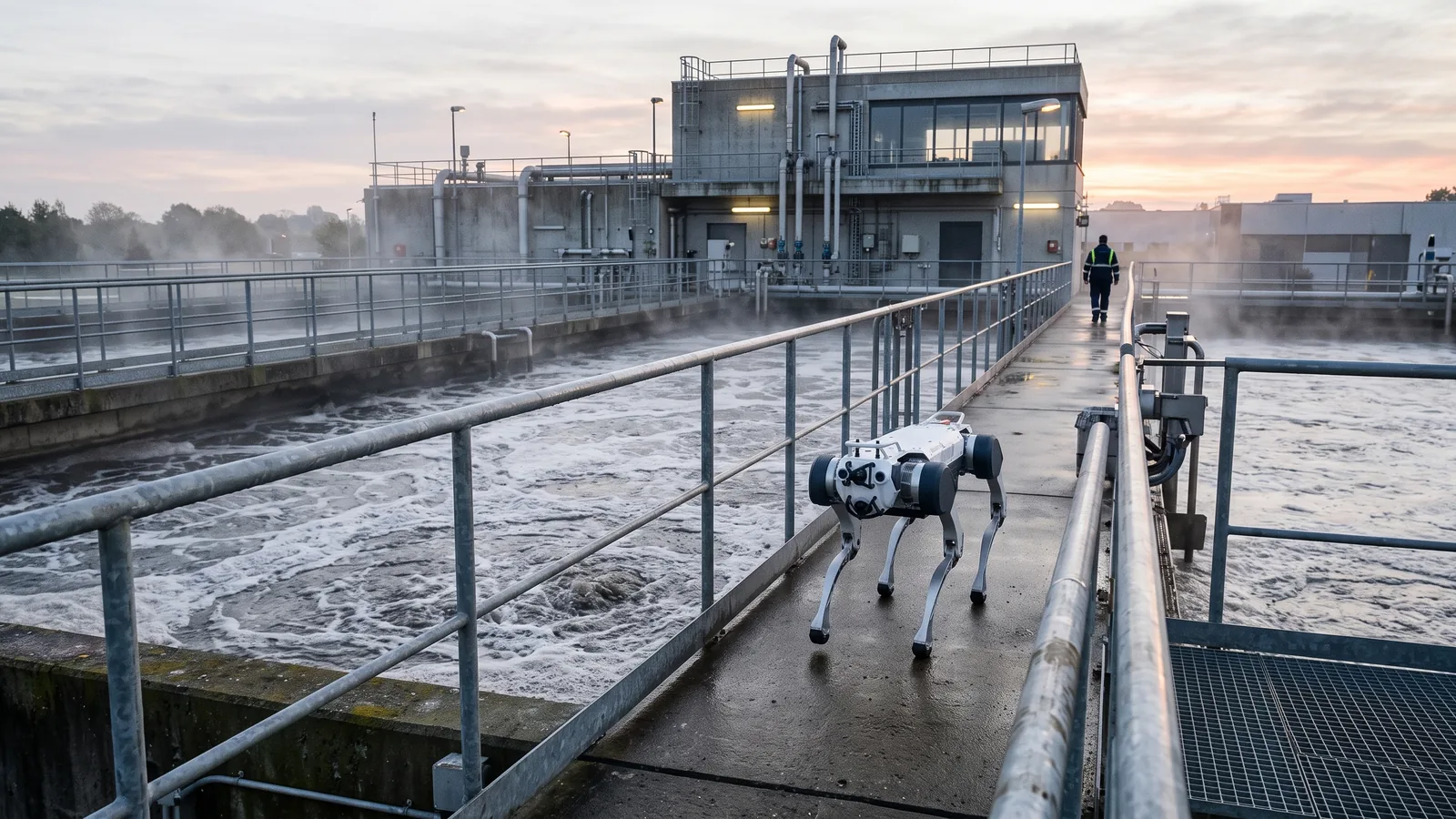 Inspection rounds in water treatment plantsThe robot tours basins, pumps and cabinets at set times and brings back images, temperatures and readings. Operators focus on deviations and running the process.
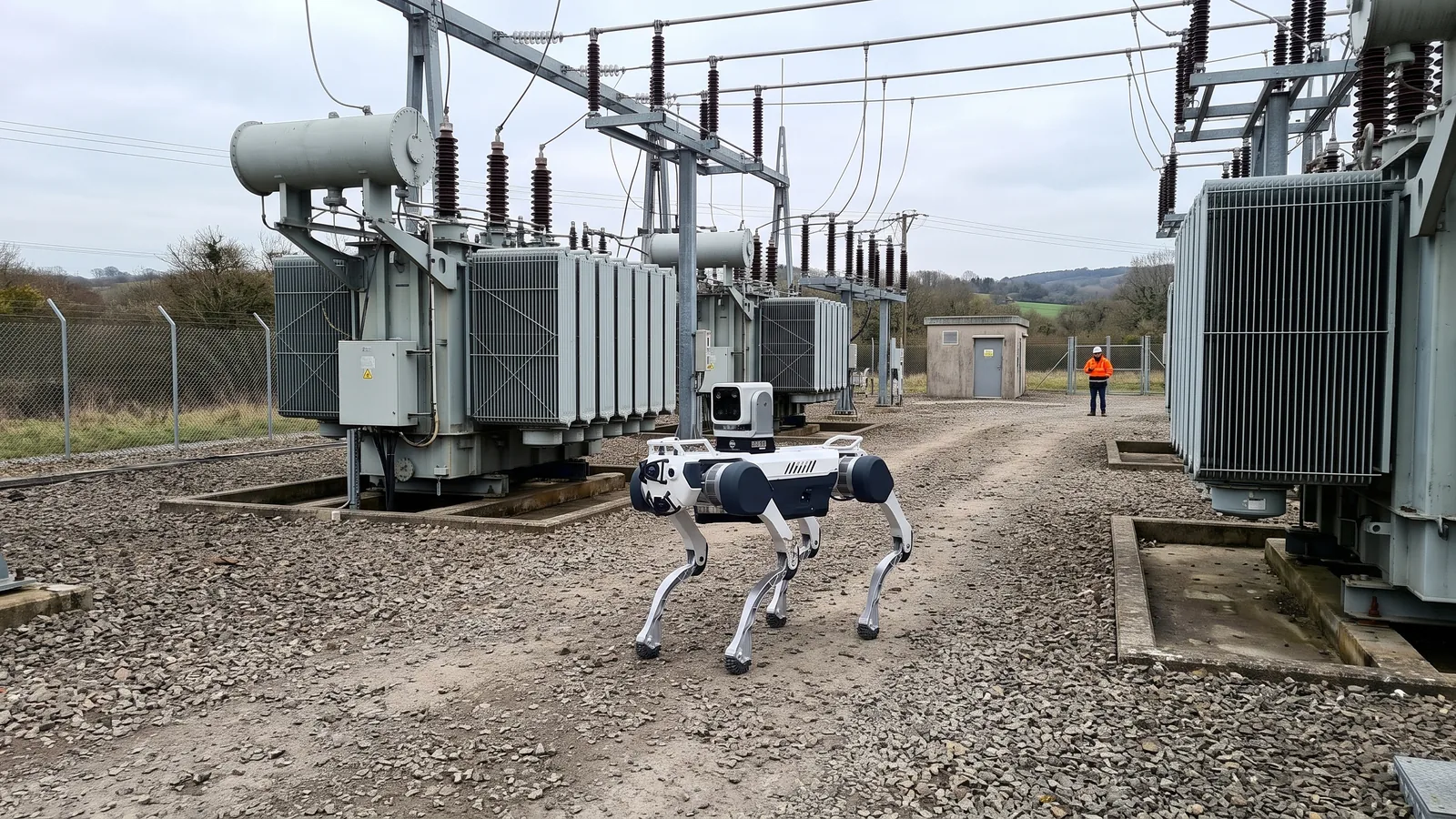 Electrical substation inspectionA ground robot patrols the substation aisles and a docked drone flies over the equipment. Together they record temperatures, gauges and visual condition, without sending someone out for every round.
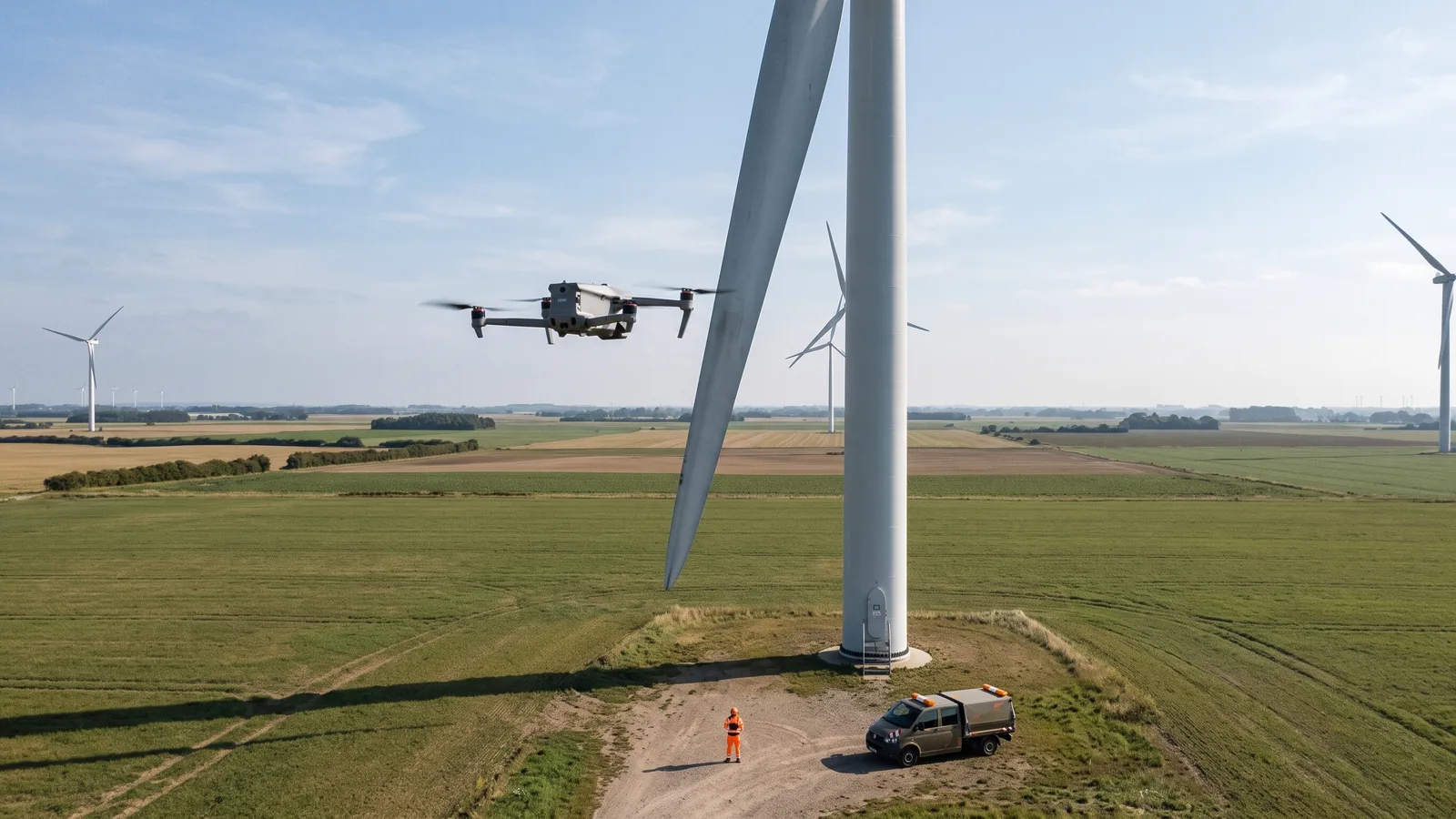 Drone inspection of power lines and wind turbinesThe drone flies along the lines and around the turbines, taking visible and thermal images of insulators, connections and blades. Maintenance crews only work at height on confirmed defects.
Tell us about your courses and projects. We propose the right robot fleet.
Robots, acquisition mode and delivery terms, in one written proposal.