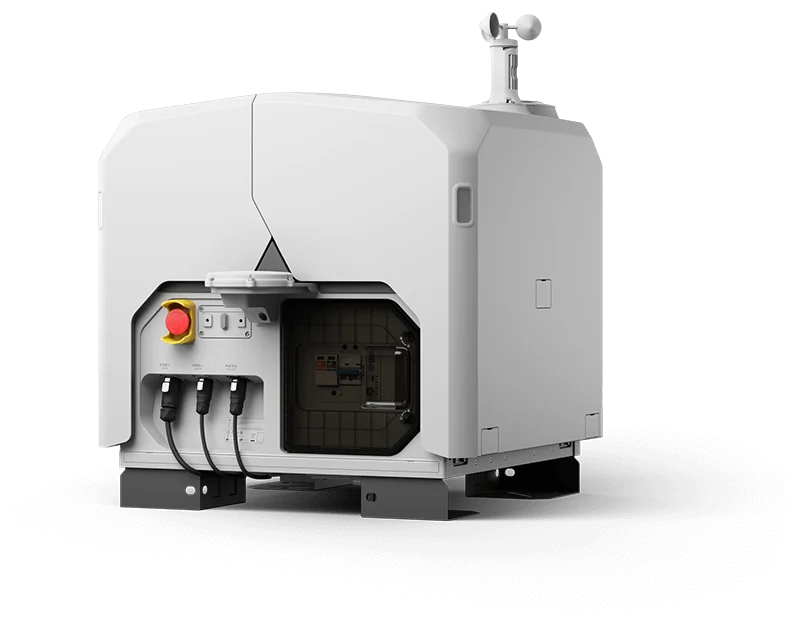
Professional drones
- Ingress protection
- IP56
- Key feature
- 54 min flight time
- Key feature
- 10 km operating radius
On order
From €16,790 ex VATor €569/month in RaaS
Updated
USE CASE · ENERGY AND SOLAR
The drone flies over modules, roofs, networks and equipment and brings back visible and thermal images, piloted on site or launched from an automated dock. Technicians keep the analysis, decisions and repairs.
Updated
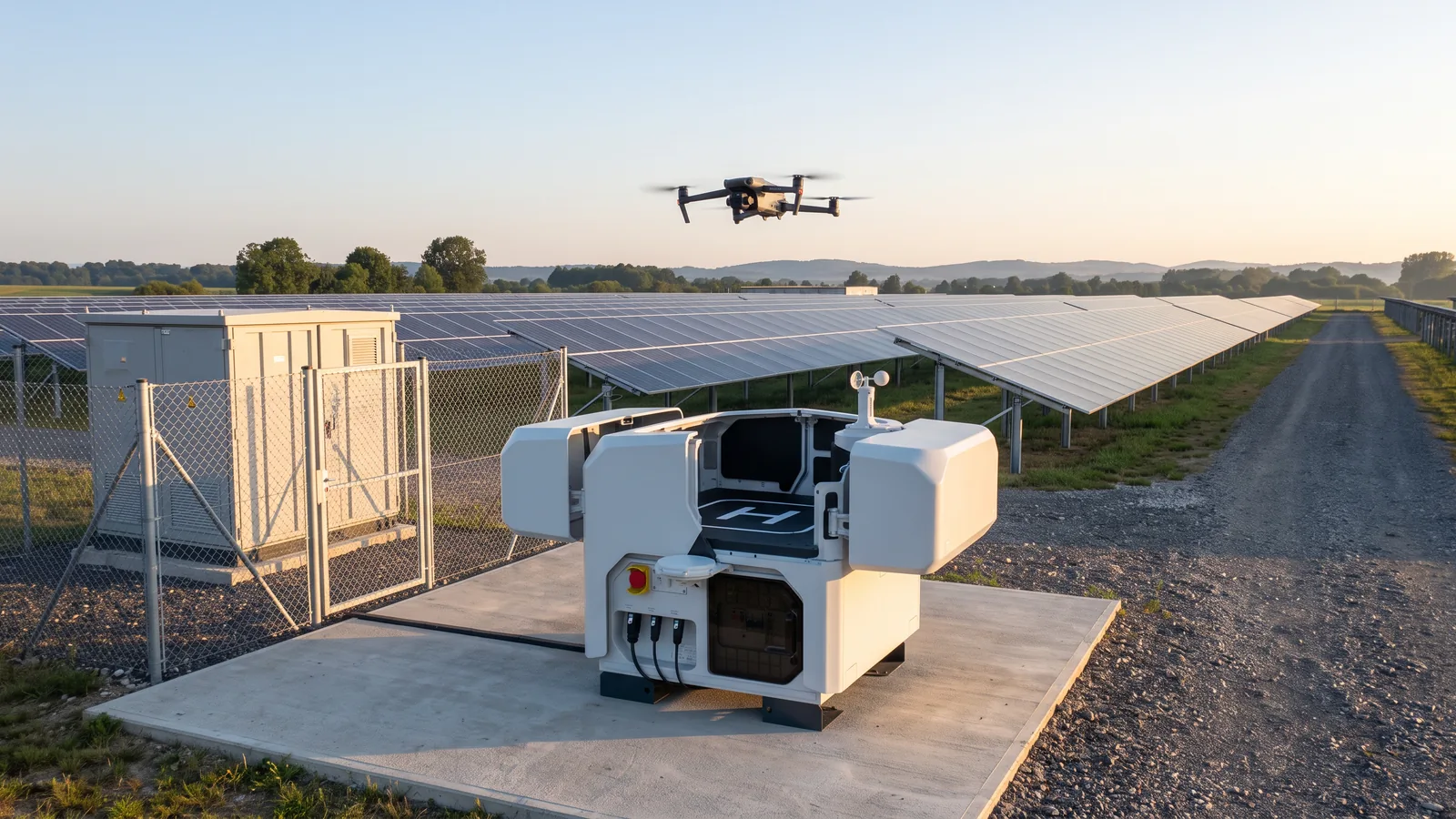
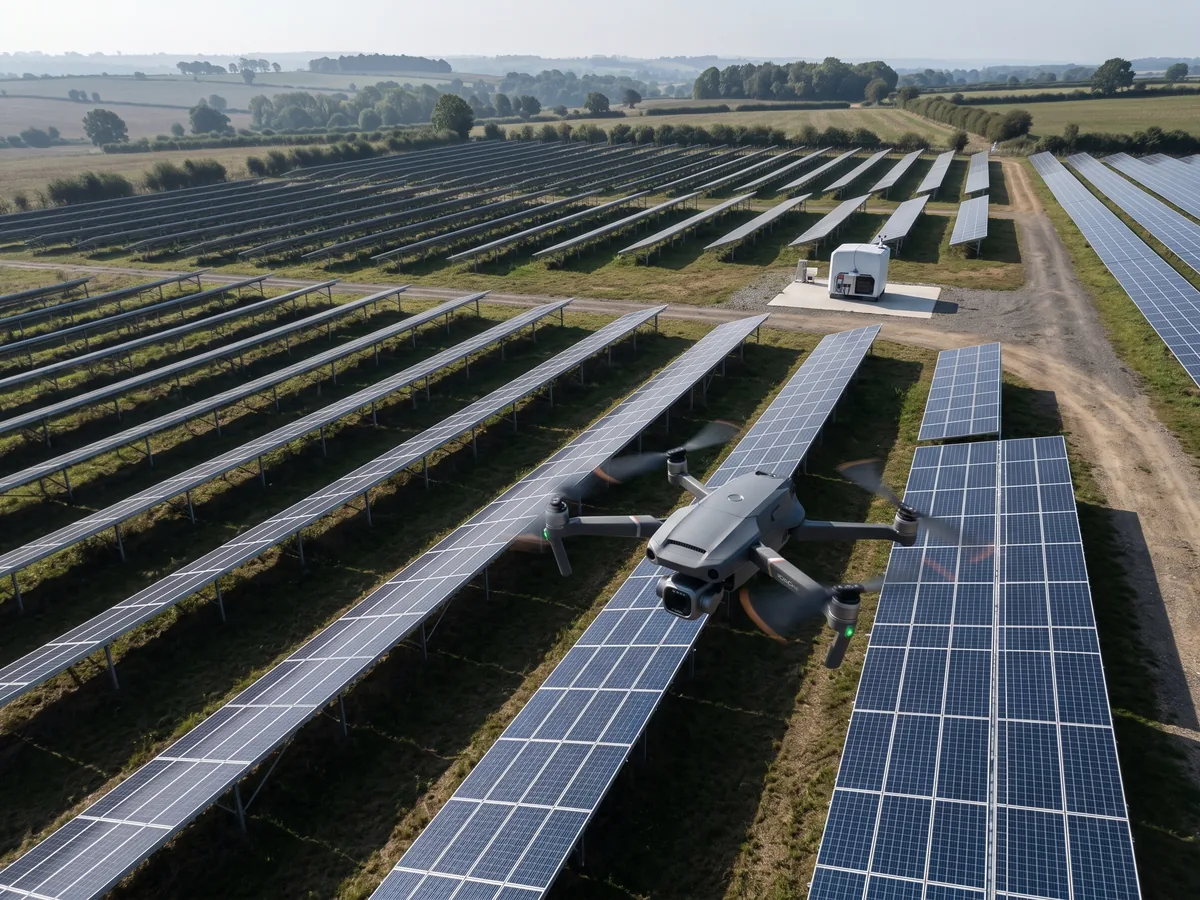
An inspection drone captures visible and thermal infrared images of solar farms, substations, roofs and industrial equipment to locate defects and hot spots.
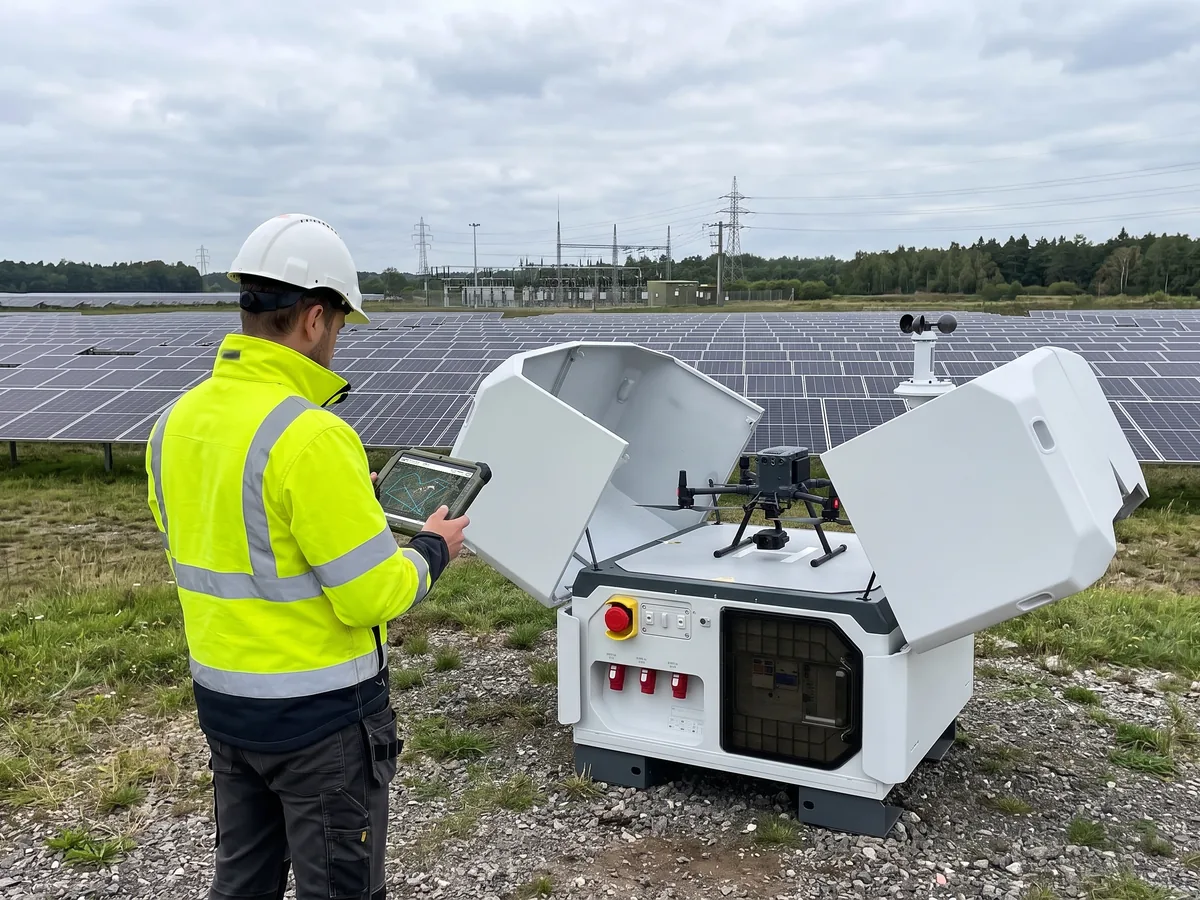
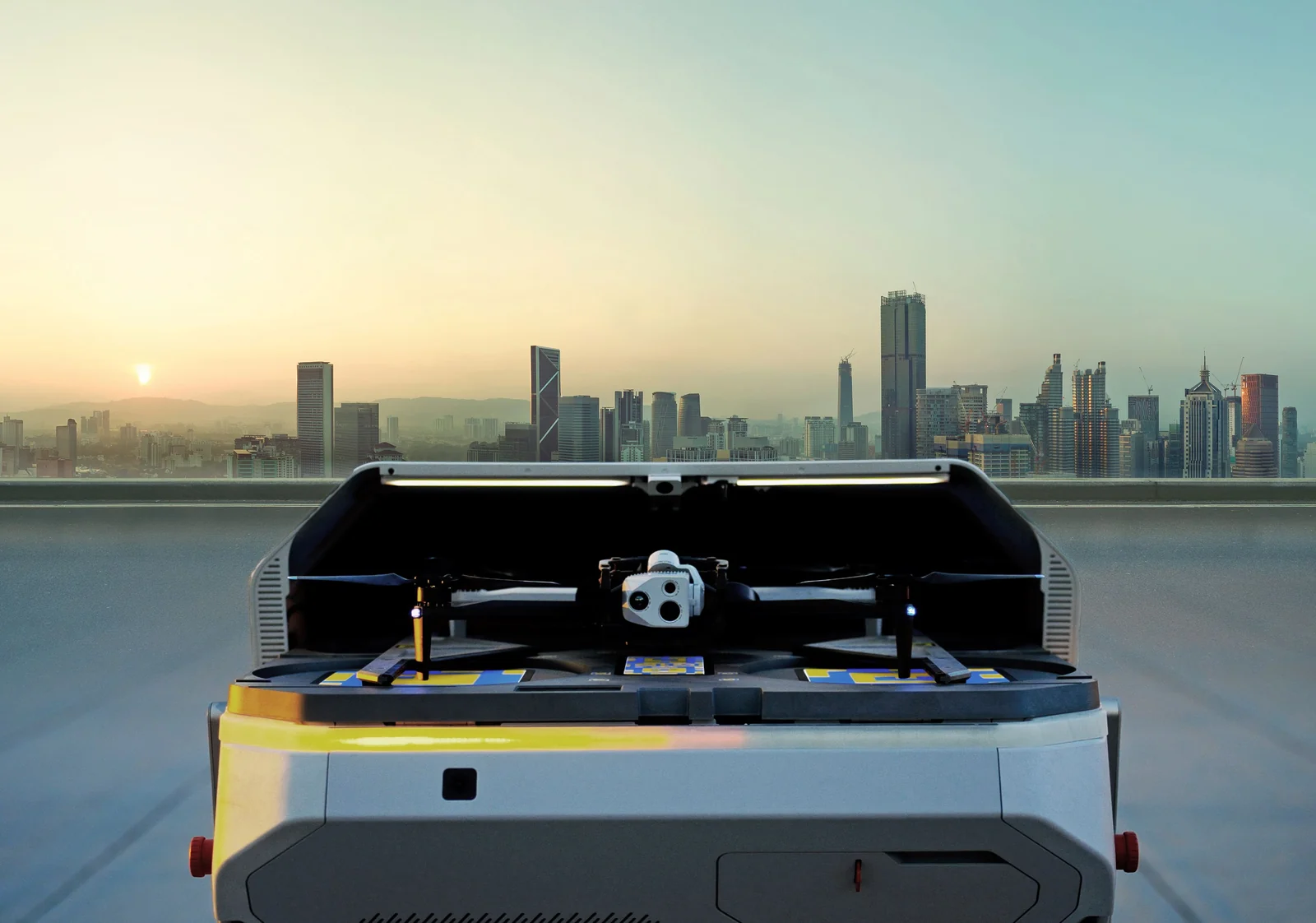
The DJI Dock 3 houses a drone that flies up to 54 min, recharges it from 15 to 95% in 27 min and covers a 10 km operating radius, according to its manufacturer.
Robot Distribution delivers it, defines the flight missions with you, trains your remote pilots and maintains it, to buy, rent or as RaaS.
WHY
A solar farm has tens of thousands of modules; an industrial site has roofs, stacks, tanks and lines that are hard to reach. Inspecting them on foot or from a lift takes time, exposes teams and leaves long gaps between checks.
In one flight the drone brings back geotagged visible and thermal images that reveal faulty modules, hot spots and damage. An automated station, known as drone-in-a-box, keeps it on site, ready to take off for a scheduled mission or after an alarm. In Europe these flights fall under Regulations (EU) 2019/947 and 2019/945; beyond-visual-line-of-sight flights and automated docks generally fall within EASA's 'specific' category.
HOW IT RUNS
We list the assets to inspect, the frequency and the data required: visible images, thermography, 3D models. The choice ranges from a drone piloted on site to an automated dock installed permanently.
Depending on the flight category, we prepare the declarations or authorisations with the national authority (the DGAC in France) and draw the site's automated flight plans.
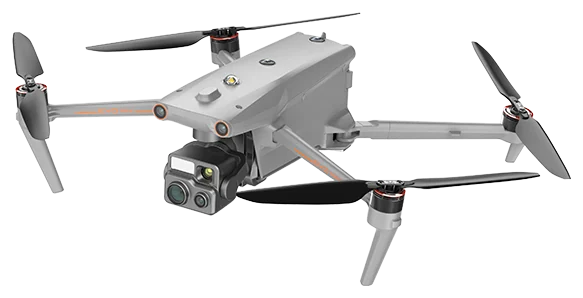
The drone follows its flight plan and captures images. The Autel EVO Max 4T V2 combines a 48 MP zoom camera, a 640 × 512 thermal camera and a 5 to 1,200 m laser rangefinder, according to its manufacturer.
The geotagged images are analysed to locate defects and hot spots, then passed to the maintenance teams who plan the work.
THE ROBOTS
Professional drones
Skydio
Professional drones
Professional drones
Professional drones
Professional drones
Professional drones
BEFORE INSTALLING
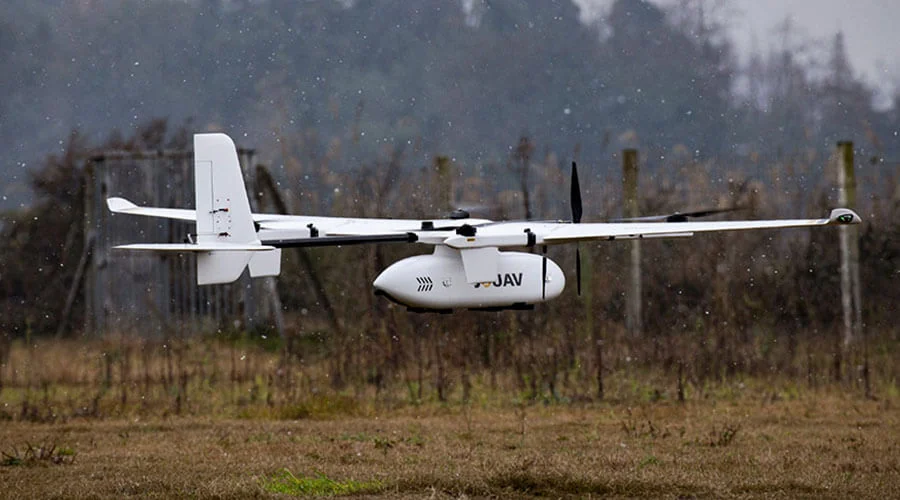
Site area and distance to the assets guide the aircraft type: the JOUAV CW-15, a vertical take-off fixed-wing drone, flies up to 180 min without payload, according to its manufacturer.
Nearby aerodromes, restricted zones, roads and homes determine the flight category and the authorisations needed.
For an automated dock we check the location, power, network link and weather exposure: the DJI Dock 3 is rated IP56 and works from −30 to 50 °C, according to its manufacturer.
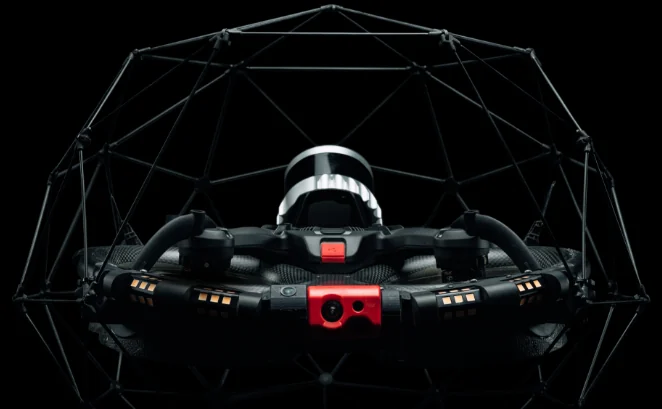
Tanks, boilers and tunnels need a protected drone: the caged Flyability Elios 3 navigates by LiDAR without GPS and carries 16,000 lm of lighting, according to its manufacturer.
RULES AND STANDARDS
Beyond the general EU drone rules, four texts shape how an inspection programme on a solar farm or plant is set up in France.
For repeated inspections outside the standard scenarios, the DSAC (French civil aviation safety authority) issues the authorisation after a SORA risk assessment. It provides a French template of EASA's PDRA-G03, written for routine inspections of sites and infrastructure on predefined routes, below 30 m above the surveyed area (or 15 m above obstacles, never above 50 m), with a direct command link. Check whether your flight plans fit it.
Aerial data capture is prohibited in ZICAD zones, which replaced the former ZIPVA zones under article D. 133-10 of the French Civil Aviation Code; the zone list is set by orders of 2 January 2023 and 26 June 2024. Before planning visible or thermal imaging flights, check whether the site or its approach lies in one of these zones.
This IEC technical specification defines outdoor infrared inspection of PV modules and plants in operation. It sets requirements for the measurement equipment, ambient conditions, inspection procedure, reporting, personnel qualification, and a matrix for classifying thermal abnormalities. Ask whether thermal reports are produced to this method, so results can be compared between campaigns and contractors.
INRS asks employers to check first that a person really needs to enter a tank, silo or boiler. It also states that even a visual inspection counts as an intervention, covered by an operating protocol, a permit to enter, atmosphere measurements and a dedicated outside watcher. A drone sent in from the opening can reduce entries; any entry that remains follows that procedure.
General information, not legal advice.
FAQ
In Europe, Regulations (EU) 2019/947 and 2019/945. Flights beyond the remote pilot's visual line of sight and automated docks generally fall within the 'specific' category, with an authorisation from the national authority. The Autel EVO Max 4T V2 holds an EU C2 class certificate, according to its manufacturer.
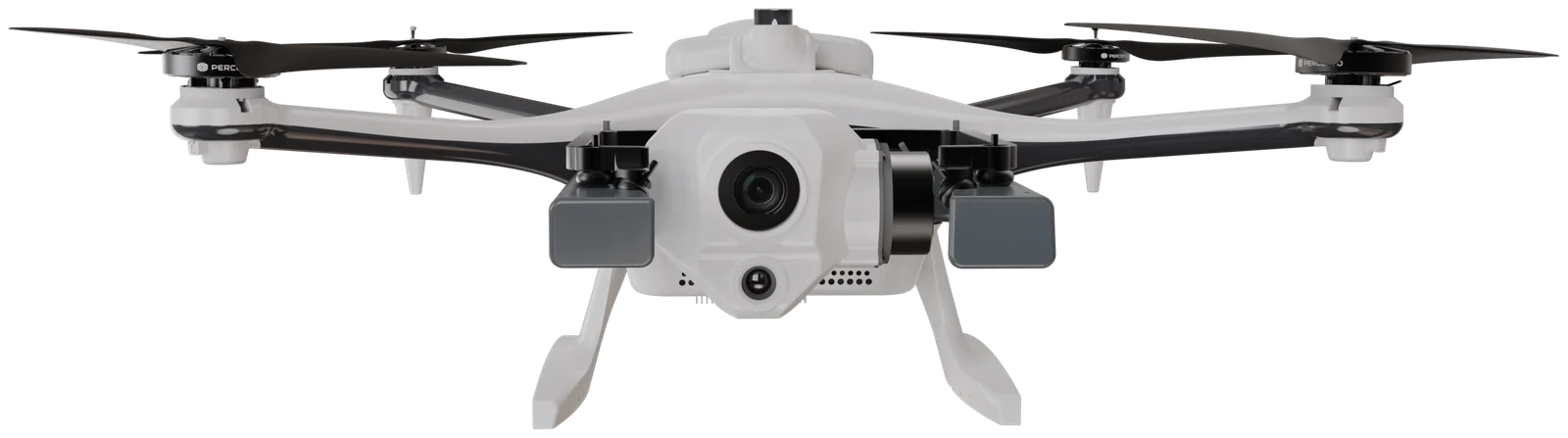
Yes, from an automated dock: the Skydio Dock for X10 gets its drone airborne in 20 s and the Percepto Air Max stays on site 24/7 in a base fitted with a weather station, according to their manufacturers. These flights need a suitable authorisation and remote supervision.
It captures the signs: the thermal camera shows up hot spots. The Matrice 4TD drone of the DJI Dock 3 carries a 640 × 512 thermal imager, and the Percepto Air Max a 61 MP RGB camera with radiometric thermal imaging, according to their manufacturers. Image analysis then points to the modules to check.
According to the manufacturer: up to 54 min for the DJI Dock 3 drone, 42 min for the Autel EVO Max 4T V2, 12.5 to 17 min for the Flyability Elios 3 and up to 180 min without payload for the JOUAV CW-15. A dock recharges the drone between missions.
Yes, with a drone built for confined spaces: the Flyability Elios 3 is protected by a cage, maps in 3D with LiDAR and accepts ultrasonic thickness, radiation or gas sensors, according to its manufacturer.
USE CASES
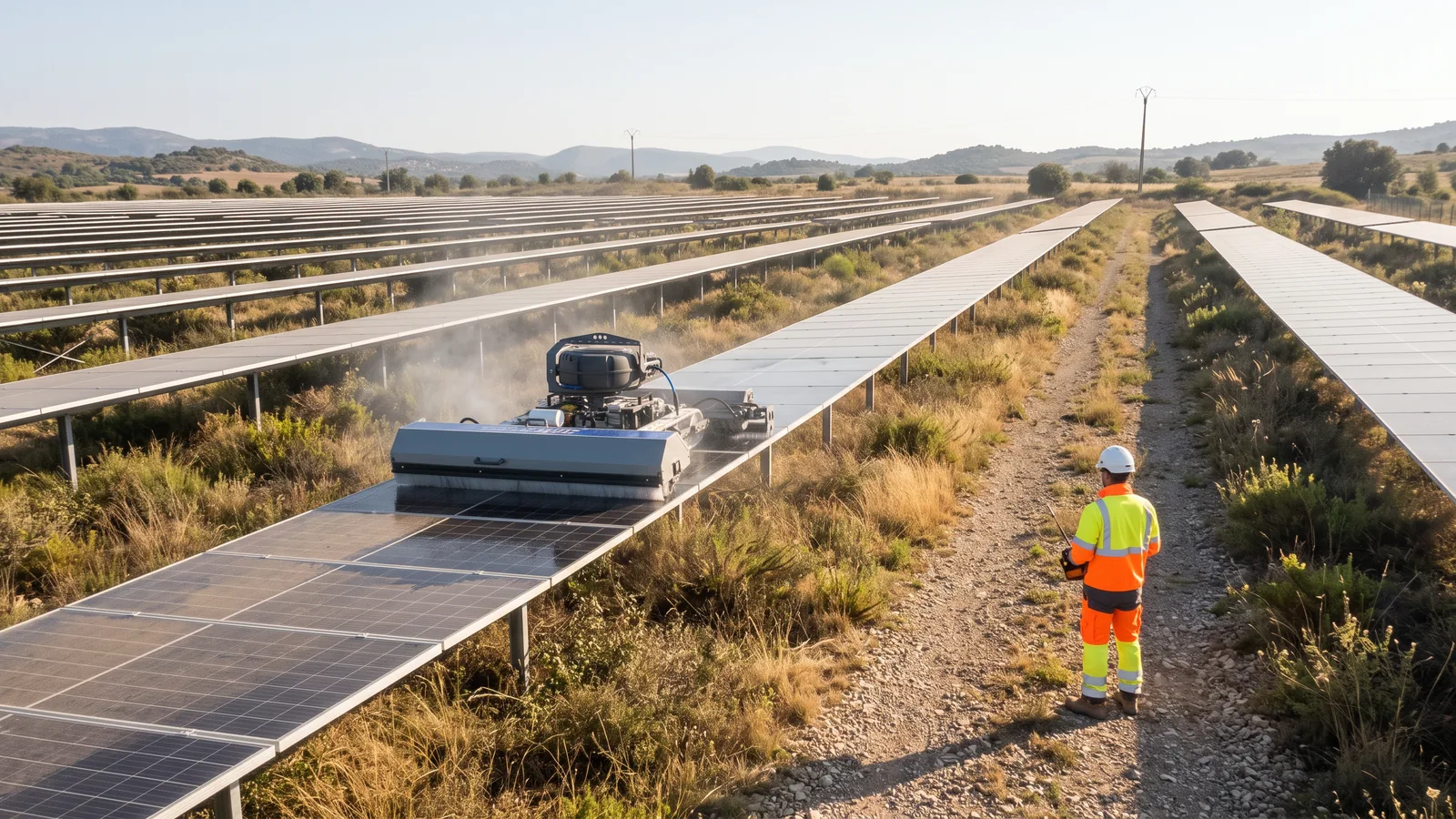 Robotic solar panel cleaningThe robot brushes the module rows, dry or with water, remote-controlled or autonomous depending on the model. Operations teams keep monitoring, electrical checks and plant maintenance.
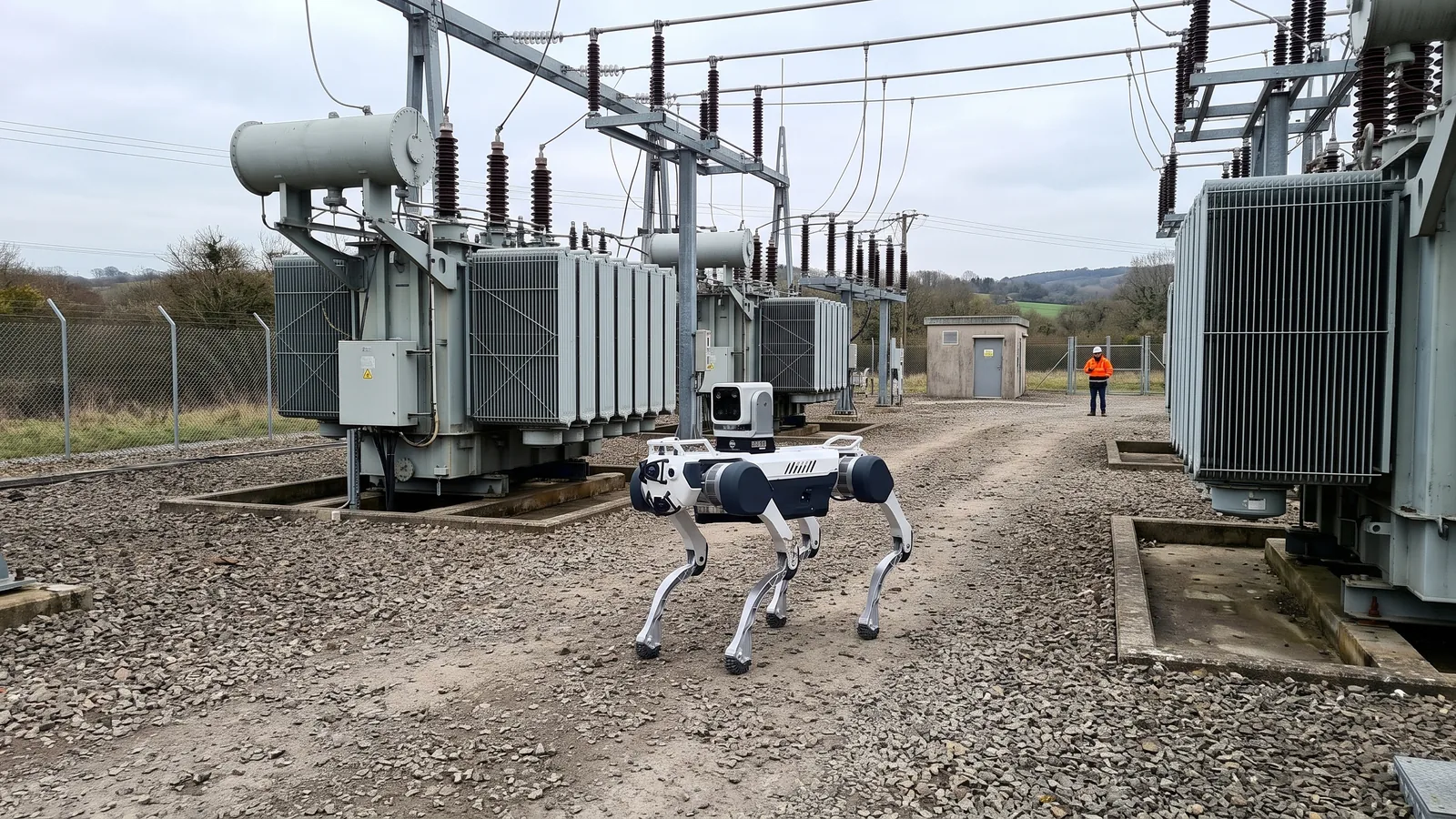 Electrical substation inspectionA ground robot patrols the substation aisles and a docked drone flies over the equipment. Together they record temperatures, gauges and visual condition, without sending someone out for every round.
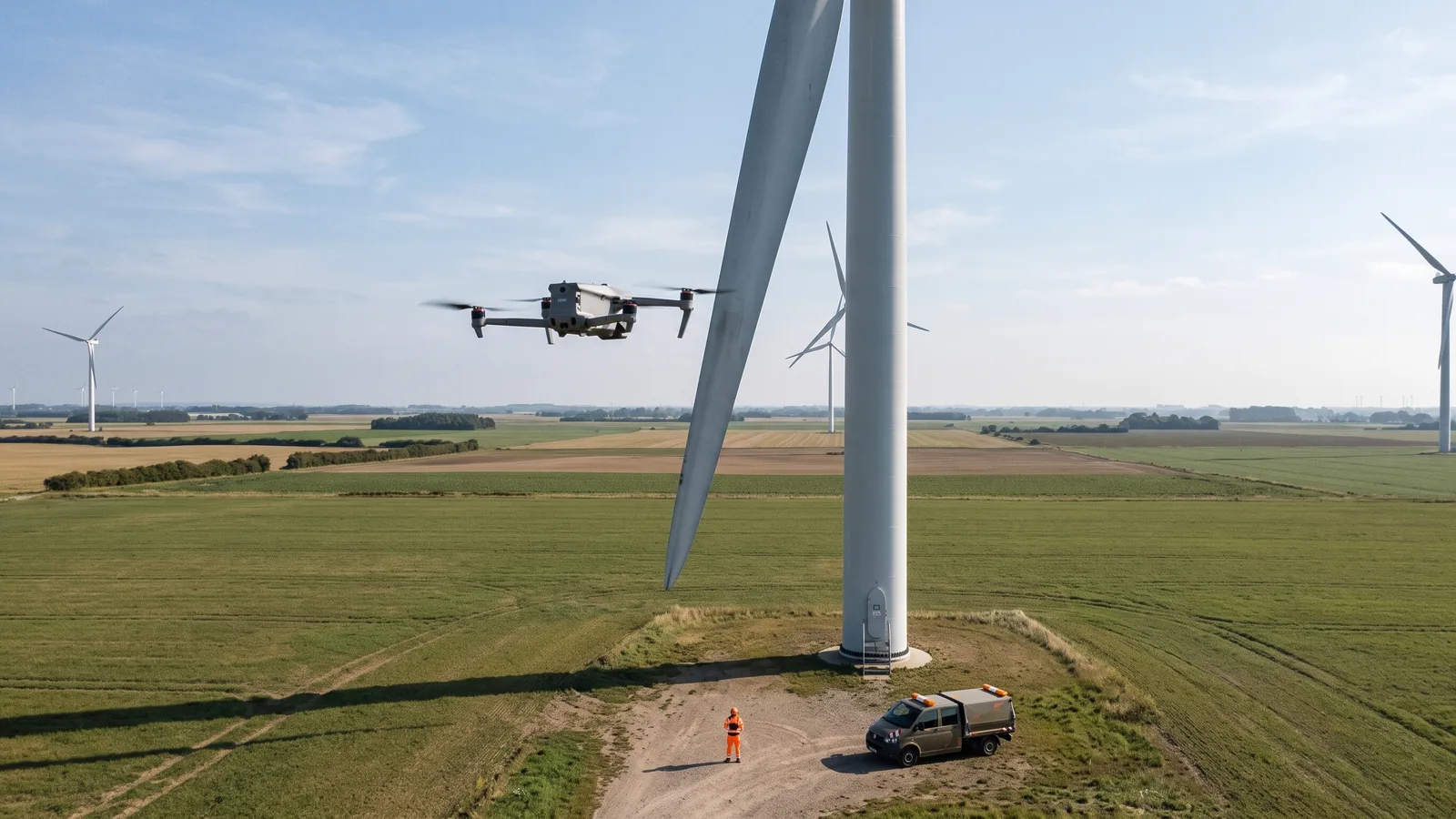 Drone inspection of power lines and wind turbinesThe drone flies along the lines and around the turbines, taking visible and thermal images of insulators, connections and blades. Maintenance crews only work at height on confirmed defects.
Robots, acquisition mode and delivery terms, in one written proposal.