Pipe and sewer inspection
- Key feature
- 150–1,000 mm pipe
- Ingress protection
- IP68
- Key feature
- Up to 500 m cable
On order
Price on request
Updated
USE CASE · WATER AND UTILITY NETWORKS
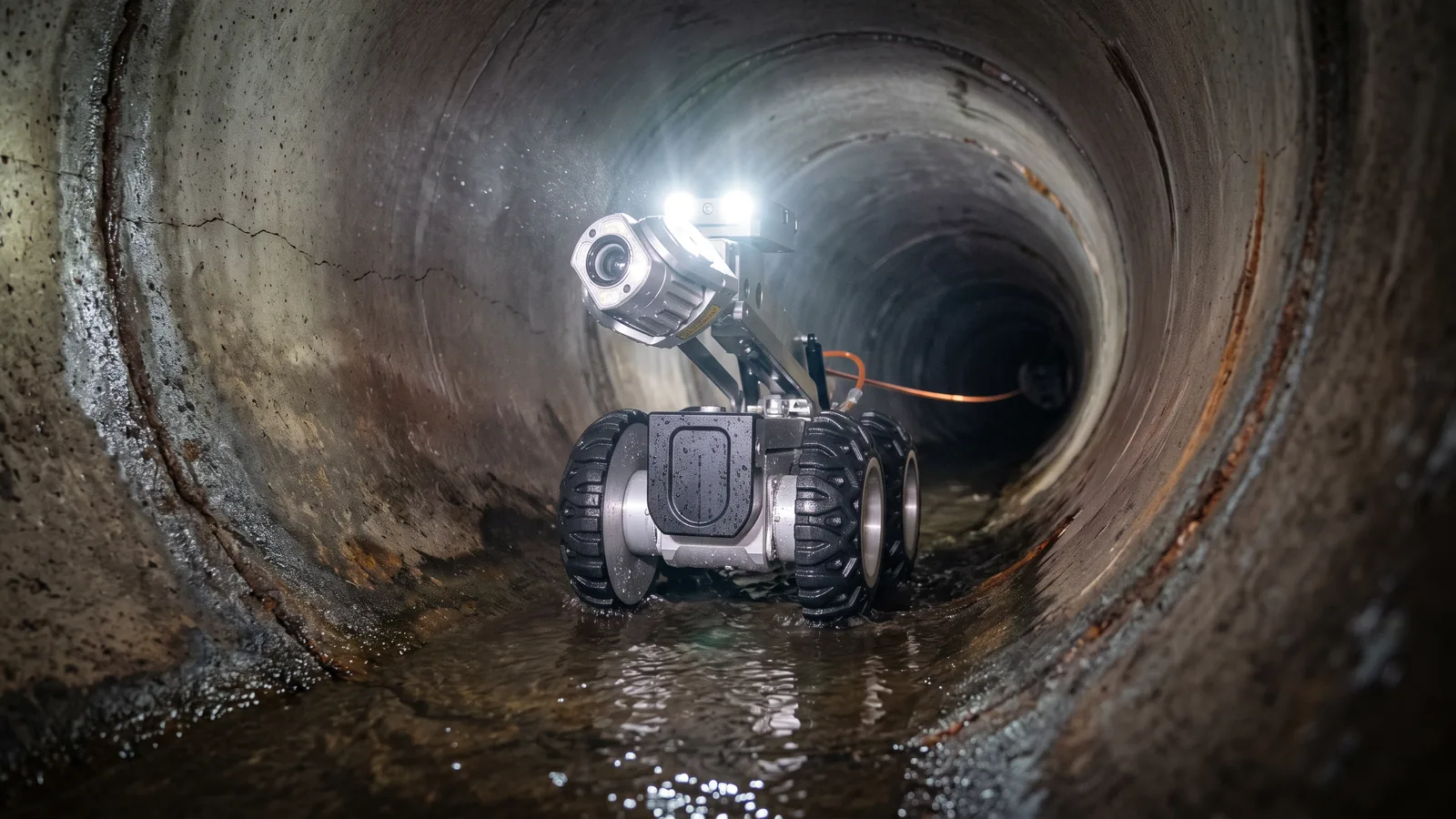
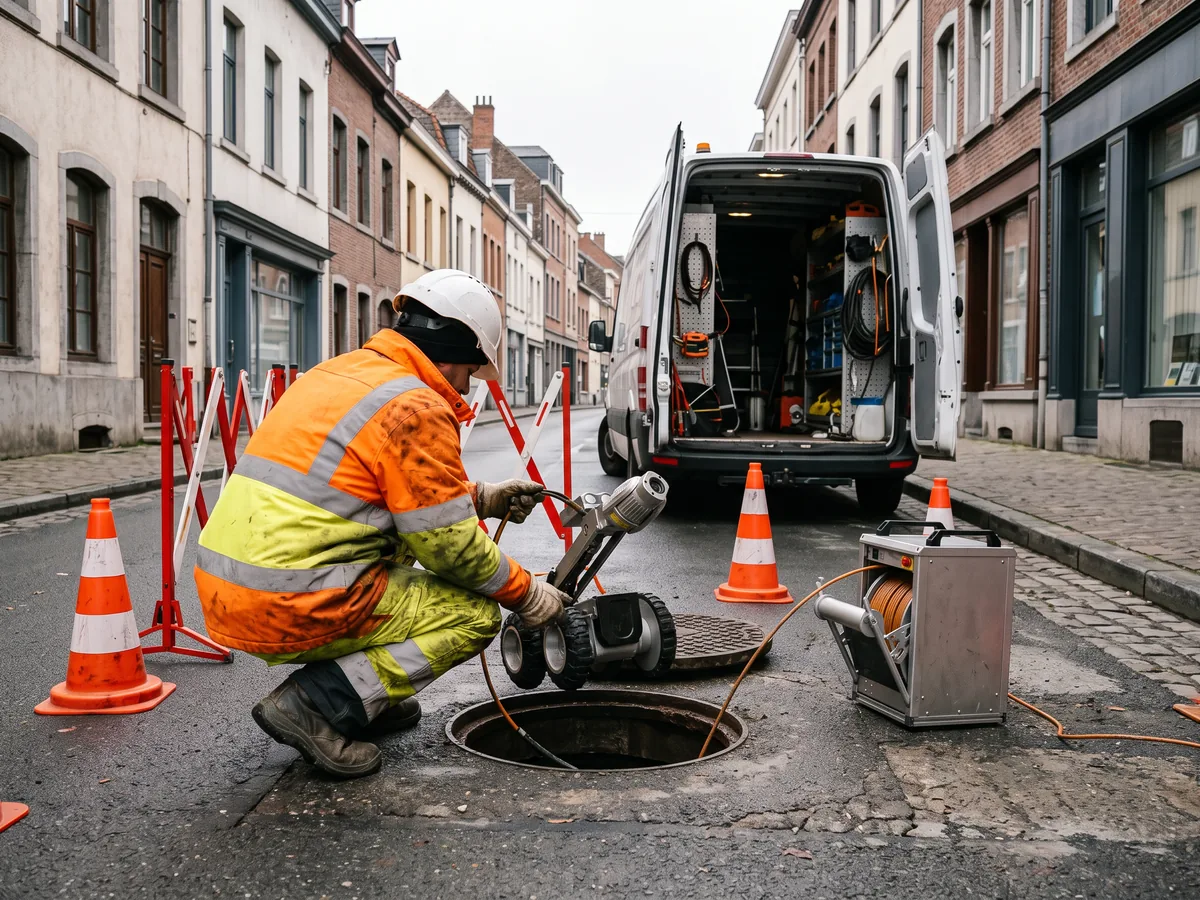
The camera robot travels the sewer from the manhole and films the pipe wall, controlled from the surface. Technicians keep the diagnosis, defect coding and the choice of works.
Updated
A sewer pipe inspection robot is a motorised camera crawler, linked to the surface by cable, that films the inside of foul and storm sewers and industrial pipes.
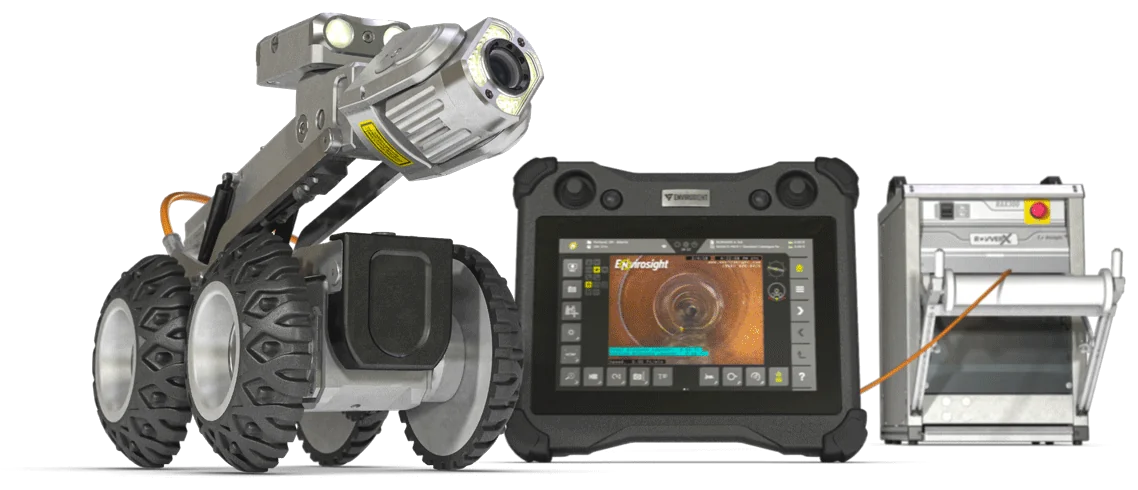
The Envirosight ROVVER X in its RX130 size weighs 6 kg, is rated IP68 to 1 bar and carries a 1080p camera with 10x optical zoom, according to its manufacturer.
Robot Distribution delivers it, equips it for your pipe sizes, trains your operators and maintains it, to buy, rent or as RaaS.
WHY
Foul and storm networks age beneath the streets: cracks, roots, deposits, displaced joints and faulty connections. Local authorities, water boards and operators must check them when new works are handed over, before rehabilitation and to plan maintenance, without sending staff into a confined space.
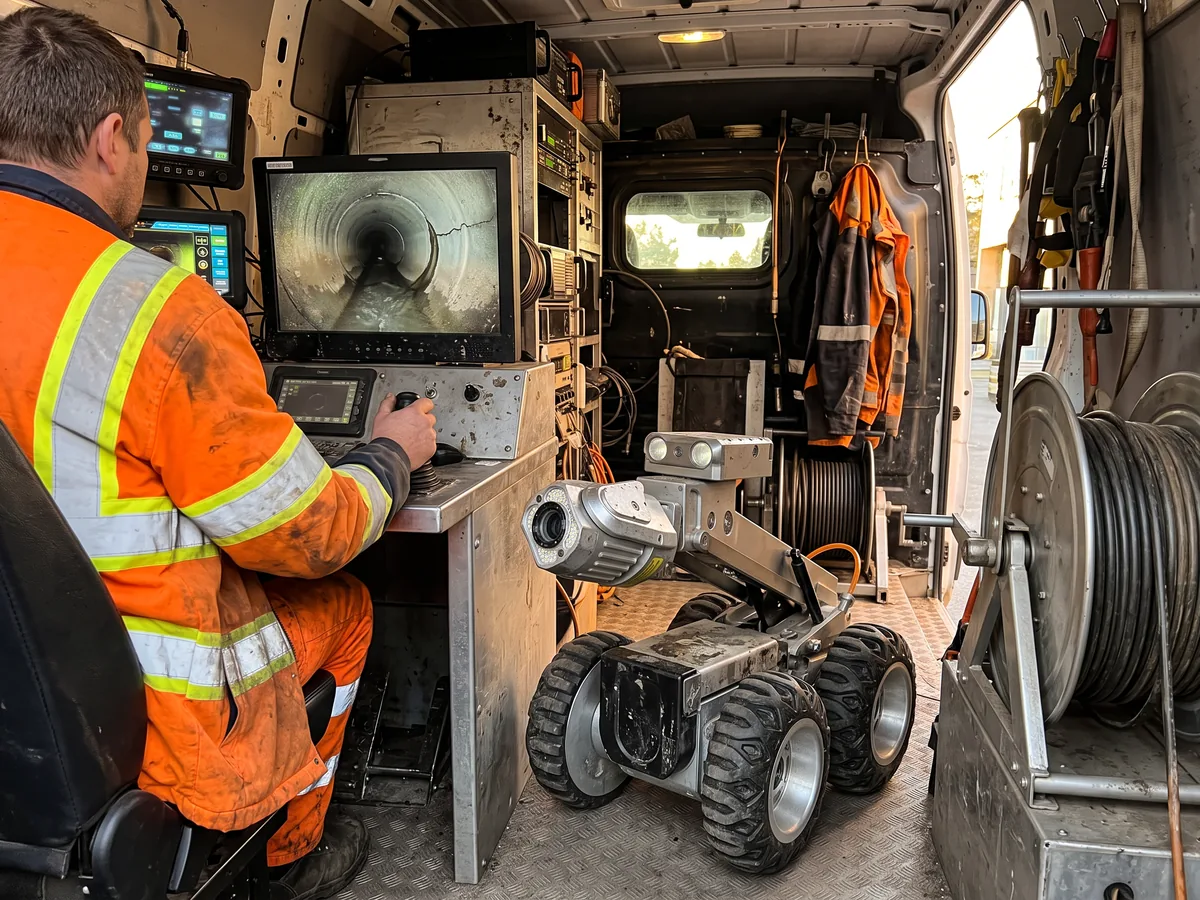
The robot enters through the manhole, drives along the pipe and sends video to the operator at the surface, who aims the camera, measures and locates each defect. Observations are coded to the European standard EN 13508-2, the basis of CCTV inspection reports.
HOW IT RUNS
We locate the manholes, check the pipe diameter and material and have the section jetted if needed so the camera can see the wall. The crawler and its wheels are chosen for the diameter.
The crawler is lowered through the manhole and driven from the surface. The Easy-Sight X5-HT travels at up to 32 m/min and raises its camera by 174 mm to centre the view in large pipes, according to its manufacturer.
The operator aims the camera, measures cracks and deformation by laser and records the position of each defect. A built-in sonde lets the crawler be located from the surface: 33 kHz, 512 Hz or 640 Hz on the iPEK ROVION RX130, according to its manufacturer.
Observations are coded, illustrated with photos and gathered in a report per section, used to plan cleaning, rehabilitation or works.
THE ROBOTS
Pipe and sewer inspection
Pipe and sewer inspection
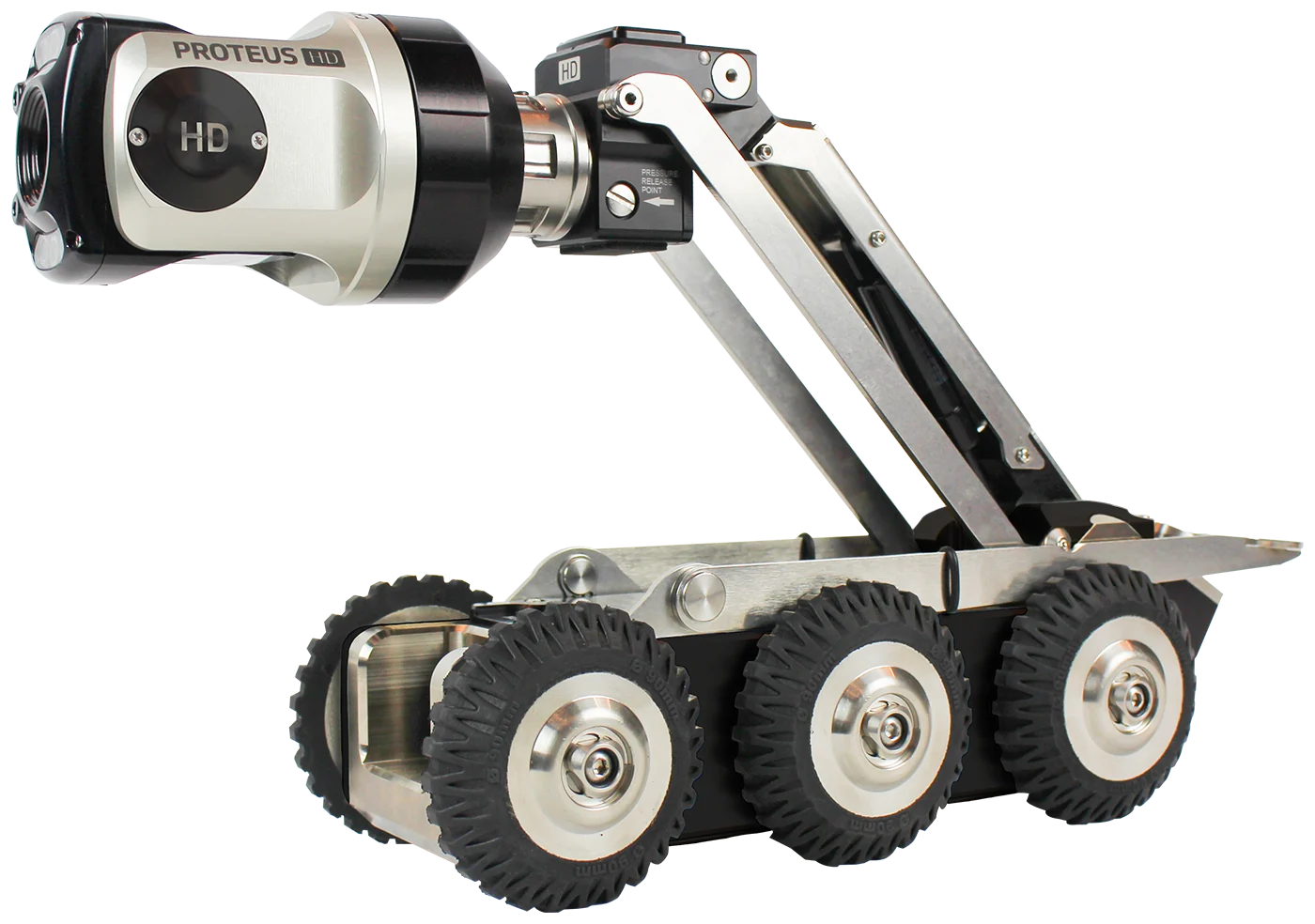
Minicam
Pipe and sewer inspection
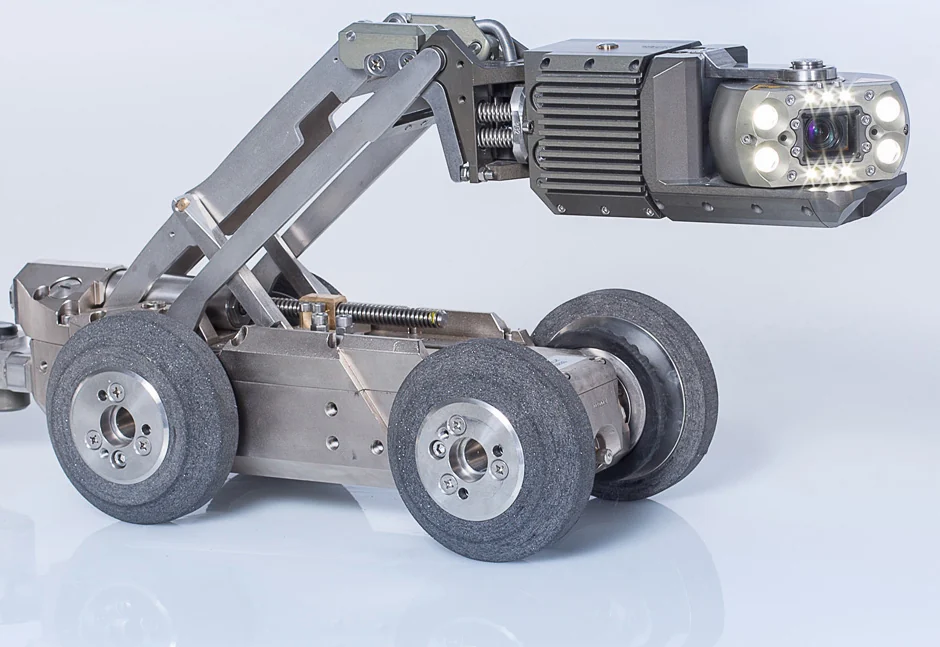
Pipe and sewer inspection
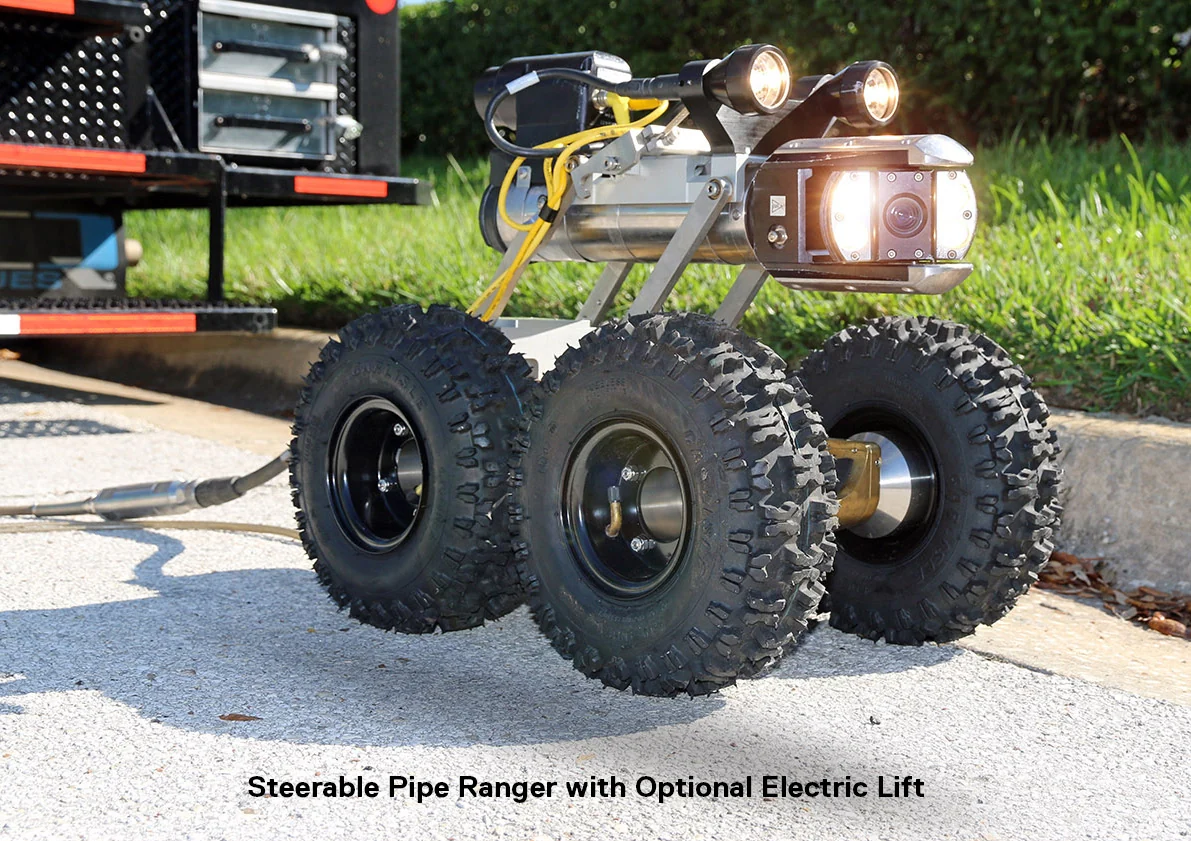
CUES
Pipe and sewer inspection
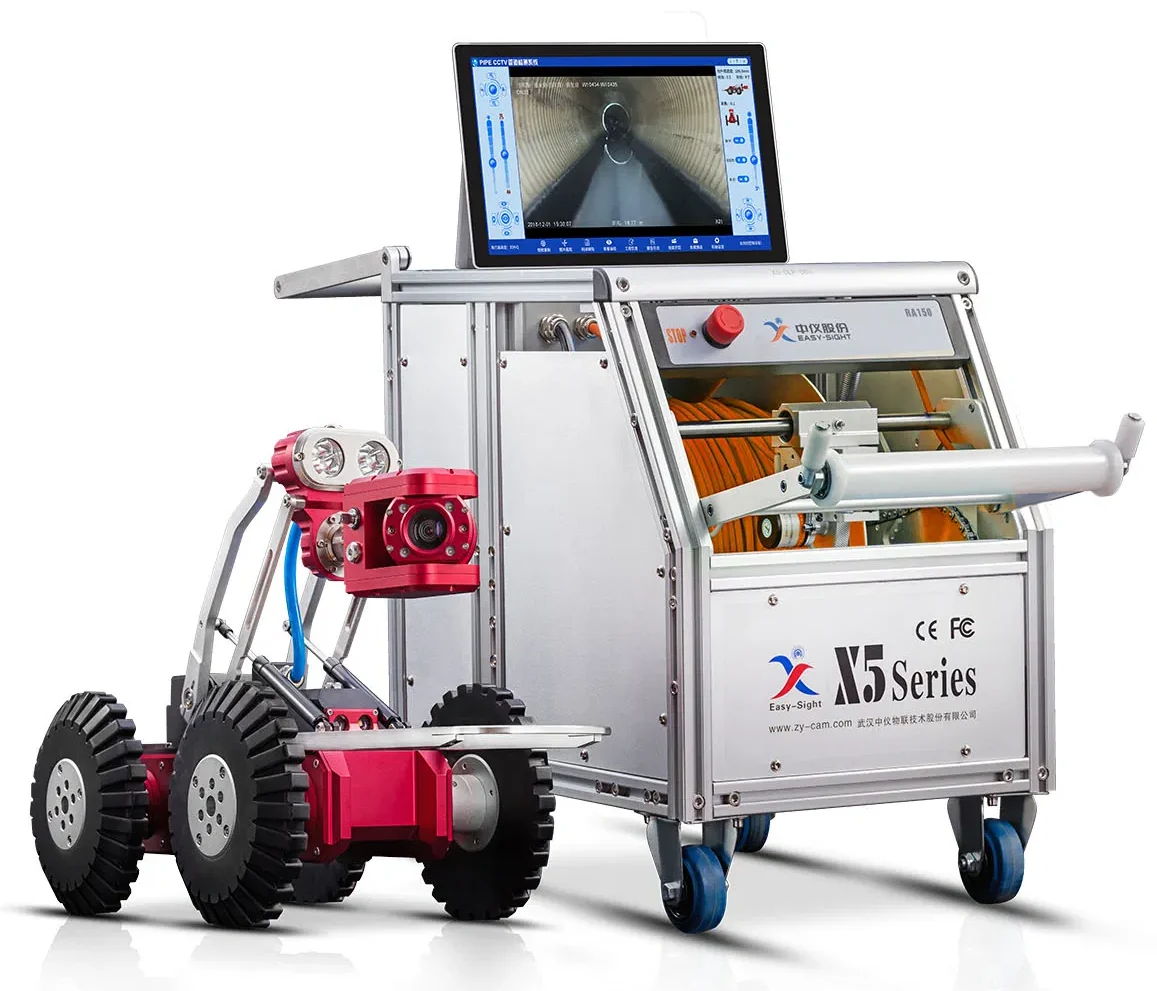
Easy-Sight
Pipe and sewer inspection
BEFORE INSTALLING
The diameter range sets the crawler: 140 to 600 mm for the Minicam Proteus CRP140-HD (1,000 mm with cradle), 180 to 1,830 mm for the CUES Steerable Pipe Ranger II, according to their manufacturers.
The distance between manholes sets the cable length: 200, 300 or 500 m depending on the reel for the iPEK ROVION RX130, up to 610 m for the CUES Steerable Pipe Ranger II, according to their manufacturers.
Manhole access, traffic, site signage and the choice between a portable system and a vehicle installation are reviewed with the operator.
Where gas may be present, ATEX zones are checked: the iPEK ROVION RX130 works with Zone 1 and Zone 2 reel versions, and the Rausch L 135 is nitrogen-pressurised with leak sensing, according to their manufacturers.
RULES AND STANDARDS
Before buying a camera crawler, check which inspections must be accredited and how the crew at the manhole is protected.
The French order of 21 July 2015 on collective sanitation systems (Article 10) requires a reception procedure before a new collection system is commissioned. Reception tests are carried out under accreditation, by a control operator independent of the works contractor. A contractor therefore cannot accept its own pipes with its own crawler. If you plan to offer acceptance inspections, check the accreditation scope you need.
Water agency guidance, such as that of the Agence de l'eau Rhône Méditerranée Corse, ties the payment of grants to a complete acceptance file. It asks for a visual or CCTV inspection over the full length laid, main and connections, by a body accredited by COFRAC or an equivalent body to NF EN ISO/CEI 17020, independent of the contractor and of the project engineer. Ask your agency for its current conditions.
The robot keeps people out of the pipe, but the set-up at the manhole is still work on sanitation structures. Recommendation R 447 of the French health insurance fund (Cnam) covers accident prevention in confined spaces, and R 472 sets the CATEC training and certification for those who enter and those who supervise. Check which staff hold CATEC and when a human entry is still planned.
General information, not legal advice.
FAQ
According to the manufacturer: DN150 to DN1000 for the iPEK ROVION RX130, about 140 to 1,520 mm for the Rausch L 135 and 300 to 1,000 mm for the Easy-Sight X5-HT. The Envirosight ROVVER X covers about 100 to 2,400 mm depending on crawler size.
Yes for the models rated IP68: the Envirosight ROVVER X and Minicam Proteus CRP140-HD to 1 bar, the Easy-Sight X5-HT to 10 m water depth, according to their manufacturers. A surcharged section still needs to be lowered so the camera can see the wall.
Yes. The Envirosight ROVVER X and Easy-Sight X5-HT measure by laser, according to their manufacturers; the ROVVER X also takes laser-profiling and side-scan modules. Measurements complete the defect coding in the report.
With a dedicated accessory: the Envirosight ROVVER X takes a lateral launch module that sends a camera into the connection, according to its manufacturer. The survey identifies the accessories your network needs.
No. The crawler is lowered through the manhole and driven by cable from the surface; the Minicam Proteus CRP140-HD raises its camera with a motorised elevator and measures its inclination, according to its manufacturer. Only the equipment set-up happens at the manhole edge.
USE CASES
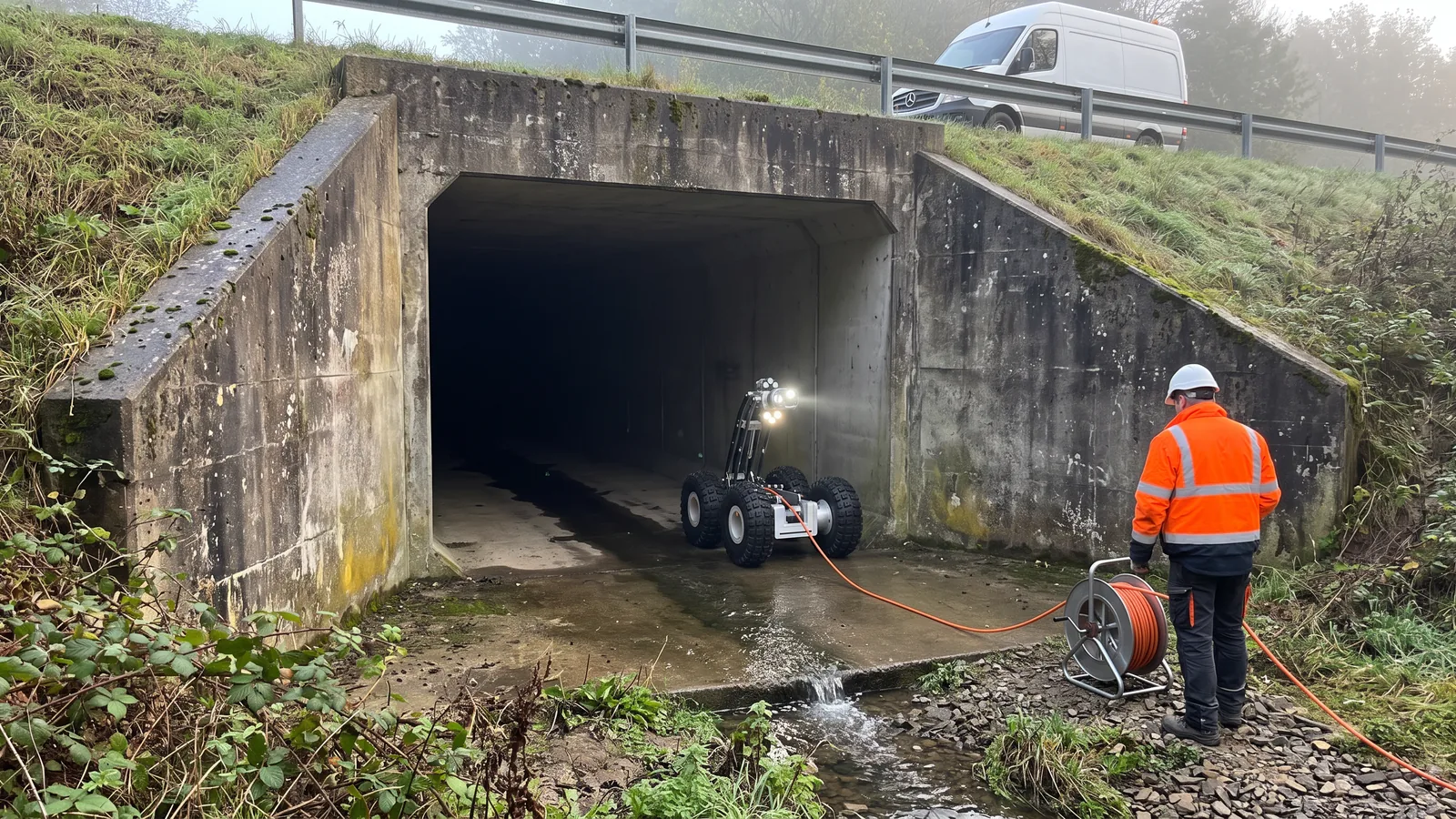 Large sewer and culvert inspectionThe robot travels through large trunk sewers, egg-shaped collectors and culverts under roads, camera centred in the section, driven from the surface. Sewer crews only go in to carry out work.
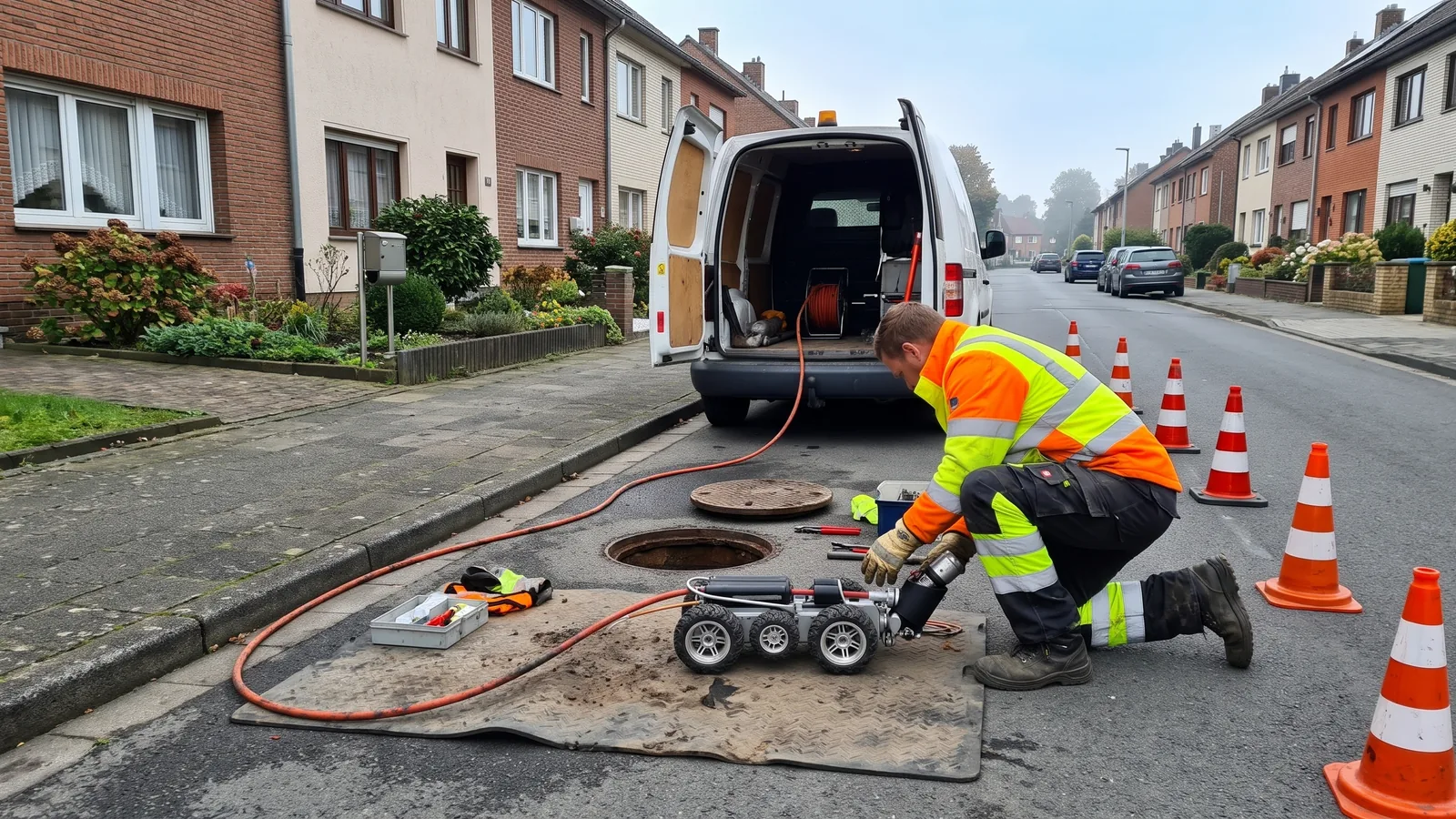 Sewer lateral inspection with a satellite cameraThe crawler drives along the main, stops at the connection and pushes a small pan-tilt camera into it. The building's lateral is inspected without opening the road or entering the property.
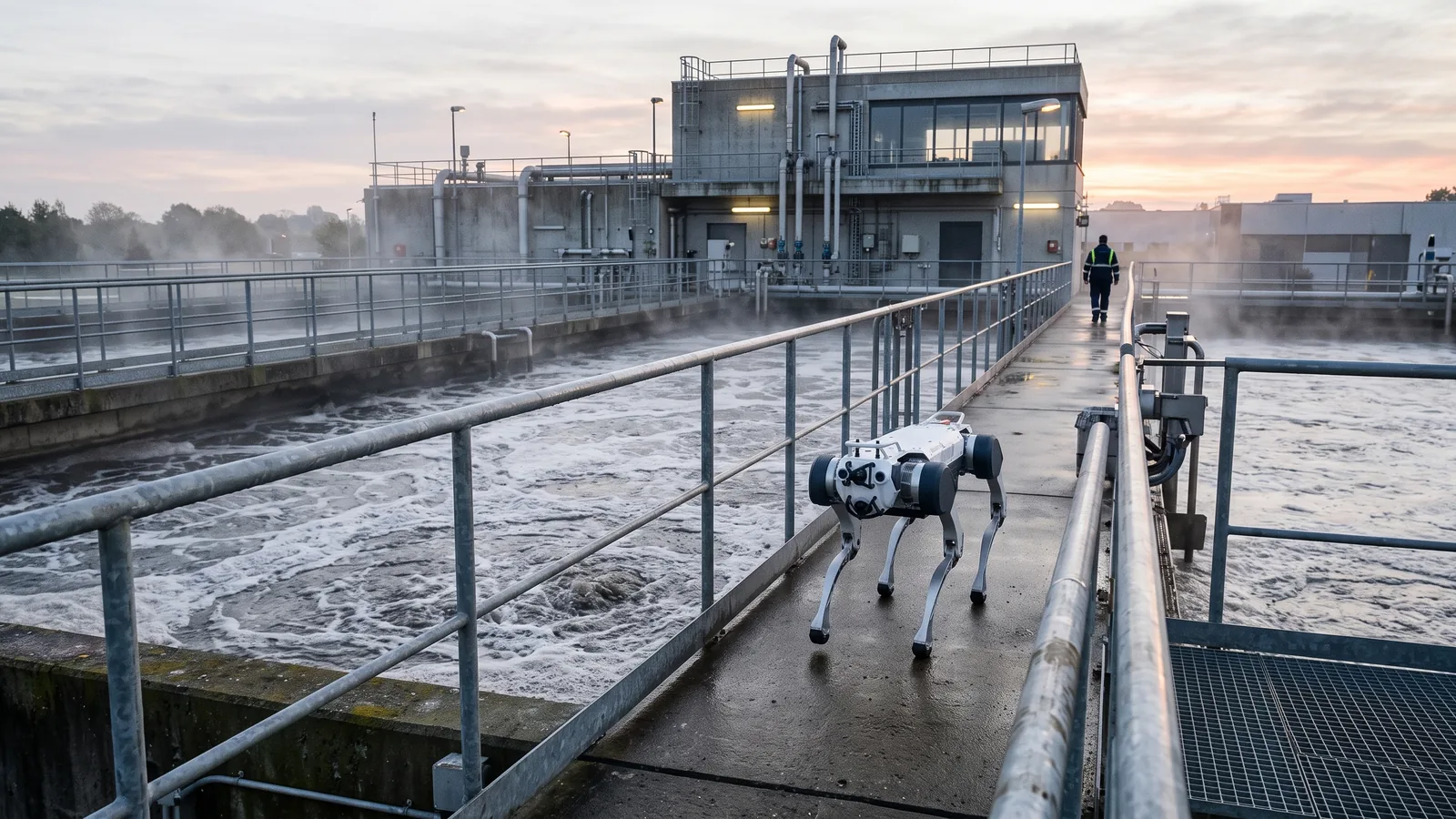 Inspection rounds in water treatment plantsThe robot tours basins, pumps and cabinets at set times and brings back images, temperatures and readings. Operators focus on deviations and running the process.
Robots, acquisition mode and delivery terms, in one written proposal.