Education
- Payload
- 0.75 kg
- Reach
- 450 mm
- Axes
- 6
On order
From €5,240 ex VATor €179/month in RaaS
Updated
USE CASE · INSPECTION, R&D AND EDUCATION
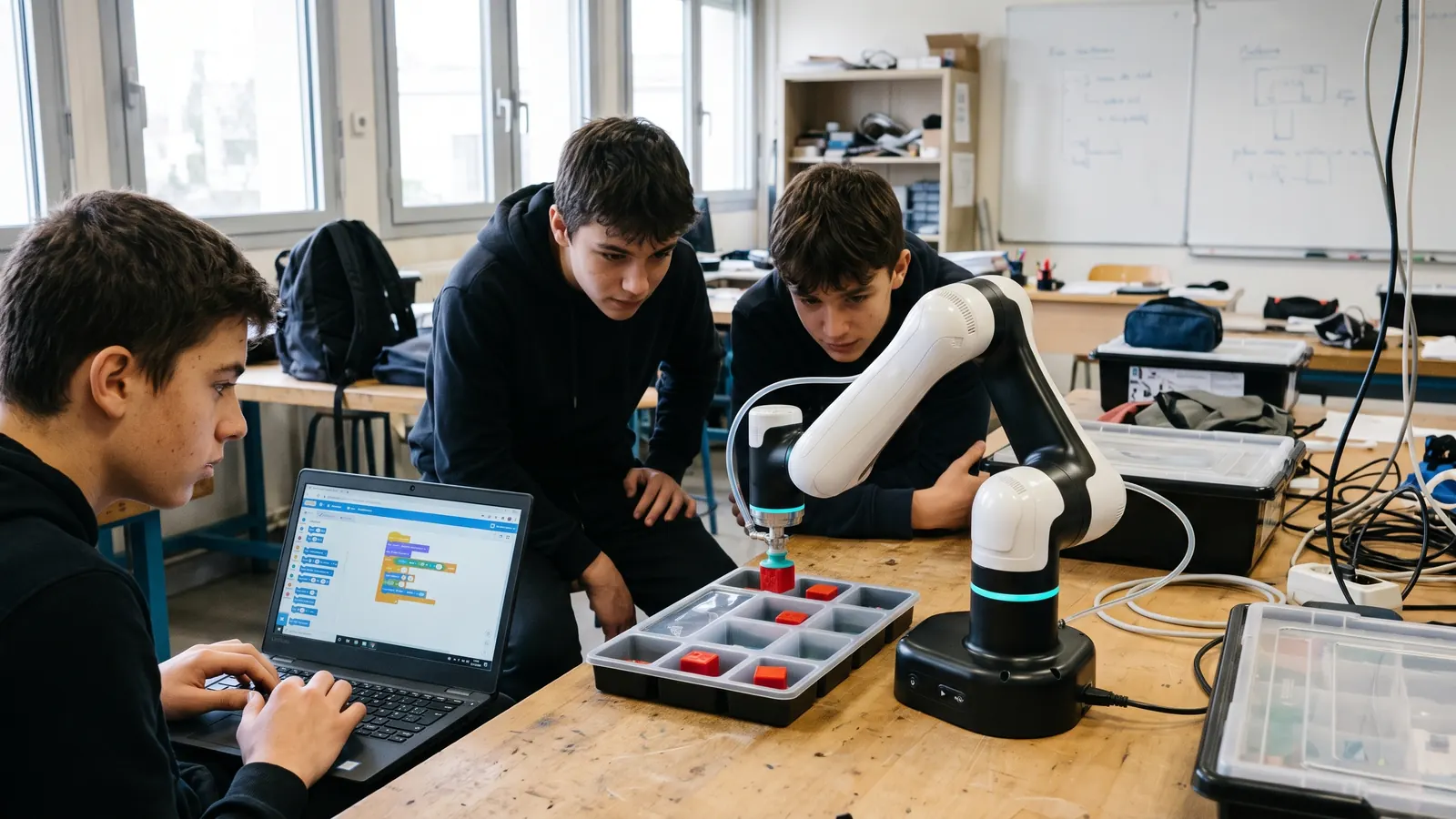
Students program a robot that moves in front of them. The abstract idea becomes a visible result, and mistakes show straight away.
Updated
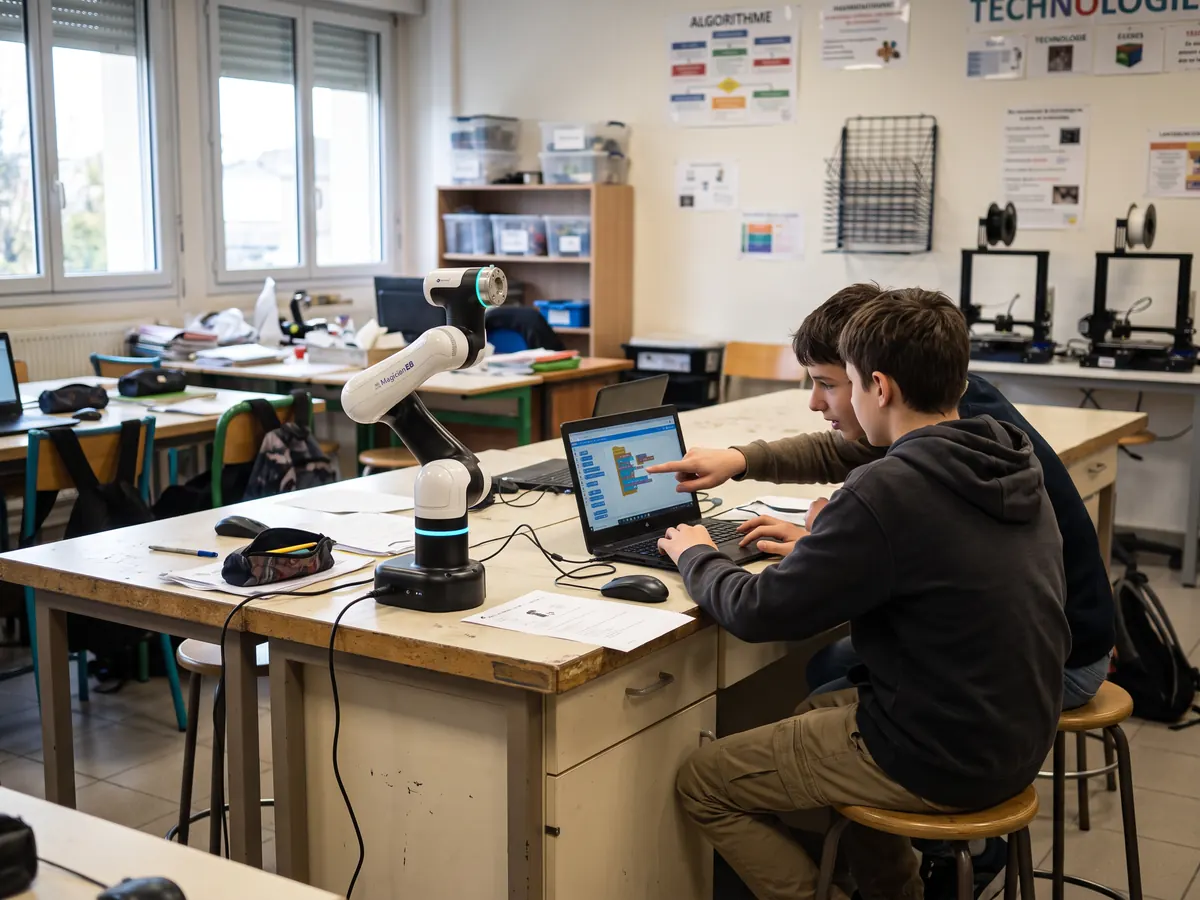
An educational robot supports technology, programming and robotics lessons, from lower secondary school to vocational schools and fab labs.
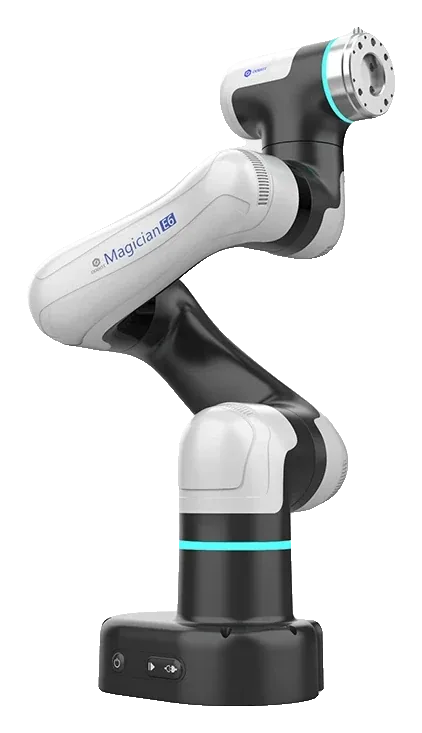
The DOBOT Magician E6 is a 6-axis desktop arm: 750 g payload, 450 mm reach and ±0.1 mm repeatability, programmed with the DobotStudio Pro industrial software, according to its manufacturer.
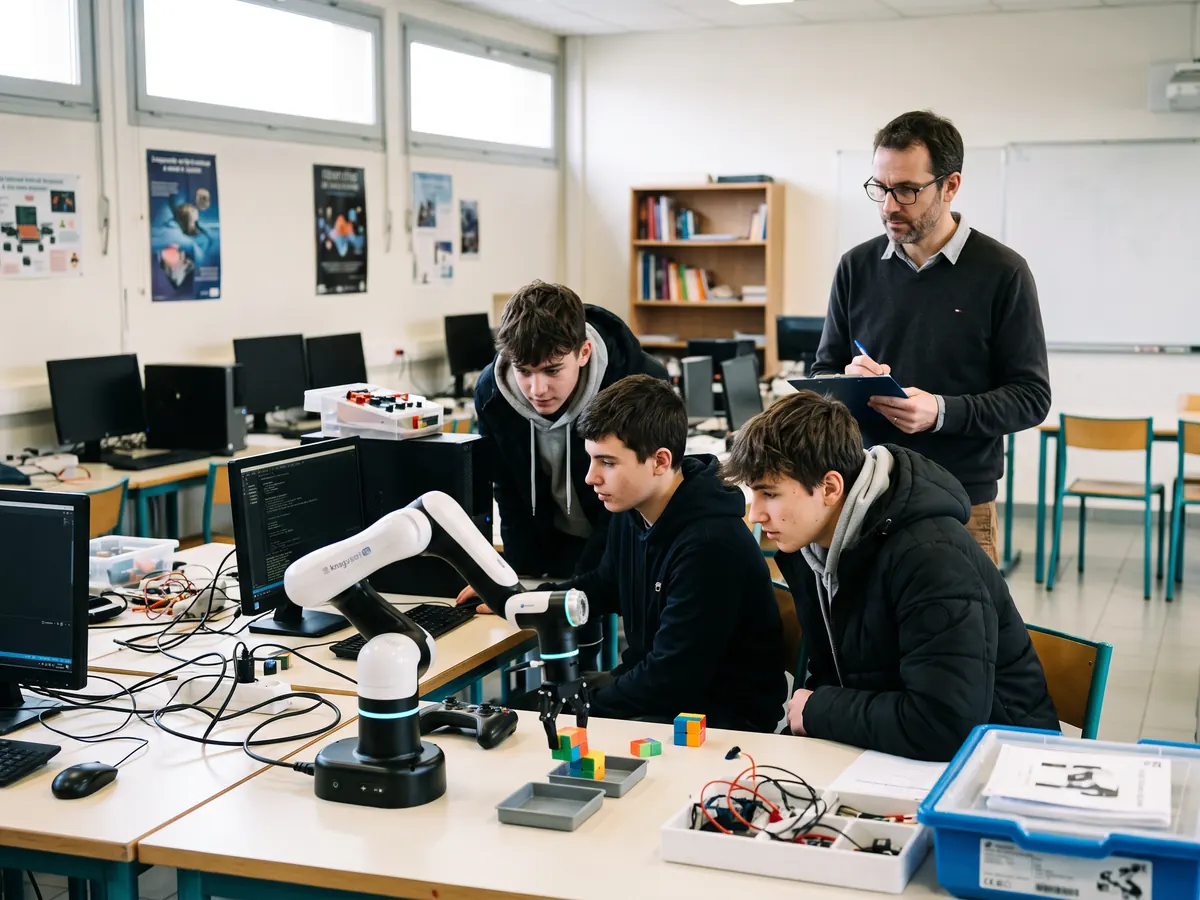
Robot Distribution advises on the equipment for the level and teaching project, delivers it, trains the teachers and provides support.
WHY
Programming a real robot changes how students relate to code: a badly written loop makes the robot fall or miss the part, and they see it. Working in small groups around a machine also builds project skills: specification, trials, corrections.
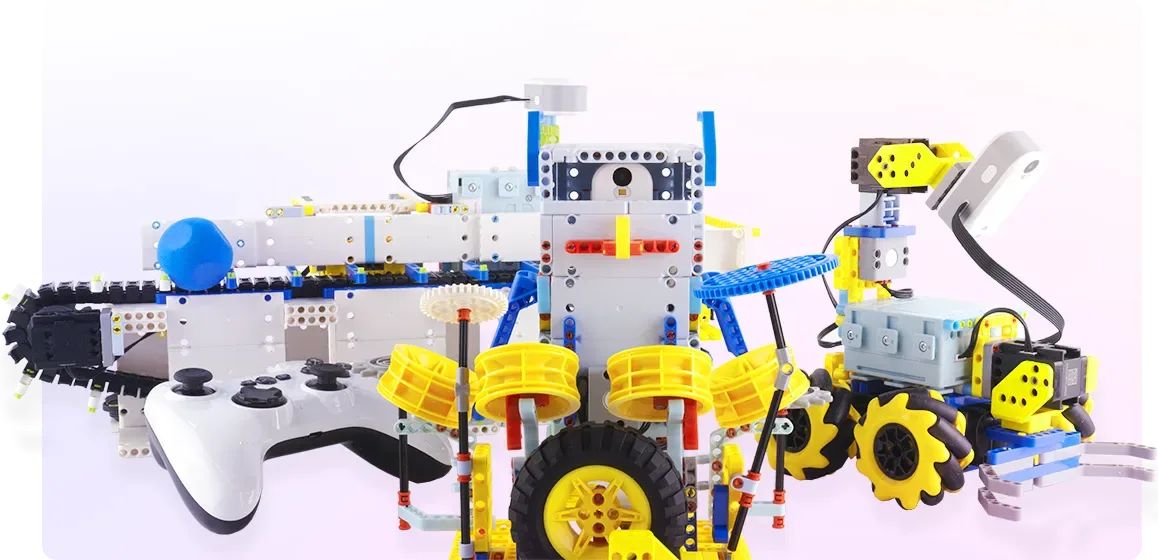
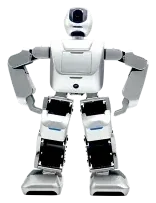
The right equipment depends on the level: a buildable kit programmed with blocks to start, a programmable humanoid for projects and competitions, a six-axis arm close to industry for technical and vocational courses.
HOW IT RUNS
Sort parts, follow a line, make a humanoid walk and talk: a concrete goal suited to the class level.
With graphical blocks to start, then in Python or an industrial programming environment for advanced students.
Each group runs its program, sees the gap with what was expected and corrects it, as many times as needed.
Groups show their solution and explain their choices; the teacher assesses the approach as much as the result.
THE ROBOTS
Education
Education
Education
BEFORE INSTALLING
Lower secondary, upper secondary, technical or vocational track, fab lab: the robot follows the skills being taught.
How many robots for groups of two to four students, and how they are shared between classes.
Software to install, accounts, classroom Wi-Fi and the IT rules of the school or local authority.
Tables, sockets, a clear test area, and lockable storage for robots and parts between lessons.
FAQ
The UBTECH uKit AI is built, then programmed with graphical blocks or MicroPython; it brings together more than ten types of sensors and actuators and does visual and voice recognition, according to its manufacturer.
The DOBOT Magician E6 is a desktop-scale 6-axis industrial arm: 750 g payload, 450 mm reach, ±0.1 mm repeatability, programmed with DobotStudio Pro according to its manufacturer.
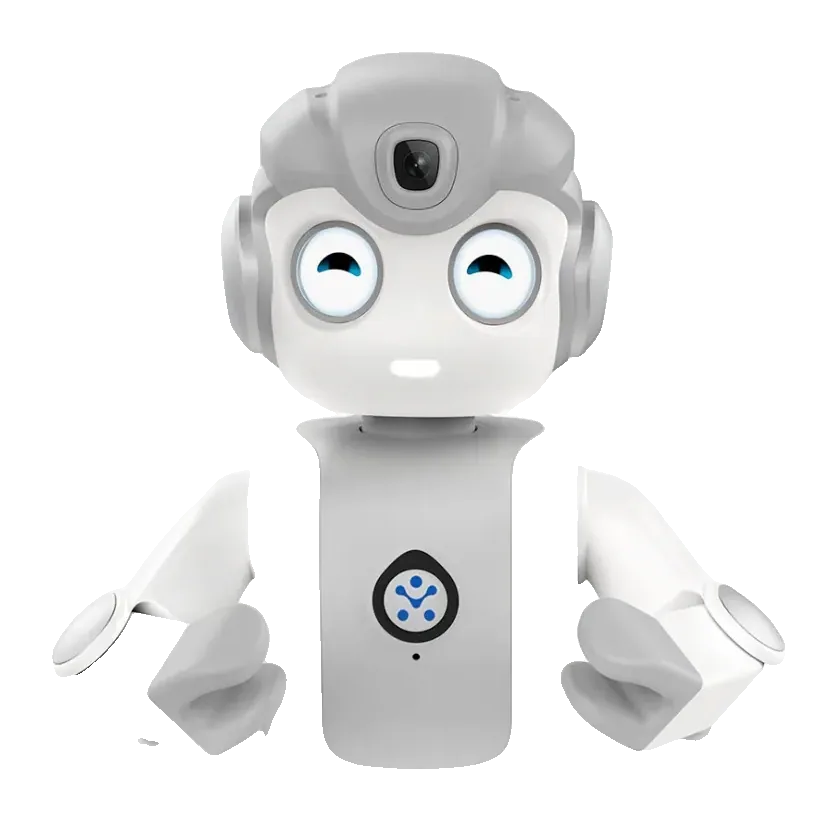
Projects and competitions: the Leju AELOS PRO3 is a small biped humanoid programmed with blocks; the UBTECH Alpha Mini (24.5 cm, 700 g, 14 degrees of freedom) recognises faces and objects according to its manufacturer.
Yes: delivery includes a handover with the teaching team, then support for questions that come up during the year.
USE CASES
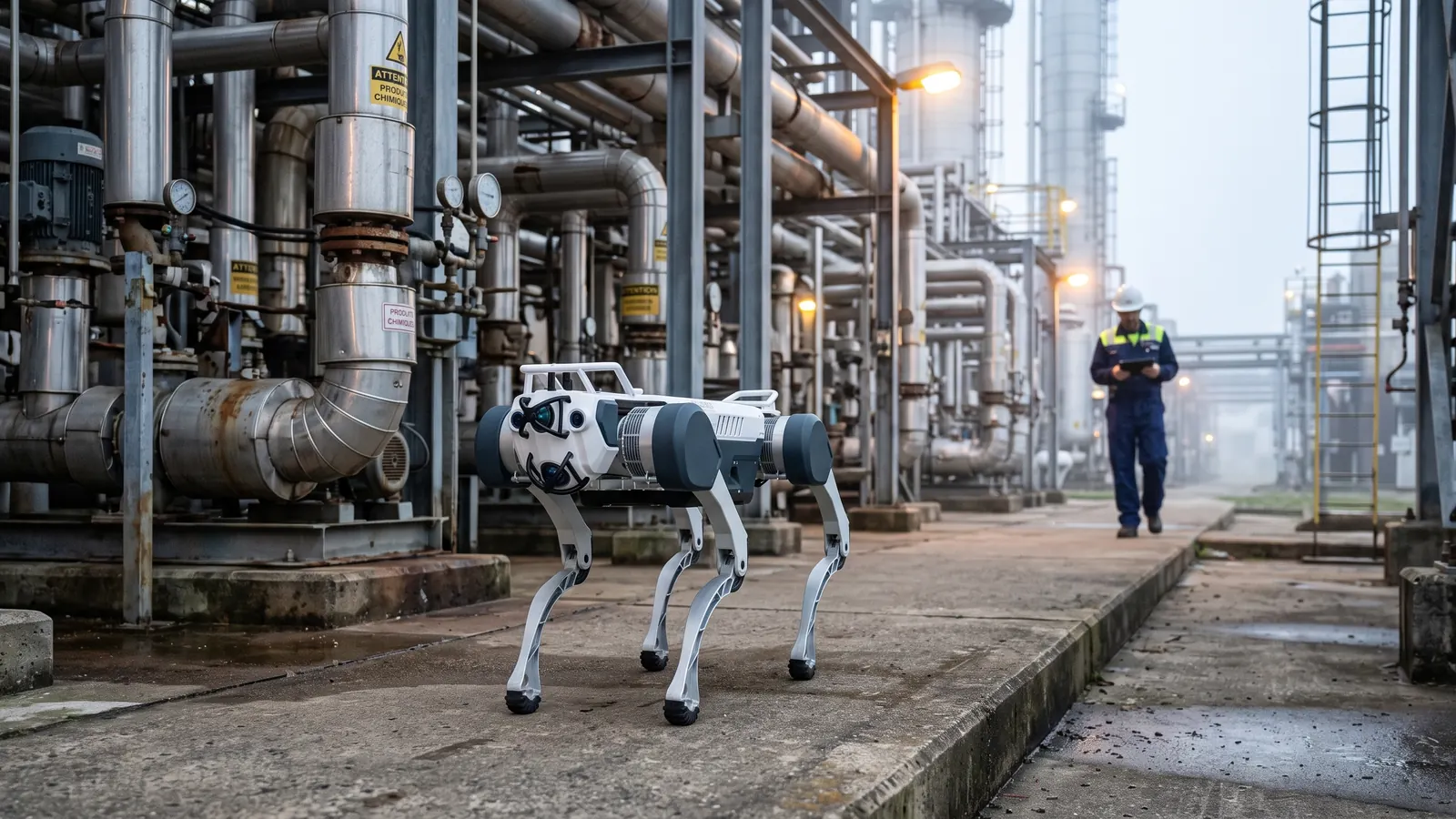 Industrial inspection roundsThe robot walks the same route every day, stops at the same points and records images, temperatures and readings. Technicians review the deviations and step in where needed.
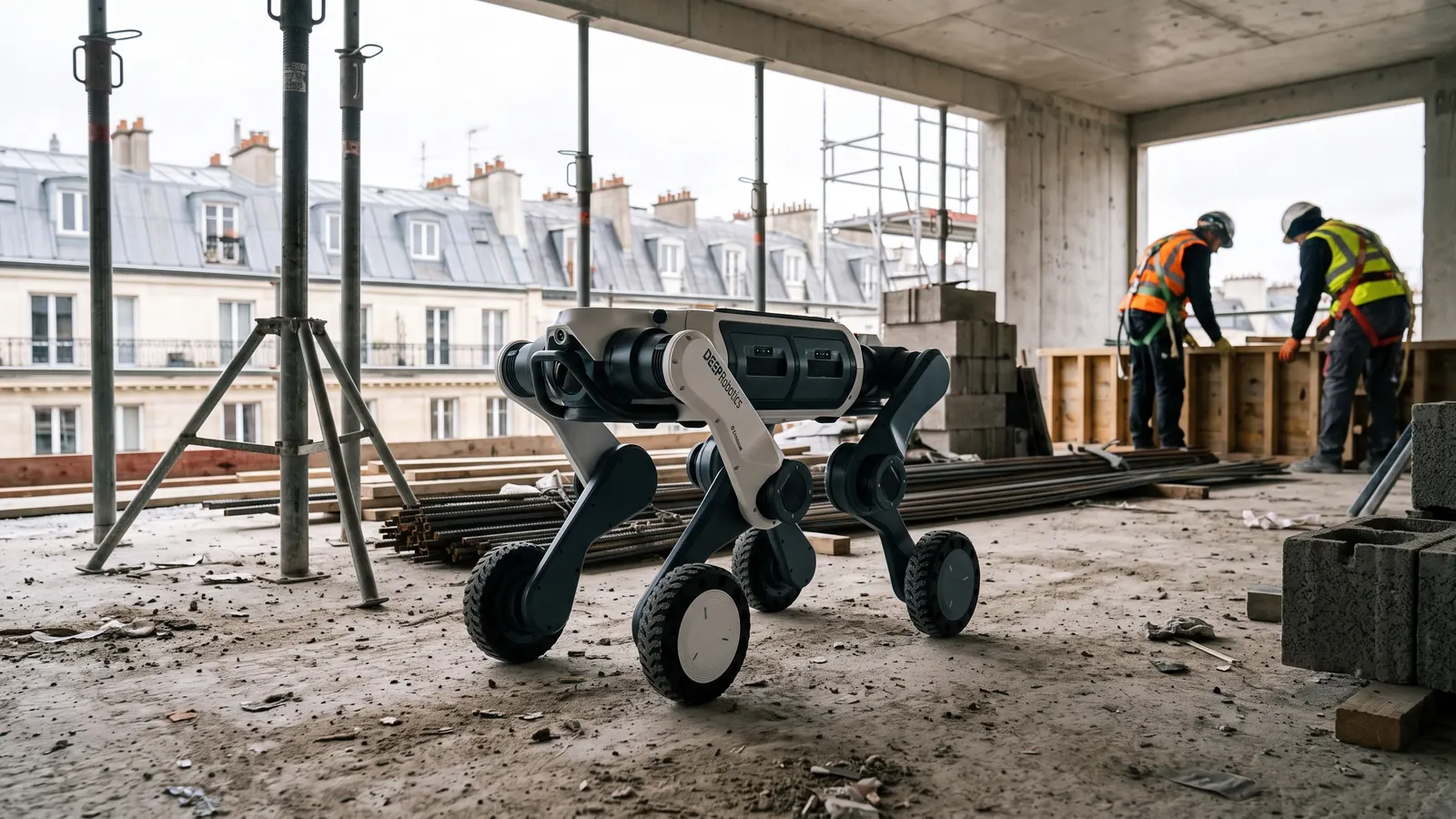 Construction site monitoringThe robot walks the site on a fixed route and brings back point clouds, photos and video. The site manager compares progress week by week without walking the whole site again.
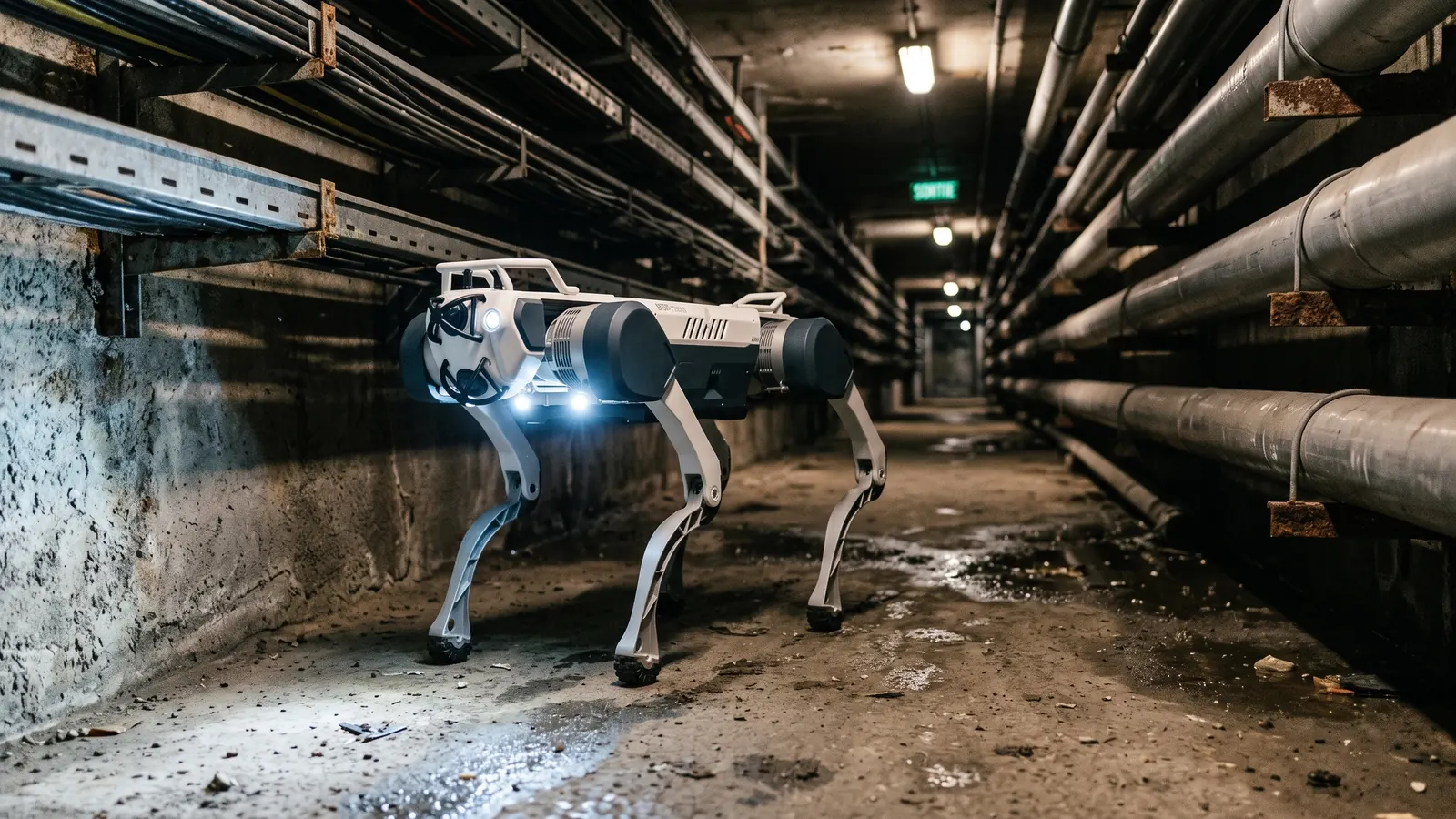 Tunnel and utility inspectionThe robot walks utility tunnels, road tunnels and underground car parks and brings back dated images and readings. Staff keep their descents for repairs.
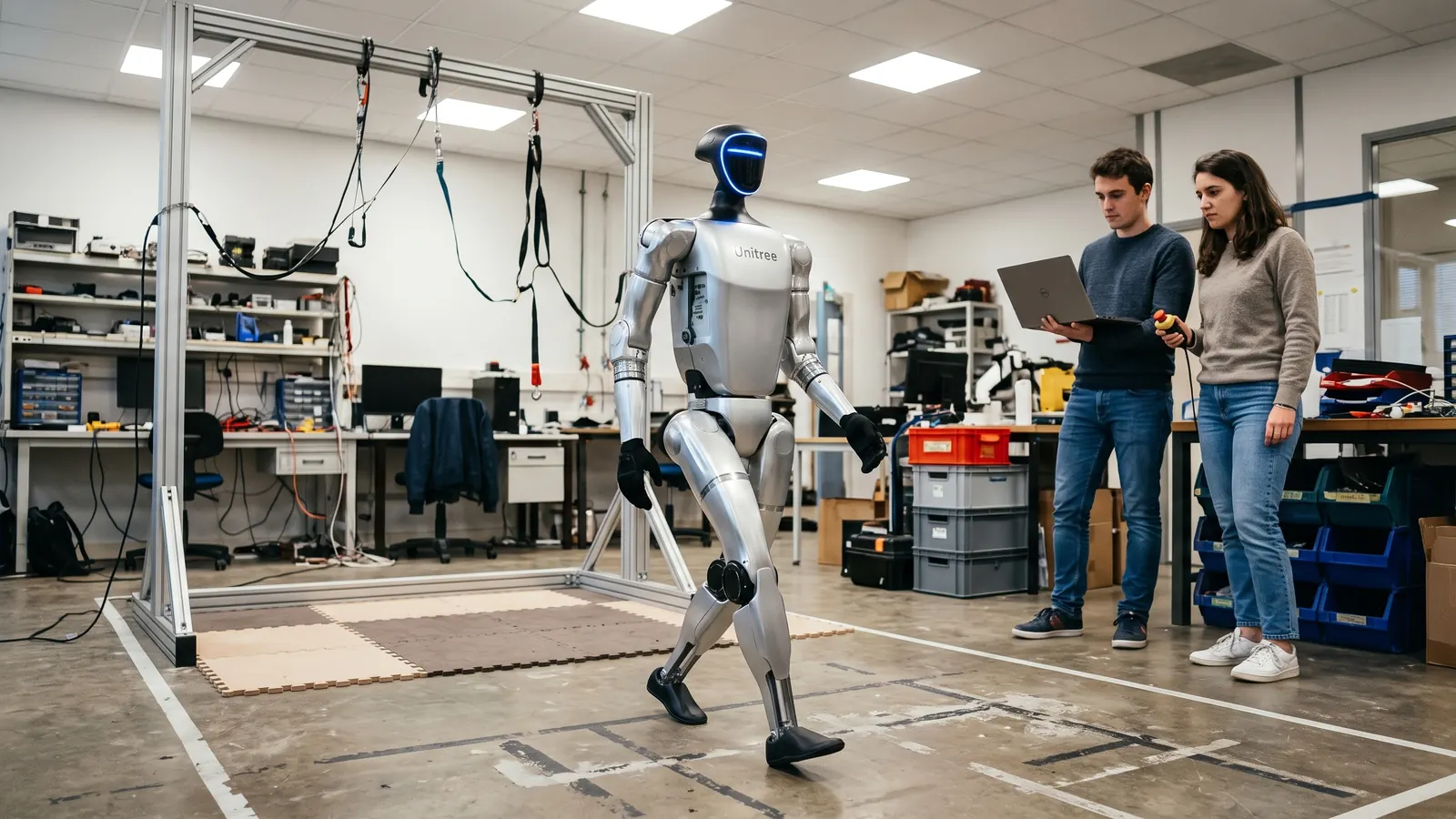 Humanoid researchThe lab works on a real humanoid body: it trains policies in simulation, transfers them to the robot and measures what holds up in the real world.
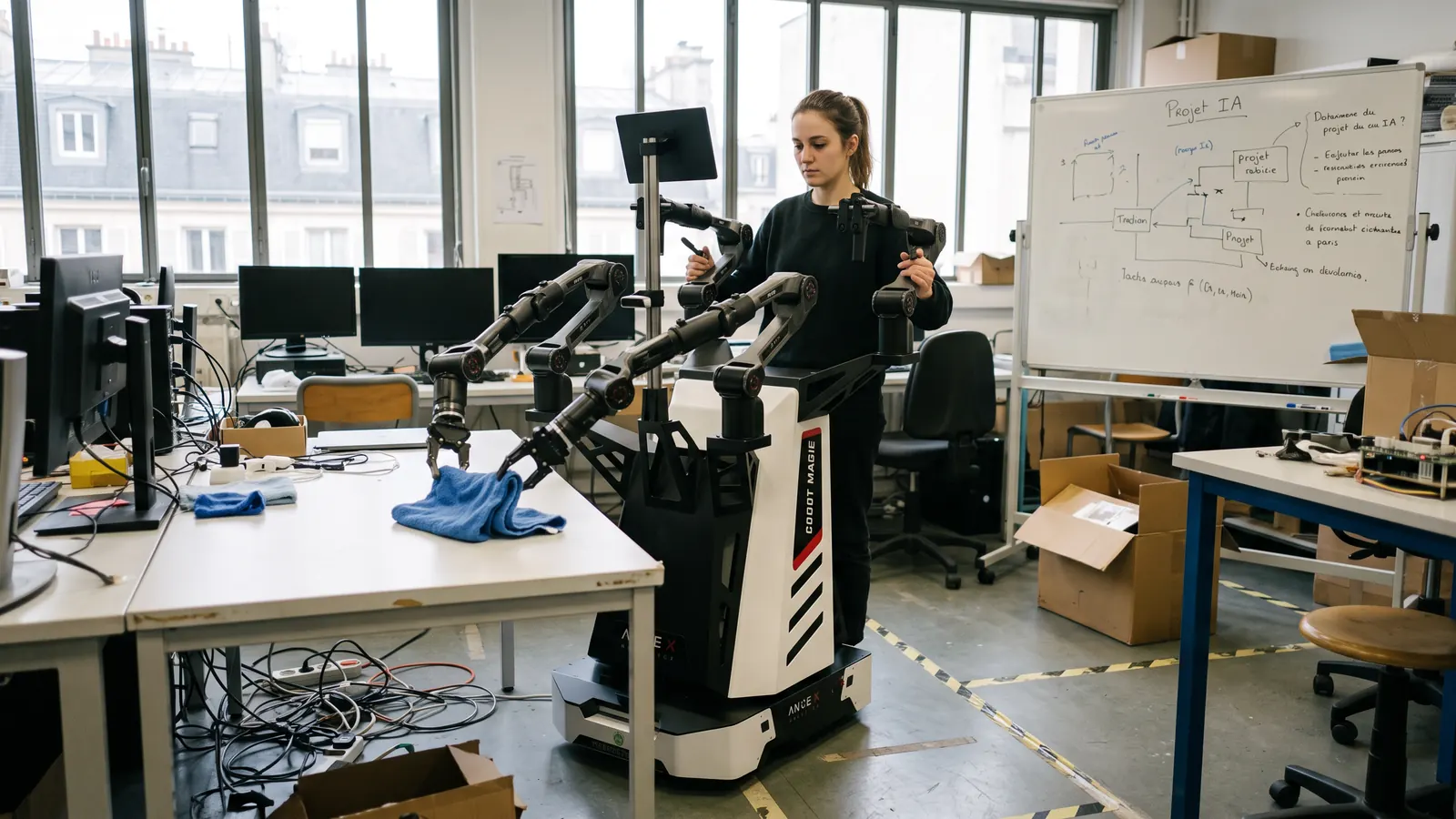 Teleoperation data collectionAn operator guides the robot's arms as if making the move by hand. Each demonstration records motion and images and becomes training data for the model.
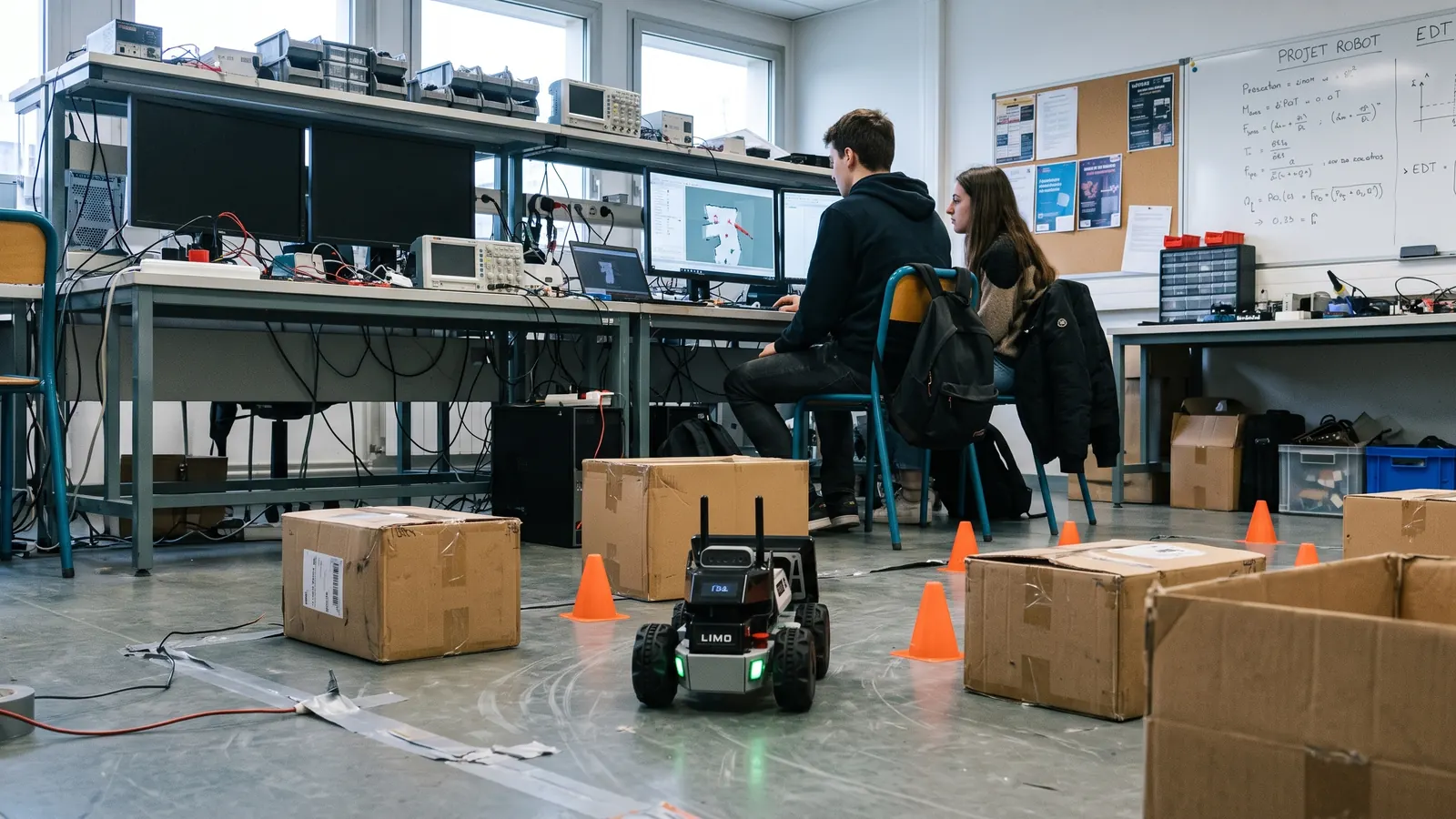 Mobile robotics and ROS 2Students map, localise and navigate a real robot. What worked in simulation meets reflections, noisy sensors and cluttered corridors.
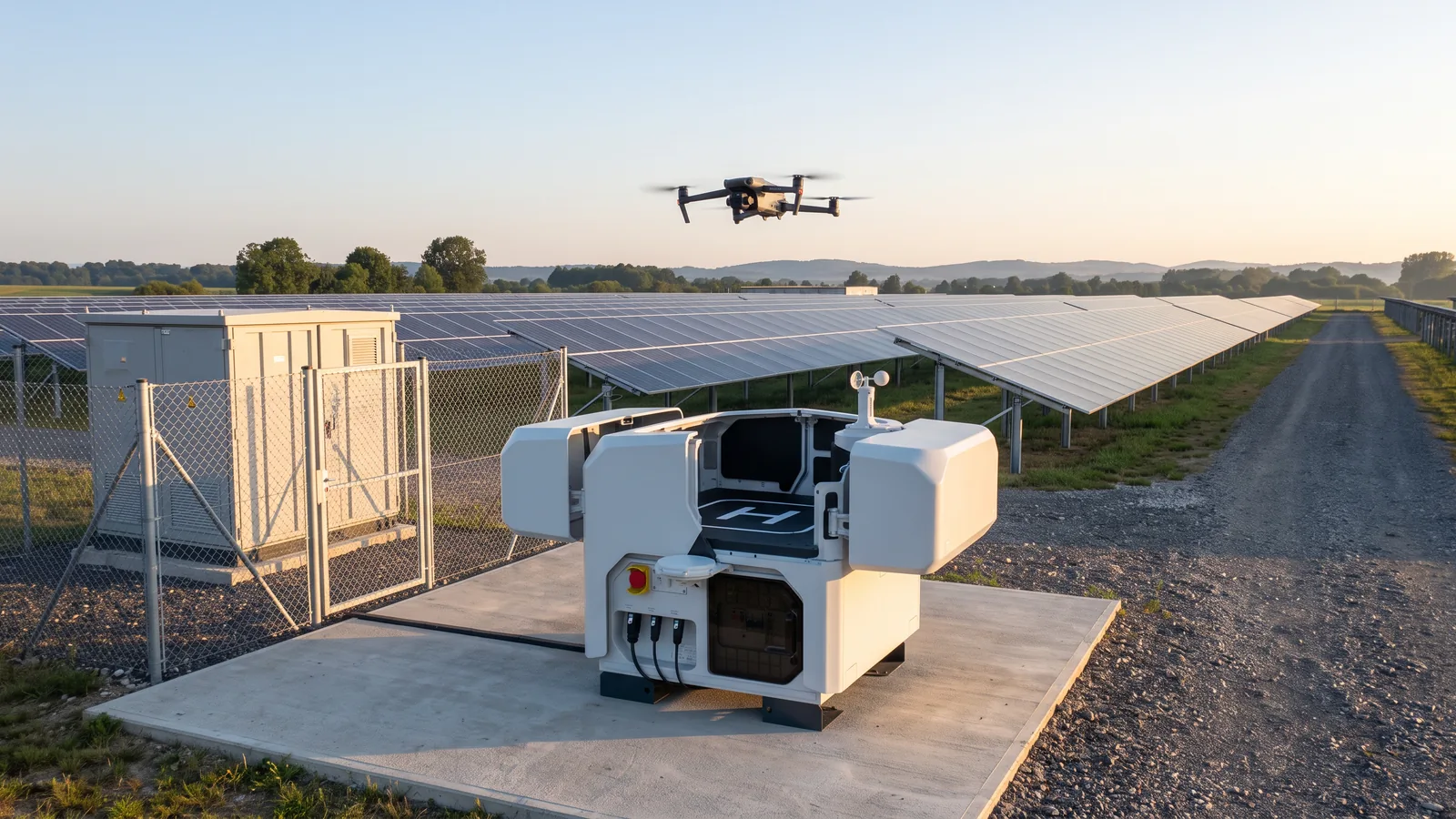 Drone inspection of solar and industrial sitesThe drone flies over modules, roofs, networks and equipment and brings back visible and thermal images, piloted on site or launched from an automated dock. Technicians keep the analysis, decisions and repairs.
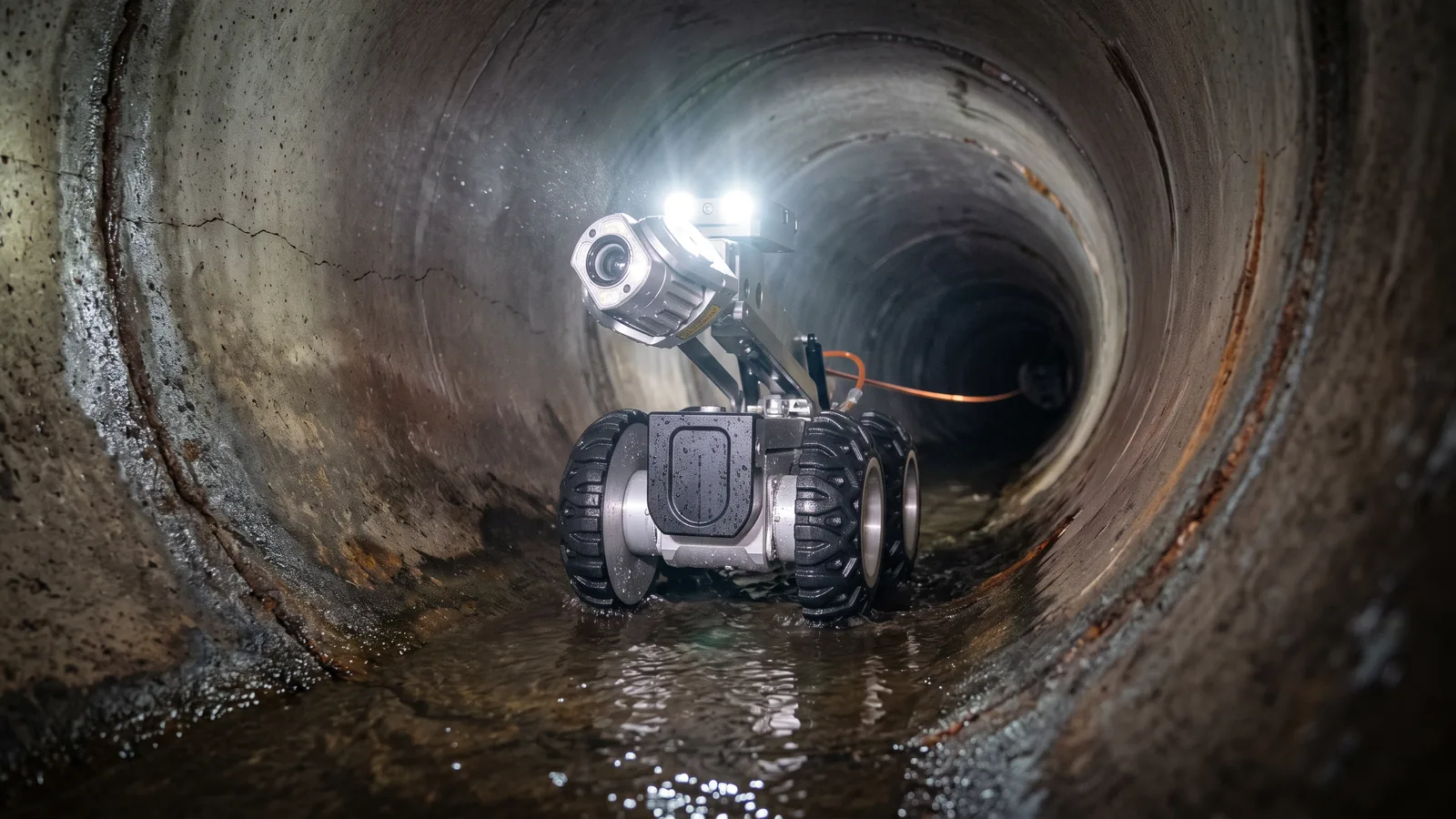 CCTV inspection of sewer pipesThe camera robot travels the sewer from the manhole and films the pipe wall, controlled from the surface. Technicians keep the diagnosis, defect coding and the choice of works.
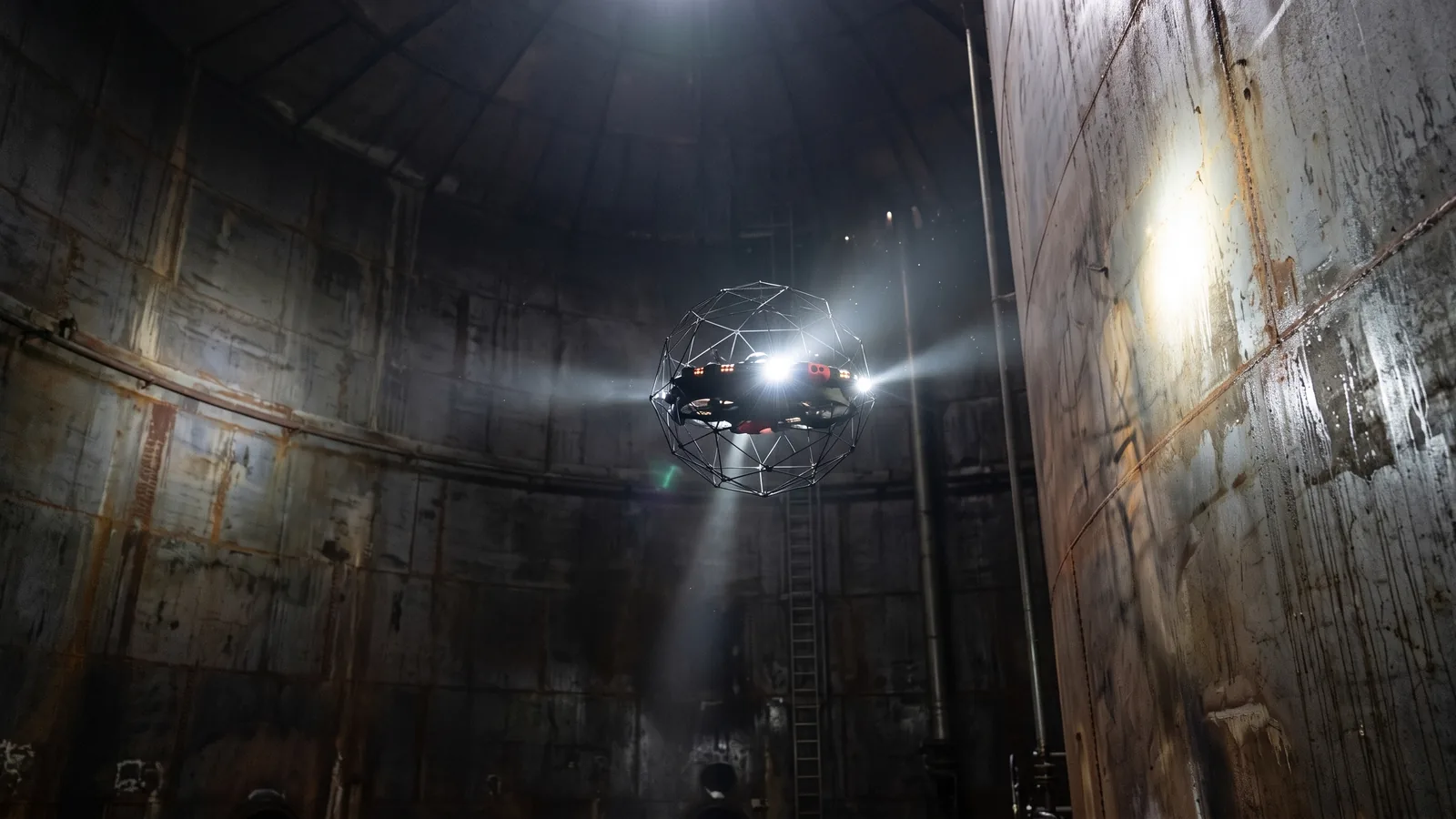 Confined-space drone inspectionThe drone goes into the tank, boiler or silo instead of the inspector and brings back images, video and 3D data. Inspectors keep the analysis, the regulatory measurements and the repair decisions.
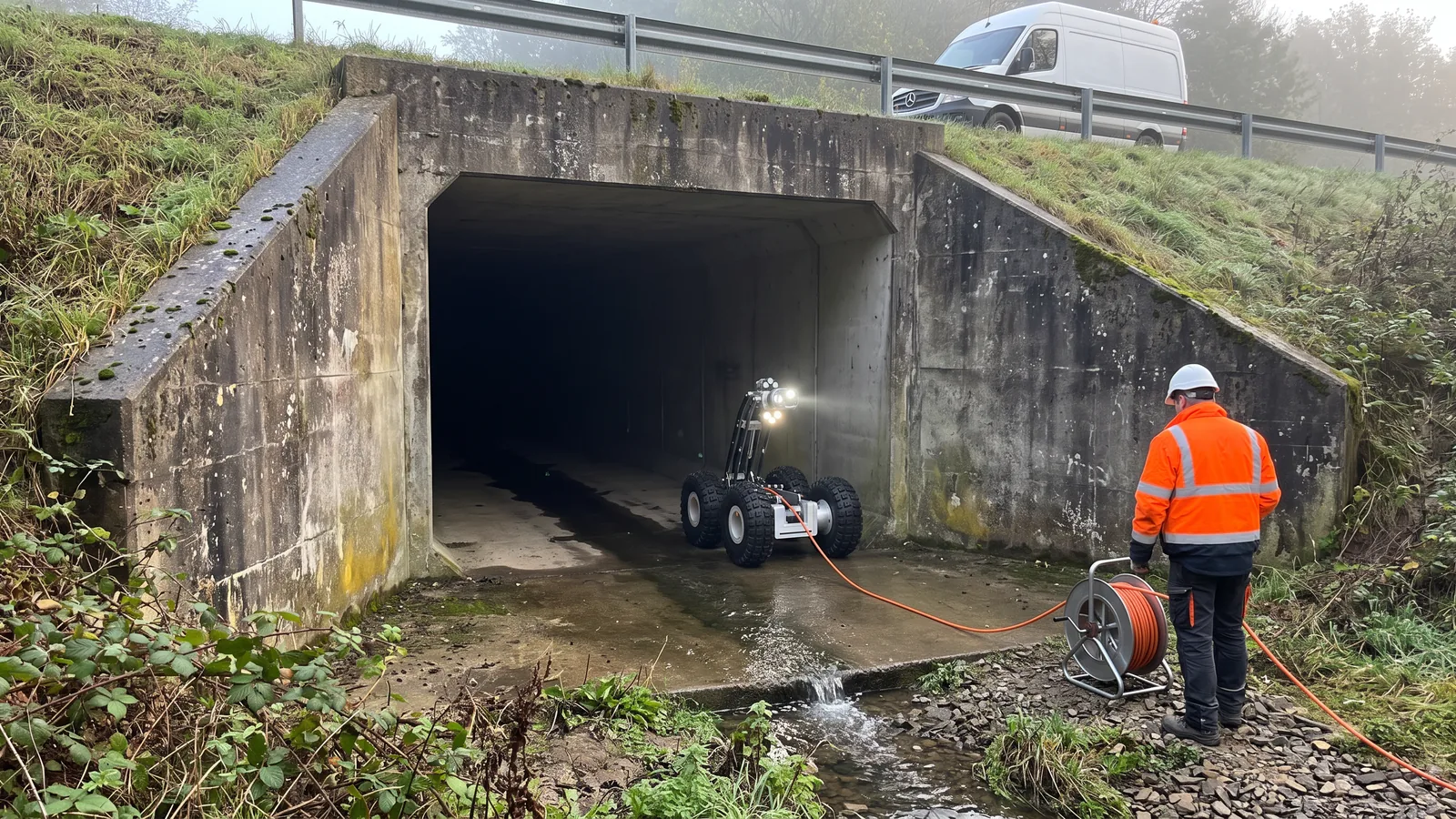 Large sewer and culvert inspectionThe robot travels through large trunk sewers, egg-shaped collectors and culverts under roads, camera centred in the section, driven from the surface. Sewer crews only go in to carry out work.
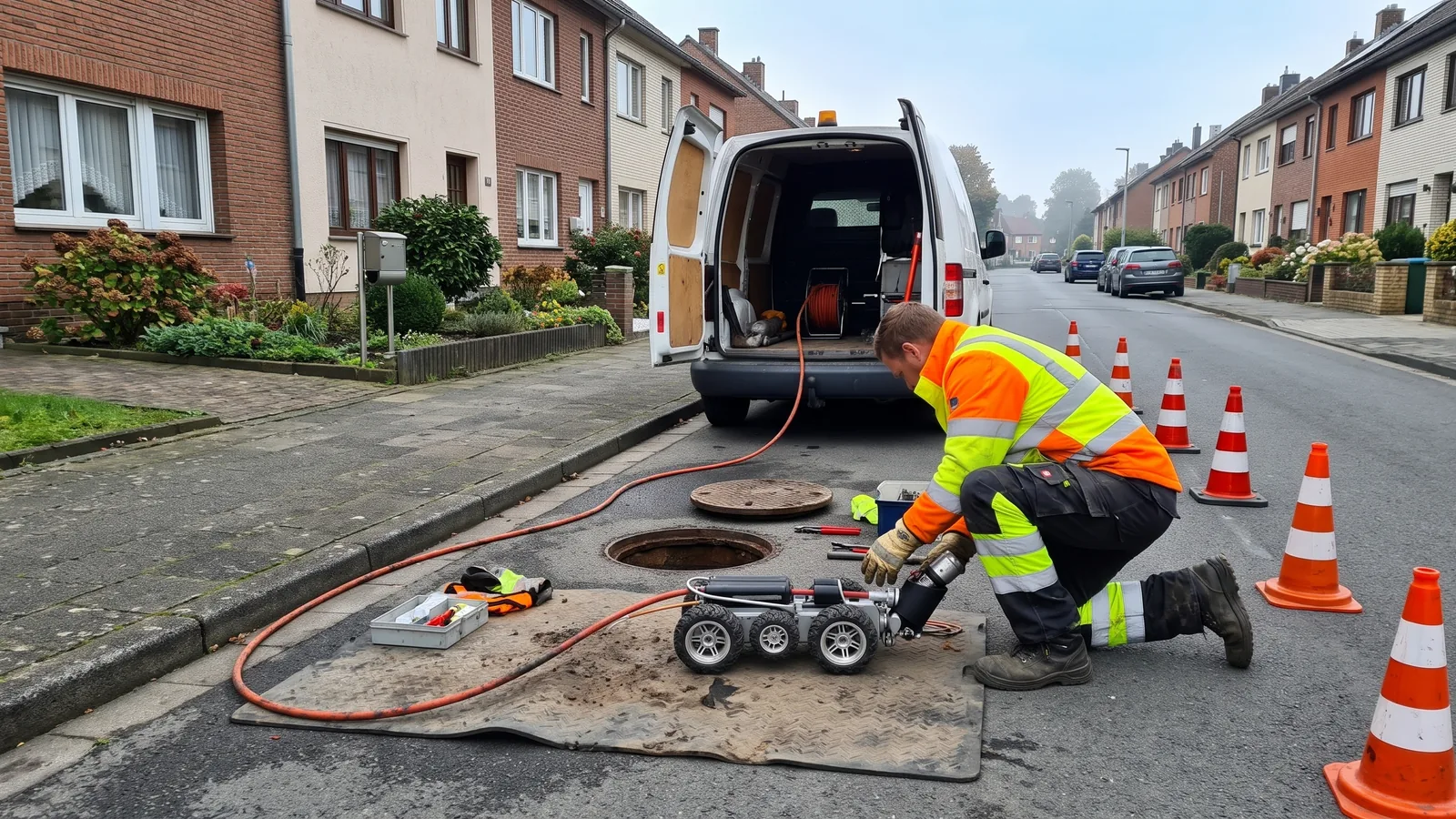 Sewer lateral inspection with a satellite cameraThe crawler drives along the main, stops at the connection and pushes a small pan-tilt camera into it. The building's lateral is inspected without opening the road or entering the property.
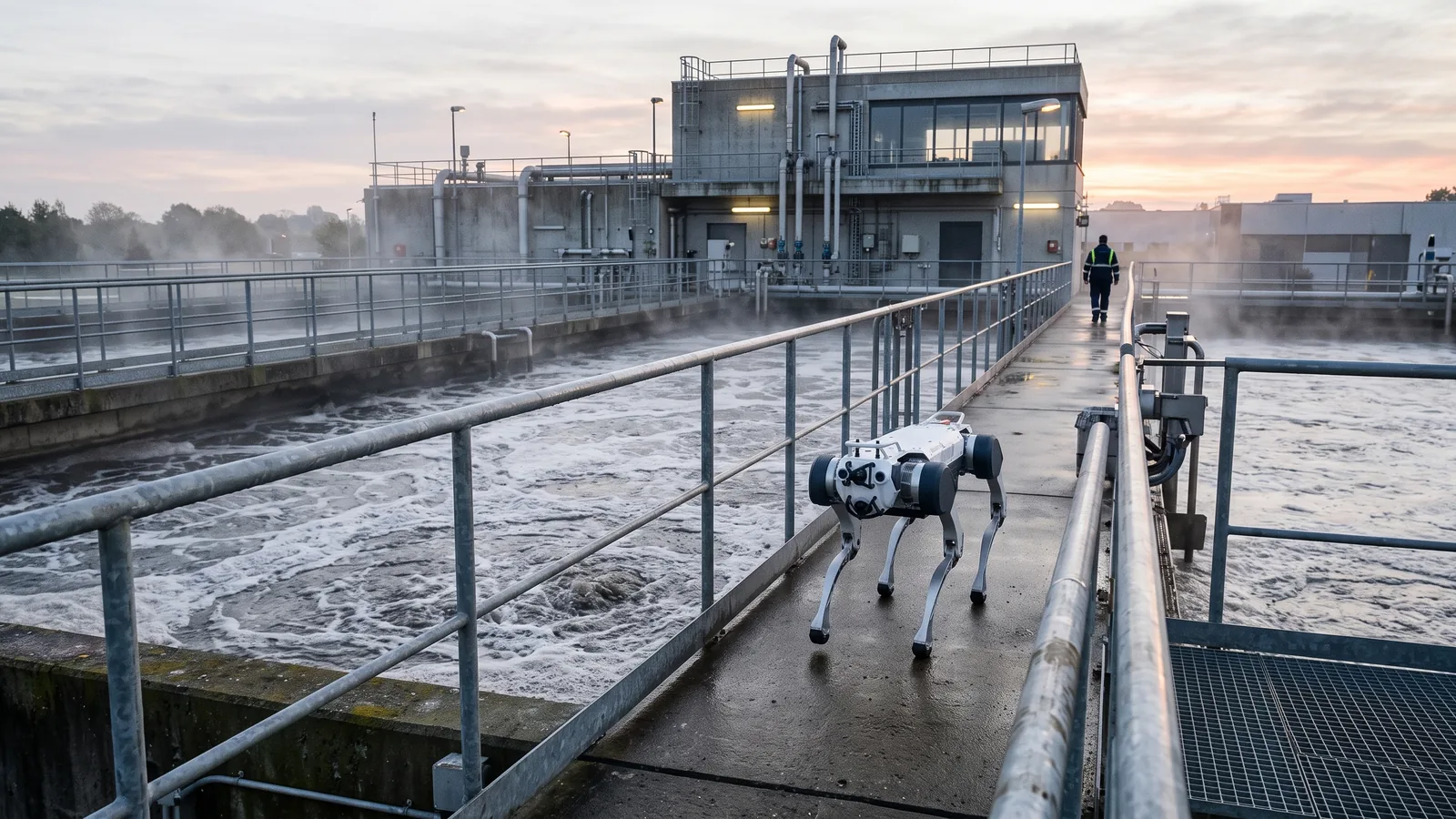 Inspection rounds in water treatment plantsThe robot tours basins, pumps and cabinets at set times and brings back images, temperatures and readings. Operators focus on deviations and running the process.
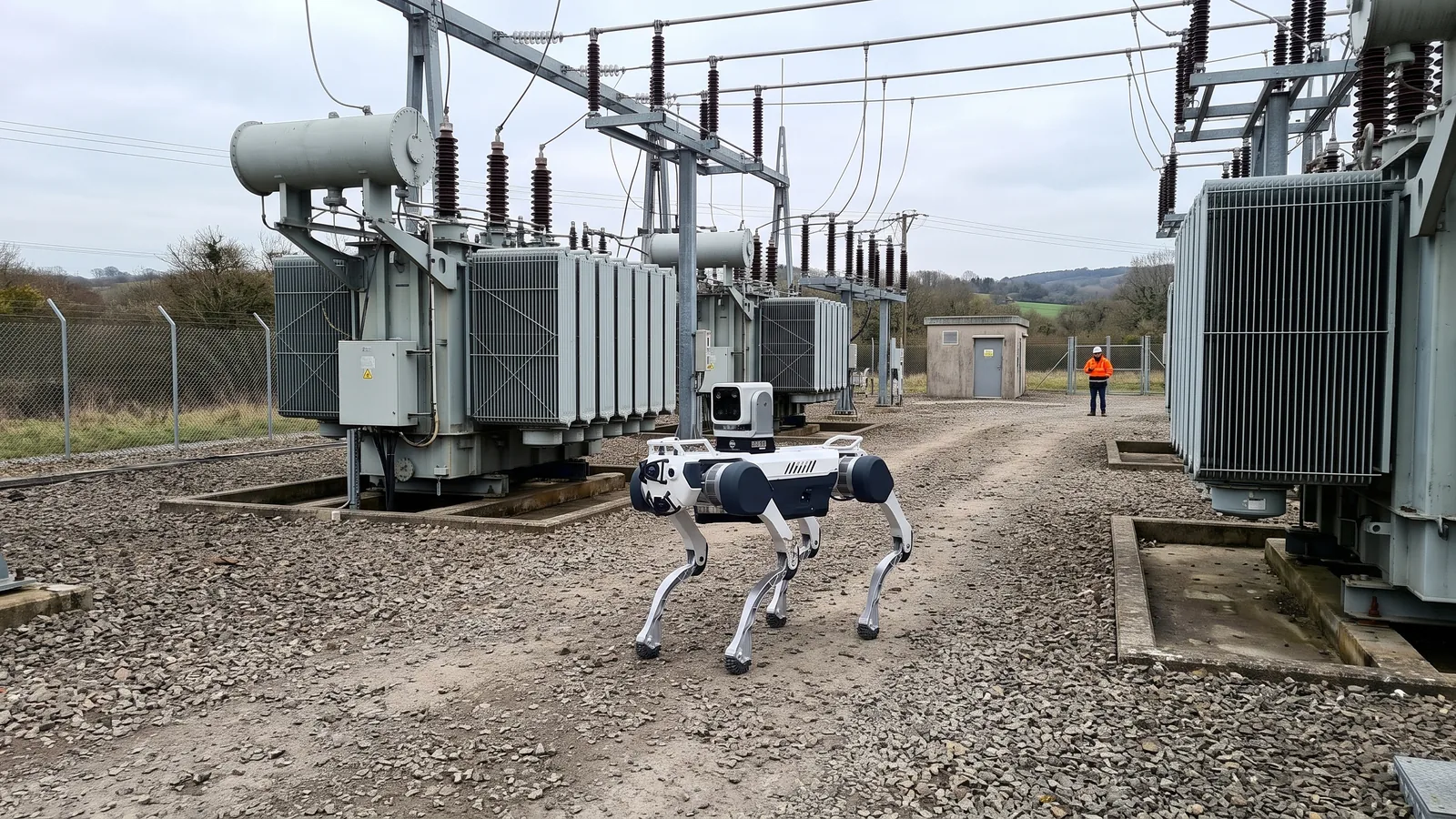 Electrical substation inspectionA ground robot patrols the substation aisles and a docked drone flies over the equipment. Together they record temperatures, gauges and visual condition, without sending someone out for every round.
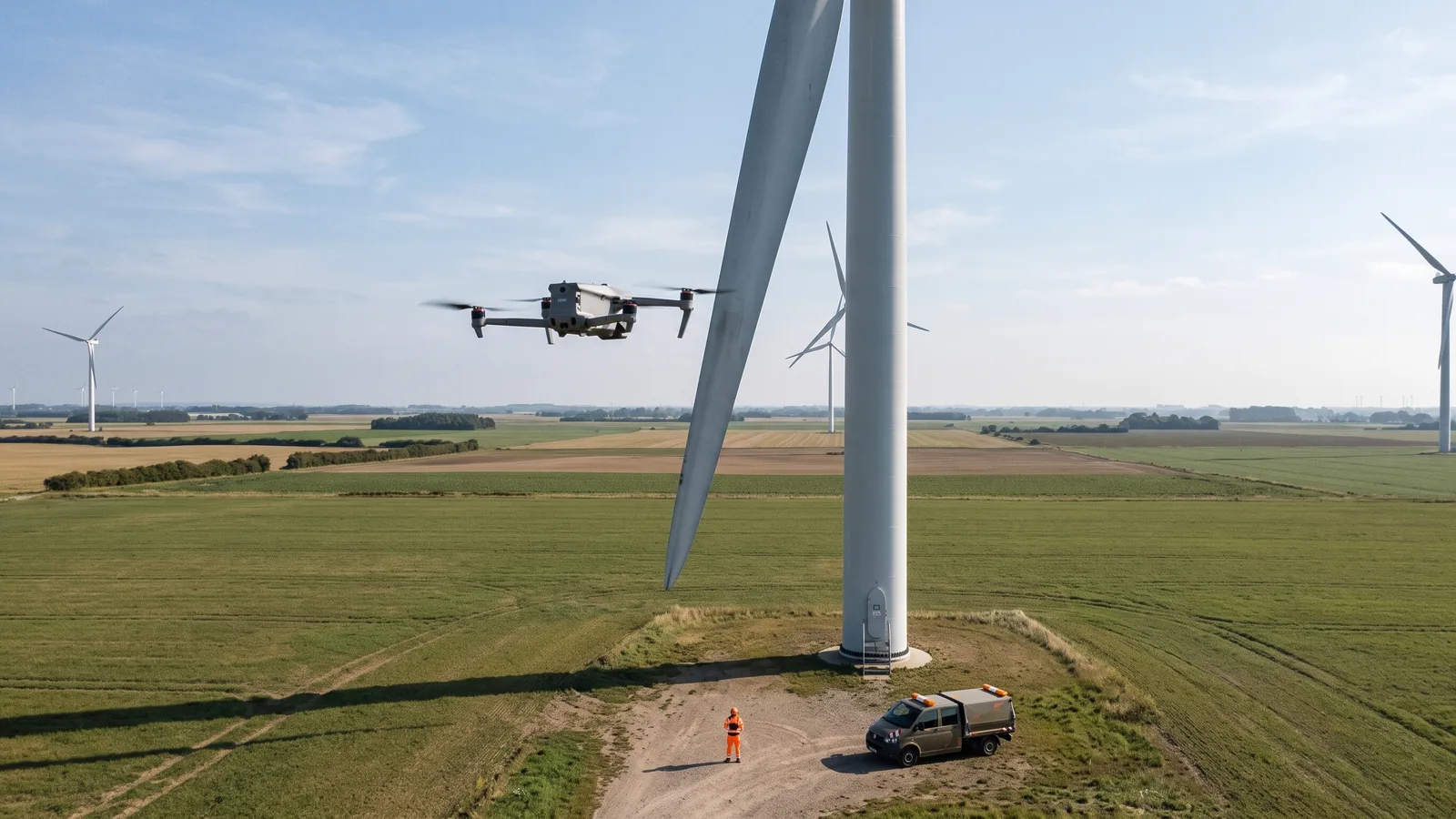 Drone inspection of power lines and wind turbinesThe drone flies along the lines and around the turbines, taking visible and thermal images of insulators, connections and blades. Maintenance crews only work at height on confirmed defects.
Robots, acquisition mode and delivery terms, in one written proposal.