Pipe and sewer inspection
- Key feature
- 400–2,000 mm pipe
- Key feature
- Up to 500 m cable
- Key feature
- 2-speed gearbox
On order
Price on request
Updated
USE CASE · WATER AND UTILITY NETWORKS
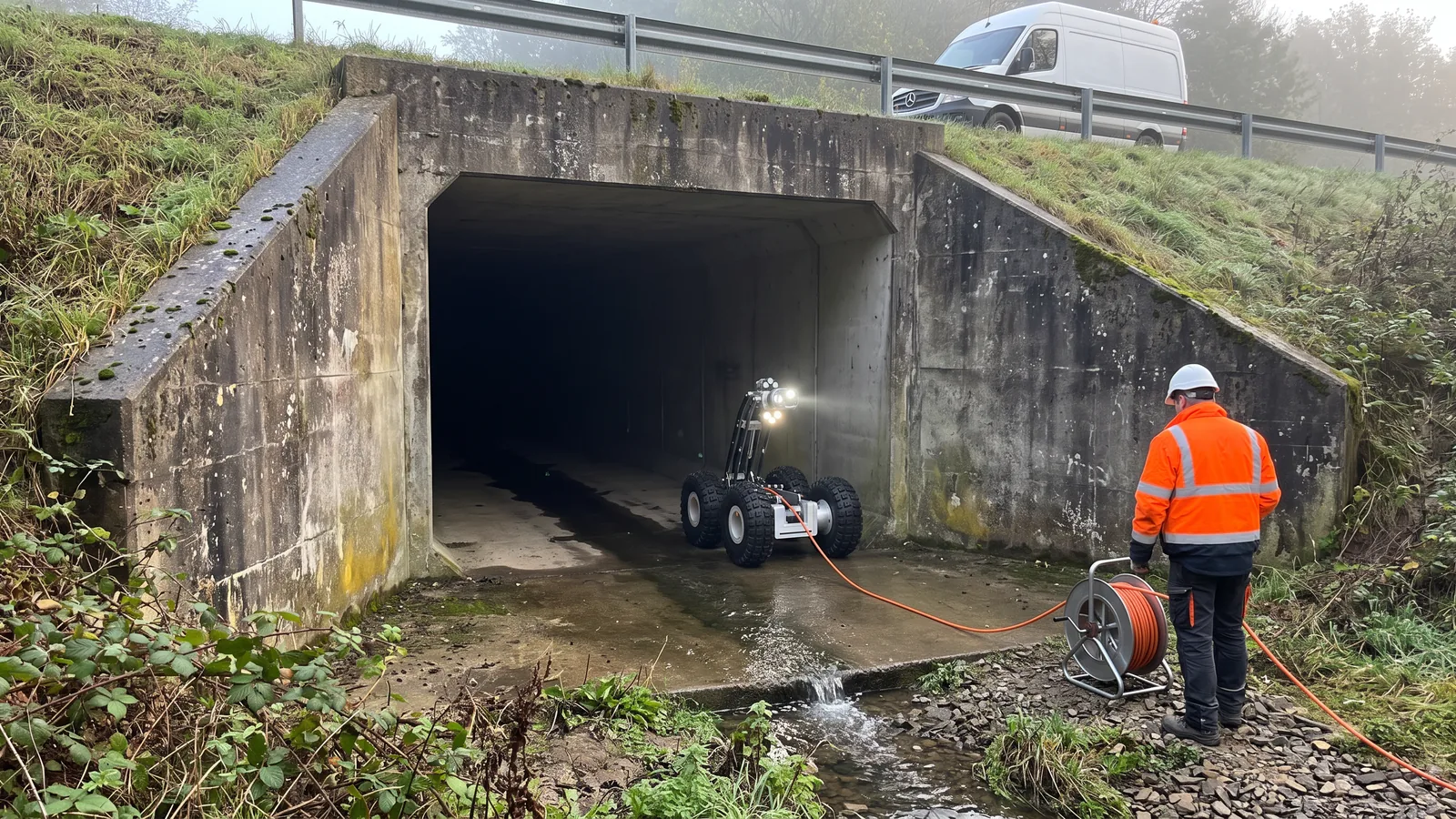
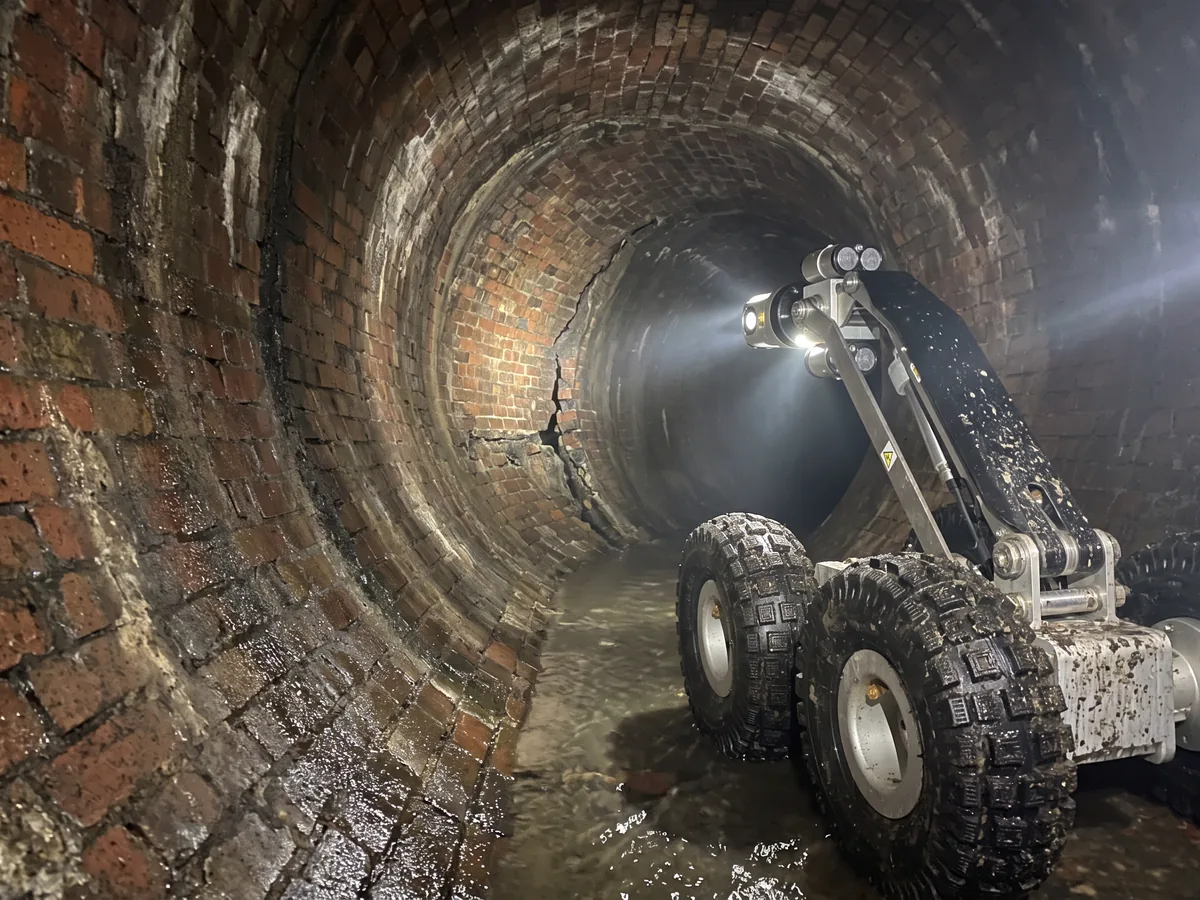
The robot travels through large trunk sewers, egg-shaped collectors and culverts under roads, camera centred in the section, driven from the surface. Sewer crews only go in to carry out work.
Updated
A large-diameter sewer inspection robot is a tethered camera crawler that lifts its camera to the centre of large pipes and inspects trunk sewers, egg-shaped collectors, box culverts and storm drains without man entry.
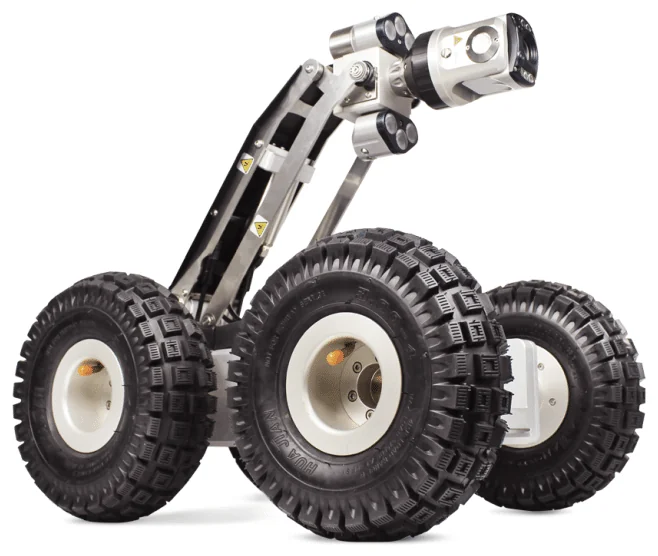
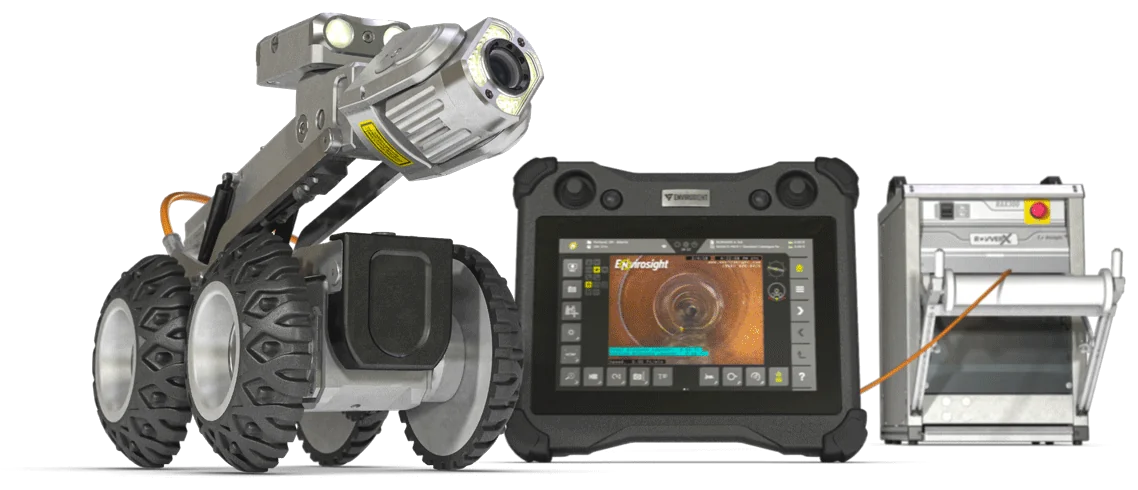
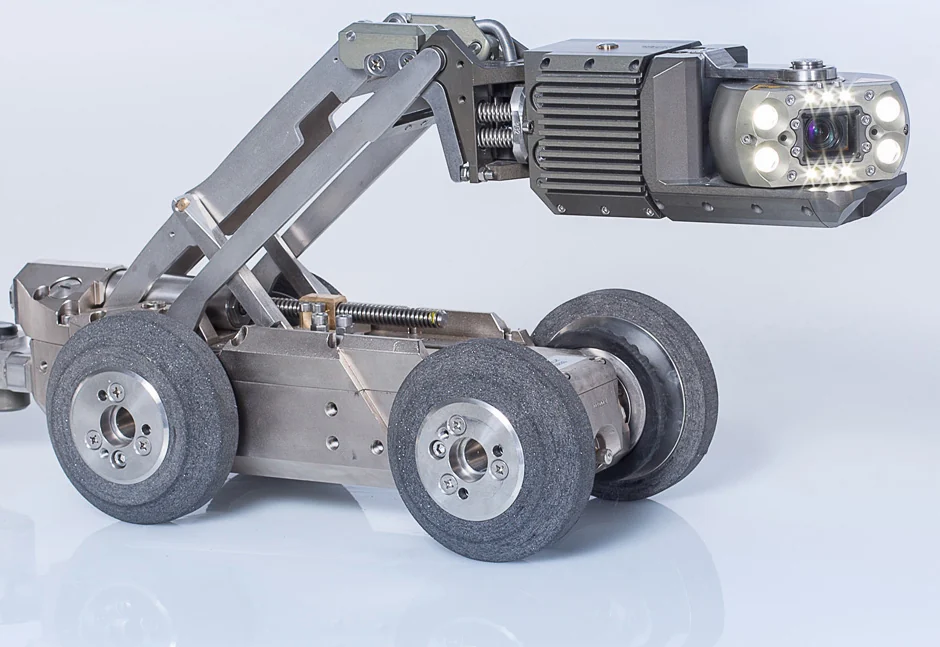
The iPEK ROVION RX400 works from DN400 to DN2000, with four-wheel drive, a two-speed gearbox, an automatic camera lifter and up to 500 m of cable, according to its manufacturer.
Robot Distribution selects the crawler and accessories for your structures, delivers it, trains your teams and maintains it, to buy, rent or as RaaS.
WHY
Large trunk sewers, walk-in egg-shaped collectors and culverts under roads or railways are often inspected on foot. Man entry is confined-space work: ventilation, gas detection, a surface watch and often flow diversion.
A large crawler records the same survey from the surface. The camera is raised to the centre of the section to see the whole wall, defects are measured and located, and the crew only goes in for the work decided from the report.
HOW IT RUNS
We locate accesses, manholes and culvert heads, check the section shape (circular, egg-shaped, box) and the water level. Crawler, wheels and lifter are chosen accordingly: the IBAK T76 covers egg-shaped profiles DN400 to DN1400 and reaches DN3000 with the HeightFlex attachment, according to its manufacturer.
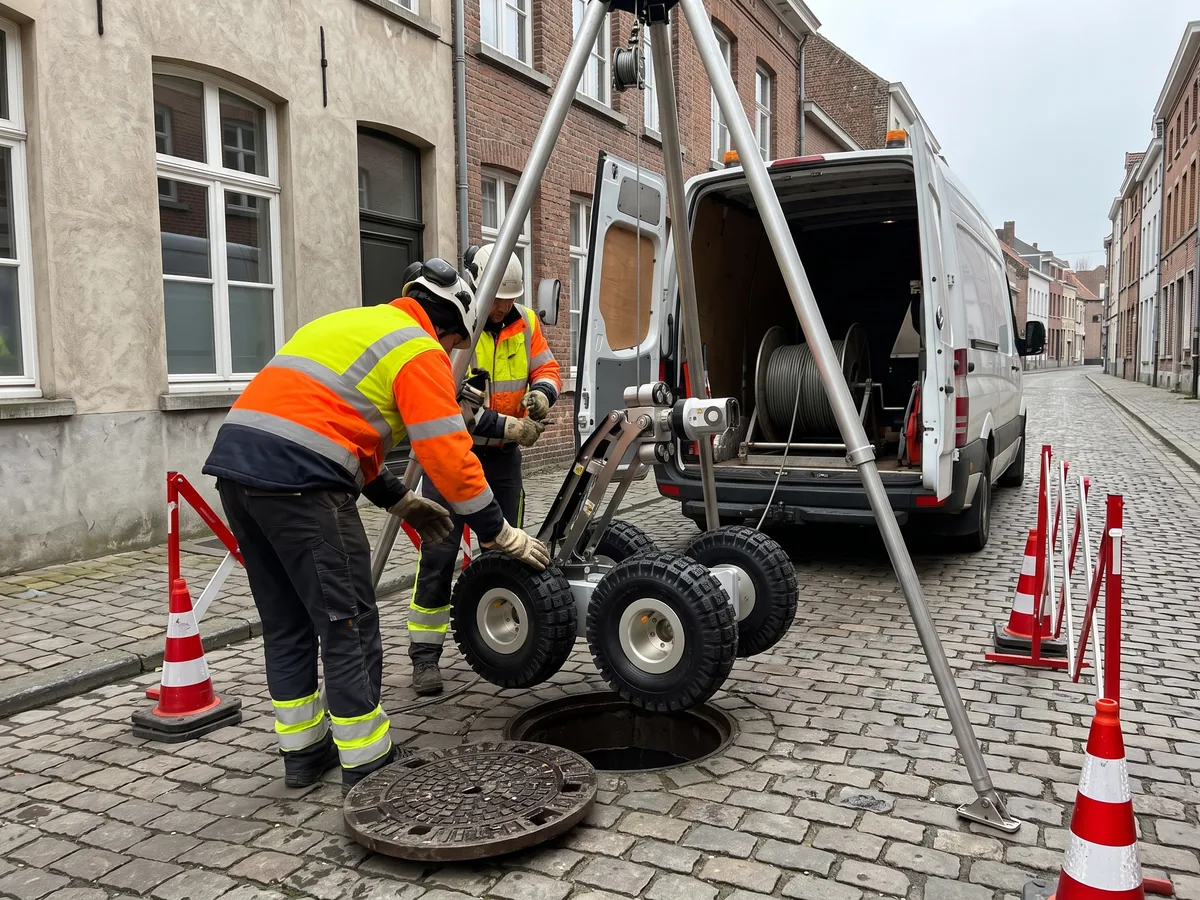
The crawler is lowered through the manhole or placed at the culvert entrance, then connected to its reel. The Minicam Proteus CRP300 works from 300 to 1,000 mm, and up to 2,200 mm with the CEP300 elevation platform, according to its manufacturer.
The operator drives from the surface, centres the camera, points it at joints, cracks and connections, and records the distance of each observation. On long runs cable length matters: 300 or 500 m on the Envirosight ROVVER X reels, according to its manufacturer.
Observations are coded to the European standard EN 13508-2, illustrated with photos and gathered in a report per section, used to plan cleaning, rehabilitation or structural repair.
THE ROBOTS
Pipe and sewer inspection
Minicam
Pipe and sewer inspection
IBAK
Pipe and sewer inspection
Pipe and sewer inspection
Pipe and sewer inspection
BEFORE INSTALLING
The diameter range and section shapes decide the crawler and lifter: DN400 to DN2000 for the iPEK ROVION RX400, 5.5 to 60 in (about 140 to 1,520 mm) for the Rausch L 135, according to their manufacturers.
Manhole size, culvert heads, distance between accesses and where the vehicle can park set the cable length and how the crawler is deployed.
Water level, flow and deposits are noted: cleaning or flow diversion may be needed for the camera to see the invert.
In networks where an explosive atmosphere is possible, the equipment must suit it: the IBAK T76 is available with an explosion-protection option, according to its manufacturer.
FAQ
According to the manufacturer: DN2000 for the iPEK ROVION RX400, 2,200 mm for the Minicam Proteus CRP300 with its elevation platform, DN3000 for the IBAK T76 with the HeightFlex attachment, and 96 in (about 2,400 mm) for the Envirosight ROVVER X depending on crawler size.
For the visual survey, in most cases: it films, measures and locates defects from the surface. Physical work, sampling and some checks are still done by a crew, under confined-space procedures.
Yes, with the right equipment: the IBAK T76 is rated for egg-shaped profiles DN400 to DN1400 by its manufacturer. For box culverts, the survey checks invert width, height and the lighting needed.
Yes. The RX130 crawler of the Envirosight ROVVER X is IP68 to 1 bar, and the Rausch L 135 is nitrogen-pressurised with a leak sensor, according to their manufacturers. A high water level still hides the invert.
Yes: observations are coded to EN 13508-2, the European standard for describing the condition of drain and sewer systems. The report is produced section by section, with video and photos.
USE CASES
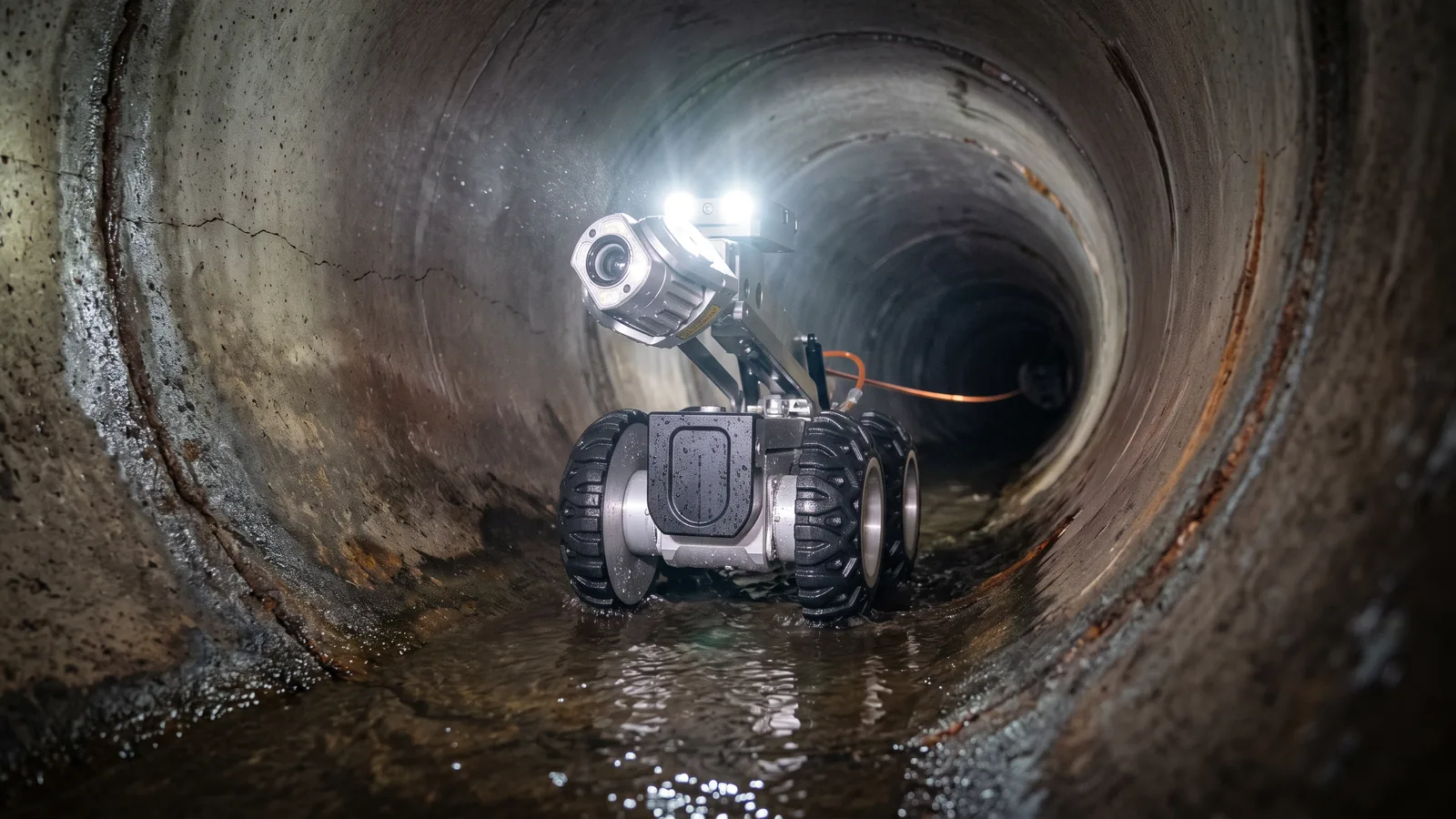 CCTV inspection of sewer pipesThe camera robot travels the sewer from the manhole and films the pipe wall, controlled from the surface. Technicians keep the diagnosis, defect coding and the choice of works.
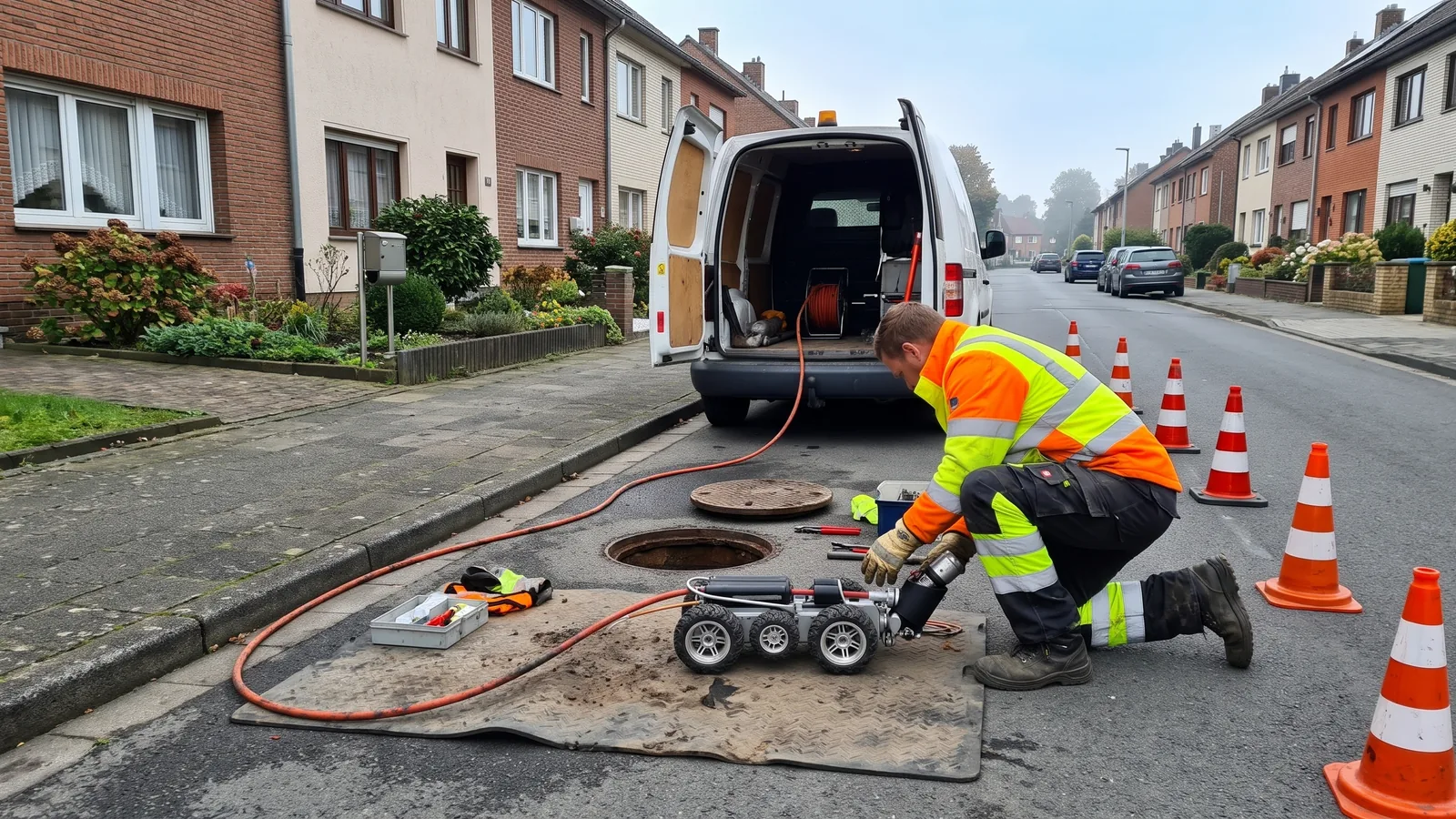 Sewer lateral inspection with a satellite cameraThe crawler drives along the main, stops at the connection and pushes a small pan-tilt camera into it. The building's lateral is inspected without opening the road or entering the property.
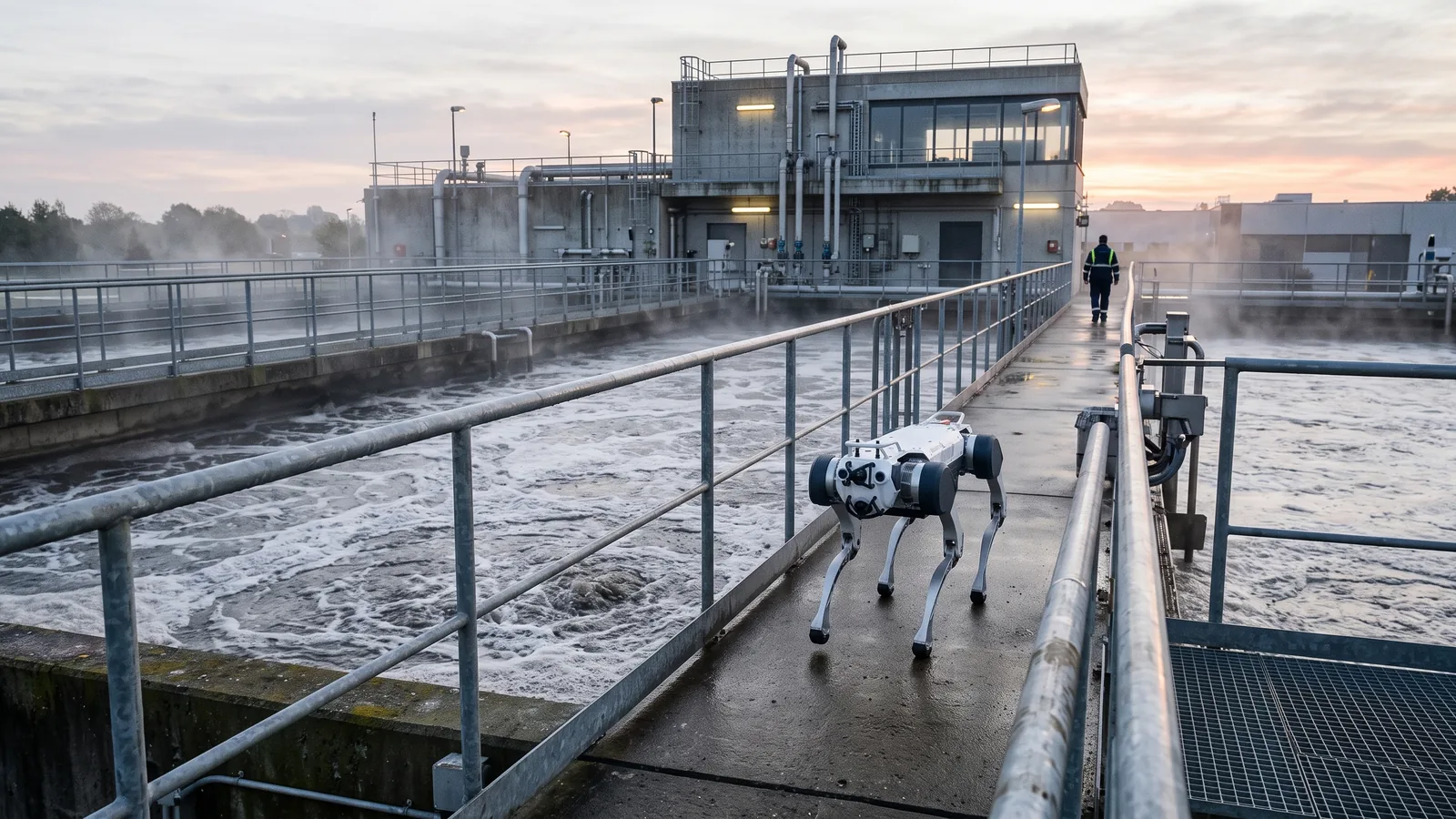 Inspection rounds in water treatment plantsThe robot tours basins, pumps and cabinets at set times and brings back images, temperatures and readings. Operators focus on deviations and running the process.
Robots, acquisition mode and delivery terms, in one written proposal.