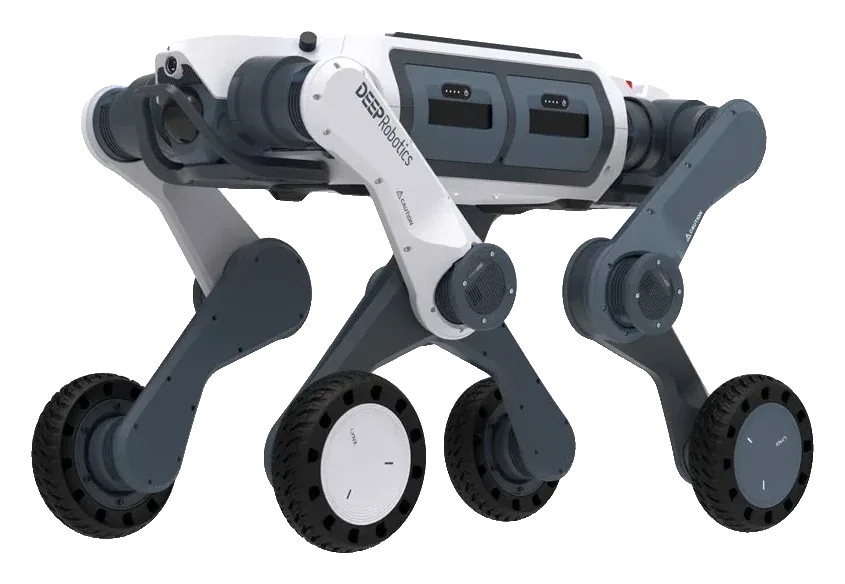
Quadrupeds
- Payload
- 15 kg
- Runtime
- 3 h
- Ingress protection
- IP66
On order
From €93,090 ex VATor €3,169/month in RaaS
Updated
USE CASE · CONSTRUCTION
The robot walks the site on a fixed route and brings back point clouds, photos and video. The site manager compares progress week by week without walking the whole site again.
Updated
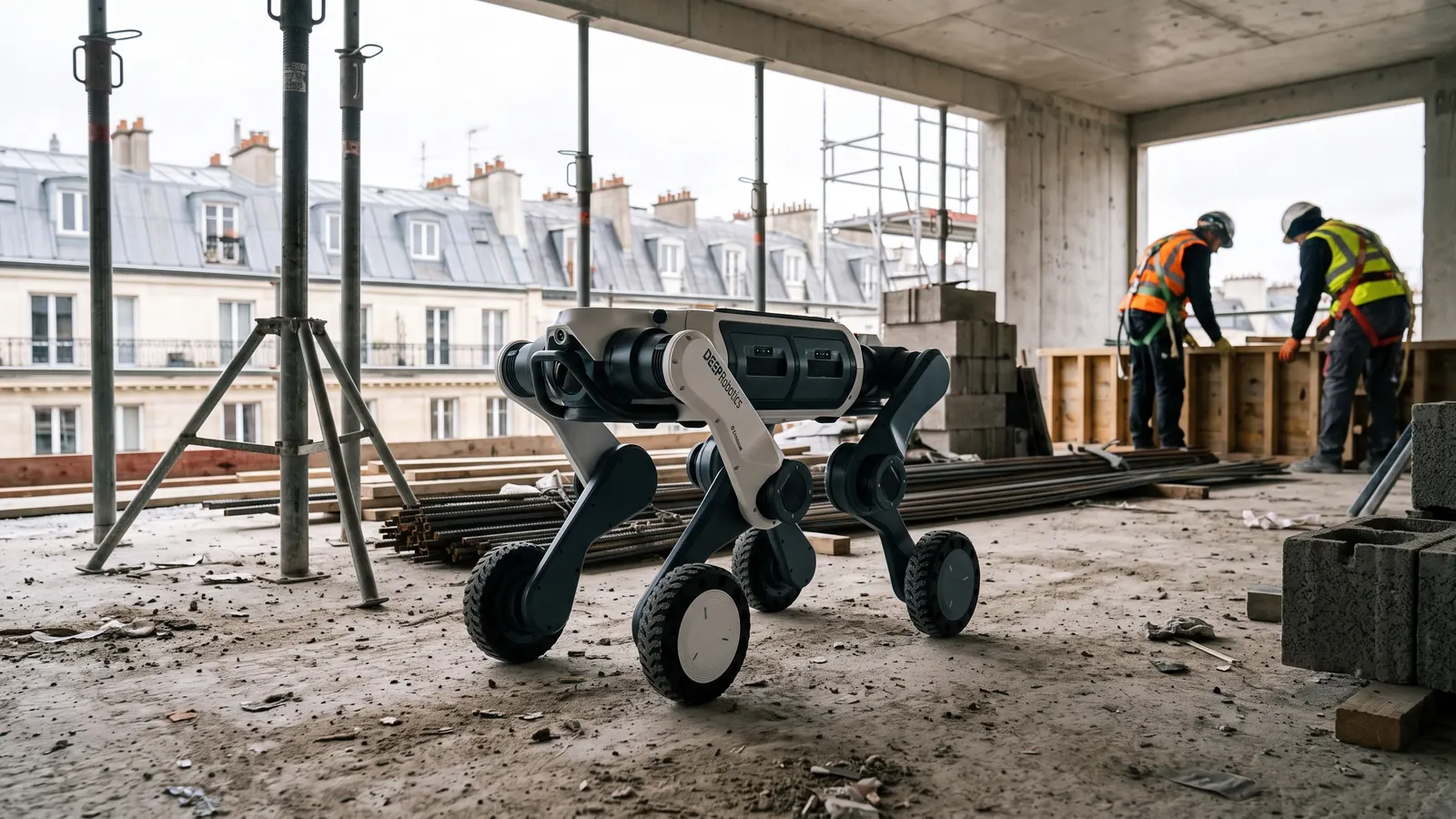
A site monitoring robot goes back to the same spots at regular intervals and brings back dated 3D scans, photos and video to track progress and spot deviations.
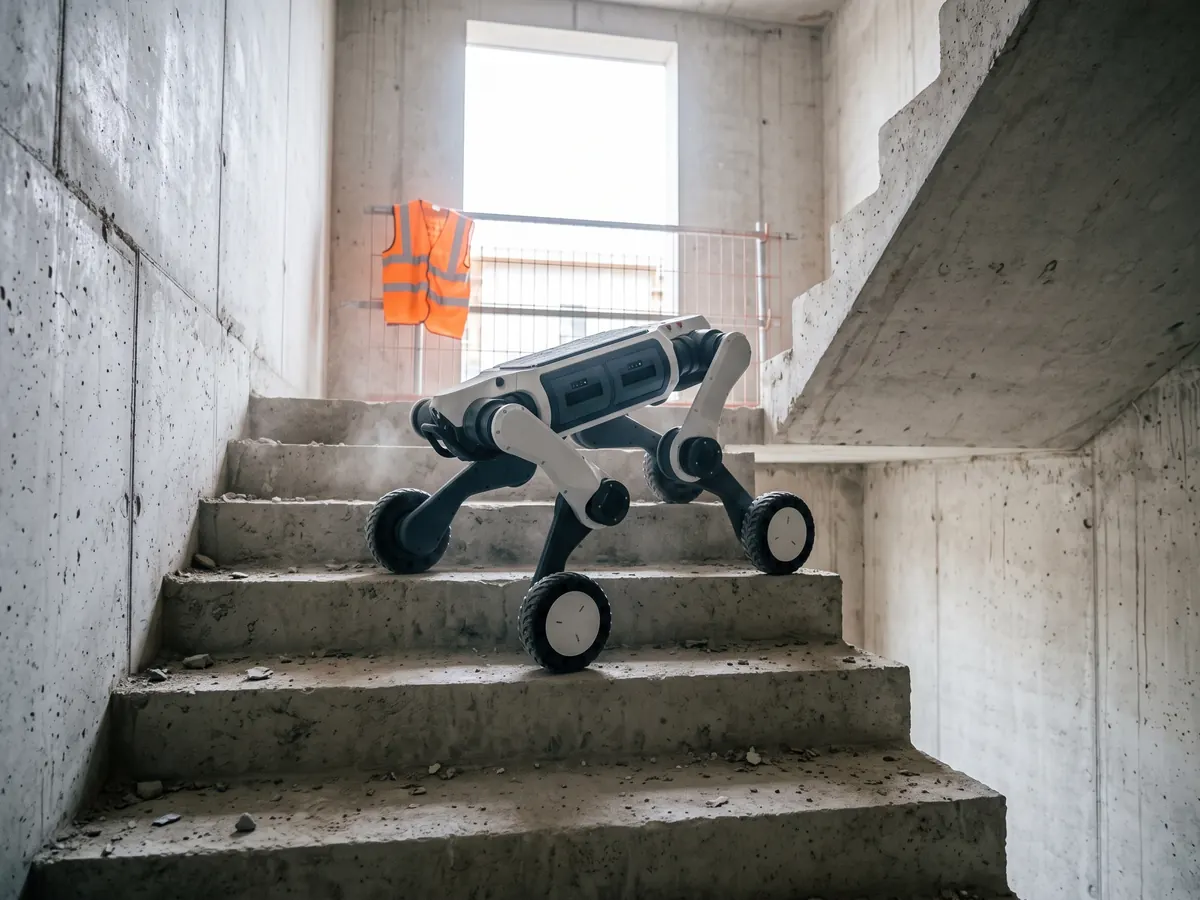
The DEEP Robotics LYNX M20 Pro climbs 25 cm stairs and 45° slopes, carries 15 kg and runs 3 h unloaded according to its manufacturer.
Robot Distribution fits the robot and its sensors to the site, records the routes and trains the site team, to buy, rent or as RaaS.
WHY
On a building or infrastructure site, knowing where each area stands takes time: walk-throughs, ad-hoc photos, occasional surveys. Week-to-week comparisons stay rough because nobody passes exactly the same spot twice.
The robot repeats the same route at every scan, across raw slabs, temporary stairs and rubble. The team gets a regular, comparable record, and end-of-day rounds on an empty site can be handed to it.
HOW IT RUNS
At commissioning the site is mapped and scan points are defined: floors, stairwells, services, risk areas.
It leaves its base, rolls on flat surfaces, walks over rubble and climbs raw stairs from one floor to the next.
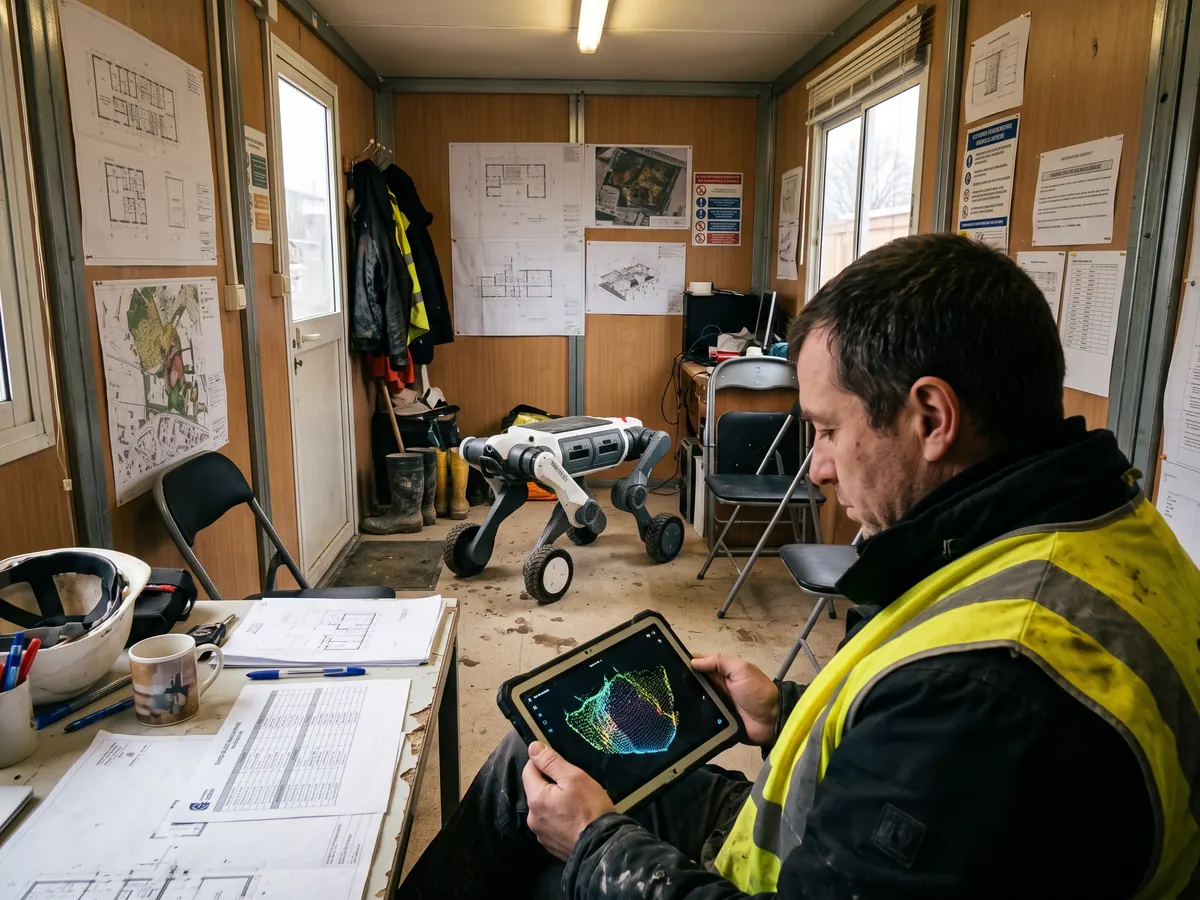
At each point it records a point cloud, photos or video depending on the sensors fitted, with date and position.
Scans are compared with the schedule or the model in your tracking tool. The site manager handles the deviations found.
THE ROBOTS
Quadrupeds
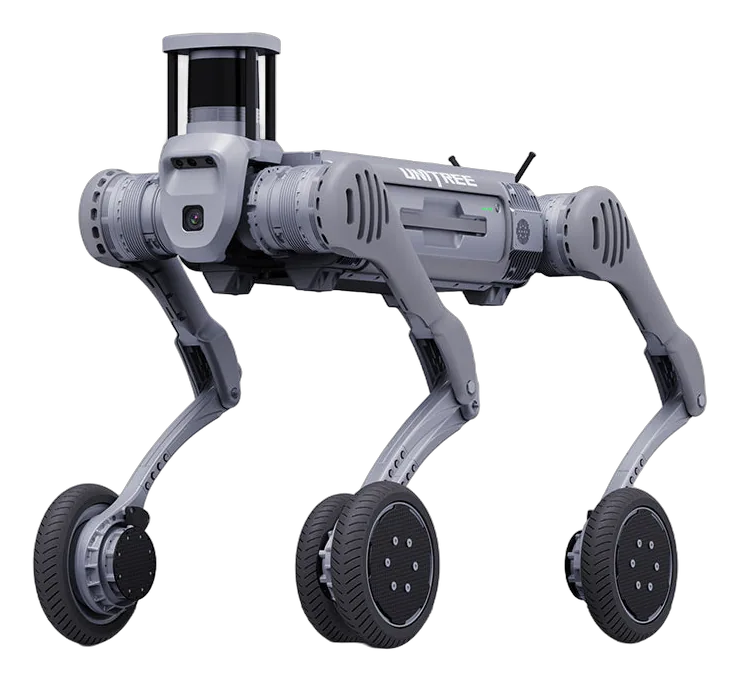
Quadrupeds
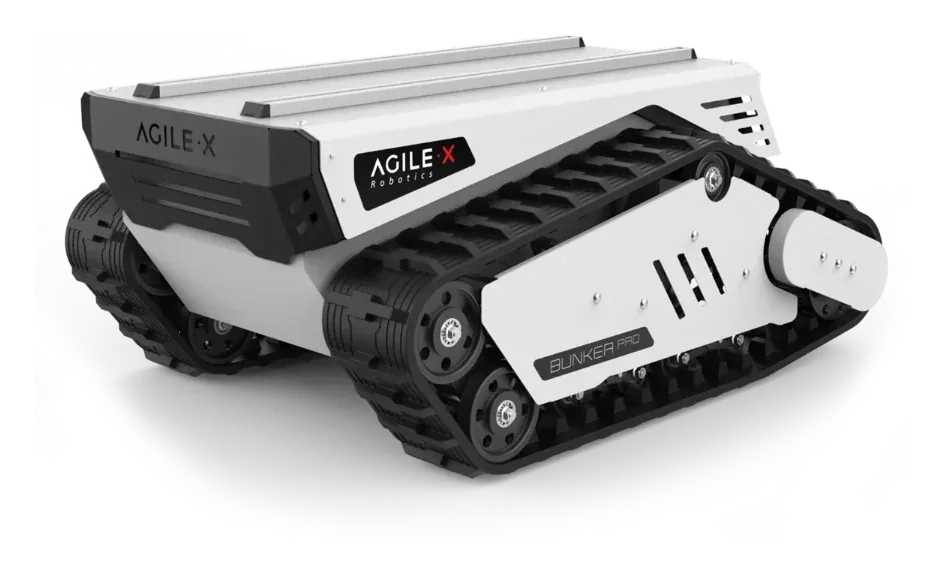
Mobile platforms
BEFORE INSTALLING
Slopes, trenches, temporary steps, mud and rubble: wheel-legs, legs or tracks are chosen for what the route demands.
Timing, lifting zones, moving plant: the robot runs when and where it does not get in the crews' way.
Radio coverage on site, and a sheltered spot for charging and battery swaps.
What your design office or tracking tool expects: point cloud, geotagged photos, video.
FAQ
Yes for the legged and wheel-legged models. According to its manufacturer, the DEEP Robotics LYNX M20 Pro climbs stairs with 25 cm steps and a single 80 cm step; the Unitree B2-W climbs 40 cm steps. The tracked BUNKER PRO 2.0 stays on passable ground.
The LYNX M20 Pro is IP66 and operates from -20 to 55 °C according to its manufacturer; the Unitree B2-W and the AgileX BUNKER PRO 2.0 are IP67.
It depends on the route and stops. The LYNX M20 Pro is rated for 3 h and 15 km unloaded, the B2-W about 30 km unloaded according to its manufacturer. The site survey splits the site into realistic routes.
Yes: short or medium-term rental follows the project schedule, with commissioning and team training included.
USE CASES
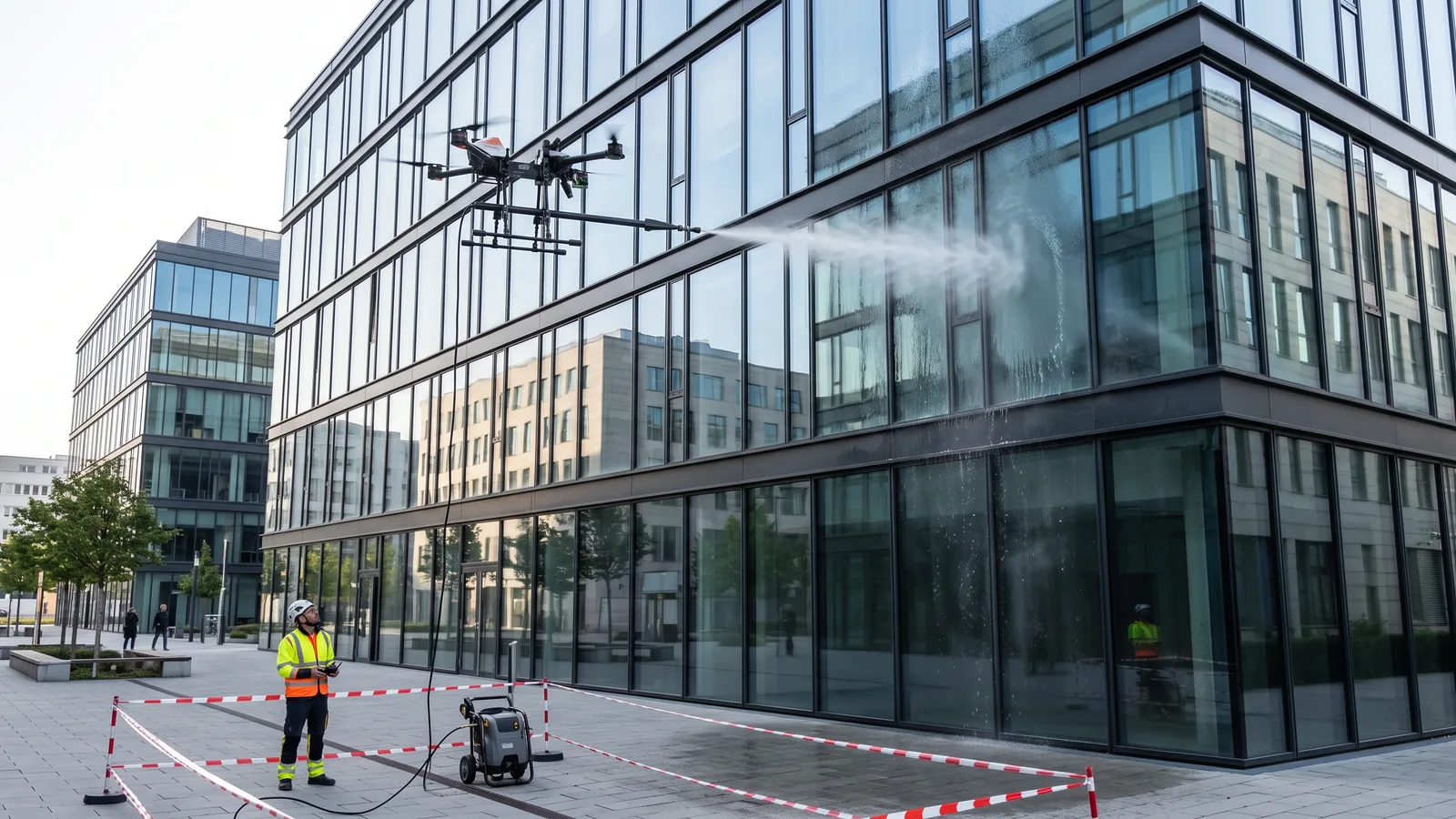 Robotic façade and window cleaningThe drone or robot washes the façade from the ground or from the gondola, without a rope access technician on every pass. The team keeps piloting, cordoning off and finishing.
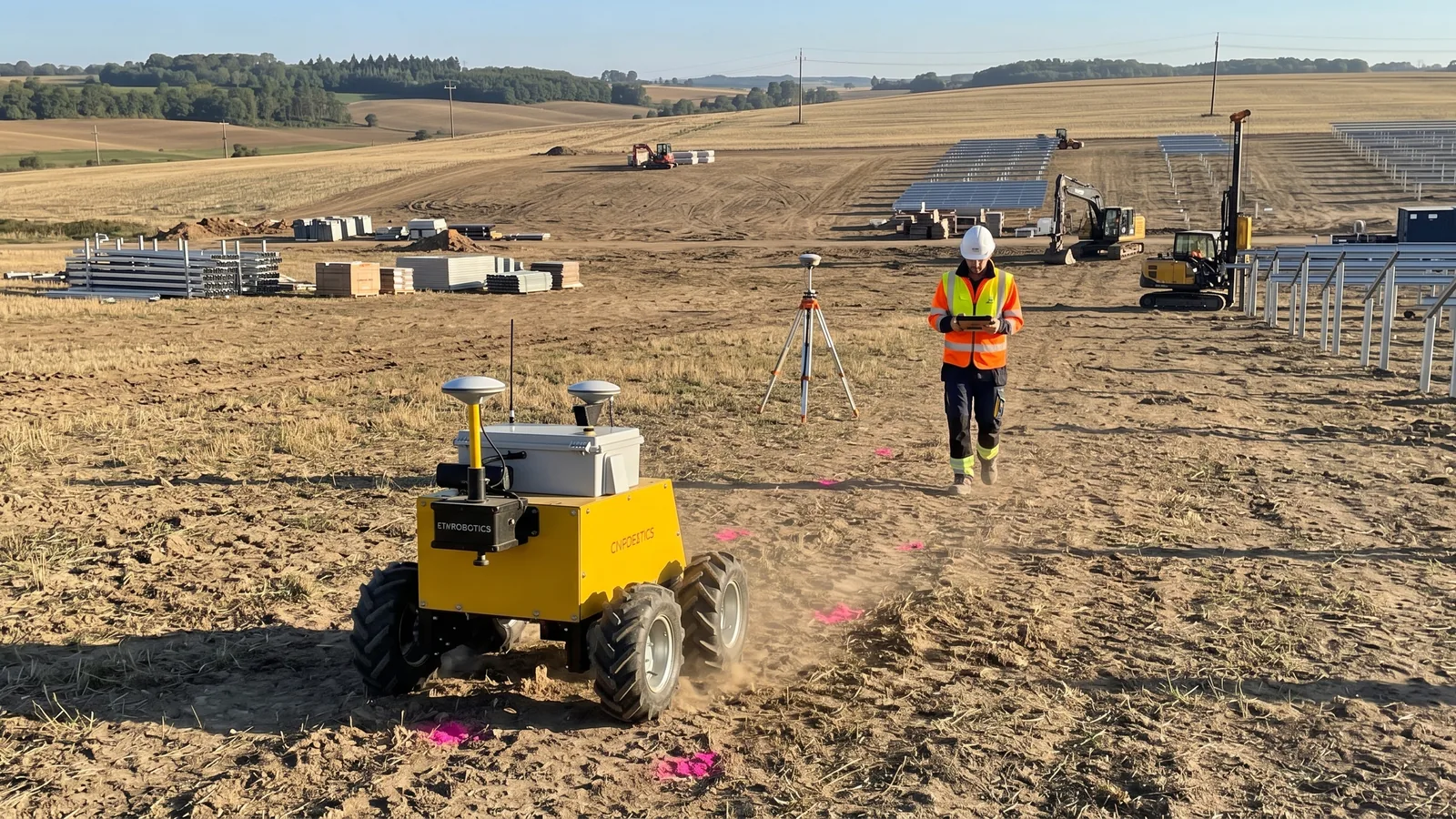 Robotic layout and set-out on construction sitesThe robot transfers axes, partitions, openings and set-out points from the digital plan to the ground. The surveyor and site manager keep control of the references and the sign-off.
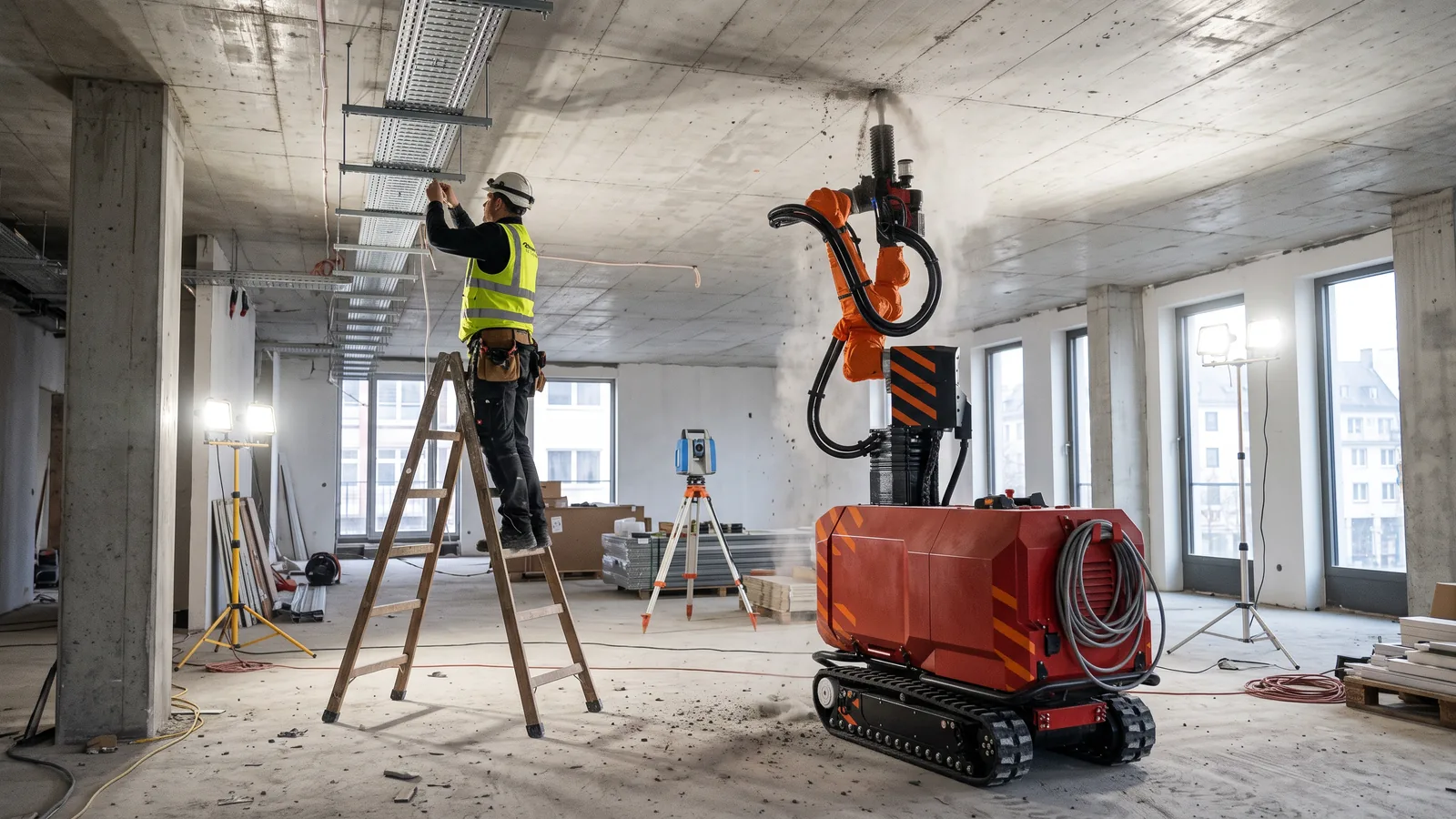 Robotic drilling and finishing on construction sitesThe robot takes on repetitive, strenuous site tasks: ceiling drilling, plastering, painting, tiling and block lifting. Tradespeople keep the preparation, touch-ups and quality control.
Robots, acquisition mode and delivery terms, in one written proposal.