Quadrupeds
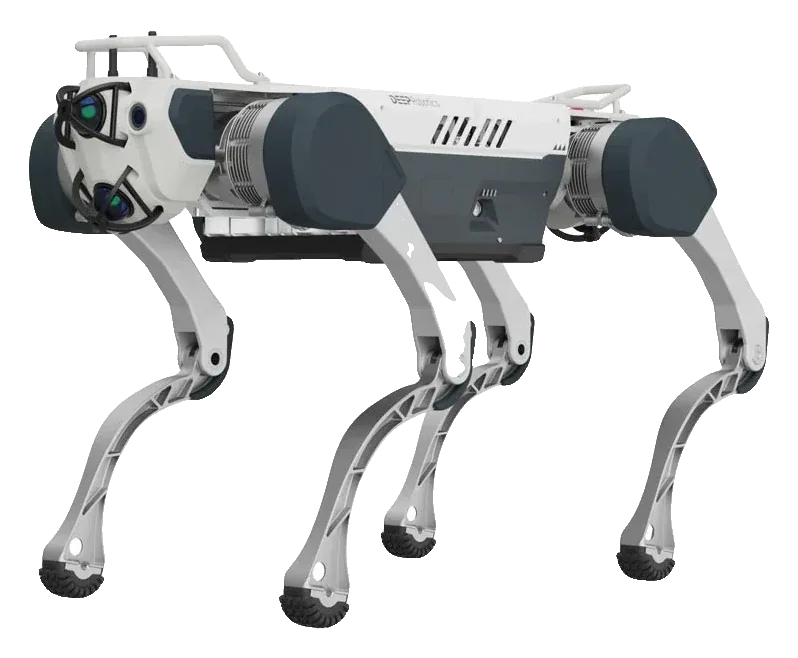
- Weight
- 59 kg
- Runtime
- 2.5–4 h
- Ingress protection
- IP67
On order
From €146,990 ex VATor €4,999/month in RaaS
Updated
USE CASE · ENERGY AND SOLAR
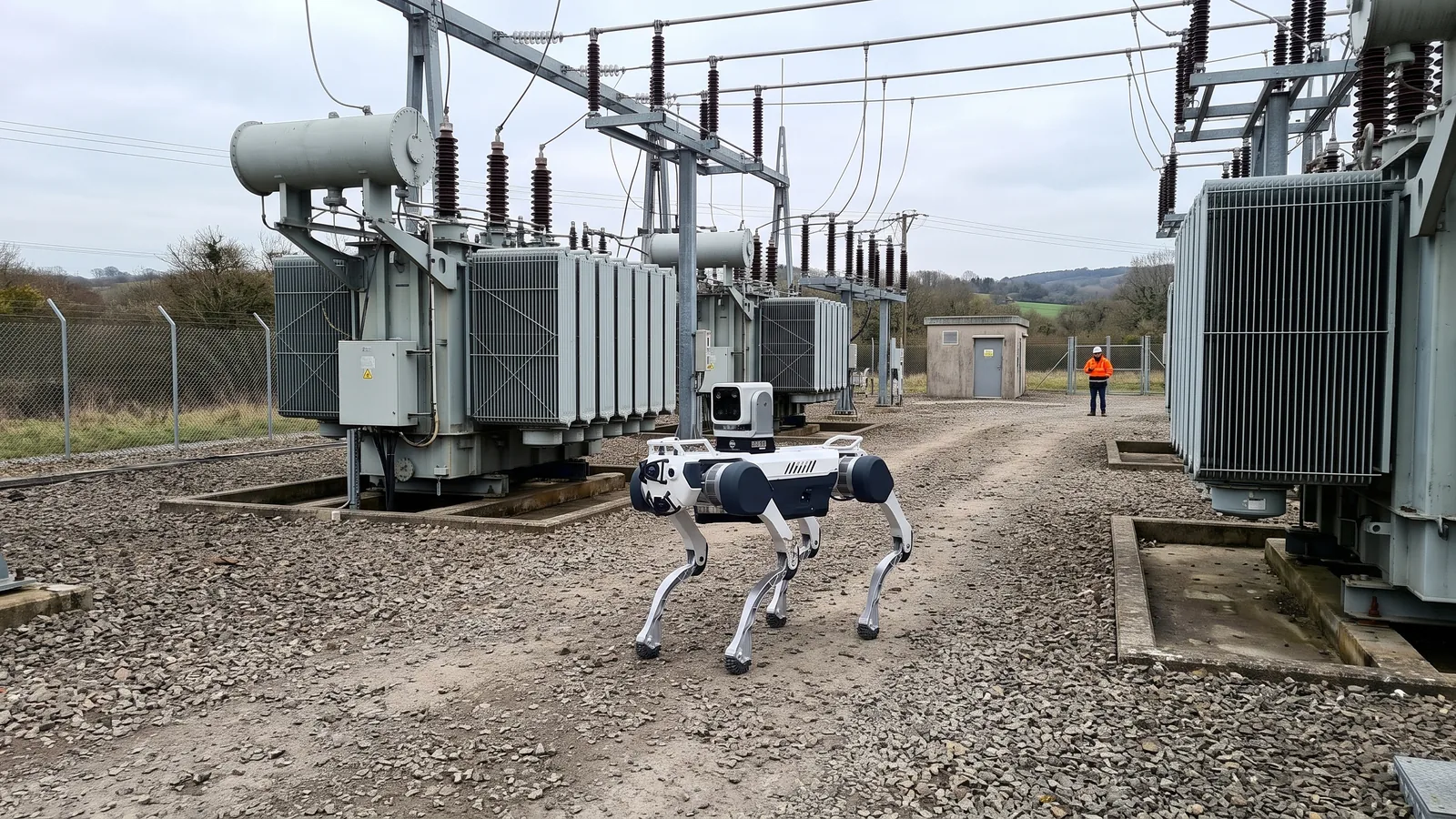
A ground robot patrols the substation aisles and a docked drone flies over the equipment. Together they record temperatures, gauges and visual condition, without sending someone out for every round.
Updated
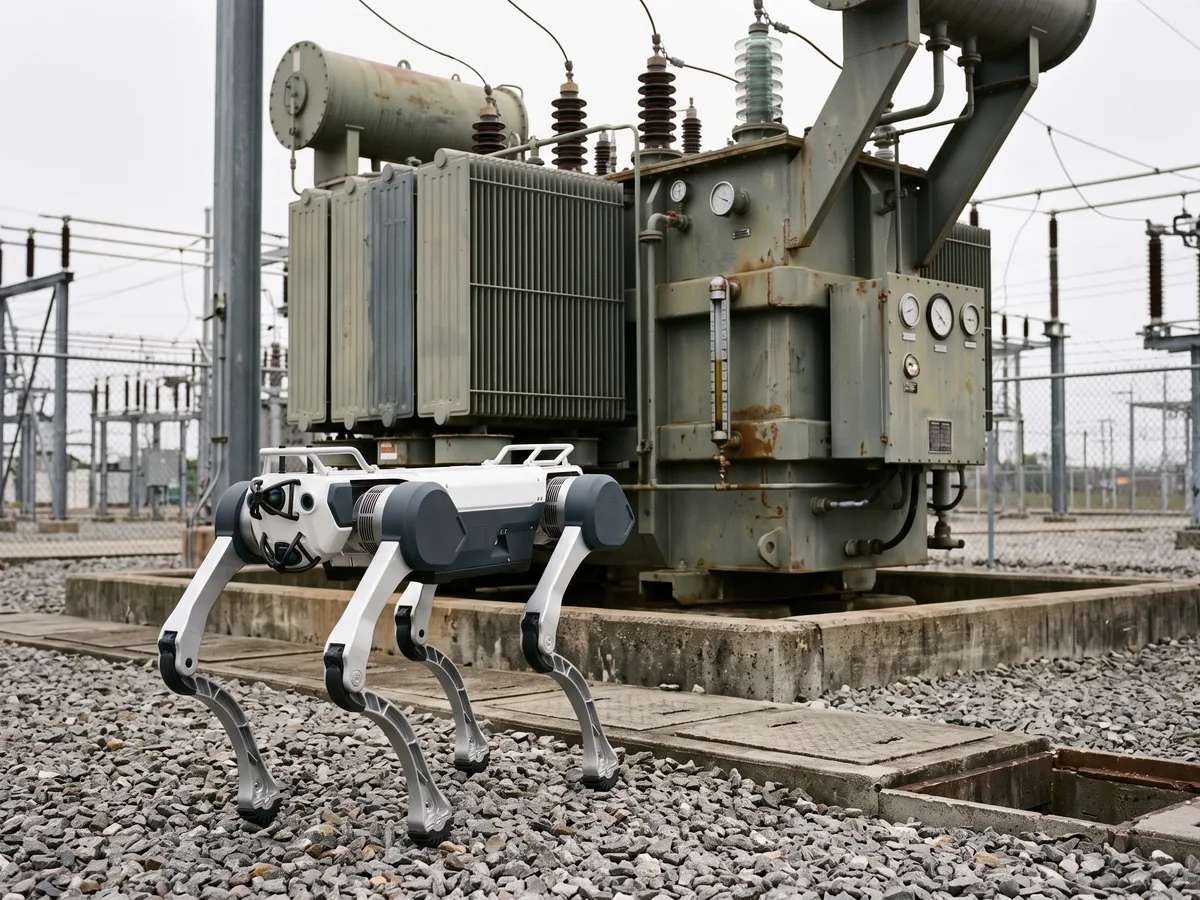
An electrical substation inspection robot patrols the aisles of a transformer or grid substation and records images, thermal images and gauge readings of transformers, circuit breakers and busbars.
The DEEP Robotics X30 Pro is IP67, works from -20 to 55 °C and offers USB, Ethernet and 5/12/24 V outputs for integrating sensors, according to its manufacturer.
Robot Distribution combines ground robot and drone for your substation, sets up the rounds, trains your teams and maintains them, to buy, rent or as RaaS.
WHY
Substations are often remote and rarely staffed. Rounds look for a hot connection, abnormal oil level or pressure, a leak, a damaged insulator or an intrusion. Each one means a trip to site and applying access rules and safety distances.
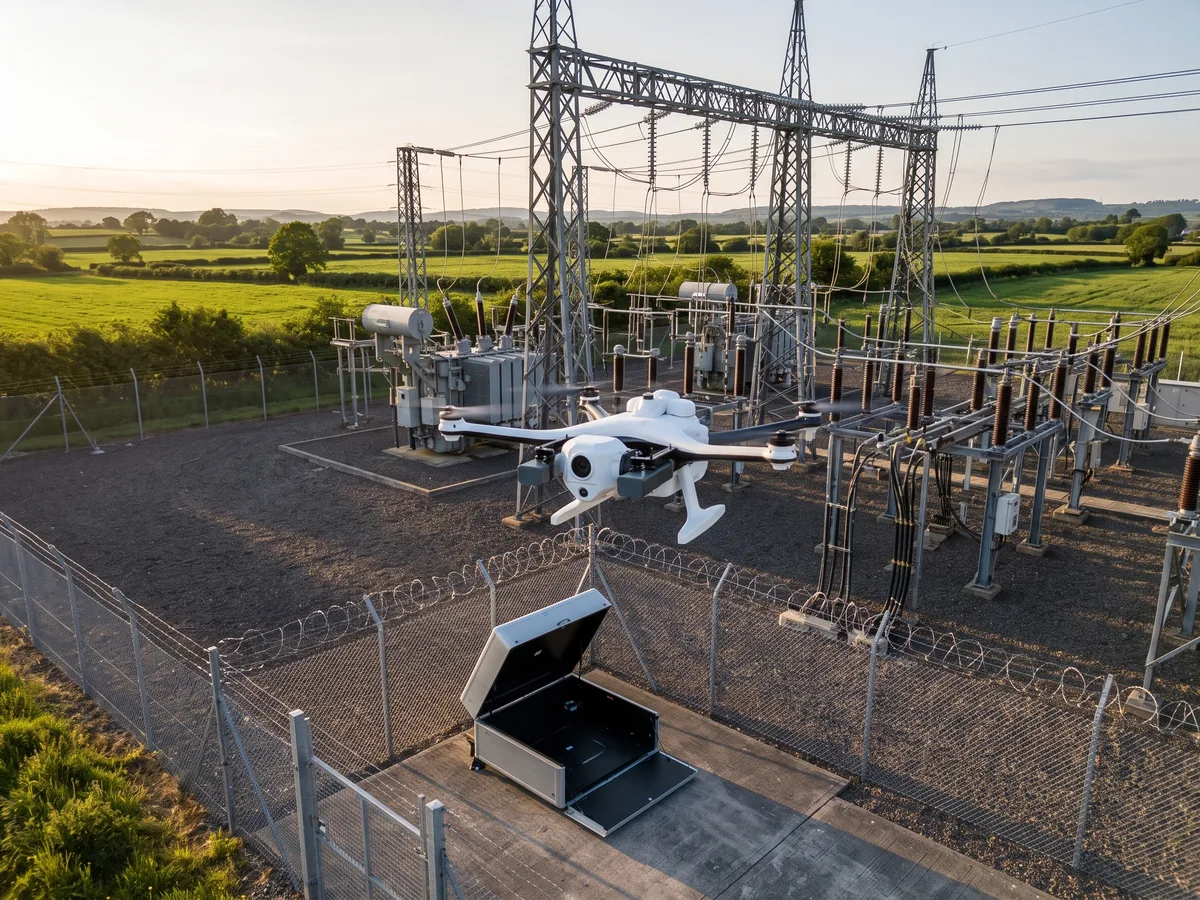
The ground robot repeats the round at set times and takes thermal images of the same points from the same angle, so drifts show up from one round to the next. The docked drone adds the view from above, over gantries, busbars and the perimeter.
HOW IT RUNS
With the operator we list the equipment and gauges to read: connections, bushings, oil level and pressure indicators, switchgear positions, fence. The route stays within authorised aisles.
The robot leaves its station and follows the aisles, gravel and slopes included. The wheel-legged Unitree B2-W travels at 15 km/h and covers about 30 km unloaded, according to its manufacturer.
From its dock, the drone flies over gantries and the perimeter. The Skydio Dock for X10 gets its drone airborne in 20 seconds and operates from −20 to 50 °C, according to its manufacturer.
Visible and thermal images reach the control room. A hot spot or an out-of-range gauge triggers a targeted check by an authorised technician.
THE ROBOTS
Quadrupeds
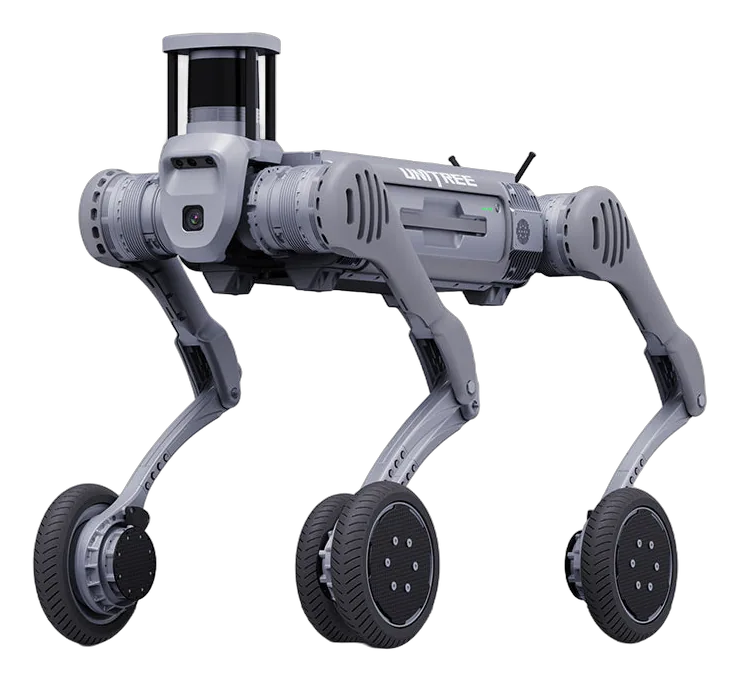
Quadrupeds
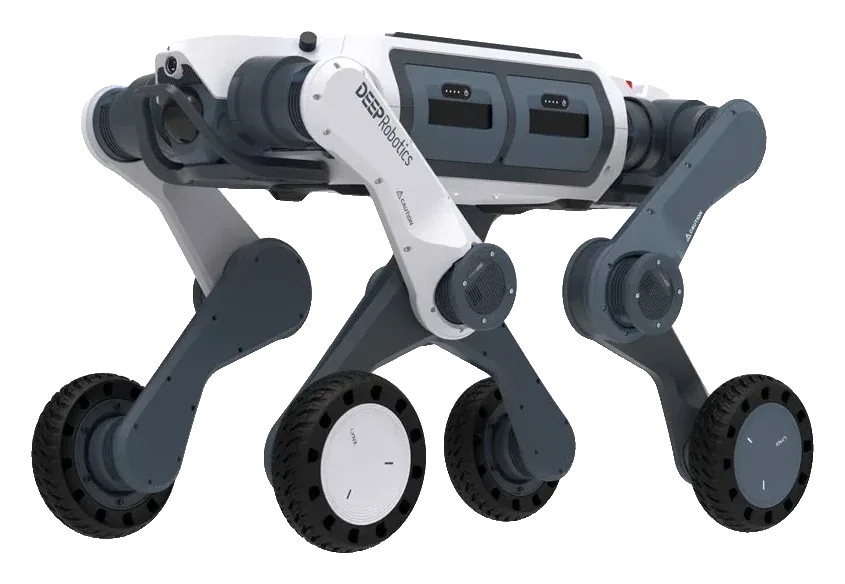
Quadrupeds
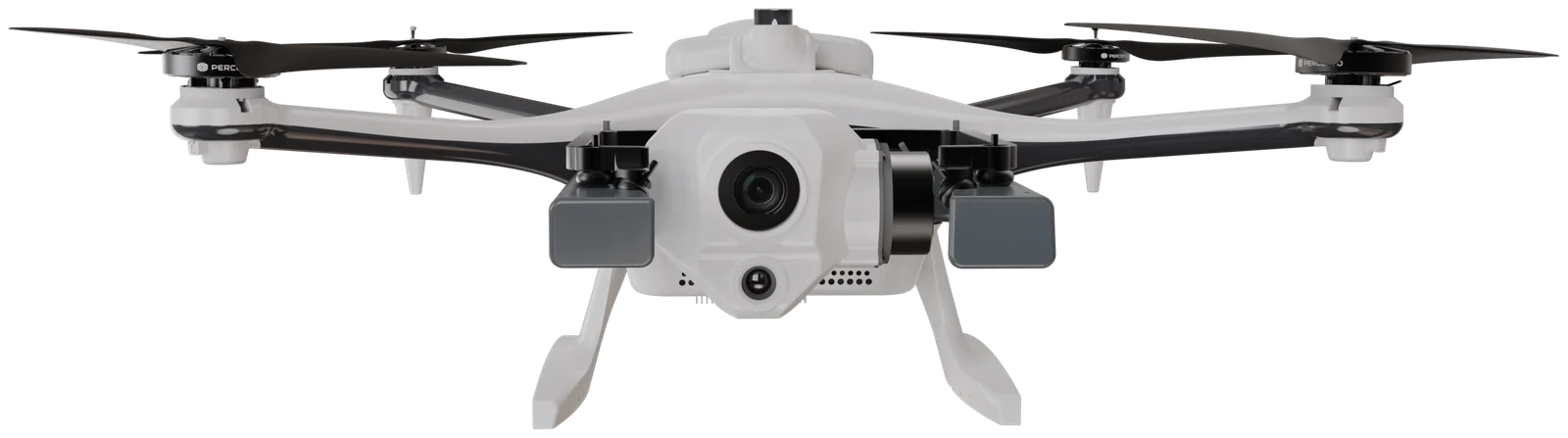
Professional drones
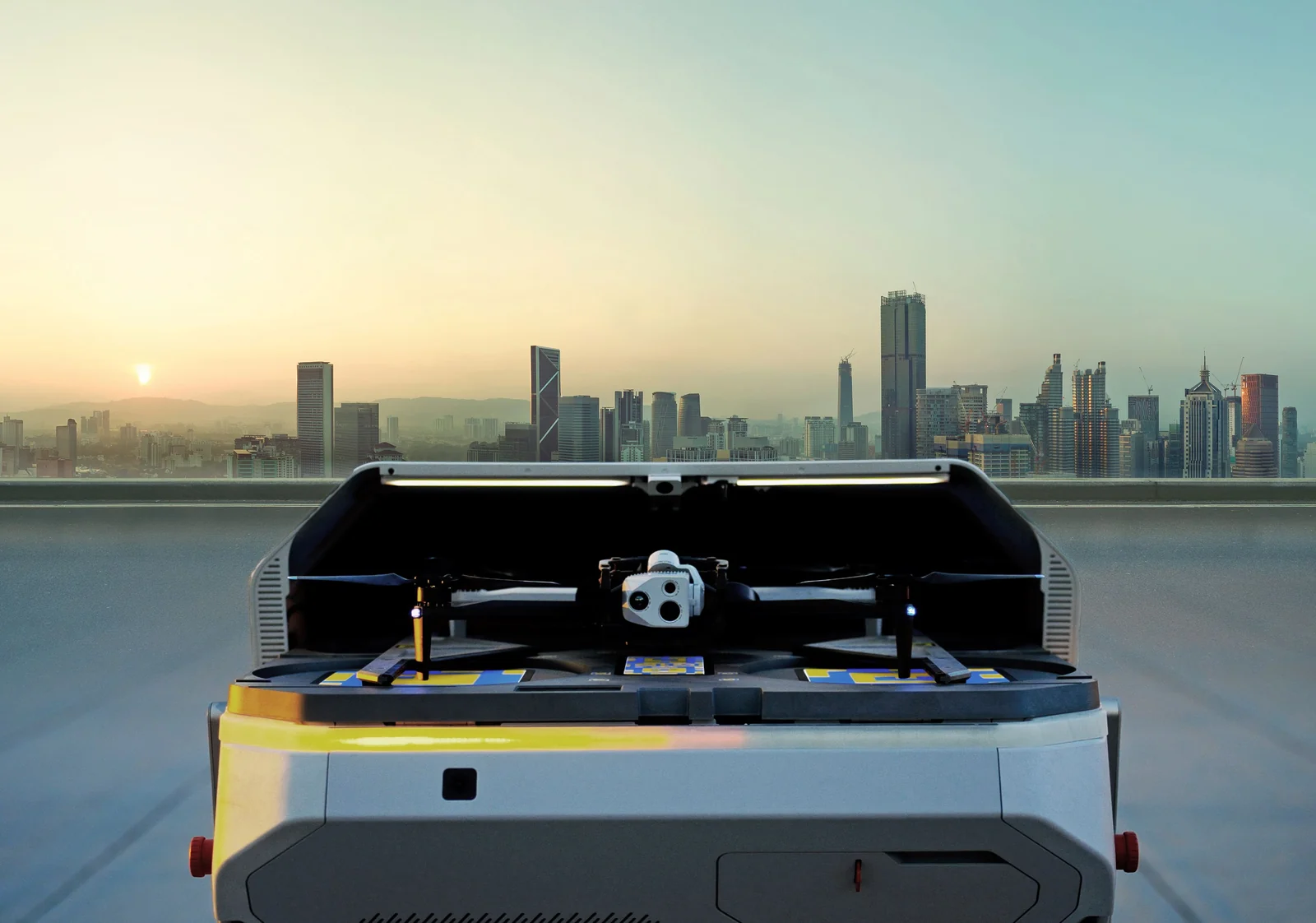
Skydio
Professional drones
BEFORE INSTALLING
Gravel, cable trenches, kerbs and slopes are noted along the whole round. The DEEP Robotics LYNX M20 Pro climbs 25 cm stairs and 45° slopes, according to its manufacturer.
Safety clearances to live parts, no-go zones and the immunity of on-board equipment to electromagnetic fields are checked with the operator.
For the drone we check the flight area, obstacles and the regulatory framework: Regulations (EU) 2019/947 and 2019/945, specific category for a remotely operated docked drone.
The substation needs a data link: Ethernet, Wi-Fi or mobile network. The Skydio Dock for X10 also runs over 5G where coverage exists, according to its manufacturer.
FAQ
Whatever its sensors capture: visible and thermal images, analogue gauges, sound or gas depending on the equipment fitted. The Percepto Air Max carries a 61 MP full-frame RGB camera and a radiometric thermal camera, according to its manufacturer.
The ground robot sees gauges and low connections up close; the drone sees gantries, busbars and the perimeter. On a large substation they complement each other; on a small one, one may be enough.
According to the manufacturer: the DEEP Robotics X30 Pro and Unitree B2-W are IP67 and work from -20 to 55 °C, the Skydio Dock for X10 is IP55, and the Percepto Air Max stays on site in its base, which includes a weather station.
Yes, in the specific category of Regulations (EU) 2019/947 and 2019/945, with an operational authorisation. The Percepto Air Max has an FAA-compliant parachute intended to support beyond-visual-line-of-sight approvals, according to its manufacturer.
USE CASES
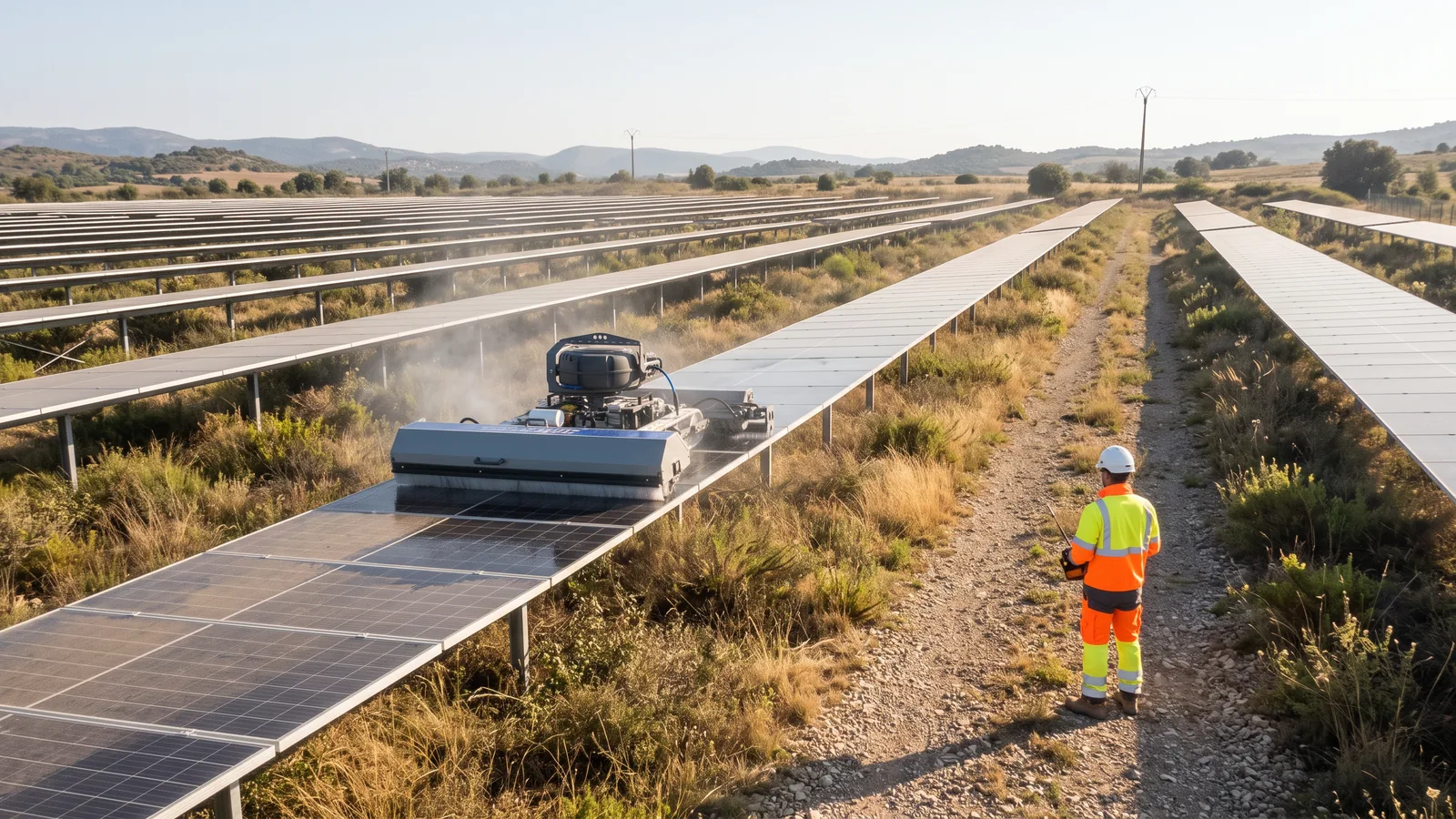 Robotic solar panel cleaningThe robot brushes the module rows, dry or with water, remote-controlled or autonomous depending on the model. Operations teams keep monitoring, electrical checks and plant maintenance.
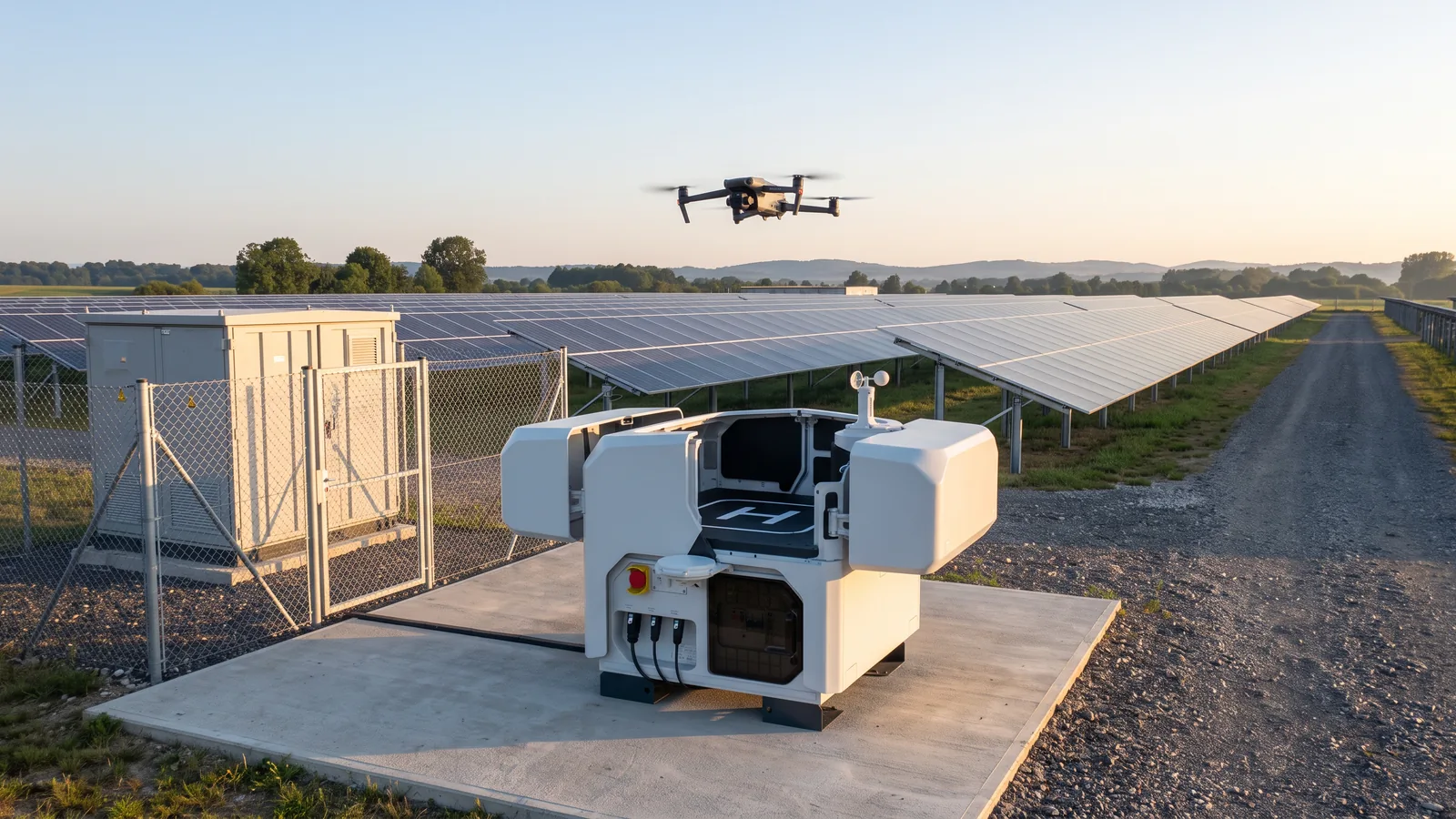 Drone inspection of solar and industrial sitesThe drone flies over modules, roofs, networks and equipment and brings back visible and thermal images, piloted on site or launched from an automated dock. Technicians keep the analysis, decisions and repairs.
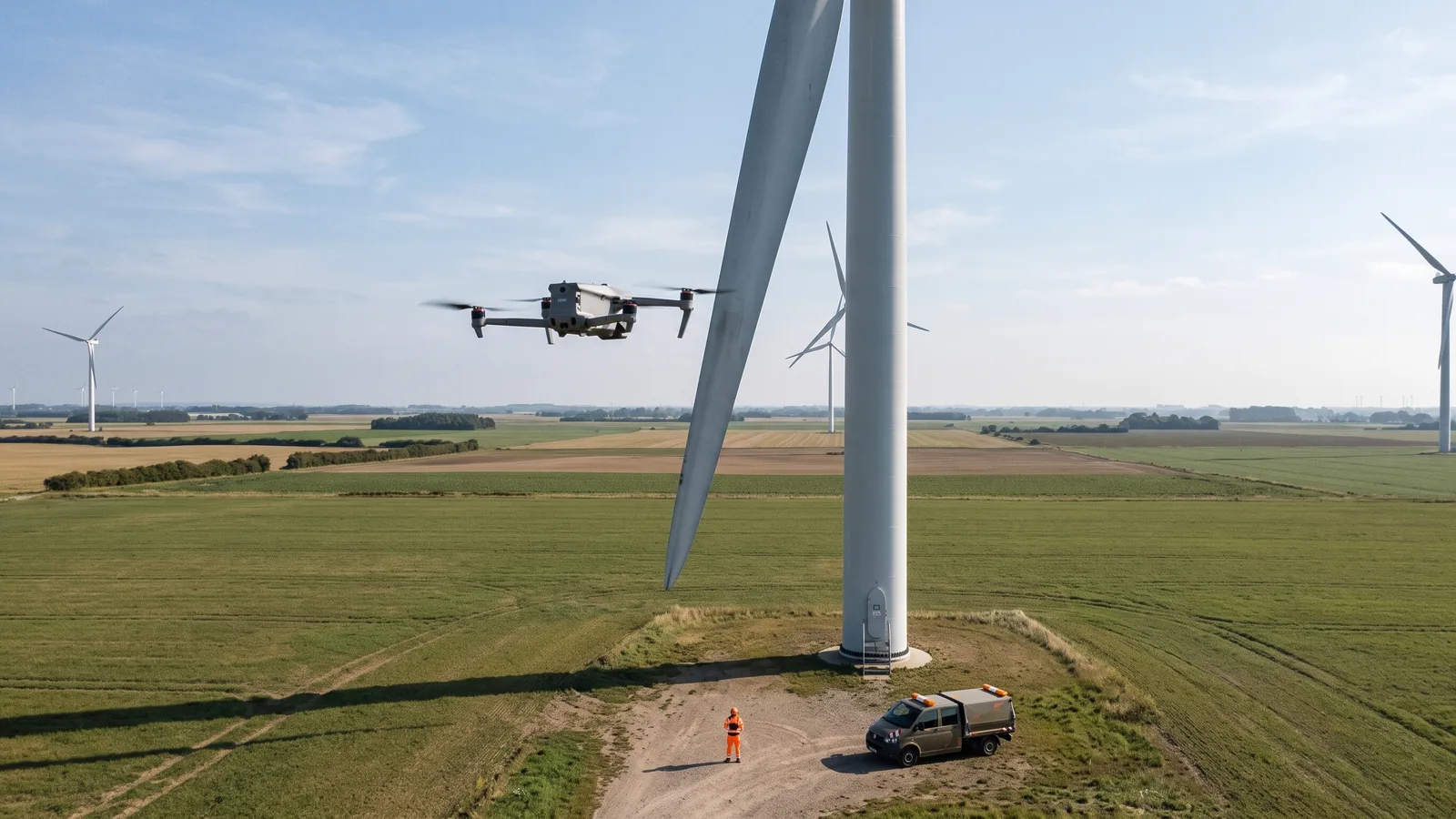 Drone inspection of power lines and wind turbinesThe drone flies along the lines and around the turbines, taking visible and thermal images of insulators, connections and blades. Maintenance crews only work at height on confirmed defects.
Robots, acquisition mode and delivery terms, in one written proposal.