Pipe and sewer inspection
- Key feature
- 150–2,000 mm pipe
- Key feature
- 45 m lateral reach
- Key feature
- 300 m cable
On order
Price on request
Updated
USE CASE · WATER AND UTILITY NETWORKS
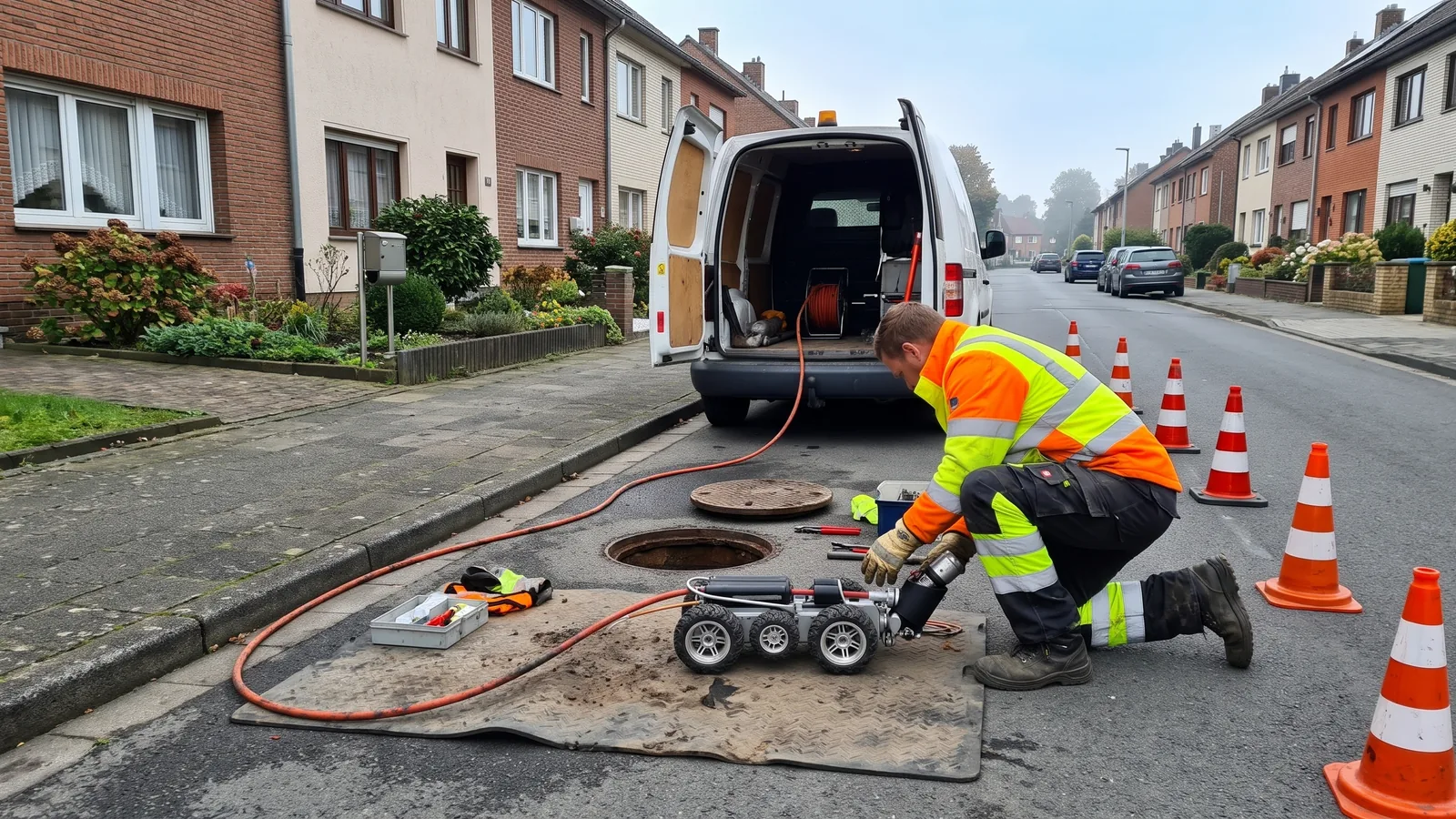
The crawler drives along the main, stops at the connection and pushes a small pan-tilt camera into it. The building's lateral is inspected without opening the road or entering the property.
Updated
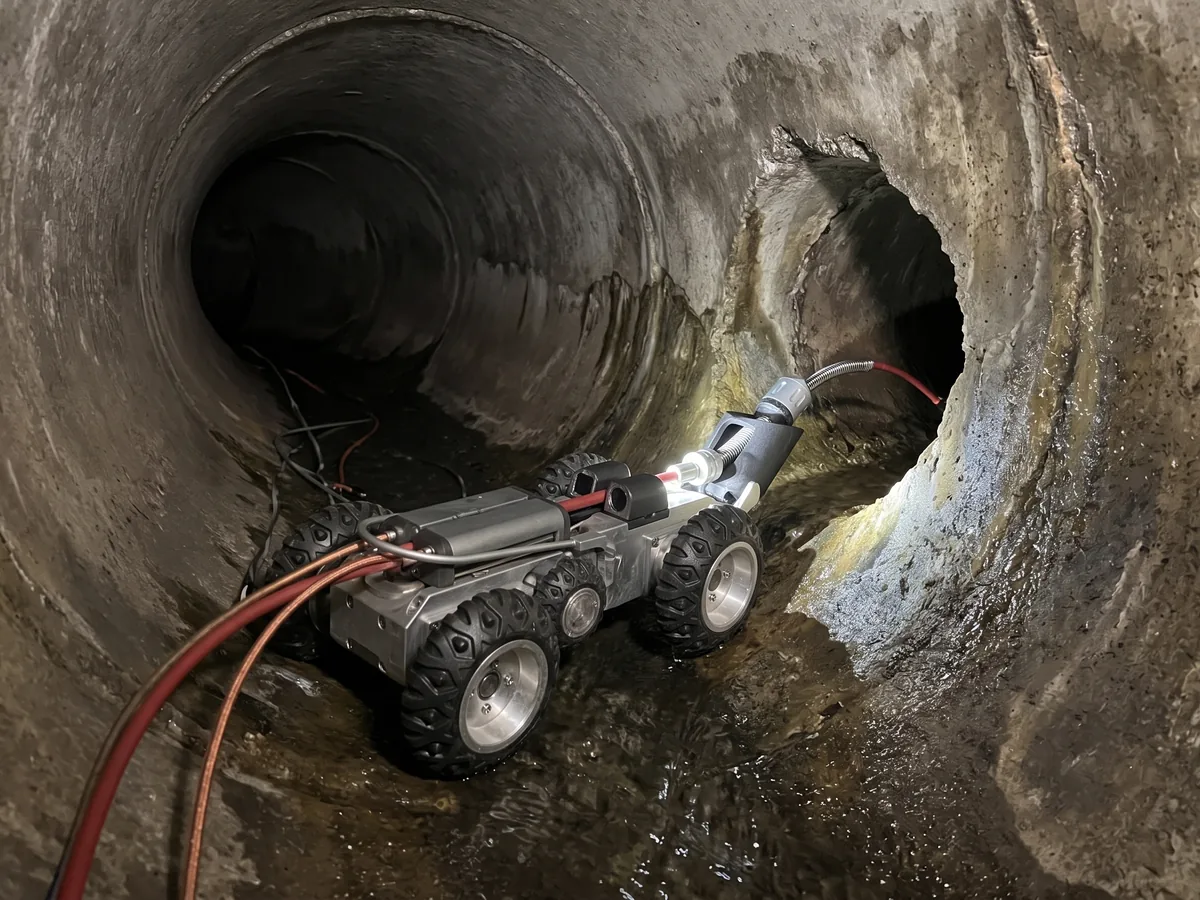
A sewer lateral inspection robot is a crawler with a satellite camera that drives in the public main and launches a second camera into the service connections of houses and buildings.
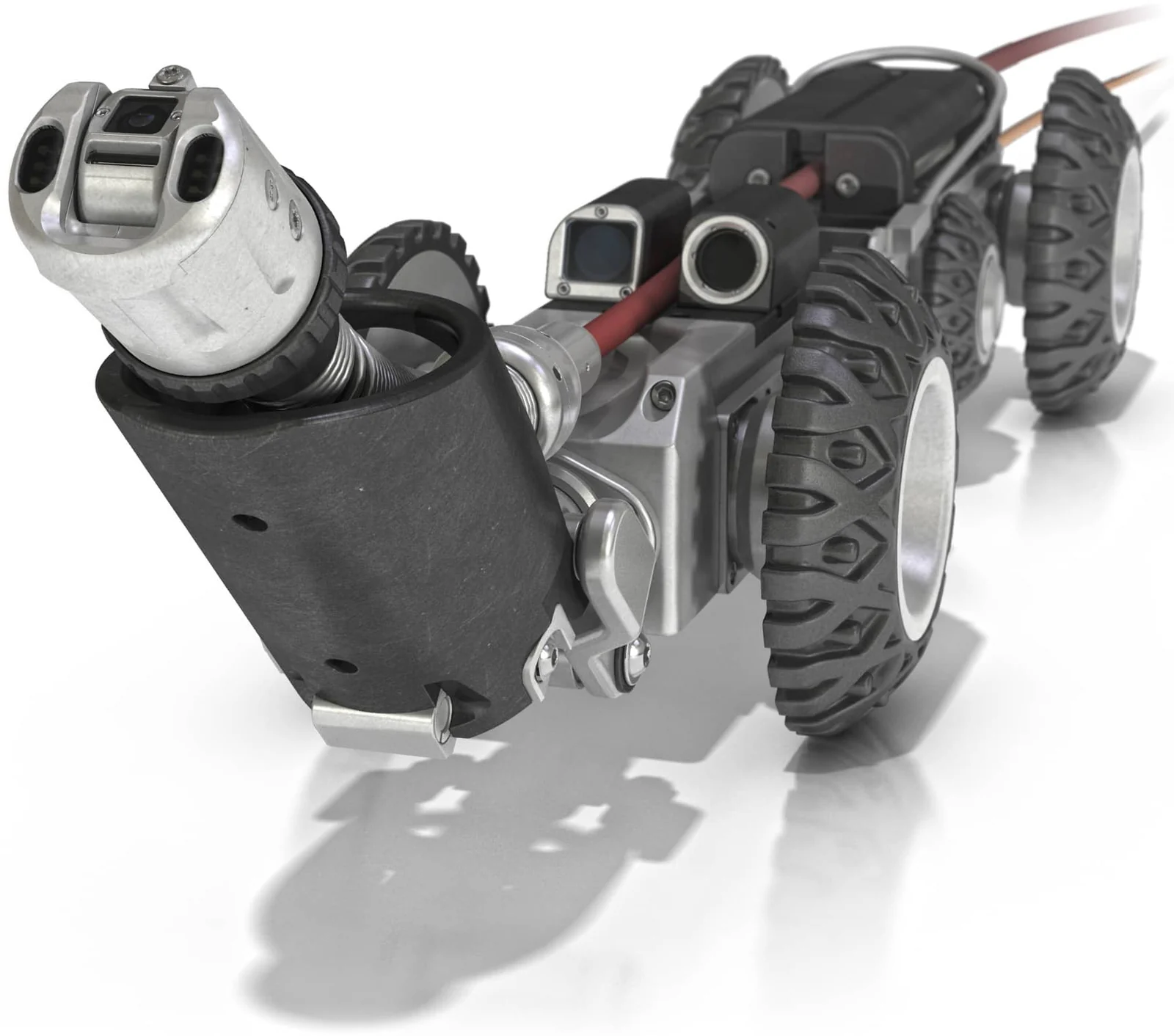
The iPEK ROVION SAT II travels in mains from DN150 to DN2000, passes accesses of 12.5 in (about 320 mm) and pushes its camera up to 45 m into the lateral, according to its manufacturer.
Robot Distribution selects the right system for your network, delivers it, trains your operators and maintains it, to buy, rent or as RaaS.
WHY
Laterals connect each house or building to the public sewer. Small, bent and often old, they are where roots, infiltration, intruding connections and cross-connections between storm and foul water are looked for.
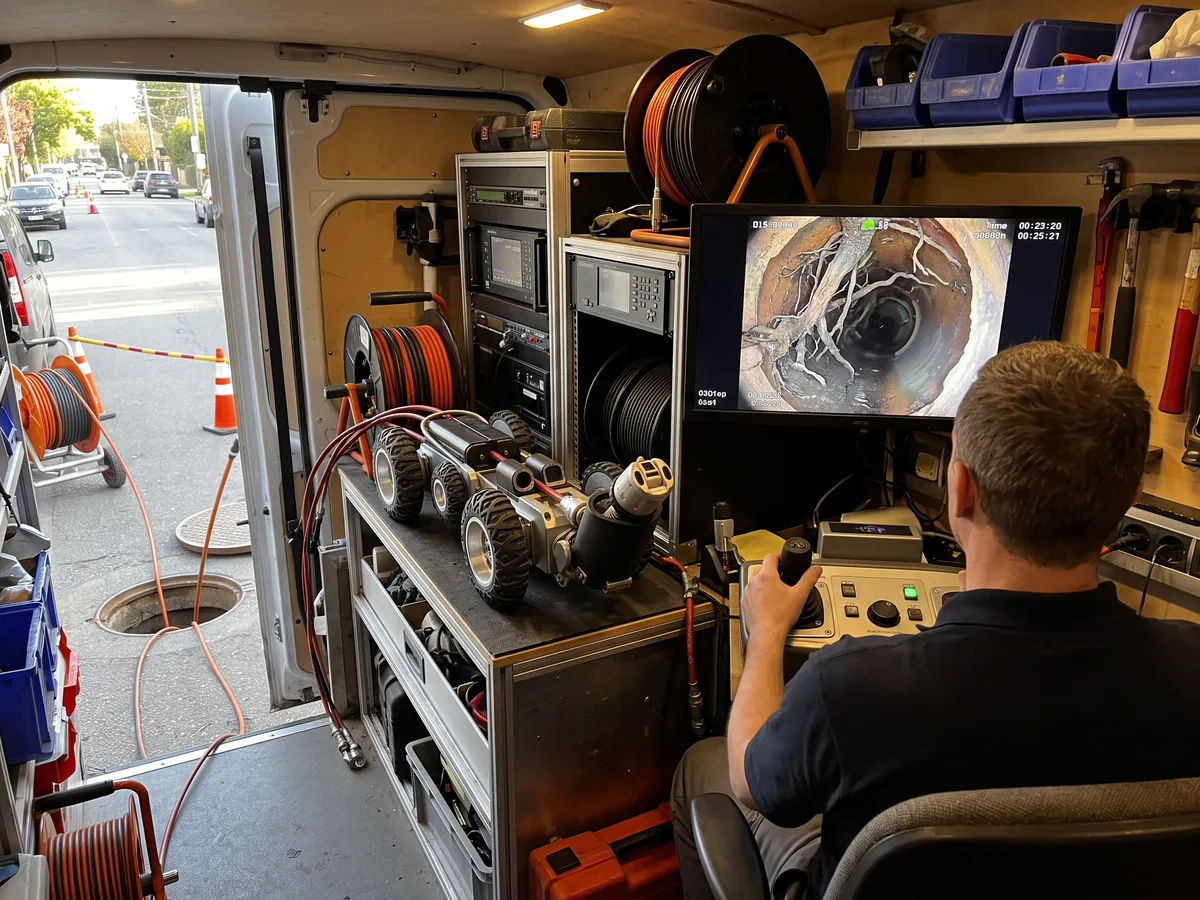
Inspecting them from the property needs access to the owner's premises and a reachable inspection chamber, which are often missing. The lateral launch crawler works from the public network: it locates each junction, inspects the lateral and records it in the same report as the main.
HOW IT RUNS
The crawler runs along the main and finds the junctions. The Envirosight ROVVER X SAT II drives up to 300 m in mains of 6 to 80 in, at about 30 m/min, according to its manufacturer.
The operator stops the crawler at the connection, turns the launch head and aims the camera at the lateral opening.
The camera is pushed into the lateral, through the bends, filming the pipe. On the iPEK ROVION SAT II, the PTP50 pan-tilt camera passes 90° bends from DN75, on a 45 m push rod, according to its manufacturer.
Each lateral is linked to its position on the main, with coded observations and images, to guide rehabilitation, lining or compliance checks.
THE ROBOTS
Pipe and sewer inspection
Pipe and sewer inspection
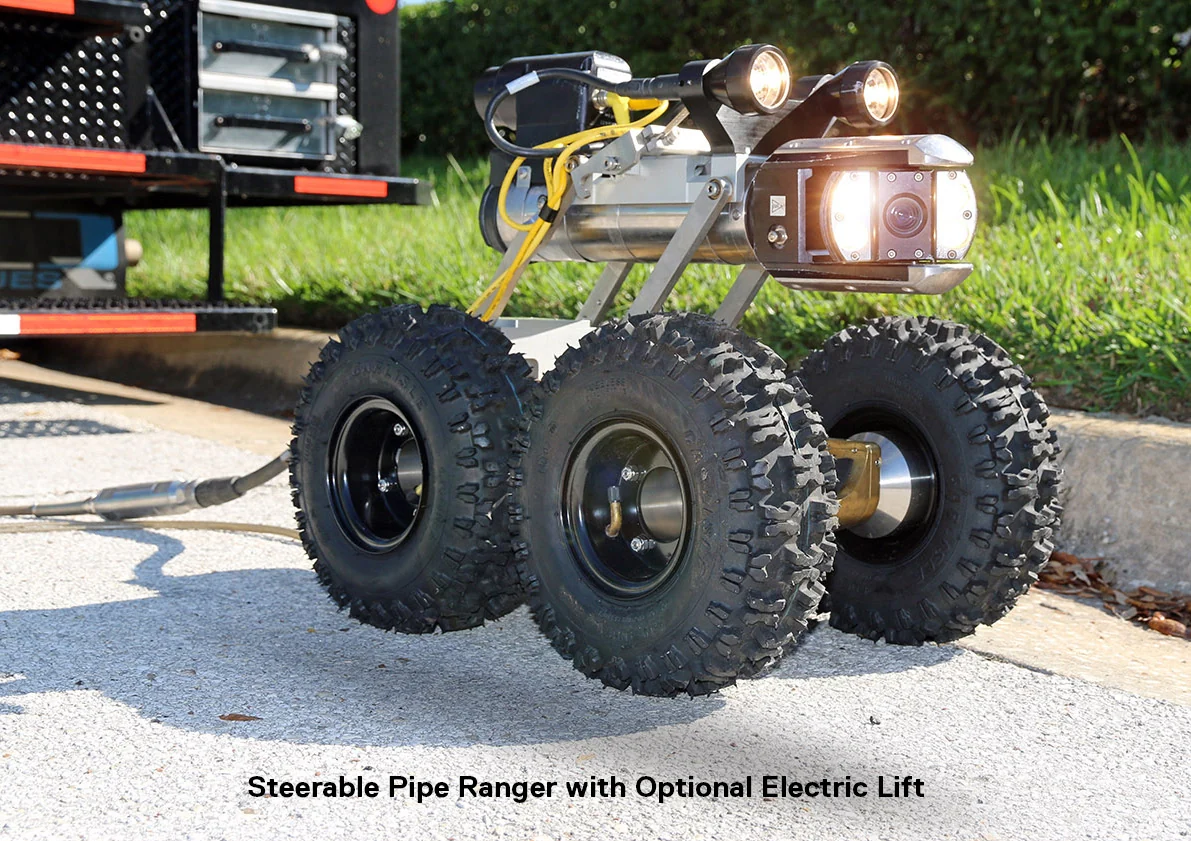
CUES
Pipe and sewer inspection
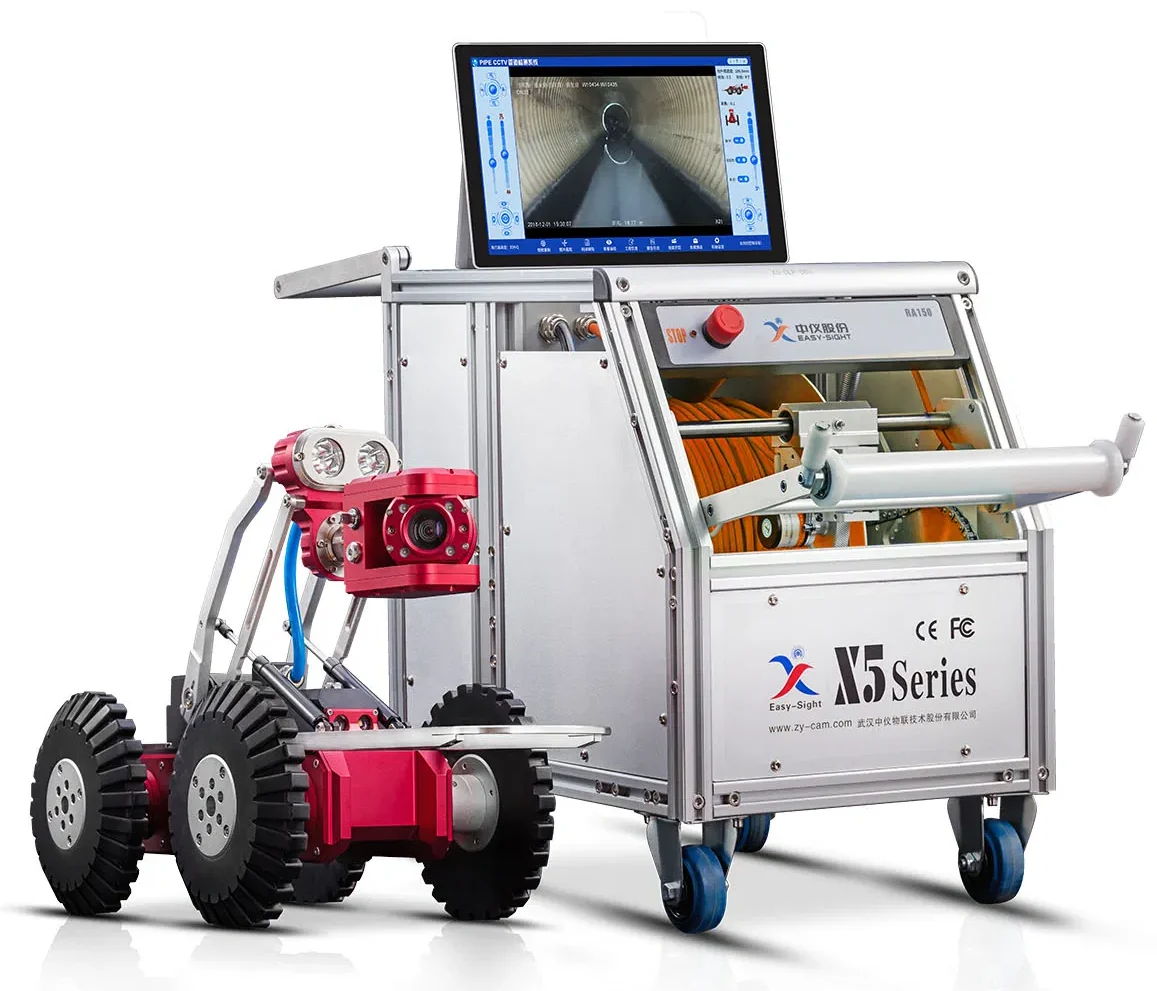
Easy-Sight
Pipe and sewer inspection
BEFORE INSTALLING
Main and lateral diameters, bends, changes of material and past rehabilitation decide the system.
The satellite crawler must fit through the manhole: both lateral launch systems in our catalogue pass accesses of 12.5 in (about 320 mm), according to their manufacturers.
The number of laterals per section and their length guide the choice between a satellite crawler and a mainline-only crawler such as the CUES Steerable Pipe Ranger II, which works in 7 to 72 in pipes with up to 2,000 ft (610 m) of cable, according to its manufacturer.
Deposits, roots and water level are noted: cleaning first improves the image and makes launching easier.
RULES AND STANDARDS
Lateral surveys feed legal duties on network diagnosis and on the compliance of each building connection.
Under Article 12 of the French order of 21 July 2015, the owner of a collection system carries out a diagnosis at least every ten years. It must estimate the infiltration and inflow of clean water and identify the main sectors with connection anomalies. The order allows any appropriate means, including CCTV inspection. A lateral launch survey gives evidence connection by connection for that diagnosis.
Systems receiving 120 kg/day of BOD5 or more must also run a permanent diagnosis. The order lists the knowledge, control and monitoring of domestic and non-domestic connections among its contents. A lateral inspection programme can feed that monitoring year after year. Check the load class of your system and the compliance deadline that applied to it with the State water police service.
The French Public Health Code splits the connection. Works that bring wastewater to the public part of the connection are paid by the owner, and the commune checks the quality of their execution (Article L1331-4). The part under the public road, up to the inspection chamber, can be built by the commune and then joins the public network (Article L1331-2). Record on each report where a defect sits relative to that boundary.
For new works, water agency guidance on acceptance control states that the visual or CCTV inspection covers the whole length laid, including connections, not only the main. Observations are coded to NF EN 13508-2. Tests are run by an accredited operator independent of the works contractor, so a contractor's own lateral survey does not replace them.
General information, not legal advice.
FAQ
Up to 45 m for both the iPEK ROVION SAT II and the Envirosight ROVVER X SAT II, according to their manufacturers. The real distance depends on bends, deposits and lateral diameter.
No: the system works from the public main. Access from the property side is only useful when the lateral is too long or blocked for the satellite camera.
The Envirosight ROVVER X SAT II carries a 5 MP pan-tilt targeting camera with a 130° field of view, according to its manufacturer. In the main, the Easy-Sight X5-HT films in 1080p with 10x optical zoom and measures cracks by laser, according to its manufacturer.
To see a junction opening and spot an intruding connection, a crawler with a pan-tilt camera is enough. To inspect the lateral along its length, you need a lateral launch system or a push camera from the inspection chamber.
USE CASES
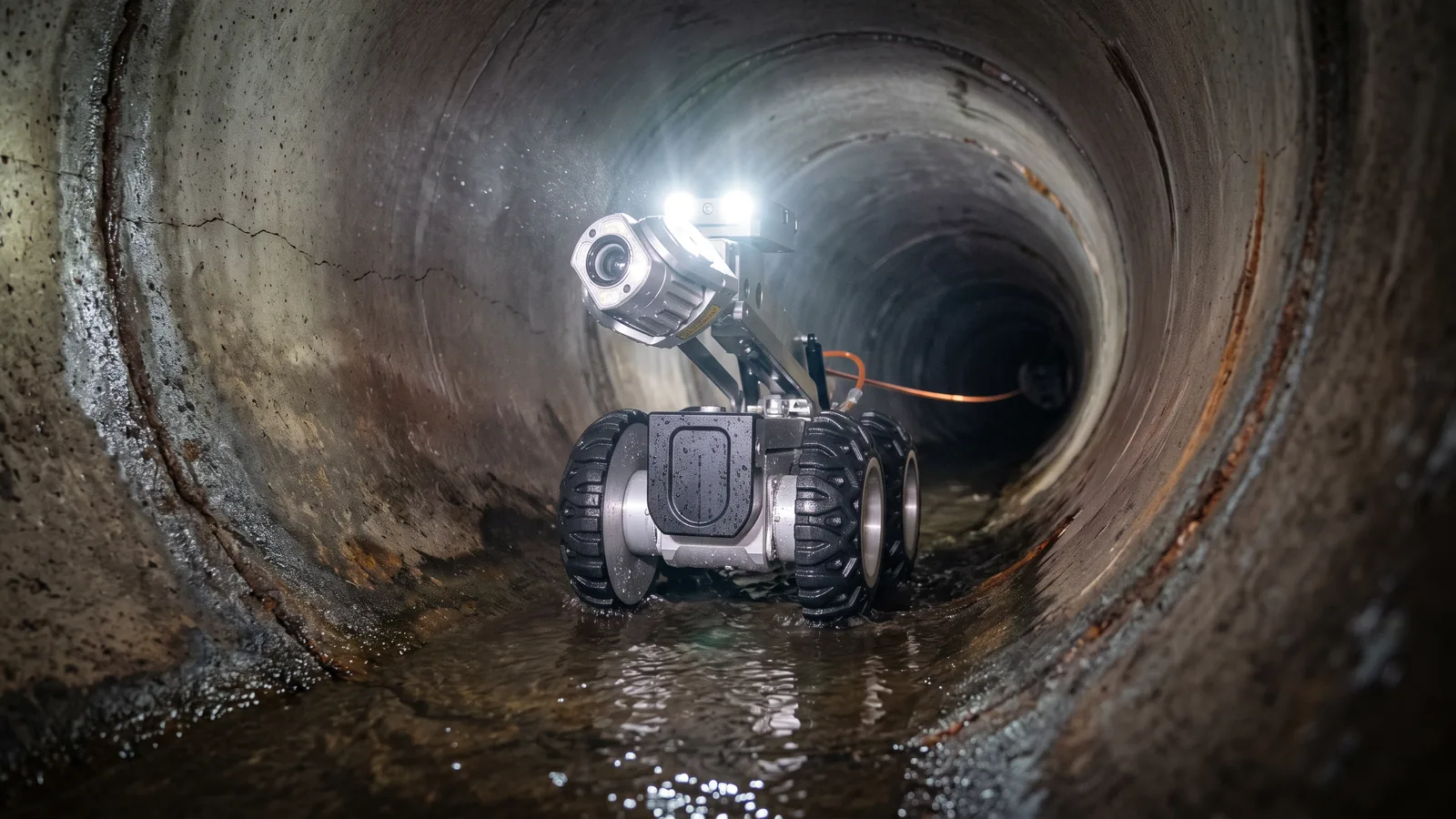 CCTV inspection of sewer pipesThe camera robot travels the sewer from the manhole and films the pipe wall, controlled from the surface. Technicians keep the diagnosis, defect coding and the choice of works.
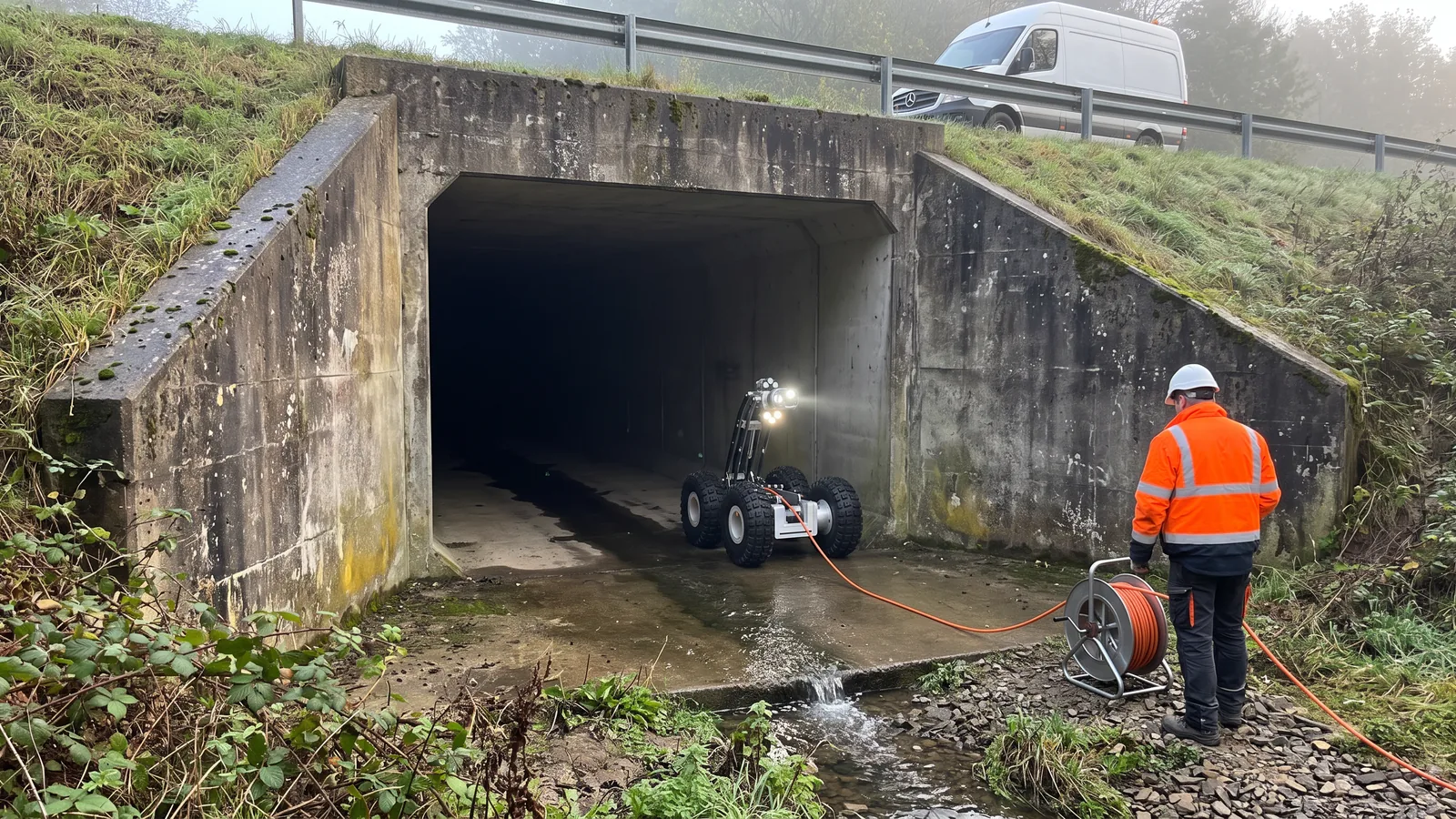 Large sewer and culvert inspectionThe robot travels through large trunk sewers, egg-shaped collectors and culverts under roads, camera centred in the section, driven from the surface. Sewer crews only go in to carry out work.
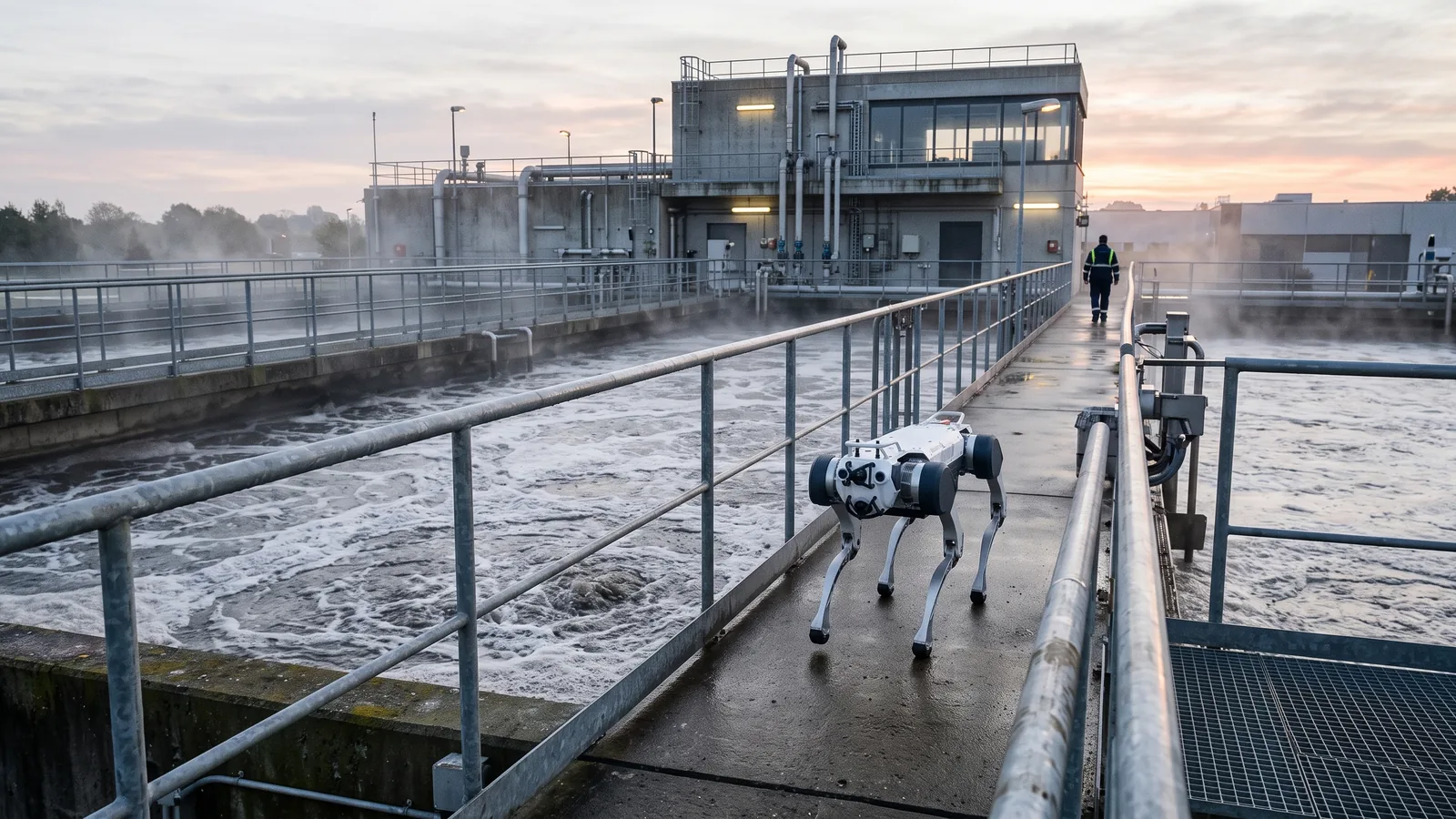 Inspection rounds in water treatment plantsThe robot tours basins, pumps and cabinets at set times and brings back images, temperatures and readings. Operators focus on deviations and running the process.
Robots, acquisition mode and delivery terms, in one written proposal.