Skip to content
ROBOT DISTRIBUTION

Updated

SOLUTION · LOGISTICS

Robots for logistics: moving goods between zones, line feeding, picking support

Autonomous mobile robots carry loads between receiving, storage, picking and shipping, so operators stop walking empty aisles.

IN BRIEF

Updated

  1. Warehouses use autonomous mobile robots to move goods between zones, feed production lines and bring picked orders to packing.

  2. The PUDU T300 carries 300 kg and works in 60 cm aisles.

  3. Robot Distribution supplies, installs and maintains these robots for purchase, rental or RaaS.

WHAT ROBOTS DO

Three flows that cost walking time.

  1. Moving goods between zones

    Totes, cartons and trolleys travel from receiving to storage or from picking to shipping on fixed or on-demand routes.

  2. Line feeding

    Parts and packaging reach the production line at set intervals, and empties return to the store.

  3. Picking support

    A robot follows or meets the picker, so the operator fills orders while the robot does the walking.

MATCHING ROBOTS

Autonomous mobile robots for logistics.

Industrial logistics · 4 robots

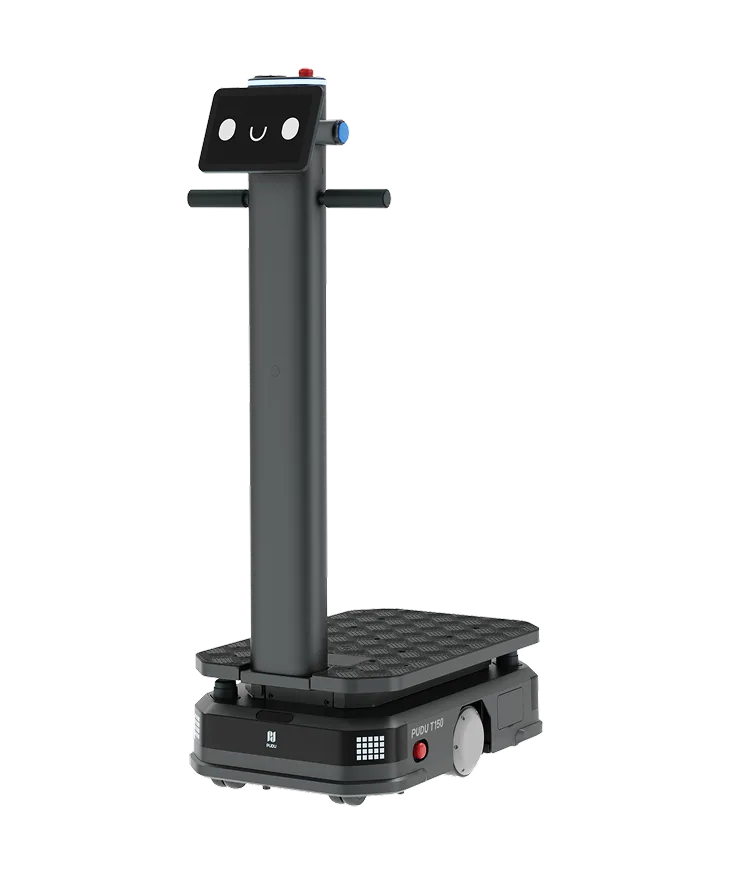
  • PUDU T150

    PUDU Robotics

    PUDU T150

    Industrial logistics

    Payload
    150 kg
    Runtime
    12 h
    Minimum passage width
    60 cm
    On order
    Price on request
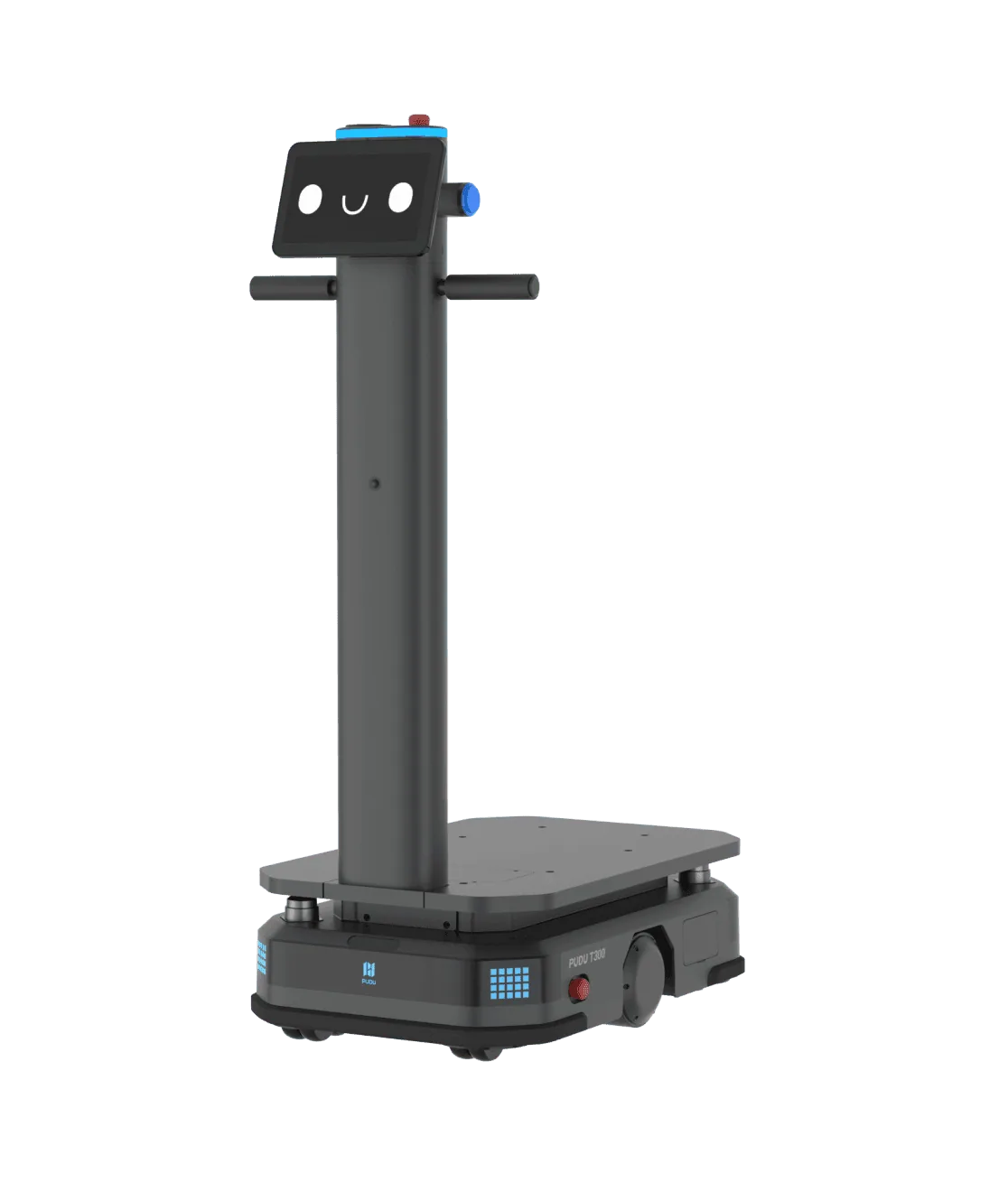
  • PUDU T300

    PUDU Robotics

    PUDU T300

    Industrial logistics

    Payload
    300 kg
    Runtime
    12 h
    Minimum passage width
    60 cm
    On order
    Price on request
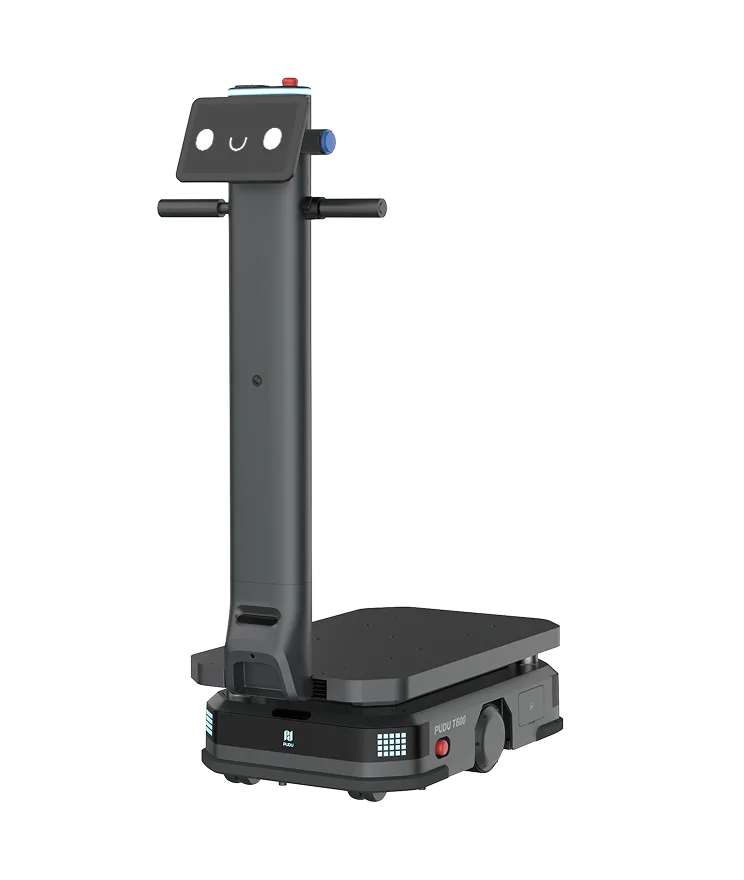
  • PUDU T600

    PUDU Robotics

    PUDU T600

    Industrial logistics

    Payload
    600 kg
    Runtime
    12 h
    Lift height
    60 mm
    On order
    Price on request
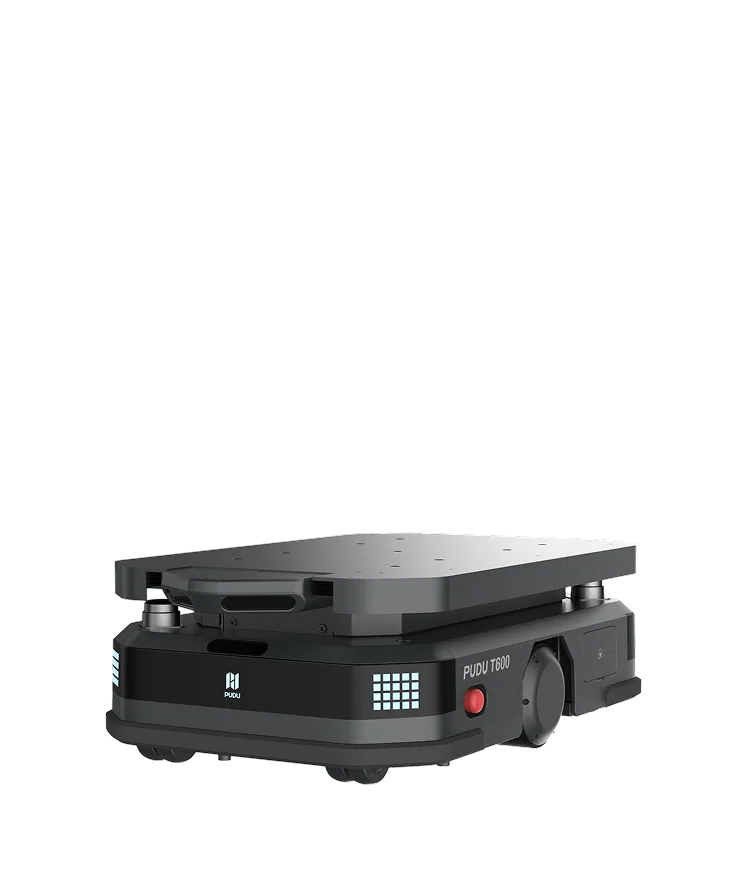
  • PUDU T600 Underride

    PUDU Robotics

    Industrial logistics

    Payload
    600 kg
    Runtime
    12 h
    Height
    25.5 cm
    On order
    Price on request

Figures from the manufacturers' published specifications, checked . Price on request for all models.

HOW DEPLOYMENT WORKS

From site survey to after-sales.

See all services
  1. Site survey

    We walk the routes with you before any order: passage widths, door thresholds, floor gaps, slopes, lifts and doors, Wi-Fi coverage, charging and water points. The survey decides the model.

  2. Mapping and commissioning

    The robot is mapped on site, routes and no-go zones are set, and lifts, doors or call systems are connected where the model supports it.

  3. Training

    Operators learn daily use, charging and cleaning, error recovery and the emergency stop. One site lead learns to change routes and maps.

  4. After-sales

    Remote diagnosis first, then a part or a technician. Preventive maintenance and software updates can be part of a service contract or of a RaaS fee.

ACQUISITION

Buy, rent, or pay by the month.

See rental and RaaS
  • BUYOwn the robotOne invoice, with warranty and an optional service contract quoted alongside.
  • RENTAL1 day to 12 monthsTest one floor or cover a season: delivered, set up and collected.
  • RAAS24 to 60 monthsOne monthly fee: robot, maintenance, software, replacement.

REGULATION

What European law asks, in plain language.

Updated · General information, not legal advice.

Read the Machinery Regulation guide
CE marking and EU declaration of conformityEvery robot we deliver carries the CE marking and comes with the manufacturer's EU declaration of conformity, which we check before delivery.
Machinery Regulation (EU) 2023/1230The Machinery Regulation applies from 20 January 2027 and replaces Directive 2006/42/EC. It adds requirements for autonomous mobile machinery, safety software and protection against corruption.
GDPR and robots with camerasA robot that films or maps a place where people can be identified processes personal data. The operator needs a legal basis, informs the people concerned and limits how long images are kept.
Your risk assessmentAs an employer, you include the robot in the risk assessment of the workplace like any other work equipment. The manufacturer's instructions state the residual risks and the training required.
Driverless industrial trucksDriverless industrial trucks are usually designed to ISO 3691-4. Check which standards the manufacturer lists in the EU declaration of conformity, and plan the traffic of robots, forklifts and pedestrians in your risk assessment.

FAQ

Questions logistics managers ask us.

What is the difference between an AMR and an AGV?

An AMR plans its own route from a map and its sensors and goes around obstacles. An AGV follows a fixed path set by wire, tape or markers and waits when that path is blocked.

How much load can a logistics robot carry?

The PUDU T150, T300 and T600 carry 150 kg, 300 kg and 600 kg according to their manufacturer. The load, its footprint and the floor condition decide the model.

Do I need to change my warehouse layout?

Usually not. An AMR navigates from a map of the existing site. The survey checks aisle widths, floor gaps, slopes, doors and the Wi-Fi coverage along the routes.

Can a robot connect to our WMS?

Most manufacturers offer an interface or an API to exchange tasks with a warehouse management system. Robot Distribution checks what the chosen model supports before the quote.

Tell us about your site. We will size the fleet.

Robots, acquisition mode and delivery terms, in one written proposal.