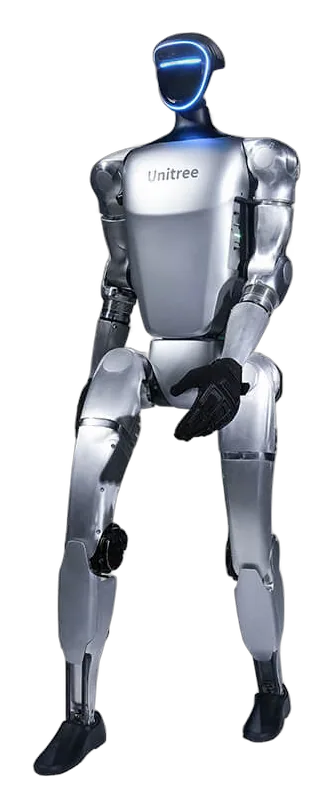
Humanoids
- Height
- 132 cm
- Degrees of freedom
- 23 DOF
- Weight
- 35 kg
On order
From €14,290 ex VATor €489/month in RaaS
Updated
USE CASE · INSPECTION, R&D AND EDUCATION
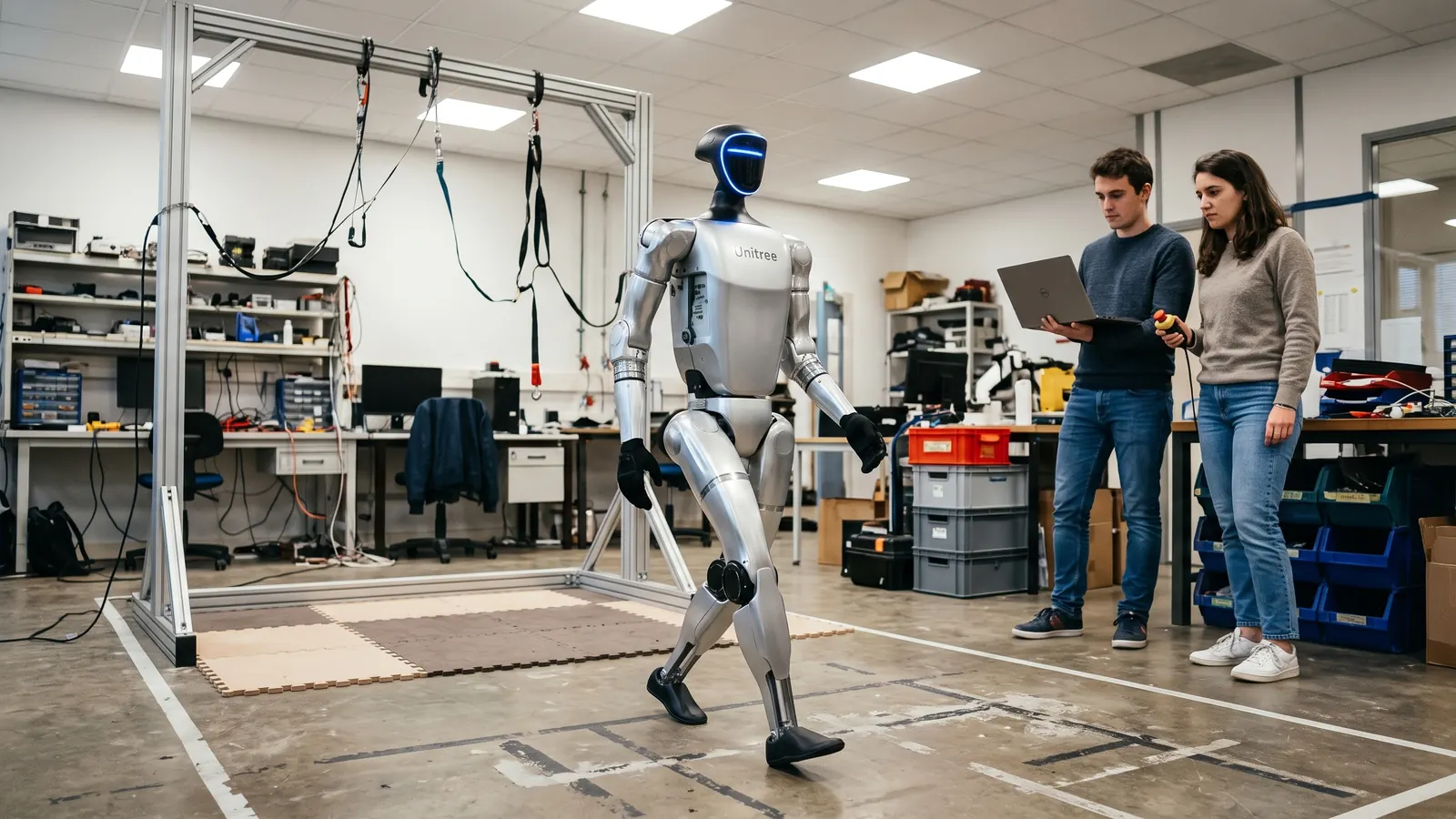
The lab works on a real humanoid body: it trains policies in simulation, transfers them to the robot and measures what holds up in the real world.
Updated
A research humanoid gives labs and universities a platform for locomotion, manipulation, imitation and reinforcement learning, and human-robot interaction.
The Unitree G1 stands 1.32 m, weighs about 35 kg, has 23 degrees of freedom (up to 43 on the EDU version) and runs about 2 h according to its manufacturer.
Robot Distribution advises on the platform for your research programme, delivers it, commissions it with the team and provides support and maintenance.
WHY
Embodied AI is validated on a real body: a walking or manipulation policy that works in simulation still has to cope with friction, impacts, noisy sensors and imperfect floors. For that, a lab needs an open, robust, available platform, not a home-made prototype.
The choice depends on the programme: a compact, light humanoid to run many locomotion trials, a more powerful platform for bimanual manipulation, a soft, touch-sensing body for human-robot interaction.
HOW IT RUNS
Delivery, handover, setup of the development workstation and safety rules for the test room, with the research team.
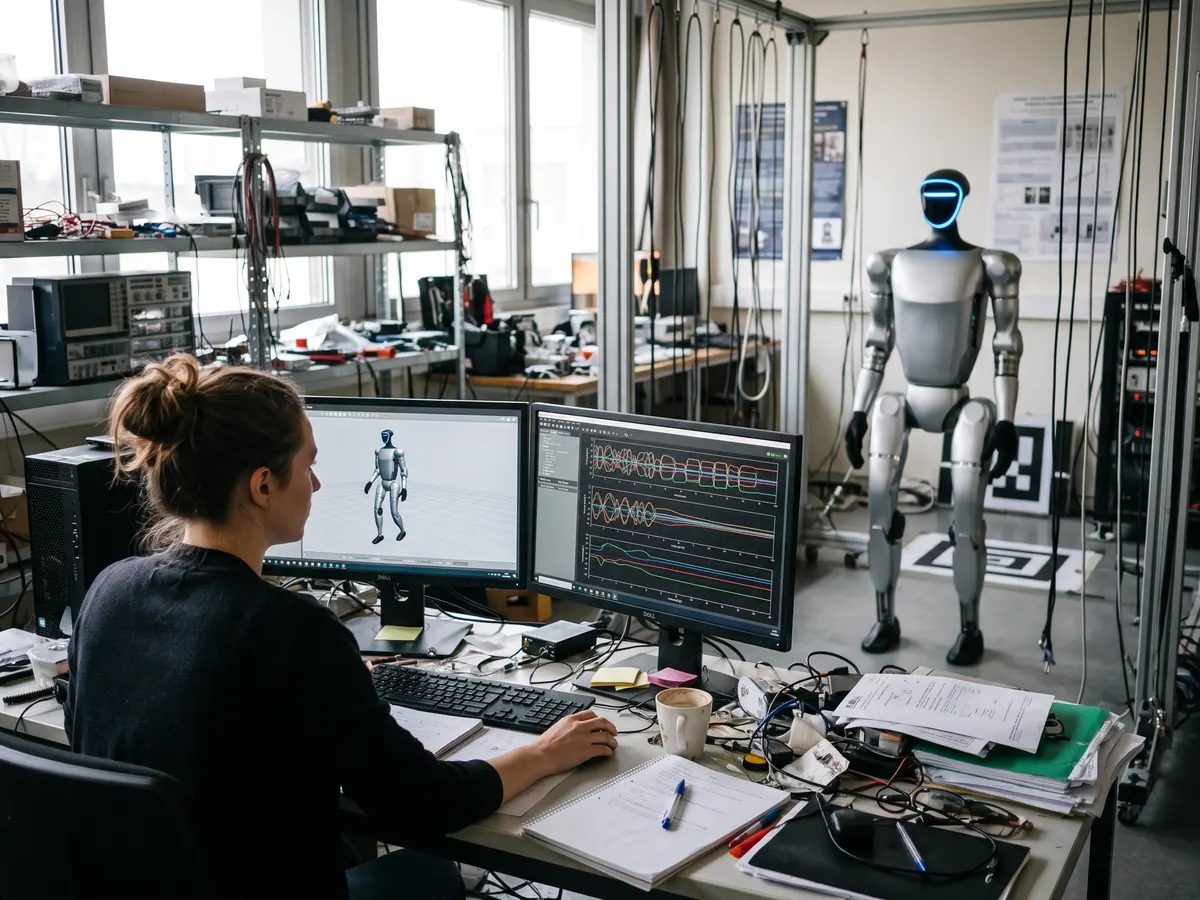
The team trains its controllers or models on the robot's digital model, then prepares the transfer to the hardware.
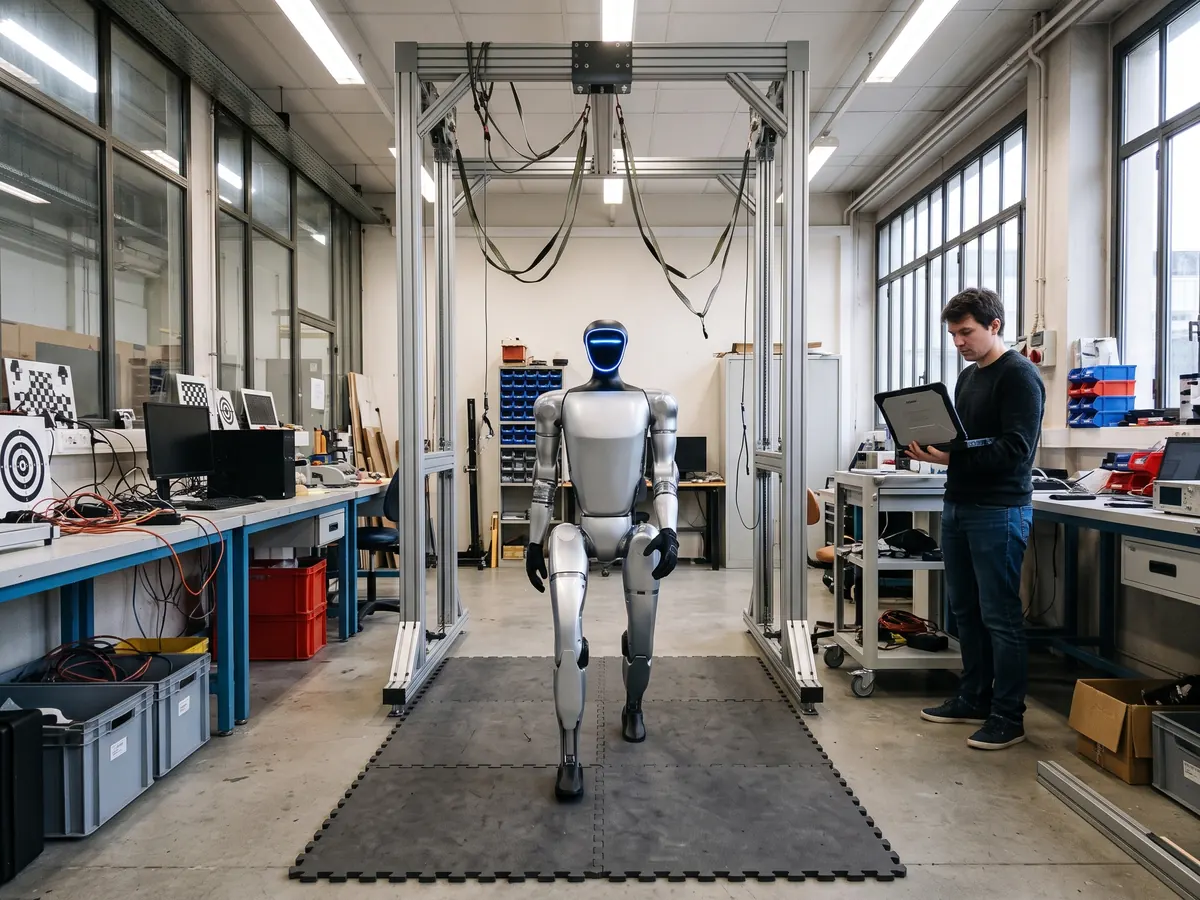
First trials on the real robot run suspended or belayed, then free once the behaviour is stable.
Joint logs, images and measurements are recorded at every trial to correct the policy and prepare publications.
THE ROBOTS
Humanoids
Humanoids
Humanoids
Humanoids
BEFORE INSTALLING
Locomotion, manipulation, interaction or demonstration: it sets the degrees of freedom, hands and computing power you need.
Joint access, development interfaces and the robot model for simulation: what the chosen version really allows.
Clear floor space, surface, gantry or safety harness, marked area and emergency stop procedure.
Who steps in after a breakage, which parts are available and how requests are handled, before the project depends on it.
RULES AND STANDARDS
A research humanoid sits between machinery law, standards still being written and the lab's own obligations to staff and study participants.
Regulation (EU) 2023/1230 replaces the Machinery Directive and applies from 20 January 2027. Article 2(2)(m) excludes machinery specially designed and constructed for research purposes for temporary use in laboratories. A humanoid bought off the shelf is not necessarily in that case. Ask the supplier which conformity marking and declaration come with the robot you order.
ISO/CD 25785-1, under development at ISO/TC 299, covers safety requirements for dynamically stable industrial mobile robots, including bipeds, in settings where public access is restricted. It is a committee draft, not a published standard. Labs can follow its progress to anticipate future requirements, without treating it as a reference yet.
Article R4121-1 of the French Labour Code requires the employer to record the occupational risk assessment in a single document (document unique) and keep it up to date, by work unit. A falling robot, pinch points and emergency stop procedures belong in it. Check with your prevention adviser that the humanoid test area is listed.
When a human-robot interaction study films or records participants, the GDPR applies. The CNIL stresses that research is not a legal basis in itself: choose consent, public-interest mission or legitimate interest before collecting data. GDPR consent is distinct from agreeing to take part in the study. Check the framework with your data protection officer.
General information, not legal advice.
FAQ
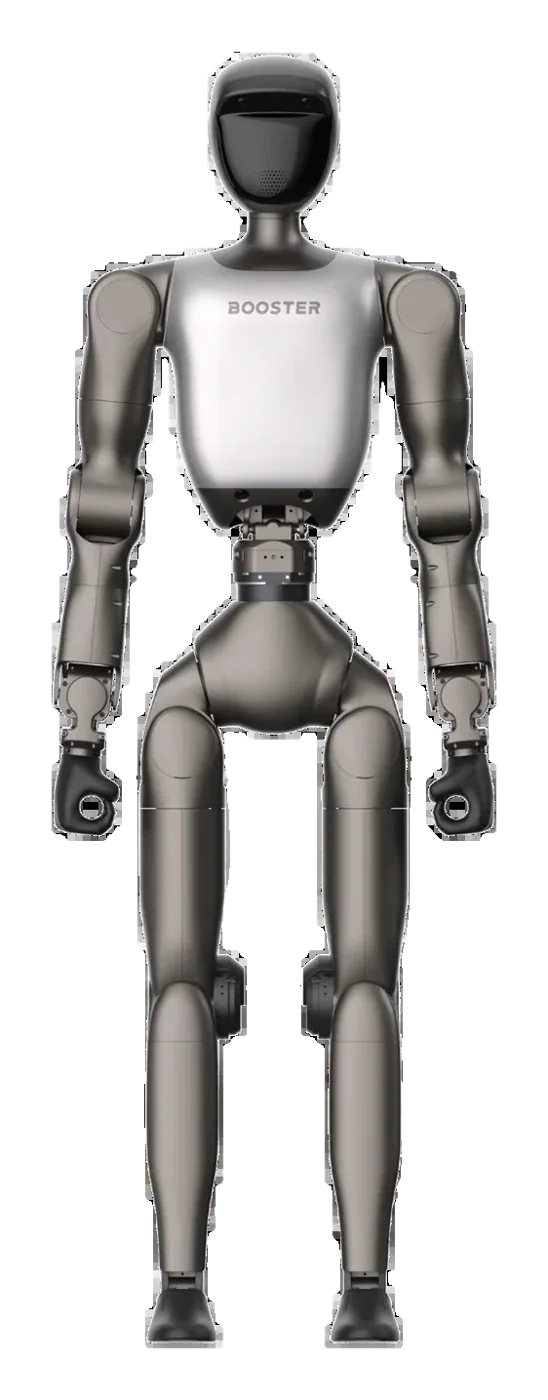
A compact platform keeps breakage risk and cost down. The Unitree G1 (1.32 m, about 35 kg) is driven by imitation and reinforcement learning according to its manufacturer; the Booster T2 (about 1.40 m, 31 degrees of freedom) walks at up to 3 m/s.
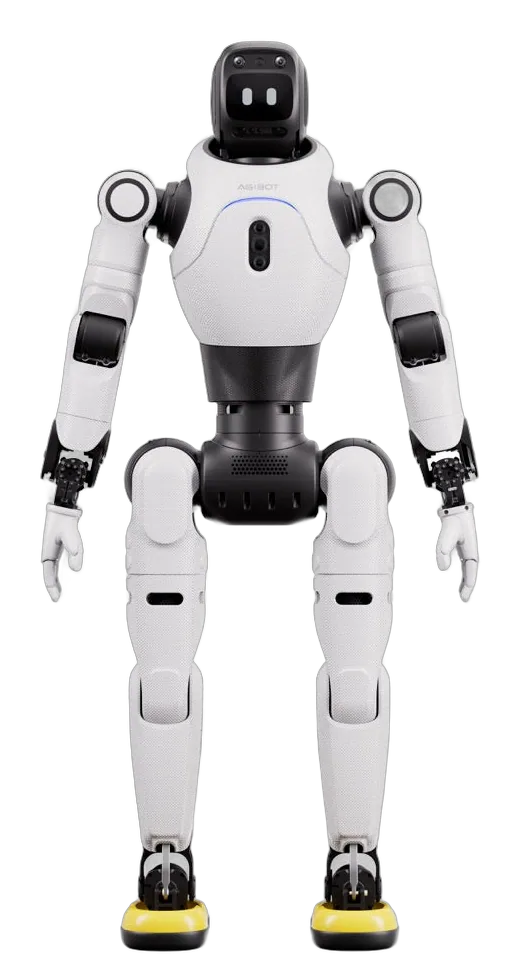
The Booster T2 is rated for a 10 kg dual-arm payload with 7-DOF arms; the AGIBOT X2 Ultra has 31 degrees of freedom and takes the brand's hands and grippers, sold separately, according to their manufacturers.
Yes, that is what the development versions are for: G1 EDU, T2 Education and Professional, secondary development on the X2 Ultra. The level of access differs by version, and we check it with you before ordering.
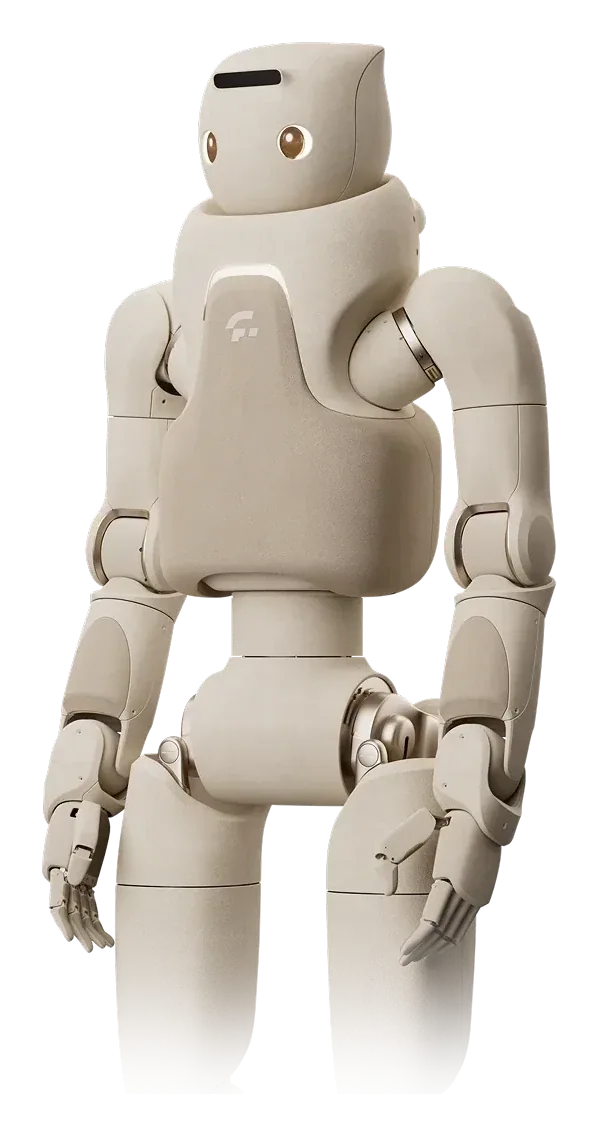
The Fourier GR-3 is designed for interaction: 1.65 m, 55 degrees of freedom, a soft shell and 31 pressure sensors according to its manufacturer.
USE CASES
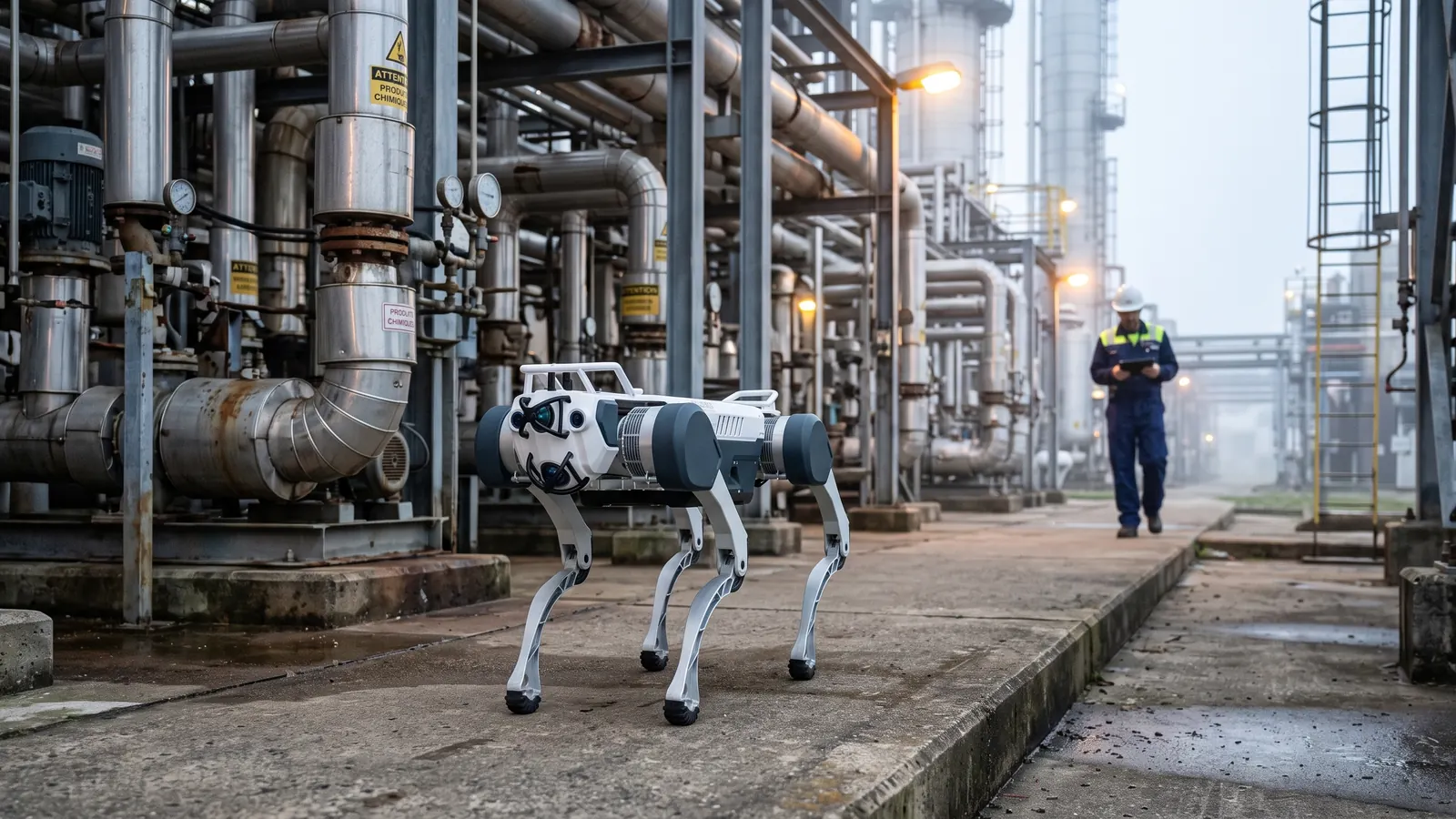 Industrial inspection roundsThe robot walks the same route every day, stops at the same points and records images, temperatures and readings. Technicians review the deviations and step in where needed.
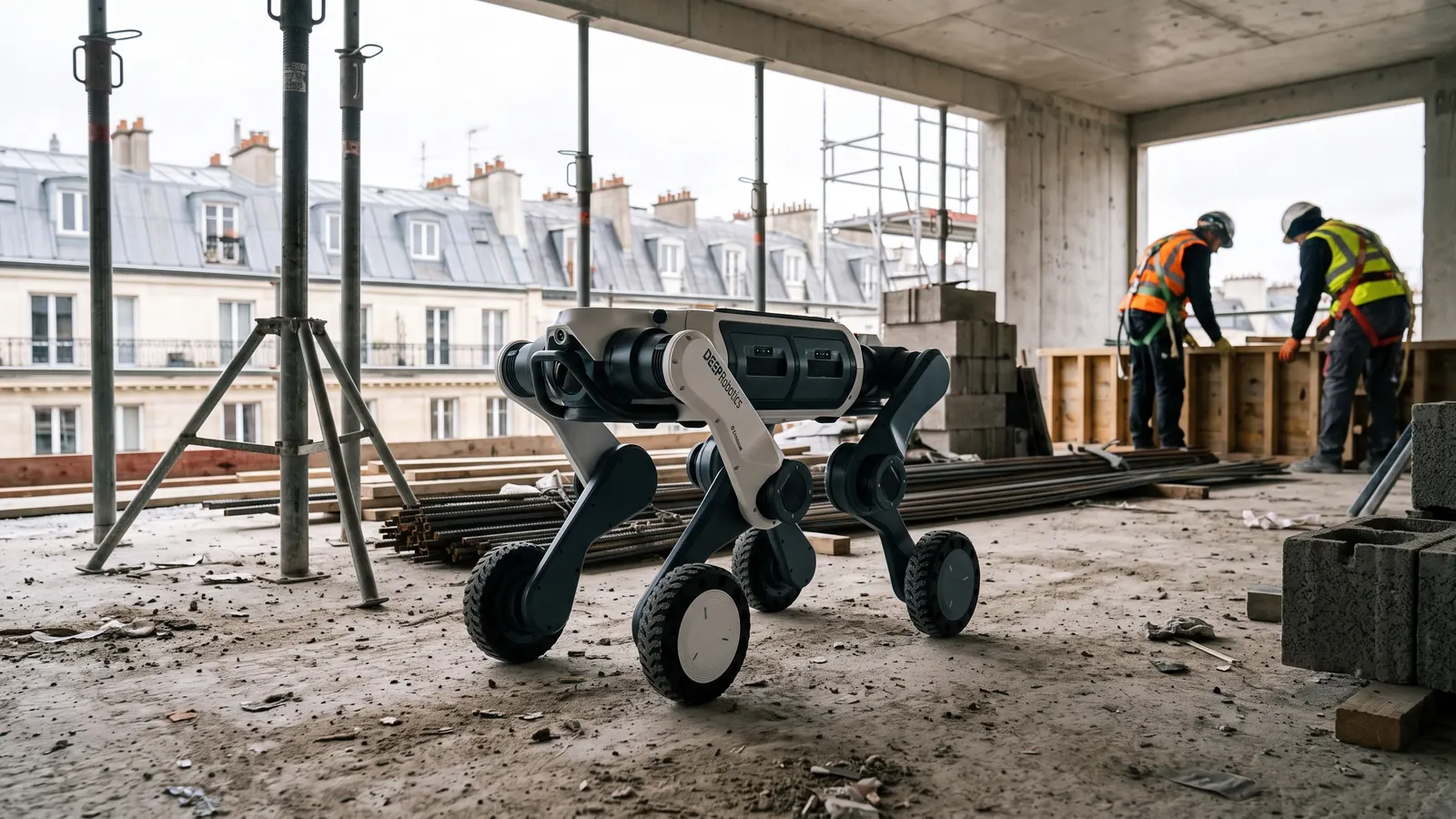 Construction site monitoringThe robot walks the site on a fixed route and brings back point clouds, photos and video. The site manager compares progress week by week without walking the whole site again.
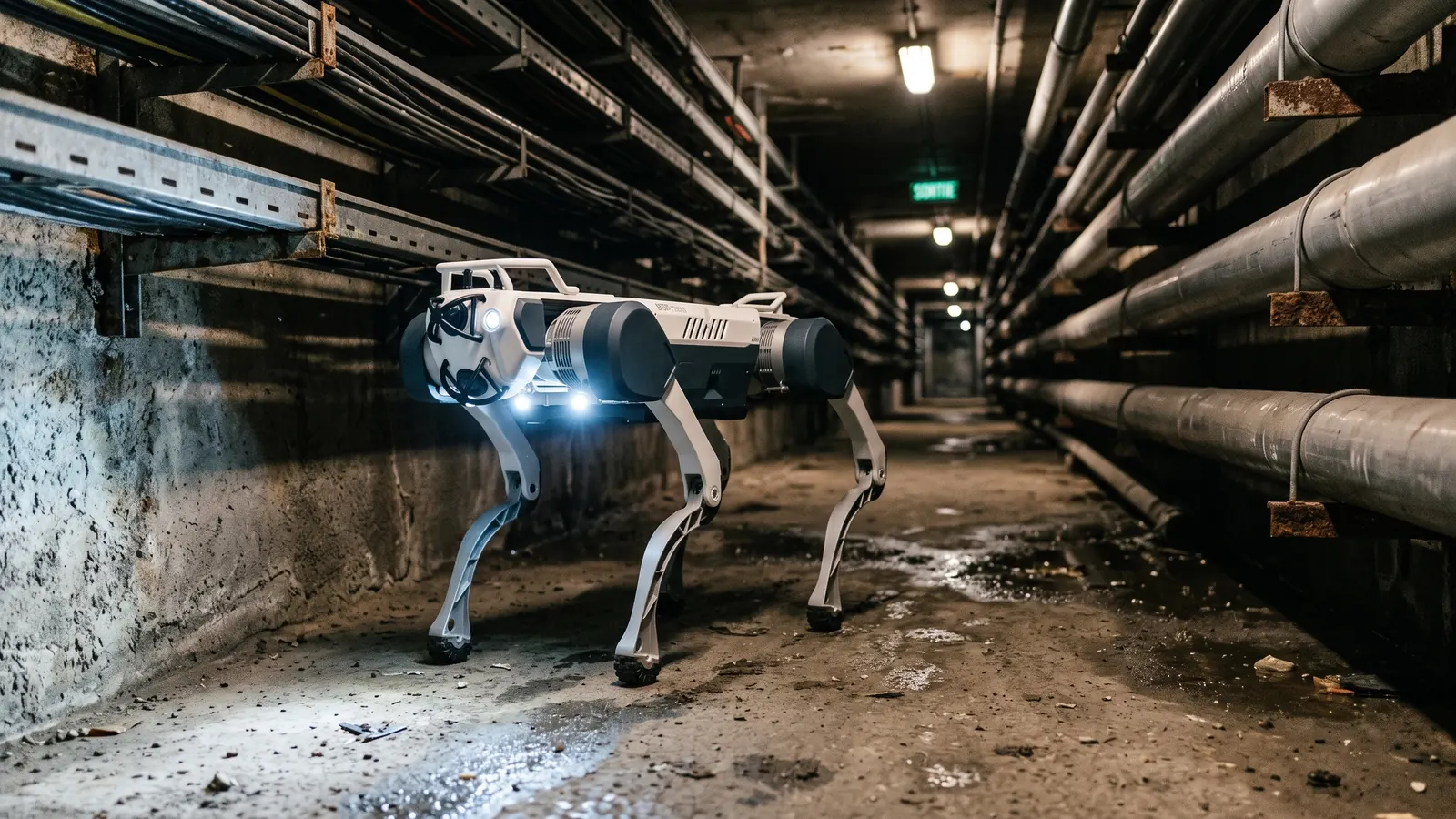 Tunnel and utility inspectionThe robot walks utility tunnels, road tunnels and underground car parks and brings back dated images and readings. Staff keep their descents for repairs.
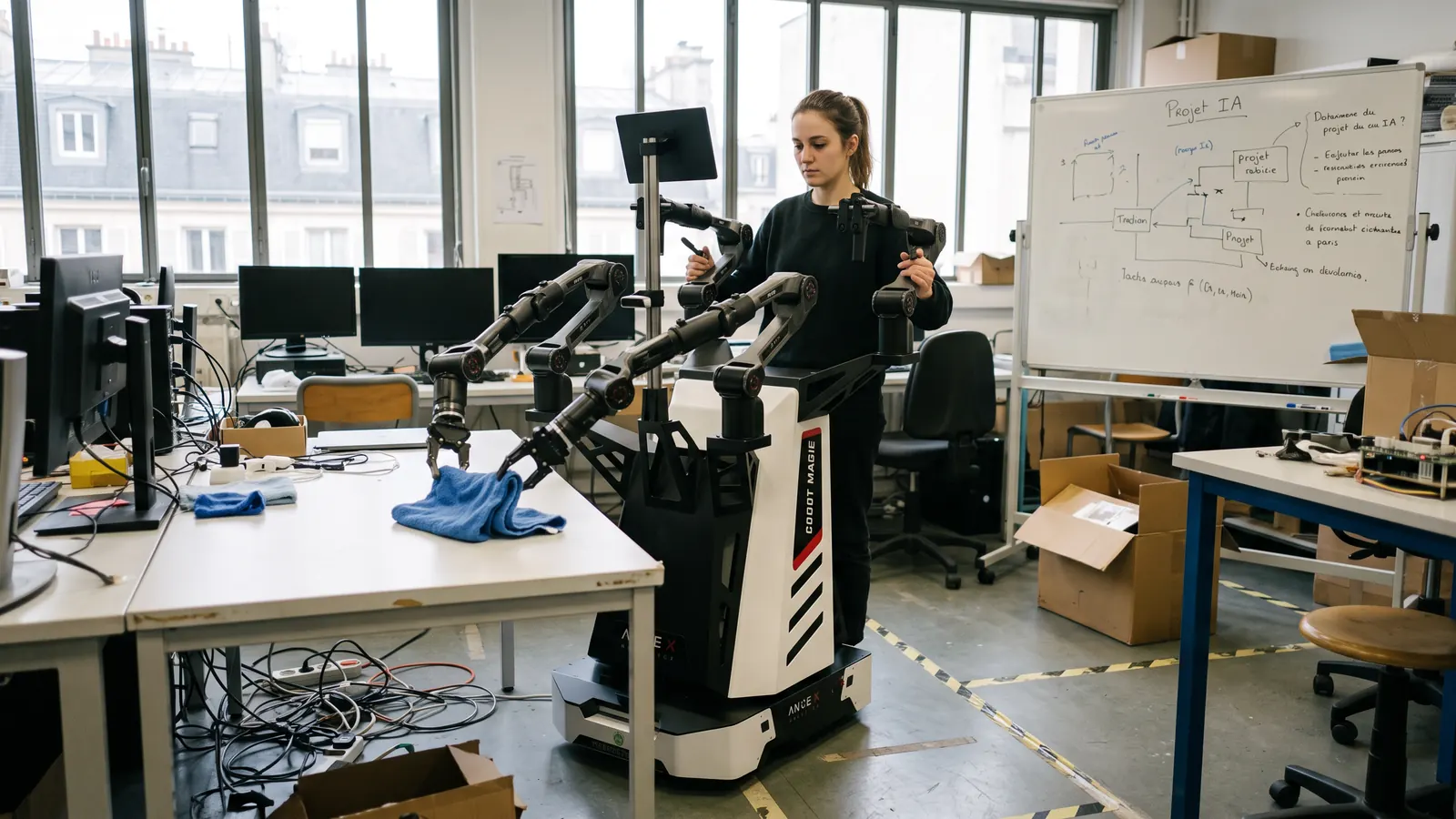 Teleoperation data collectionAn operator guides the robot's arms as if making the move by hand. Each demonstration records motion and images and becomes training data for the model.
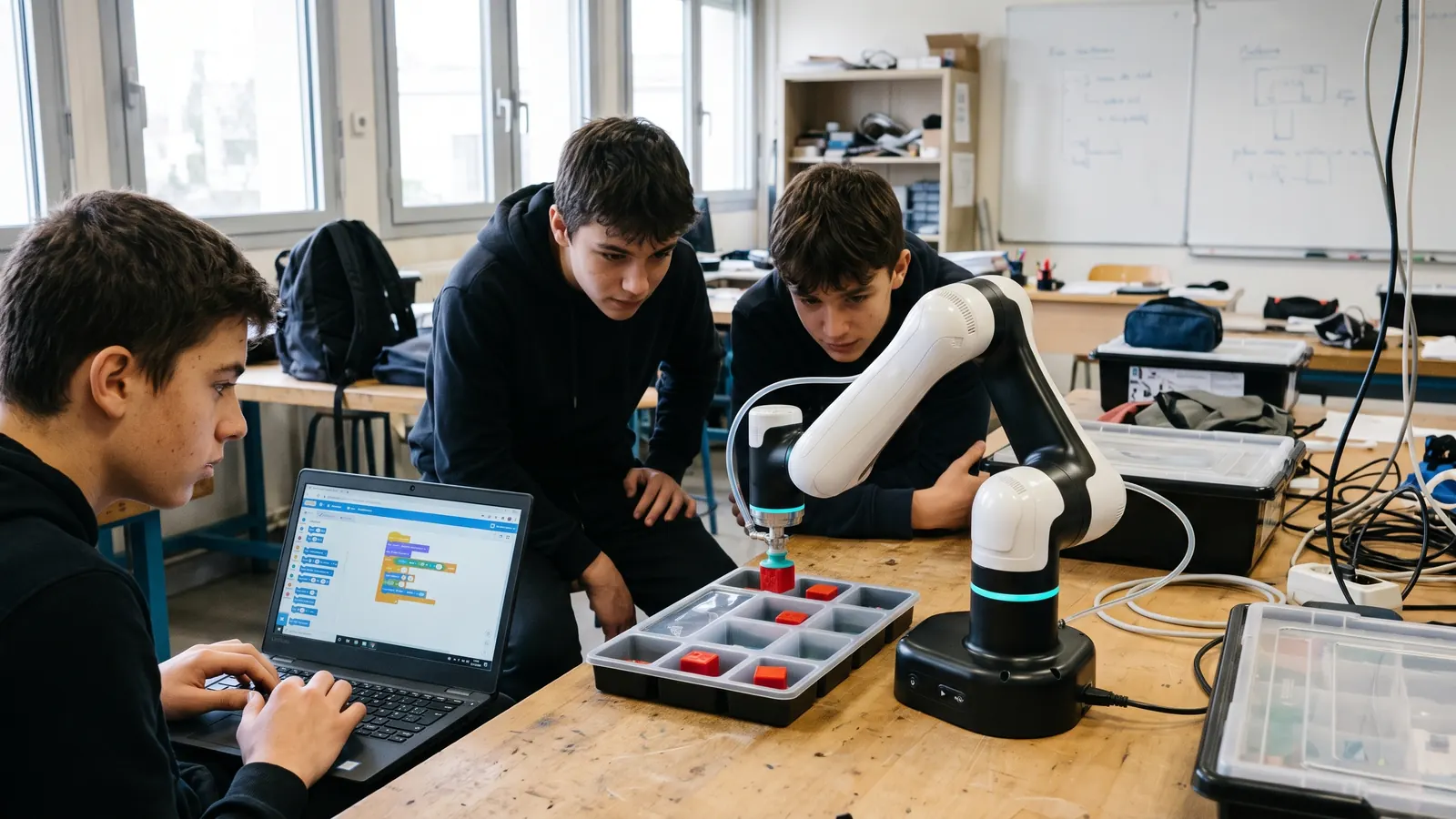 Robotics teachingStudents program a robot that moves in front of them. The abstract idea becomes a visible result, and mistakes show straight away.
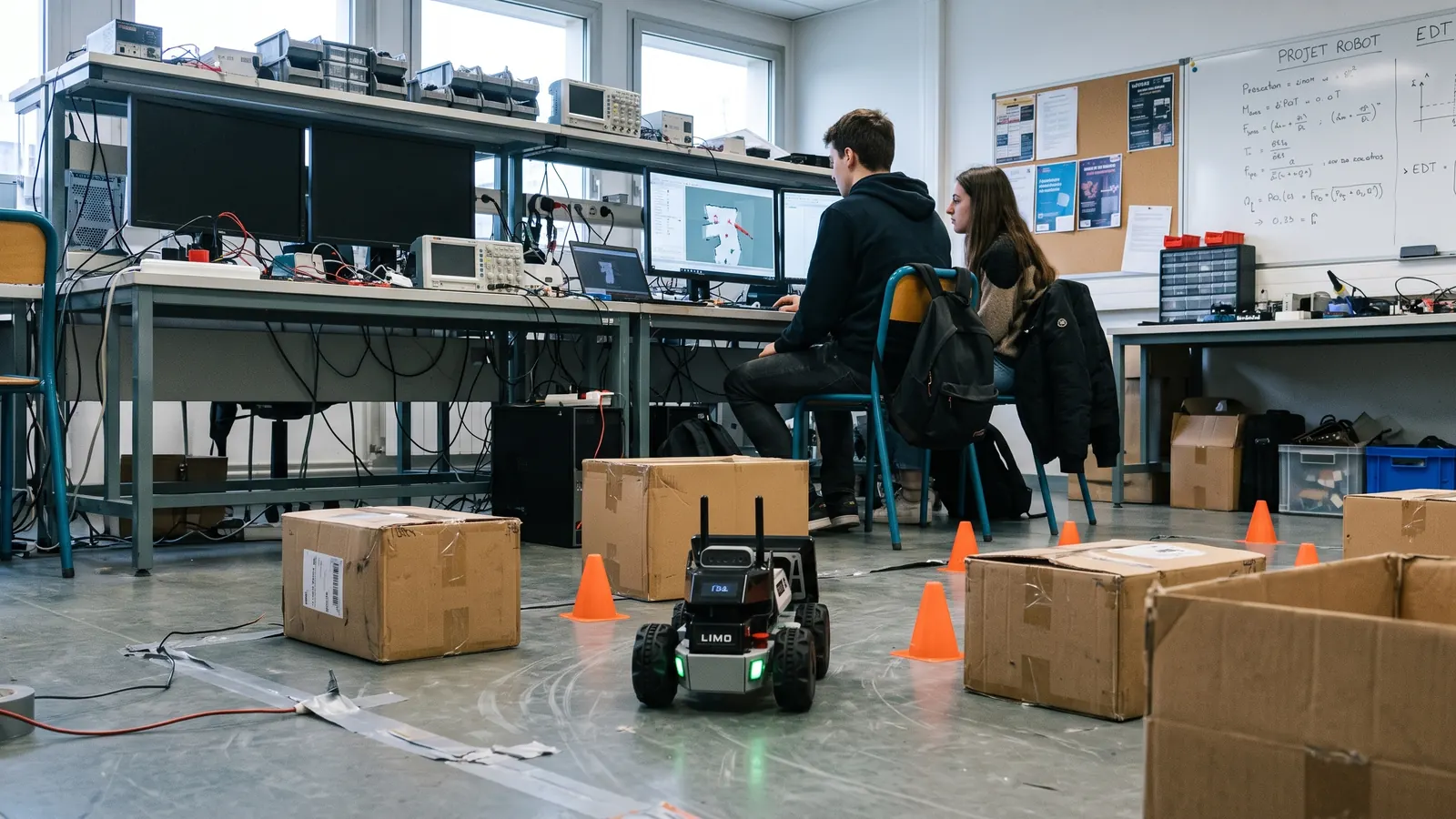 Mobile robotics and ROS 2Students map, localise and navigate a real robot. What worked in simulation meets reflections, noisy sensors and cluttered corridors.
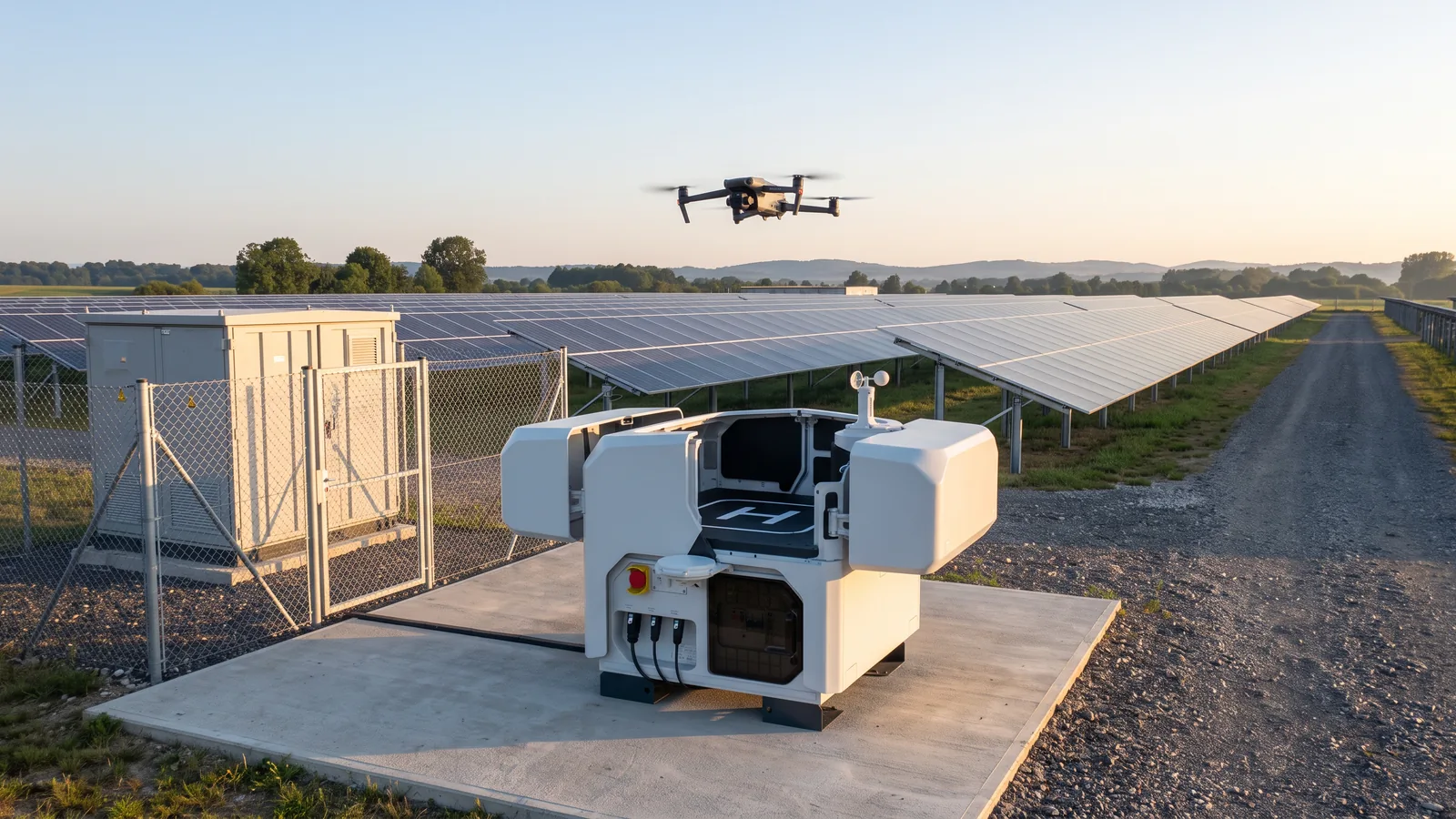 Drone inspection of solar and industrial sitesThe drone flies over modules, roofs, networks and equipment and brings back visible and thermal images, piloted on site or launched from an automated dock. Technicians keep the analysis, decisions and repairs.
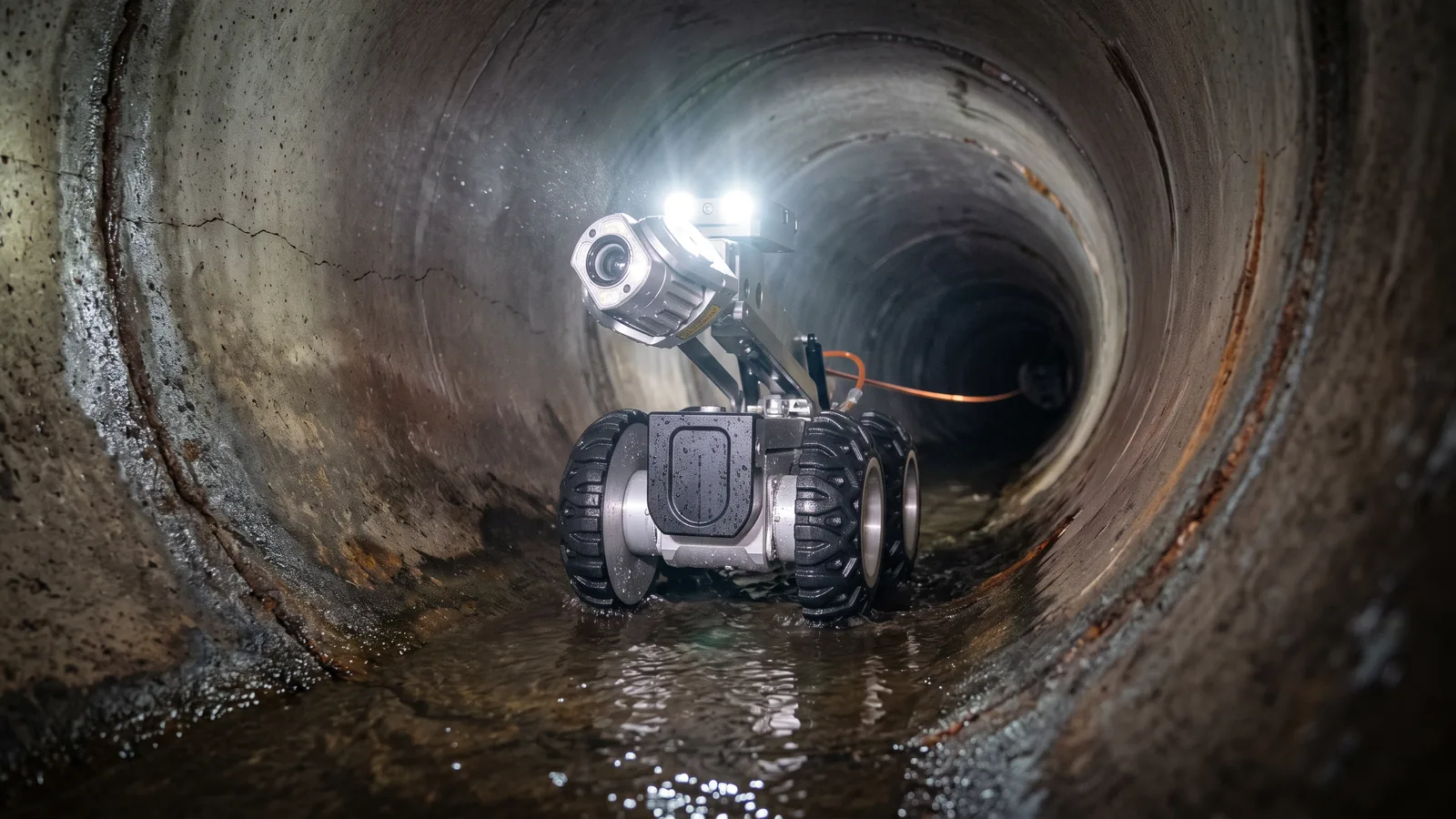 CCTV inspection of sewer pipesThe camera robot travels the sewer from the manhole and films the pipe wall, controlled from the surface. Technicians keep the diagnosis, defect coding and the choice of works.
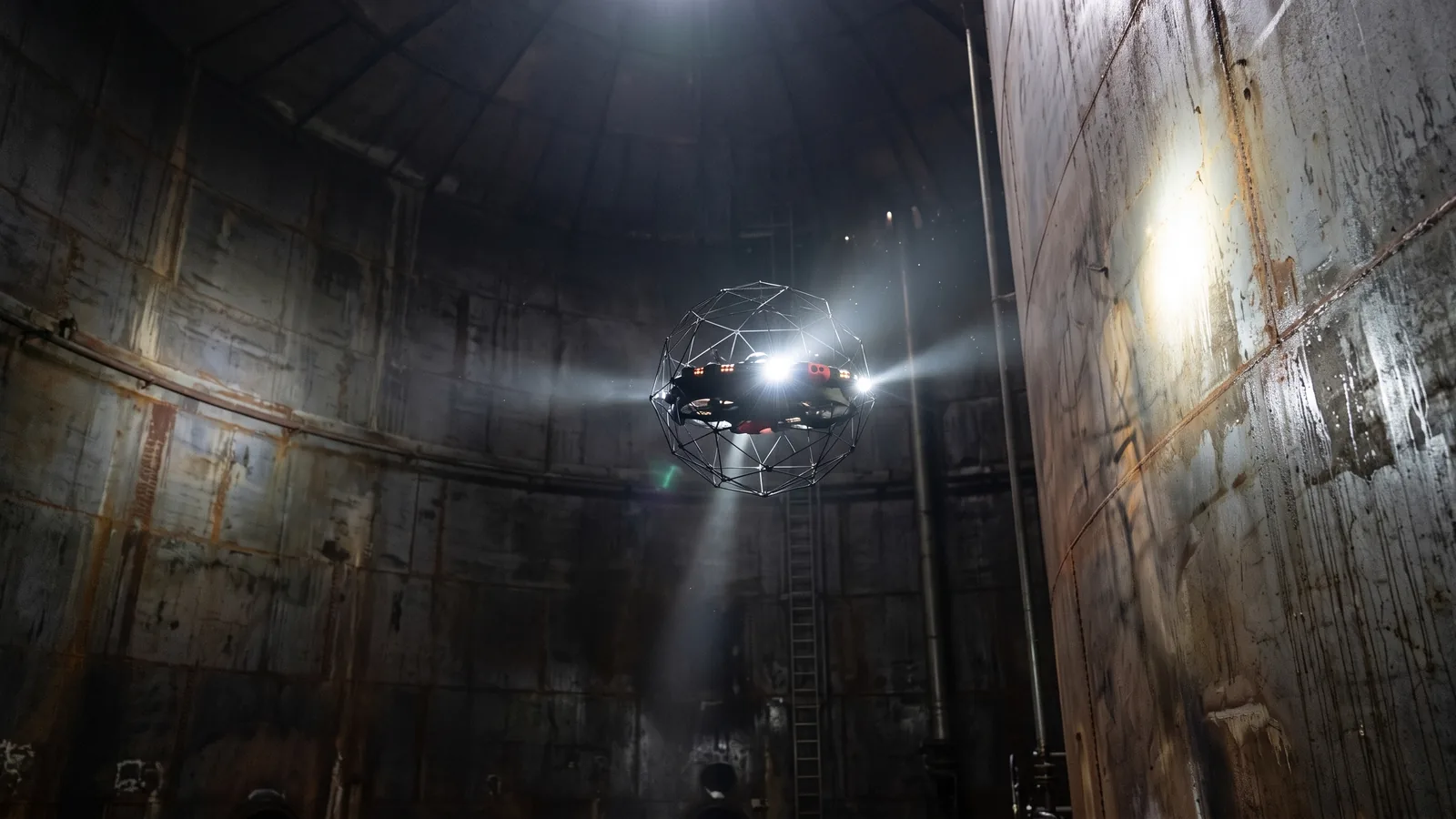 Confined-space drone inspectionThe drone goes into the tank, boiler or silo instead of the inspector and brings back images, video and 3D data. Inspectors keep the analysis, the regulatory measurements and the repair decisions.
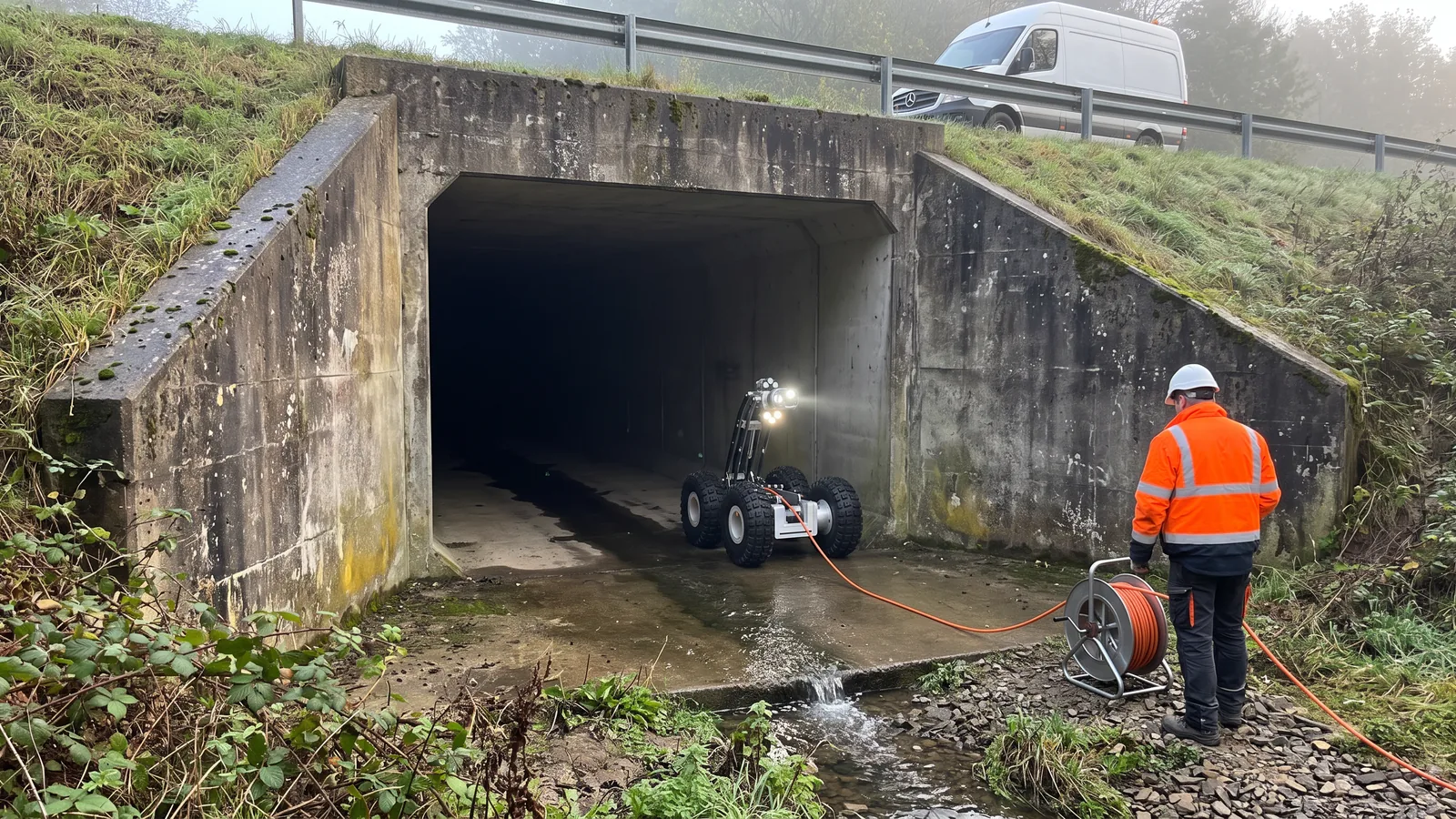 Large sewer and culvert inspectionThe robot travels through large trunk sewers, egg-shaped collectors and culverts under roads, camera centred in the section, driven from the surface. Sewer crews only go in to carry out work.
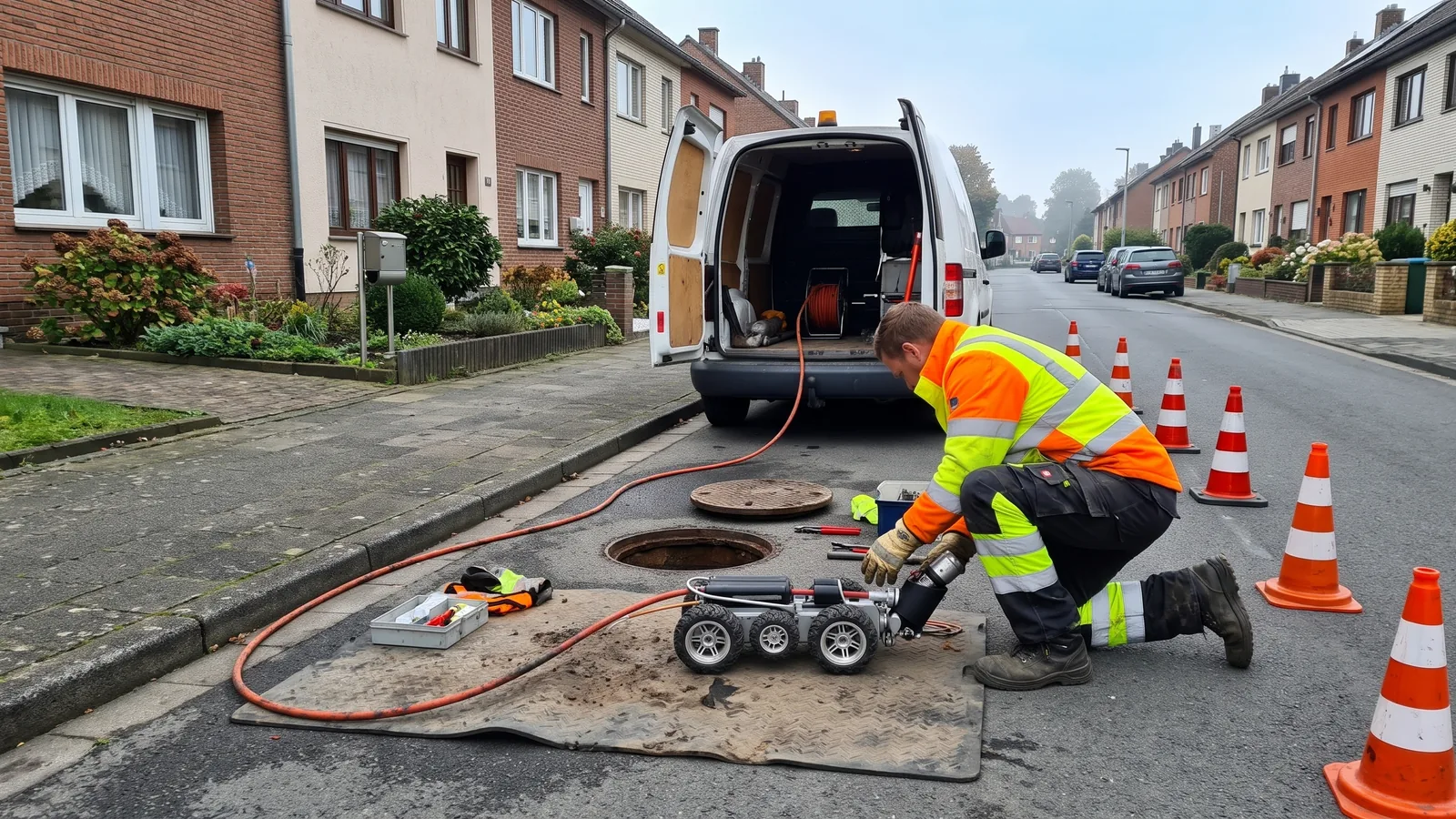 Sewer lateral inspection with a satellite cameraThe crawler drives along the main, stops at the connection and pushes a small pan-tilt camera into it. The building's lateral is inspected without opening the road or entering the property.
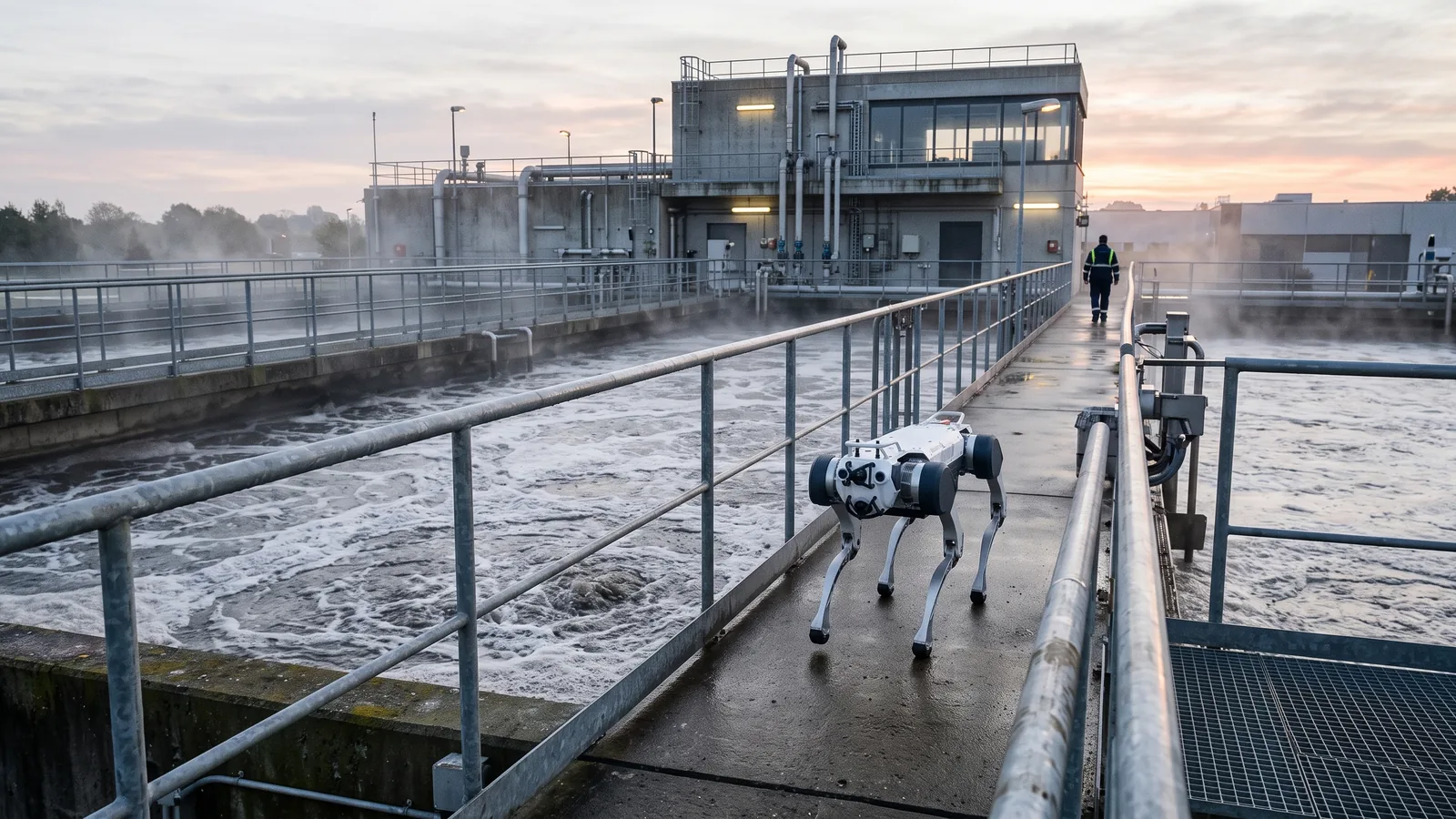 Inspection rounds in water treatment plantsThe robot tours basins, pumps and cabinets at set times and brings back images, temperatures and readings. Operators focus on deviations and running the process.
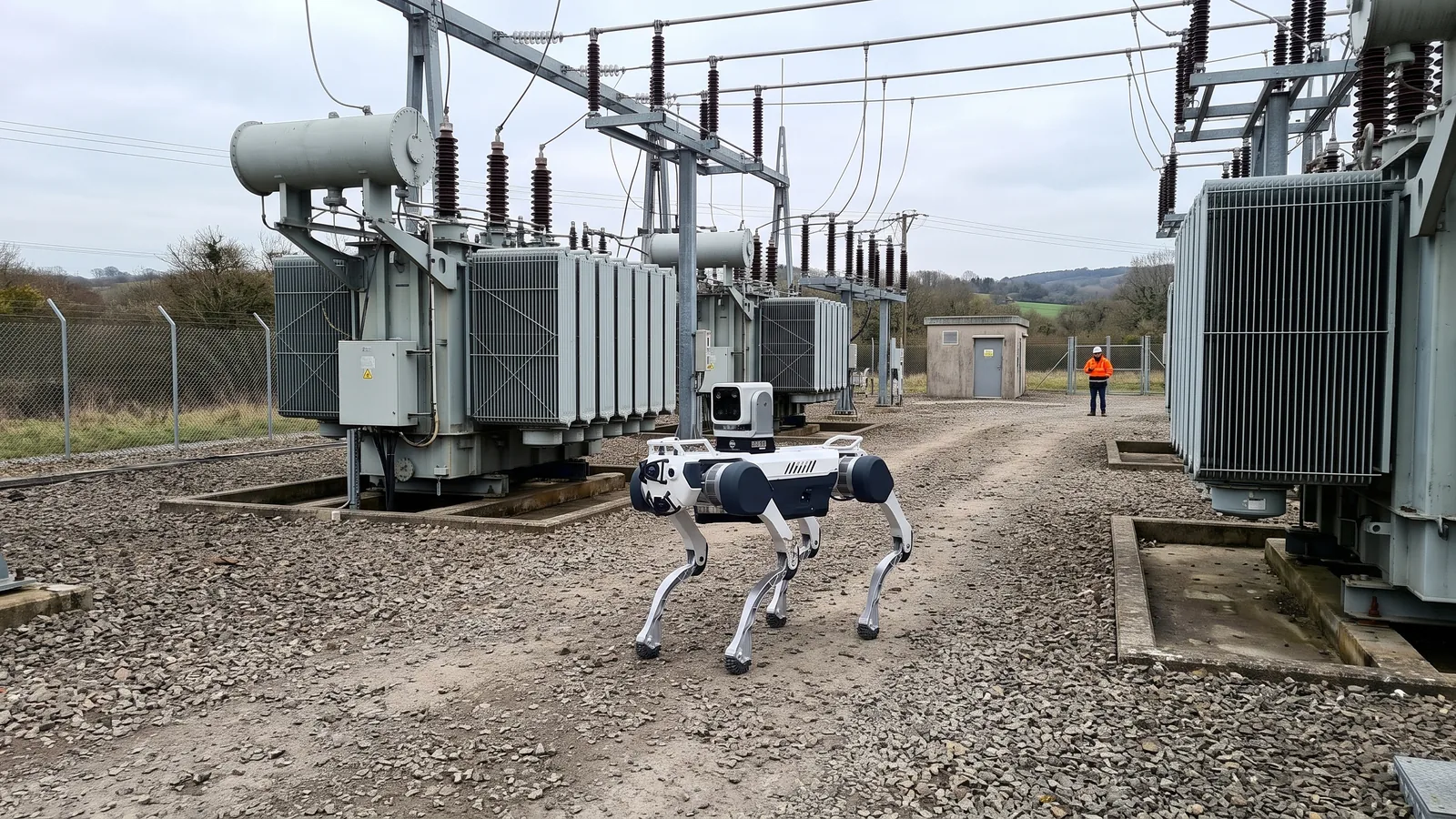 Electrical substation inspectionA ground robot patrols the substation aisles and a docked drone flies over the equipment. Together they record temperatures, gauges and visual condition, without sending someone out for every round.
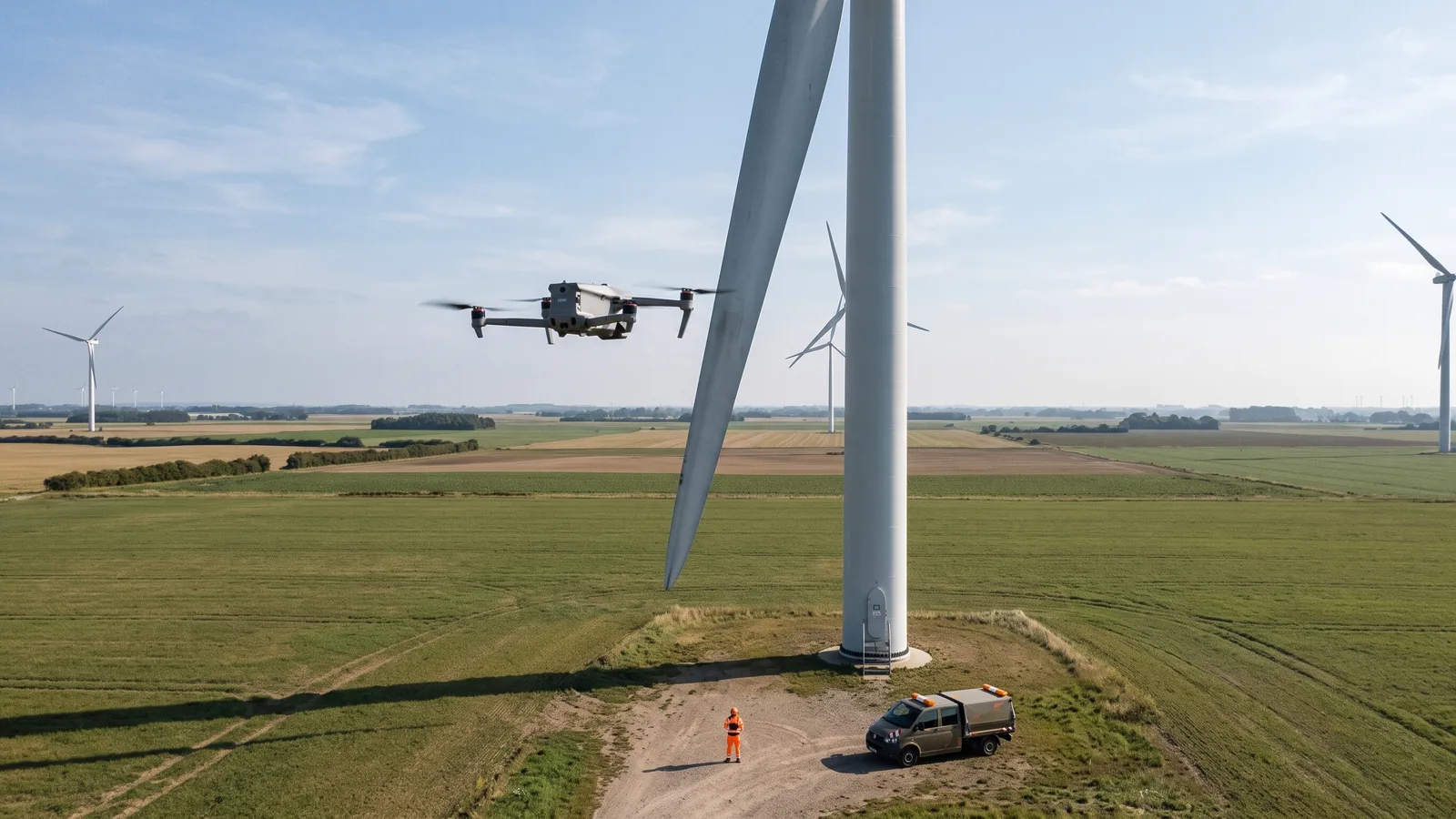 Drone inspection of power lines and wind turbinesThe drone flies along the lines and around the turbines, taking visible and thermal images of insulators, connections and blades. Maintenance crews only work at height on confirmed defects.
Robots, acquisition mode and delivery terms, in one written proposal.