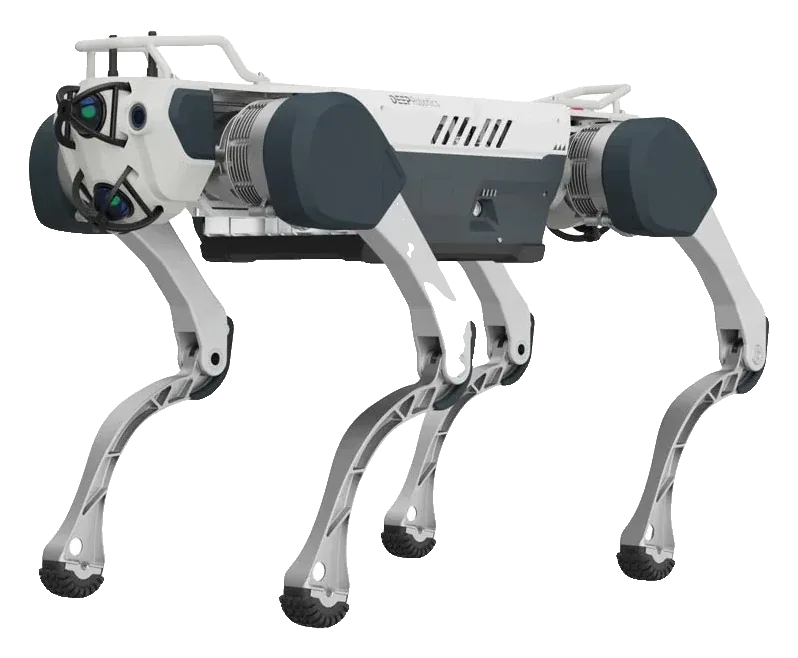
Quadrupeds
- Weight
- 56 kg
- Runtime
- 2.5–4 h
- Ingress protection
- IP67
On order
From €94,990 ex VATor €3,229/month in RaaS
Updated
USE CASE · LOCAL AUTHORITIES
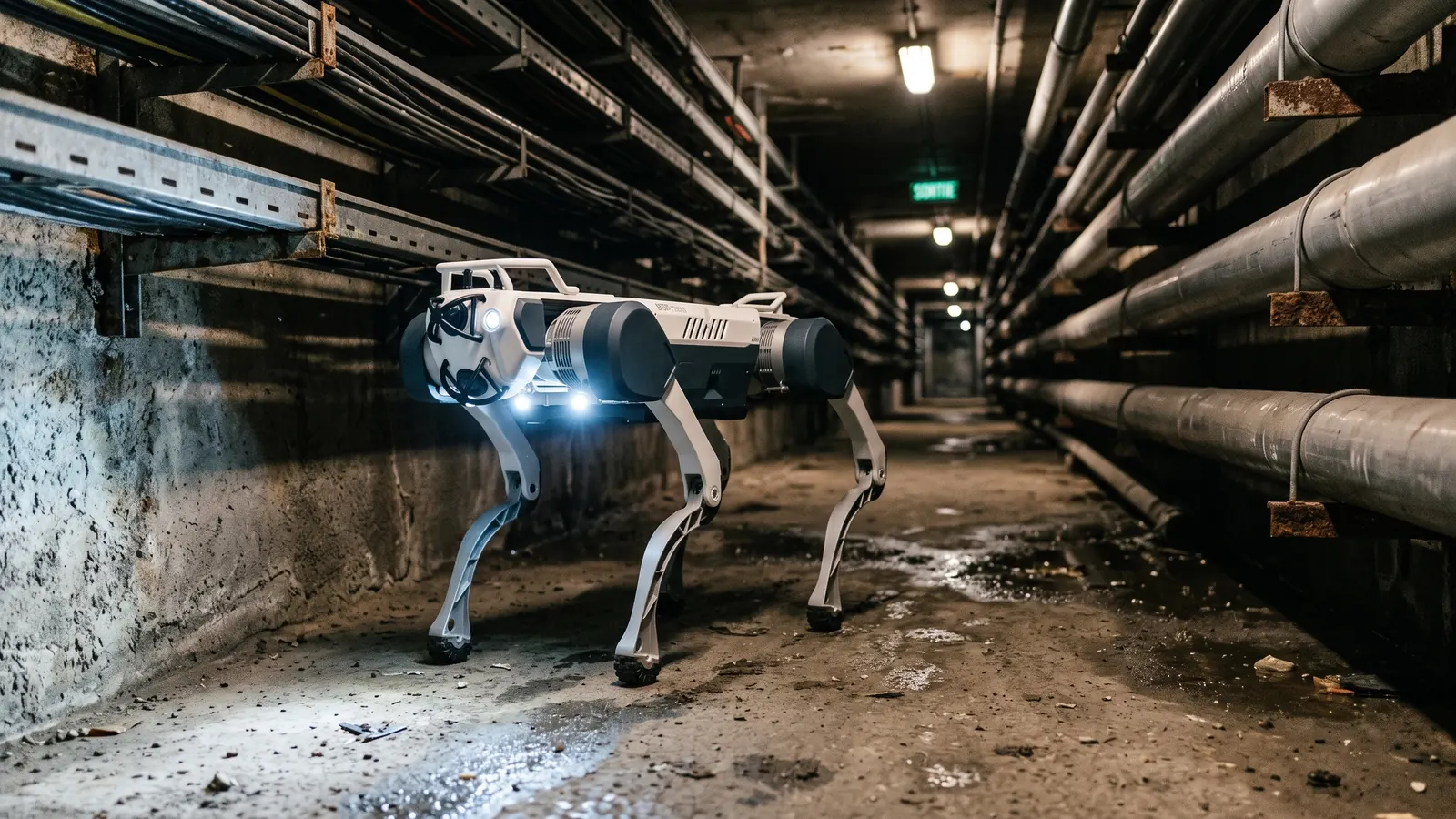
The robot walks utility tunnels, road tunnels and underground car parks and brings back dated images and readings. Staff keep their descents for repairs.
Updated
An underground inspection robot walks a municipality's utility tunnels, road tunnels and car parks and brings back photos, video and readings at each checkpoint.
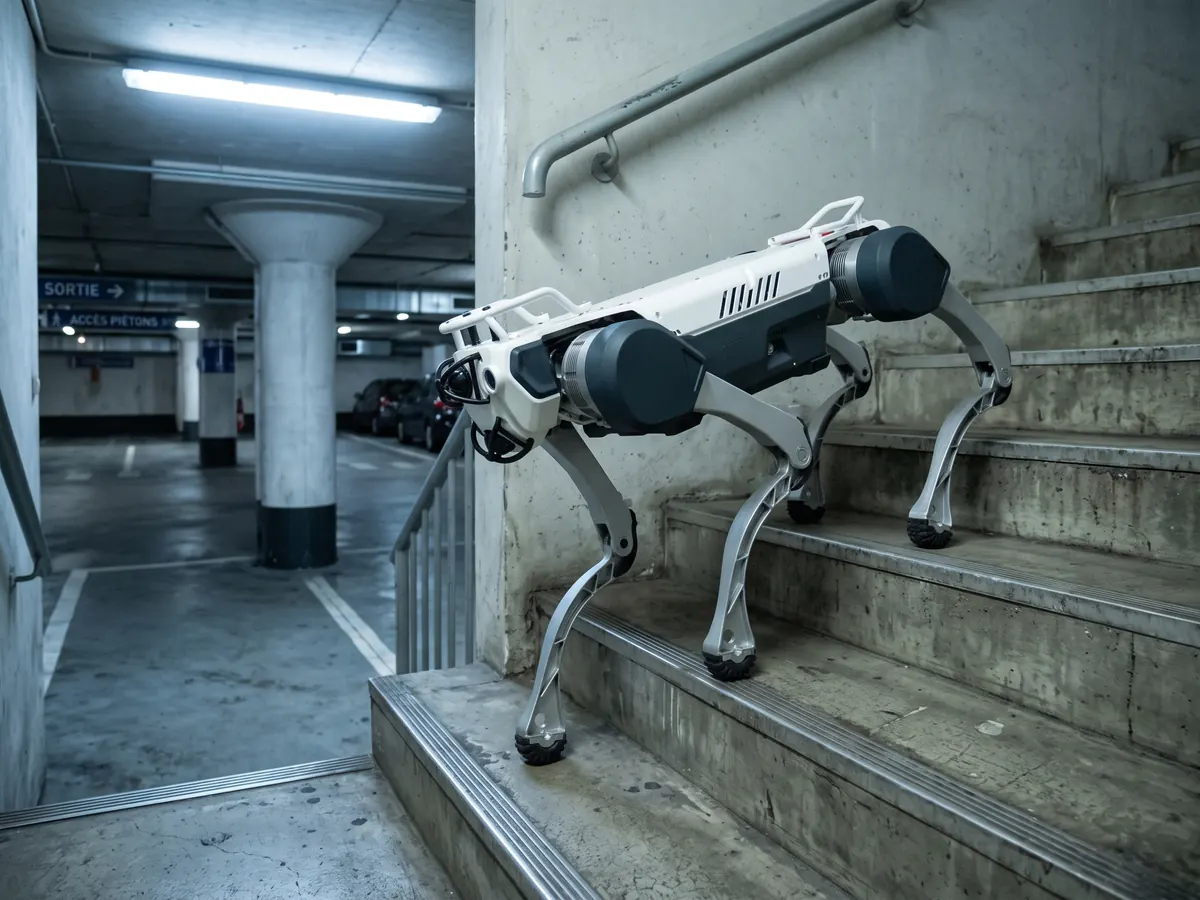
The DEEP Robotics X30 is IP67, works from -20 to 55 °C, climbs 45° stairs and its perception works in darkness according to its manufacturer.
Robot Distribution equips it for your structures, records the routes with your technical services and maintains it, to buy, rent or as RaaS.
WHY
Utility tunnels, underground networks, road tunnels and car parks need regular visits: wall condition, water ingress, cable and pipe supports, lighting, safety equipment. Each descent takes at least two staff, preparation and sometimes a closure.
The robot does those routine visits in the dark and damp, at the same pace and from the same angles. Technical services follow the structures on comparable records and only send a crew where a defect is found.
HOW IT RUNS
At commissioning the structure is mapped and checkpoints are set: joints, manholes, supports, cabinets, known ingress points.
Set down at the access or leaving its dock, it follows the route, crosses sills, steps and gutters, without relying on lighting.
Photos, video, a thermal image or a gas reading depending on the sensors fitted, with the position of each reading in the structure.
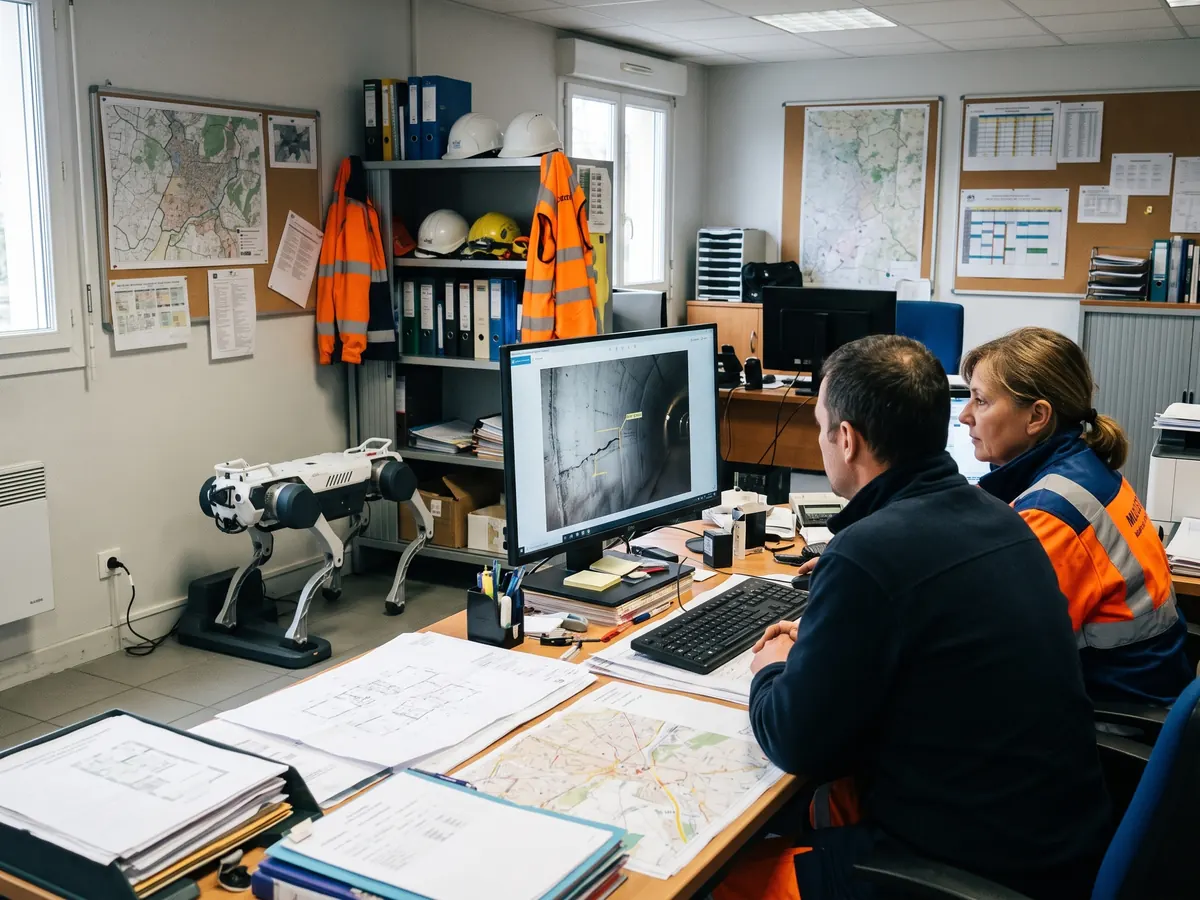
Readings are reviewed at the office. A crack, water ingress or damaged support gets a targeted repair visit.
THE ROBOTS
Quadrupeds
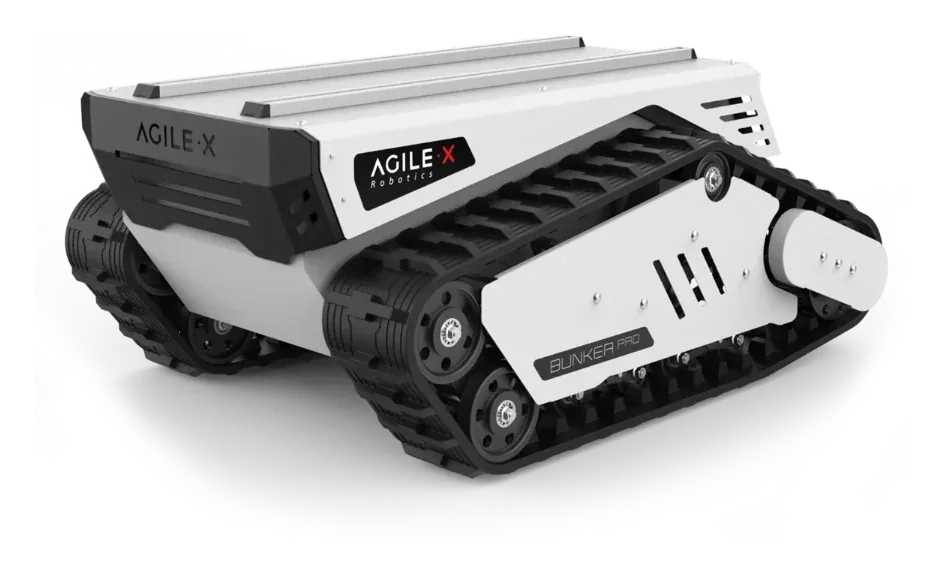
Mobile platforms
BEFORE INSTALLING
Stairs, hatches, ladders and ramps: the robot must be able to get into the structure, or be set down in it, and come back out.
Zone classification (ATEX) and possible gas are checked. A robot only enters a classified zone if it is certified for that zone.
Underground, network is often missing. A radio relay or data retrieval on return is planned, depending on the structure.
Gutters, puddles, mud and debris: legs or tracks are chosen for the ground and the possible water depth.
RULES AND STANDARDS
Underground structures come with their own safety regimes, and spaces open to the public add privacy rules.
In France, road tunnels longer than 300 metres fall under specific articles of the Road Code (Code de la voirie routière, R118-1 and R118-1-1). Works or substantial modifications cannot start before the State has assessed the preliminary safety documentation, as CETU, the State tunnel study centre, explains. Before fitting a dock or radio relays in such a tunnel, ask the owner whether its safety file is affected.
Recommendation R 447 of the French health insurance fund (Cnam), on preventing accidents in confined spaces, covers cable laying in technical galleries as well as water and sanitation structures. The robot cuts the number of descents, but every human entry, including recovering a stuck robot, still follows those rules. Plan a recovery procedure with trained and equipped staff before the first visit.
Inspection footage in car parks or tunnels open to the public can show people and number plates. For cameras in places open to the public, the CNIL sets clear expectations: prefectoral authorisation for video surveillance systems, visible information signs, retention limited to the purpose and never over one month, and restricted access to images. Check with your data protection officer which regime applies to robot footage; masking faces and plates helps.
General information, not legal advice.
FAQ
Yes. According to its manufacturer, the DEEP Robotics X30 is IP67, operates from -20 to 55 °C and its perception works in darkness. The AgileX BUNKER PRO 2.0 is also IP67 and operates from -20 to 60 °C.
It depends on the access, the cross-section, the water depth and the ATEX classification. The site survey decides structure by structure; an uncertified robot does not enter a classified zone.
The manufacturer states a range of at least 10 km and 2.5 to 4 h for the X30, with quick battery swap, and 15 to 20 km for the BUNKER PRO 2.0. Stops at each checkpoint reduce the real distance.
The X30 climbs stairs and steps. The tracked BUNKER PRO 2.0 carries up to 120 kg and crosses 300 mm trenches according to its manufacturer, but does not climb stairs.
USE CASES
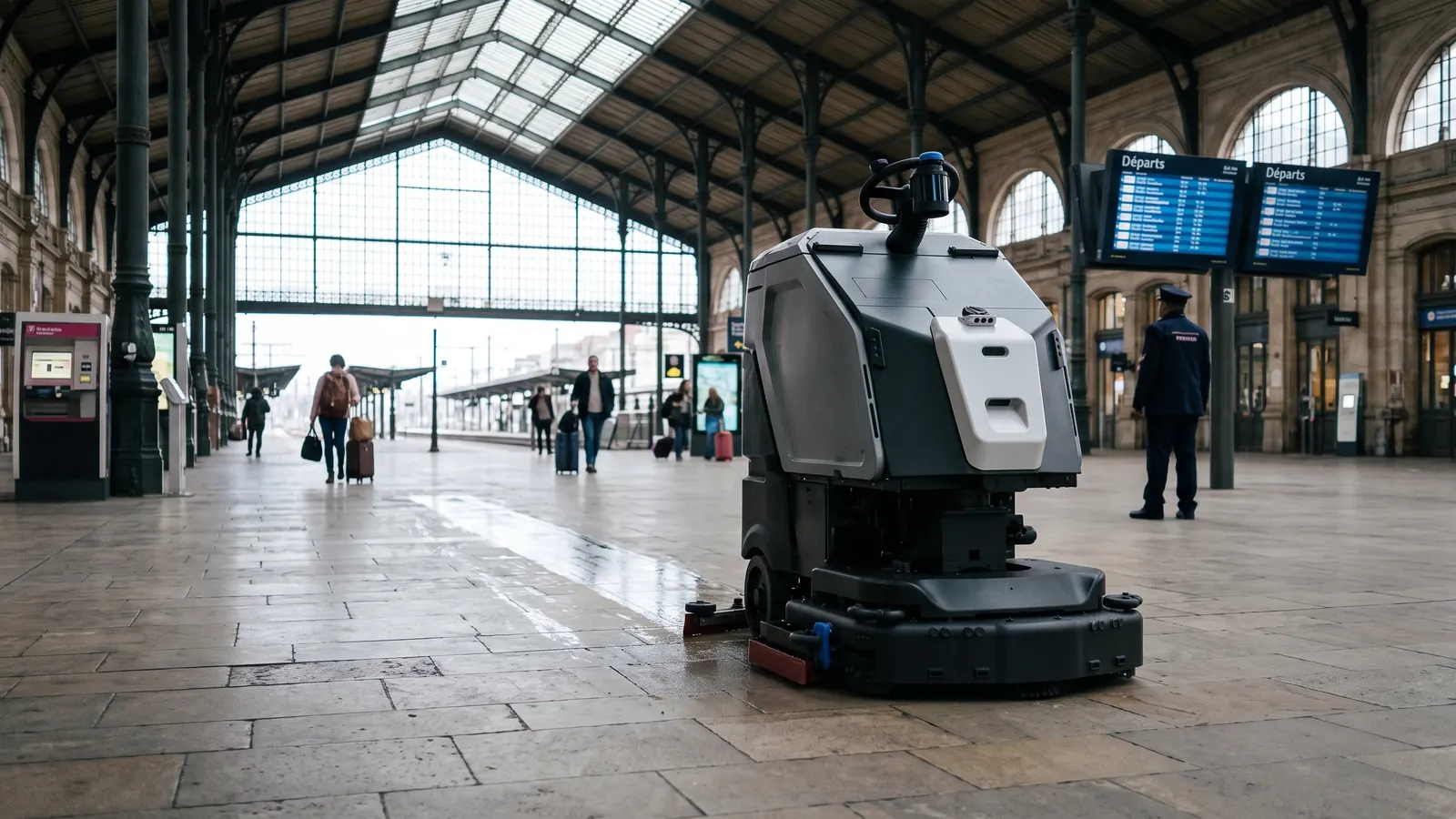 Public space cleaningRobots scrub large concourses and sweep forecourts on programmed routes. Staff keep washrooms, furniture, bins and the welcome of the public.
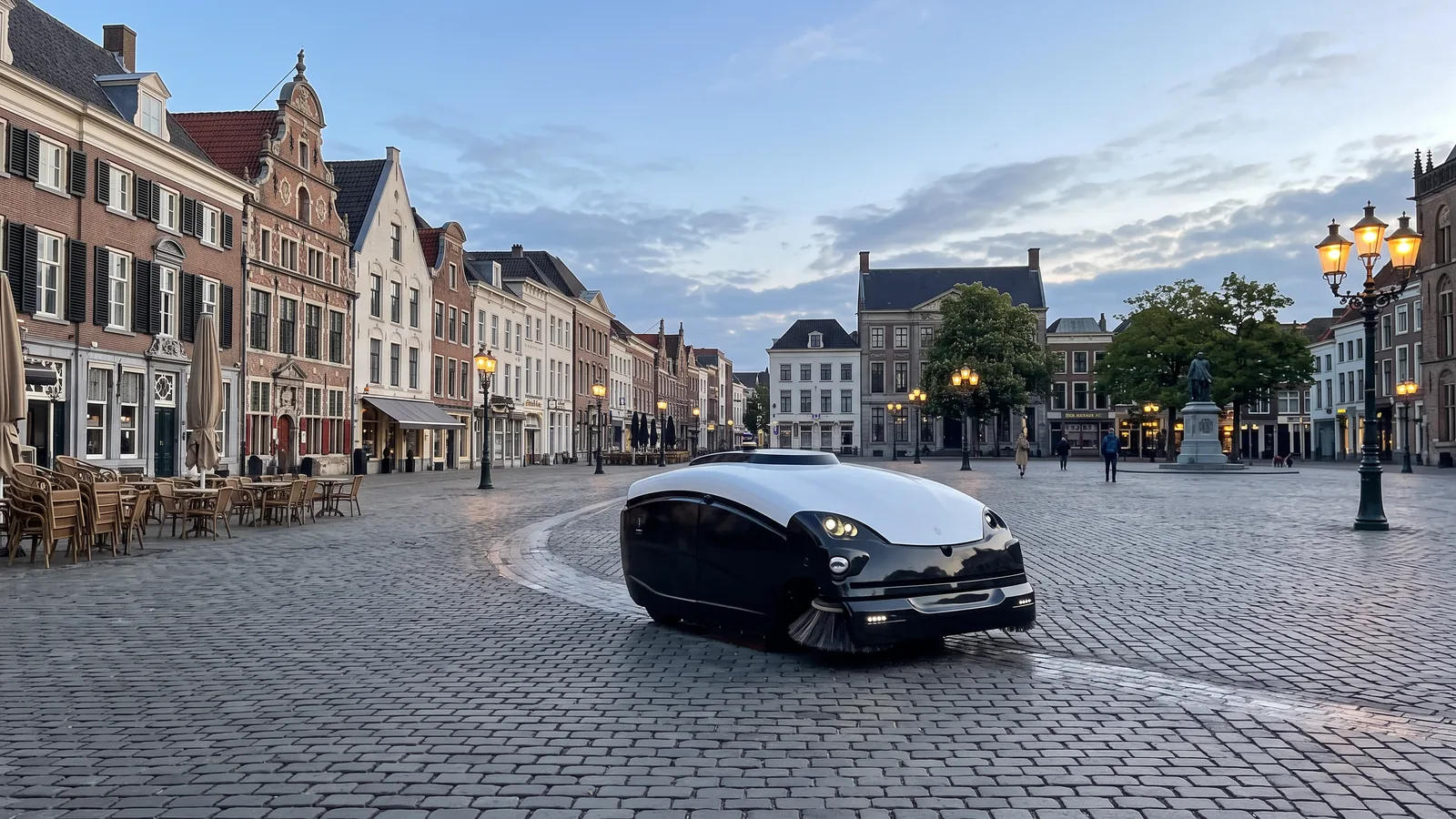 Autonomous road sweepingThe autonomous sweeper follows its routes by night or day, electrically, and returns on its own at the end of the cycle. Street cleaning staff keep manual litter picking, bins, fly-tipping and supervision.
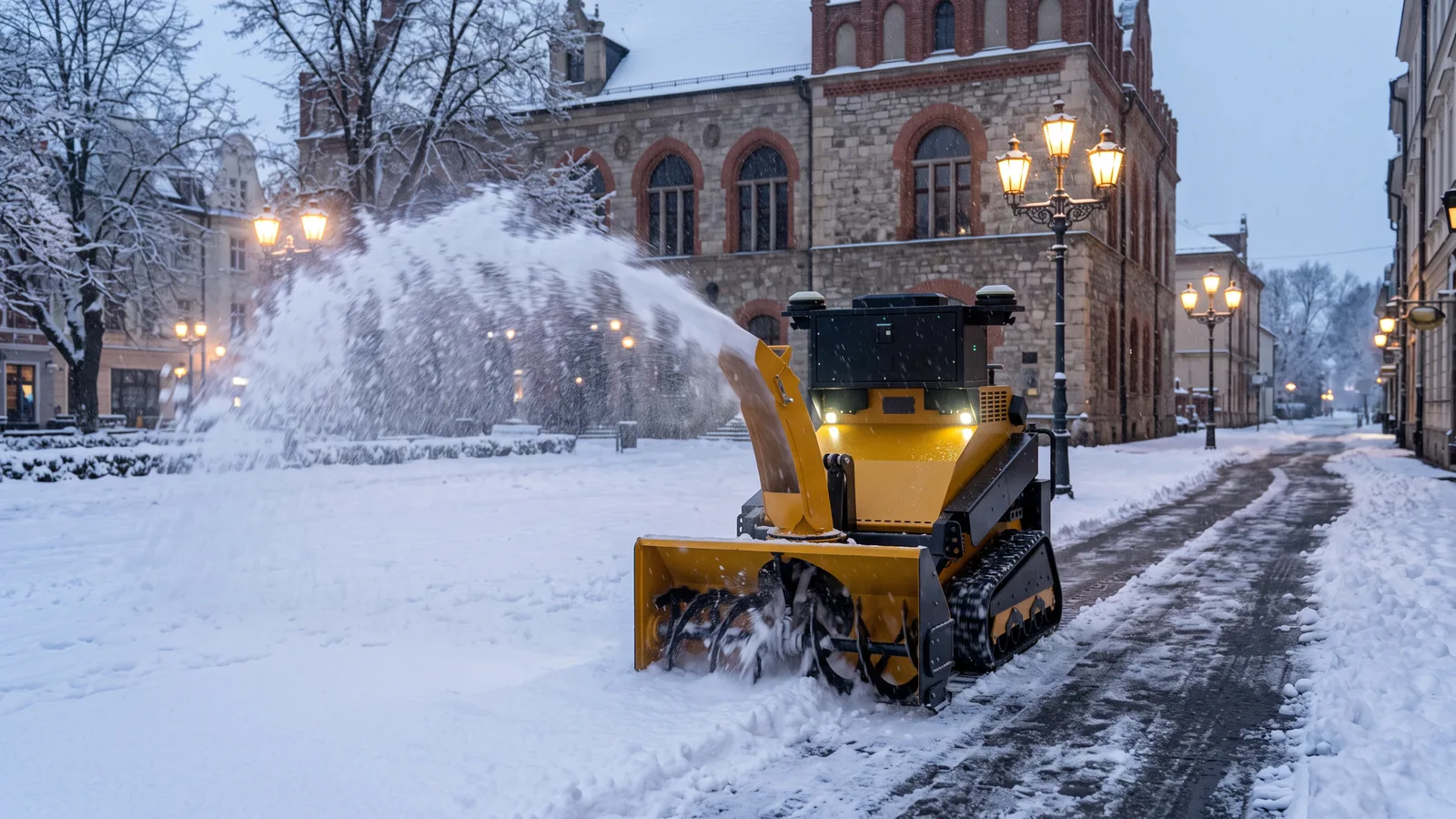 Robotic snow clearing of paths and car parksThe robot clears snow and treats ice on recorded routes, early in the morning or during the snowfall. Staff keep the steps, awkward access points, monitoring and emergency call-outs.
Robots, acquisition mode and delivery terms, in one written proposal.