Quadrupeds
- Weight
- 56 kg
- Runtime
- 2.5–4 h
- Ingress protection
- IP67
On order
From €94,990 ex VATor €3,229/month in RaaS
Updated
USE CASE · WATER AND UTILITY NETWORKS
The robot tours basins, pumps and cabinets at set times and brings back images, temperatures and readings. Operators focus on deviations and running the process.
Updated
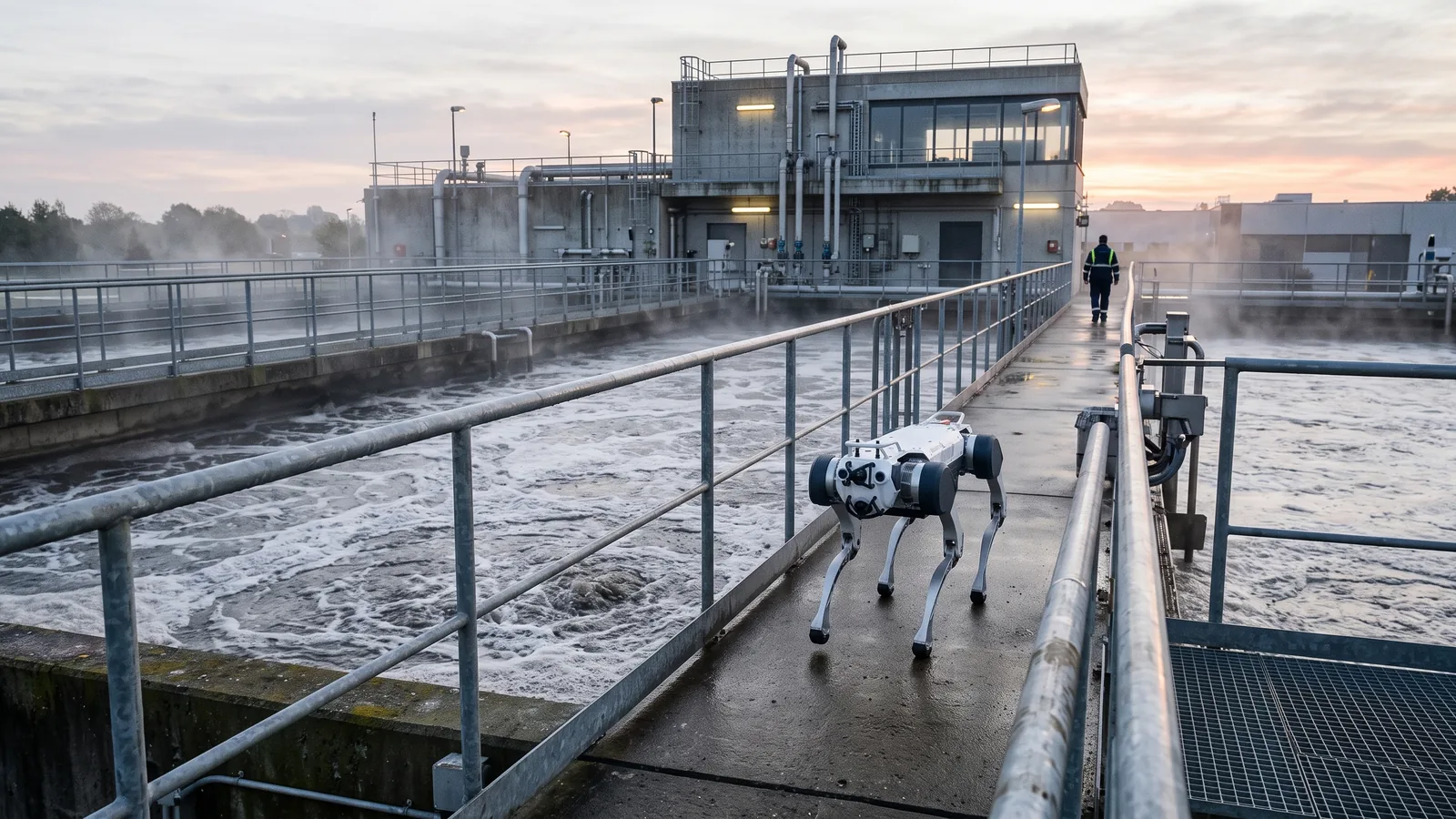
A water treatment plant inspection robot runs the rounds of a wastewater plant, drinking water works or pumping station on its own and records images, thermal images and gauge readings at each checkpoint.
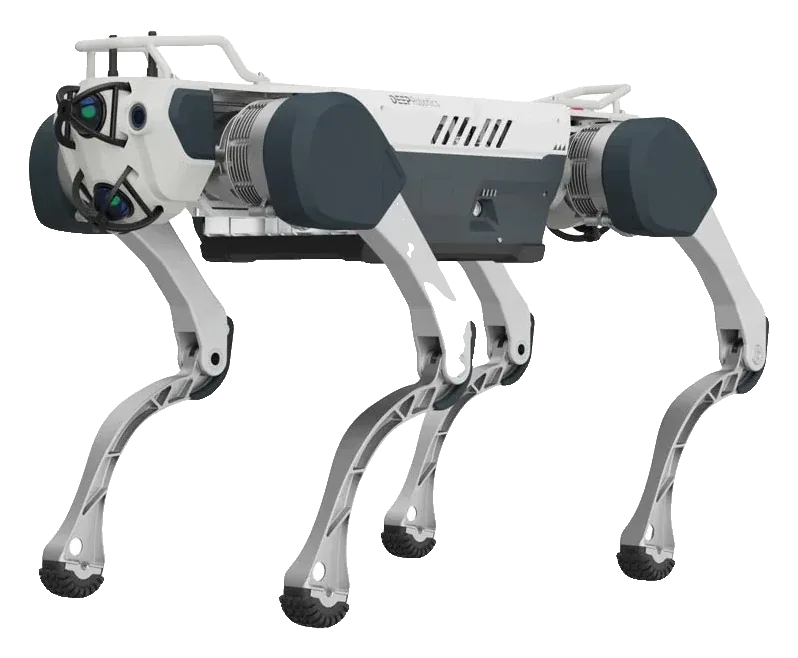
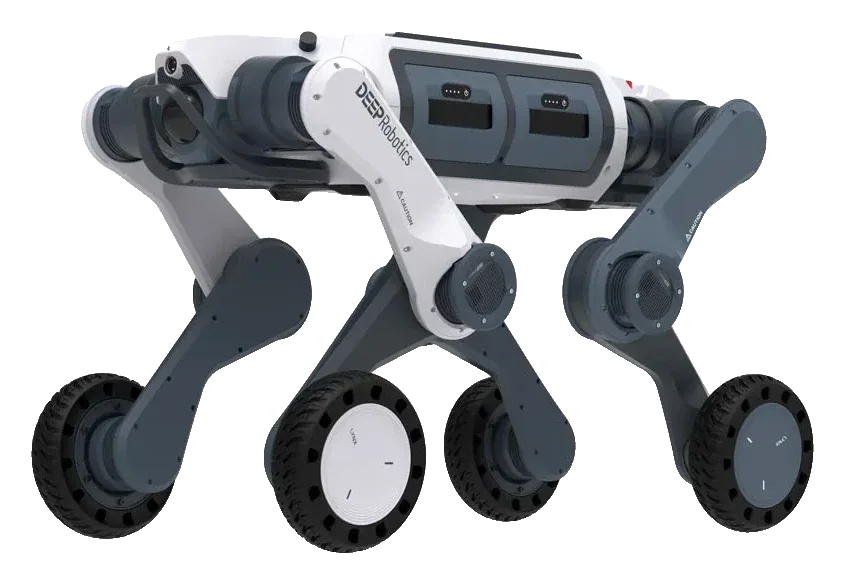
The DEEP Robotics X30 is IP67, works from -20 to 55 °C, climbs stairs and slopes up to 45° and runs 2.5 to 4 h per battery, according to its manufacturer.
Robot Distribution fits it with the right sensors for the site, records the rounds, trains operators and maintains it, to buy, rent or as RaaS.
WHY
A water treatment plant runs around the clock, often with a small team at night and at weekends. Rounds come back every day: pumps and motors, flow meters, pressure gauges, electrical cabinets, basin levels, odours and leaks, along walkways, gratings and stairs exposed to the weather.
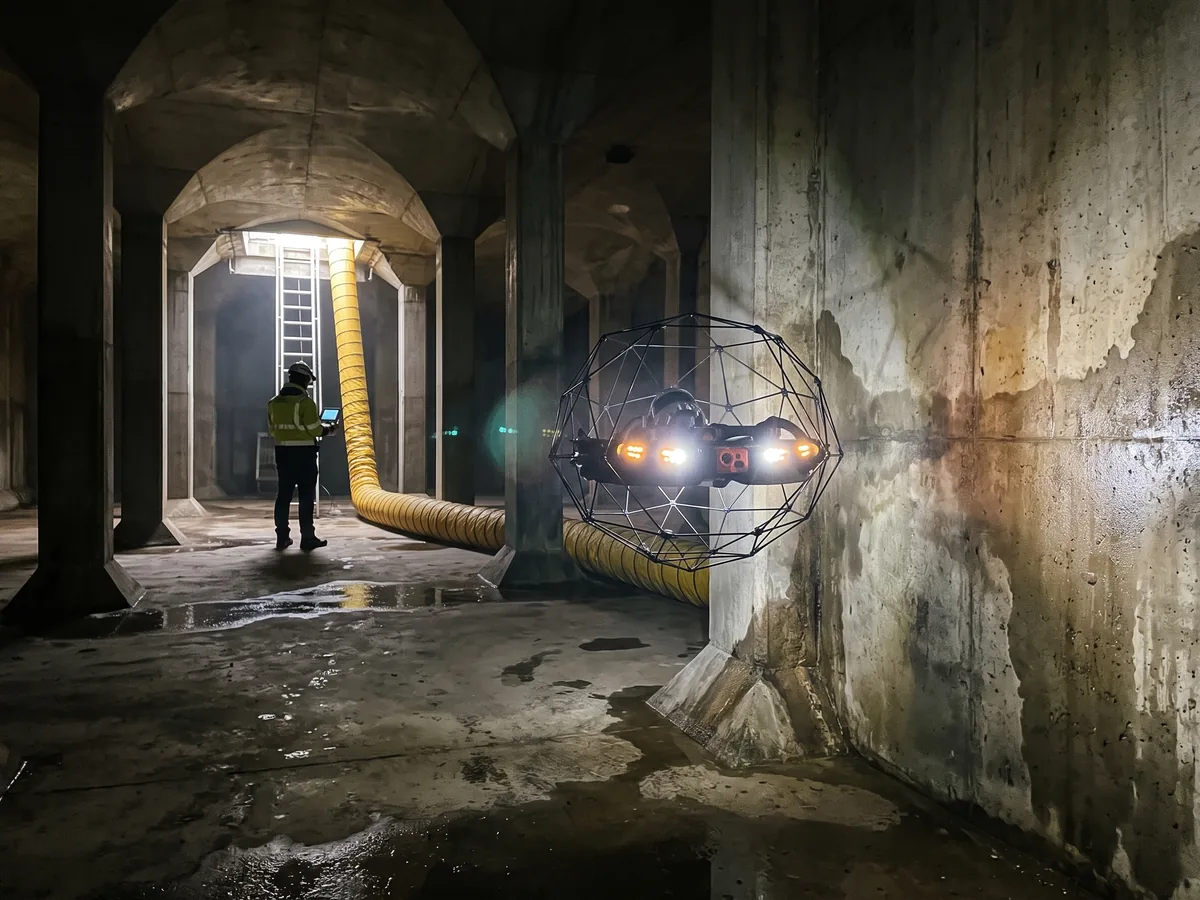
The robot runs these rounds at set times, with the same camera angles, and timestamps every reading. Enclosed structures such as reservoirs, wet wells and tanks emptied for maintenance are inspected with a caged drone, so no crew has to go in.
HOW IT RUNS
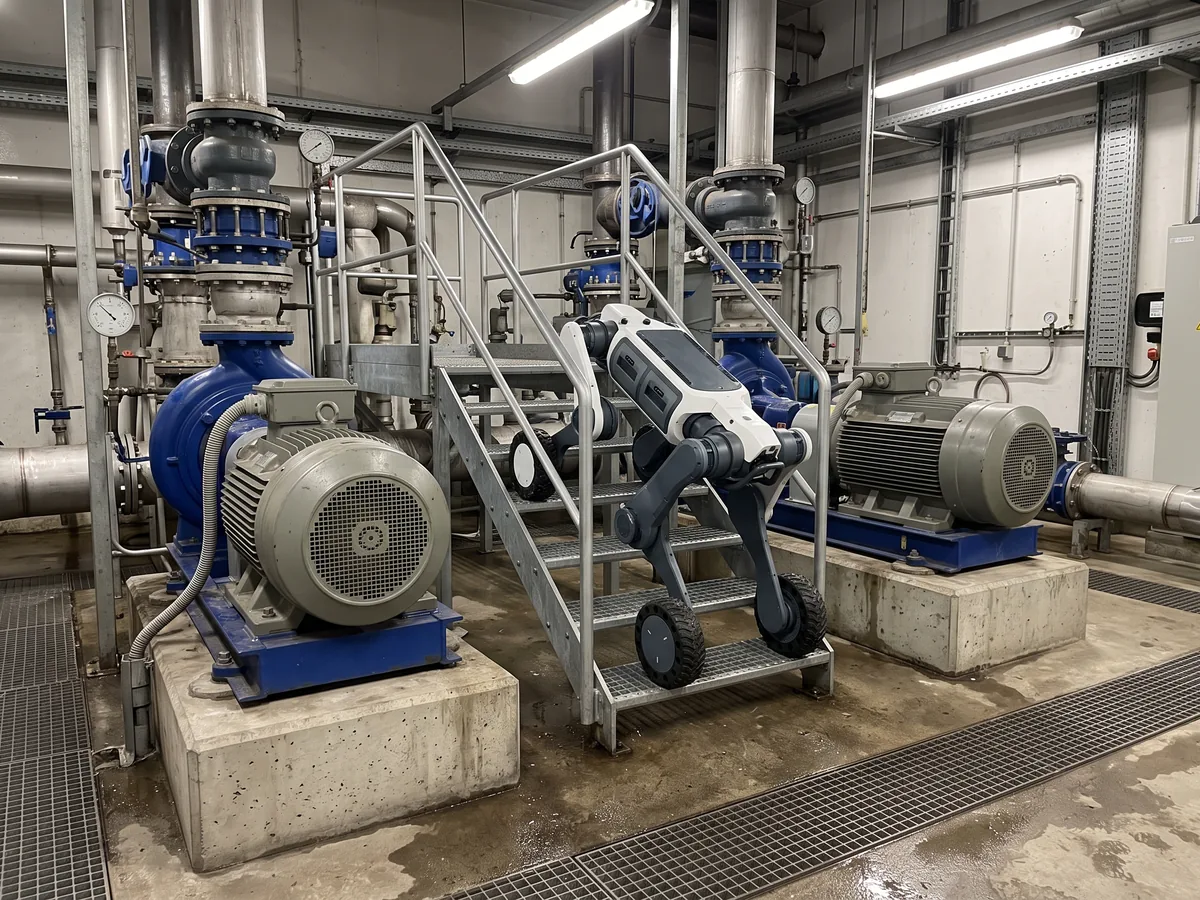
At commissioning we map the plant and set the checkpoints: pumps, motors, valves, gauges, cabinets, basin edges. The DEEP Robotics LYNX M20 navigates with two 96-line LiDARs, according to its manufacturer.
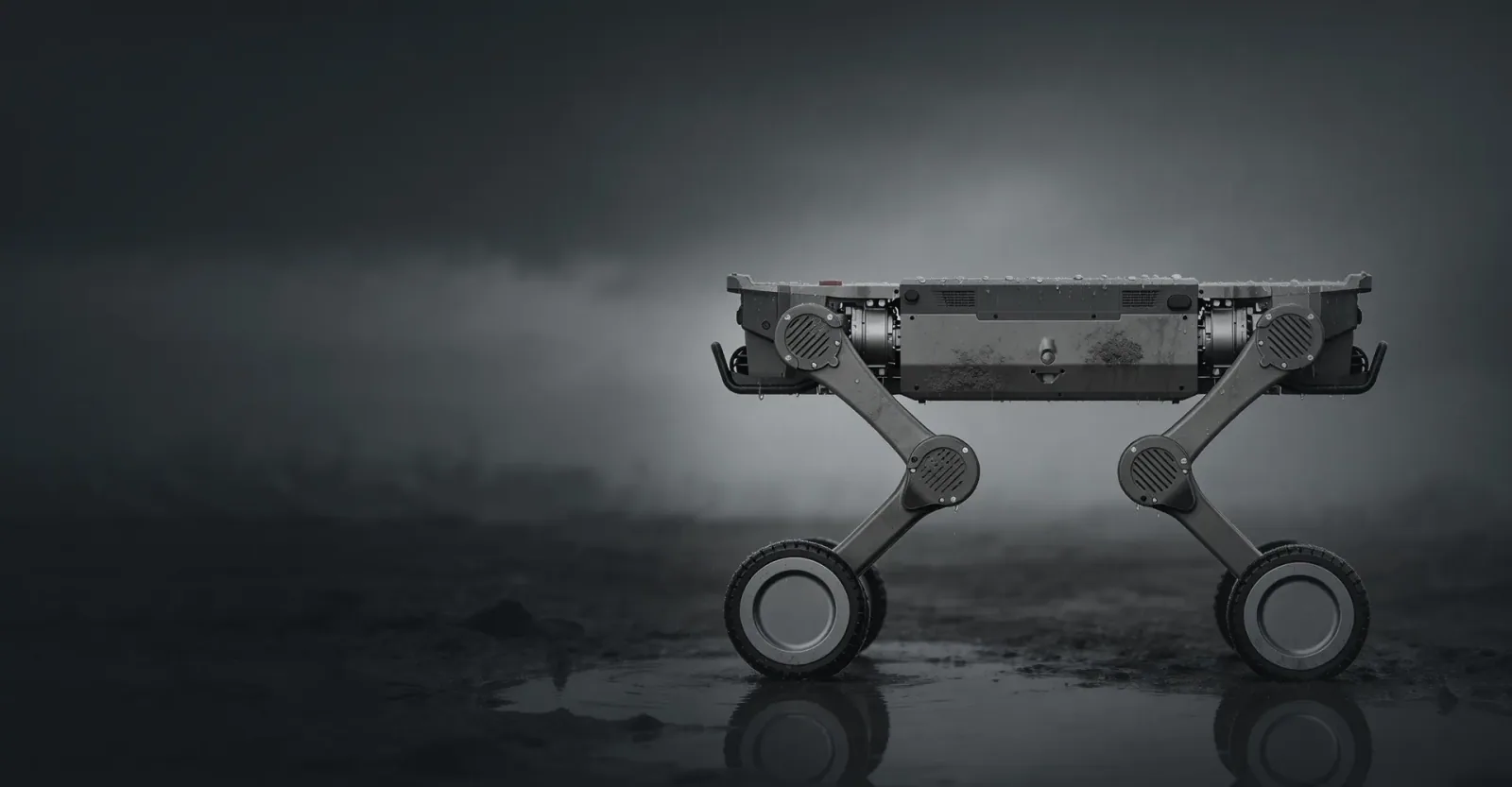
The robot leaves its charging station, follows walkways and stairs, steers around obstacles and stops at each checkpoint. The wheel-legged AGIBOT D1 Max runs about 5 h and 29 km unloaded, according to its manufacturer.
Depending on the sensors fitted, it records photos, video, thermal images or gas readings. A hot motor, a needle out of range or a leak is flagged to the operator.
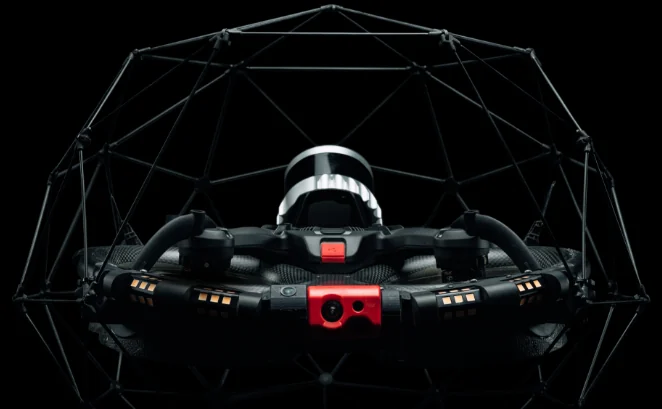
Reservoirs, wet wells and tanks emptied for maintenance are inspected with the Flyability Elios 3: a caged drone with LiDAR for 3D mapping and 16,000 lm lighting, according to its manufacturer.
THE ROBOTS
Quadrupeds
Quadrupeds
Quadrupeds
Quadrupeds
Professional drones
BEFORE INSTALLING
Walkways, gratings, stairs, ramps and basin edges are noted: the robot must complete the whole round unaided. The DEEP Robotics LYNX M20 climbs 25 cm stairs and 80 cm steps, according to its manufacturer.
Digesters, inlet works and sludge buildings may be ATEX-classified. A robot only enters a classified zone if it is certified for it; otherwise the round goes around it.
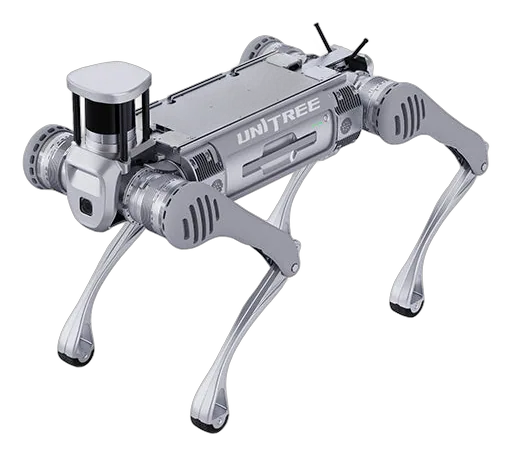
Outdoor rounds run in rain and winter: the Unitree B2 is IP67 and works from -20 to 55 °C, according to its manufacturer.
Wi-Fi or mobile coverage along the round, the charging station location and how alerts reach the control room are agreed with the operator.
RULES AND STANDARDS
A robot doing rounds changes who goes where on site, and it adds a connected device to critical infrastructure.
INRS lists the main hazards of wastewater work: hydrogen sulphide and methane from fermentation, asphyxia in confined spaces, biological agents in effluent and sludge, falls and drowning near basins, and isolated work. These are the tasks where a robot reading can replace a person's visit. INRS also advises building prevention into new or refurbished plants, a good time to plan routes, docks and charging points.
When an outside company installs or services the robot on site, the French Labour Code requires a joint inspection first (Articles R4512-2 and R4512-3). A written prevention plan is required if the work reaches 400 hours over 12 months, or whatever its duration for listed dangerous work, which includes drowning risk. Agree it with the supplier before commissioning and update it when equipment changes.
Directive (EU) 2022/2555 (NIS 2) covers drinking water and waste water among its sectors. ANSSI states that entities will be classed essential or important by criticality and size under French transposition, must take legal, technical and organisational measures to manage risks to their networks and information systems, and must report significant incidents. A robot linked to the plant network sits inside that perimeter: involve IT security early.
Since 1 August 2025, Delegated Regulation (EU) 2022/30, as amended by Regulation (EU) 2023/2444, applies cybersecurity requirements of the Radio Equipment Directive 2014/53/EU to radio equipment that can communicate over the internet: it must not harm the network, and must protect personal data where it processes it. Ask the supplier for the EU declaration of conformity covering these points, for the robot and its base station.
General information, not legal advice.
FAQ
Whatever its sensors measure: visible camera, thermal camera, gas detector, microphone. The Unitree B2 carries more than 40 kg while walking and the DEEP Robotics LYNX M20 15 kg, according to their manufacturers, which leaves room for this equipment.
It can carry a gas detector and take the reading instead of a person, provided the area is not ATEX-classified or its equipment is certified for it. Zone classification is checked during the site survey.
According to the manufacturer: 2.5 to 4 h per battery for the DEEP Robotics X30, 4 to 6 h for the Unitree B2, about 5 h unloaded for the AGIBOT D1 Max. All three have quickly swappable batteries.
Once the structure is emptied and ventilated, the Flyability Elios 3 flies inside in its protective cage, without GPS, and maps the interior with LiDAR. It flies over 12.5 min, up to 17 min with the high-capacity battery, and can carry an ultrasonic thickness sensor, according to its manufacturer.
USE CASES
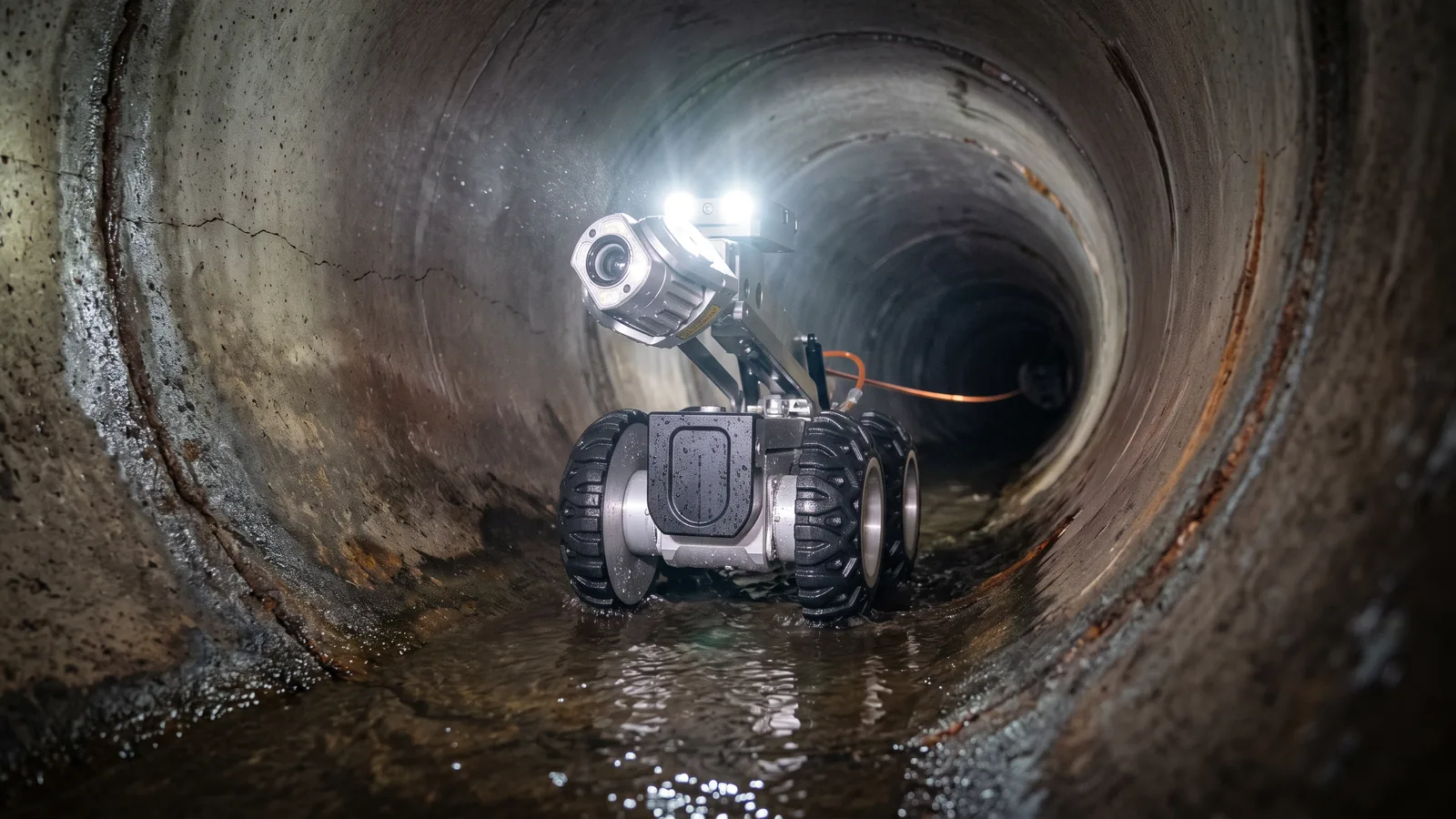 CCTV inspection of sewer pipesThe camera robot travels the sewer from the manhole and films the pipe wall, controlled from the surface. Technicians keep the diagnosis, defect coding and the choice of works.
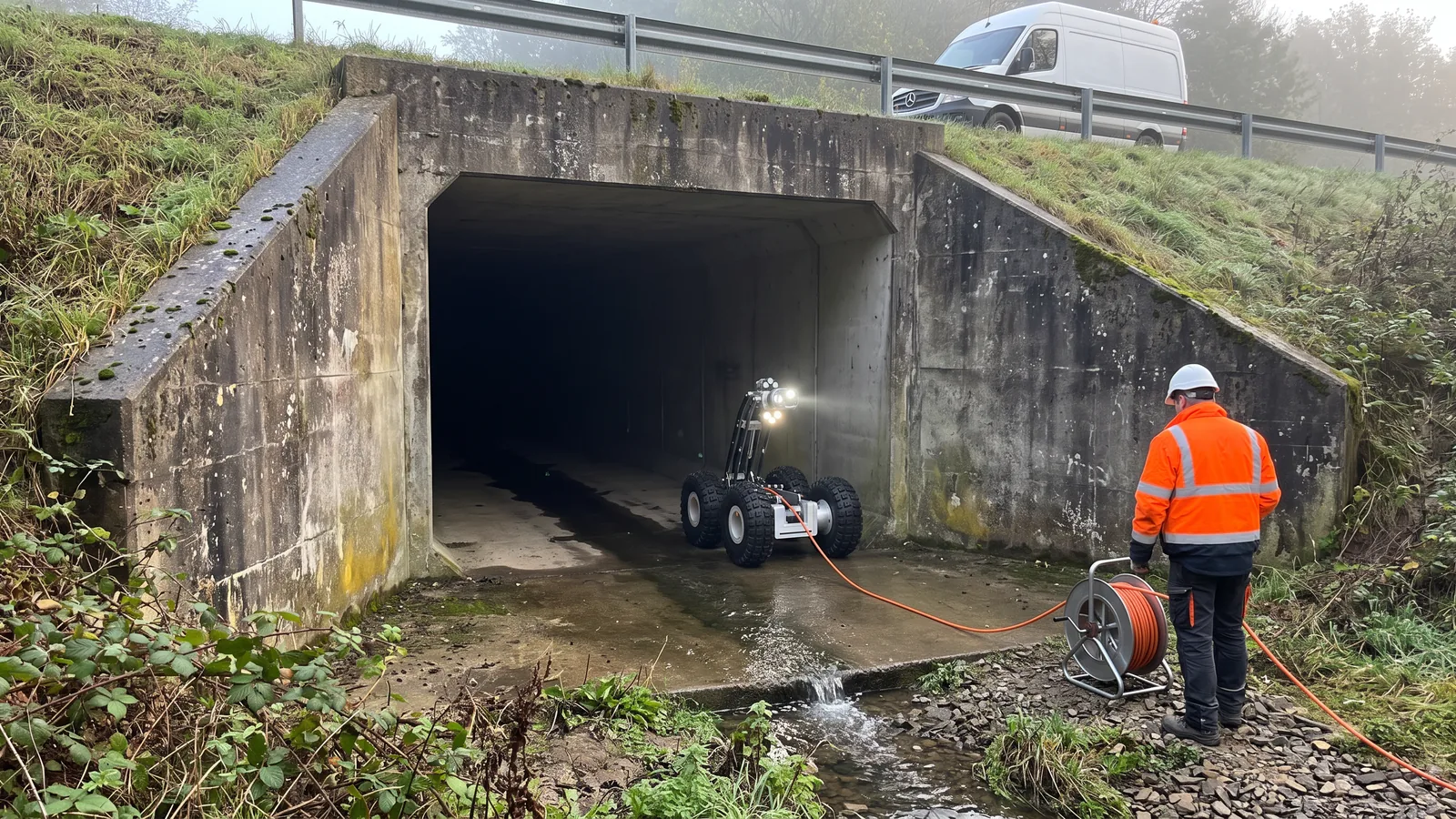 Large sewer and culvert inspectionThe robot travels through large trunk sewers, egg-shaped collectors and culverts under roads, camera centred in the section, driven from the surface. Sewer crews only go in to carry out work.
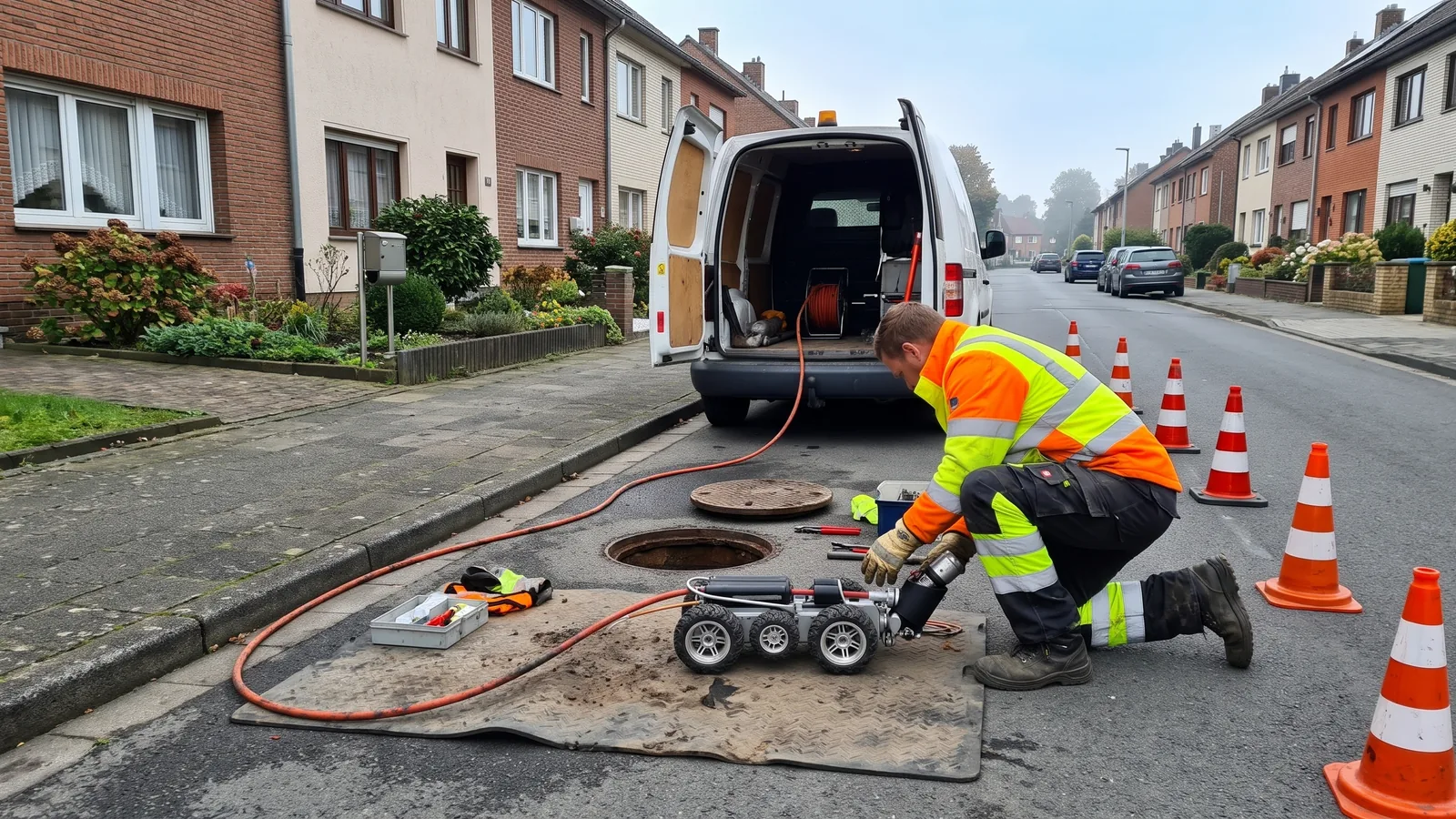 Sewer lateral inspection with a satellite cameraThe crawler drives along the main, stops at the connection and pushes a small pan-tilt camera into it. The building's lateral is inspected without opening the road or entering the property.
Robots, acquisition mode and delivery terms, in one written proposal.