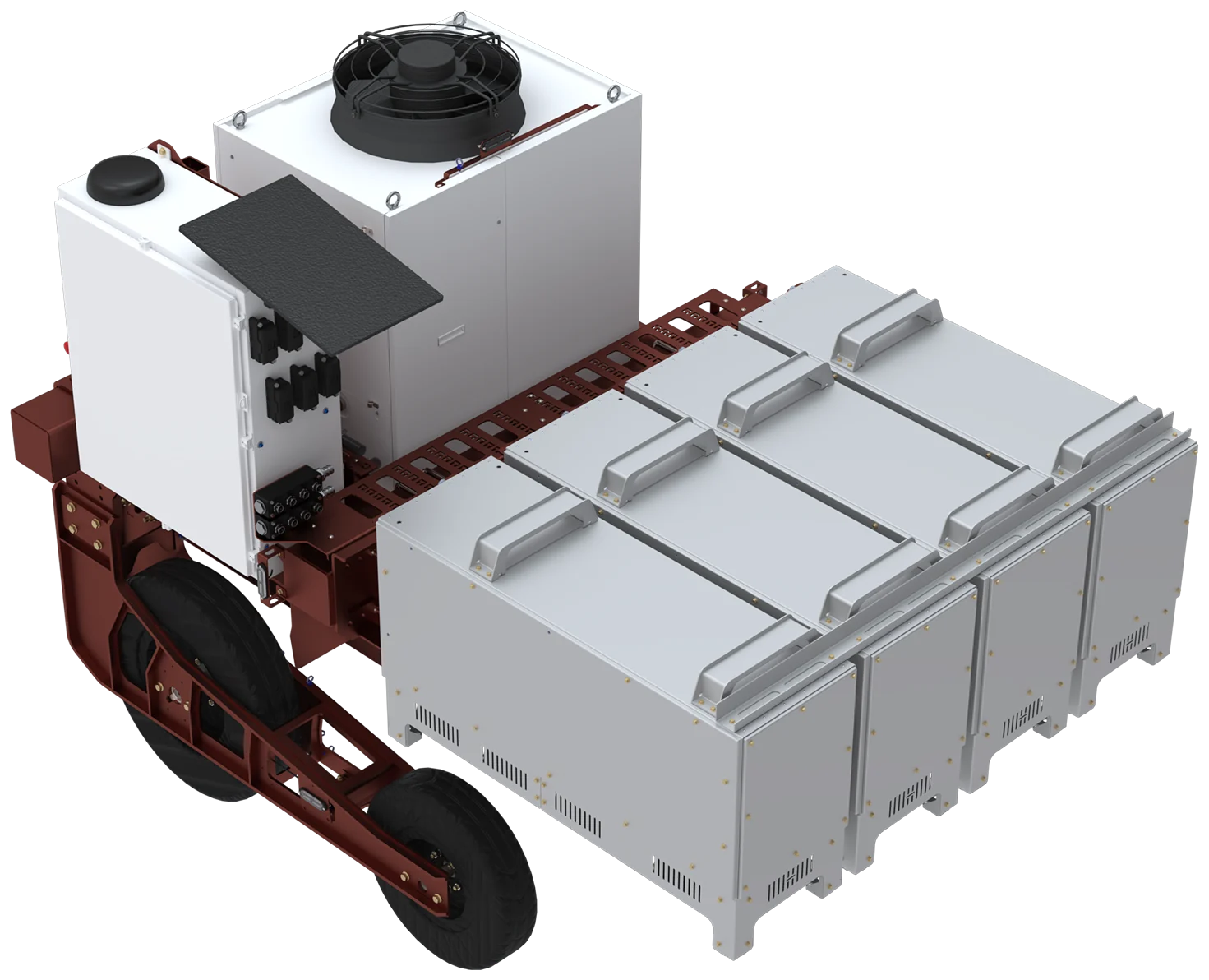
Agricultural robots
- Working width
- 2,000 mm
- Weight
- 1,928 kg
- Key feature
- 2 × 240 W lasers per module
On order
Price on request
Updated
SOLUTION · AGRICULTURE AND VITICULTURE
Robots weed row crops, work vineyard soil and carry tools without a driver. The grower sets the plots, the tools and the schedule.
Updated
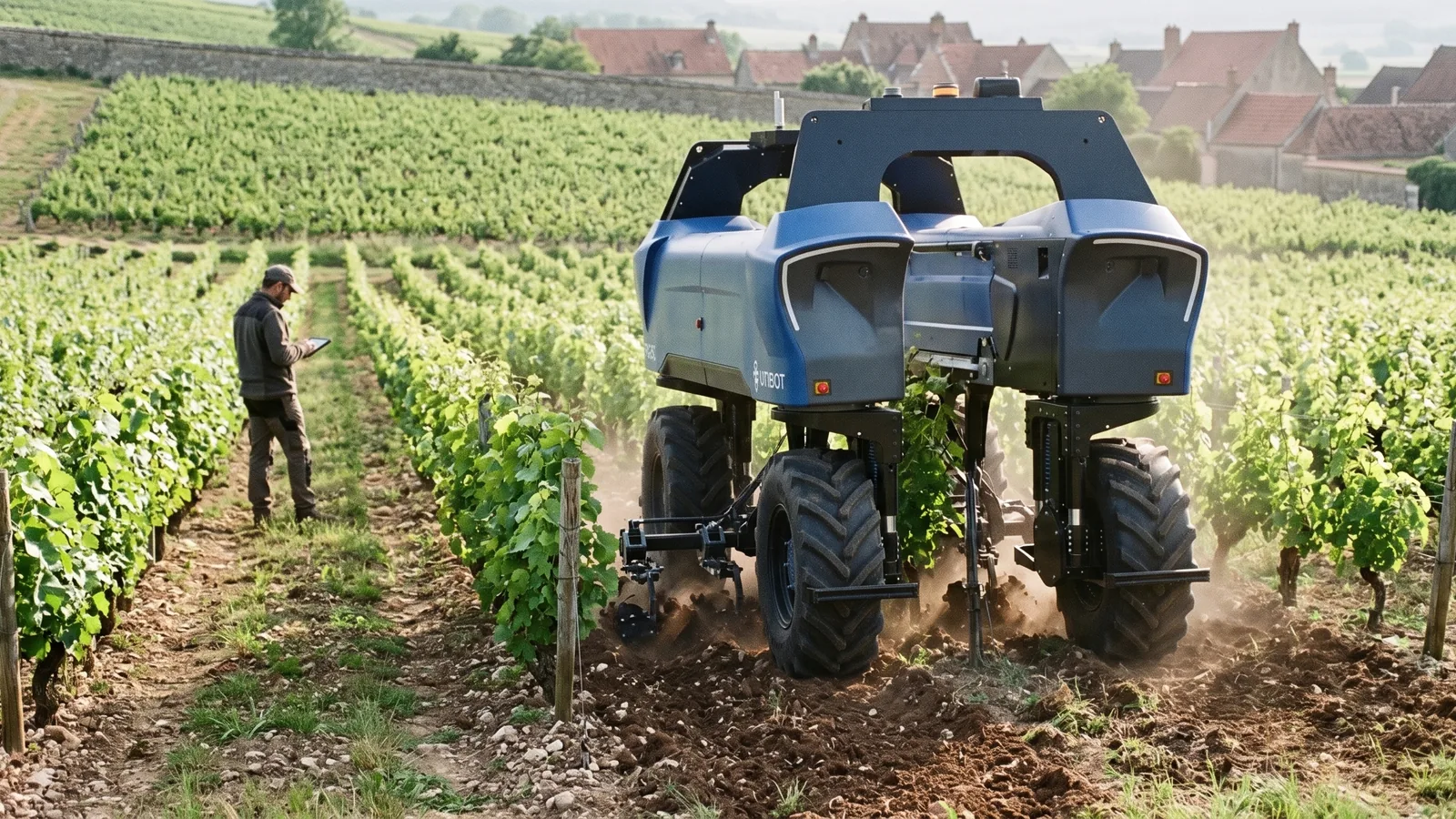
Vegetable growers, arable farms and wine estates use RTK-guided autonomous robots to sow, weed and work the soil under the vine row.
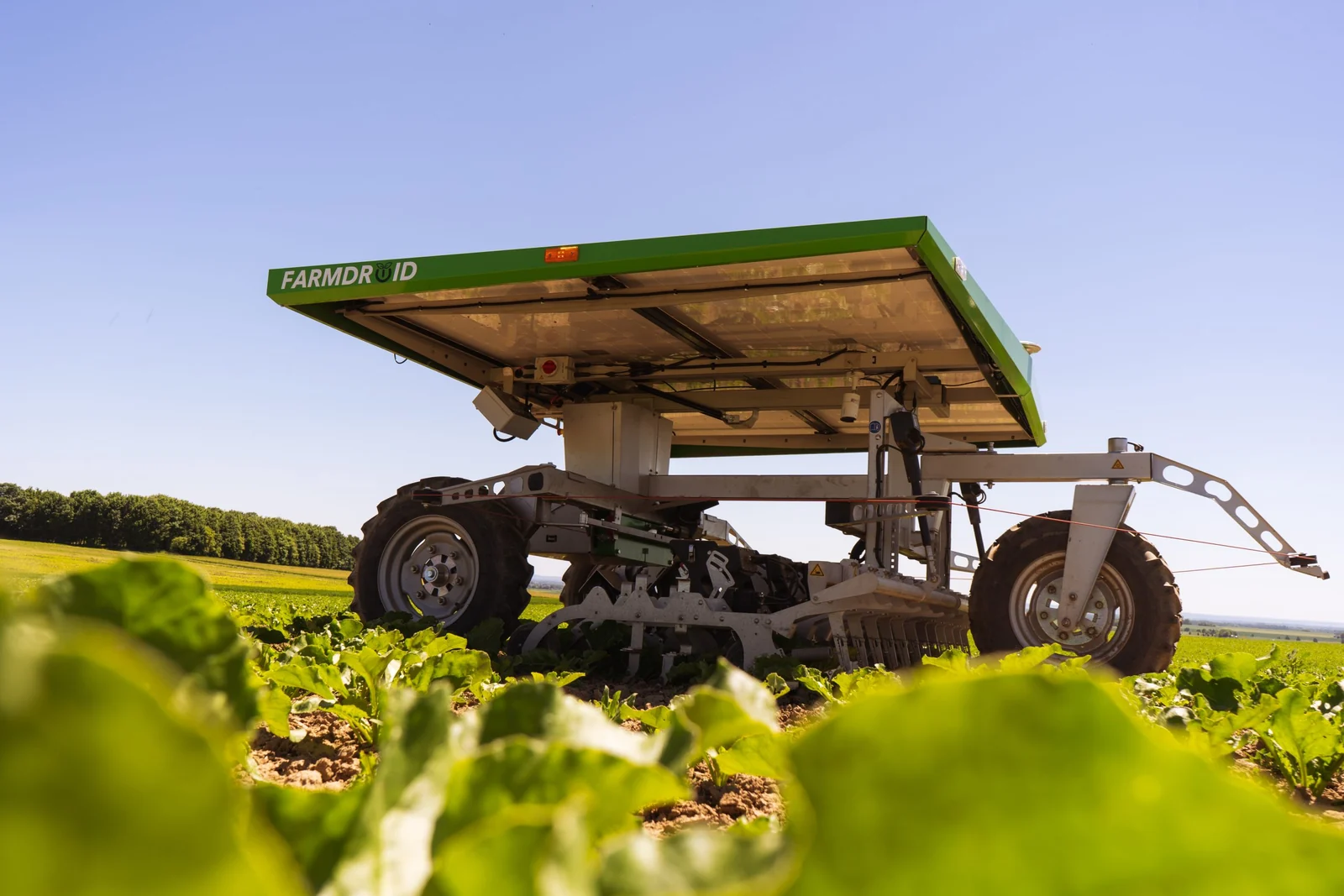
FarmDroid FD20 sows then weeds over a 3.5 m width, records each seed position to within 8 mm and covers about 6 ha a day, according to its manufacturer.
Robot Distribution fits the robot and its tools to the farm, commissions it and maintains it, for purchase, rental or RaaS.
WHAT ROBOTS DO
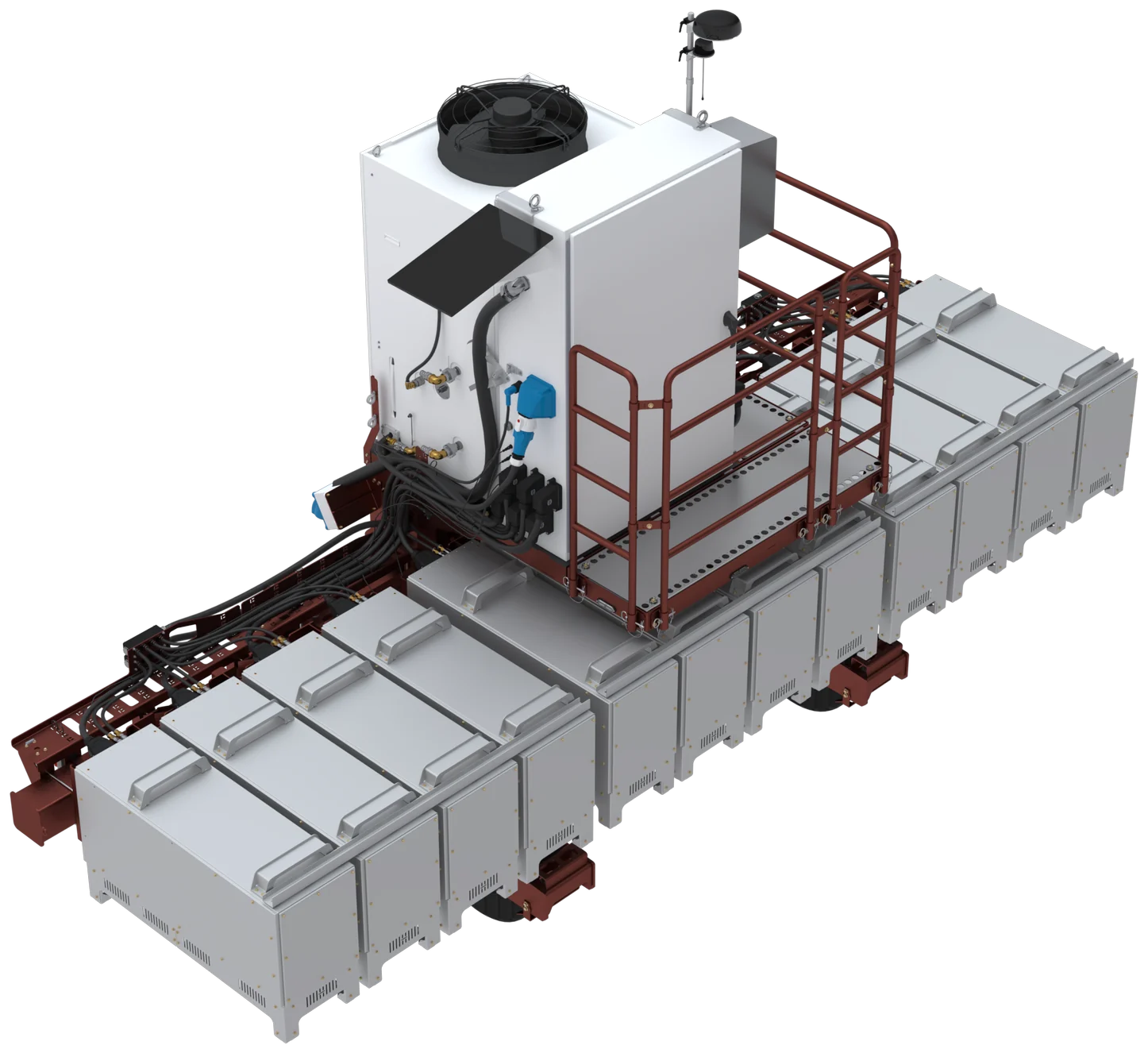
FarmDroid FD20 hoes between and within rows using the position of each seed. Carbon Robotics LaserWeeder G2 200, pulled by a tractor, kills weeds with lasers over a 2.0 m width without herbicide, according to its manufacturer.
An electric straddle robot carries tools for soil work, mowing and trimming. VitiBot Bakus S has a passage 0.60 m wide and 1.75 m high and steers with two RTK receivers to under 1 cm, according to its manufacturer.
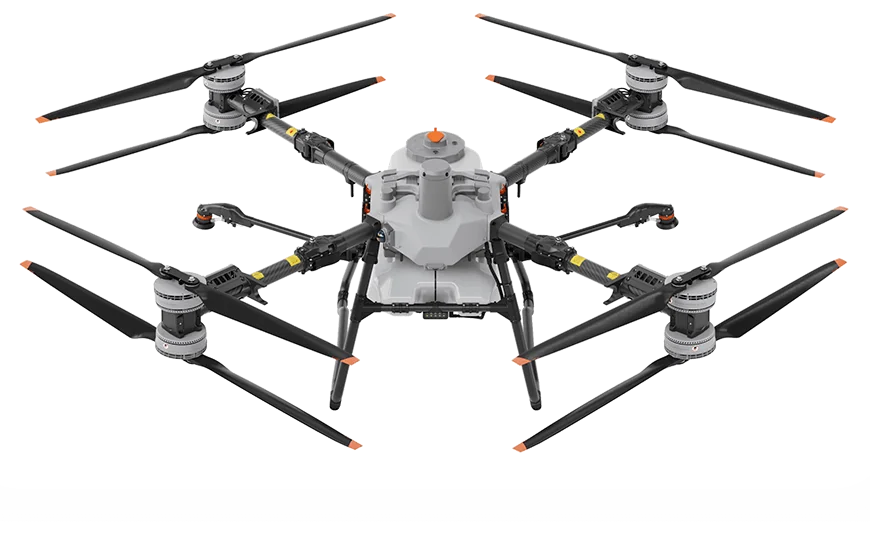
DJI Agras T100 carries a 100 L spray tank or a 150 L spreading tank, according to its manufacturer. In the European Union, aerial spraying of pesticides is prohibited unless a derogation is granted.
USE CASES
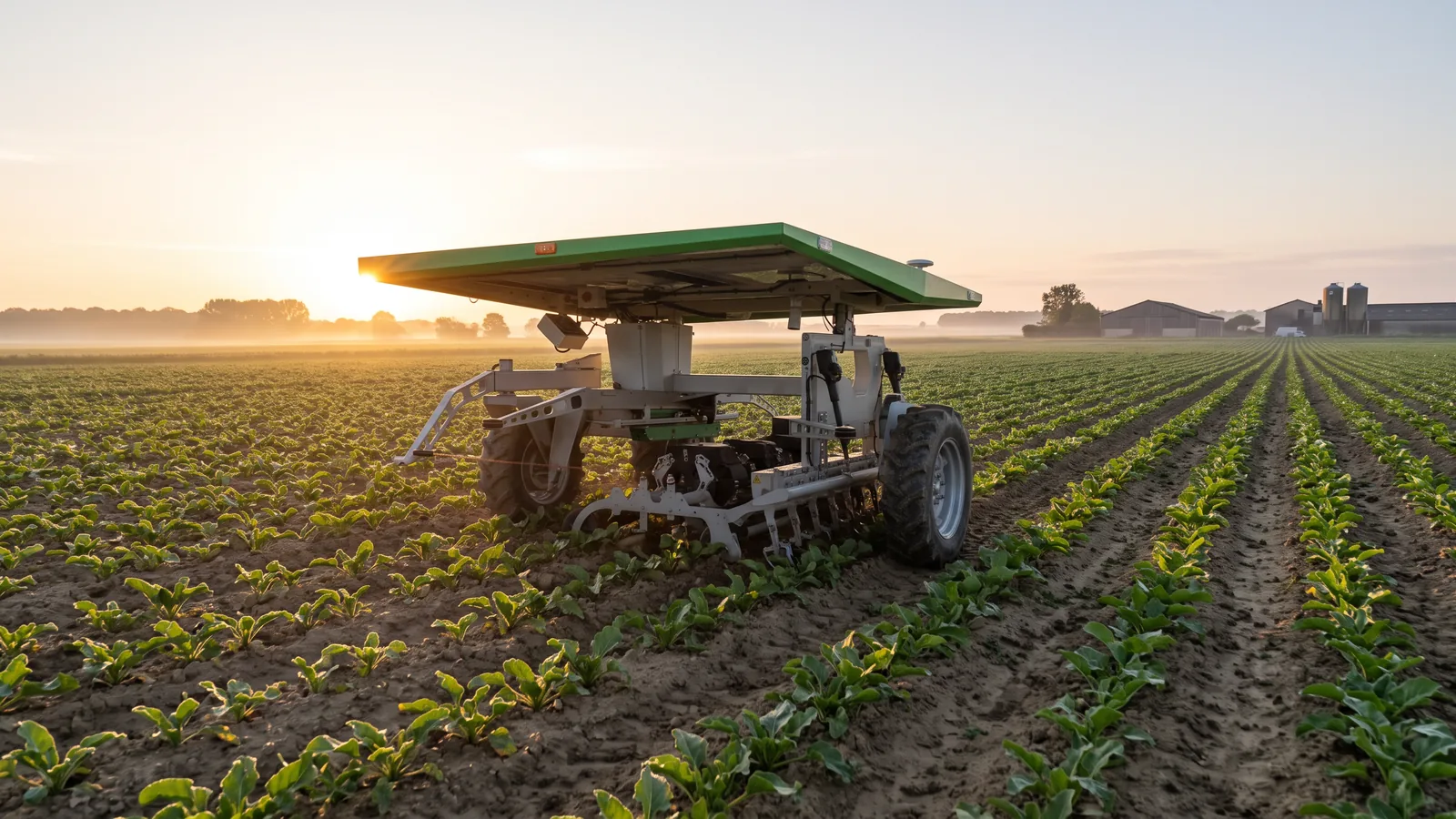 Autonomous crop weedingThe robot tells crop from weeds, then weeds mechanically, by laser or with micro-droplets, with no hand weeding. The grower keeps the choice of fields, settings and when to act.
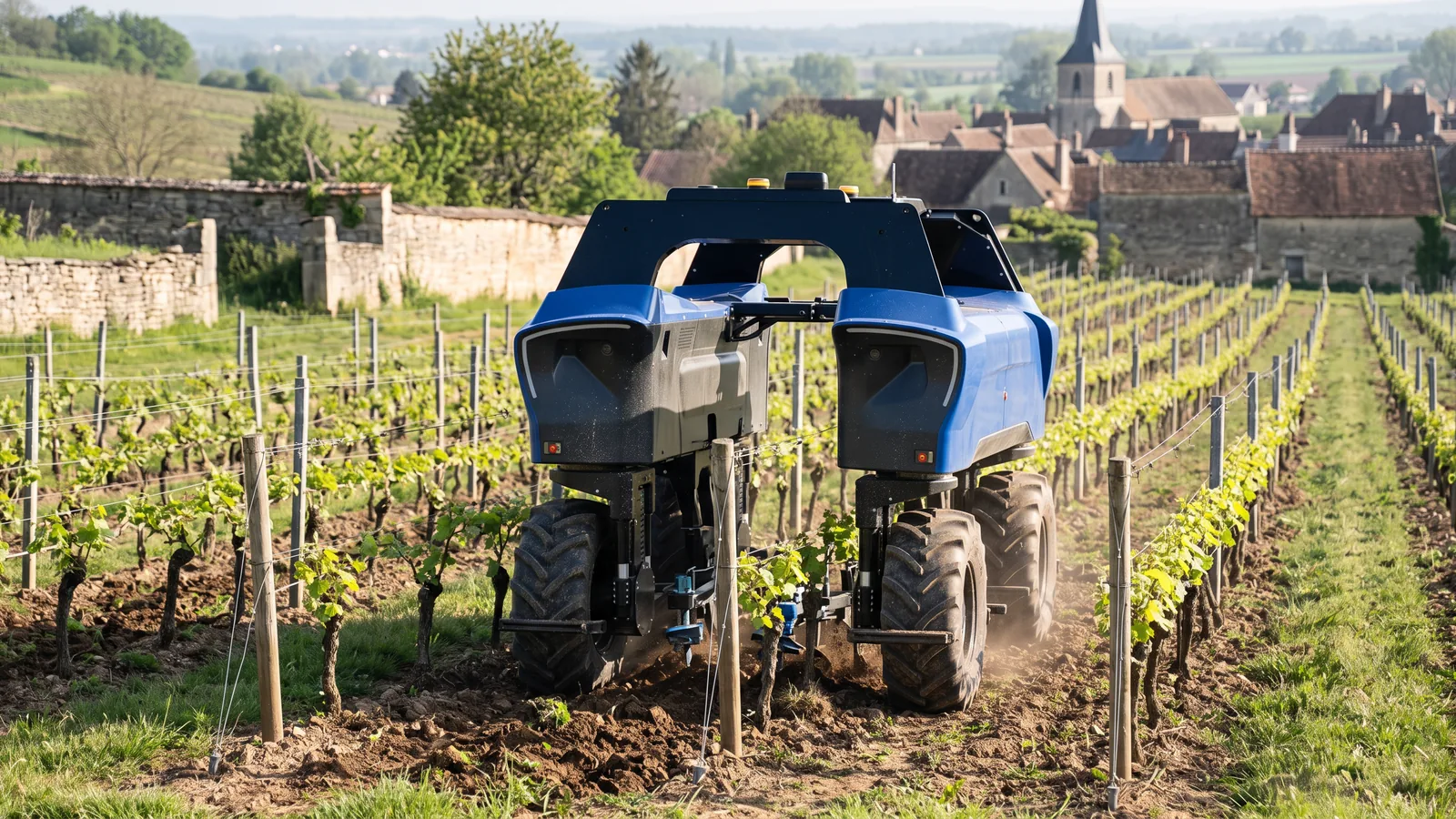 Vineyard soil work and canopy careThe robot straddles the row and carries tools for soil work, mowing and trimming, guided by satellite. The grower keeps pruning, crop decisions and watching the vines.
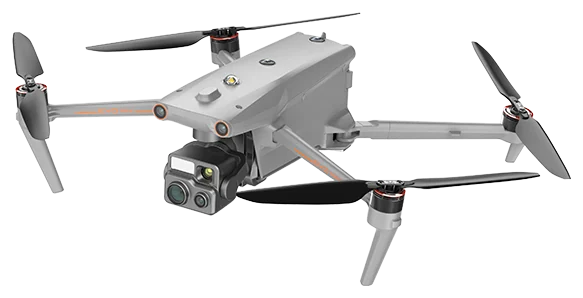
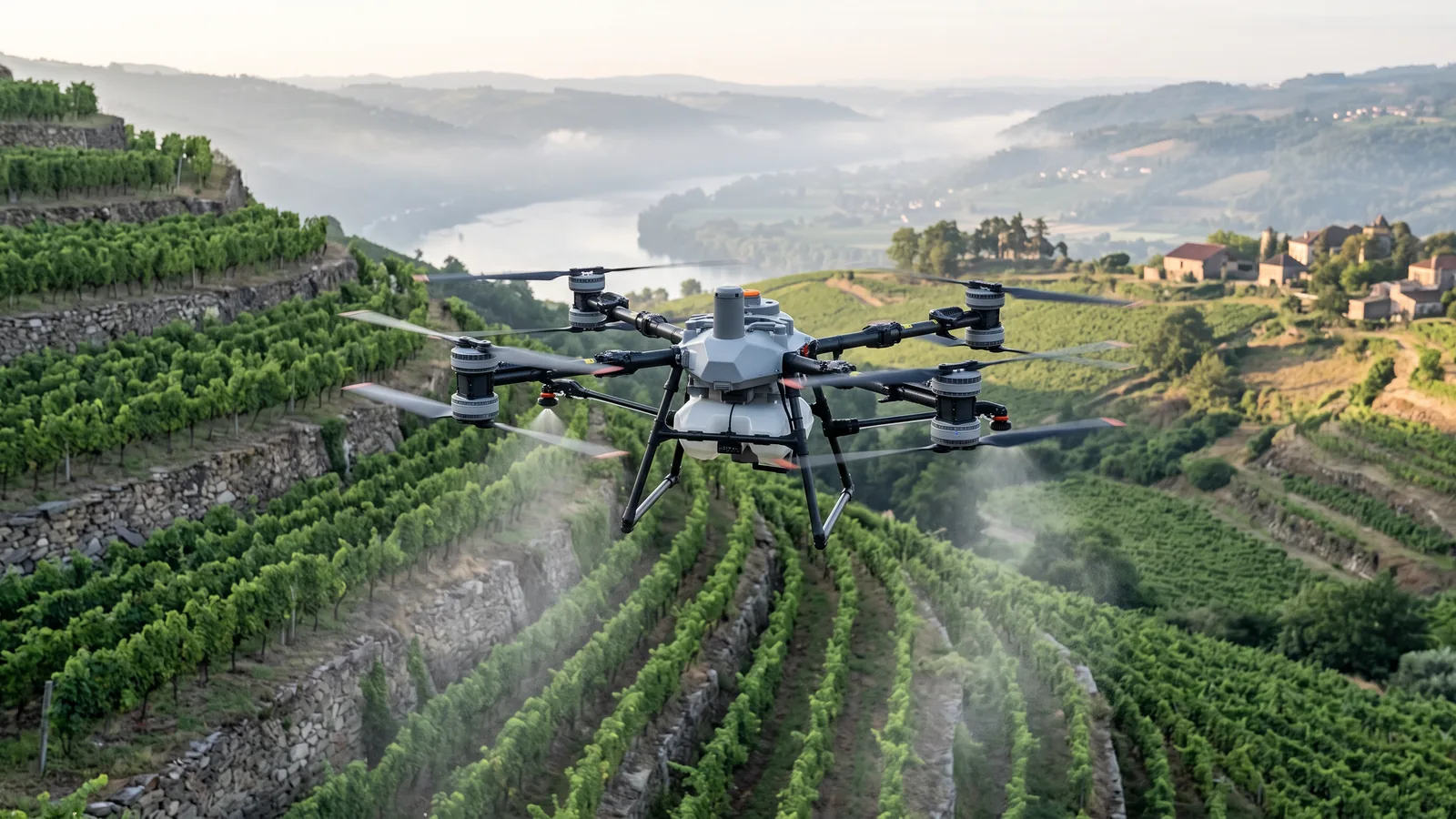 Agricultural drone spraying and spreadingThe drone follows a flight plan drawn over the field and spreads fertiliser, seed or spray, without entering the crop. The regulatory framework is checked before each use.
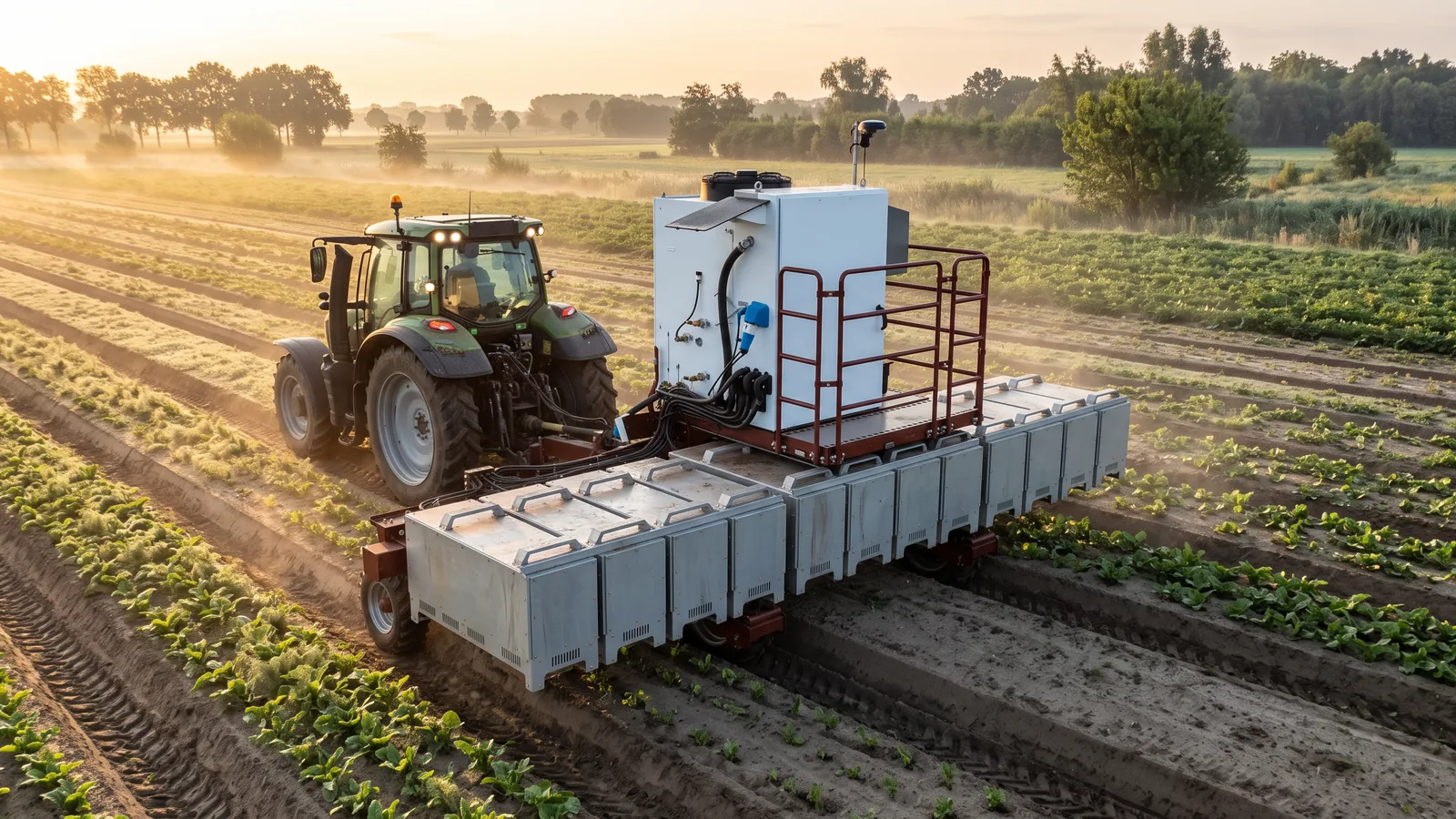 Laser weeding of vegetables and specialty cropsThe laser weeder spots each weed by camera and kills it with a laser, with no chemical and no tillage. The grower chooses the fields, the passes and, depending on the crop, between laser and spot spraying.
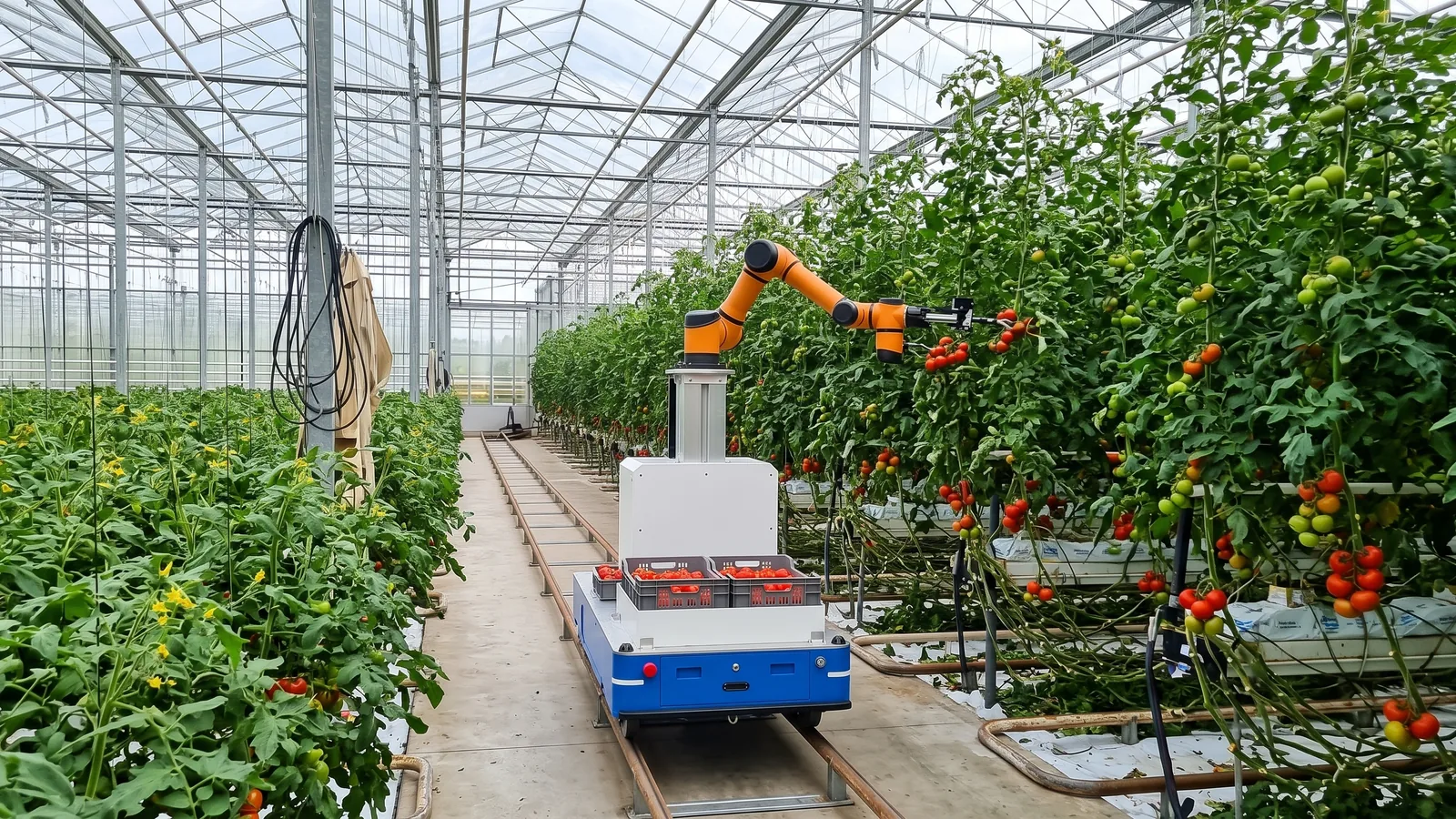 Greenhouse harvesting and orchard workIn the greenhouse, the robot spots ripe trusses and cuts them; in the orchard, electric robots spray, carry and pull tools between the rows. Teams keep the tasks that need a trained eye.
MATCHING ROBOTS
Agricultural robots
Agricultural robots
Agricultural robots
FarmDroid
Agricultural robots
Professional drones
Professional drones
Professional drones
Professional drones
Outdoor
Outdoor
Belrobotics
Outdoor
Belrobotics
Outdoor
Figures from the manufacturers' published specifications, checked . Prices ex VAT shown as "from" prices, or on quote.
HOW DEPLOYMENT WORKS
We walk the routes with you before any order: passage widths, door thresholds, floor gaps, slopes, lifts and doors, Wi-Fi coverage, charging and water points. The survey decides the model.
The robot is mapped on site, routes and no-go zones are set, and lifts, doors or call systems are connected where the model supports it.
Operators learn daily use, charging and cleaning, error recovery and the emergency stop. One site lead learns to change routes and maps.
Remote diagnosis first, then a part or a technician. Preventive maintenance and software updates can be part of a service contract or of a RaaS fee.
ACQUISITION
REGULATION
Updated · General information, not legal advice.
Read the Machinery Regulation guideFAQ
Yes. According to their manufacturers, FarmDroid FD20 and Naïo Oz weed mechanically, and Carbon Robotics LaserWeeder G2 200 kills weeds with camera-guided 240 W lasers, by day and by night.
A straddle robot whose passage matches the rows. According to their manufacturers, VitiBot Bakus S has a 0.60 × 1.75 m passage and Bakus L a 0.80 × 2.20 m passage; Naïo Ted lifts up to 600 kg of tools and covers up to 6.5 ha a day.
Aerial spraying of pesticides is prohibited by Directive 2009/128/EC unless the Member State grants a derogation. Spreading fertiliser or seed by drone follows other rules, including Implementing Regulation (EU) 2019/947 on drones.
Yes, within a defined area. According to their manufacturers, FarmDroid FD20 works 18 to 24 h a day on its solar panels, and Naïo Ted can work without an operator nearby since 2023. The grower remains responsible for the risk assessment.
Robots, acquisition mode and delivery terms, in one written proposal.