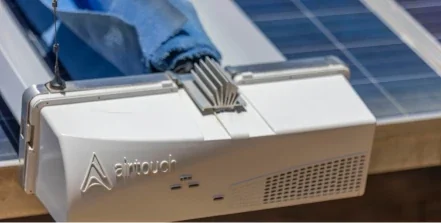
Solar panel cleaning
- Key feature
- Under 40 kg
- Key feature
- Up to 2 km per charge
- Key feature
- Waterless cleaning
On order
Price on request
Updated
SOLUTION · ENERGY AND SOLAR
Cleaning robots maintain the module rows, docked drones fly over the plant and quadrupeds run rounds in substations. Technicians act on the faults found.
Updated
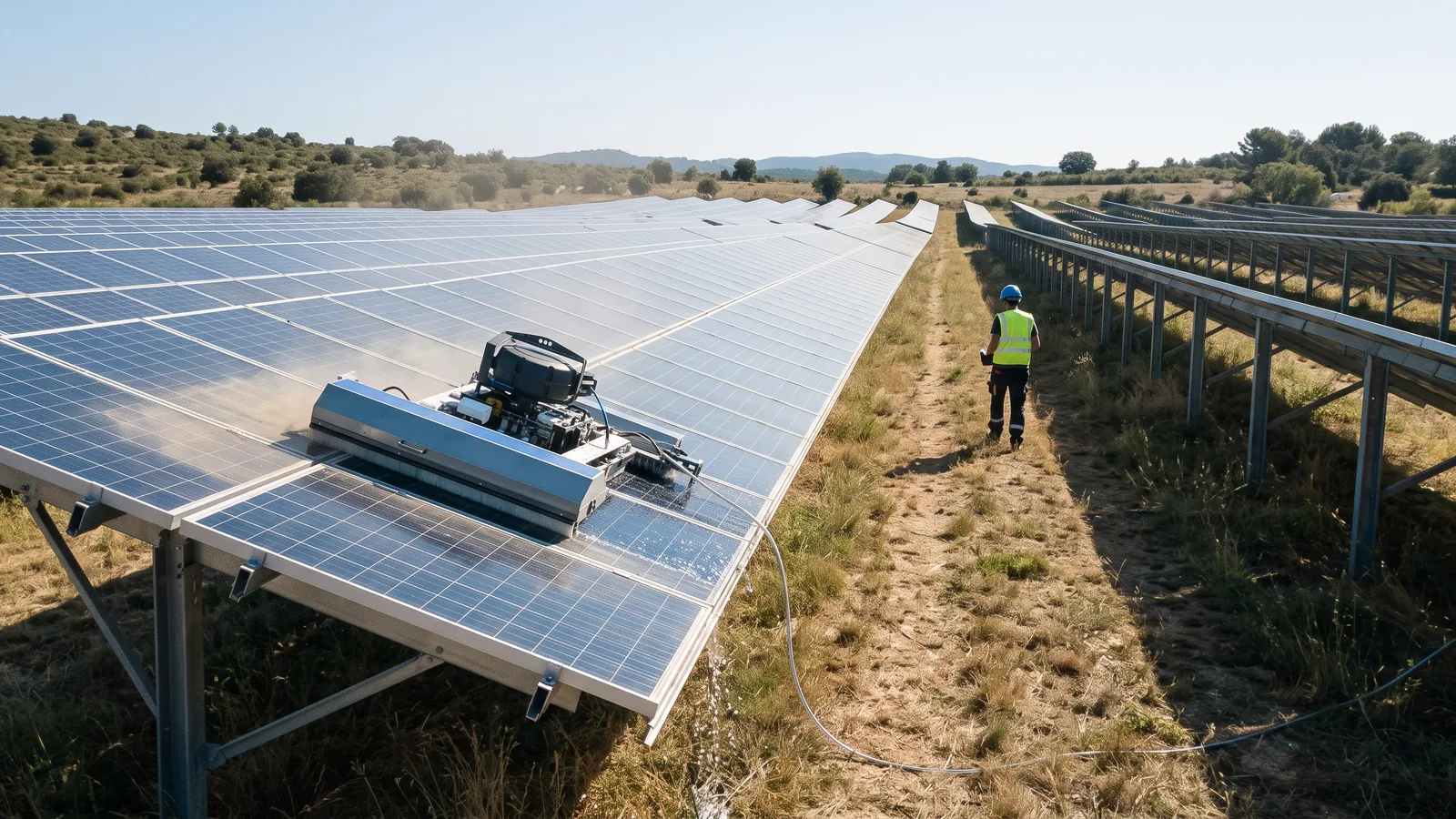
On solar farms and electrical sites, robots clean the panels, drone-in-a-box systems carry out thermal inspection and quadruped robots run site rounds.
hyCLEANER solarROBOT pro cleans a 2,400 mm wide path, climbs 25° slopes depending on the surface and runs up to 3 h per battery, according to its manufacturer.
Robot Distribution matches the robot to the mounting structure and the site, commissions it and maintains it, for purchase, rental or RaaS.
WHAT ROBOTS DO
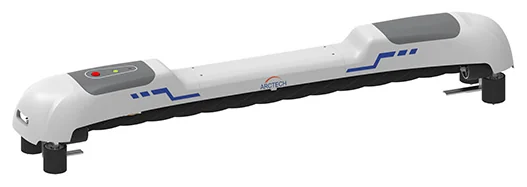
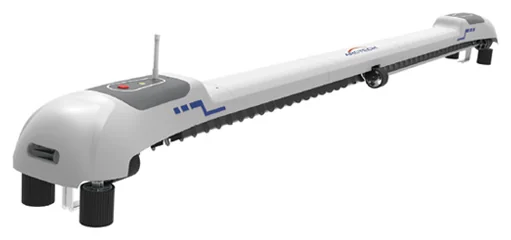
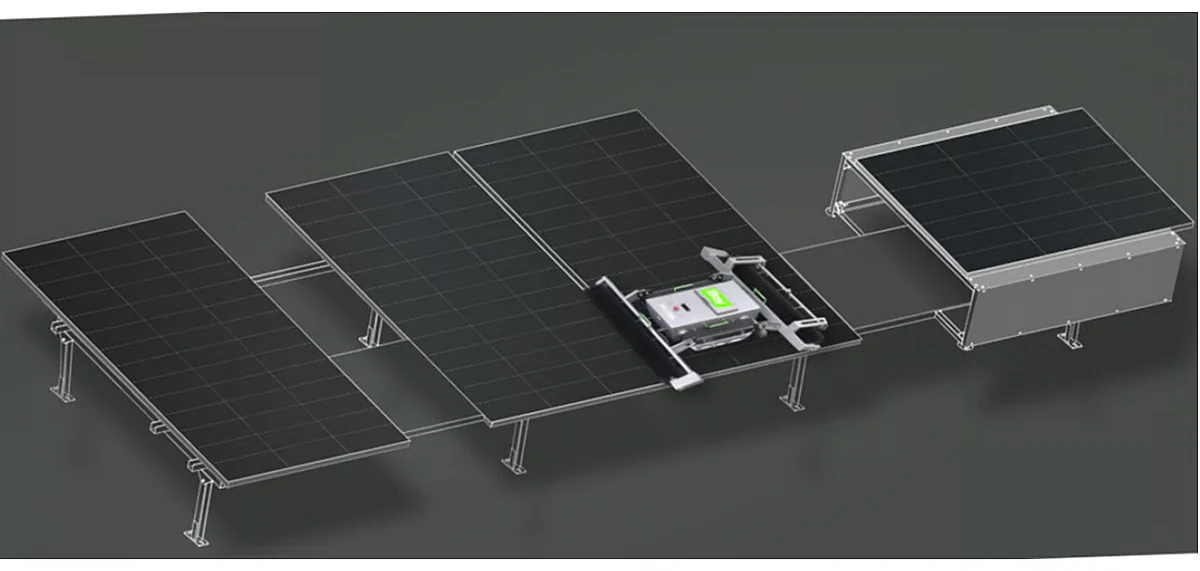
A remote-controlled robot brushes rooftops and ground-mounted plants; on trackers, a robot fixed to the row cleans it dry on a schedule. Arctech Star Shine I covers up to 5 km per trip without water, according to its manufacturer.
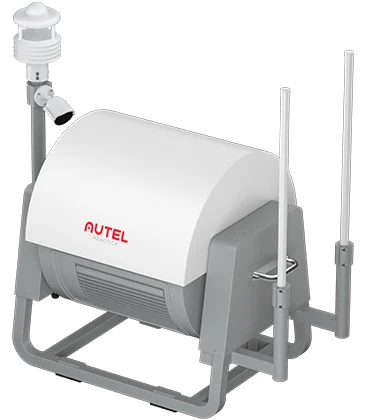
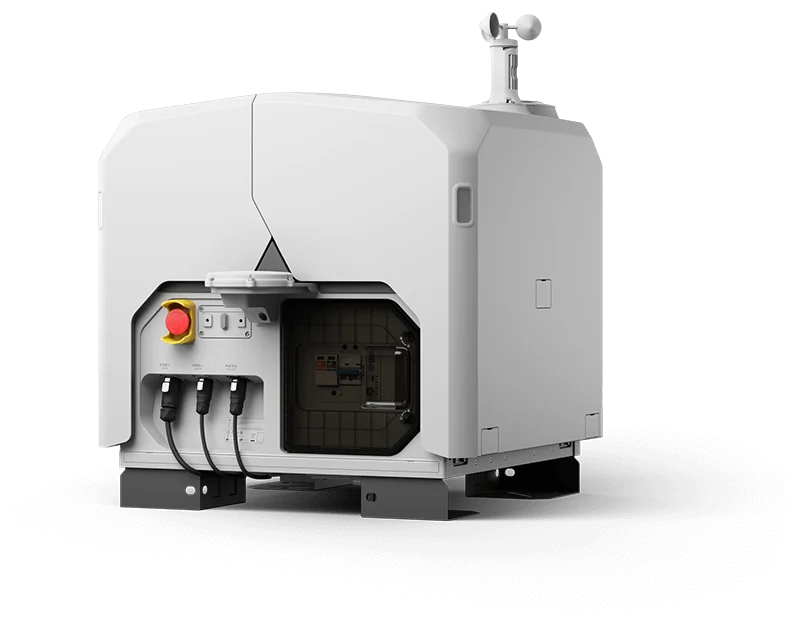
A drone housed in a dock takes off on a schedule and flies over modules, inverters and substations. DJI Dock 3 covers a 10 km radius with a Matrice 4TD carrying a 640 × 512 thermal camera, according to its manufacturer.
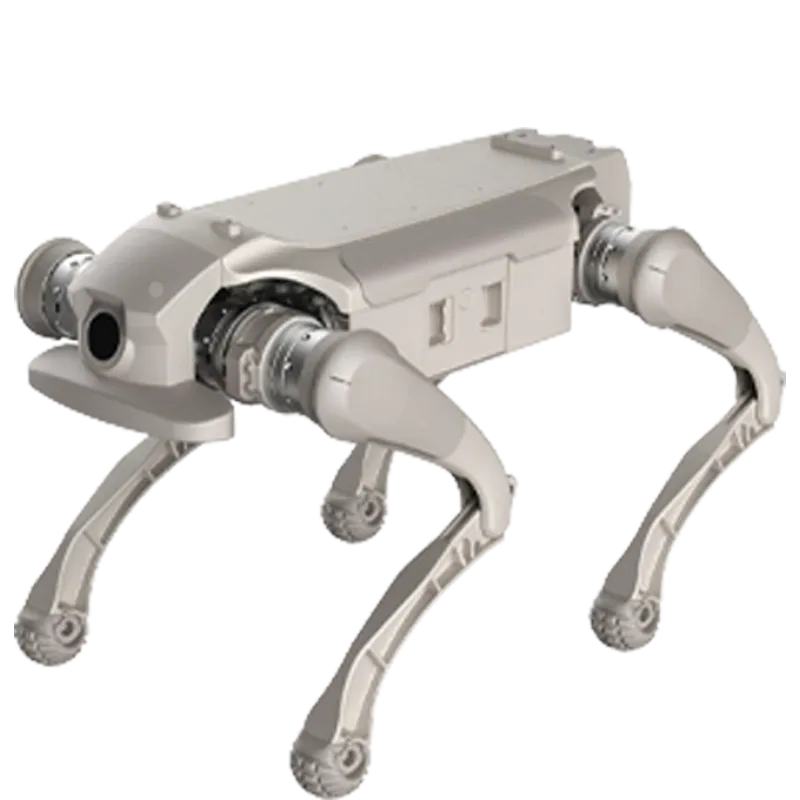
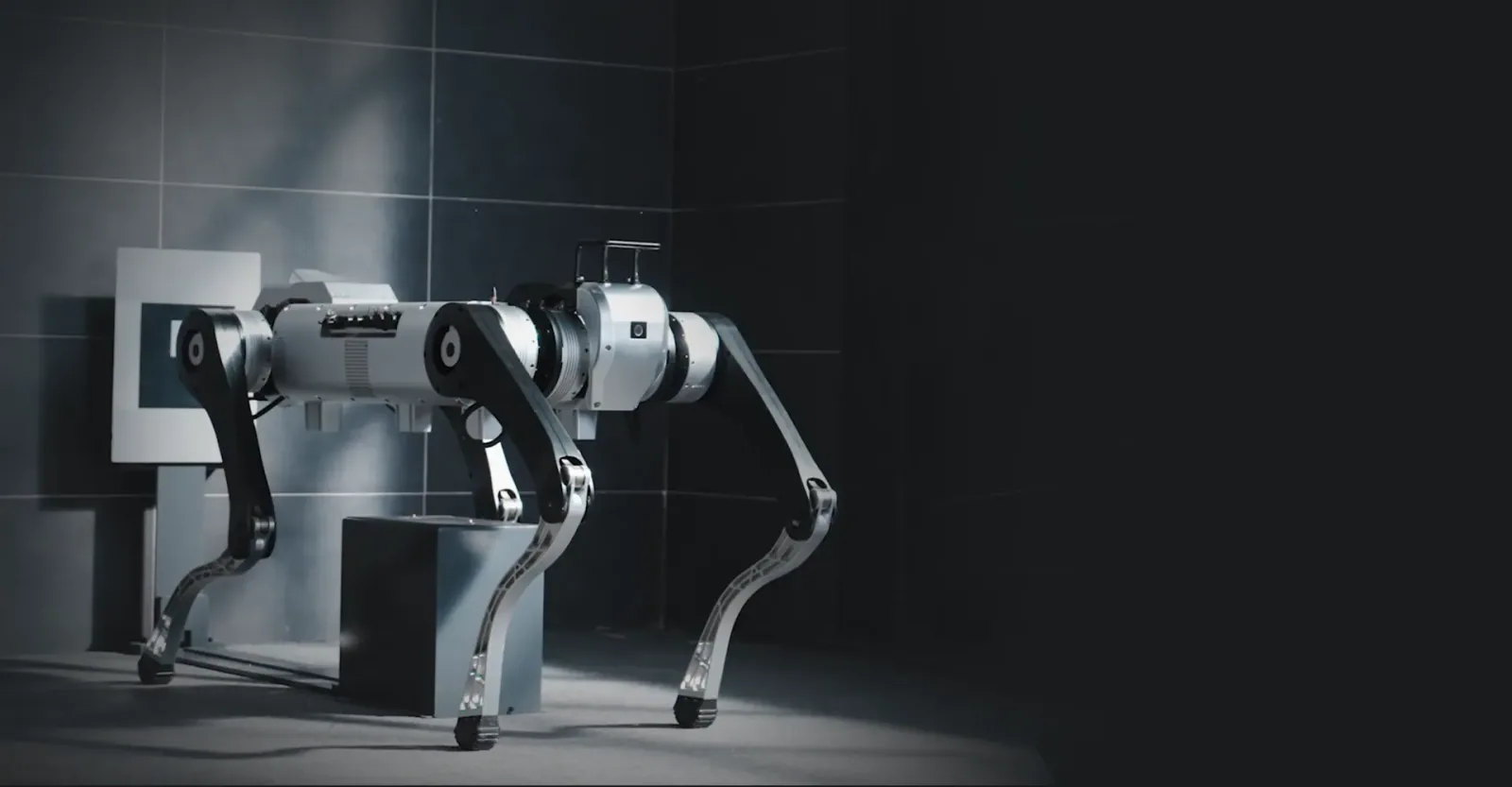
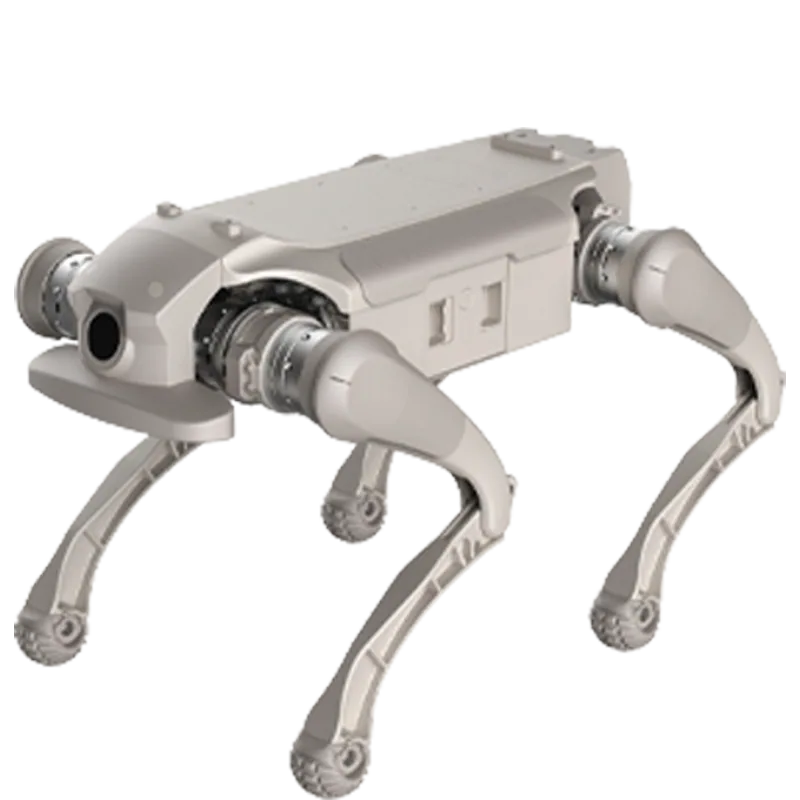
A quadruped robot walks substations and plant rooms on a fixed route. DEEP Robotics X30 is rated IP67, climbs 45° stairs and works from -20 to 55 °C, according to its manufacturer.
USE CASES
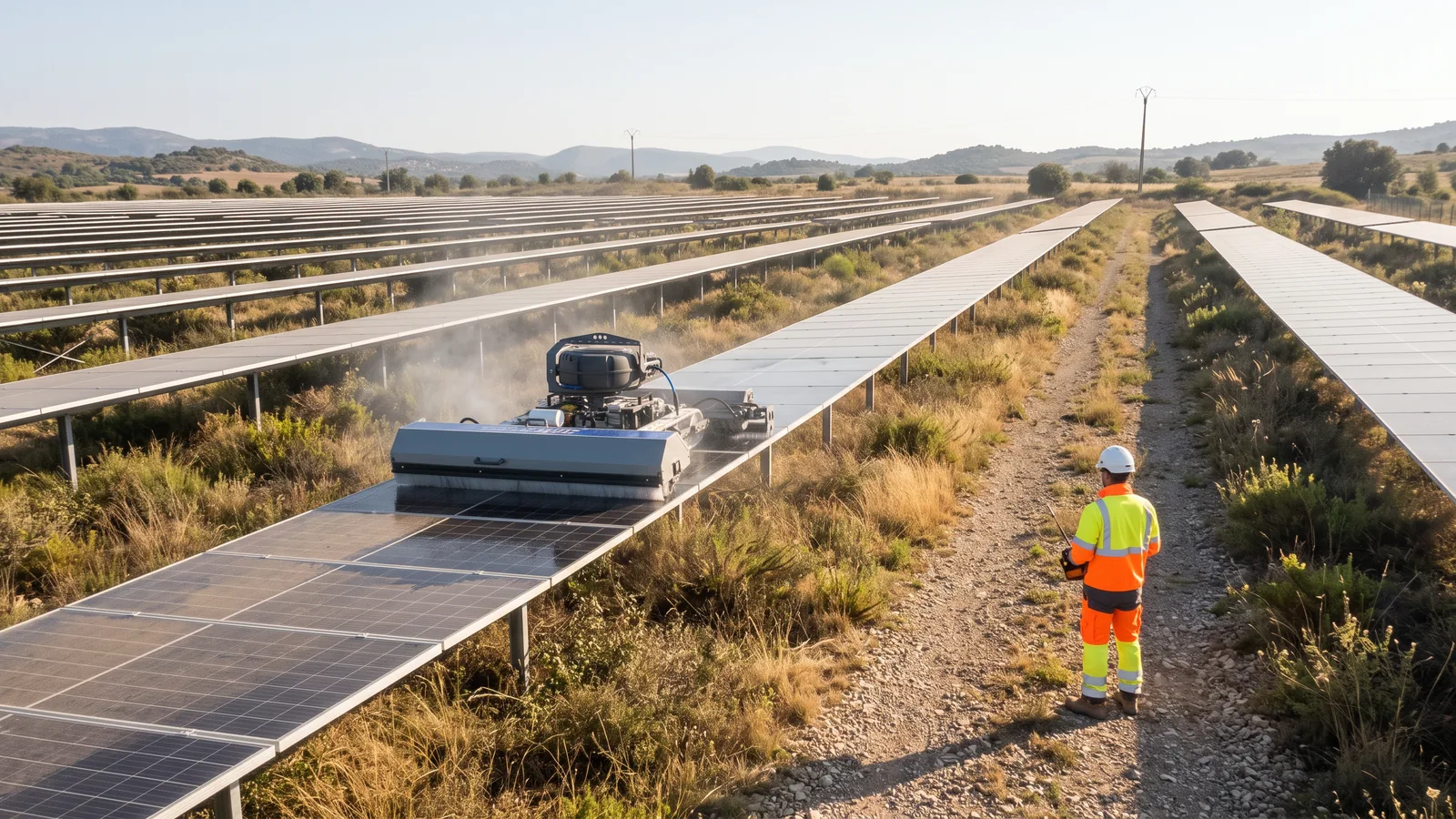 Robotic solar panel cleaningThe robot brushes the module rows, dry or with water, remote-controlled or autonomous depending on the model. Operations teams keep monitoring, electrical checks and plant maintenance.
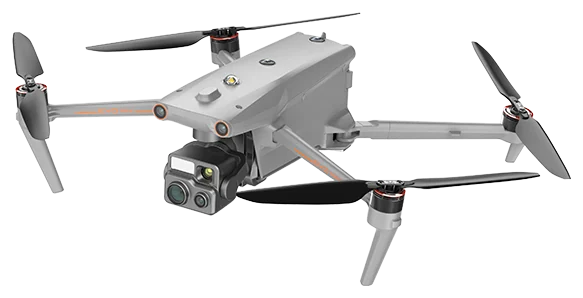
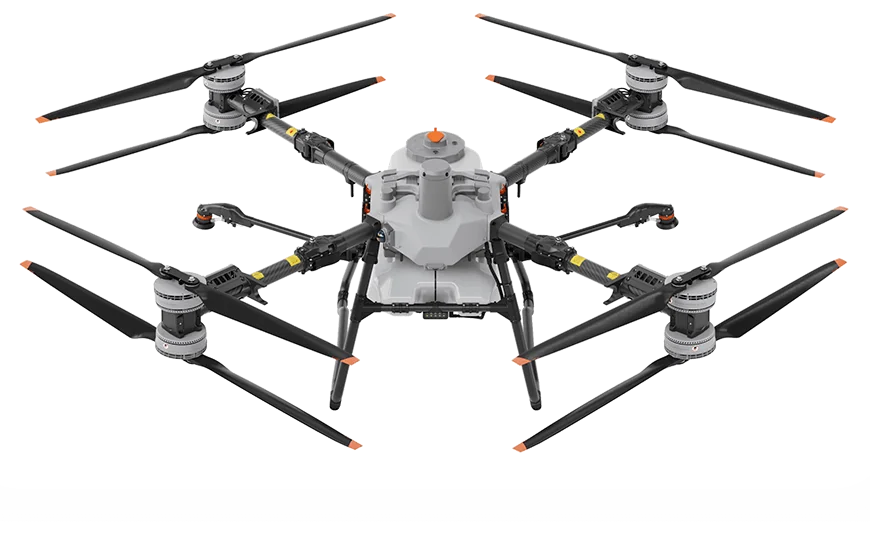
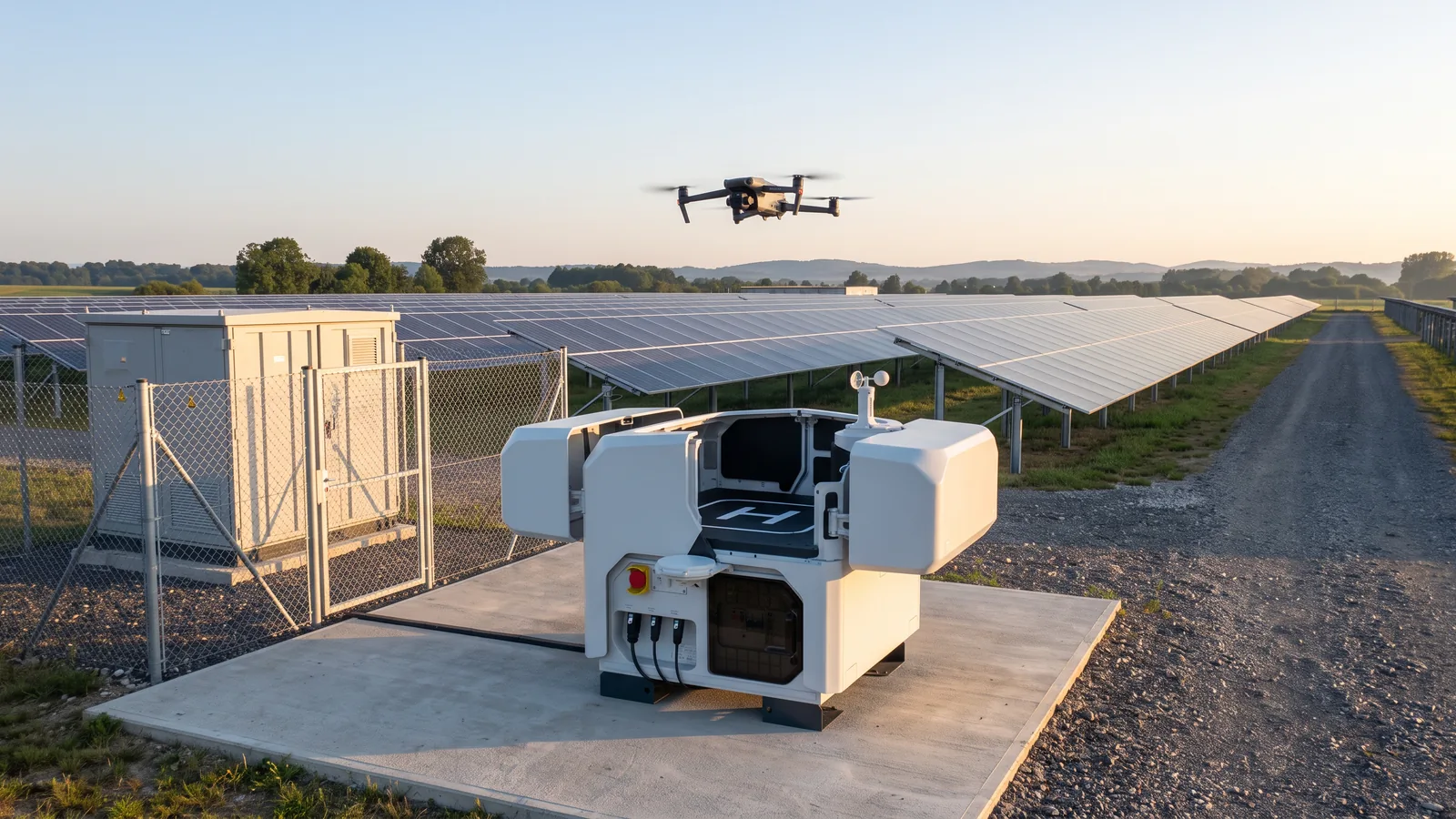 Drone inspection of solar and industrial sitesThe drone flies over modules, roofs, networks and equipment and brings back visible and thermal images, piloted on site or launched from an automated dock. Technicians keep the analysis, decisions and repairs.
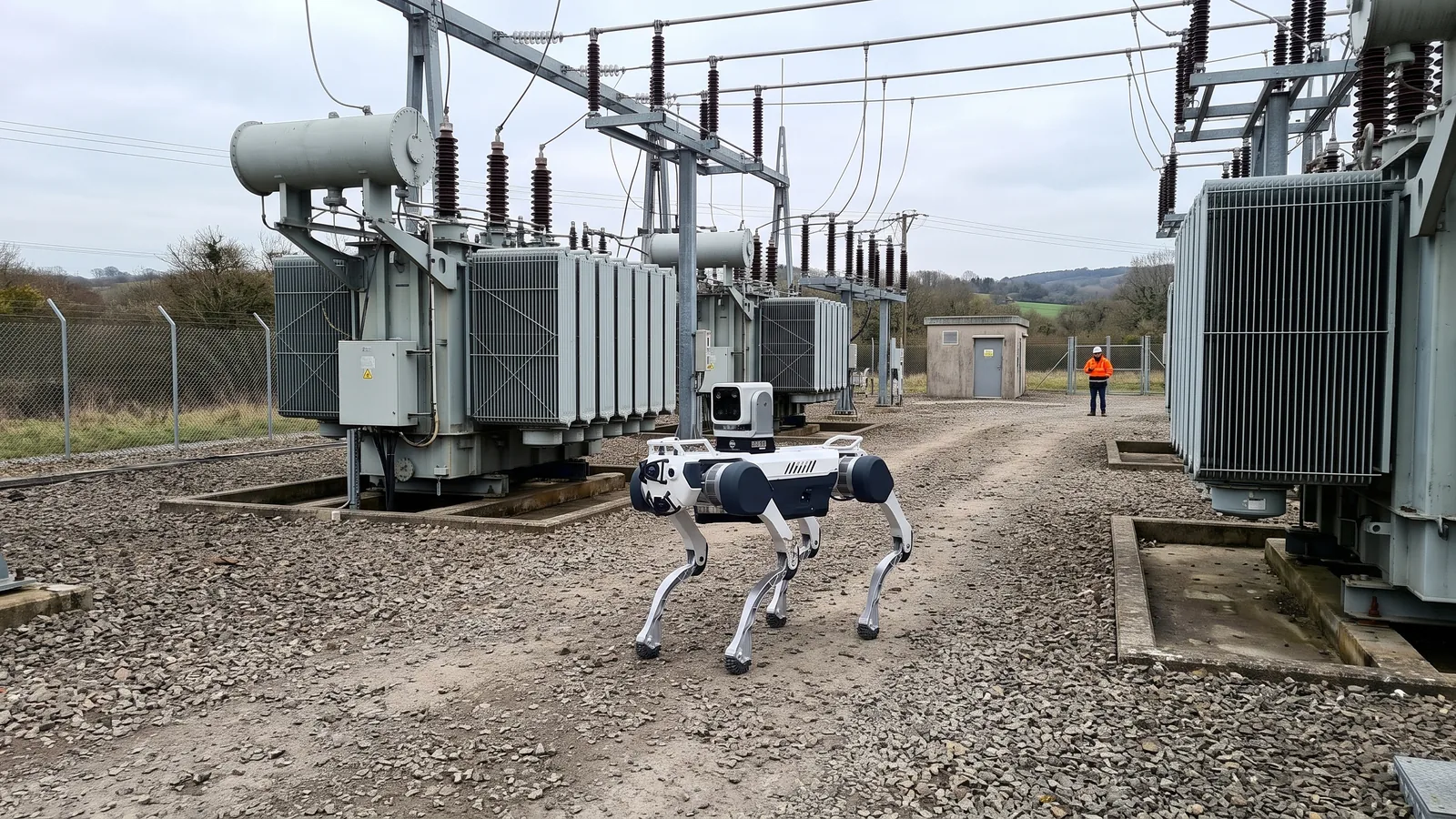 Electrical substation inspectionA ground robot patrols the substation aisles and a docked drone flies over the equipment. Together they record temperatures, gauges and visual condition, without sending someone out for every round.
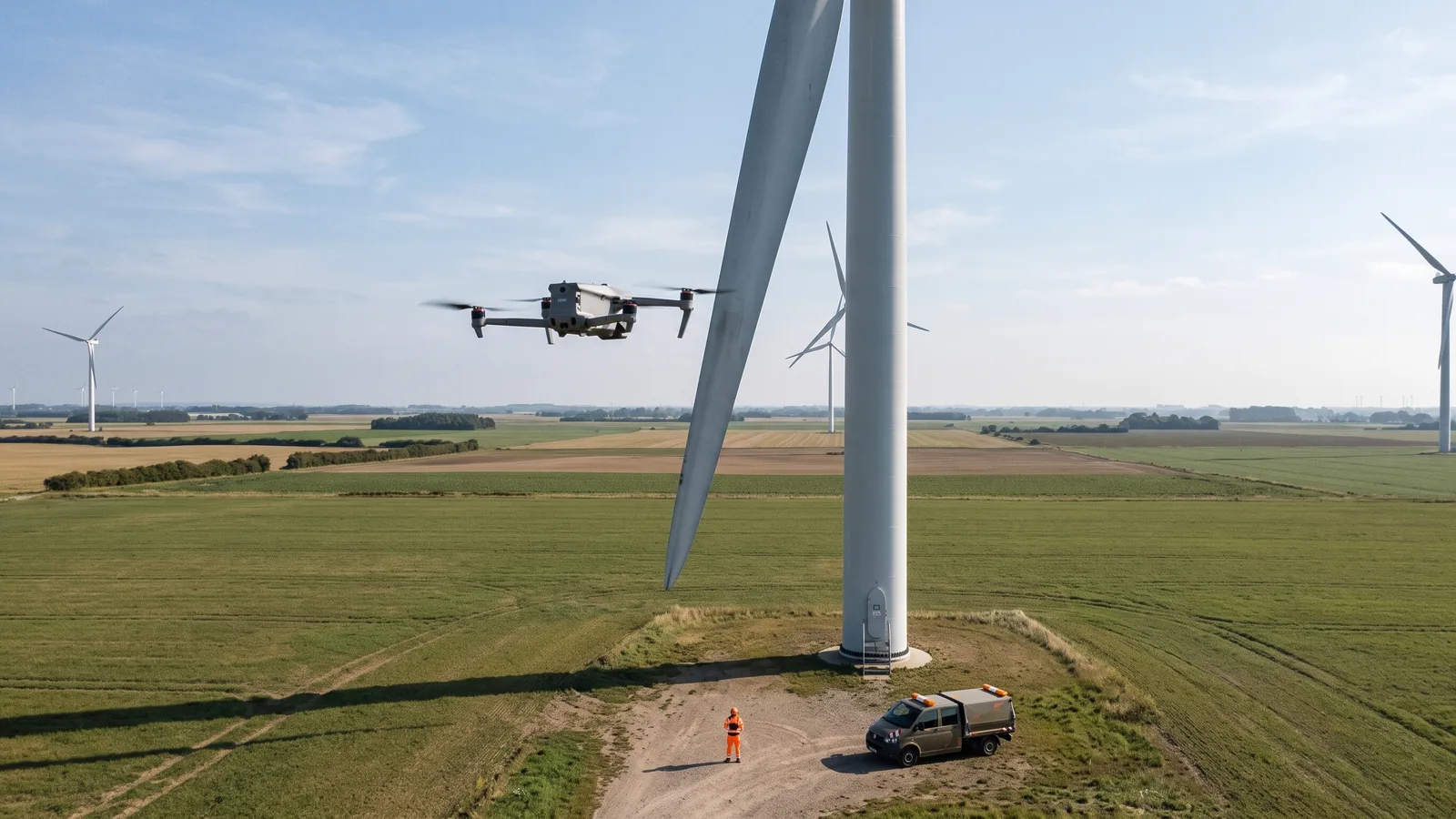 Drone inspection of power lines and wind turbinesThe drone flies along the lines and around the turbines, taking visible and thermal images of insulators, connections and blades. Maintenance crews only work at height on confirmed defects.
MATCHING ROBOTS
Solar panel cleaning
Solar panel cleaning
Solar panel cleaning
BayRobot
Solar panel cleaning
Professional drones
Professional drones
Professional drones
Professional drones
Quadrupeds
Quadrupeds
Quadrupeds
Quadrupeds
Figures from the manufacturers' published specifications, checked . Prices ex VAT shown as "from" prices, or on quote.
HOW DEPLOYMENT WORKS
We walk the routes with you before any order: passage widths, door thresholds, floor gaps, slopes, lifts and doors, Wi-Fi coverage, charging and water points. The survey decides the model.
The robot is mapped on site, routes and no-go zones are set, and lifts, doors or call systems are connected where the model supports it.
Operators learn daily use, charging and cleaning, error recovery and the emergency stop. One site lead learns to change routes and maps.
Remote diagnosis first, then a part or a technician. Preventive maintenance and software updates can be part of a service contract or of a RaaS fee.
ACQUISITION
REGULATION
Updated · General information, not legal advice.
Read the Machinery Regulation guideFAQ
Yes. According to their manufacturers, Arctech Star Shine I cleans dry and Ecoppia T4 uses microfiber and airflow, on single-axis trackers. hyCLEANER solarROBOT ultimate works dry or wet, using 8 to 14 l/min when cleaning wet.
Yes for remote-controlled models. According to its manufacturer, hyCLEANER solarROBOT compact splits into six parts under 10 kg for lifting onto the roof and suits systems of about 50 to 2,000 m². Rooftop work follows the site's fall-protection rules.
Usually, yes. Drones fall under Implementing Regulation (EU) 2019/947: an automated flight beyond the pilot's visual line of sight is in the 'specific' category and requires a declaration or an authorisation from the national authority. Robot Distribution factors this into the site survey.
Yes. According to its manufacturer, DEEP Robotics X30 is built for power inspection, rated IP67, works from -20 to 55 °C and in darkness, with 2.5 to 4 h of runtime. The site survey checks the route, network coverage and safety distances to exposed live parts.
Robots, acquisition mode and delivery terms, in one written proposal.