Outdoor
- Key feature
- ≤10 s per truss
- Payload
- 200 kg
- Runtime
- 8 h
On order
Price on request
Updated
USE CASE · AGRICULTURE AND VITICULTURE
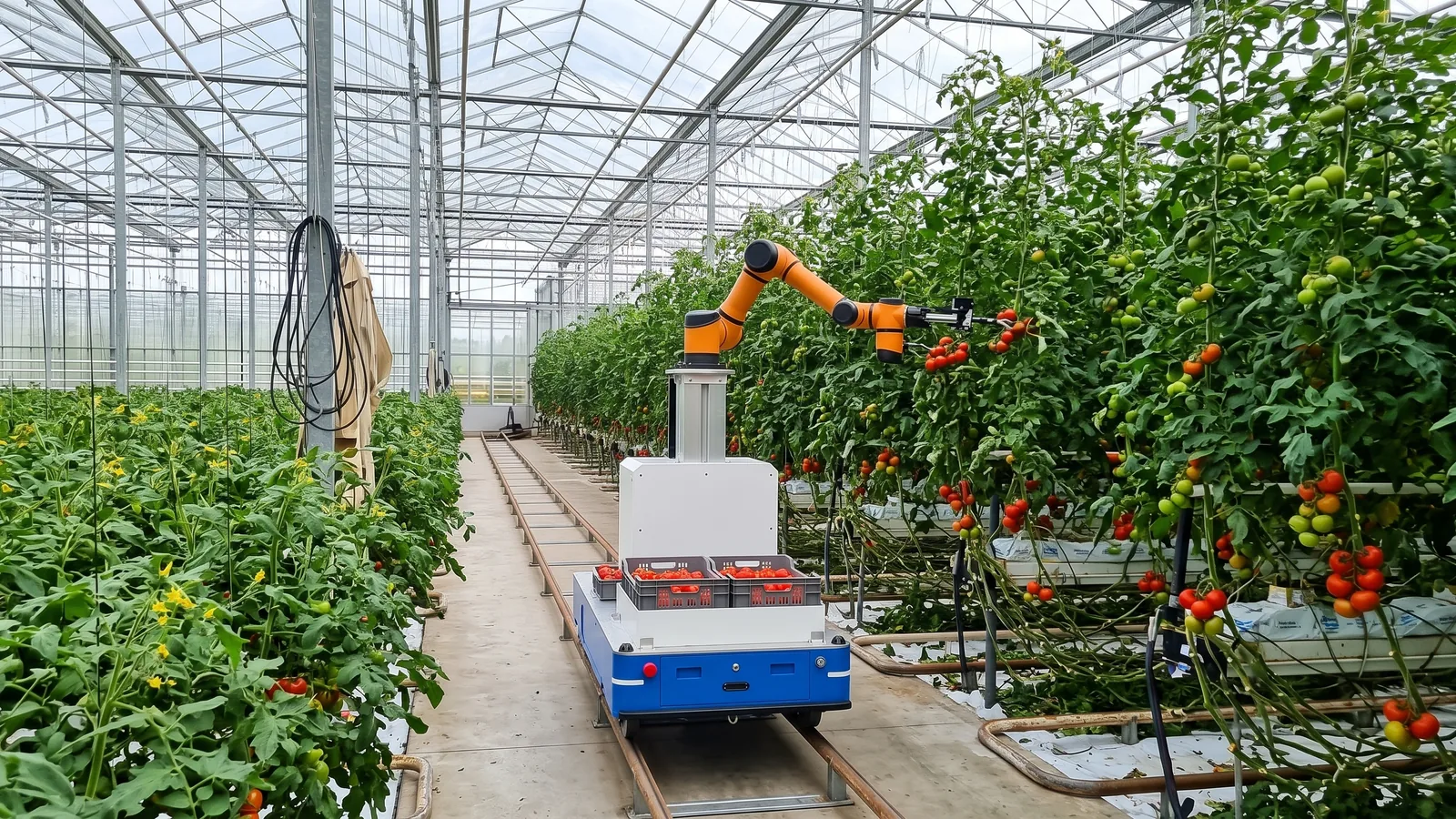
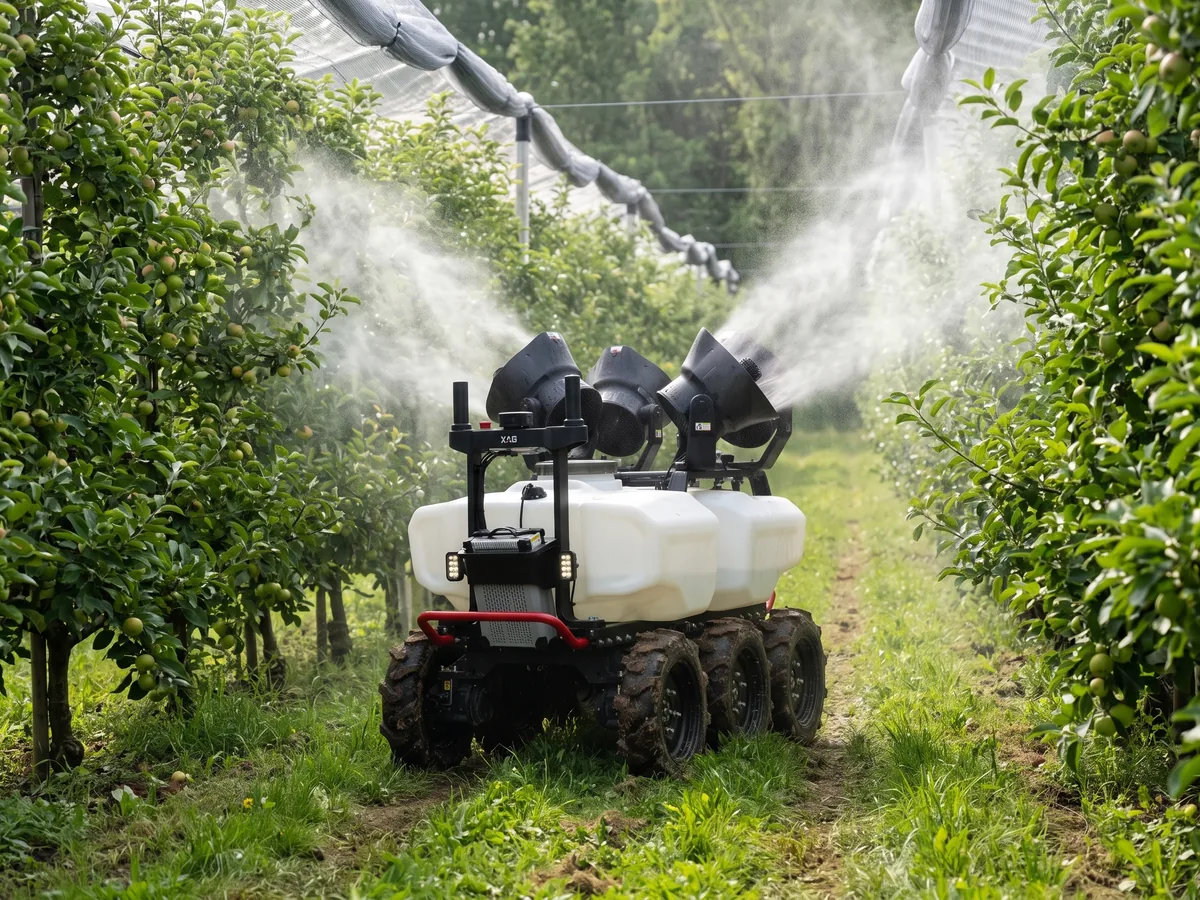
In the greenhouse, the robot spots ripe trusses and cuts them; in the orchard, electric robots spray, carry and pull tools between the rows. Teams keep the tasks that need a trained eye.
Updated
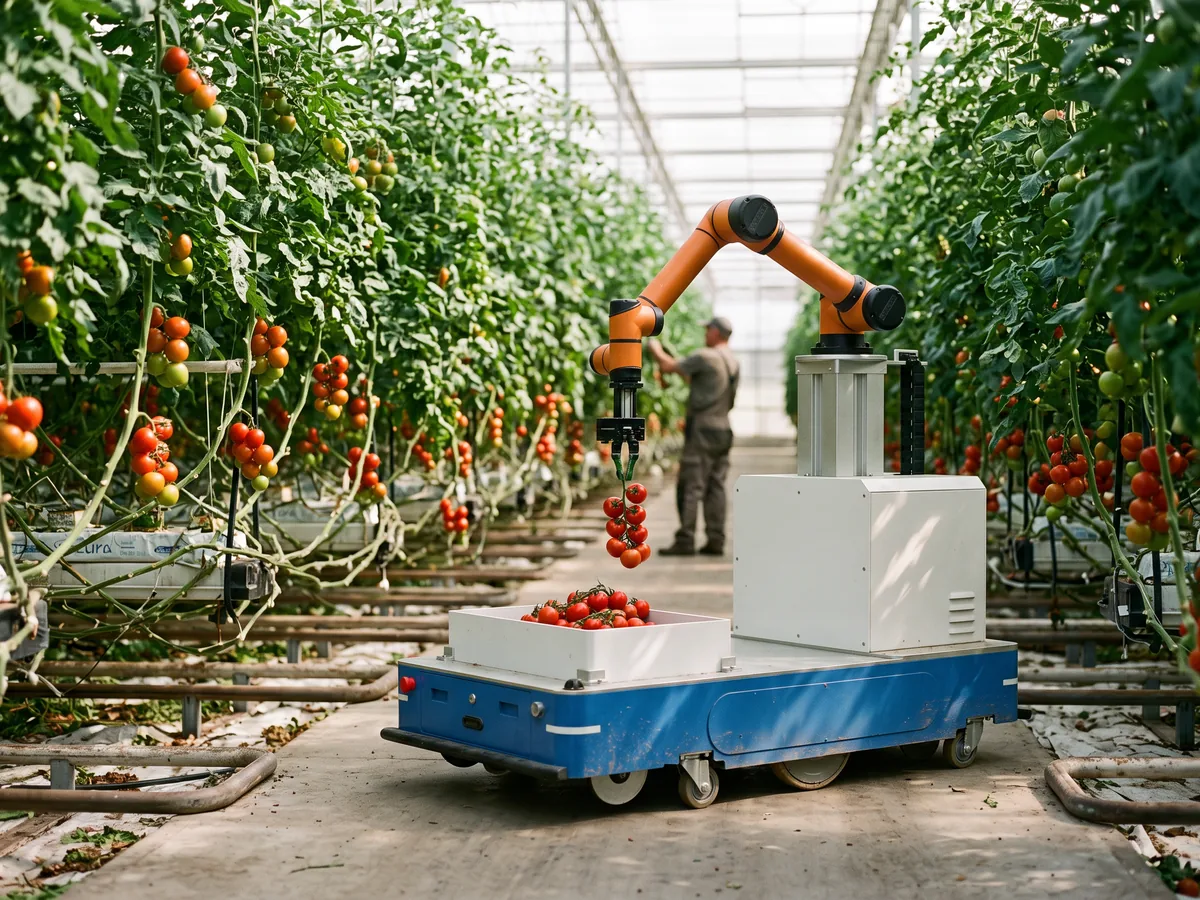
A harvesting robot picks ripe fruit on its own, such as truss tomatoes in greenhouses, while tool-carrier and carrier robots handle transport and row maintenance in orchards.
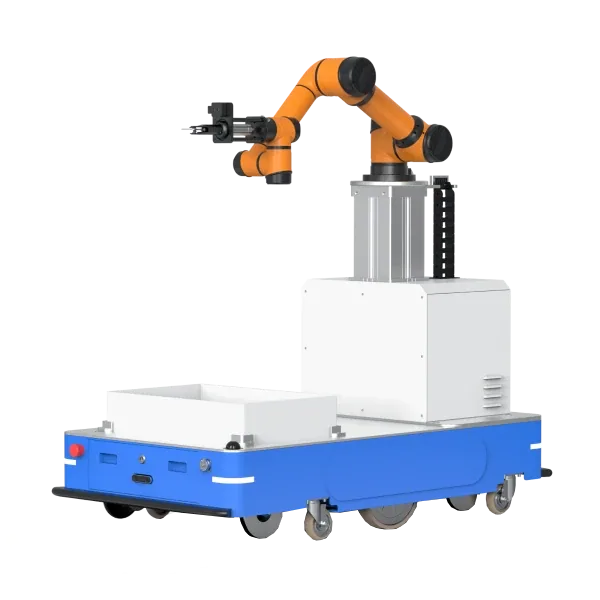
The AUBO Farm200 Picking Robot grades truss ripeness and cuts one in 10 s or less, on heating-pipe rails or flat floors, with at least 8 h of runtime, according to its manufacturer.
Robot Distribution delivers it, sets it up in your greenhouses or orchards, trains your teams and maintains it, to buy, rent or as RaaS.
WHY
In tomato greenhouses and orchards alike, harvesting and moving crates take a lot of labour over a short period, often hard to recruit. Trips between the rows and the row ends weigh on the working day.
Robotic picking is available today for specific crops, such as truss tomatoes under glass. In orchards, the autonomous electric robots in our catalogue bring spraying, transport and row maintenance; fruit picking stays with the teams.
HOW IT RUNS
At commissioning we record the rows, aisles and loading areas. The AUBO Farm200 navigates by laser SLAM to ±10 mm and runs on 550 mm gauge rails, according to its manufacturer.
The robot spots the trusses, grades their ripeness and cuts them with pneumatic or electric scissors. It recognises position and ripeness in at least 80% of cases, according to its manufacturer.
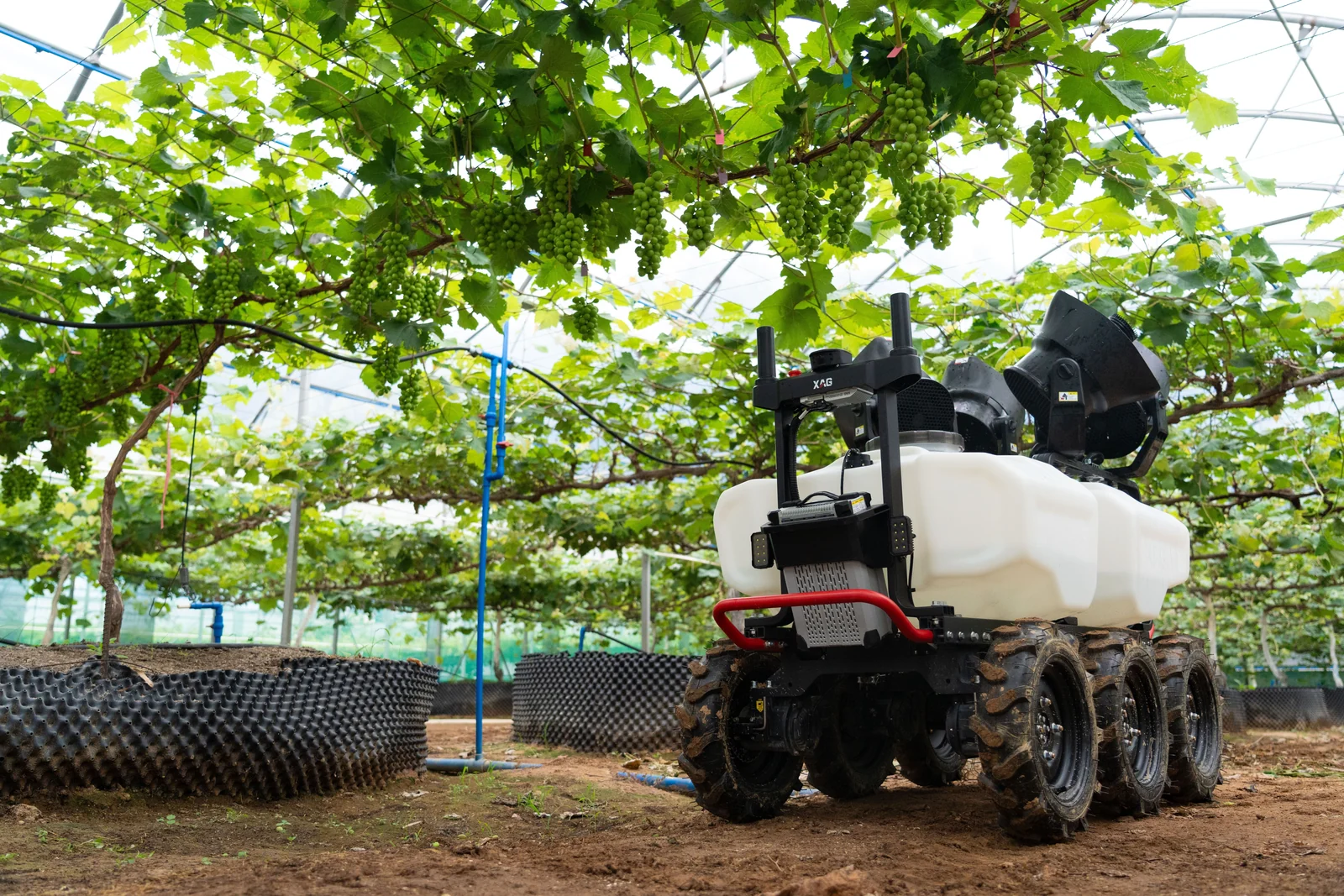
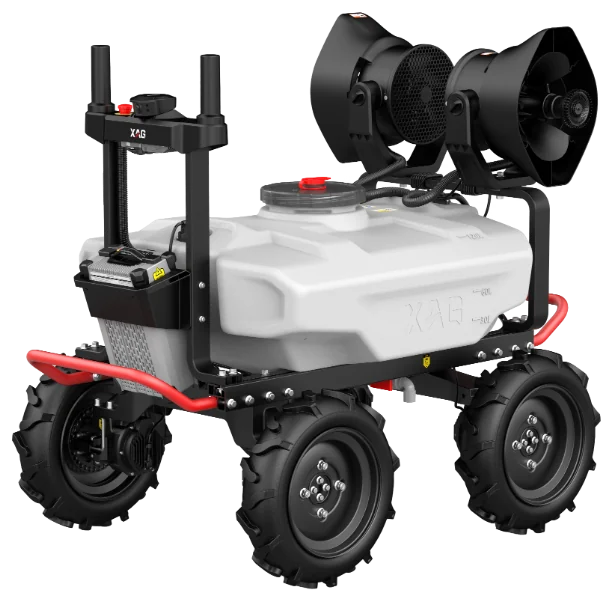
As an option, the AUBO Farm200 changes its own crates, up to 10, and its base carries 200 kg. In orchards, the XAG R200 can be fitted as a carrier and takes up to 240 kg, according to their manufacturer.
Between harvests, the SIZA TOOGO 2.0 carries standard implements on a 1,600 kg three-point lift, and the XAG R200 sprays up to 7 m on each side, according to their manufacturer.
THE ROBOTS
Outdoor
Agricultural robots
BEFORE INSTALLING
Species, variety, training system and picking height decide what can be robotised: with our catalogue, automatic picking covers truss tomatoes under glass.
Heating-pipe rails, concrete aisles, grass cover and slopes are noted: the XAG R200 climbs 20% grades and the AUBO Farm200 15°, according to their manufacturer.
Row spacing sets the robot: the SIZA TOOGO 2.0 has a hydraulically adjustable 1.50 to 2.20 m track and 670 mm ground clearance, according to its manufacturer.
RTK reception is checked in orchards and the network in greenhouses, and the charging spot is planned. The SIZA TOOGO 2.0 charges its 70 kWh battery to 90% in 2 h, according to its manufacturer.
RULES AND STANDARDS
A picking robot touches food and shares rows with pickers, so food hygiene, food-contact and worker-protection rules apply on top of machine safety.
Annex I, Part A of the regulation asks growers who harvest plant products to keep facilities, equipment, containers, crates and vehicles clean and, where necessary, disinfected. A picking robot's cutters, grippers and crate changer fall under this duty. Ask the supplier for a cleaning and disinfection procedure compatible with the robot's parts, and add it to the farm's hygiene plan and records.
Parts intended to touch fruit, such as gripper pads, cutting tools or crates, are food-contact materials. They must not transfer constituents to food in quantities that could endanger health or alter taste or composition. Where specific EU measures apply, such as for plastics, a written declaration of compliance must accompany them. Ask for these declarations for every part in contact with the harvest.
When a robot sprays a greenhouse or orchard, French rules still set how long people must stay out: by default 6 hours outdoors and 8 hours in an enclosed space such as a greenhouse, 24 or 48 hours for products with certain hazard statements, unless the product authorisation says otherwise. Plan harvest and robot supervision rounds around these intervals.
From 20 January 2027, the Machinery Regulation adapts safety requirements to people and machines sharing a space, including contact risks with moving parts. Machines with self-evolving logic must show planned actions in a way operators understand. For a picking arm working near teams, ask how the robot detects people, slows or stops, and how this is documented in the instructions.
General information, not legal advice.
FAQ
For some crops. The AUBO Farm200 Picking Robot picks truss tomatoes in greenhouses in 10 s or less per truss, according to its manufacturer. For apples, pears or stone fruit, our robots handle spraying, transport and row maintenance, not picking.
According to its manufacturer, the AUBO Farm200 runs at least 8 h and recharges from 15 to 95% in 3 h; an automatic charging station is available as an option.
According to the manufacturer: the six-wheel-drive XAG R200 sprays from a 240 L tank and can be fitted as a carrier; the SIZA TOOGO 2.0 carries standard implements and works up to 12 h. The four-wheel-drive XAG R100 is designed for densely planted greenhouse crops.
The XAG R100 and R200 are rated IPX6, according to their manufacturer. In greenhouses, the survey also checks humidity, heat and wash-down areas.
These robots are machines under the Machinery Directive 2006/42/EC, replaced by Regulation (EU) 2023/1230 from 20 January 2027. Applying plant protection products remains subject to the rules in force on your farm.
USE CASES
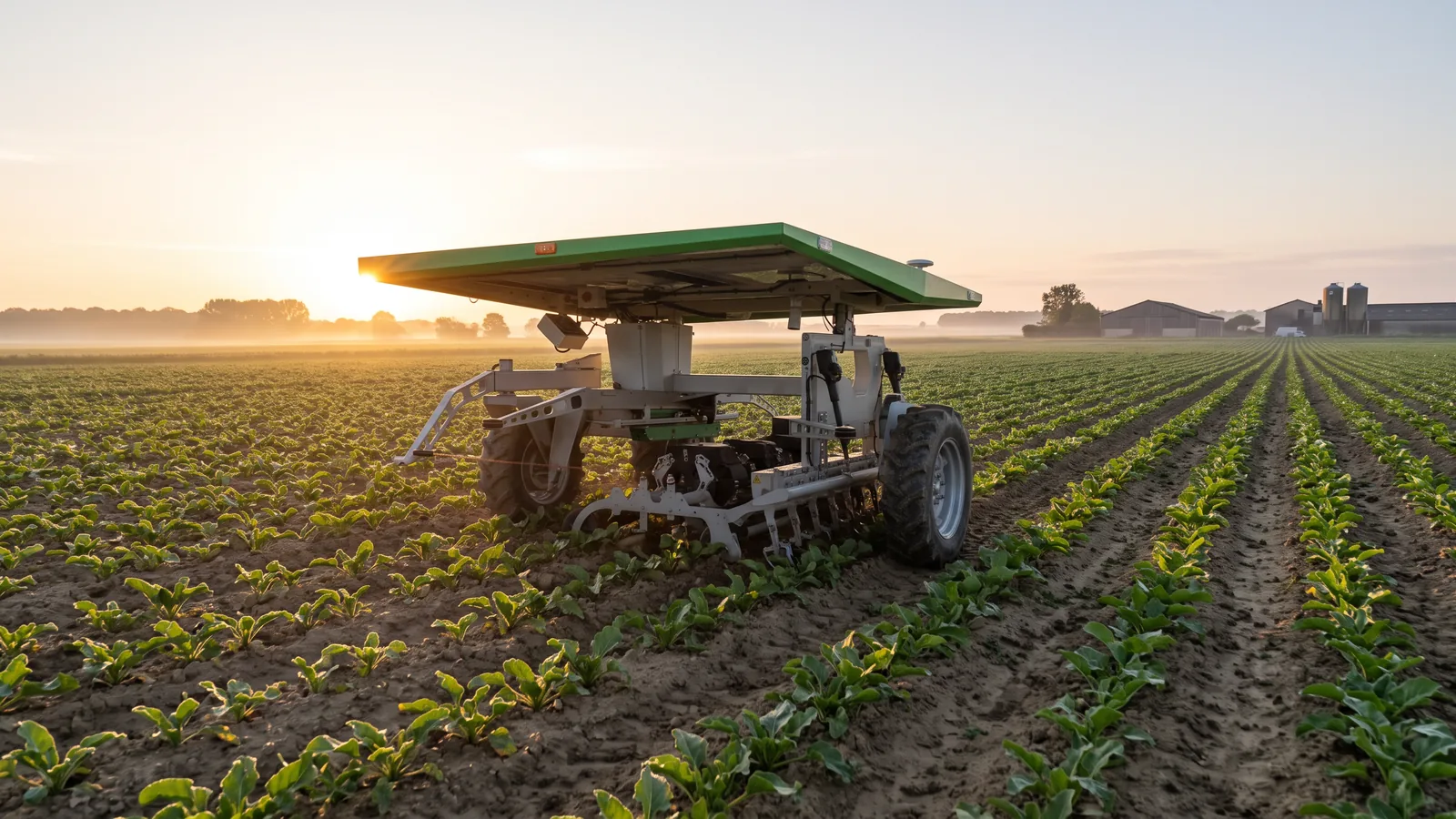 Autonomous crop weedingThe robot tells crop from weeds, then weeds mechanically, by laser or with micro-droplets, with no hand weeding. The grower keeps the choice of fields, settings and when to act.
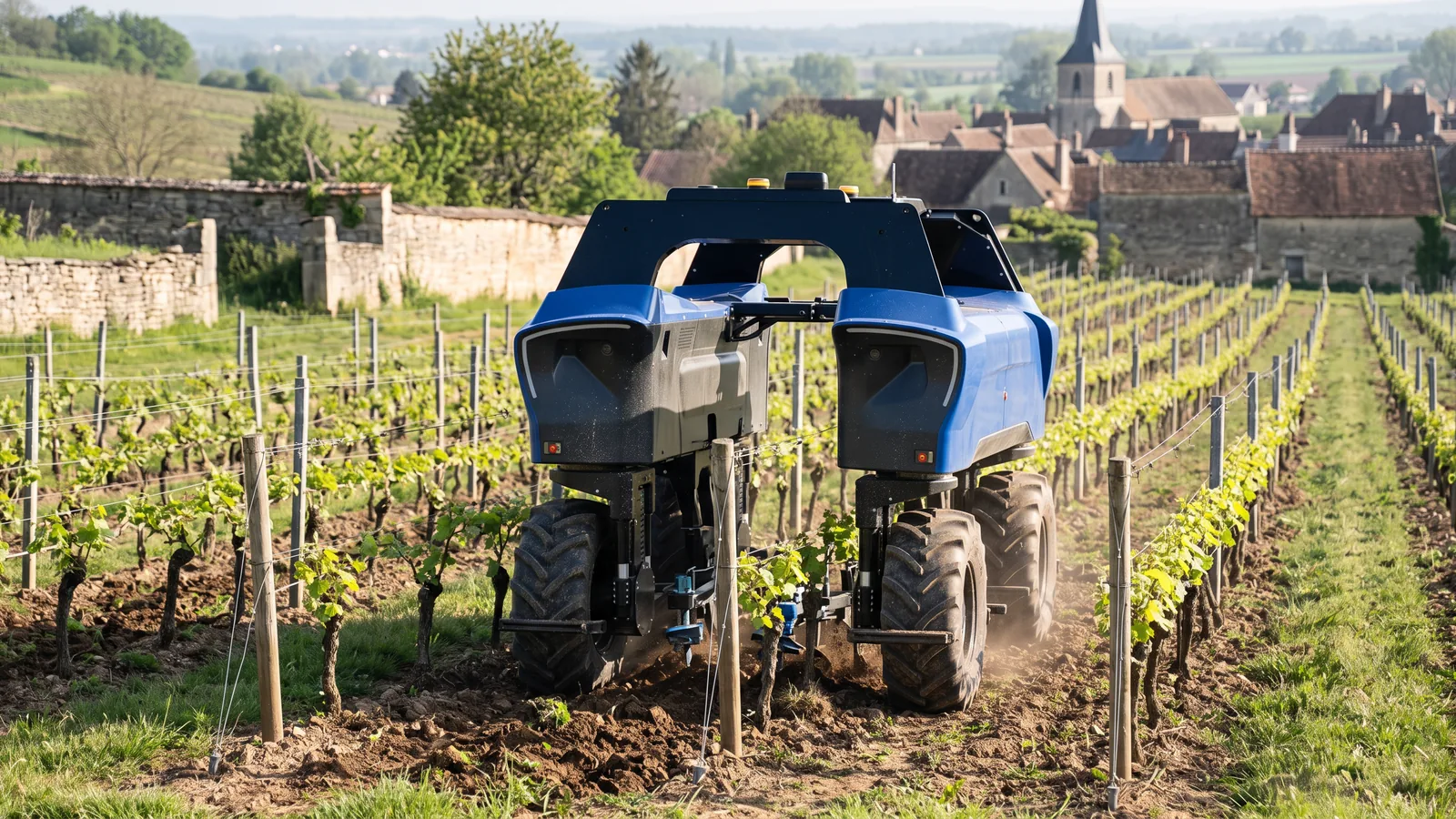 Vineyard soil work and canopy careThe robot straddles the row and carries tools for soil work, mowing and trimming, guided by satellite. The grower keeps pruning, crop decisions and watching the vines.
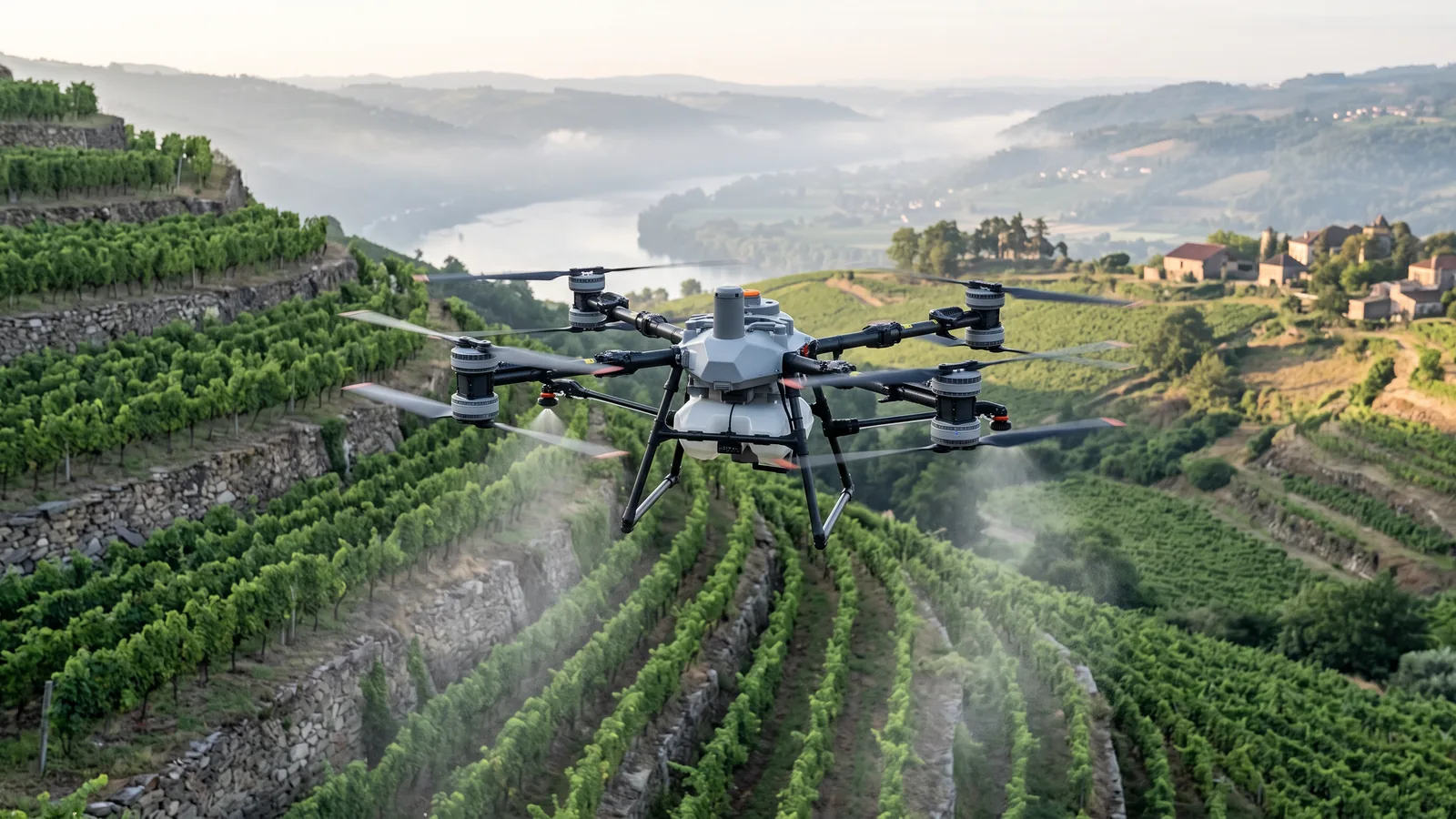 Agricultural drone spraying and spreadingThe drone follows a flight plan drawn over the field and spreads fertiliser, seed or spray, without entering the crop. The regulatory framework is checked before each use.
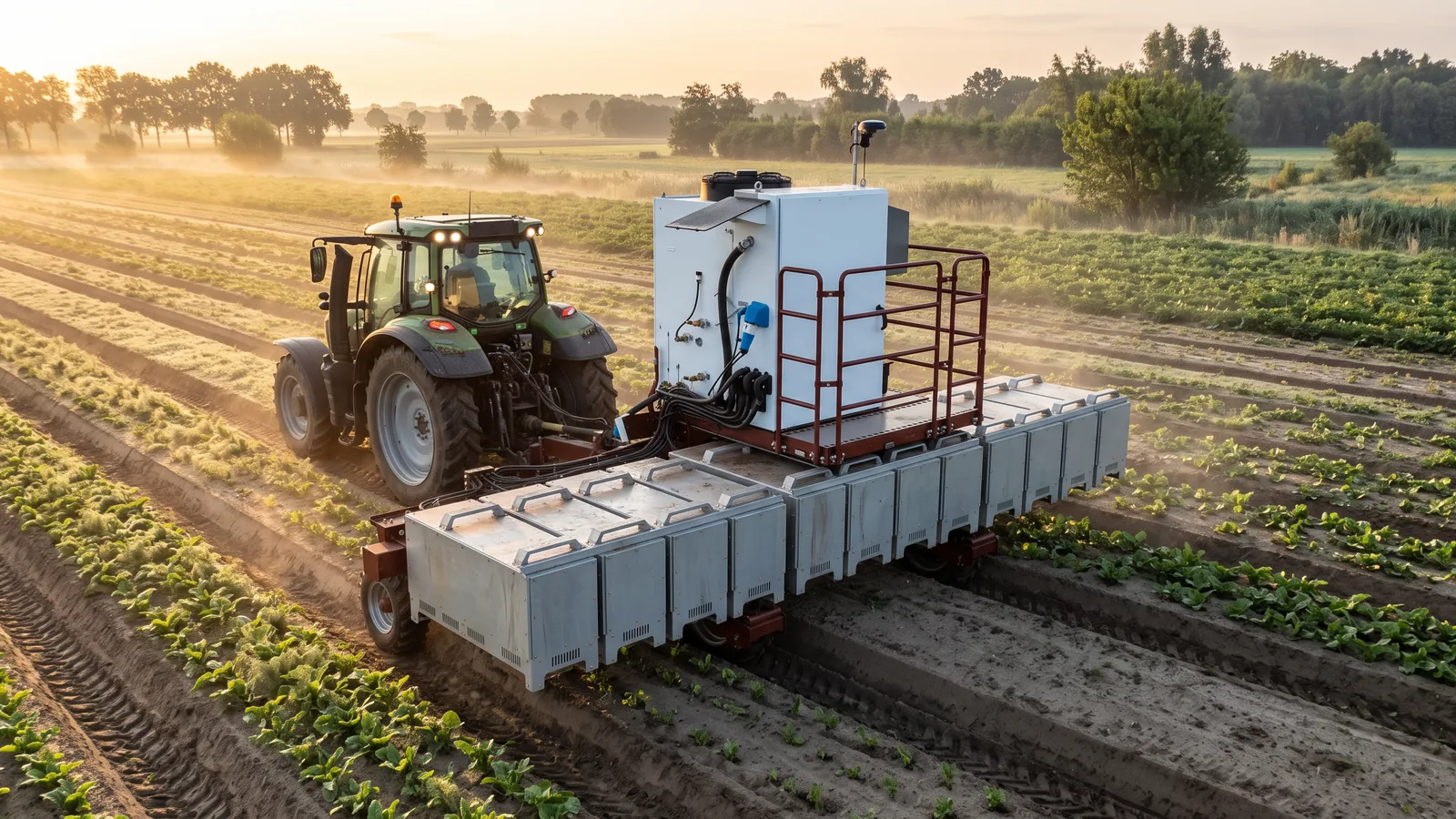 Laser weeding of vegetables and specialty cropsThe laser weeder spots each weed by camera and kills it with a laser, with no chemical and no tillage. The grower chooses the fields, the passes and, depending on the crop, between laser and spot spraying.
Robots, acquisition mode and delivery terms, in one written proposal.