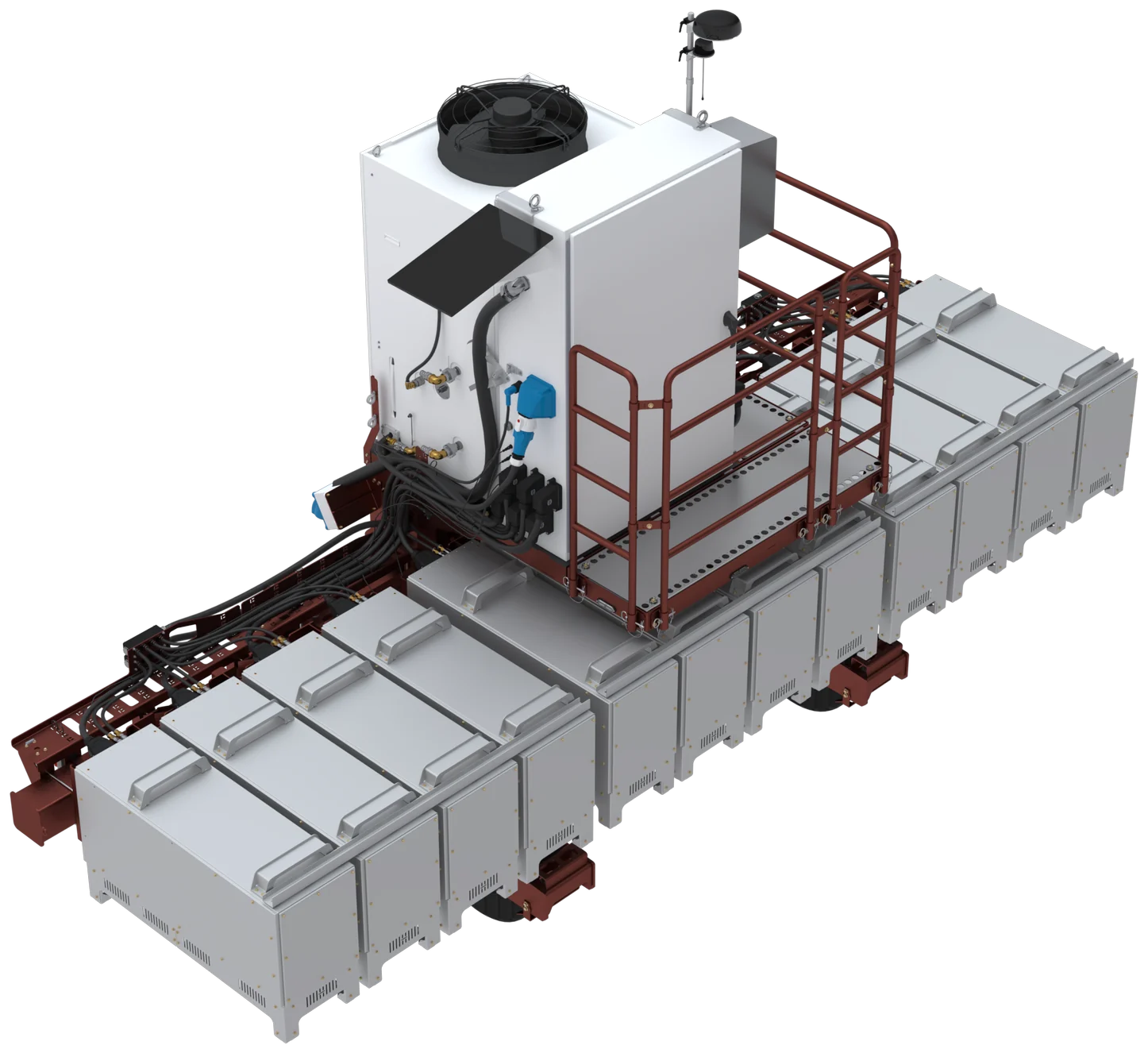
Agricultural robots
- Working width
- 6,100 mm
- Weight
- 3,266 kg
- Key feature
- 2 × 240 W lasers per module
On order
Price on request
Updated
USE CASE · AGRICULTURE AND VITICULTURE
The laser weeder spots each weed by camera and kills it with a laser, with no chemical and no tillage. The grower chooses the fields, the passes and, depending on the crop, between laser and spot spraying.
Updated
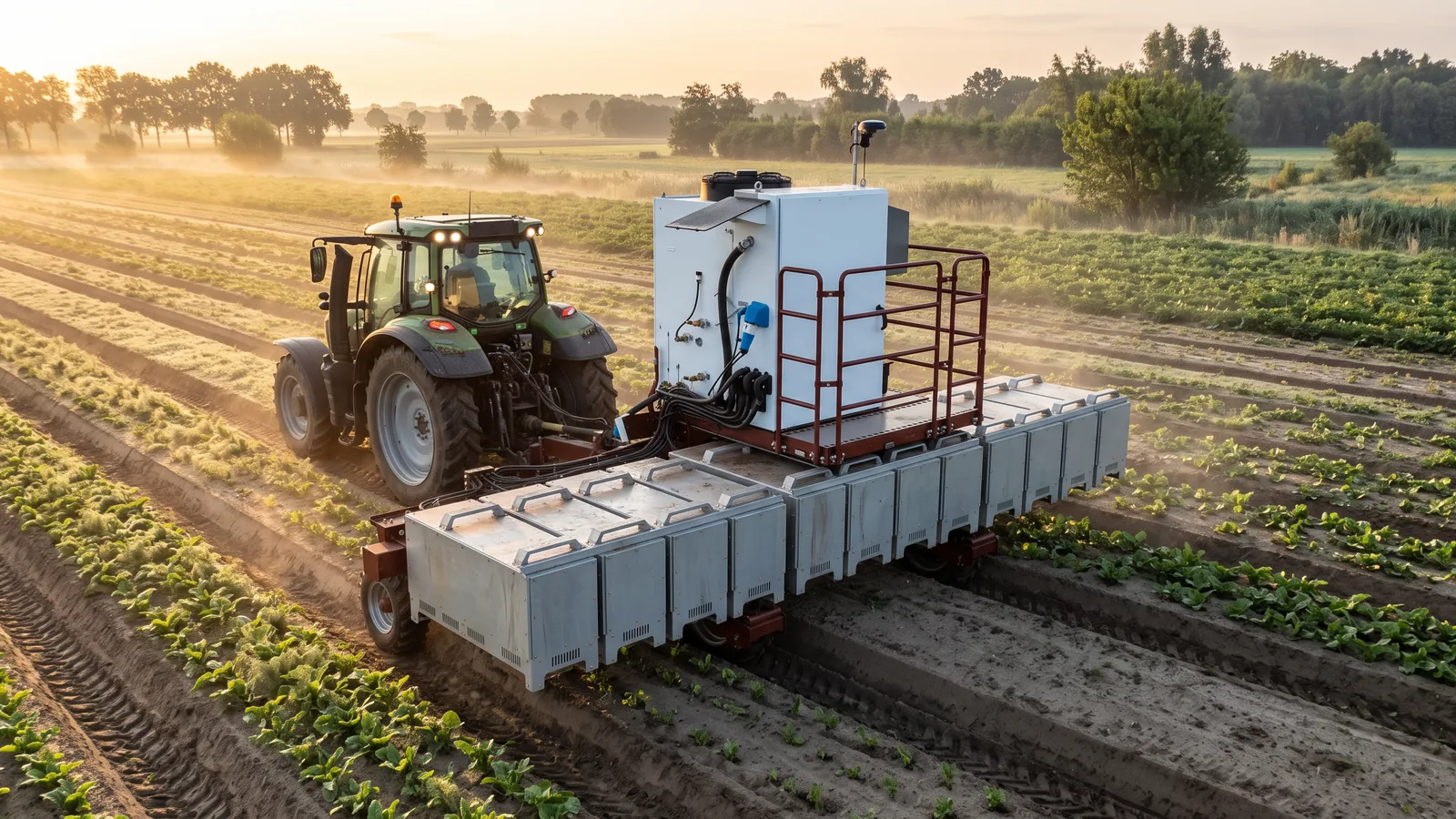
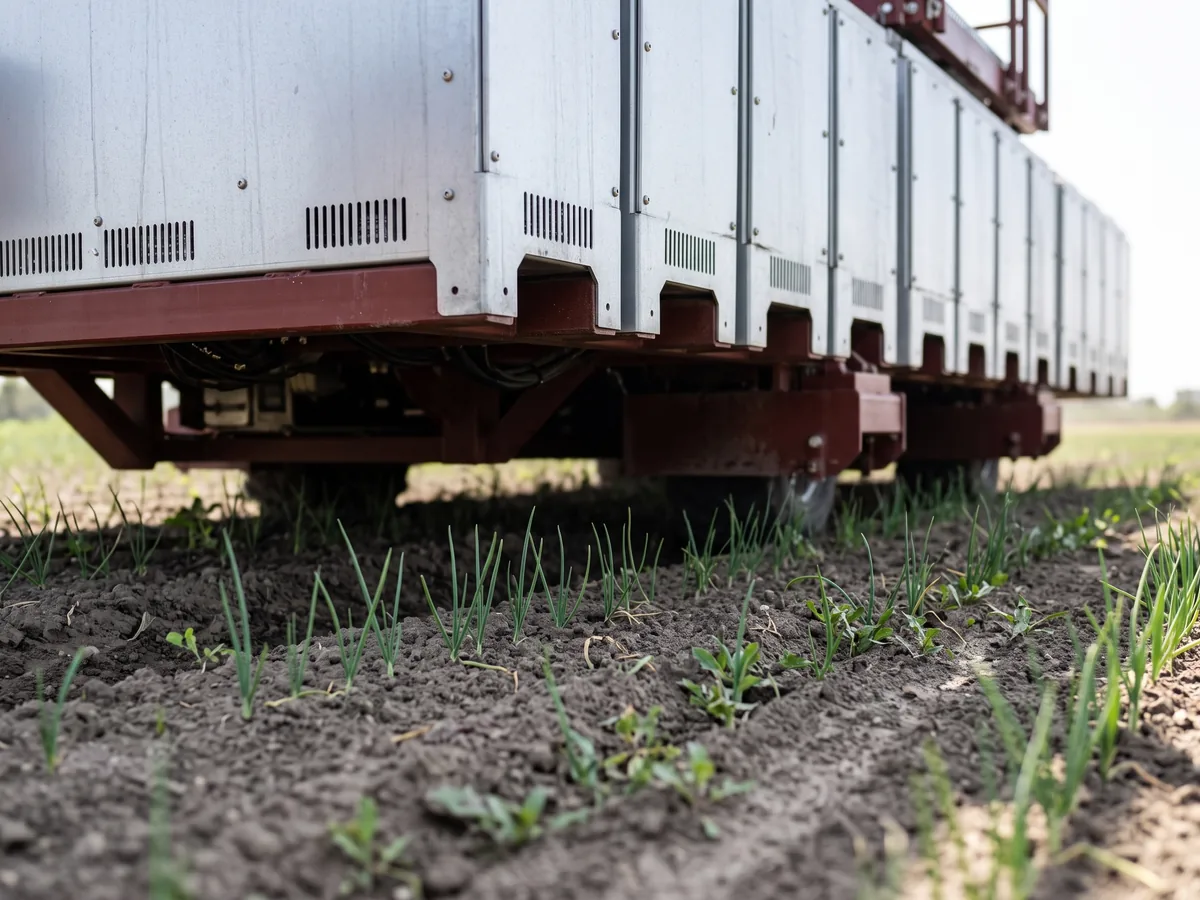
A laser weeding robot, pulled behind a tractor, detects weeds with cameras and artificial intelligence and kills them with lasers, without herbicide or soil disturbance, in vegetables and specialty crops.
The Carbon Robotics LaserWeeder G2 600 works a 6.1 m width, with two 240 W lasers and three cameras per module, by day and night, according to its manufacturer.
Robot Distribution delivers it, commissions it on your fields, trains your drivers and maintains it, to buy, rent or as RaaS.
WHY
In carrots, onions, lettuce or field vegetables, in-row weeding is still often done by hand, and herbicide options are shrinking. Mechanical hoeing does not reach weeds close to the crop plant.
Two precision technologies meet this need: lasers, which kill the weed with no chemical at all, and spot spraying, which treats only the target plants. The choice depends on the crop, weed pressure, area and the farm's specifications.
HOW IT RUNS
At commissioning we set the crop, row spacing and growth stage. The AI model tells the crop plant from the weeds on the camera images.
The tractor moves at a steady speed. Each LaserWeeder G2 module covers a 61 cm strip, according to its manufacturer; the G2 200 works 2 m, the G2 600 6.1 m.
The laser kills the detected weed without touching the crop. In spot spraying, the Ecorobotix ARA 620 UHP treats only target plants, through 156 nozzles at 4 cm spacing, according to its manufacturer.
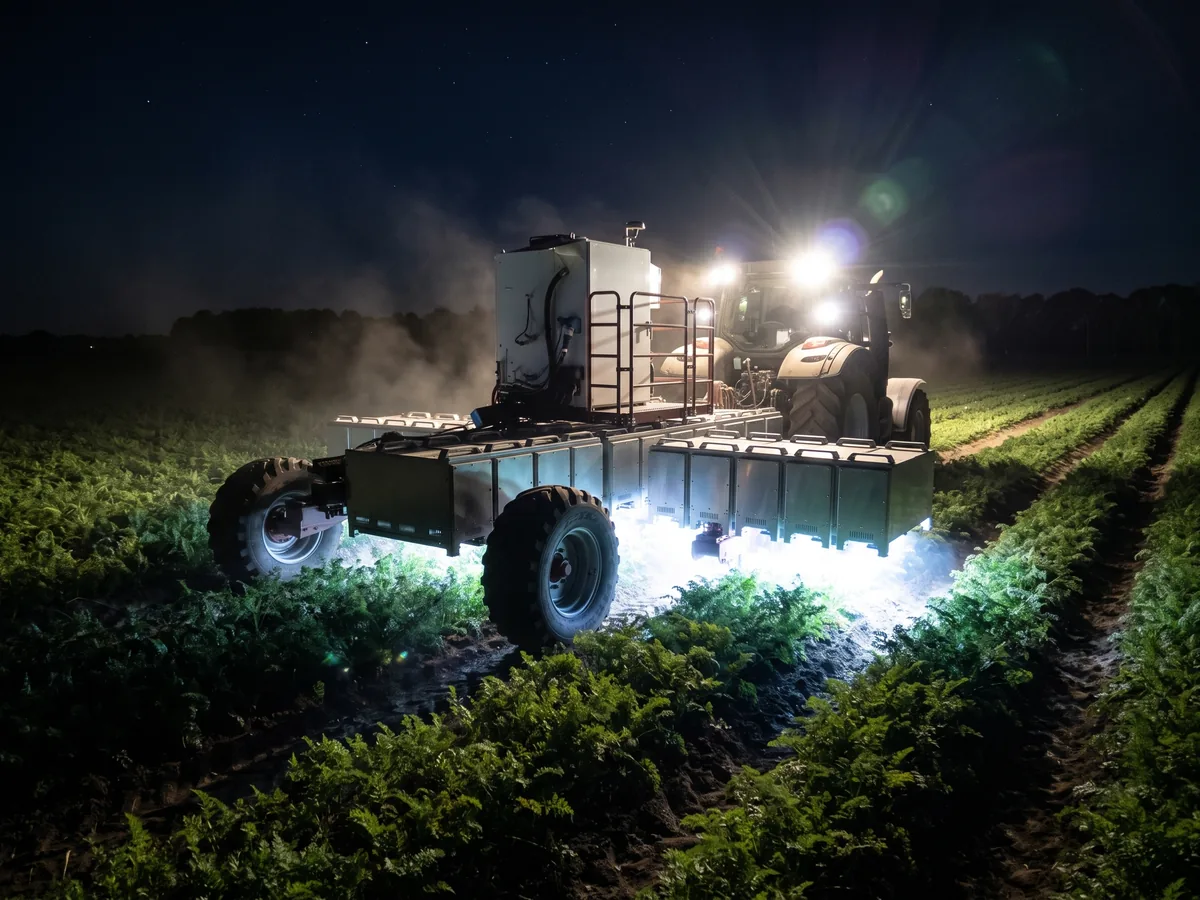
With 20 LEDs per module, the LaserWeeder G2 also works at night, according to its manufacturer. The grower follows the treated areas and adjusts settings to the crop stage.
THE ROBOTS
Agricultural robots
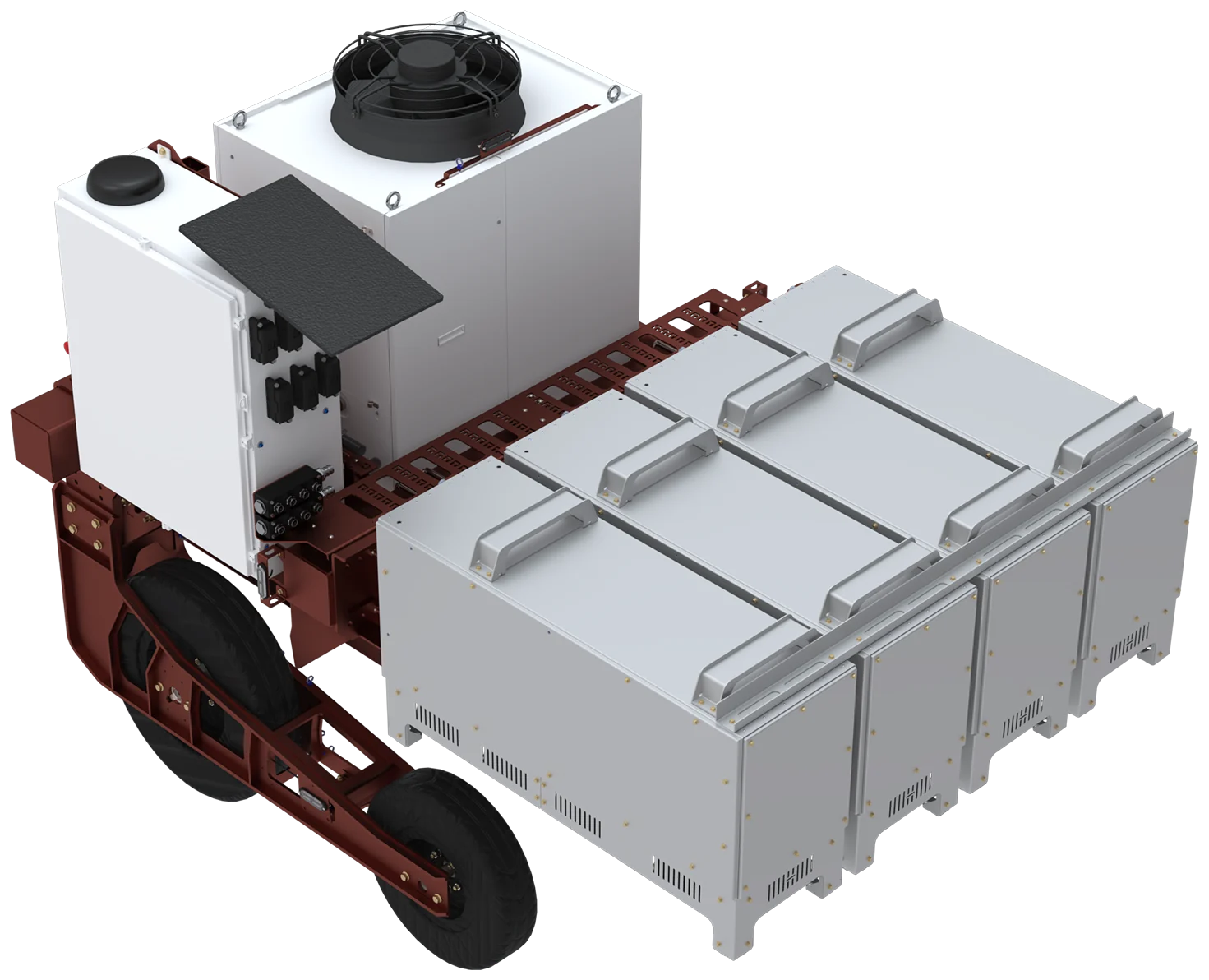
Agricultural robots
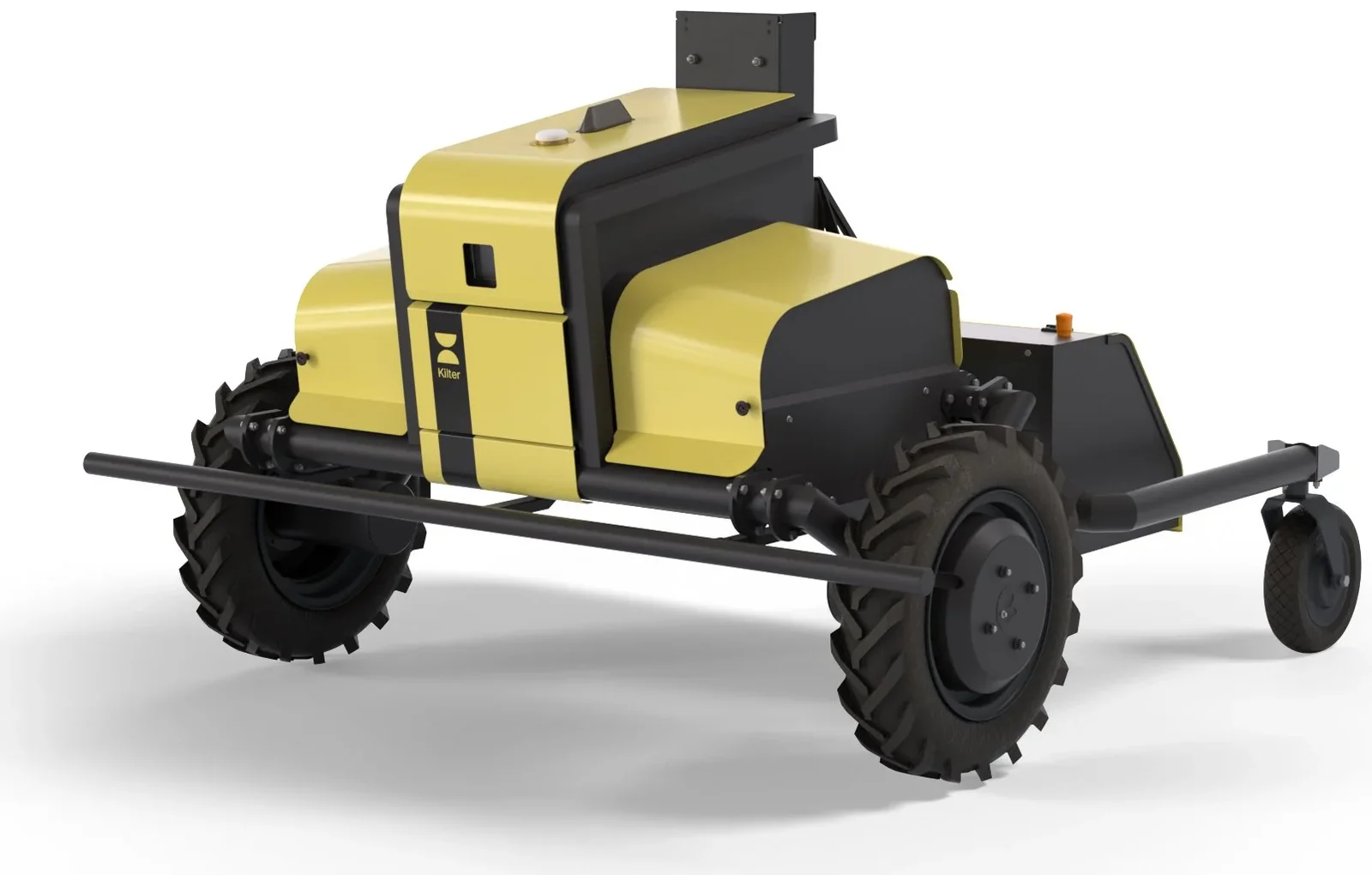
Agricultural robots
Agricultural robots
BEFORE INSTALLING
Vegetable type, bed width and row spacing set the model: 2 m for the LaserWeeder G2 200, 6.1 m for the G2 600, up to 6.2 m for the ARA 620 UHP, according to their manufacturer.
The LaserWeeder G2 600 weighs 3,266 kg and the G2 200 1,928 kg; the ARA 620 UHP needs over 90 hp and a category 2 three-point hitch, according to their manufacturer. Tractor power and lift are checked.
The laser treats weeds one by one; spot spraying cuts inputs: the Kilter AX-1 reports an average 96.6% less herbicide at about 5% weed pressure, according to its manufacturer.
Network coverage is checked for remote monitoring. Safety rules around the working implement are set with the teams on commissioning day.
RULES AND STANDARDS
A laser weeder combines high-power lasers with a tractor-drawn implement, so laser product rules, workplace optical radiation rules and agricultural machinery standards all apply.
IEC 60825-1, Safety of laser products – Part 1: Equipment classification and requirements, classifies laser products by hazard and requires labels, warnings and protective features that limit unnecessary exposure. Ask the supplier for the laser class of the complete implement, the shielding around the firing zone, the interlocks that cut emission when a module is opened or lifted, and the matching labels.
These articles, which implement Directive 2006/25/EC, cover laser sources at work. The employer assesses exposure, first from manufacturer documentation, then by calculation or measurement if a risk cannot be ruled out. Zones above limit values are restricted and signposted, and staff are trained. Include drivers and anyone working near the implement in the farm's risk assessment.
ISO 4254-1, Agricultural machinery – Safety – Part 1: General requirements, covers mounted, semi-mounted and trailed machines and the safety information the maker provides. Road safety is outside its scope. For a wide pulled implement, ask how it folds and is transported between fields, and check the hitch, lighting and access steps for cleaning and maintenance.
From 20 January 2027, the Machinery Regulation applies directly in France. Relevant software must be protected against accidental or intentional corruption, and connecting the machine to another device must not create a hazard. For a weeder whose detection models are updated remotely, ask how updates are secured and how instructions, now usually digital, stay available.
General information, not legal advice.
FAQ
No. The Carbon Robotics LaserWeeder kills weeds with lasers, without herbicide or soil disturbance, according to its manufacturer. Spot spraying does use a product, but only on the target plants.
The laser uses no product and is aimed at vegetables and specialty crops. Plant-by-plant spraying covers large areas quickly: the Ecorobotix ARA 620 UHP treats up to 4 ha/h at 7.2 km/h and quotes up to 95% less chemical, according to its manufacturer. The site survey compares both on your fields.
Yes: each LaserWeeder G2 module carries 20 LEDs for day and night work, and the ARA 620 UHP also works at night, according to their manufacturer.
According to the manufacturer: a 6 × 6 mm resolution for the Kilter AX-1's micro-droplets and a 6 × 6 cm spot precision for the ARA 620 UHP. The LaserWeeder G2 spots each weed with three high-resolution cameras per module.
For the LaserWeeder G2 and the ARA 620 UHP, yes: they are pulled or mounted implements. The Kilter AX-1 is a modular autonomous robot with a 300 kg dry weight, according to its manufacturer.
USE CASES
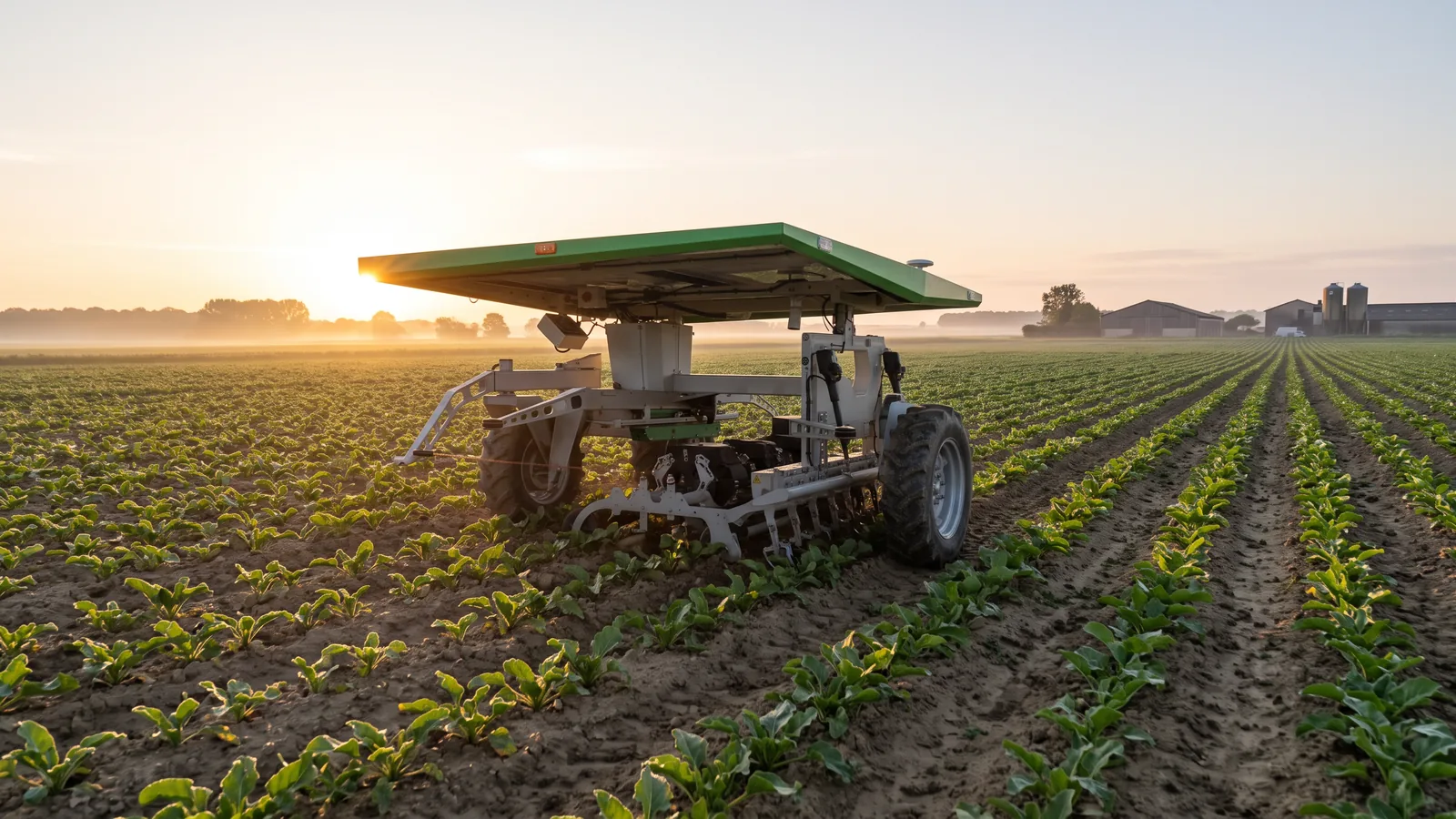 Autonomous crop weedingThe robot tells crop from weeds, then weeds mechanically, by laser or with micro-droplets, with no hand weeding. The grower keeps the choice of fields, settings and when to act.
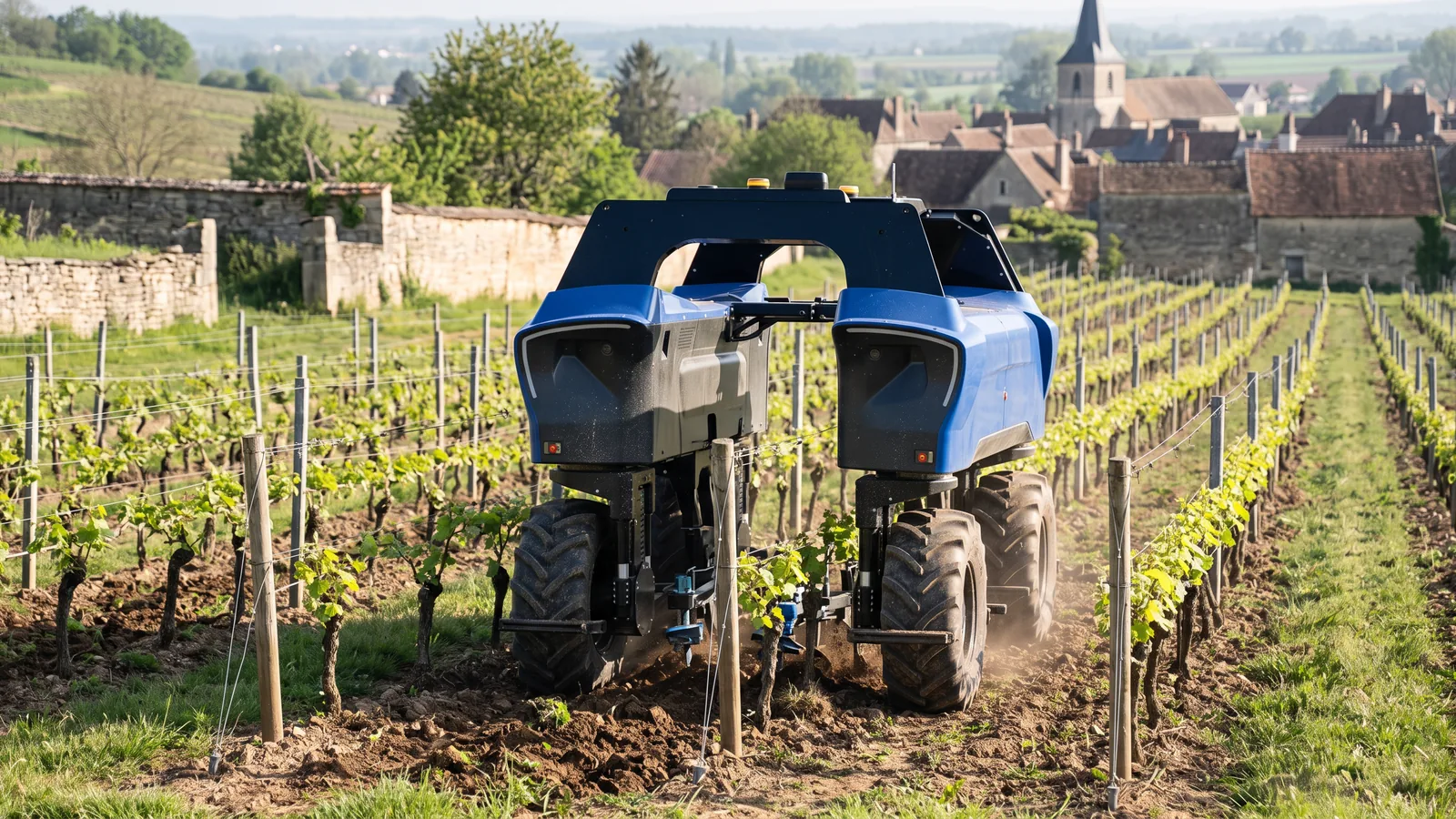 Vineyard soil work and canopy careThe robot straddles the row and carries tools for soil work, mowing and trimming, guided by satellite. The grower keeps pruning, crop decisions and watching the vines.
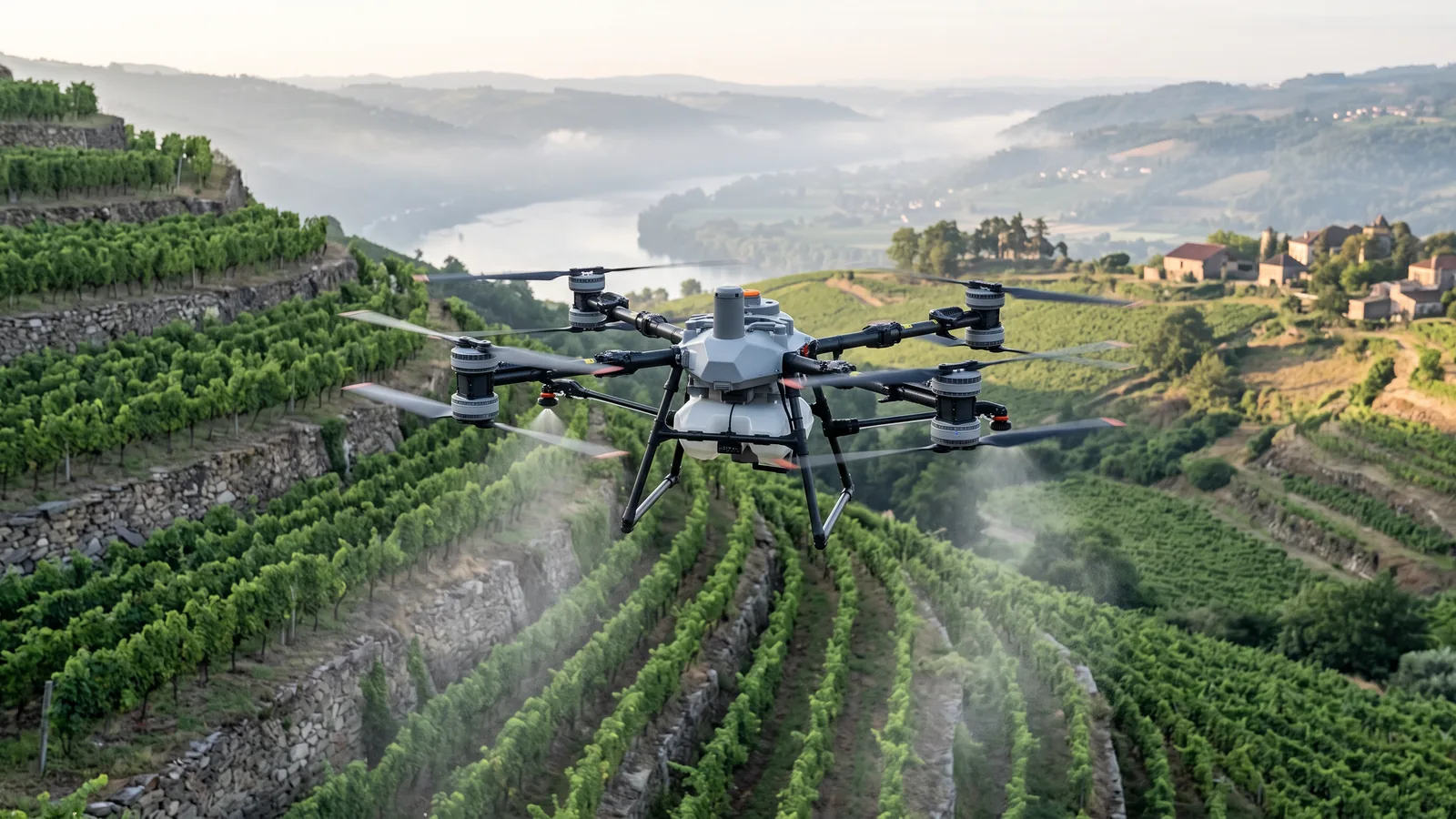 Agricultural drone spraying and spreadingThe drone follows a flight plan drawn over the field and spreads fertiliser, seed or spray, without entering the crop. The regulatory framework is checked before each use.
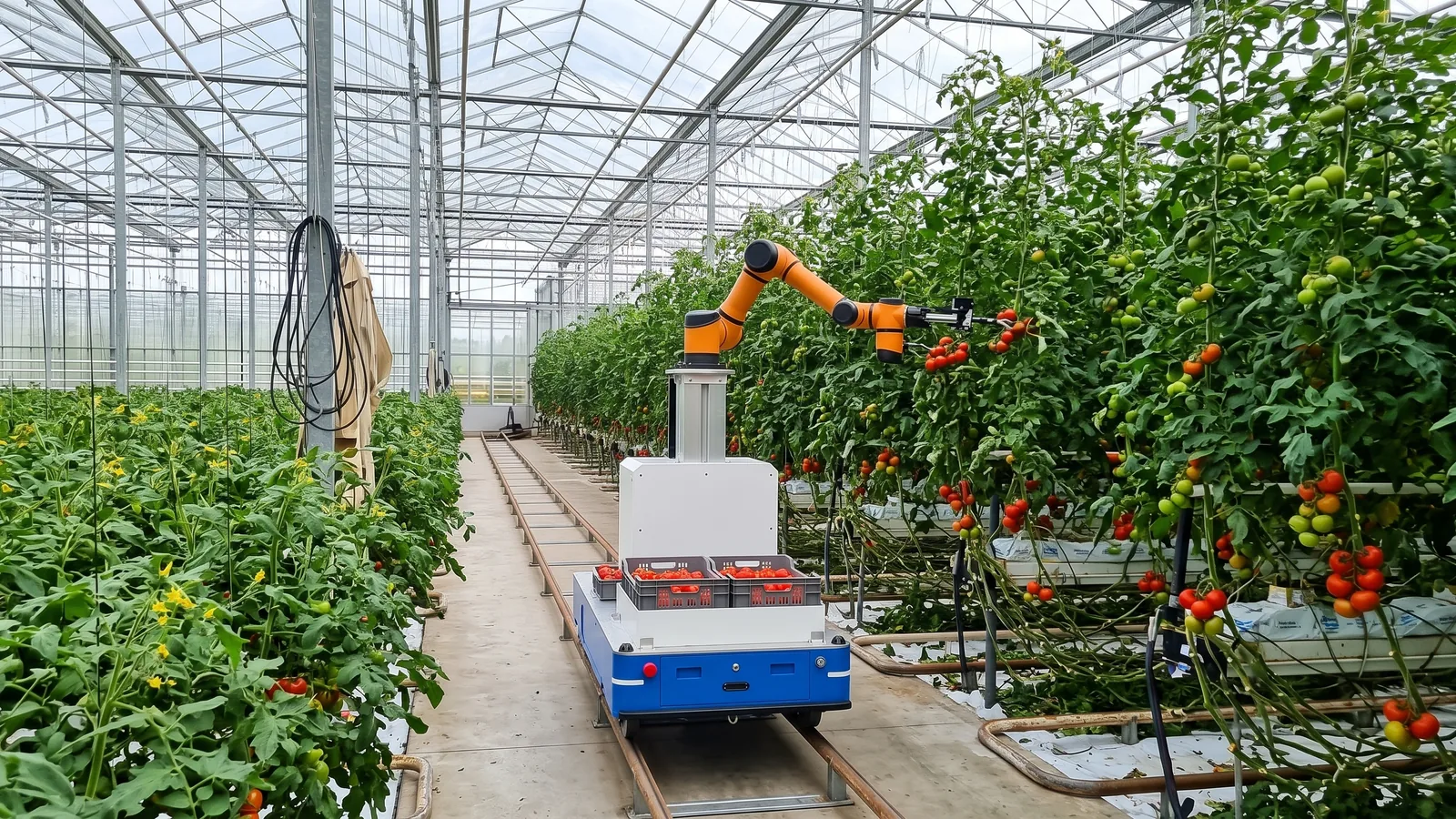 Greenhouse harvesting and orchard workIn the greenhouse, the robot spots ripe trusses and cuts them; in the orchard, electric robots spray, carry and pull tools between the rows. Teams keep the tasks that need a trained eye.
Robots, acquisition mode and delivery terms, in one written proposal.