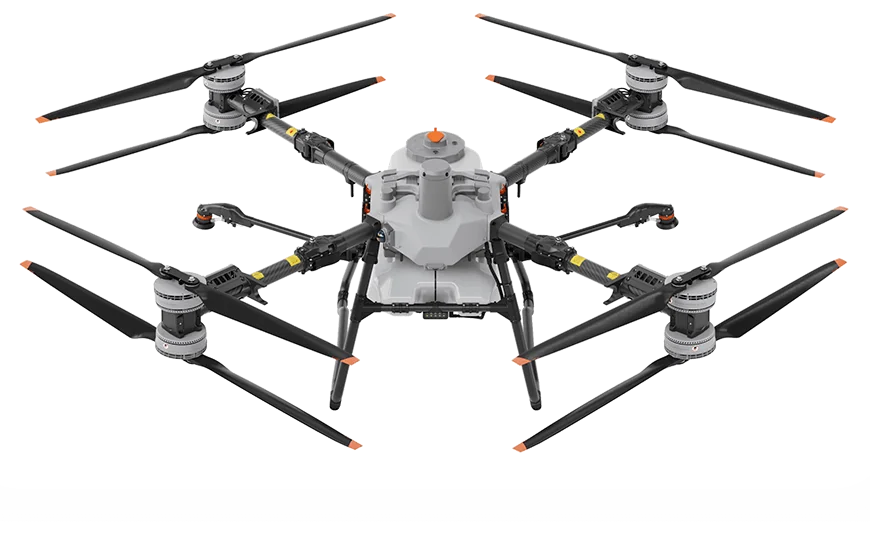
Professional drones
- Payload
- 100 kg
- Key feature
- 100 L spray tank
- Key feature
- 40 L/min spray flow
On order
From €9,640 ex VATor €329/month in RaaS
Updated
USE CASE · AGRICULTURE AND VITICULTURE
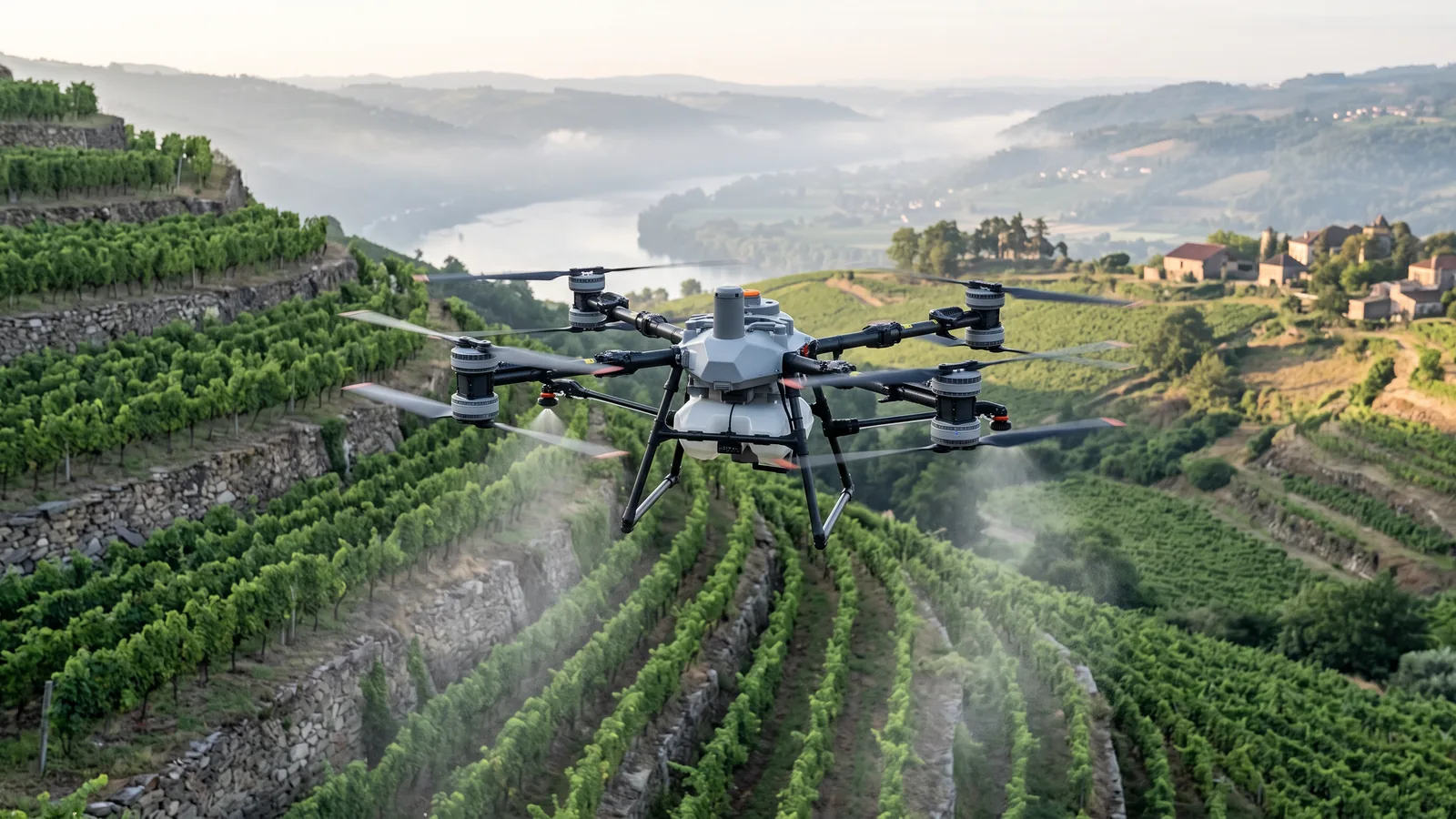
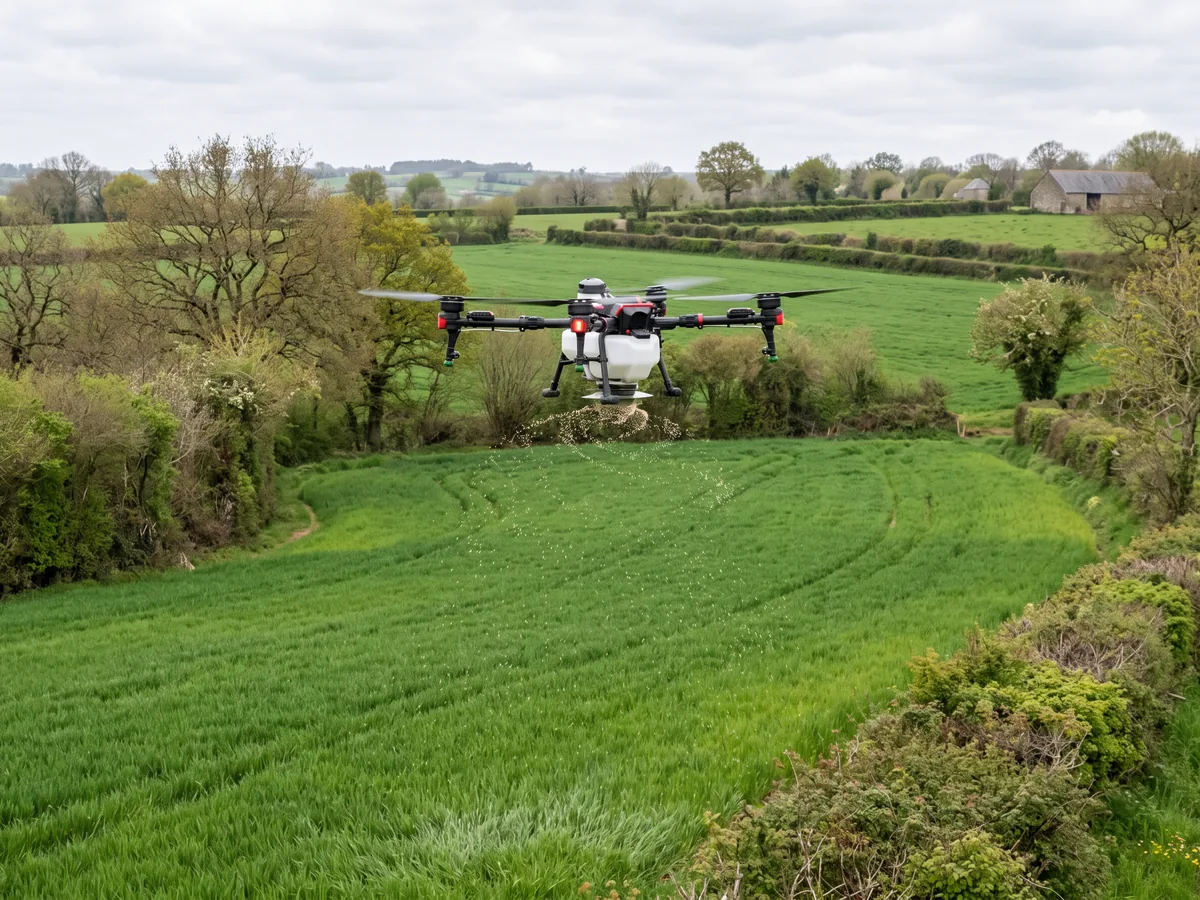
The drone follows a flight plan drawn over the field and spreads fertiliser, seed or spray, without entering the crop. The regulatory framework is checked before each use.
Updated
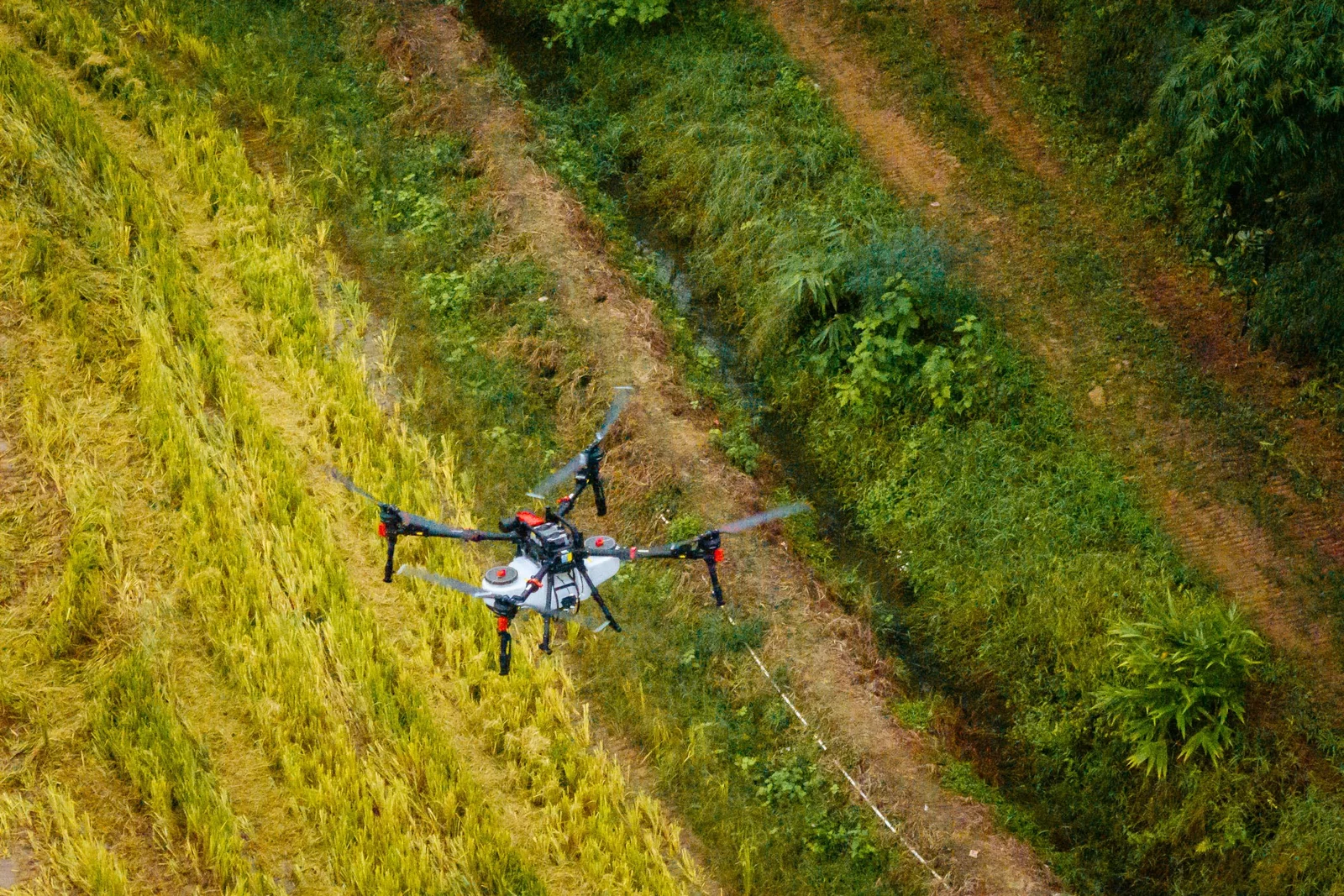
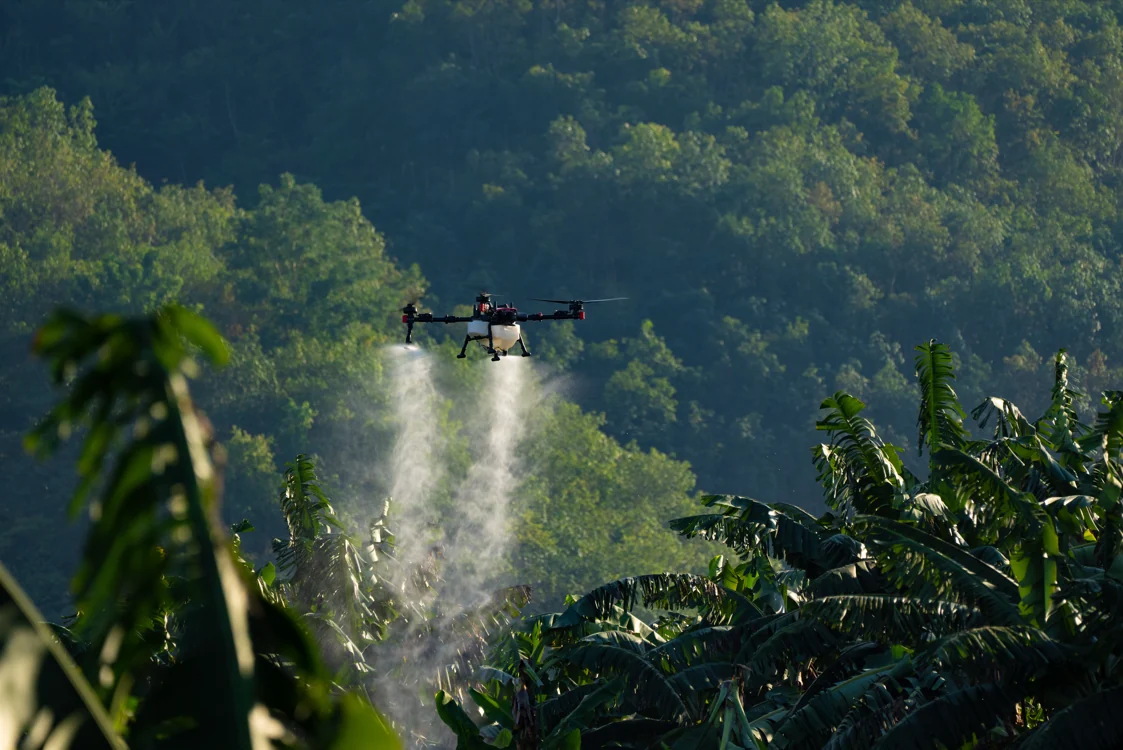
An agricultural spraying drone is a multirotor fitted with a tank and nozzles or a spreader that treats or spreads a field in automatic flight, without compacting the soil or damaging the crop.
The DJI Agras T100 carries a 100 kg payload, with a 100 L spray tank at 40 L/min or a 150 L spreading tank, according to its manufacturer.
Robot Distribution delivers it, trains your pilots, helps you frame its use within the regulations and maintains it, to buy, rent or as RaaS.
WHY
On waterlogged ground, steep slopes or tall crops, a tractor pass is hard or impossible. The drone treats or spreads from the air, with no compaction and no wheel tracks in the crop.
In the European Union, aerial spraying of plant protection products is banned by Article 9 of Directive 2009/128/EC, except for derogations granted by Member States in specific cases. Spreading fertiliser or seed is not covered by that ban, but the flight remains subject to the EU drone rules.
HOW IT RUNS
We check the product, the use and the authorisations needed: any derogation for spraying, and an operational authorisation in the 'specific' category for the flight (Regulation (EU) 2019/947).
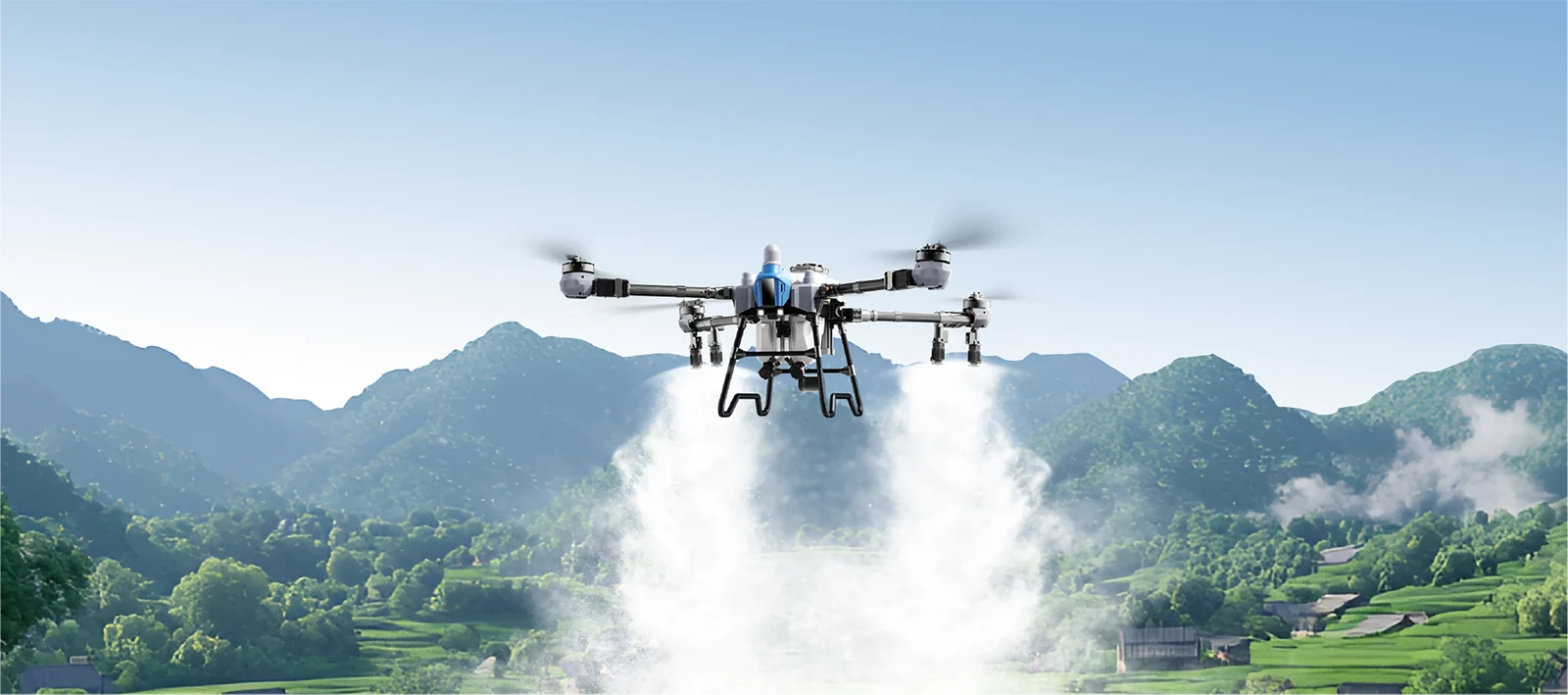
We draw the field, obstacles and swath. The XAG P150 sprays over a 5 to 10 m swath and detects obstacles from 1.5 to 100 m with 4D radar, according to its manufacturer.
The drone follows the plan, adjusts the flow and returns to swap batteries or refill. The XAG P150 states up to 26 ha/h in open fields, according to its manufacturer.
The pilot cleans the tank and nozzles, checks the batteries and files the flight report. Robot Distribution handles maintenance.
THE ROBOTS
Professional drones
Professional drones
Professional drones
EAVision
Professional drones
BEFORE INSTALLING
Fertiliser spreading, seeding or spraying: each use has its own framework. Spraying plant protection products is only possible under a national derogation.
Area, shape, slope, power lines, trees and nearby homes are noted for each field.
The volume to apply sets the model: a 30 L tank for the XAG P60, 70 L for the XAG P150, 100 L for the DJI Agras T100, according to their manufacturers.
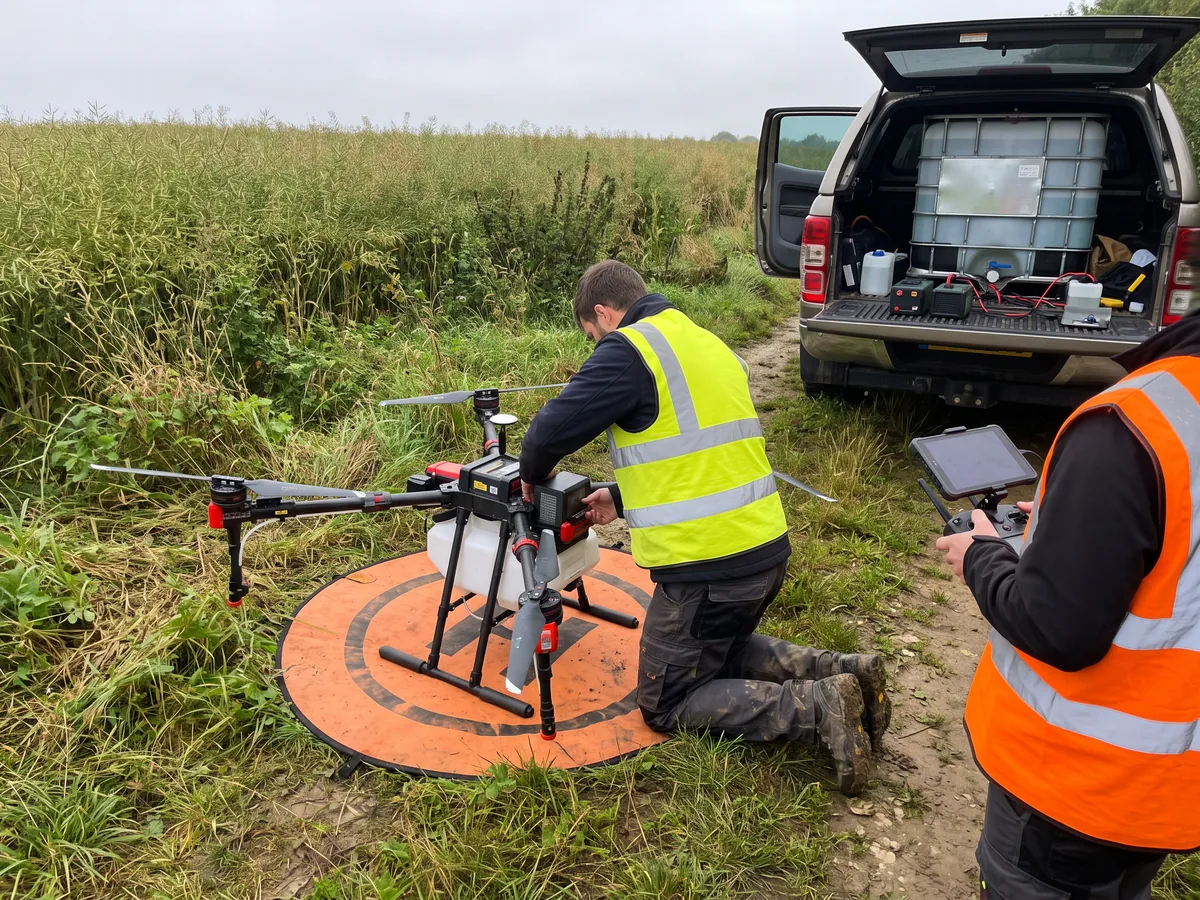
Pilot training, field battery charging, water and drone transport are planned with you.
RULES AND STANDARDS
Since the law of 23 April 2025 and its implementing texts of May 2026, France allows drone application in narrow cases, under conditions on products, plots, flight and people.
Drones may apply only biocontrol products, products usable in organic farming and low-risk products, from a list of about 150 approved by order of 19 May 2026. Eligible plots: slopes of 20% or more, banana plantations, ground-grown rootstock mother vines. Programmes need a regional prefect authorisation. Limits: 18 km/h, 3 m above the crop, at least 20 m from inhabited areas, anti-drift equipment from the ministry list.
The open category requires a take-off mass under 25 kg and forbids dropping any material or carrying dangerous goods. A spraying or spreading drone therefore always flies in the specific category, where the operator must be registered whatever the drone's mass. In France, operator and drone are registered on the AlphaTango portal and the operating authorisation is issued by DSAC.
Anyone who uses plant protection products professionally needs the relevant Certiphyto certificate, valid five years, under the Code rural (art. L. 254-1 and following). A contractor treating other farms' fields works within an approved company and holds a decision-maker certificate. Check the certificates of both the remote pilot and the person deciding the treatment, alongside their drone competence.
Since 1 January 2026, each application is recorded electronically in a machine-readable format: product and authorisation number, date and start time, dose, treated area and its location, crop and growth stage. Paper notes must be transferred within 30 days. Ask whether the drone's flight reports can export these fields directly.
General information, not legal advice.
FAQ
Directive 2009/128/EC bans aerial spraying of plant protection products, except for derogations granted by each Member State in specific cases. We check the applicable framework with you before any use.
Yes. A drone of this size falls under the 'specific' category of the EU rules (Regulations (EU) 2019/947 and 2019/945): the operator needs an operational authorisation from the national aviation authority.
Yes. The DJI Agras T100 carries a 150 L hopper at 400 kg/min, the XAG P150 a 115 L container at 280 kg/min, and the XAG P60 states 1,100 kg/h, according to their manufacturers.
The XAG P60 and P150 are rated IPX6K according to their manufacturer, allowing a hose-down after each job.
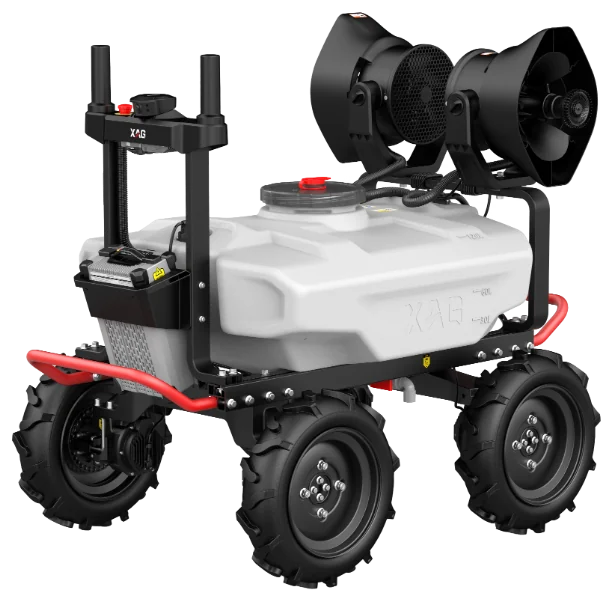
Yes: the XAG R100, an electric four-wheel-drive robot, sprays in greenhouses and dense crops with a 120 L tank and a 7 m reach per side, according to its manufacturer.
USE CASES
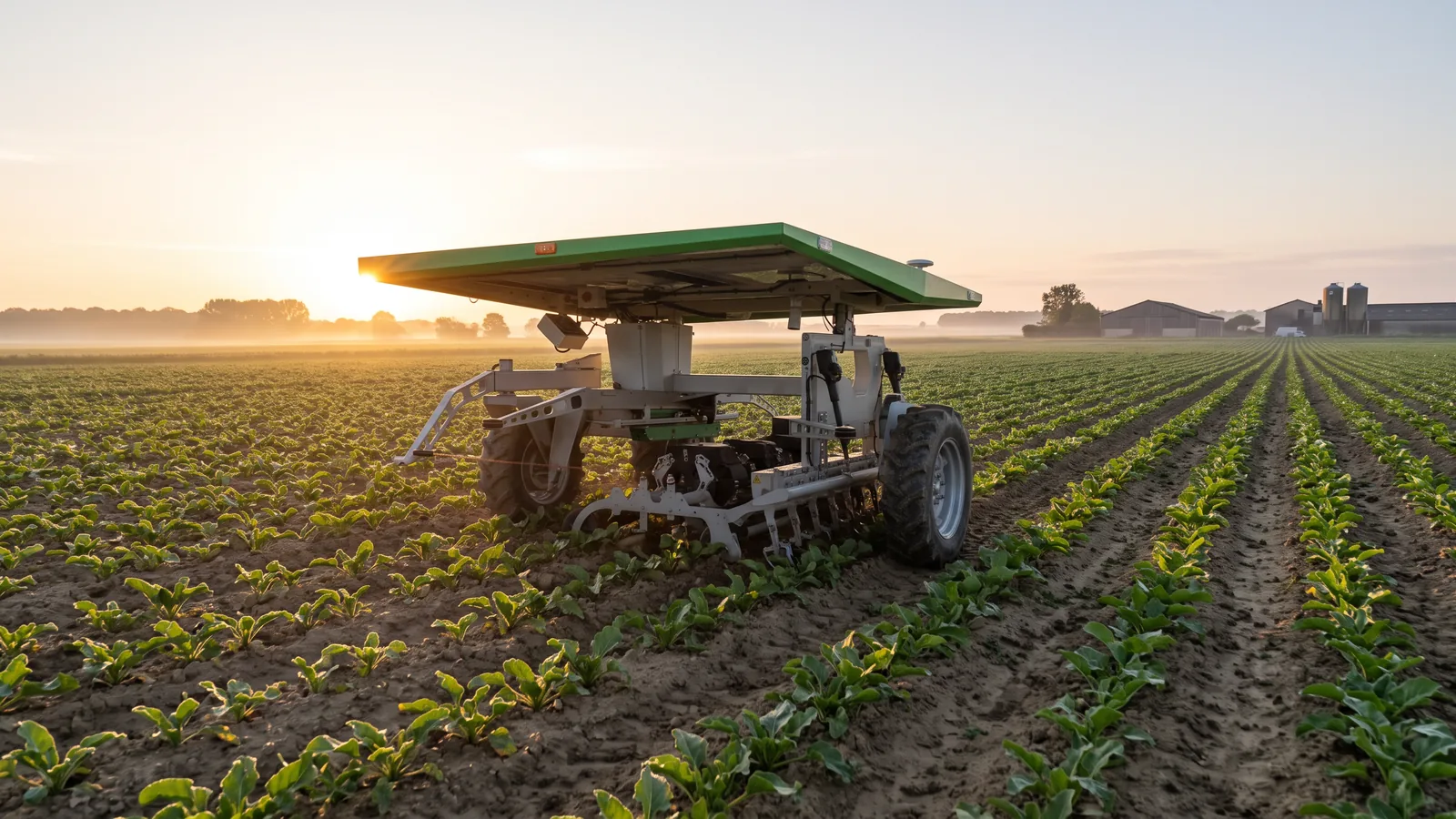 Autonomous crop weedingThe robot tells crop from weeds, then weeds mechanically, by laser or with micro-droplets, with no hand weeding. The grower keeps the choice of fields, settings and when to act.
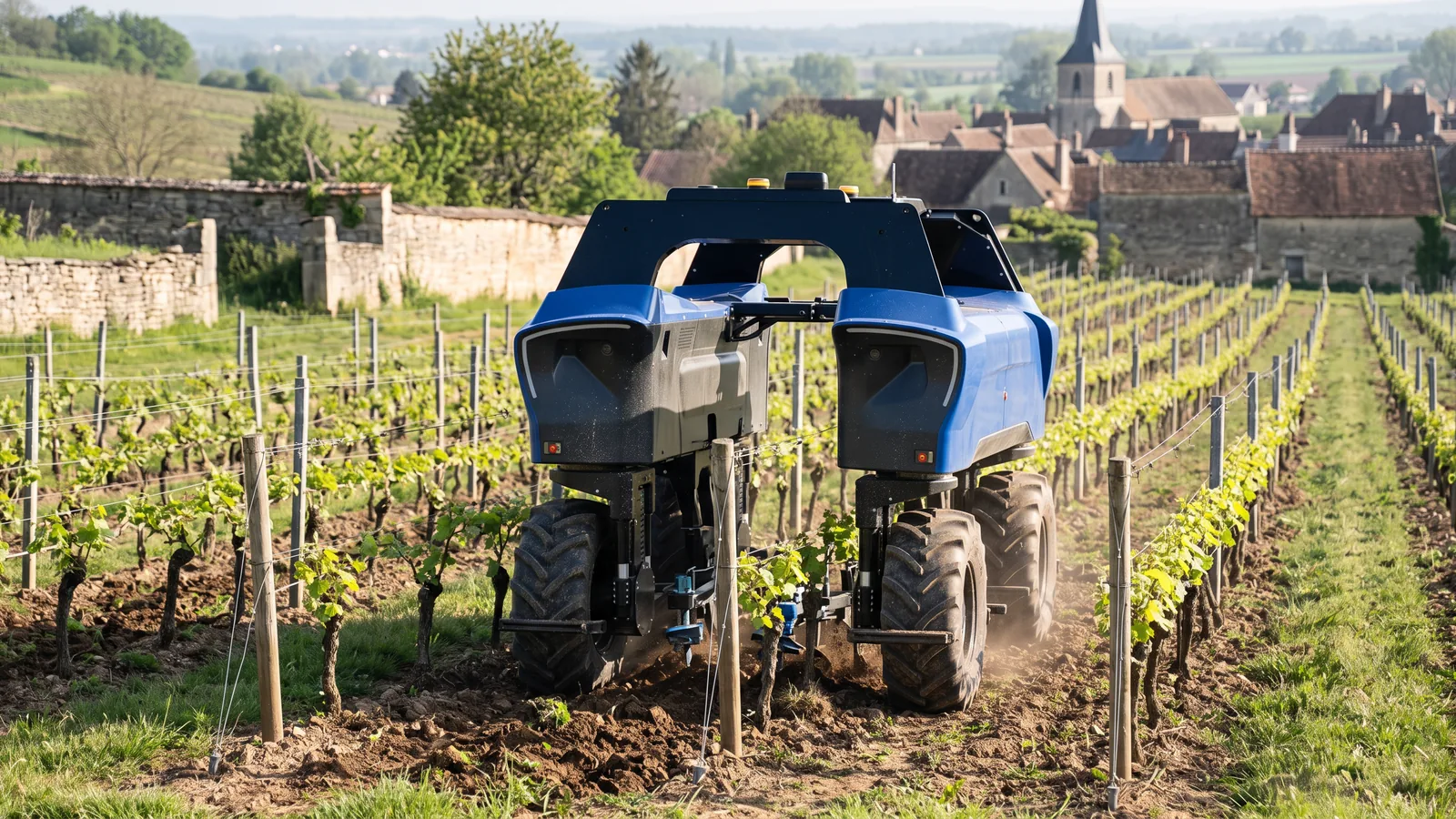 Vineyard soil work and canopy careThe robot straddles the row and carries tools for soil work, mowing and trimming, guided by satellite. The grower keeps pruning, crop decisions and watching the vines.
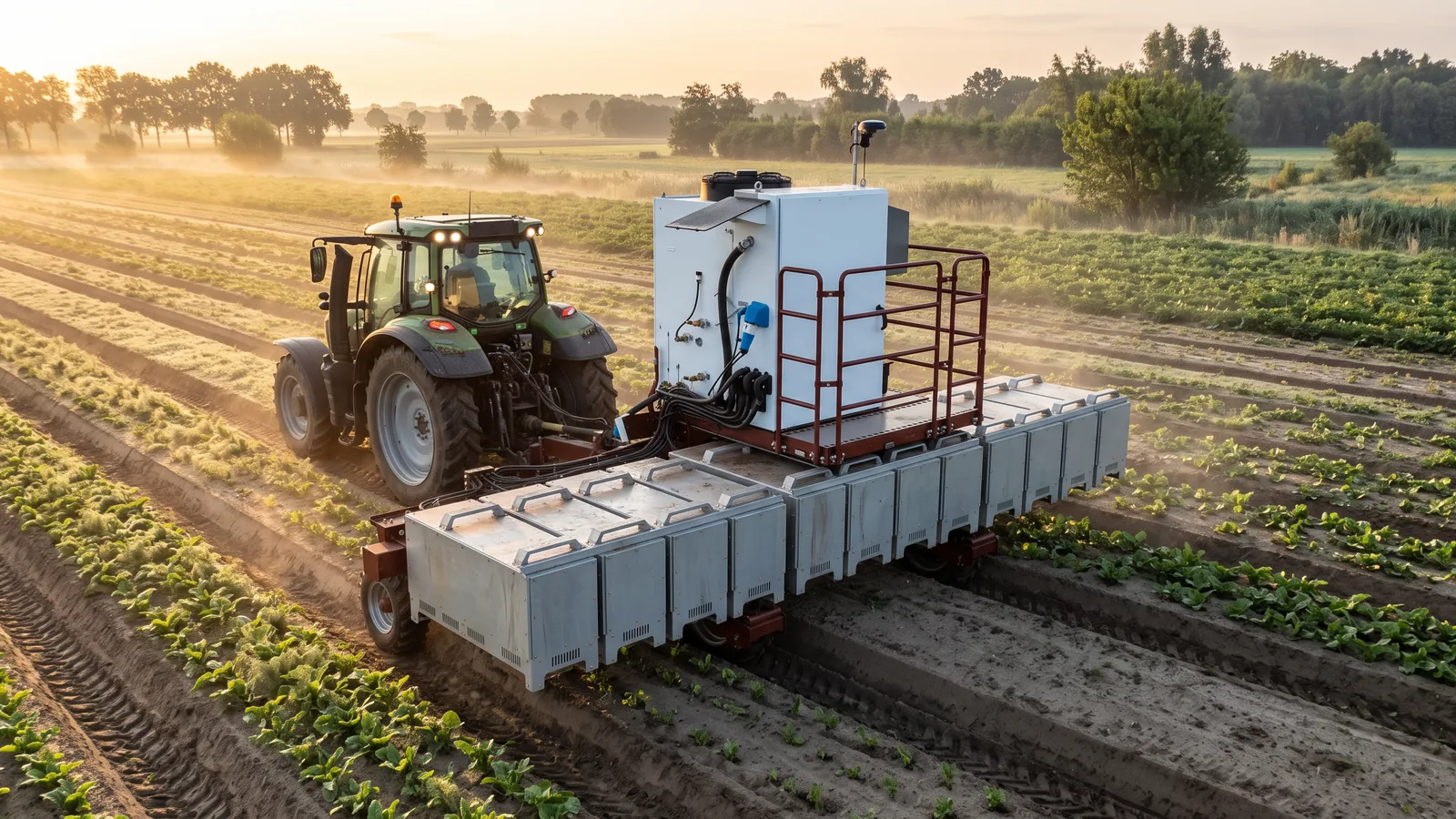 Laser weeding of vegetables and specialty cropsThe laser weeder spots each weed by camera and kills it with a laser, with no chemical and no tillage. The grower chooses the fields, the passes and, depending on the crop, between laser and spot spraying.
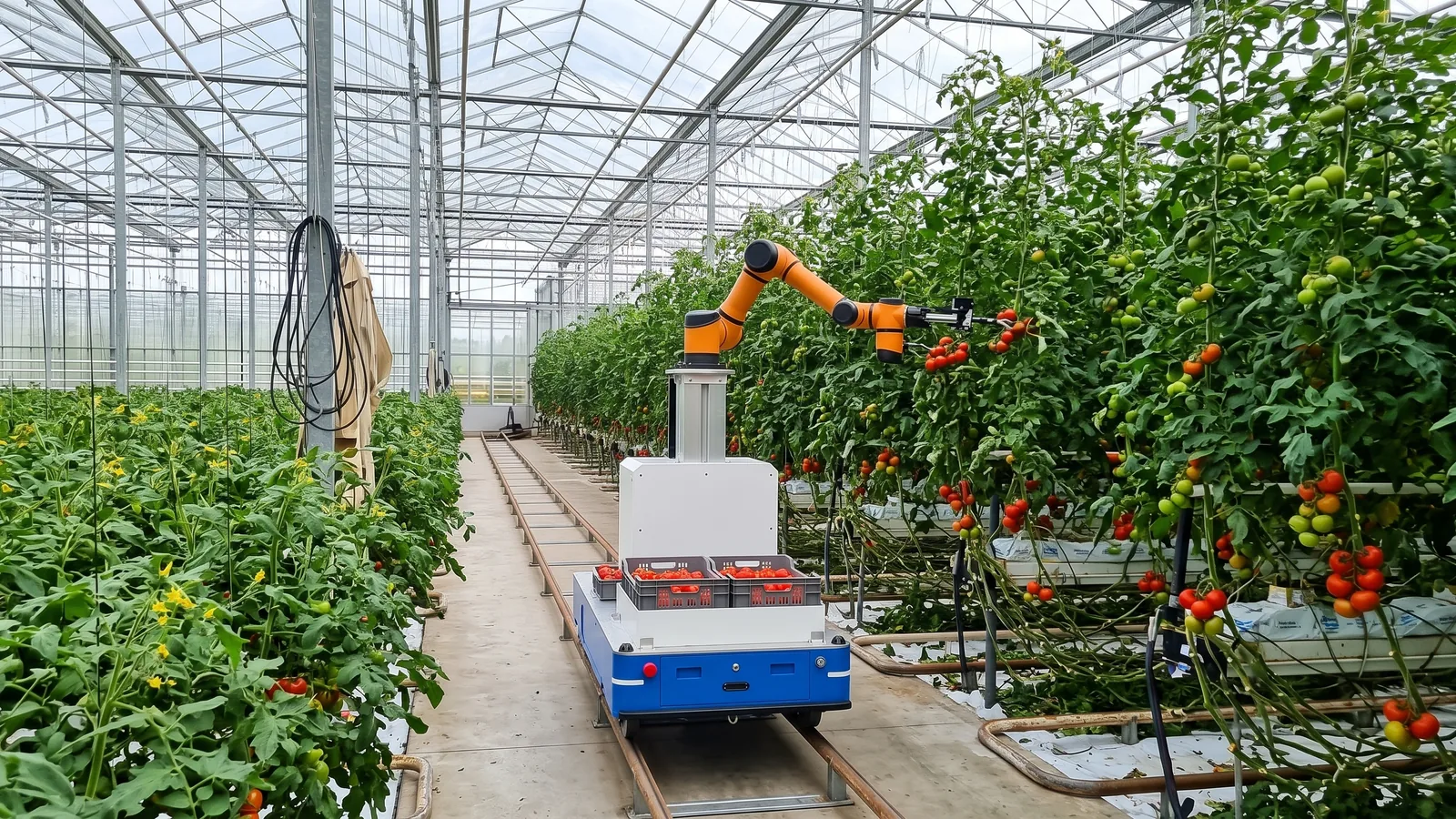 Greenhouse harvesting and orchard workIn the greenhouse, the robot spots ripe trusses and cuts them; in the orchard, electric robots spray, carry and pull tools between the rows. Teams keep the tasks that need a trained eye.
Robots, acquisition mode and delivery terms, in one written proposal.