Agricultural robots
- Weight
- 2,050 kg
- Runtime
- 10–11 h
- Maximum speed
- 6 km/h
On order
Price on request
Updated
USE CASE · AGRICULTURE AND VITICULTURE
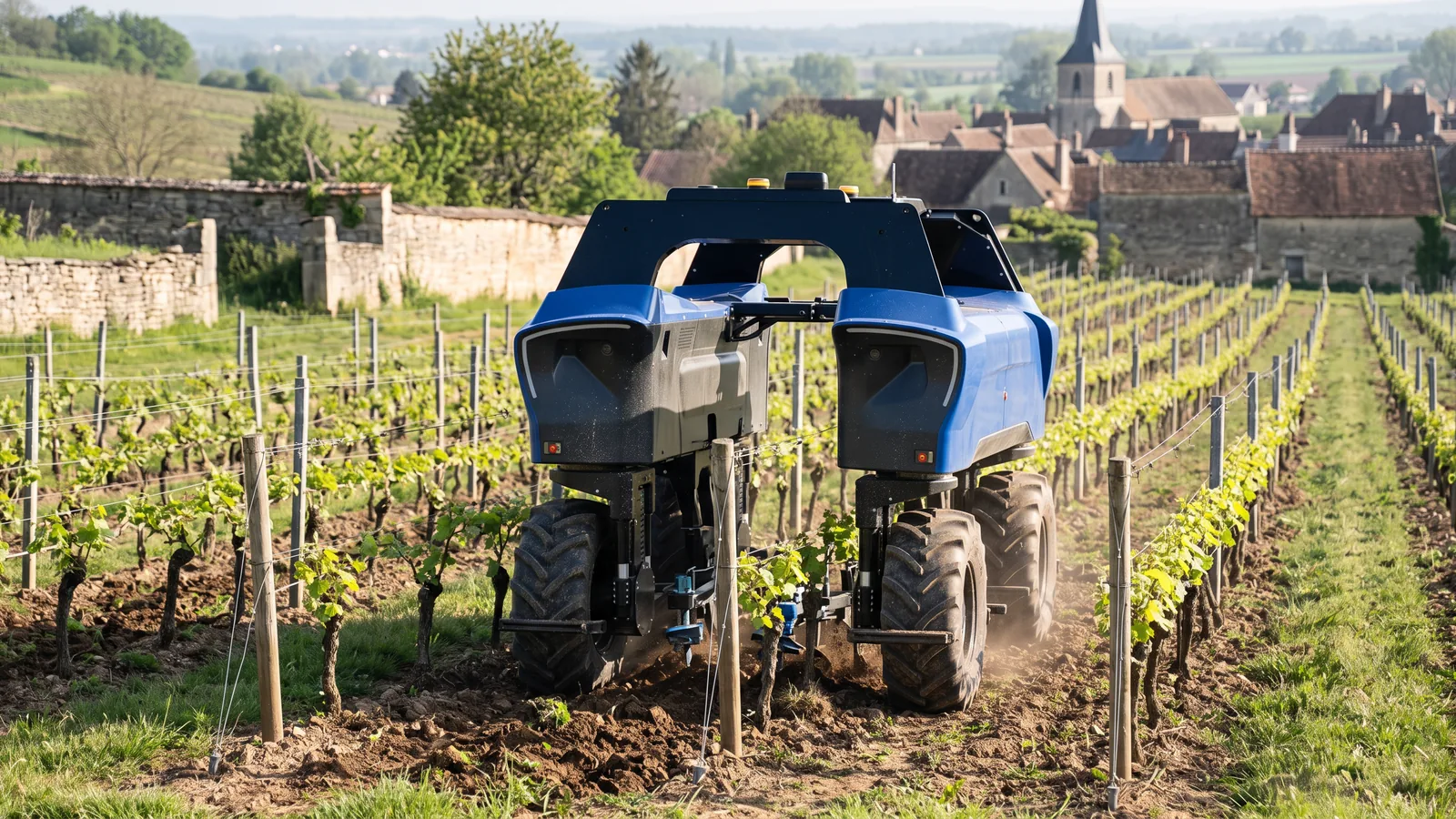
The robot straddles the row and carries tools for soil work, mowing and trimming, guided by satellite. The grower keeps pruning, crop decisions and watching the vines.
Updated
A vineyard robot is an electric, autonomous tool carrier that straddles vine rows to work the soil under the vine and between rows, mow and trim, in place of a straddle tractor.
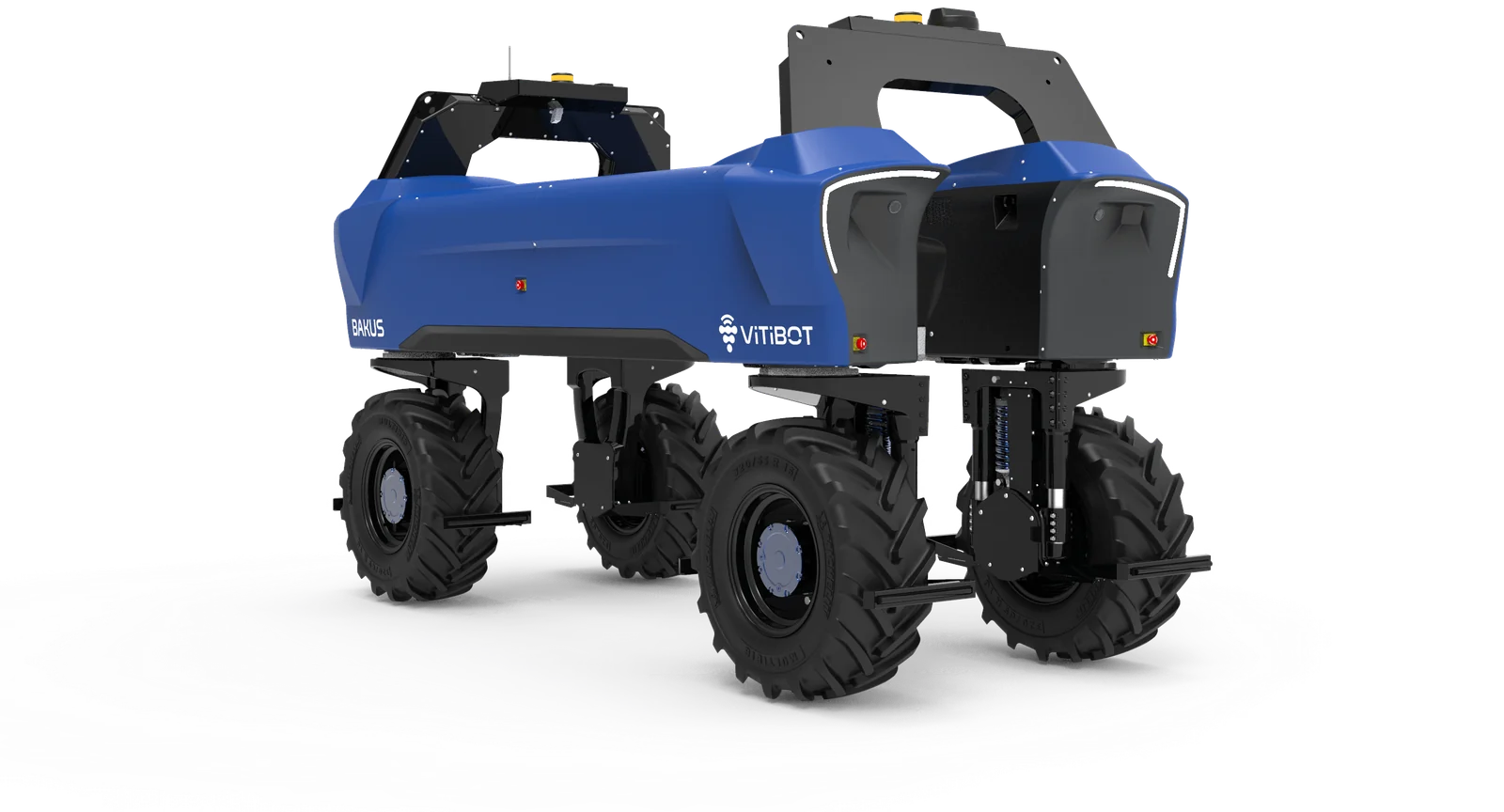
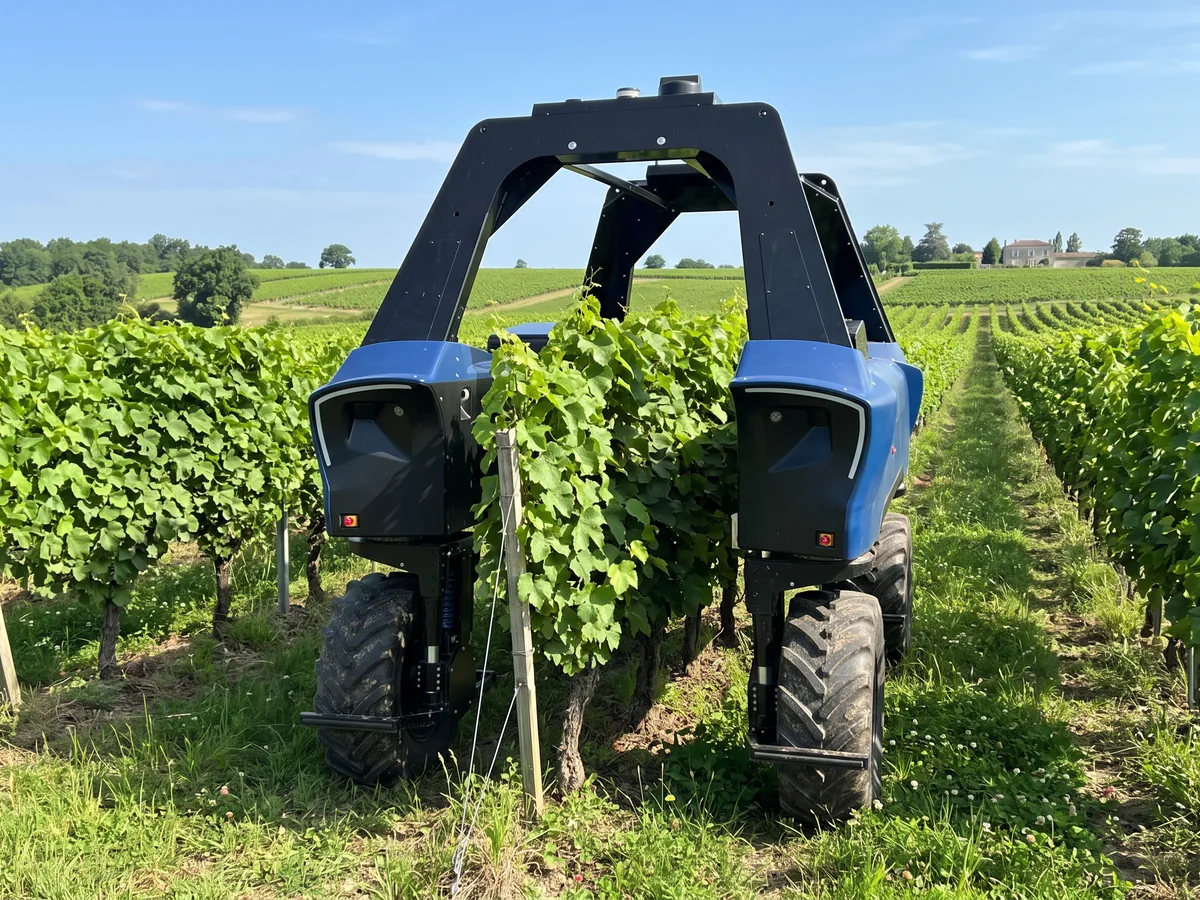
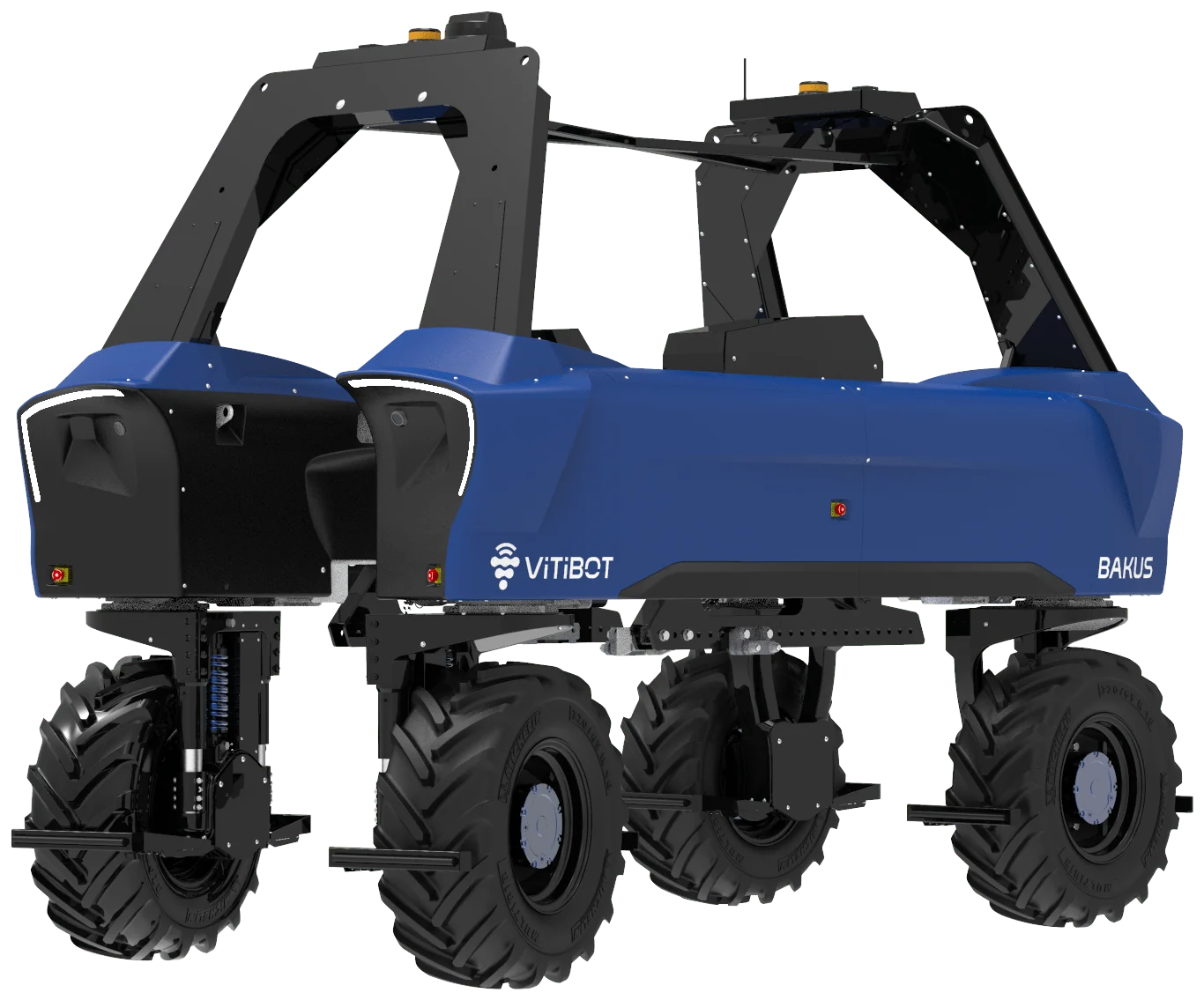
The VitiBot Bakus S, built for narrow vineyards, has a passage 0.60 m wide by 1.75 m high and navigates with two RTK receivers to under 1 cm, according to its manufacturer.
Robot Distribution delivers it, maps your plots, trains your teams and maintains it, to buy, rent or as RaaS.
WHY
Mechanical under-vine weeding, inter-row mowing and trimming come back several times a season. With a tractor, these passes tie up a driver for long hours, often in the same weeks as other work.
The electric robot runs these passes autonomously, with no diesel and no driver on board. The grower keeps pruning, crop decisions and observing the vines.
HOW IT RUNS
At commissioning we record each plot's rows, headlands and access. The robot then positions itself by RTK, to under 1 cm for the VitiBot Bakus, according to its manufacturer.
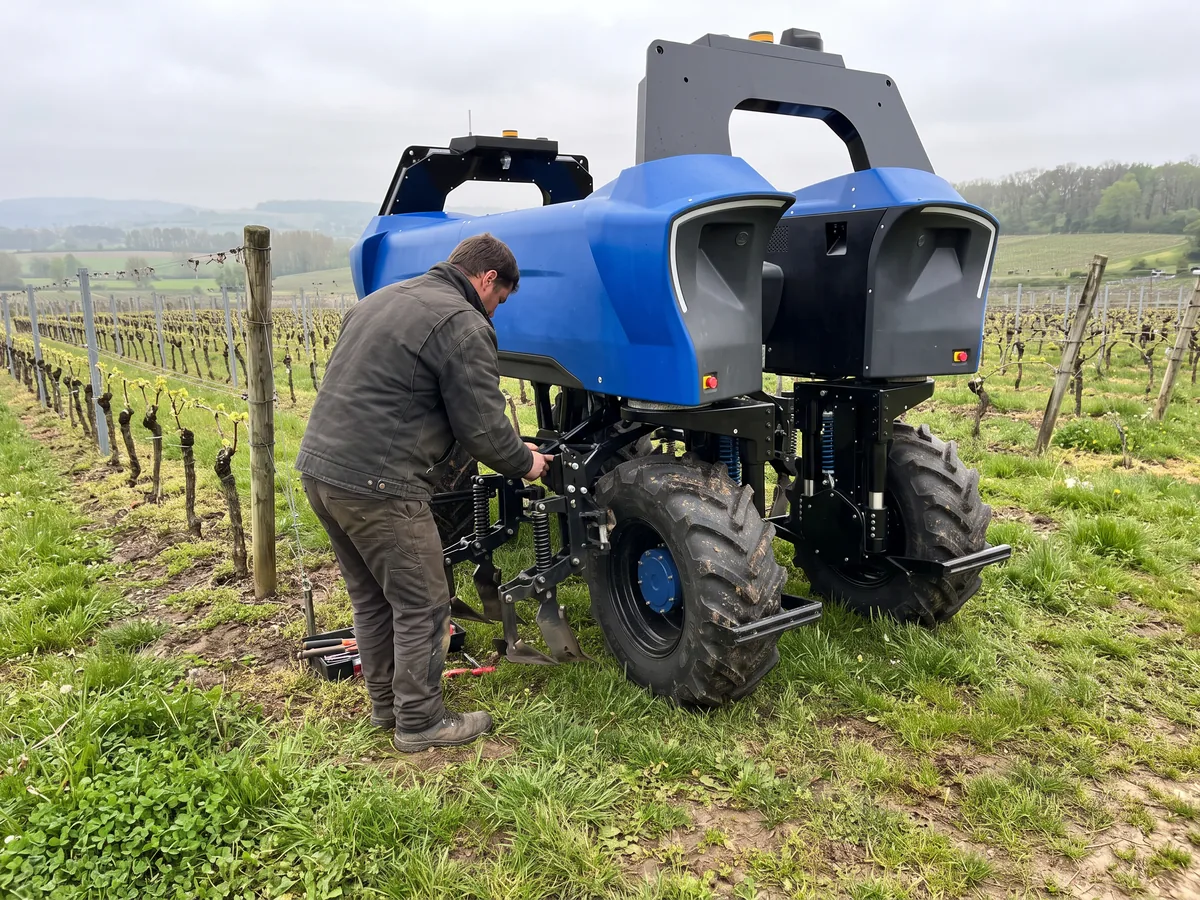
We fit the tools for the day's task: under-vine ploughs, blades, mowers, trimmer. The Naïo Ted lifts up to 600 kg of tools and has a secured outlet for electric tools, according to its manufacturer.
The robot straddles the row, works the plot row by row and turns on the headland. The Naïo Ted covers up to 6.5 ha per day, according to its manufacturer.
The grower follows progress and checks the work and tool wear. Robot Distribution maintains the robot and its tools.
THE ROBOTS
Agricultural robots
Agricultural robots
Agricultural robots
Agricultural robots
BEFORE INSTALLING
Row spacing and trellis height set the model: the Bakus S clears 0.60 × 1.75 m, the Bakus L 0.80 × 2.20 m, according to their manufacturer.
Slopes, side slopes, headland width and access are noted plot by plot.
Satellite reception and RTK correction are checked on each block, along with network coverage.
We list existing tools, those to adapt and where to charge. The SIZA TOOGO 2.0 charges from 0 to 90% in 2 h, according to its manufacturer.
FAQ
The VitiBot Bakus S is built for narrow vineyards: 1.10 m track, passage 0.60 m wide by 1.75 m high, according to its manufacturer. For wide, tall vines, the Bakus L clears 0.80 × 2.20 m.
The SIZA TOOGO 2.0 takes standard implements on a category 2 three-point lift of 1,600 kg and a 540 rpm PTO, according to its manufacturer. It is aimed at wide-row vineyards and orchards.
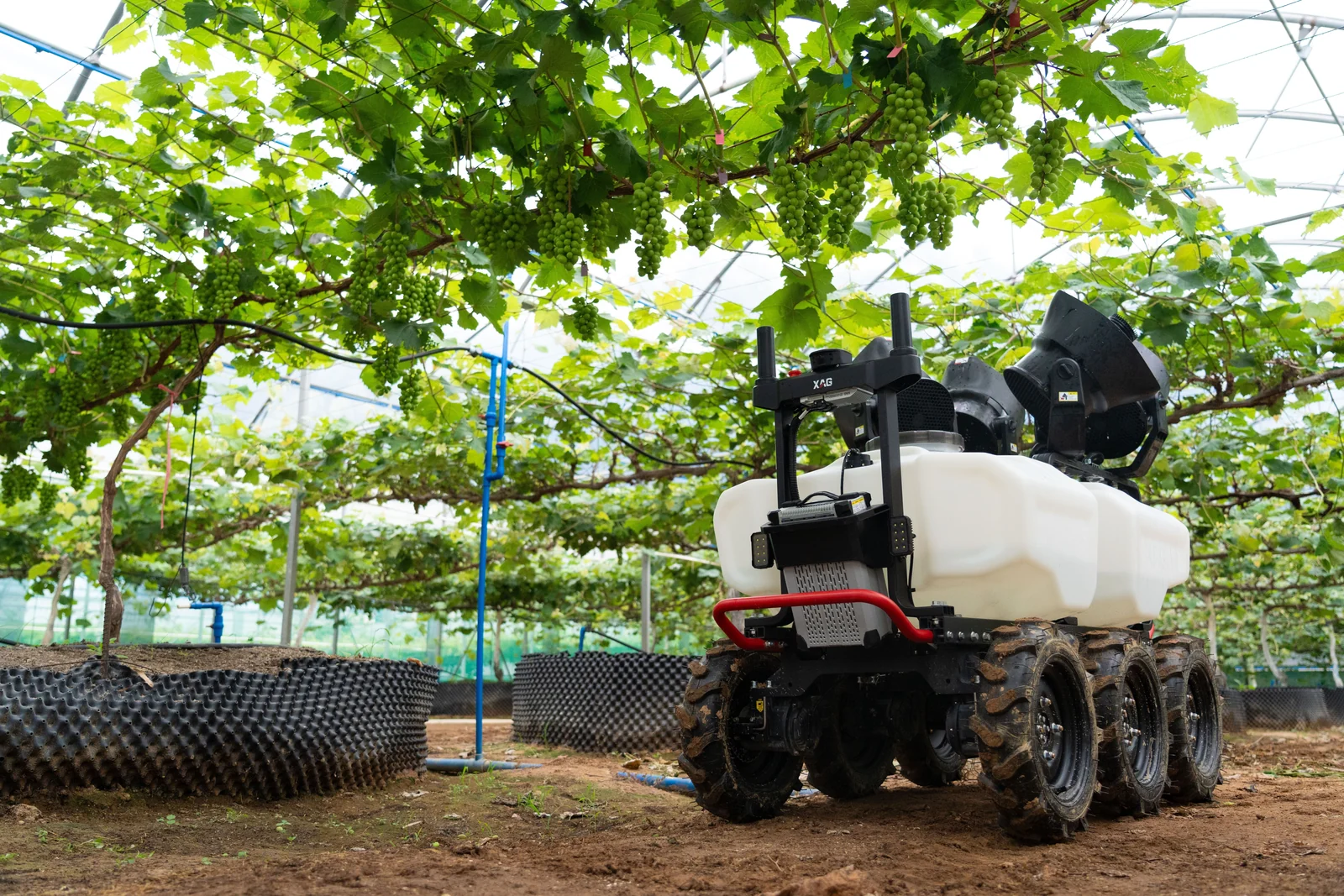
The electric six-wheel-drive XAG R200 carries a 240 L tank and four centrifugal sprayers reaching 7 m per side, according to its manufacturer. Use of plant protection products remains subject to their regulations.
Since 2023 the Naïo Ted can work without an operator nearby, according to its manufacturer. The survey sets the work area, signage and remote supervision with you.
USE CASES
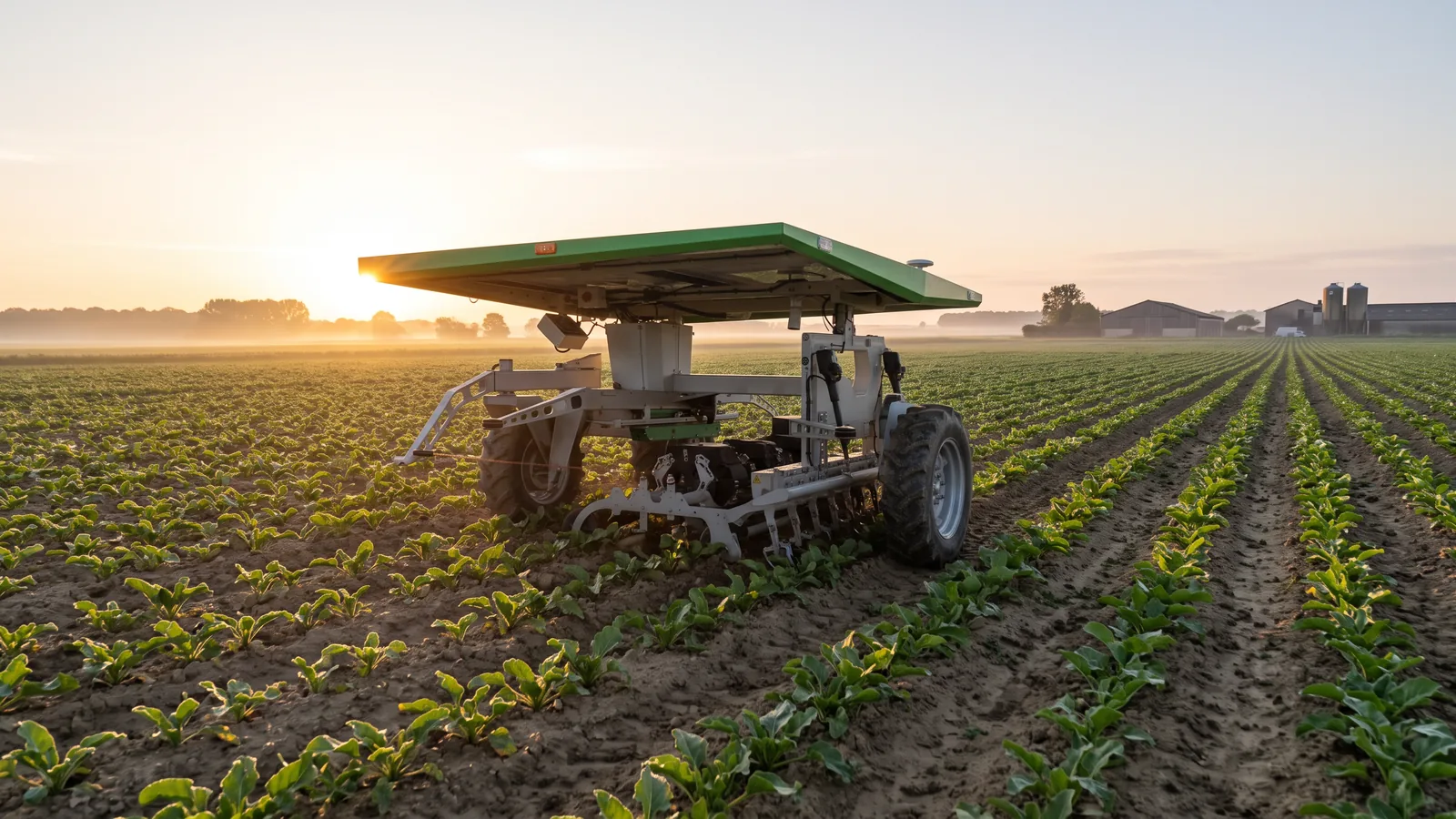 Autonomous crop weedingThe robot tells crop from weeds, then weeds mechanically, by laser or with micro-droplets, with no hand weeding. The grower keeps the choice of fields, settings and when to act.
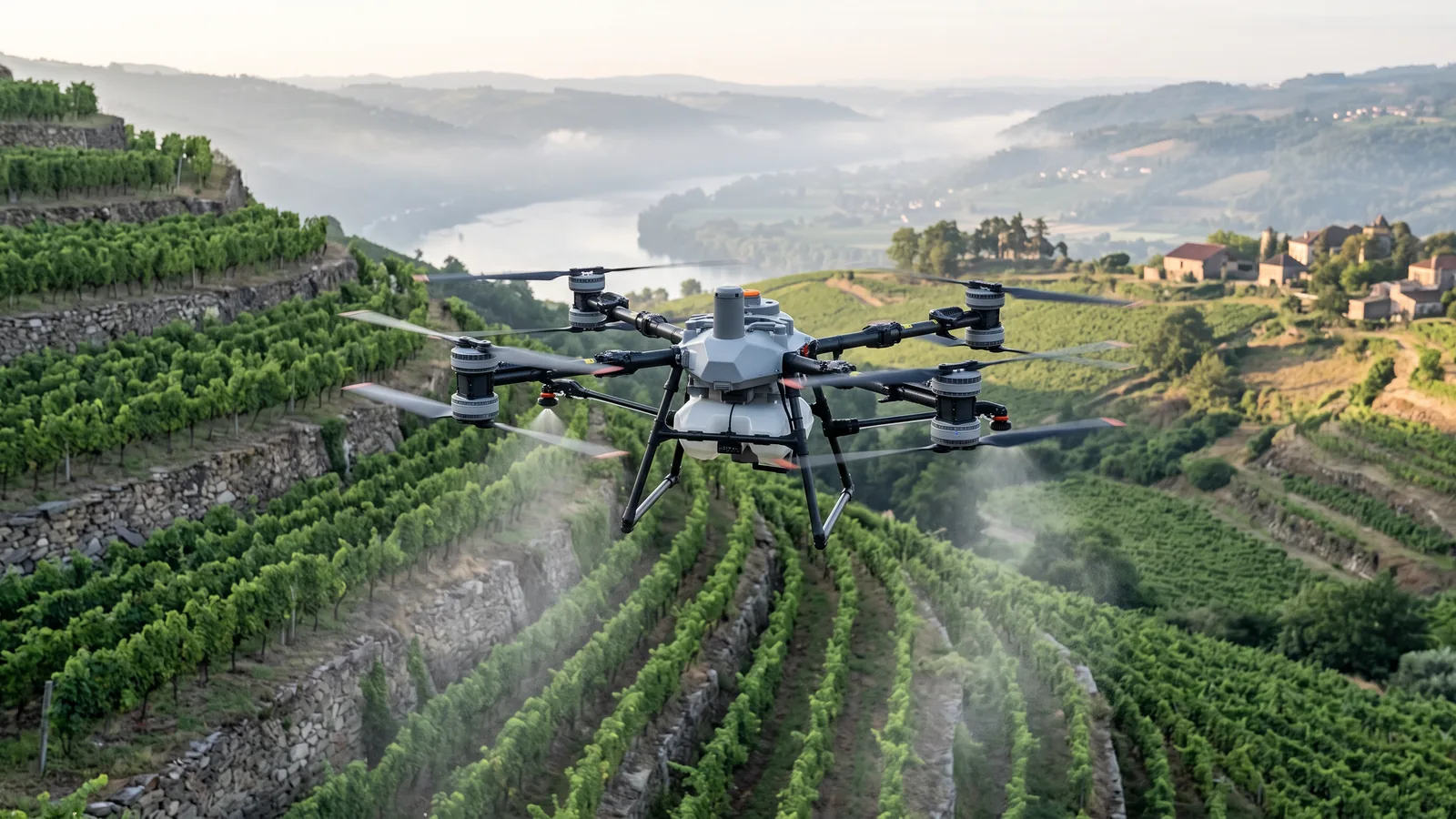 Agricultural drone spraying and spreadingThe drone follows a flight plan drawn over the field and spreads fertiliser, seed or spray, without entering the crop. The regulatory framework is checked before each use.
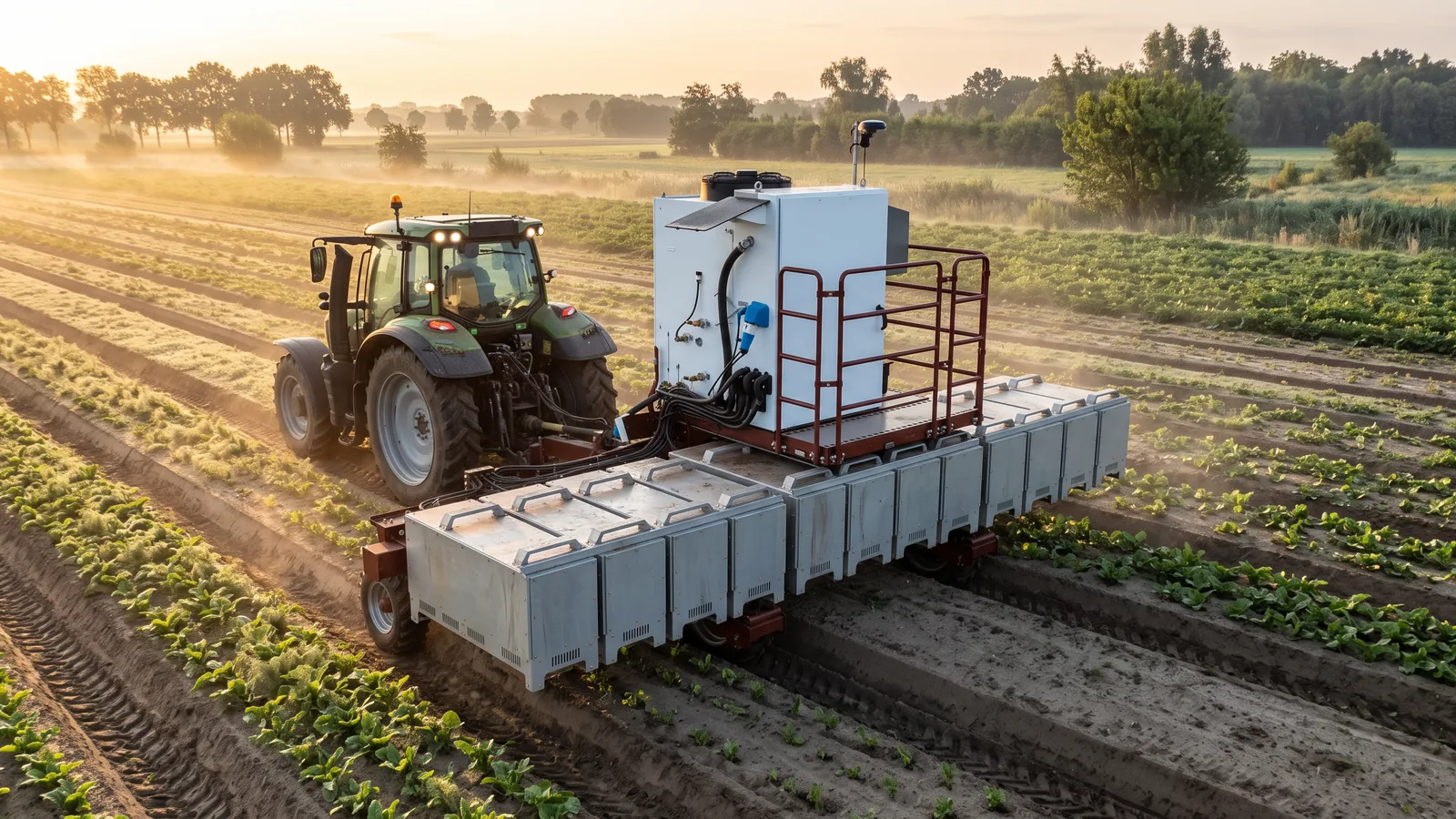 Laser weeding of vegetables and specialty cropsThe laser weeder spots each weed by camera and kills it with a laser, with no chemical and no tillage. The grower chooses the fields, the passes and, depending on the crop, between laser and spot spraying.
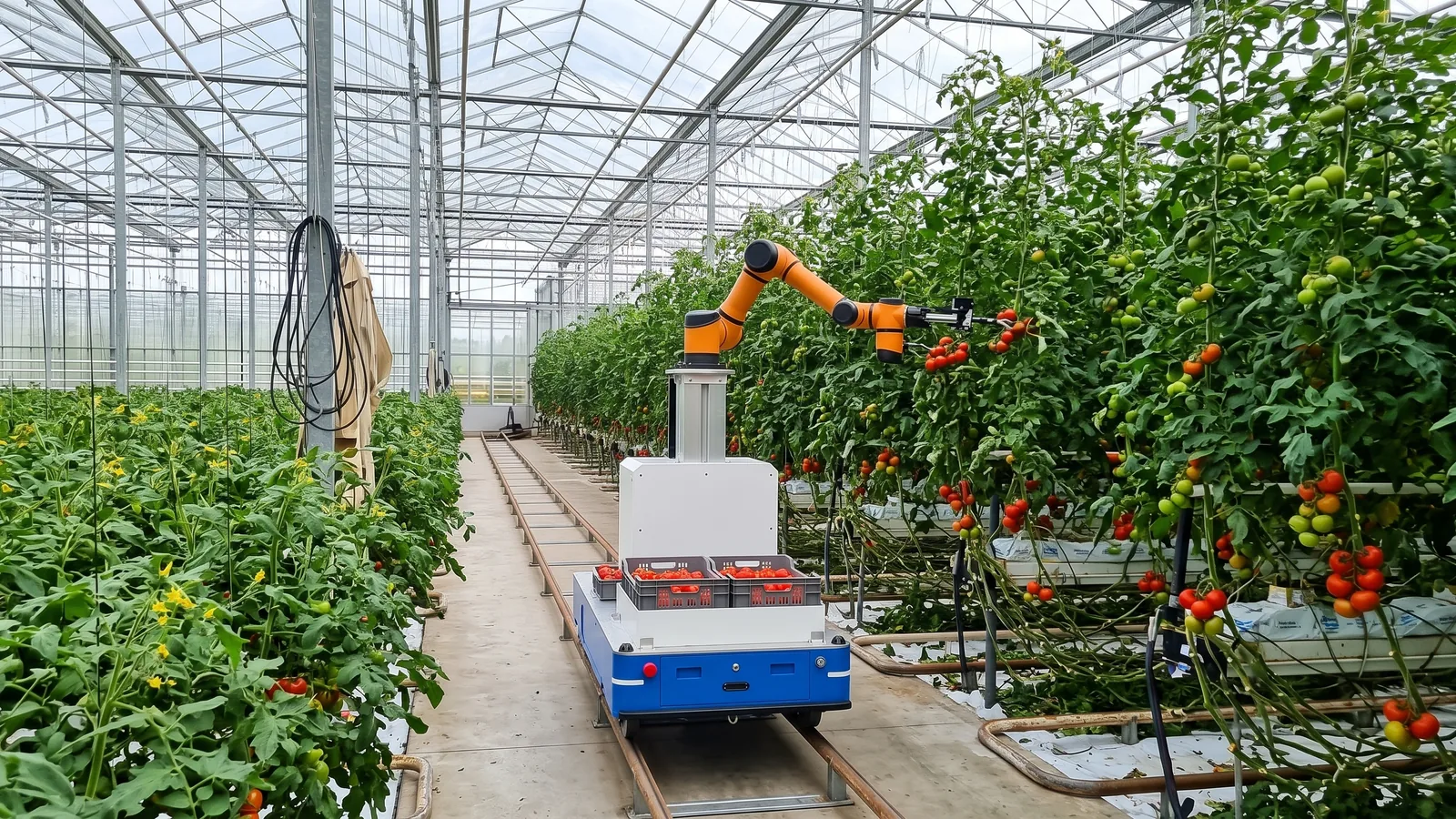 Greenhouse harvesting and orchard workIn the greenhouse, the robot spots ripe trusses and cuts them; in the orchard, electric robots spray, carry and pull tools between the rows. Teams keep the tasks that need a trained eye.
Robots, acquisition mode and delivery terms, in one written proposal.