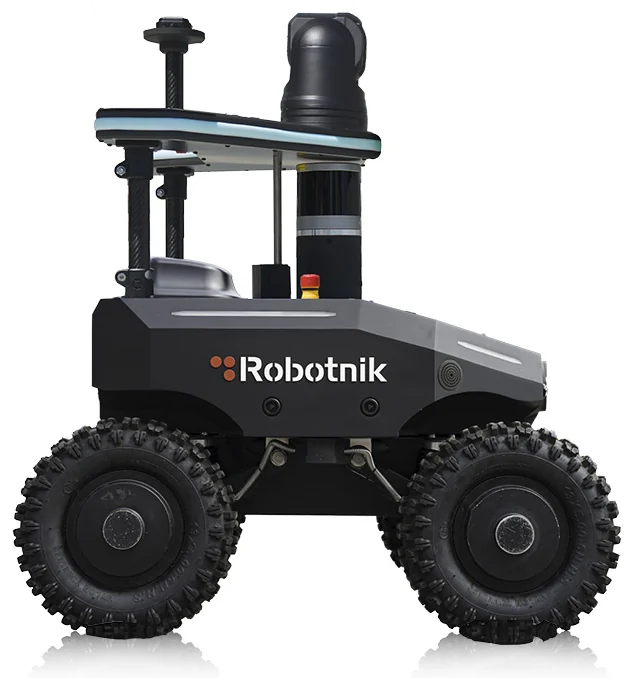
Security and patrol
- Runtime
- 10 h
- Maximum speed
- 1.5 m/s
- Ingress protection
- IP55
On order
From €49,990 ex VATor €1,699/month in RaaS
Updated
USE CASE · LOGISTICS
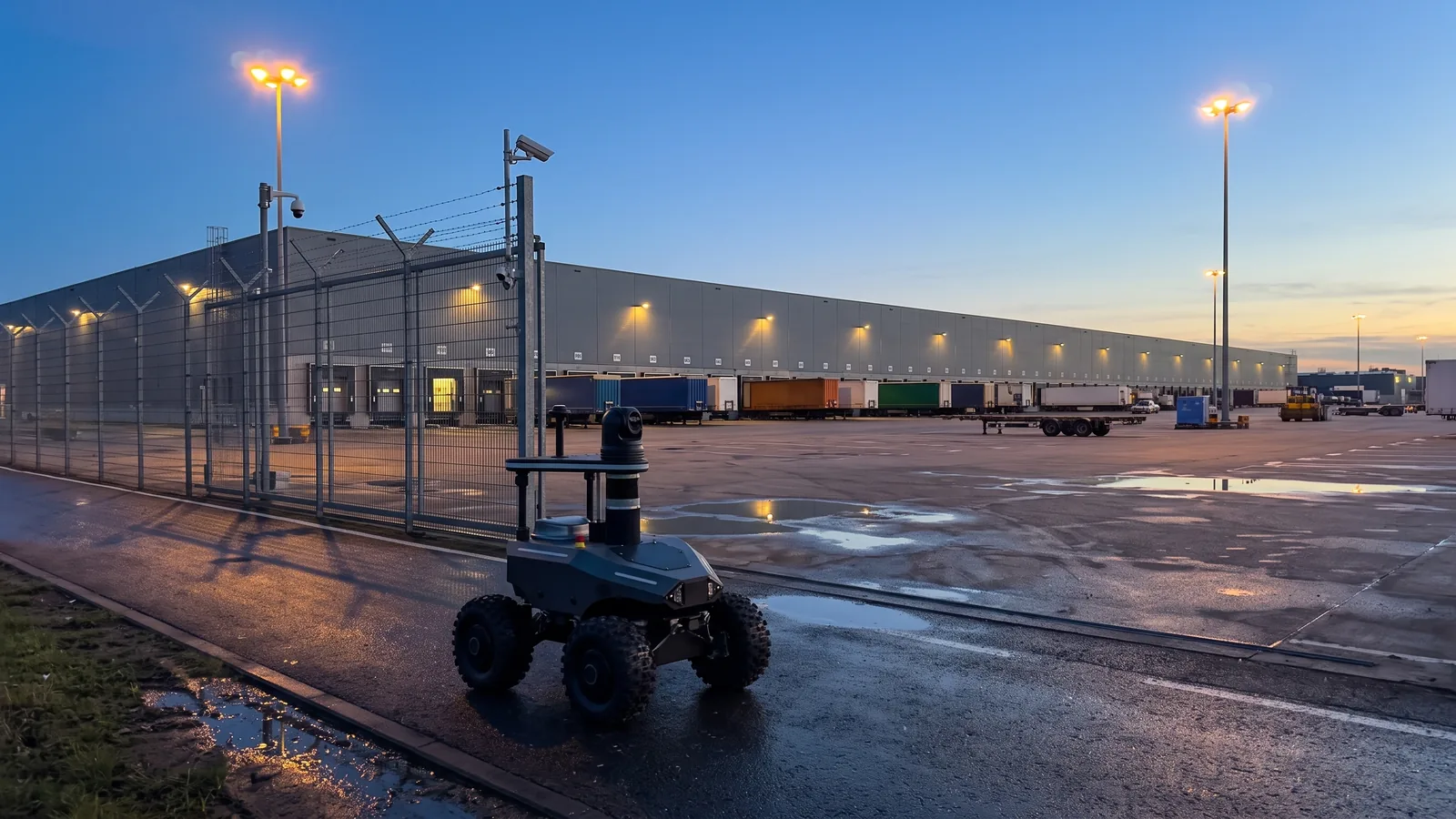
The robot follows the fence, passes the docks and crosses the truck yard on scheduled rounds, then alerts the gatehouse. Guards keep access control, verification and response.
Updated
A logistics security robot patrols the perimeter, truck yard and loading docks of a distribution centre on its own, films in visible light and thermal, and sends its alerts to the gatehouse or remote monitoring centre.
The Robotnik RB-WATCHER XL patrols for up to 10 h per charge, is rated IP55 and climbs 14 cm obstacles, with a bi-spectral PTZ camera, according to its manufacturer.
Robot Distribution delivers it, programmes the rounds, sets up alert routing to your gatehouse, trains your teams and maintains it, to buy, rent or as RaaS.
WHY
A logistics platform often covers several hectares: fence line, a yard of parked trailers and swap bodies, loading docks, truck parks and battery charging rooms. Intrusions, theft from trailers and gates left open happen mostly at night and at weekends, when the site runs at low activity.
The robot covers these distances at regular times, in all weathers, and reports what it sees to the gatehouse. Guards keep access control, verification and response; a docked drone can add an aerial view of the site to the ground round.
HOW IT RUNS
At commissioning the robot maps the fence, traffic lanes, yard and docks. With the security manager we set routes, checkpoints (gates, docks, tanks, charging rooms) and zones to avoid during operations.
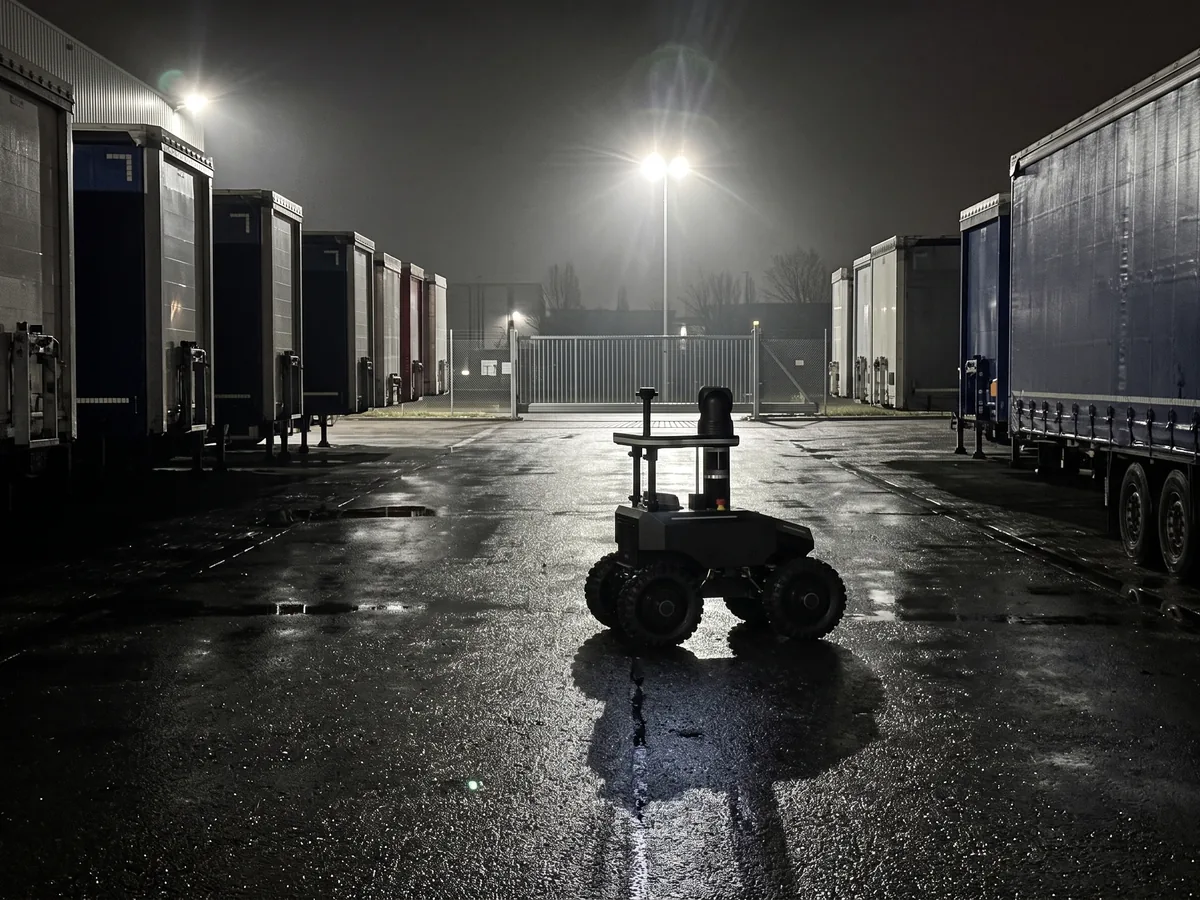
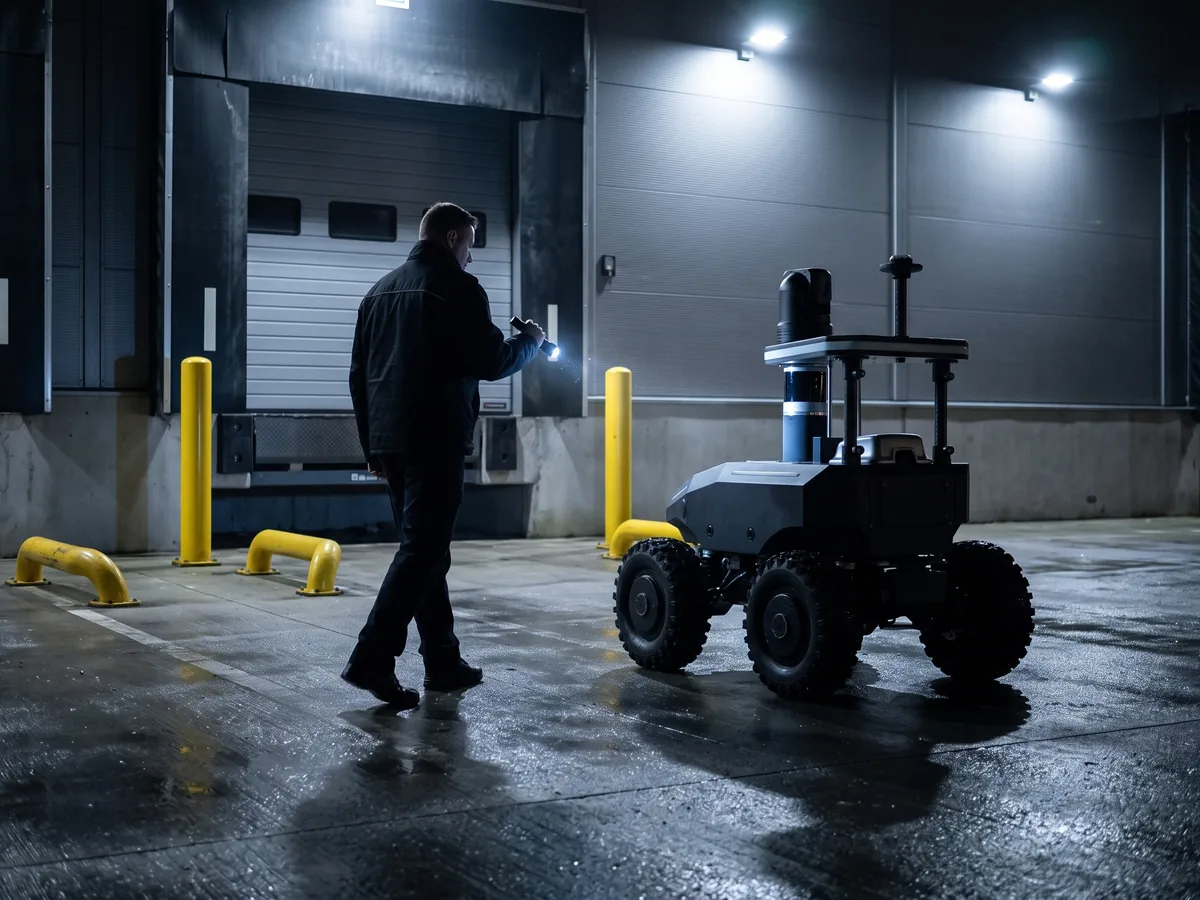
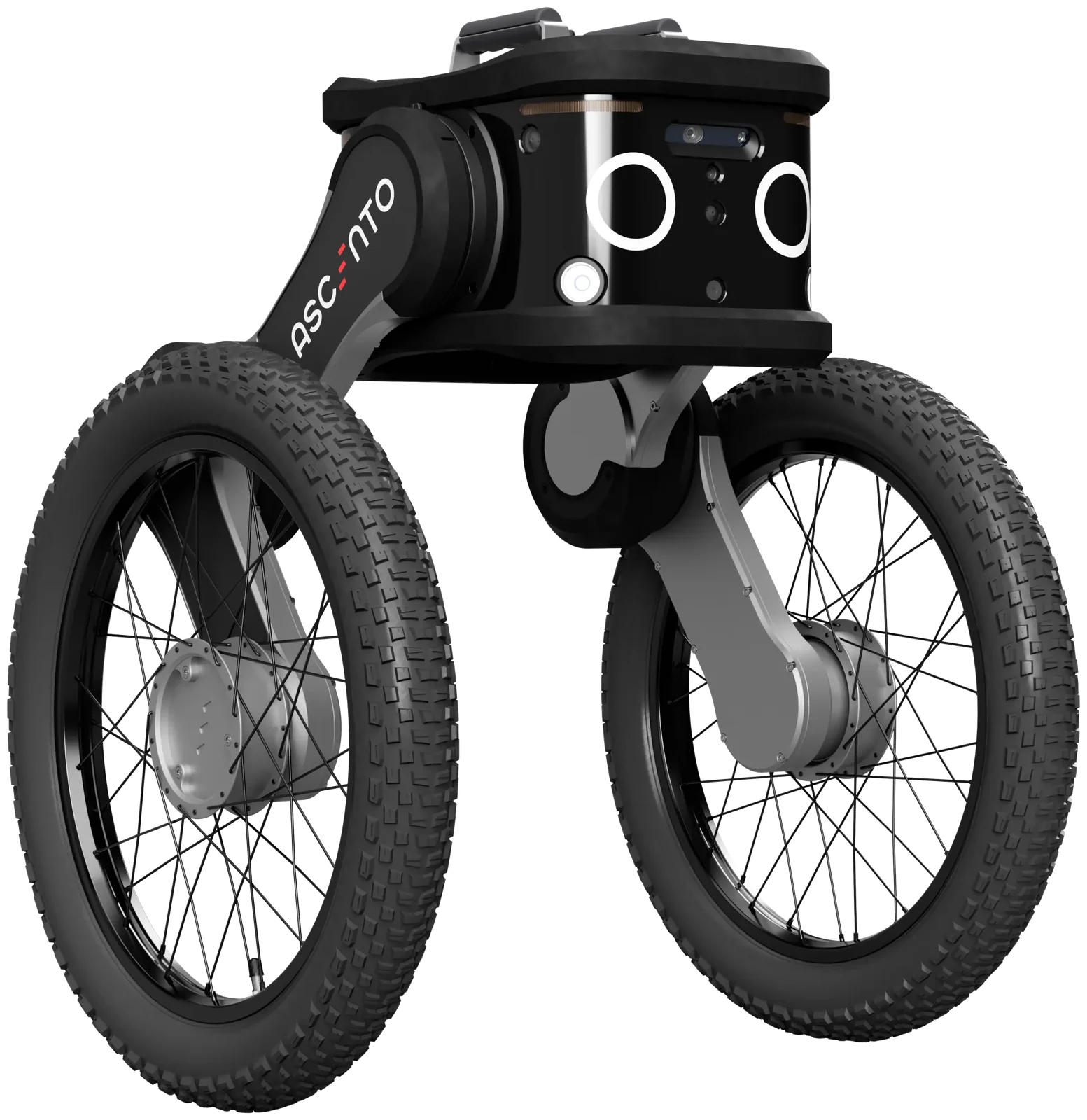
The robot follows the fence and passes between trailers. The Ascento Guard detects intruders, open gates, damaged fences and overheating equipment, according to its manufacturer.
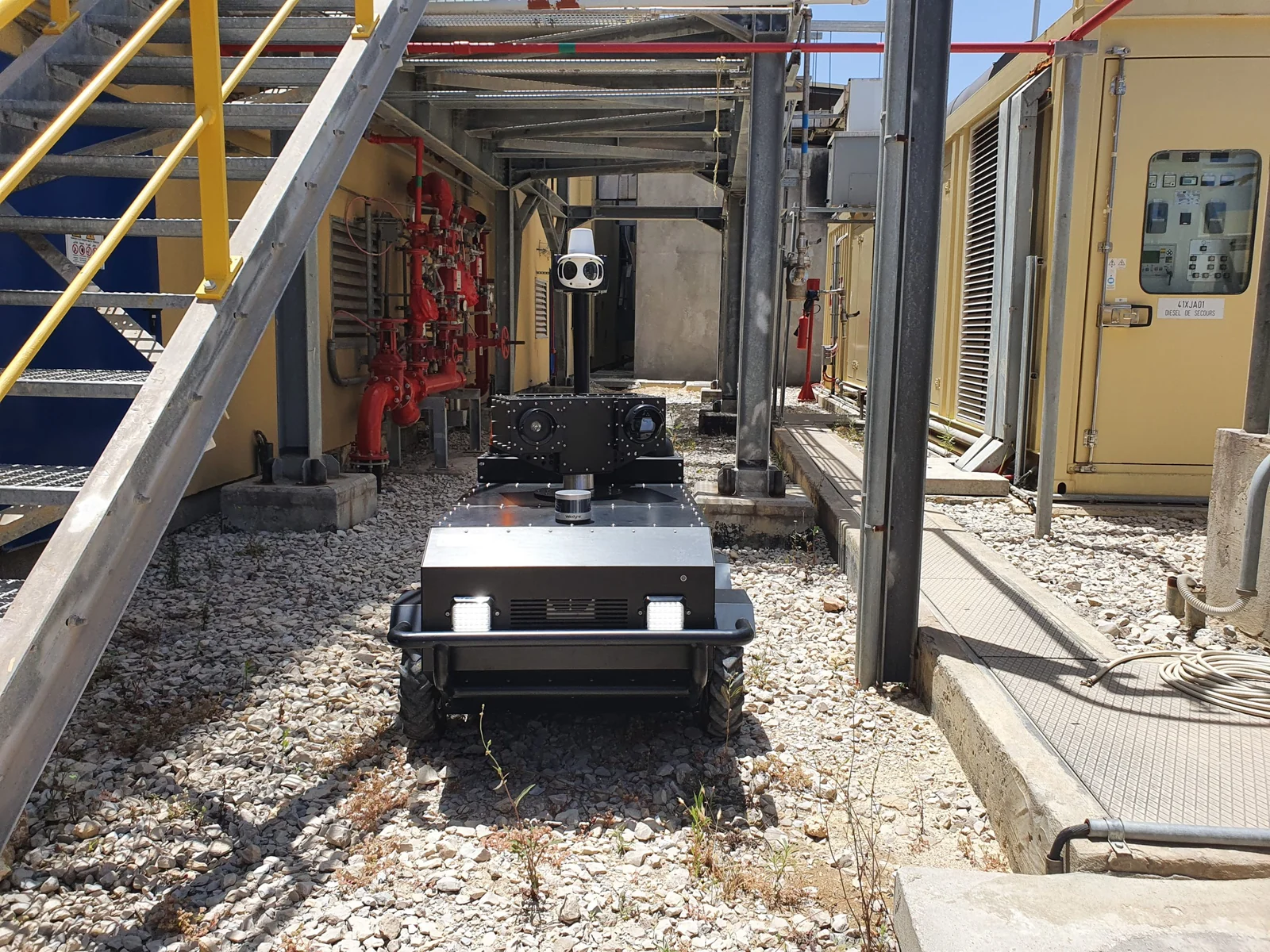
For each anomaly, visible and thermal images and the position go to the gatehouse. The Enova Robotics PGuard observes up to 500 m with its 32× optical zoom, according to its manufacturer; the guard checks, then decides.
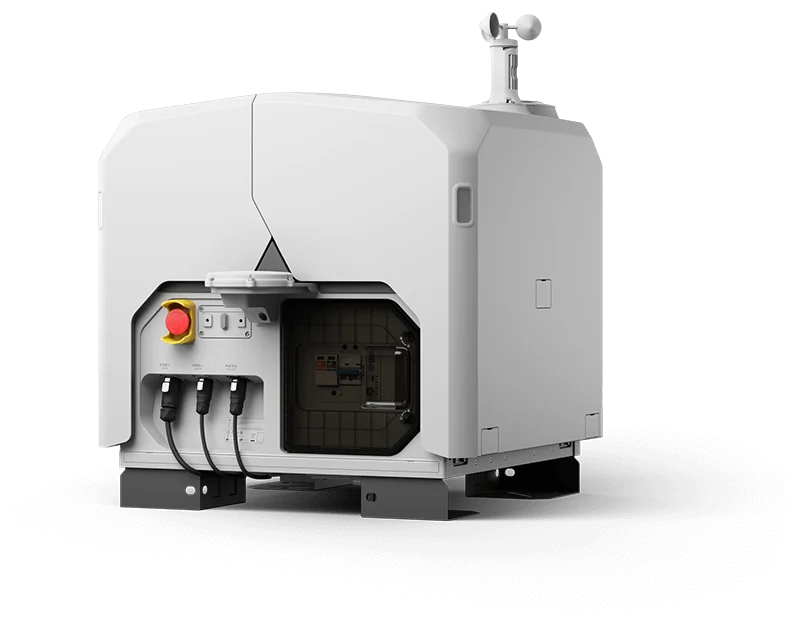
The robot returns to its station between rounds. On a large site, the DJI Dock 3 launches a drone that flies up to 54 minutes within a 10 km radius, according to its manufacturer, for an overall view.
THE ROBOTS
Security and patrol
Ascento
Security and patrol
Professional drones
BEFORE INSTALLING
Tarmac, gravel, potholes, kerbs and rails are noted: the four-wheel-drive Enova Robotics PGuard climbs 20 cm obstacles and 25° slopes, according to its manufacturer.
Rounds run in rain, wind and cold: the Enova Robotics PGuard works from −20 to +50 °C and the DJI Dock 3 from −30 to 50 °C, according to their manufacturers.
Operating hours, truck lanes, dock manoeuvres and forklift traffic: patrol windows and no-go zones are set so the robot does not disrupt operations.
4G, 5G or Wi-Fi coverage to the far end of the fence, link with existing CCTV, GDPR for images; a docked drone requires an authorisation in the specific category under Regulations (EU) 2019/947 and 2019/945.
FAQ
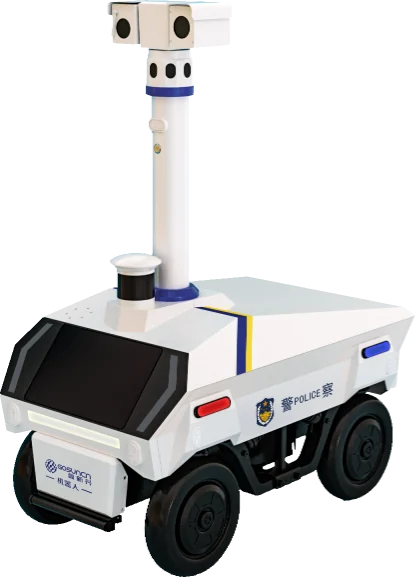
It depends on the route and speed: according to their manufacturers, the Enova Robotics PGuard travels at up to 12 km/h for 8 h, and the Gosuncn X3 covers 8 h or 28 km per charge. For several hectares, a ground robot is combined with a docked drone.
Yes, within the stated limits: the Robotnik RB-WATCHER XL is rated IP55, the Enova Robotics PGuard works from −20 to +50 °C and the Ascento Guard is built for rain, snow and wind, according to their manufacturers.
Yes: every robot on this page carries a thermal camera, as standard or as an option. The Gosuncn X3, for example, takes an optional 384 × 288 thermal camera alongside its 30× zoom camera, according to its manufacturer.
The ground robot does the close rounds along fences, between trailers and on the docks. A docked drone such as the DJI Dock 3 gives a fast aerial view of a large site; its operation falls under the specific category of European Regulations 2019/947 and 2019/945.
The Ascento Guard integrates with existing video management systems, according to its manufacturer. For the other models, alert routing to your gatehouse is studied during the site survey.
USE CASES
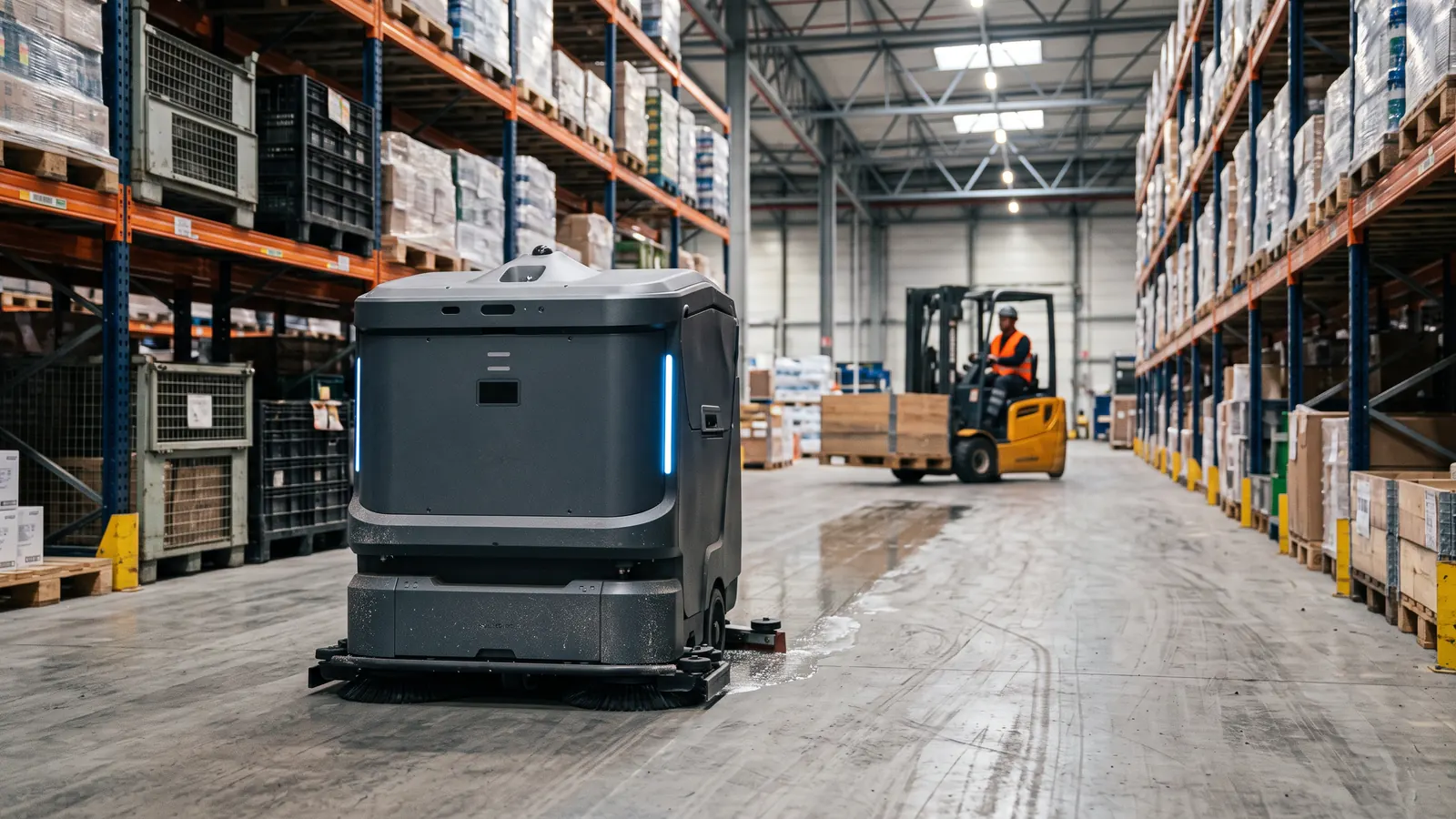 Warehouse and factory floor scrubbingThe robot scrubs aisles and traffic areas without stopping operations. No forklift driver tied up on the scrubber, and the floor stays clean from one shift to the next.
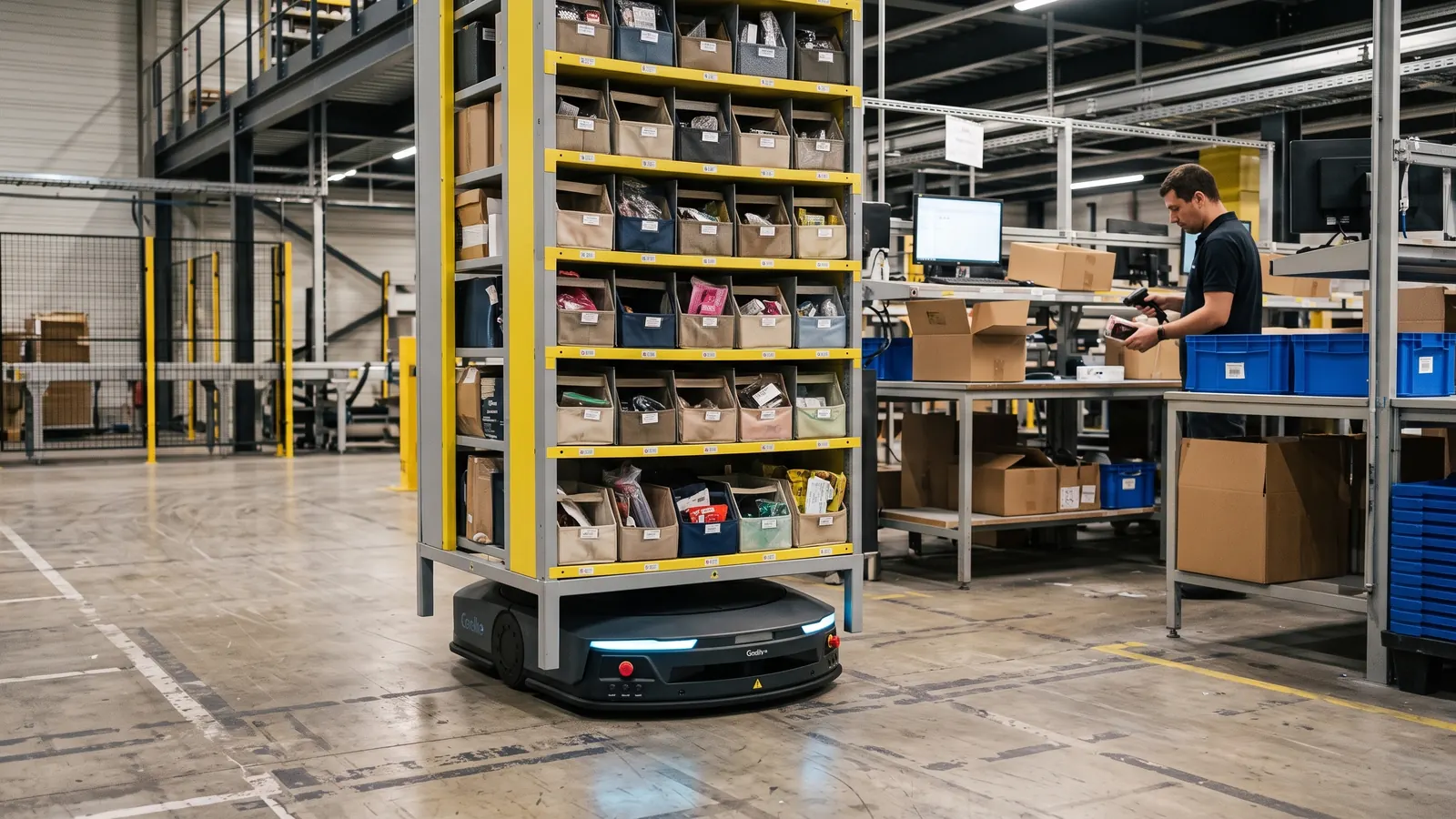 Goods-to-person pickingThe robots lift mobile shelves and bring them to the picking station. The picker stays at the station: picking, checking and packing.
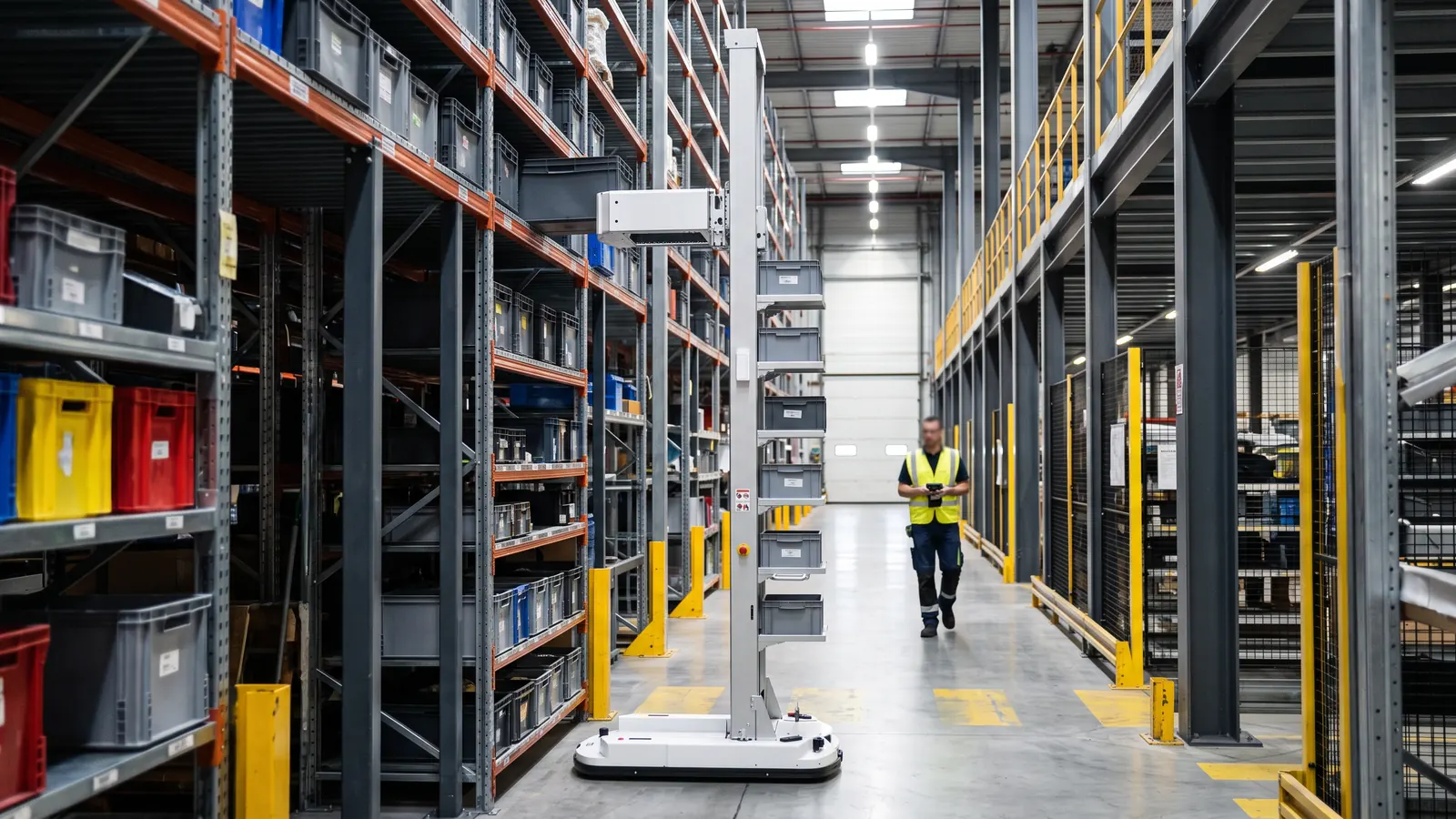 Tote storage and retrievalThe robots climb to fetch totes and cartons from the racks and bring them to the station. The picker picks, replenishes and packs without ladders or carts.
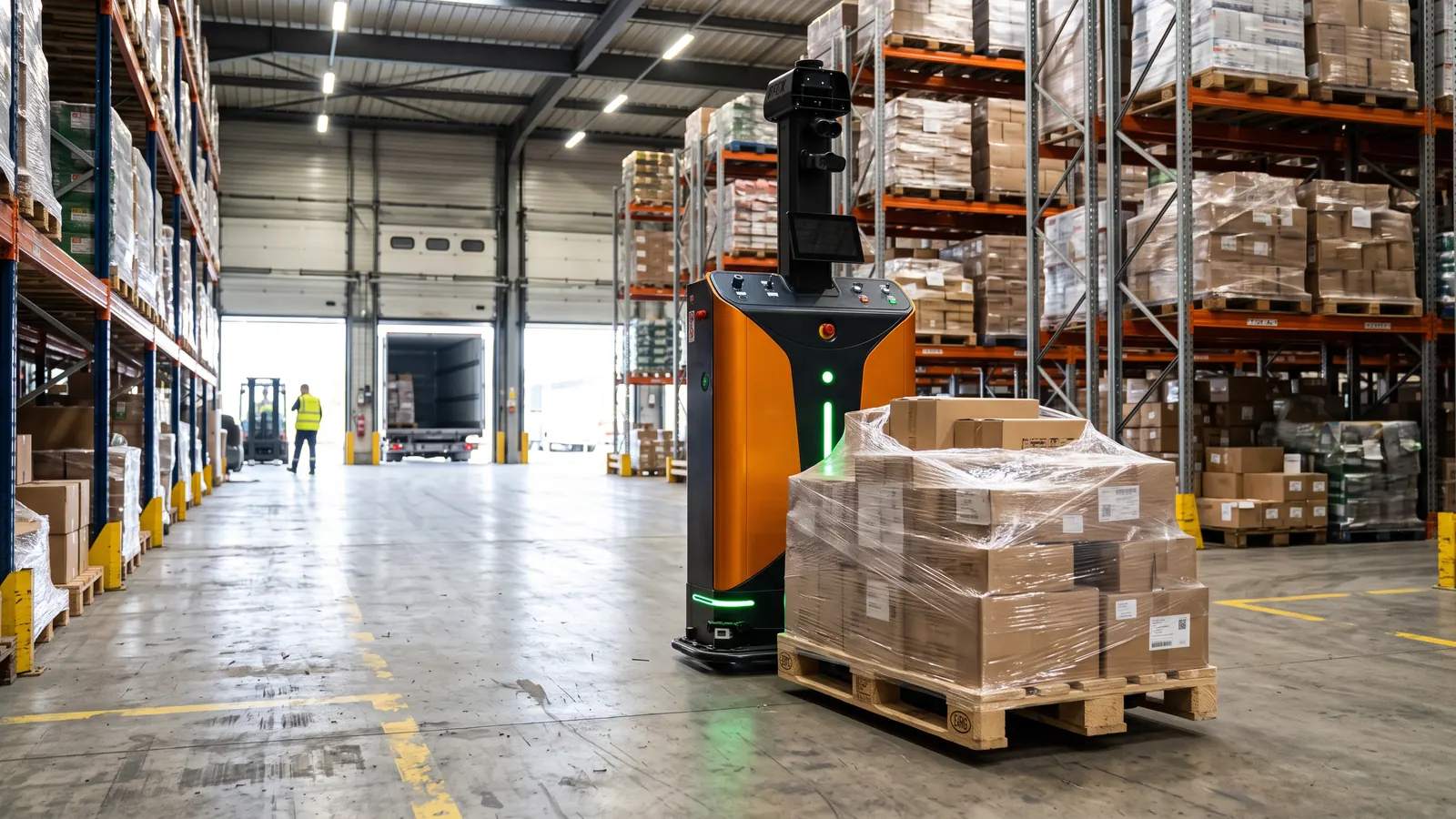 Autonomous pallet forkliftThe autonomous forklift runs the repetitive pallet shuttles between goods-in, storage and production. Drivers keep the loading, special cases and checks.
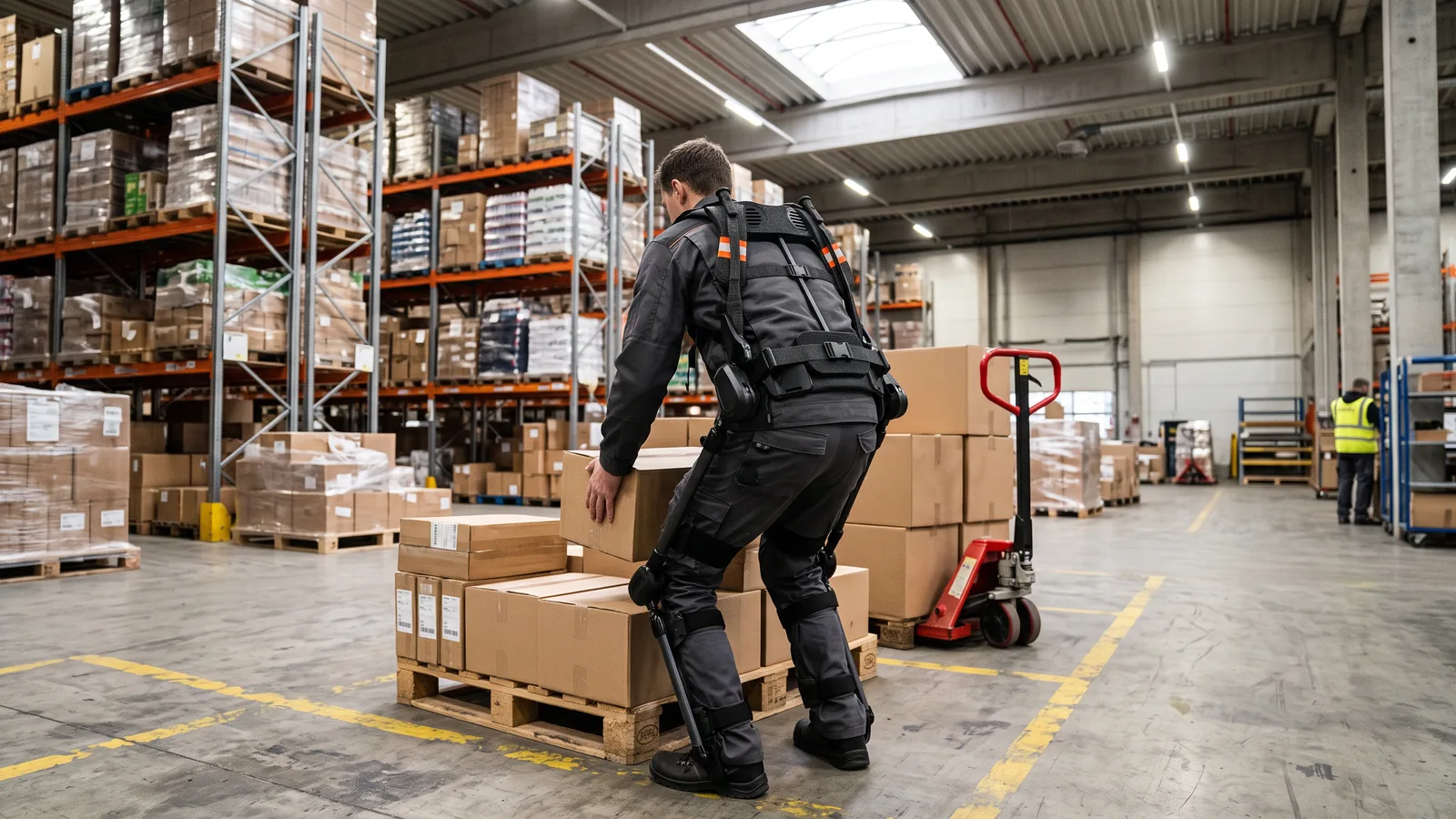 Exoskeletons for manual handlingThe exoskeleton assists the operator on every lift, without changing the workstation or the movement. The worker stays in control; the device reduces the strain on the back or shoulders.
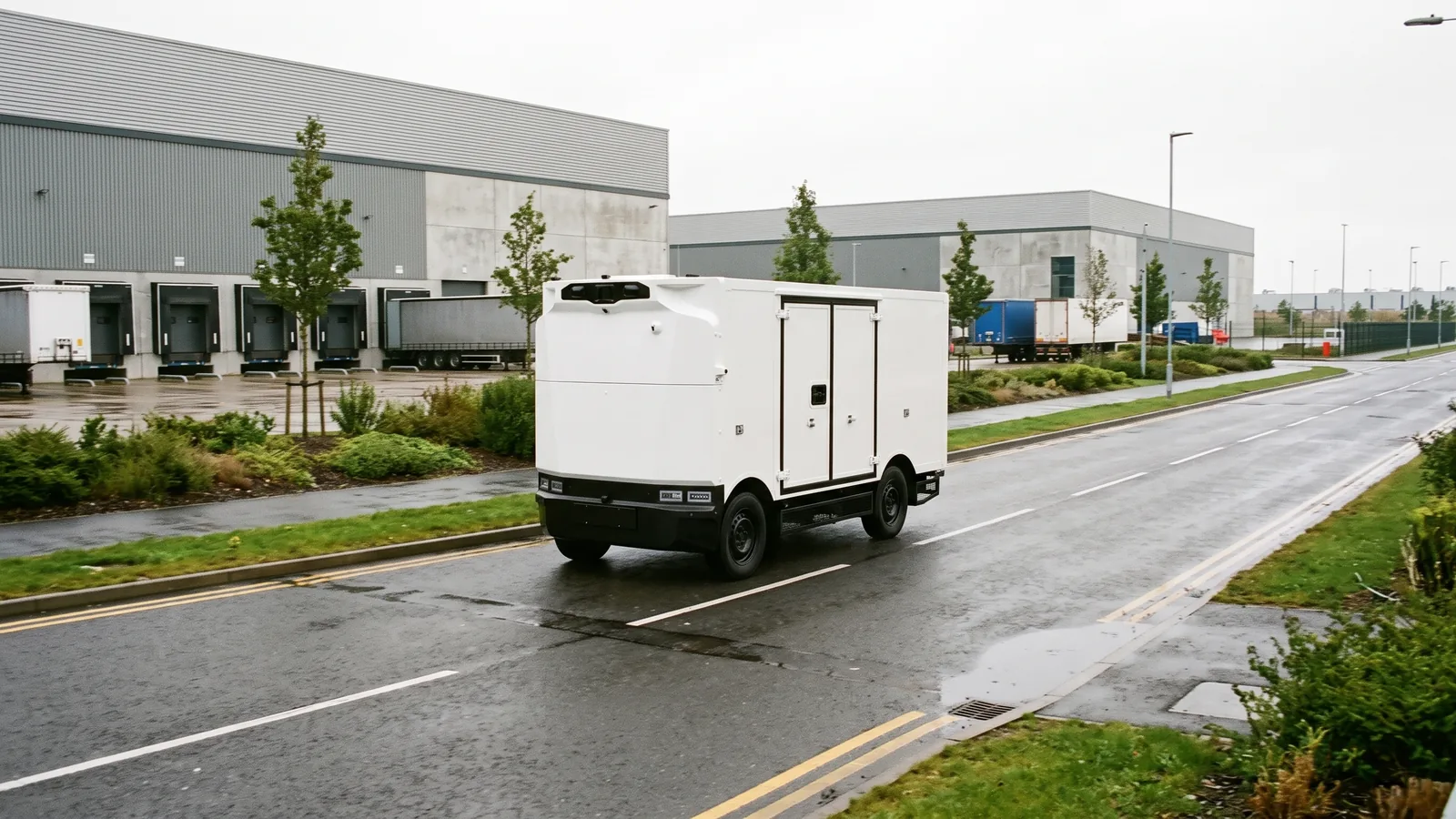 Autonomous last-mile deliveryThe autonomous vehicle carries parcels and goods between a warehouse, delivery points or the buildings of a site. Teams keep loading, fleet supervision and the customer relationship.
Robots, acquisition mode and delivery terms, in one written proposal.