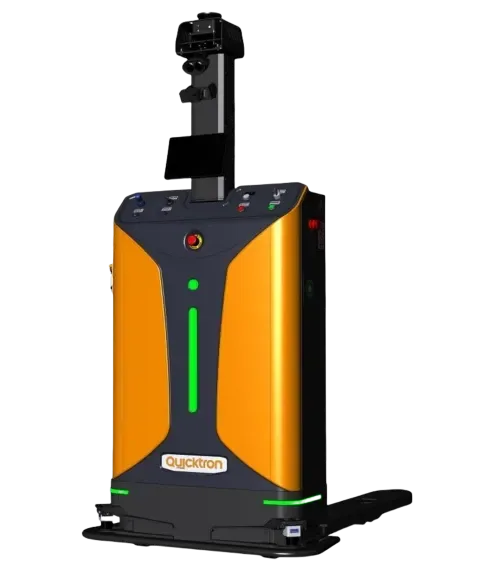
Industrial logistics
- Payload
- 1,400 kg
- Key feature
- 3 m lift
- Key feature
- SLAM
On order
Price on request
Updated
USE CASE · LOGISTICS
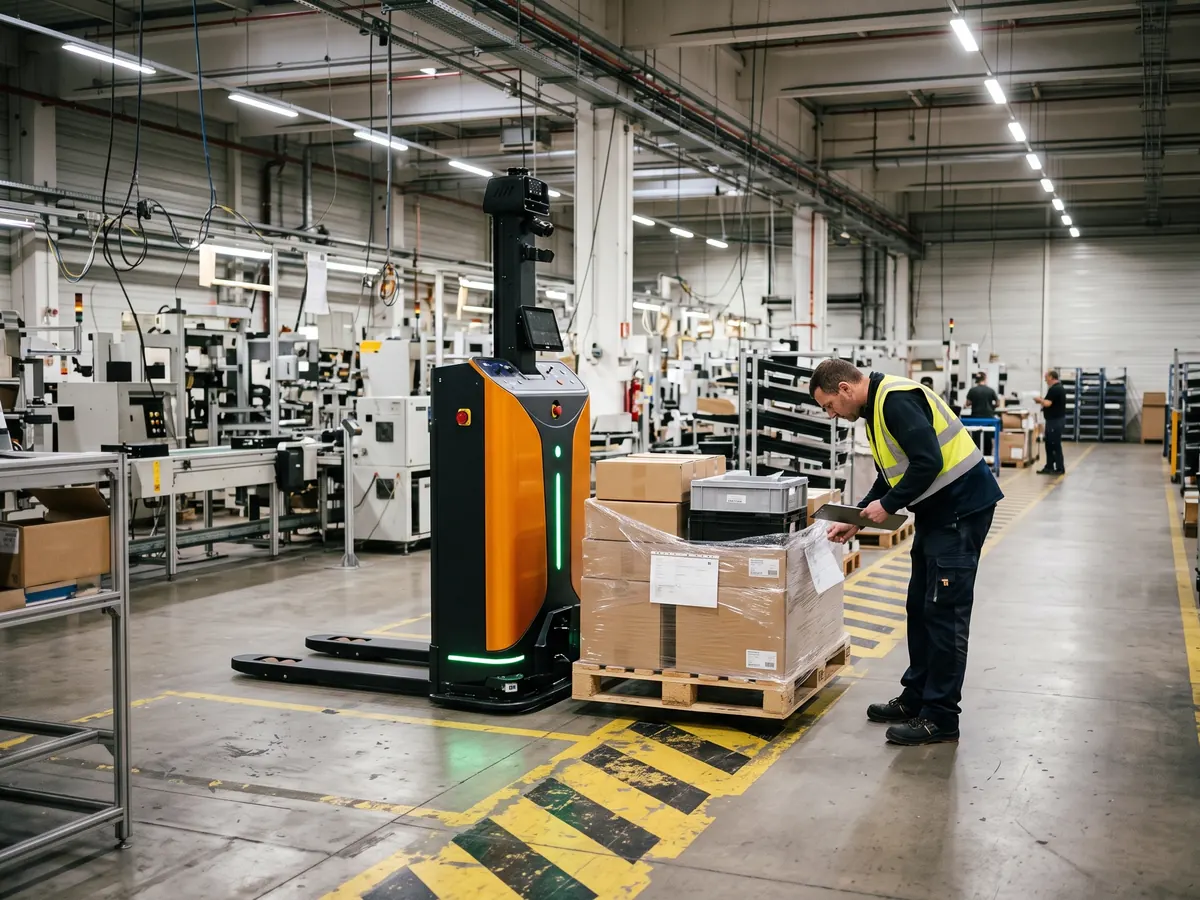
The autonomous forklift runs the repetitive pallet shuttles between goods-in, storage and production. Drivers keep the loading, special cases and checks.
Updated
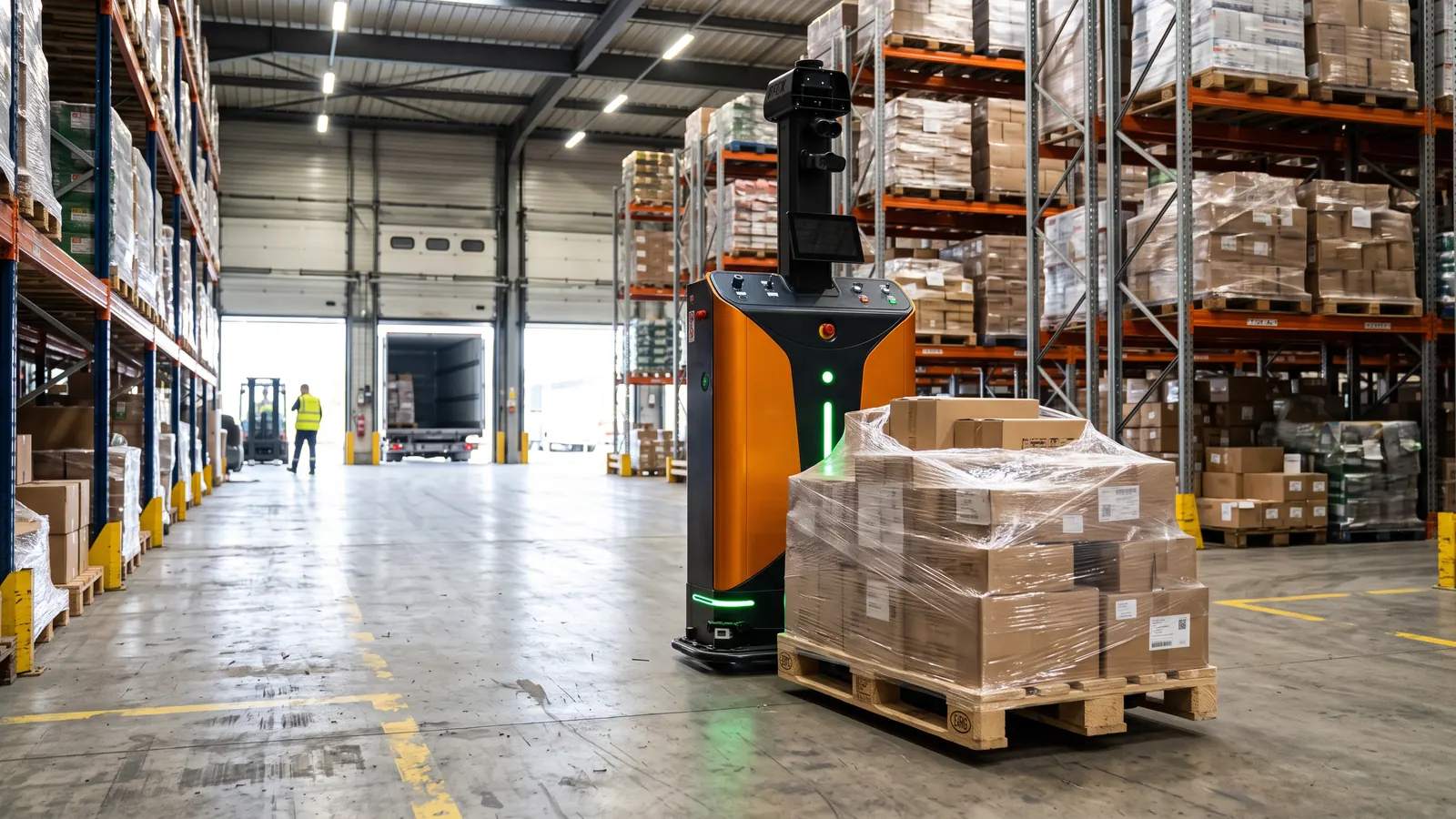
An autonomous forklift takes a pallet from a defined location, carries it along the site map and puts it down on the floor, on a conveyor or at low rack level, with no driver on board.
The Quicktron FD140 carries 1,400 kg, lifts up to 3,000 mm and positions to ±10 mm according to its manufacturer.
Robot Distribution maps the site, sets the locations and traffic rules, connects the fleet to your WMS or ERP, trains the team and maintains it, to buy, rent or as RaaS.
WHY
In a warehouse or factory, many forklift trips are repetitive shuttles: dock to storage, storage to line side, end of line to shipping. They are easy trips that still tie up a driver on every shift, often at night.
The autonomous forklift takes over these shuttles with the same pallets and locations. It travels at a steady speed, slows down and stops for obstacles and pedestrians, and leaves drivers on the jobs that need judgement: loading trucks, damaged pallets, urgent requests.
HOW IT RUNS
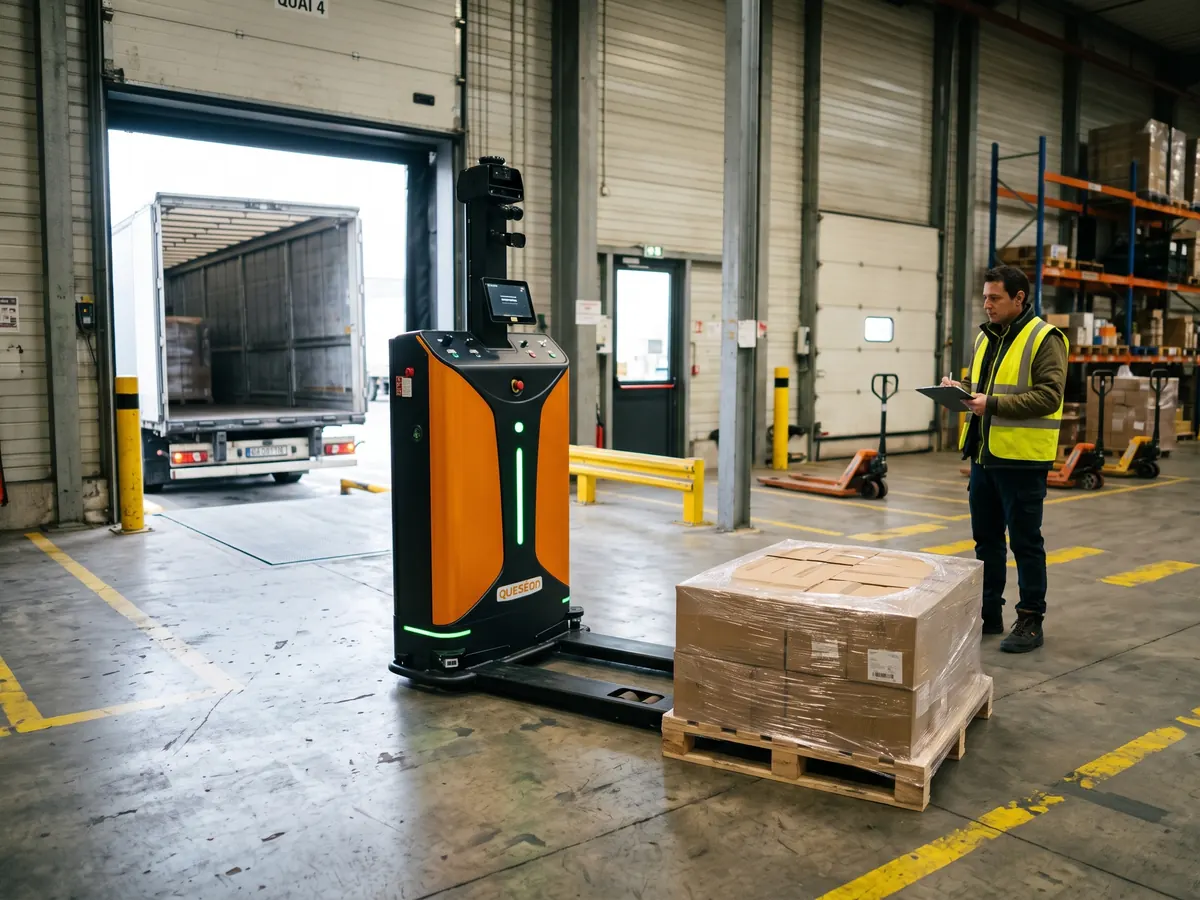
The WMS, the ERP or an operator on a tablet requests the transfer of a pallet from one location to another.
It drives to the location, lines up with the pallet, engages its forks and lifts it.
It follows the site map, slows down in areas shared with pedestrians and stops for any obstacle it detects.
It puts the pallet at the destination, on the floor, on a conveyor or at low rack level, and confirms the mission in the system.
THE ROBOTS
Industrial logistics
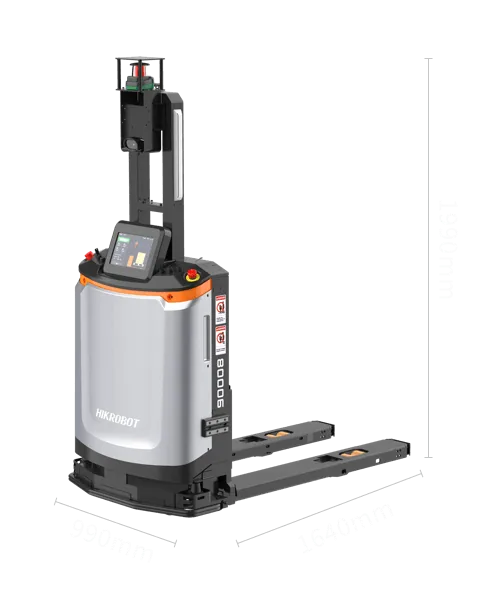
Industrial logistics
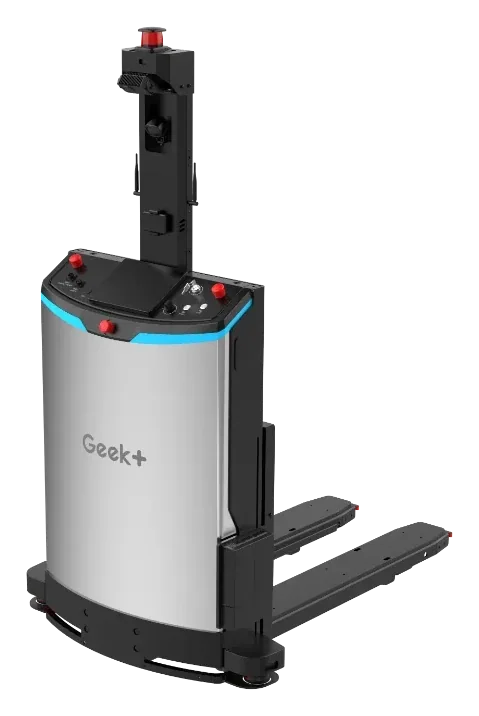
Industrial logistics
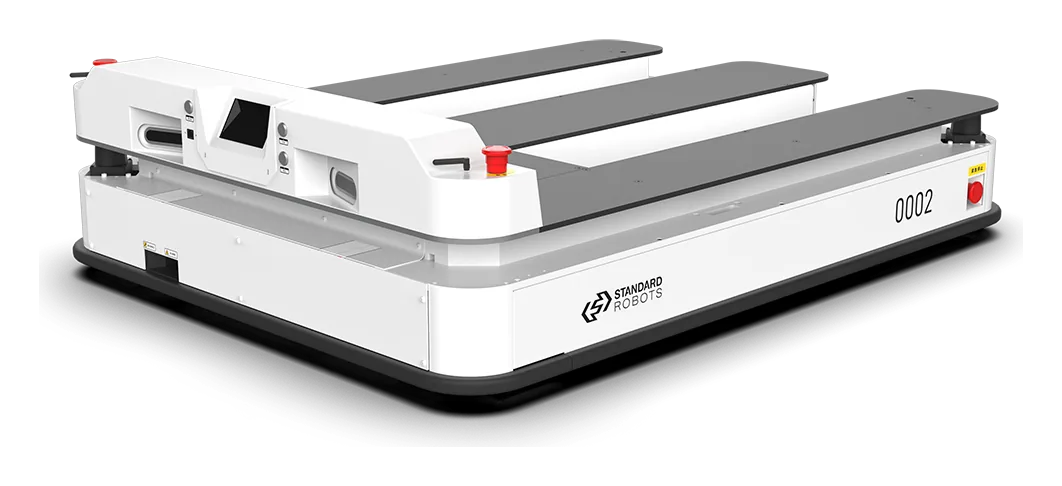
Industrial logistics
BEFORE INSTALLING
Pallet formats, maximum weight and pallet condition: the forklift must engage and lift them with no risk of tipping.
Aisle width, slopes, docks, high-speed doors and slab condition along the whole route.
Floor, conveyor or rack: each pick and drop height is compared with the lift of the chosen forklift.
Areas shared with pedestrians and manned forklifts, floor marking, signage and right-of-way rules, set with the risk assessment.
FAQ
1,400 kg for the Quicktron FD140, 1,500 kg for the Hikrobot F3-1500, 2,000 kg for the Geek+ F20MT and 1,200 kg for the Standard Robots SUNRISE-1200E according to their manufacturers.
The Quicktron FD140 lifts up to 3,000 mm according to its manufacturer, which covers the lower rack levels. The Hikrobot F3-1500 (200 mm) and the Geek+ F20MT (120 mm) are autonomous pallet trucks built for floor and conveyor transfers.
2.5 m for the Quicktron FD140 and at least 2.1 m for the Hikrobot F3-1500 according to their manufacturers. The site survey also checks turns, docks and doors.
8 h for the Quicktron FD140 and the Standard Robots SUNRISE-1200E, 6 to 8 h for the Hikrobot F3-1500, which recharges in 2 h or less, according to their manufacturers. Charging is scheduled in quiet periods.
USE CASES
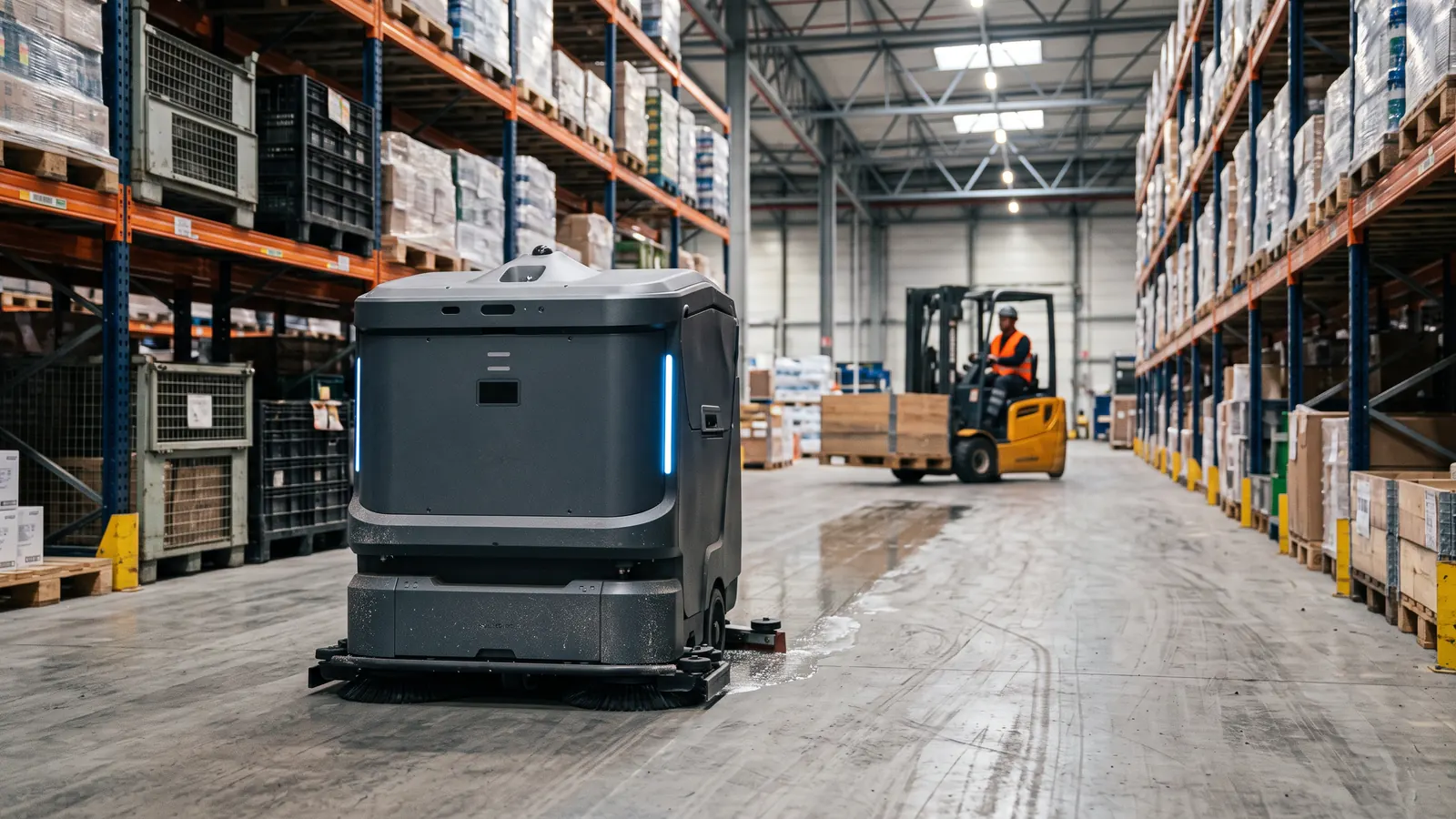 Warehouse and factory floor scrubbingThe robot scrubs aisles and traffic areas without stopping operations. No forklift driver tied up on the scrubber, and the floor stays clean from one shift to the next.
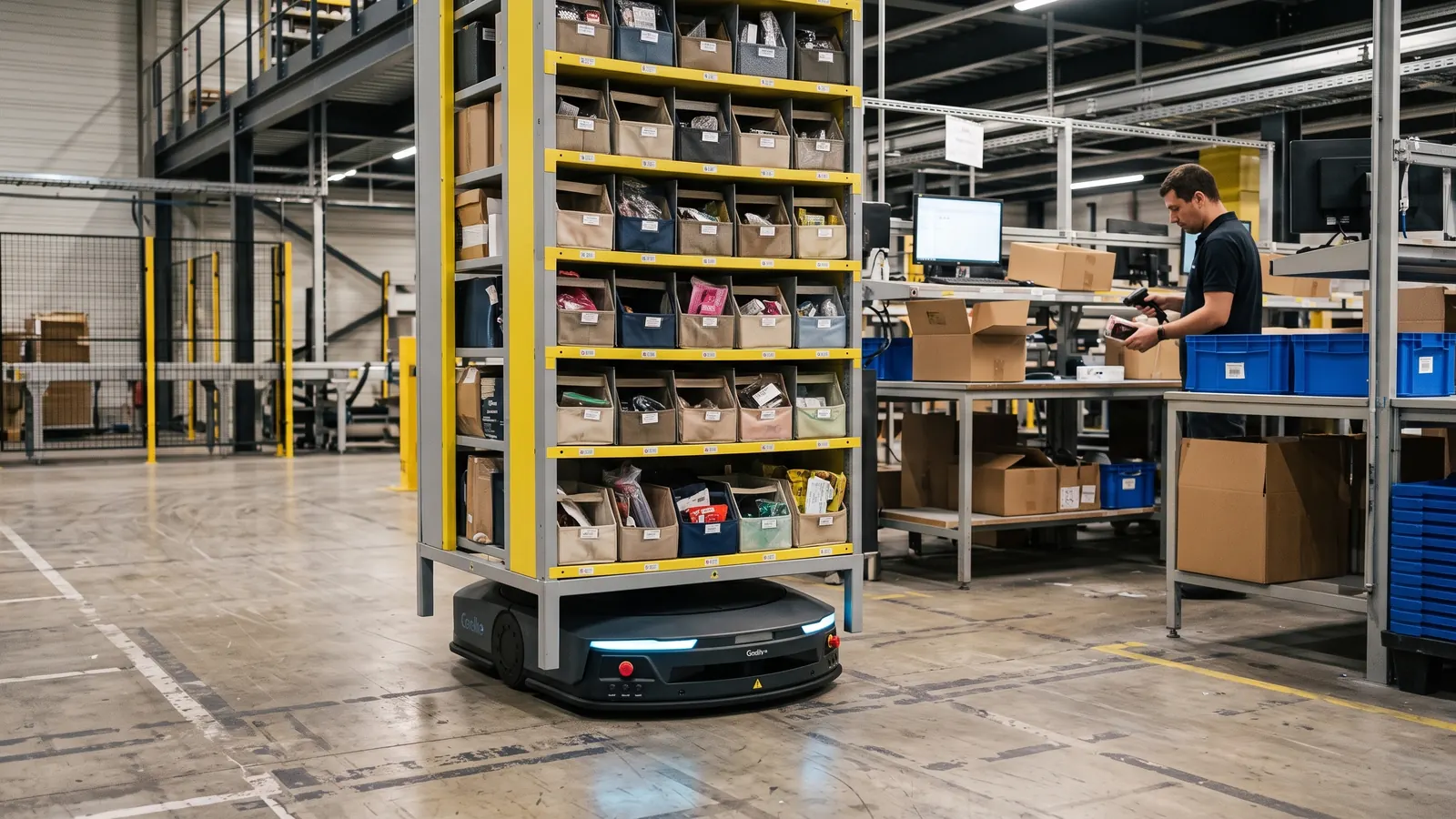 Goods-to-person pickingThe robots lift mobile shelves and bring them to the picking station. The picker stays at the station: picking, checking and packing.
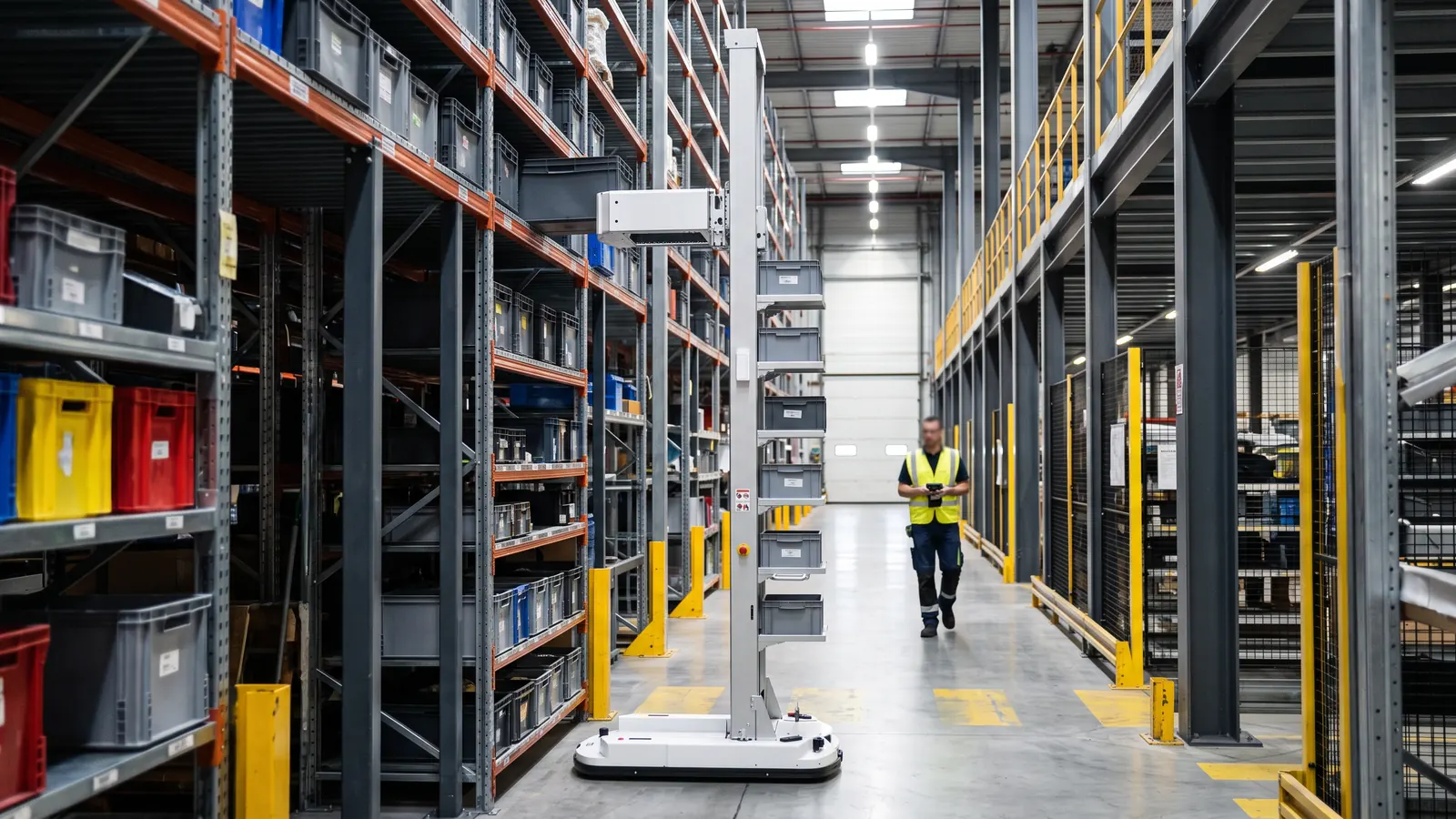 Tote storage and retrievalThe robots climb to fetch totes and cartons from the racks and bring them to the station. The picker picks, replenishes and packs without ladders or carts.
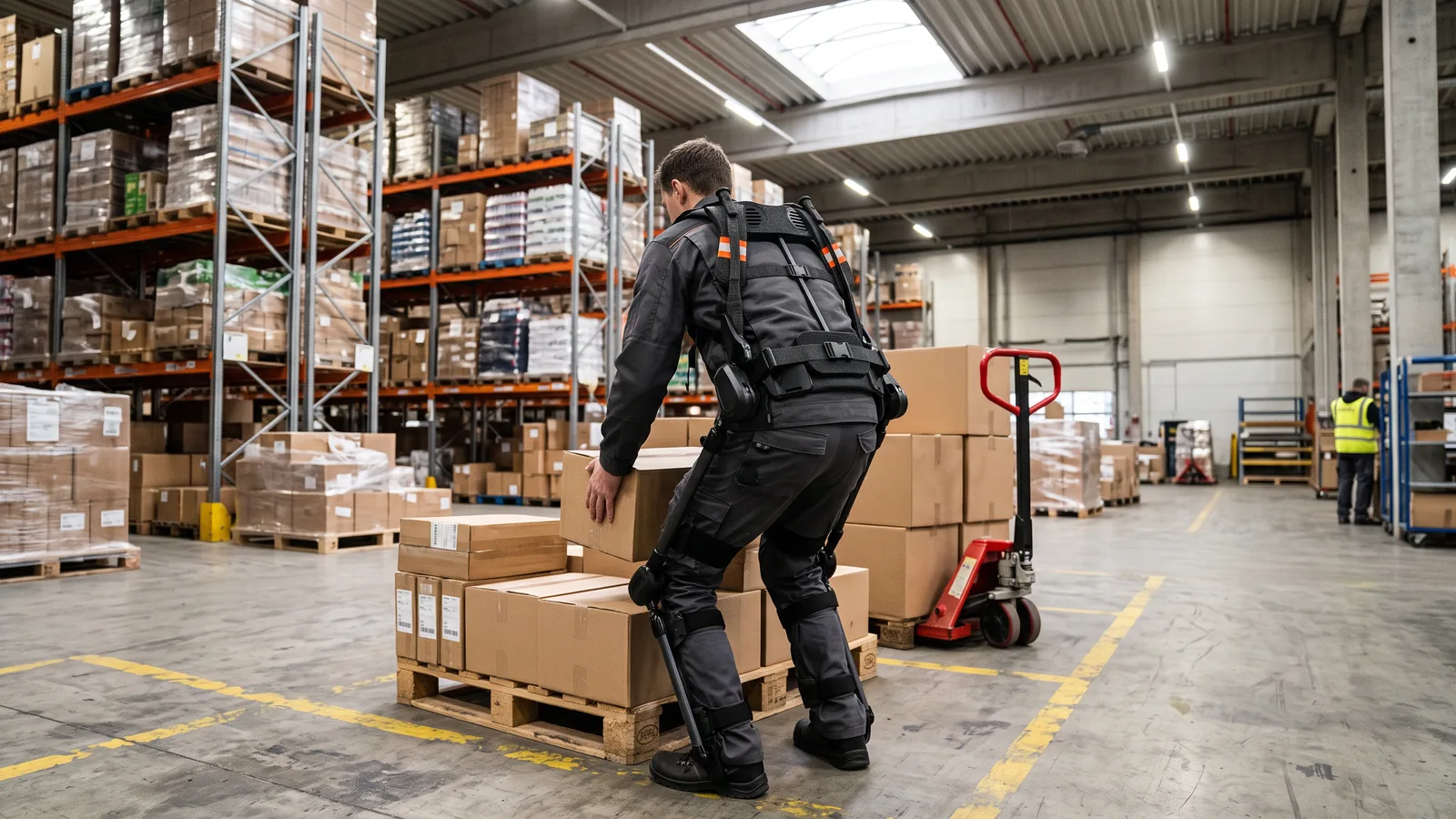 Exoskeletons for manual handlingThe exoskeleton assists the operator on every lift, without changing the workstation or the movement. The worker stays in control; the device reduces the strain on the back or shoulders.
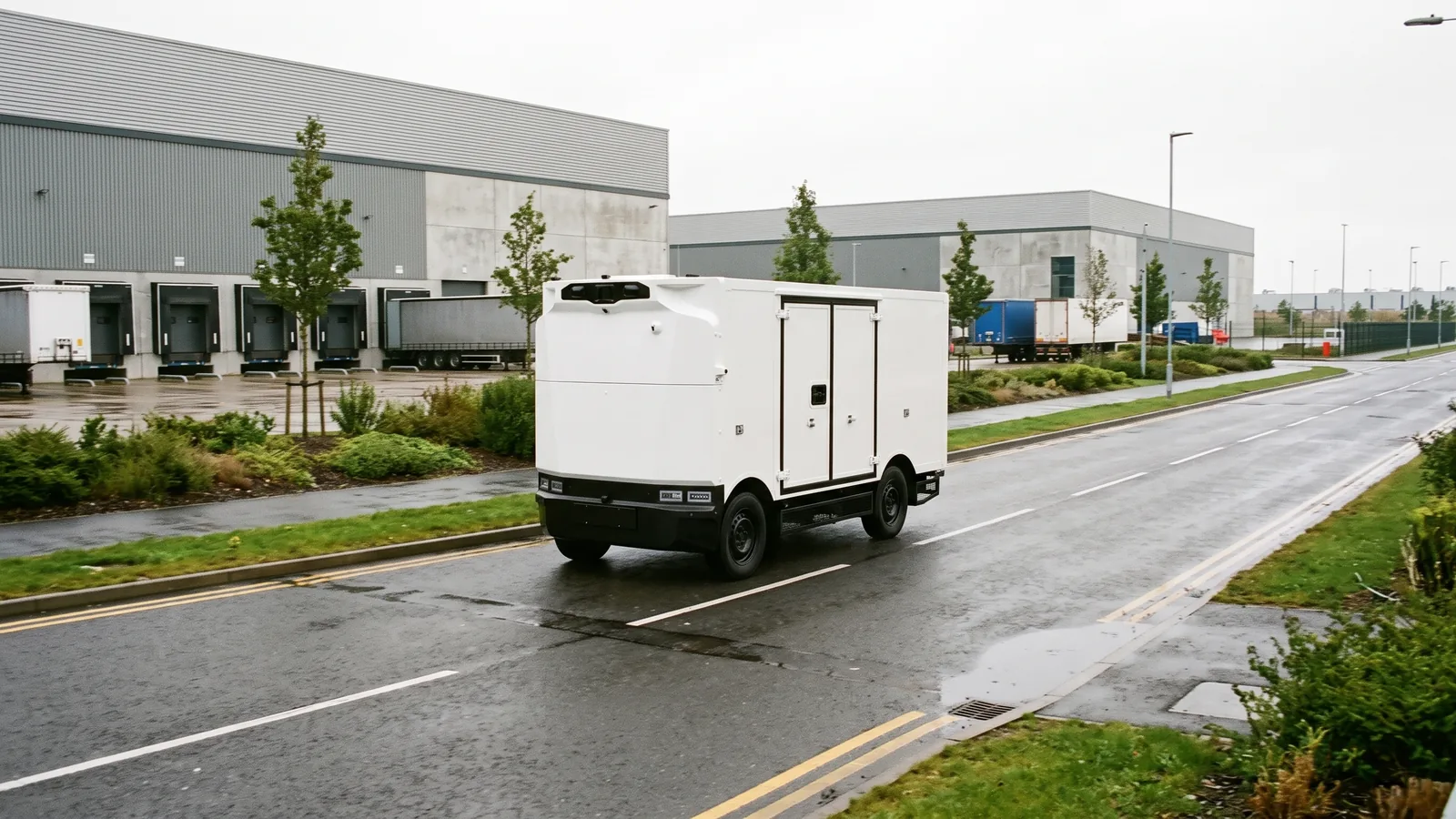 Autonomous last-mile deliveryThe autonomous vehicle carries parcels and goods between a warehouse, delivery points or the buildings of a site. Teams keep loading, fleet supervision and the customer relationship.
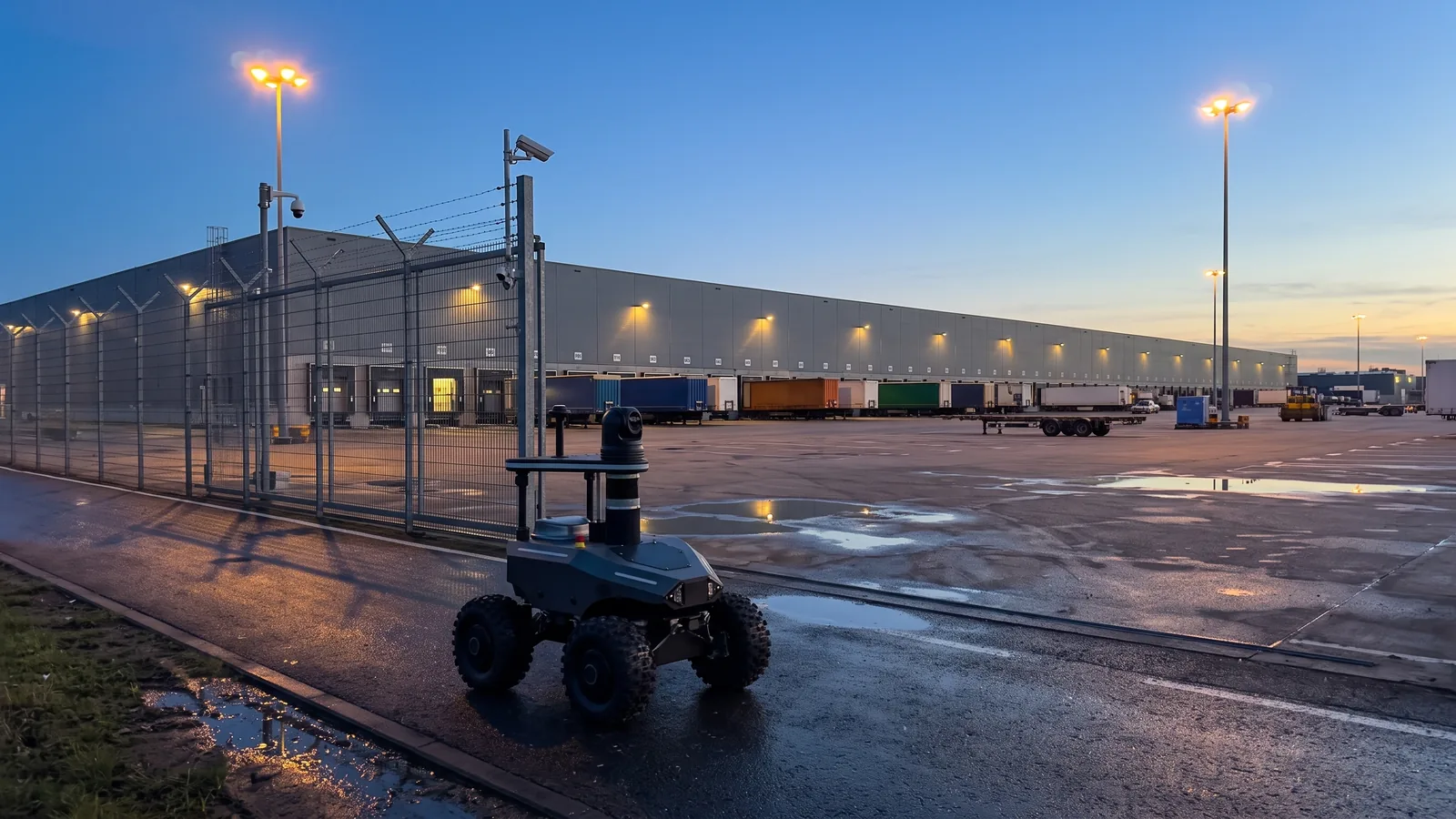 Robotic security for warehouses and logistics yardsThe robot follows the fence, passes the docks and crosses the truck yard on scheduled rounds, then alerts the gatehouse. Guards keep access control, verification and response.
Robots, acquisition mode and delivery terms, in one written proposal.