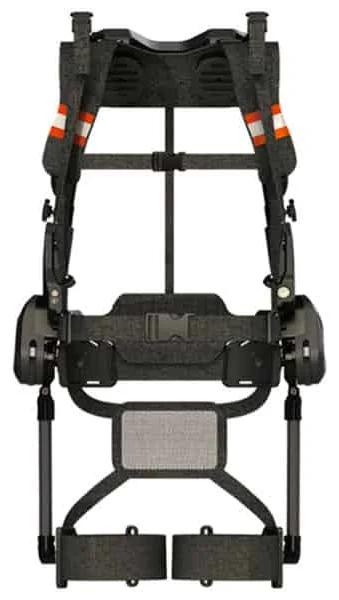
Kenqing
Exoskeletons
- Key feature
- 40 kg lift assist
- Runtime
- 4–6 h
- Ingress protection
- IP56
On order
Price on request
Updated
USE CASE · LOGISTICS
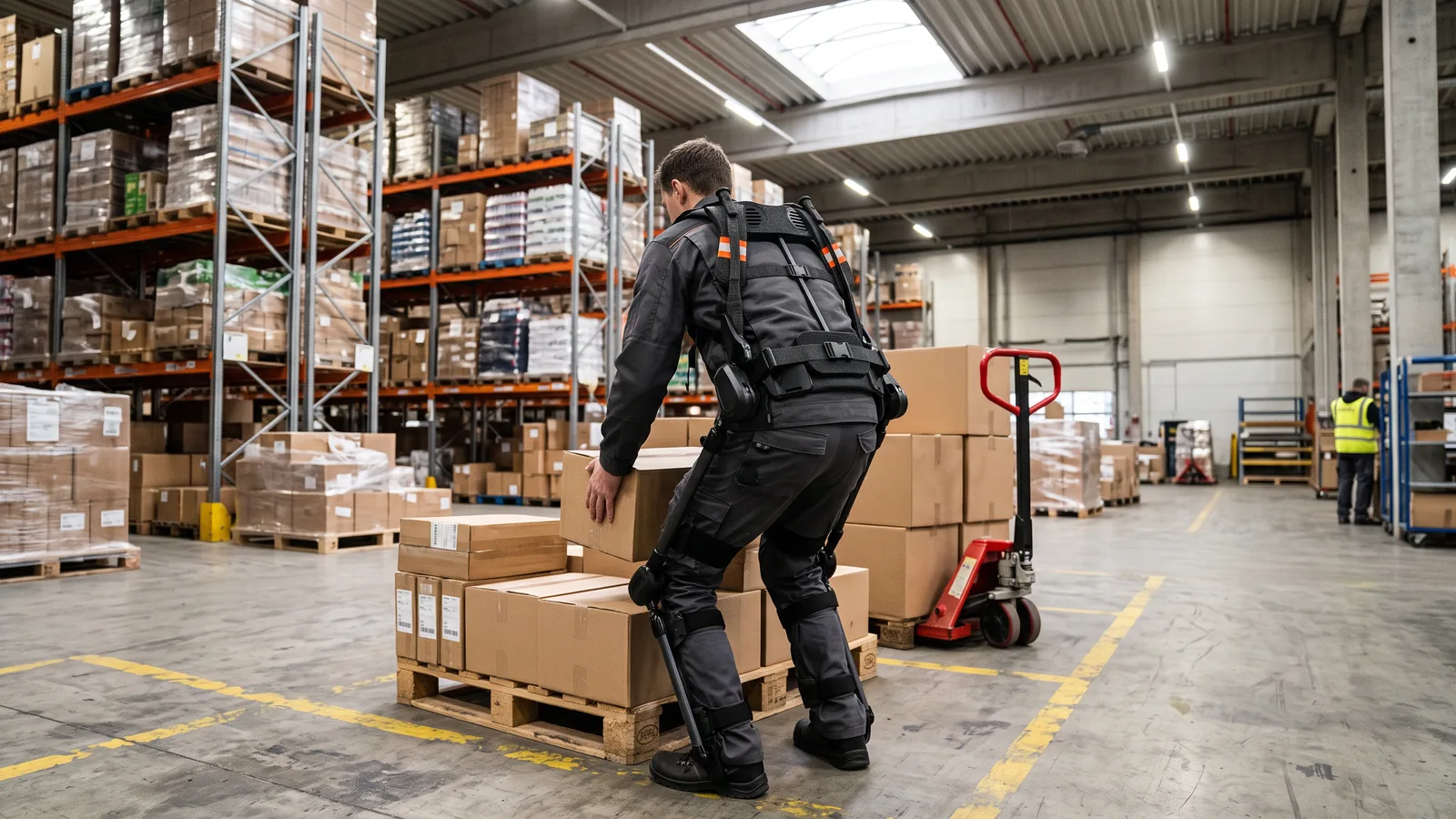
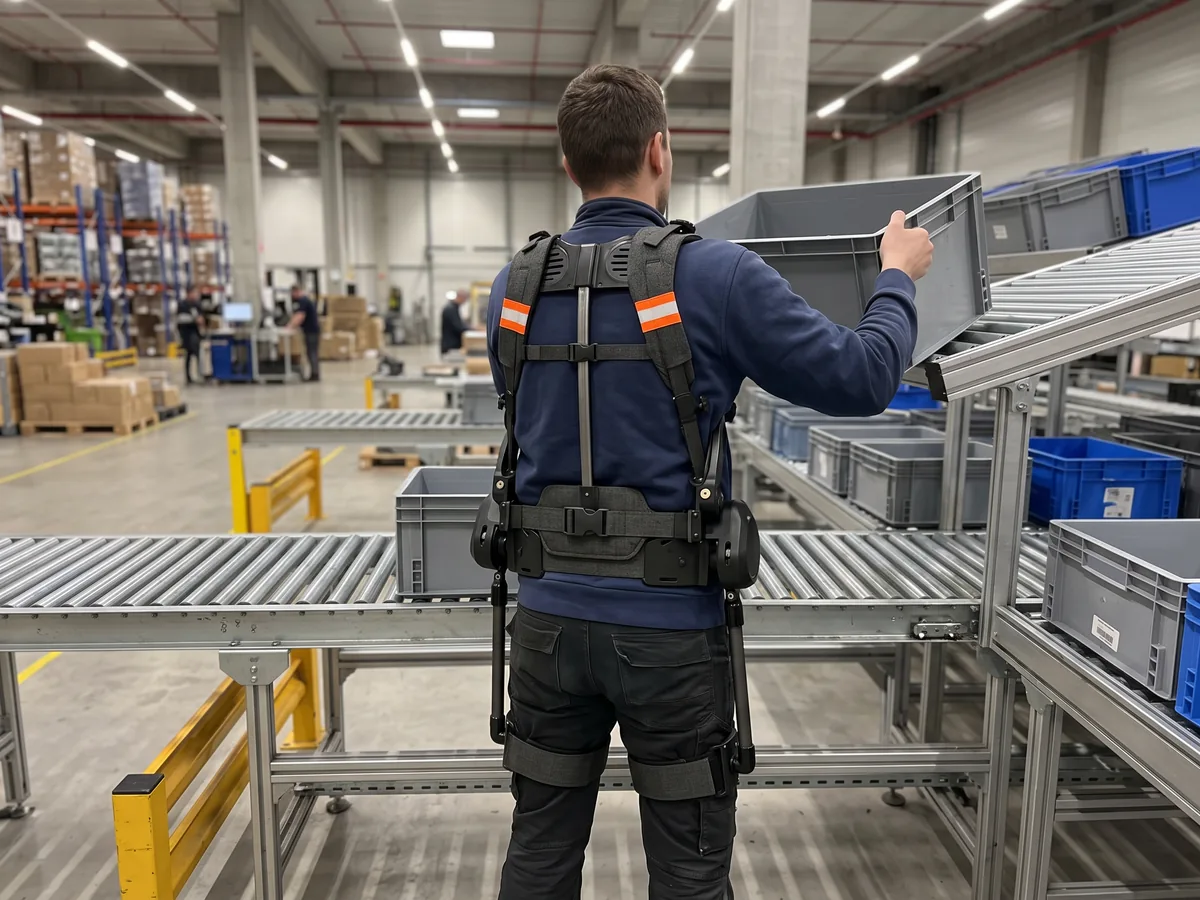
The exoskeleton assists the operator on every lift, without changing the workstation or the movement. The worker stays in control; the device reduces the strain on the back or shoulders.
Updated
A manual handling exoskeleton is a wearable device that assists the back, hips or shoulders during lifts and bent postures, using motors or springs.
The four-motor Kenqing Ant-W1 adapts to loads up to 40 kg, weighs 8.5 kg with battery and runs 4 to 6 hours, or about 2,000 lifts, according to its manufacturer.
Robot Distribution organises on-the-job trials, delivers the devices, trains users and maintains them, to buy, rent or as RaaS.
WHY
In warehouses, on loading docks and at the line side, repeated lifting of parcels and totes loads the lower back and shoulders all day. These movements are one of the causes of musculoskeletal disorders among logistics operators.
The exoskeleton does not replace workstation design or mechanical aids: it complements them where manual handling remains necessary. Powered models assist heavy loads; lighter passive models relieve repeated bending. Exoskeletons sold as personal protective equipment fall under Regulation (EU) 2016/425.
HOW IT RUNS
With the health and safety manager, we identify the stations with repeated lifting: loads, frequency, pick-up and set-down heights, postures.
Volunteer operators try several models in real conditions: powered for heavy loads, passive for frequent bending, shoulder models for overhead work.
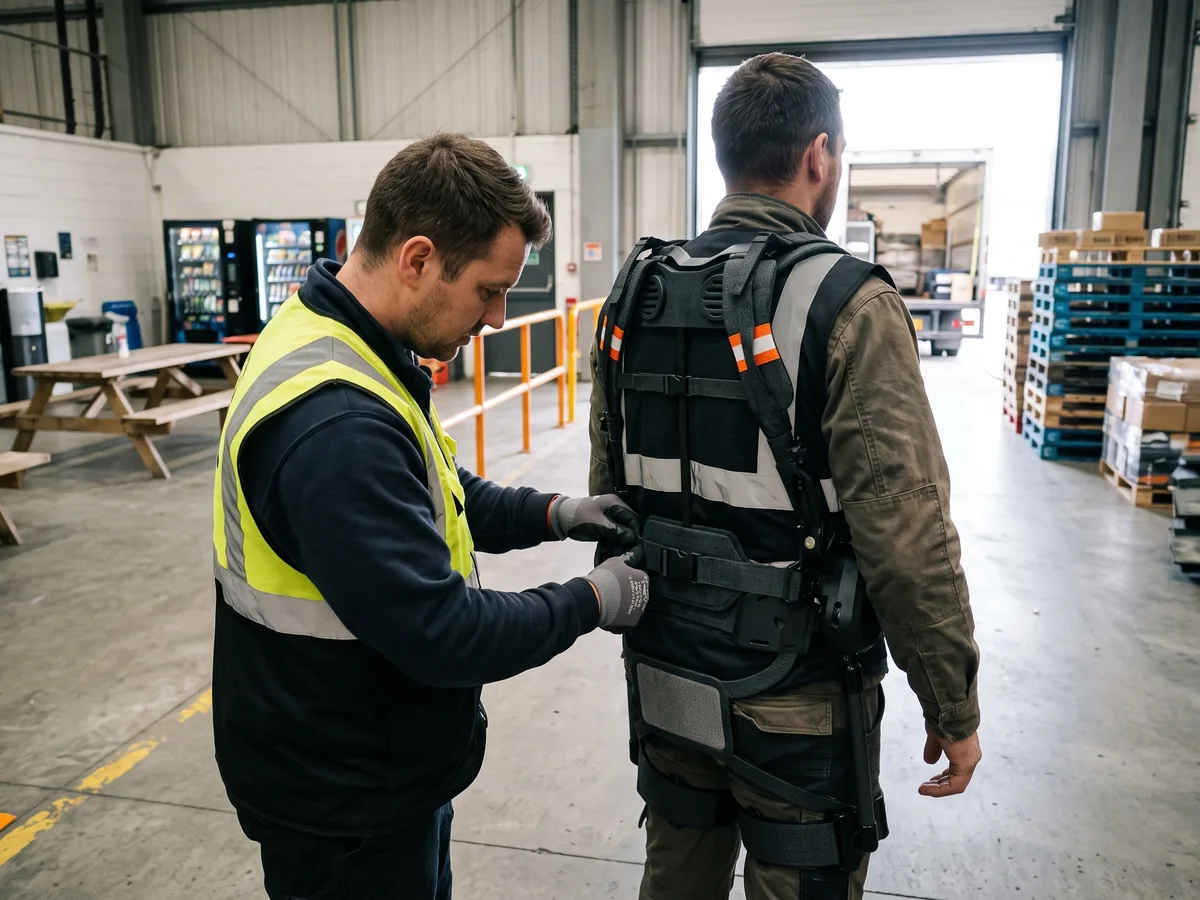
Each device is adjusted to the user; the Kenqing Ant-W1 fits people from 160 to 190 cm tall, according to its manufacturer. Training covers putting it on, adjustments and good lifting technique.
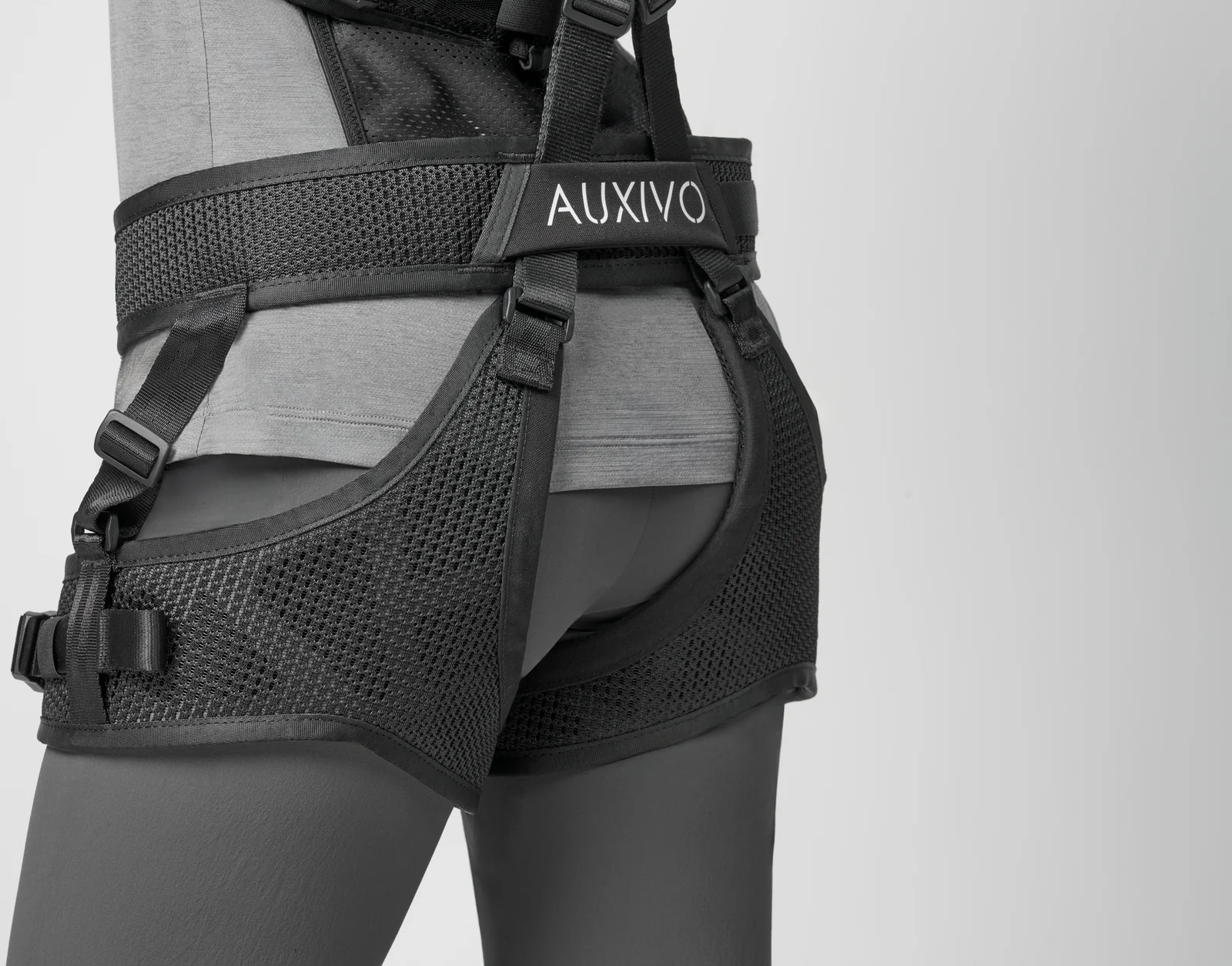
We collect user feedback, organise charging and replace wear parts: the back elements of the Auxivo LiftSuit 2.0 are changed after one year or 150,000 lifts, according to its manufacturer.
THE ROBOTS
Kenqing
Exoskeletons
Exoskeletons
Exoskeletons
Exoskeletons
Exoskeletons
Comau
Exoskeletons
BEFORE INSTALLING
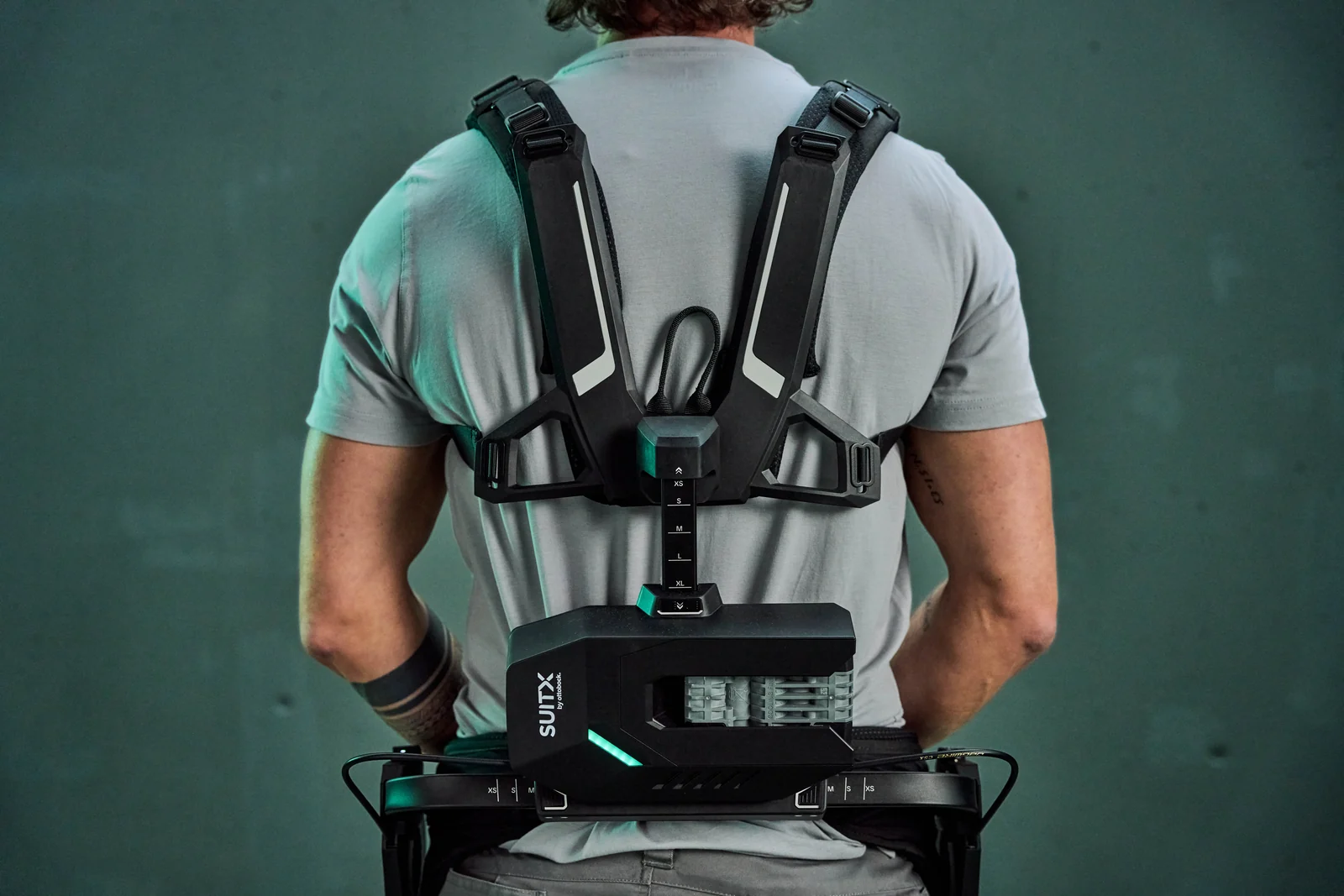
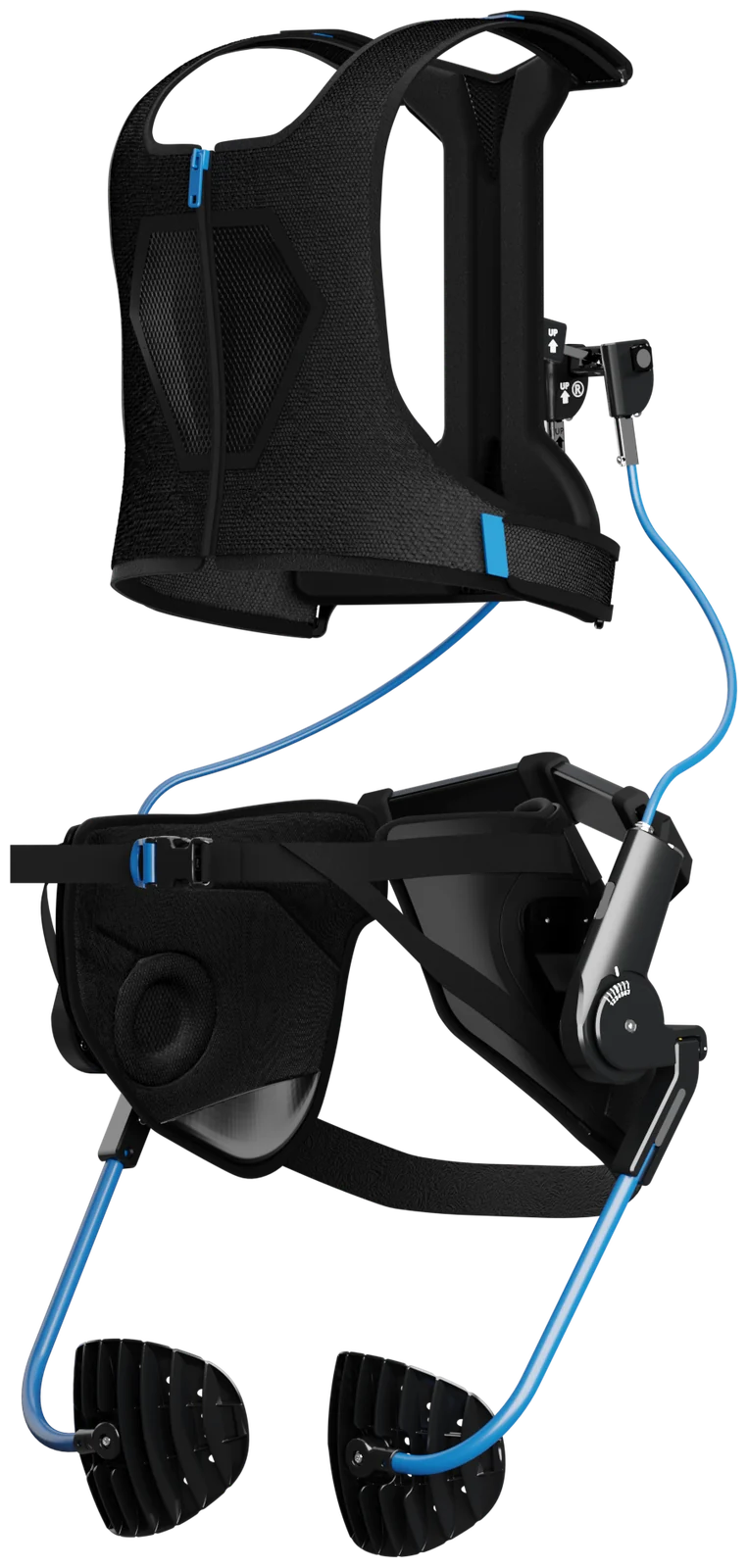
Load weights, lifts per hour and heights guide the model: up to 30 kg of assistance for the ULS FIT-HV Pro, up to 17 kg of support for the SUITX IX BACK VOLTON, according to their manufacturers.
Shift length, breaks and charging options are noted: the SUITX IX BACK VOLTON states up to 10 hours of runtime, the ULS FIT-HV Pro 3 to 8 hours with a recharge in about 60 minutes, according to their manufacturers.
Temperature, dust and humidity are checked: the Kenqing Ant-W1 is rated IP56 for -20 °C to 45 °C and the Laevo FLEX was tested to IP55, according to their manufacturers.
Narrow aisles, getting on a truck and walking between lifts are observed: the Laevo FLEX can be worn while walking without switching it off, according to its manufacturer.
RULES AND STANDARDS
An exoskeleton enters a framework of labour law and prevention guidance that applies before, during and after the trials.
Articles R4541-1 et seq. of the French Labour Code require the employer to assess handling risks and to redesign workstations, with mechanical aids where possible. Article R4541-9 caps habitual carrying at 55 kg without medical fitness approval, and never above 105 kg. An exoskeleton does not lift these limits: check that the workstation analysis is documented before choosing a device.
Article L2312-8 of the Labour Code lists the introduction of new technologies and any major change to health and safety conditions among the subjects on which the works council (CSE) is informed and consulted. Equipping a team with exoskeletons can fall within this scope. Plan the consultation in the project schedule, before the devices are deployed beyond the trials.
INRS guide ED 6315 (2nd edition, 2022) describes three phases: defining the need after looking for collective prevention measures, assessing the human–exoskeleton interaction with volunteer operators in real work, then short, medium and long-term follow-up. It asks for the occupational health service to be involved throughout. Use it as the frame for your trial protocol.
ISO 18646-4:2021 sets performance criteria and test methods for lower-back support robots, whatever their drive. It does not cover safety validation. When comparing powered back exoskeletons, ask the supplier whether performance figures were measured according to this standard, and check safety and conformity marking separately.
General information, not legal advice.
FAQ
Powered models, such as the Kenqing Ant-W1 or the ULS FIT-HV Pro, give active assistance through motors and run on a battery. Passive models, such as the Auxivo LiftSuit 2.0 or the Laevo FLEX, return energy stored in elastic elements or gas springs, with no battery, according to their manufacturers.
According to the manufacturer: 5.6 kg for the ULS FIT-HV Pro, 5.7 kg including battery for the SUITX IX BACK VOLTON, 8.5 kg including battery for the Kenqing Ant-W1.
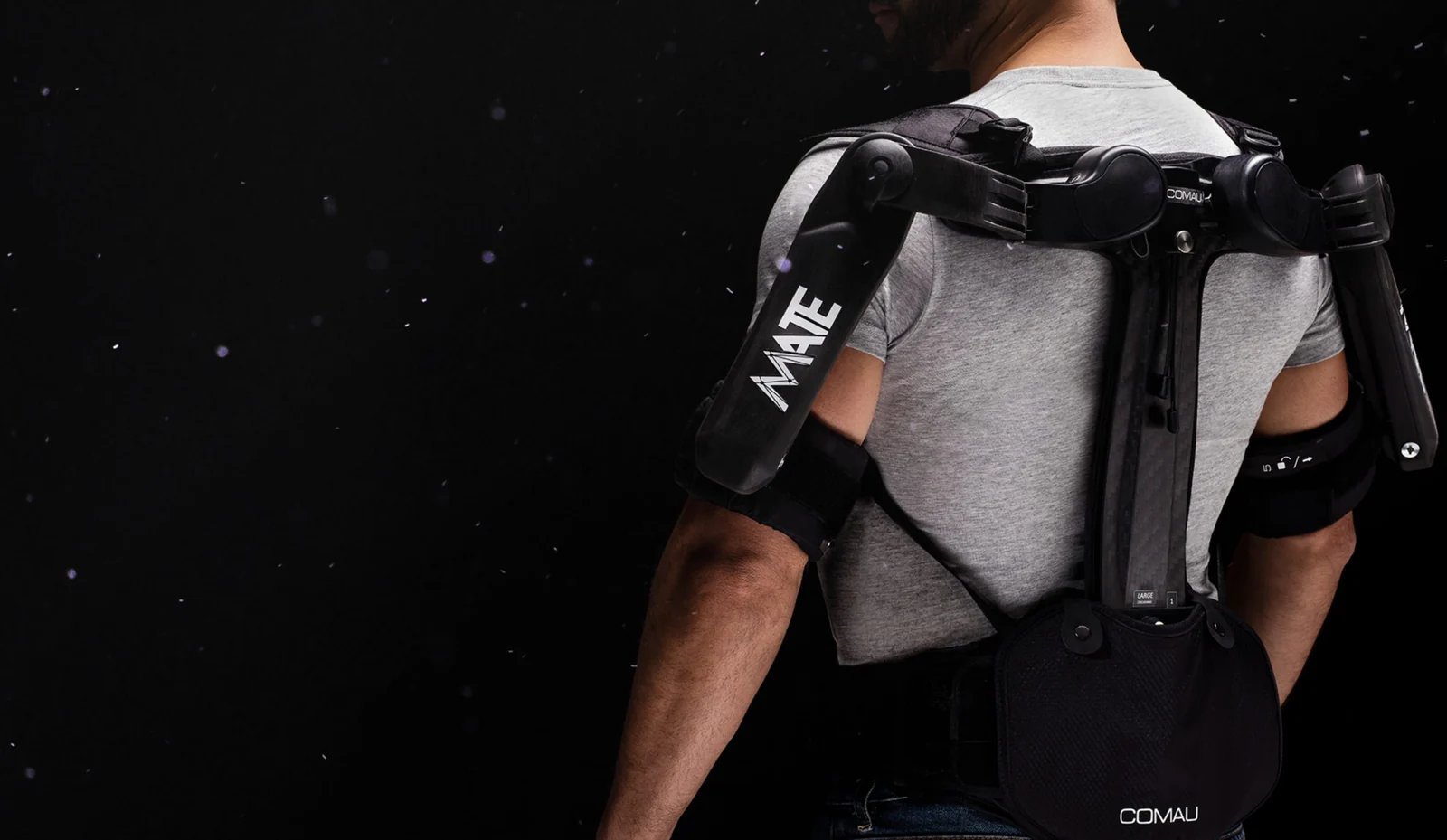
Yes: the Comau MATE-XT is a passive carbon-fibre shoulder exoskeleton for overhead work, with peak torque at 90° of shoulder flexion, for indoor and outdoor use, according to its manufacturer.
Some are: the Laevo FLEX is certified as personal protective equipment, according to its manufacturer, and then falls under Regulation (EU) 2016/425. We check the marking of each model with you.
Models adjust to body shape: the Comau MATE-XT comes in sizes S and L and the Laevo FLEX with a men's or women's vest, according to their manufacturers. On-the-job trials and the occupational doctor's opinion guide the choice.
USE CASES
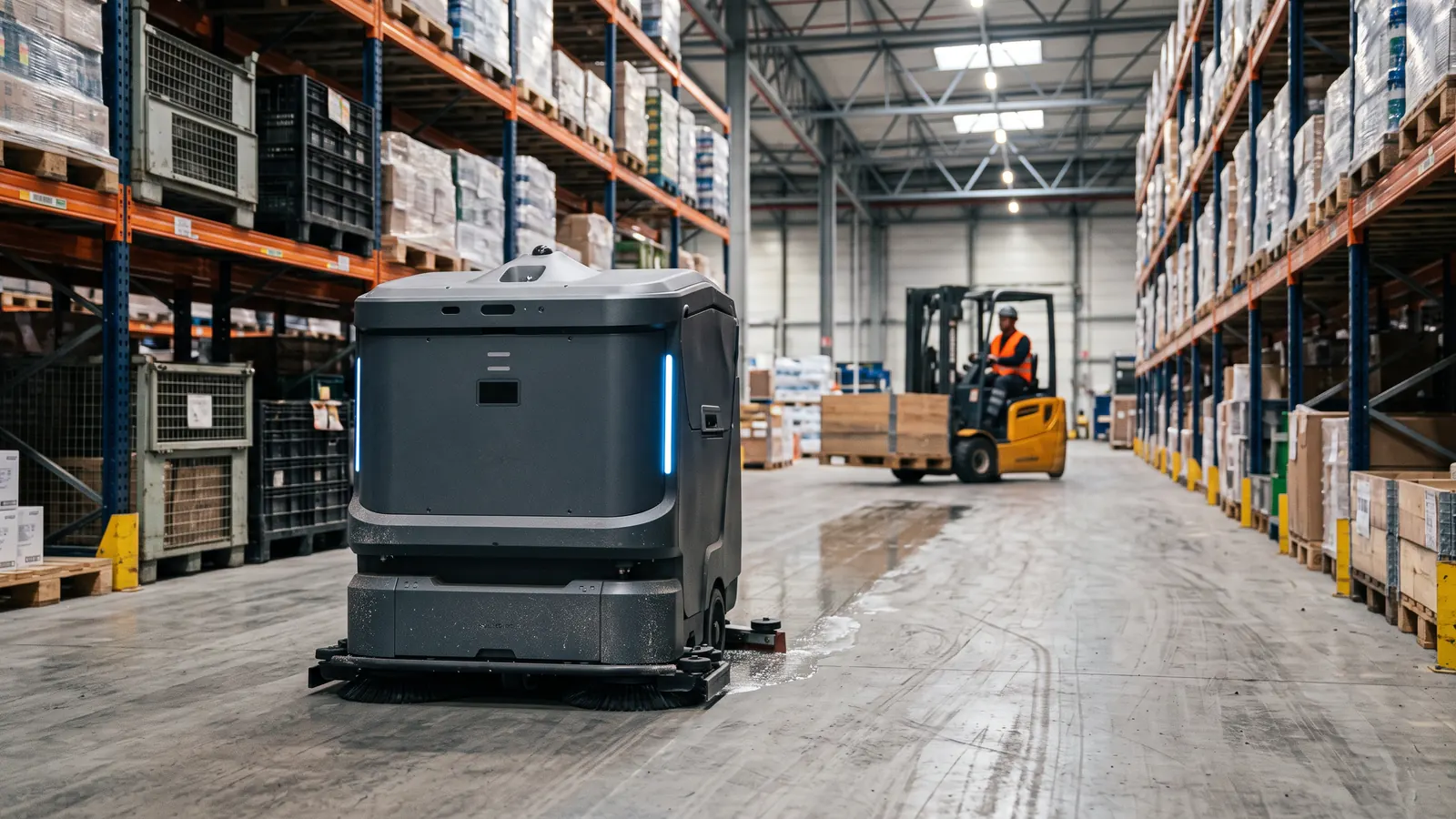 Warehouse and factory floor scrubbingThe robot scrubs aisles and traffic areas without stopping operations. No forklift driver tied up on the scrubber, and the floor stays clean from one shift to the next.
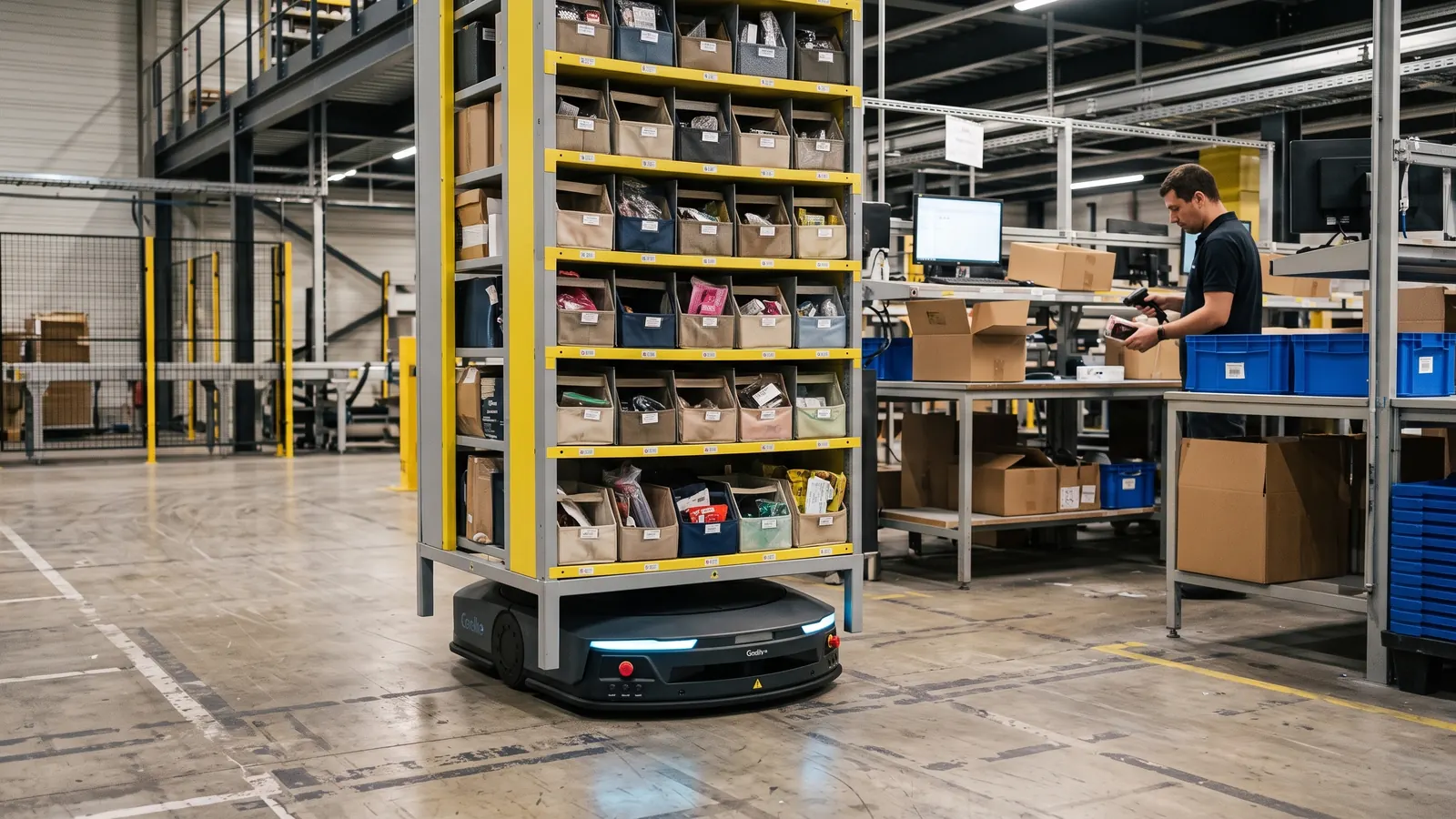 Goods-to-person pickingThe robots lift mobile shelves and bring them to the picking station. The picker stays at the station: picking, checking and packing.
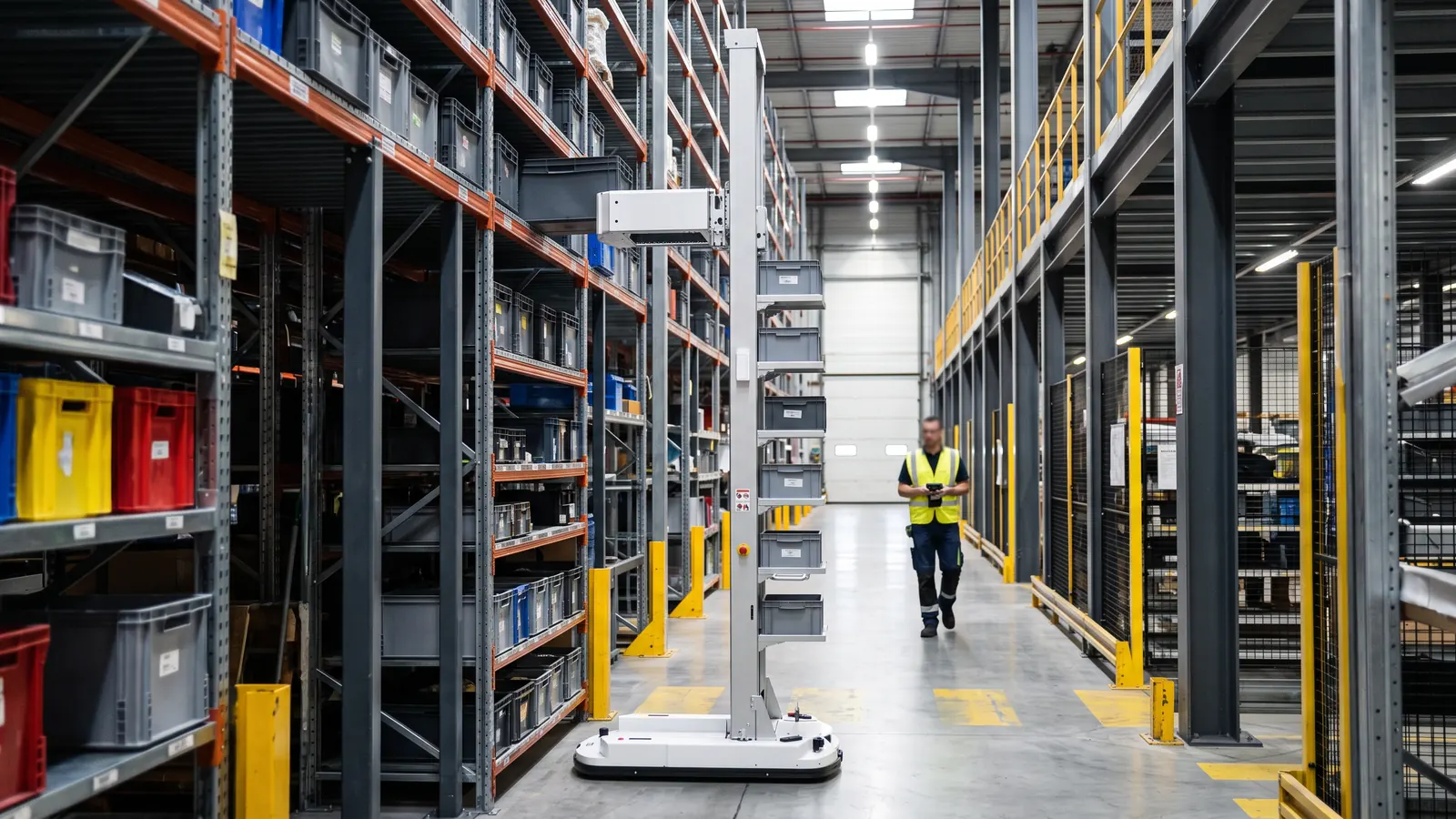 Tote storage and retrievalThe robots climb to fetch totes and cartons from the racks and bring them to the station. The picker picks, replenishes and packs without ladders or carts.
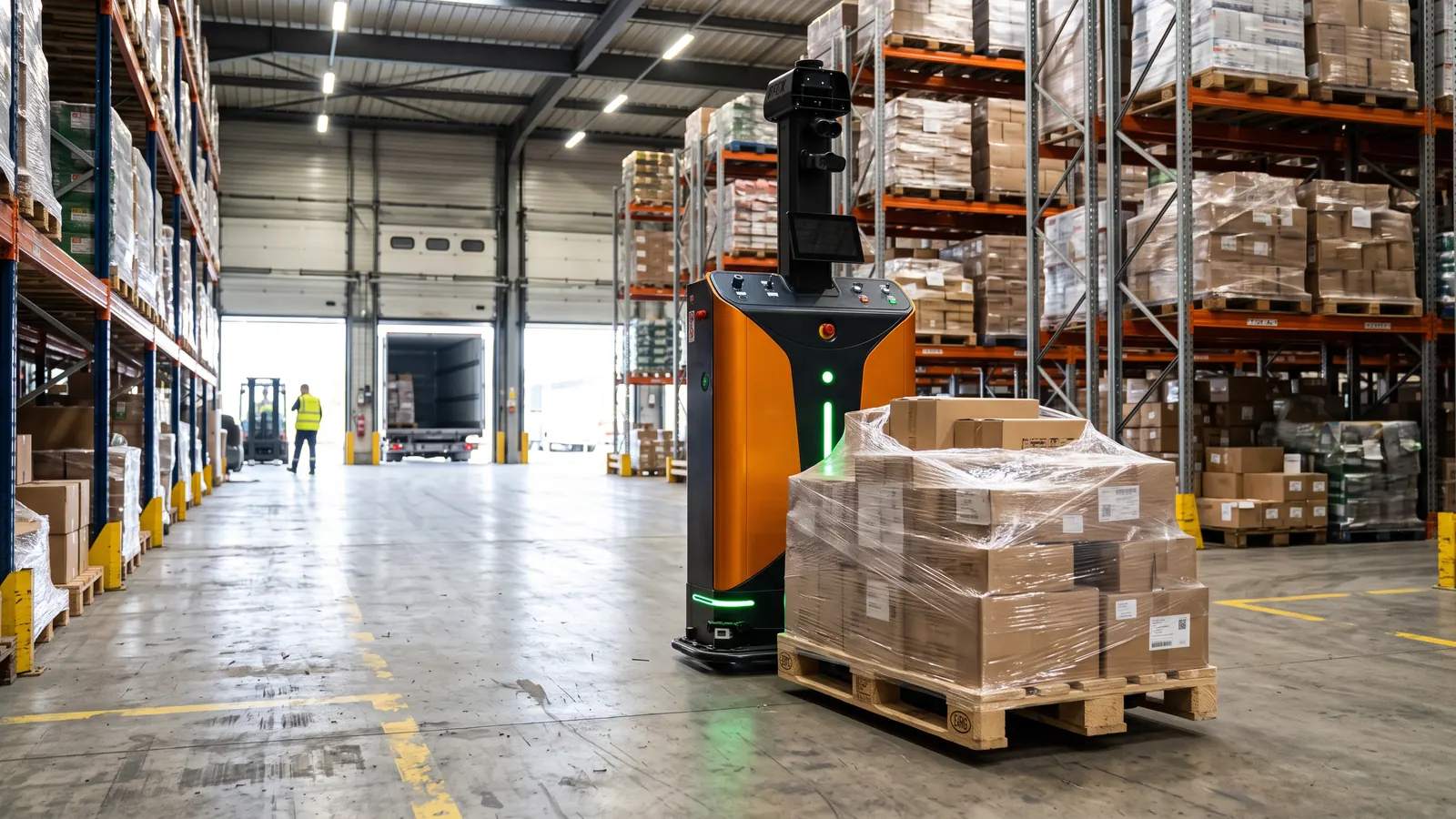 Autonomous pallet forkliftThe autonomous forklift runs the repetitive pallet shuttles between goods-in, storage and production. Drivers keep the loading, special cases and checks.
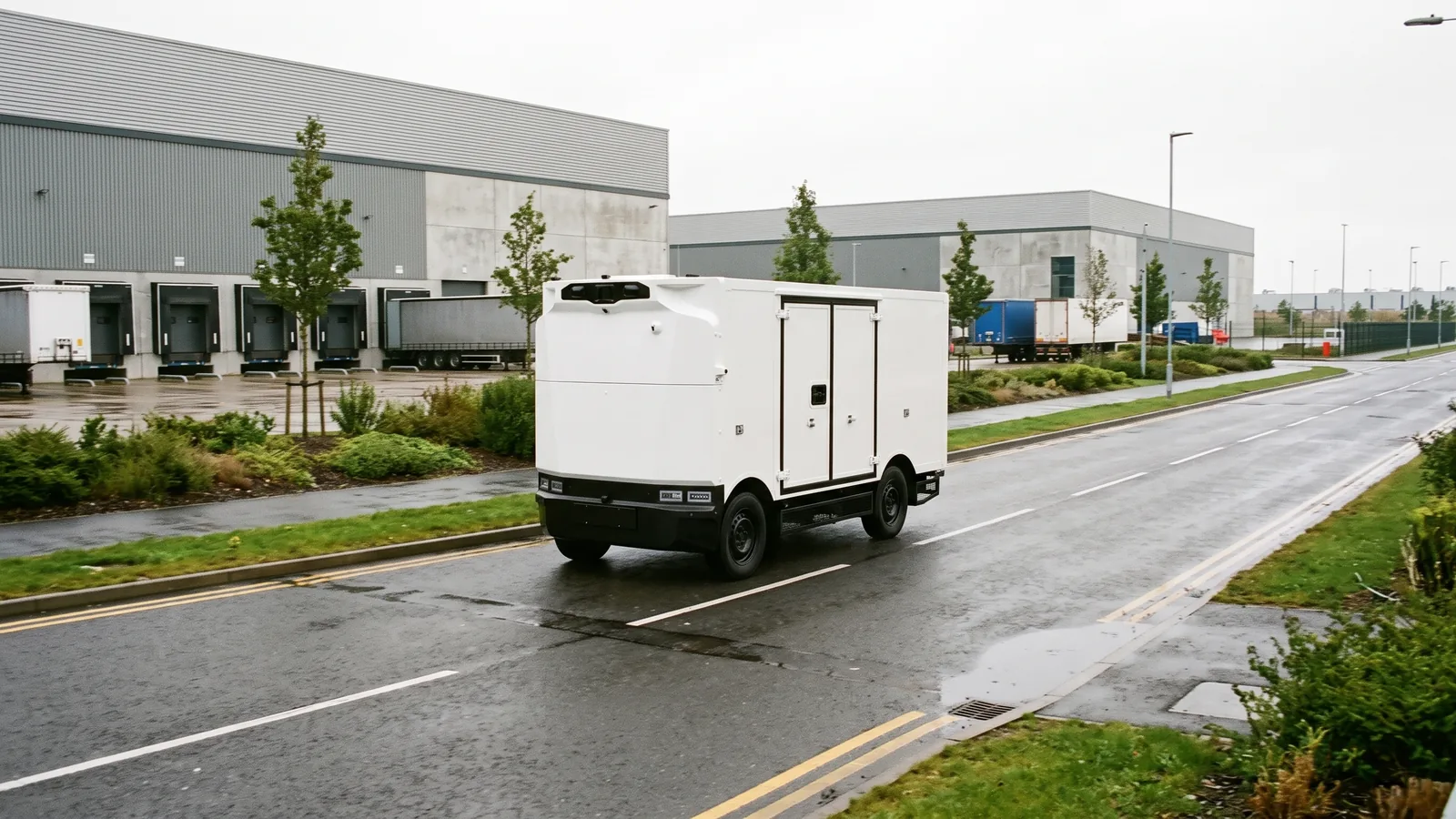 Autonomous last-mile deliveryThe autonomous vehicle carries parcels and goods between a warehouse, delivery points or the buildings of a site. Teams keep loading, fleet supervision and the customer relationship.
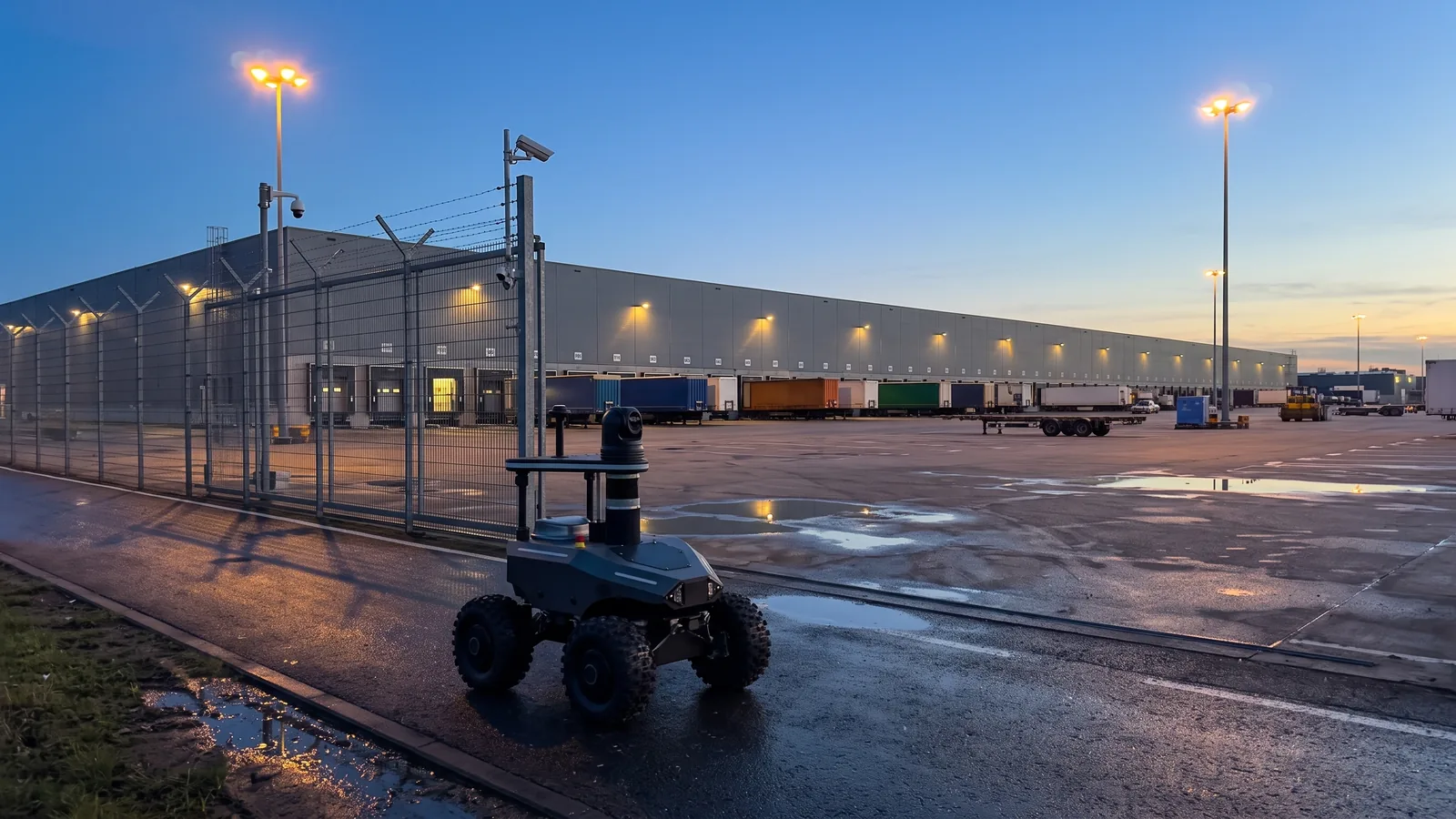 Robotic security for warehouses and logistics yardsThe robot follows the fence, passes the docks and crosses the truck yard on scheduled rounds, then alerts the gatehouse. Guards keep access control, verification and response.
Robots, acquisition mode and delivery terms, in one written proposal.