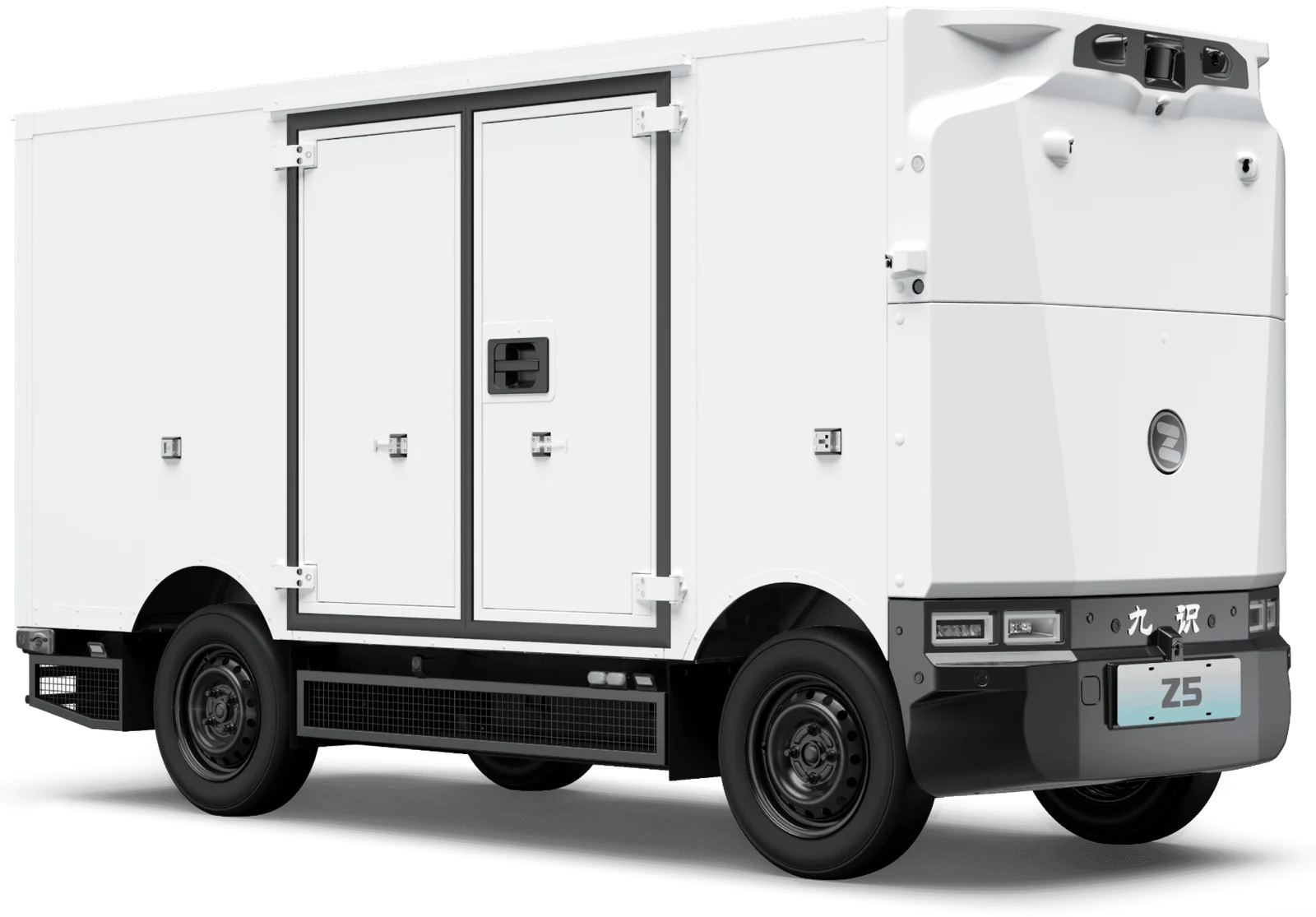
Zelos
Last-mile delivery
- Payload
- 1,000 kg
- Key feature
- 6.5 m³ cargo
- Key feature
- Up to 260 km range
On order
Price on request
Updated
USE CASE · LOGISTICS
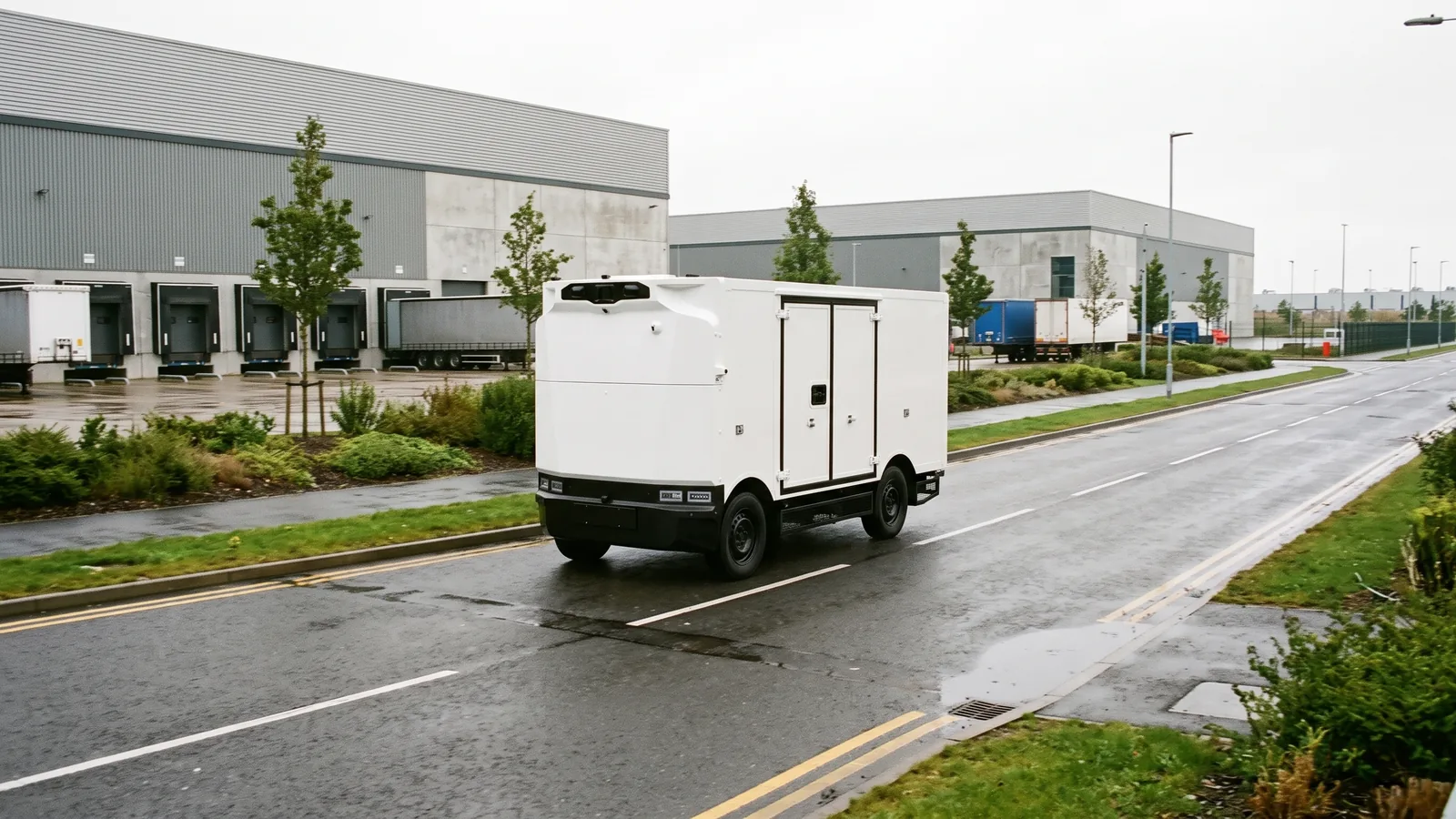
The autonomous vehicle carries parcels and goods between a warehouse, delivery points or the buildings of a site. Teams keep loading, fleet supervision and the customer relationship.
Updated
An autonomous delivery vehicle is an electric van with no driver on board that carries parcels and goods on a defined route, on a private site or, with authorisation, on public roads.
The SAE Level 4 Zelos Z5 carries up to 1,000 kg in 6 m³ and covers up to 260 km per charge with the long-range battery, according to its manufacturer.
Robot Distribution studies the route and the regulatory framework, delivers the vehicles, trains the supervisors and maintains them, to buy, rent or as RaaS.
WHY
Between a logistics hub and stores, or between the buildings of an industrial park or campus, the same goods shuttles run every day. They tie up drivers on short, repetitive trips in a trade where hiring is difficult.
The autonomous vehicle runs these trips on a mapped route; a supervisor follows the fleet remotely and steps in when needed. On public roads, operation requires national authorisation: in France, trials on open roads fall under Decree No. 2018-211 of 28 March 2018. Private sites, campuses and industrial parks are a place to start.
HOW IT RUNS
We record the trips, volumes, loading and delivery points, the status of the roads (private or public) and the authorisations needed.
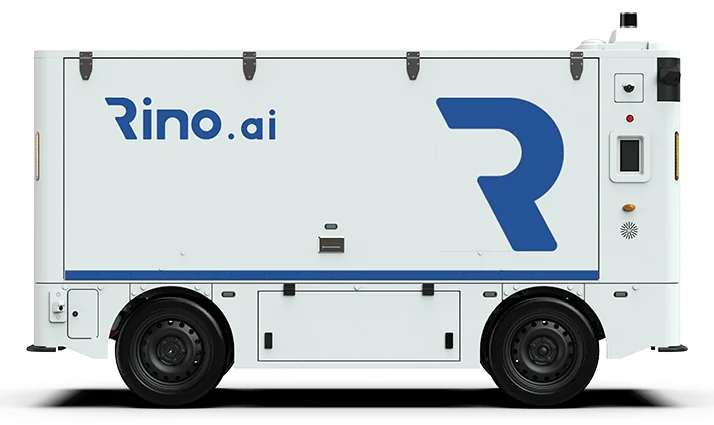
The route is mapped and stops are defined. The White Rhino R5 combines lidar and cameras, and its multi-compartment body serves multi-drop rounds, according to its manufacturer.
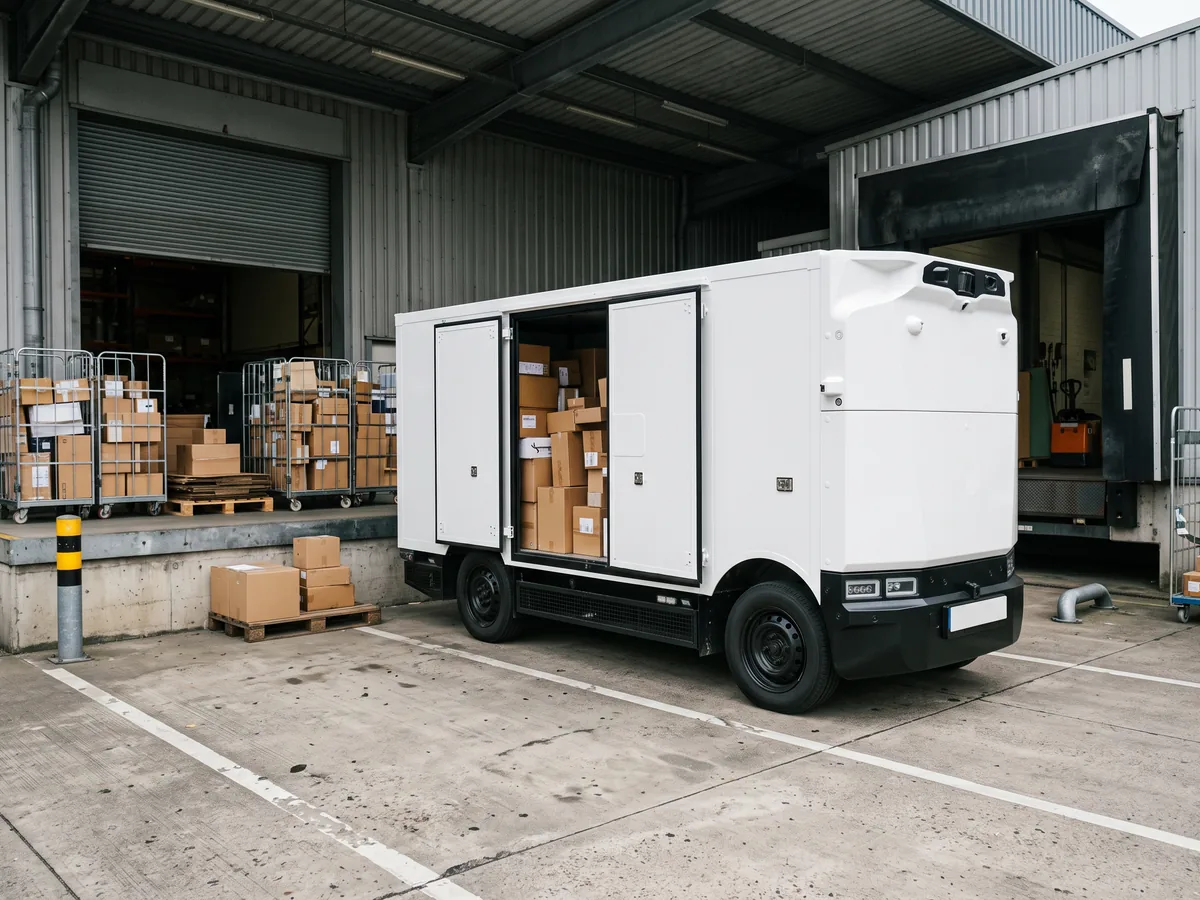
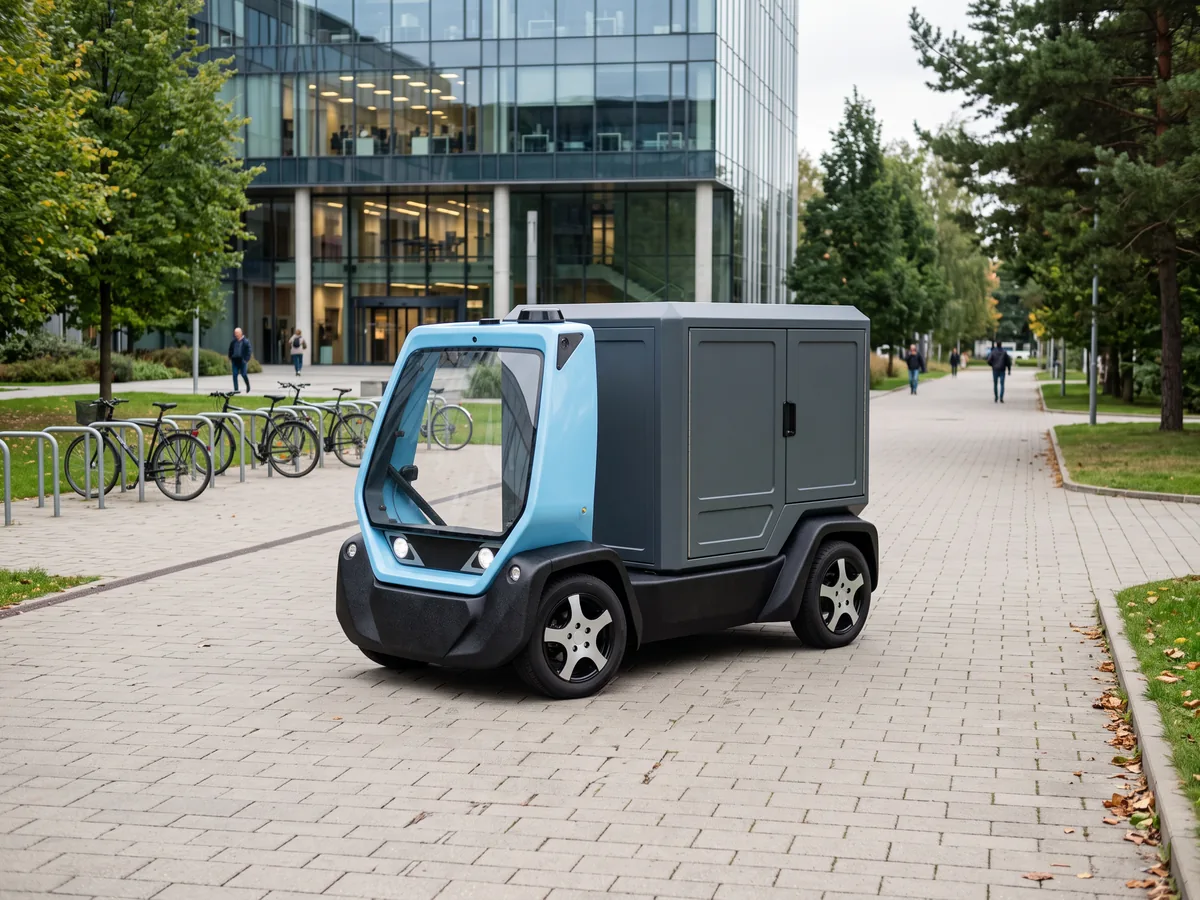
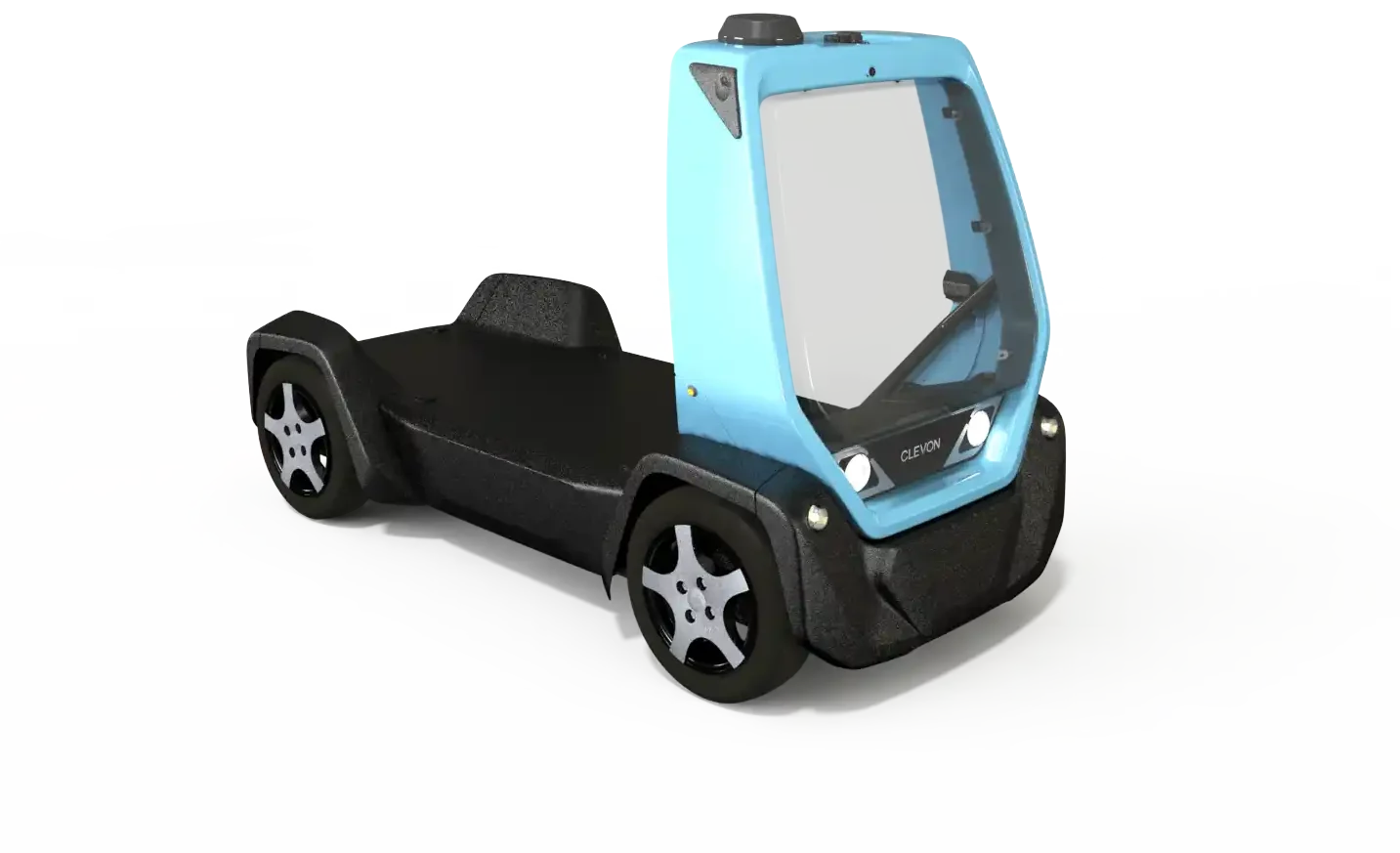
The team loads the vehicle at the dock; the CLEVON 1 takes interchangeable top modules (cargo box, parcel locker, flat bed), according to its manufacturer.
The vehicle drives itself to the delivery points, where recipients collect their goods; an operator supervises the fleet remotely and the vehicle returns to charge.
THE ROBOTS
Zelos
Last-mile delivery
Last-mile delivery
Neolix
Last-mile delivery
Last-mile delivery
BEFORE INSTALLING
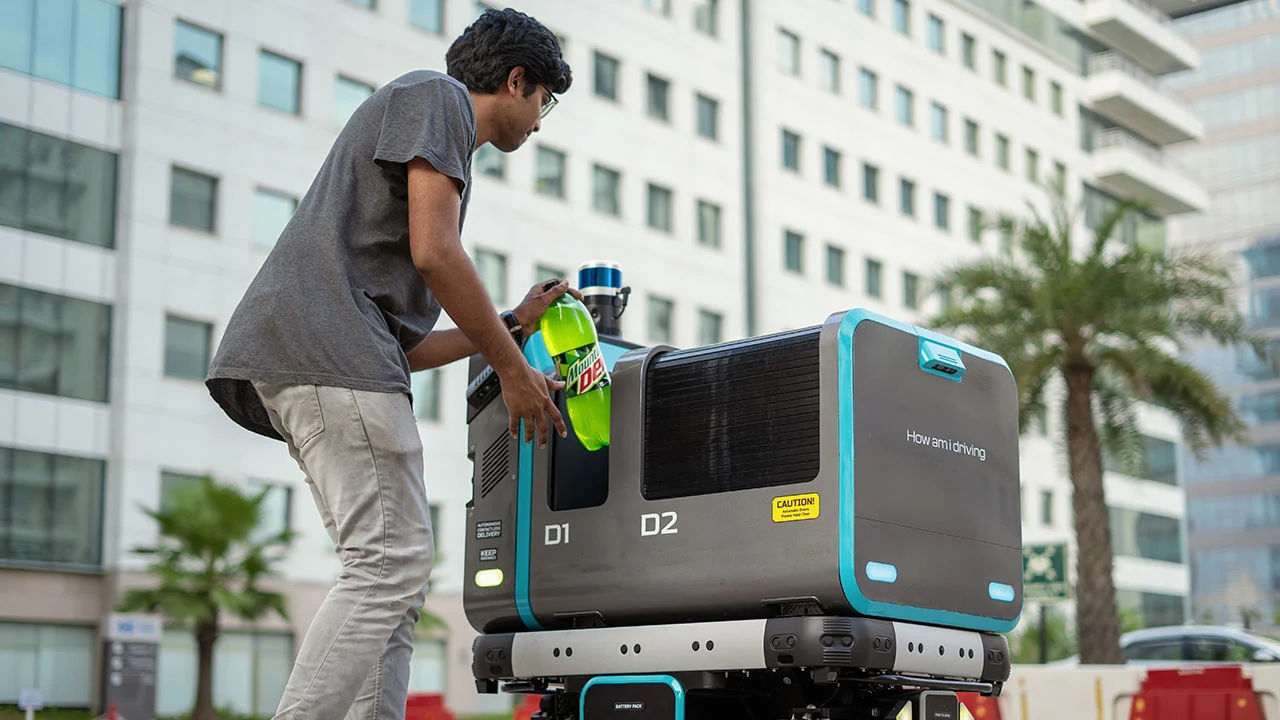
Weight, volume and parcels per round guide the model: 800 kg and 5 m³ for the White Rhino R5, 400 to 500 parcels per trip for the Neolix X3, according to their manufacturers.
Trip lengths and available charging time are calculated: the White Rhino R5 covers 120 km in town and charges in 1.5 h on DC, according to its manufacturer.
Road widths, slopes, junctions, pedestrian traffic and private or public status are noted; they determine which authorisations to apply for.
Mobile network coverage along the route, the supervision station and intervention procedures are agreed with the site operator.
RULES AND STANDARDS
Which text applies depends on the machine: a type-approved driverless van, an experimental vehicle, or a delivery robot that is legally a machine.
This implementing regulation sets how the automated driving system of fully automated M and N vehicles is type-approved, including goods vehicles running in a predefined area or hub-to-hub on a fixed route. It defines the operational design domain, a remote intervention operator who does not drive the vehicle, and in-service reporting by the manufacturer. Ask whether the vehicle holds this approval and for which domain.
Without such approval, a trial on public roads is authorised under Decree No. 2018-211, after the road manager and, if needed, the traffic police authority are consulted. For ten years, the decree also allows derogations from Articles R. 321-15, R. 412-7 and R. 412-8 of the Highway Code for wheeled devices delivering goods on certain carriageways, pavements and verges. The authorisation lists the roads and the maximum number of vehicles.
Regulation (EU) 2023/1230 excludes motor vehicles covered by Regulation (EU) 2018/858, except machinery mounted on them, but its recitals bring vehicles not subject to EU type-approval into scope. A campus, hospital or indoor delivery robot therefore needs CE marking as machinery, under Directive 2006/42/EC today and the new regulation from 20 January 2027.
For these robots, the Machinery Regulation adds requirements for autonomous mobile machinery. According to INRS, the supervision function lets a remote supervisor only start, stop or move the robot to a safe state, and travel must take place in an enclosed space or with person and obstacle detection. Ask how alerts reach the supervisor and what the robot does when contact is lost.
General information, not legal advice.
FAQ
Only with authorisation: trials of vehicles with delegated driving on public roads fall under Decree No. 2018-211 of 28 March 2018. On a private site (logistics park, campus, industrial site), deployment is prepared directly with the site operator.
According to the manufacturer: up to 1,000 kg and 6 m³ for the Zelos Z5, 800 kg and 5 m³ for the White Rhino R5, 400 to 500 parcels per trip for the Neolix X3.
According to the manufacturer: 180 or 260 km depending on the battery for the Zelos Z5; 120 km and 45 km/h for the White Rhino R5; about 70 km or 5 hours and up to 29 km/h for the CLEVON 1, charged from 20 to 80% in about 45 minutes.
Yes: the Ottonomy Ottobot 2.0 drives indoors and outdoors, with four-wheel drive, a crab mode for sideways moves and modular insulated compartments, according to its manufacturer. It suits hospitals, campuses and airports.
A supervisor follows the fleet remotely; with the CLEVON 1, a single operator supervises several vehicles, according to its manufacturer. Intervention procedures are agreed with the site operator.
USE CASES
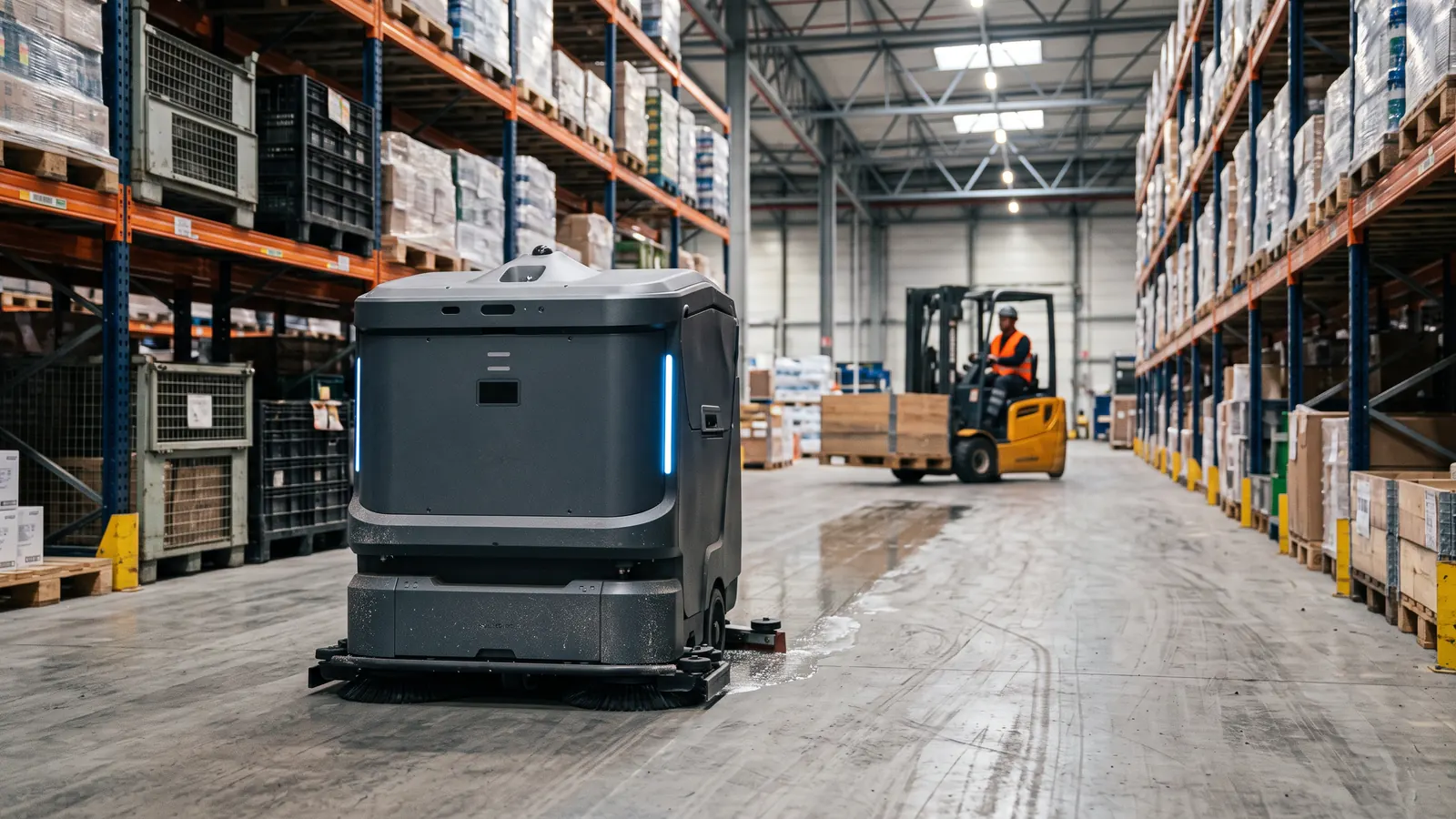 Warehouse and factory floor scrubbingThe robot scrubs aisles and traffic areas without stopping operations. No forklift driver tied up on the scrubber, and the floor stays clean from one shift to the next.
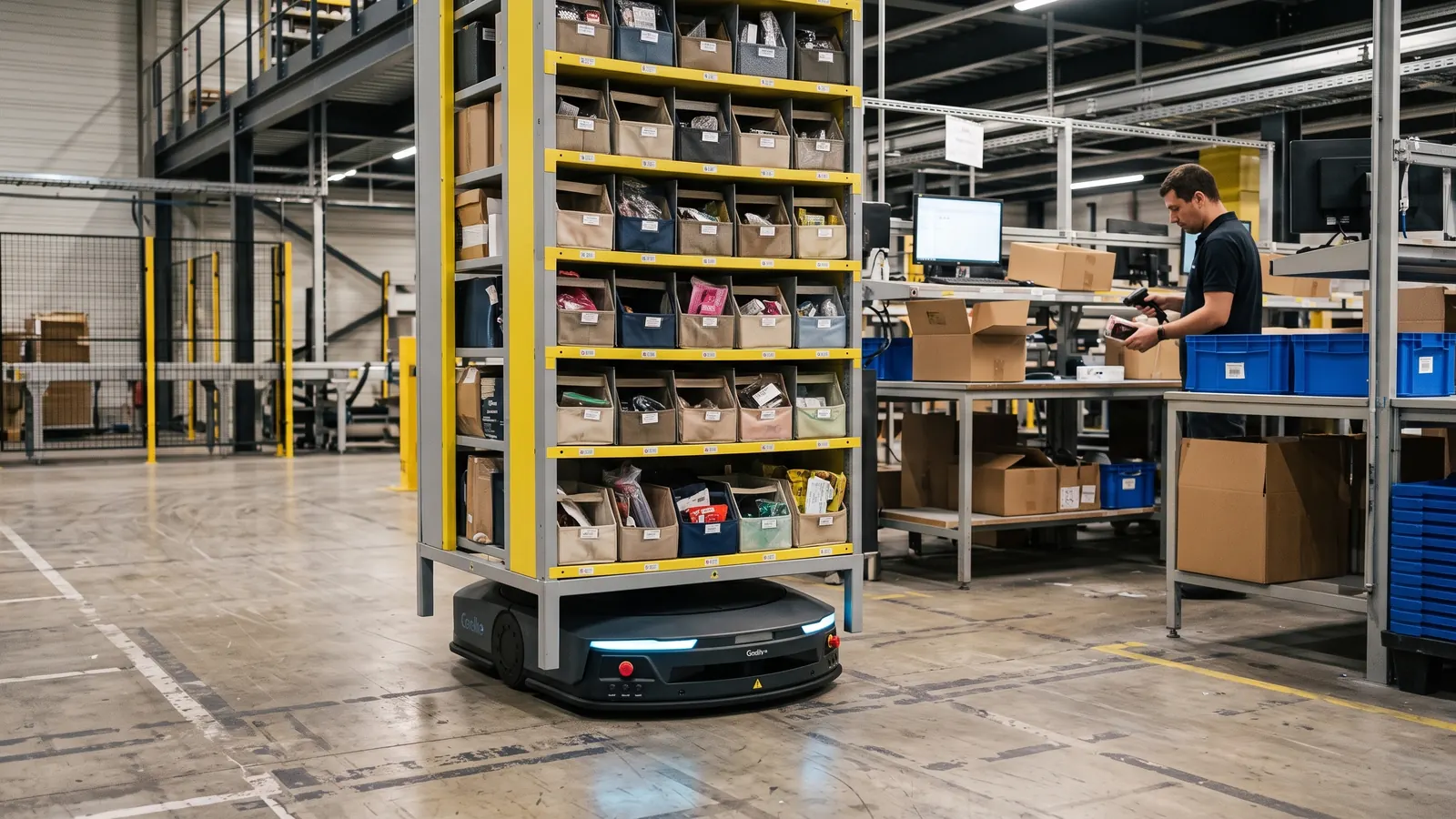 Goods-to-person pickingThe robots lift mobile shelves and bring them to the picking station. The picker stays at the station: picking, checking and packing.
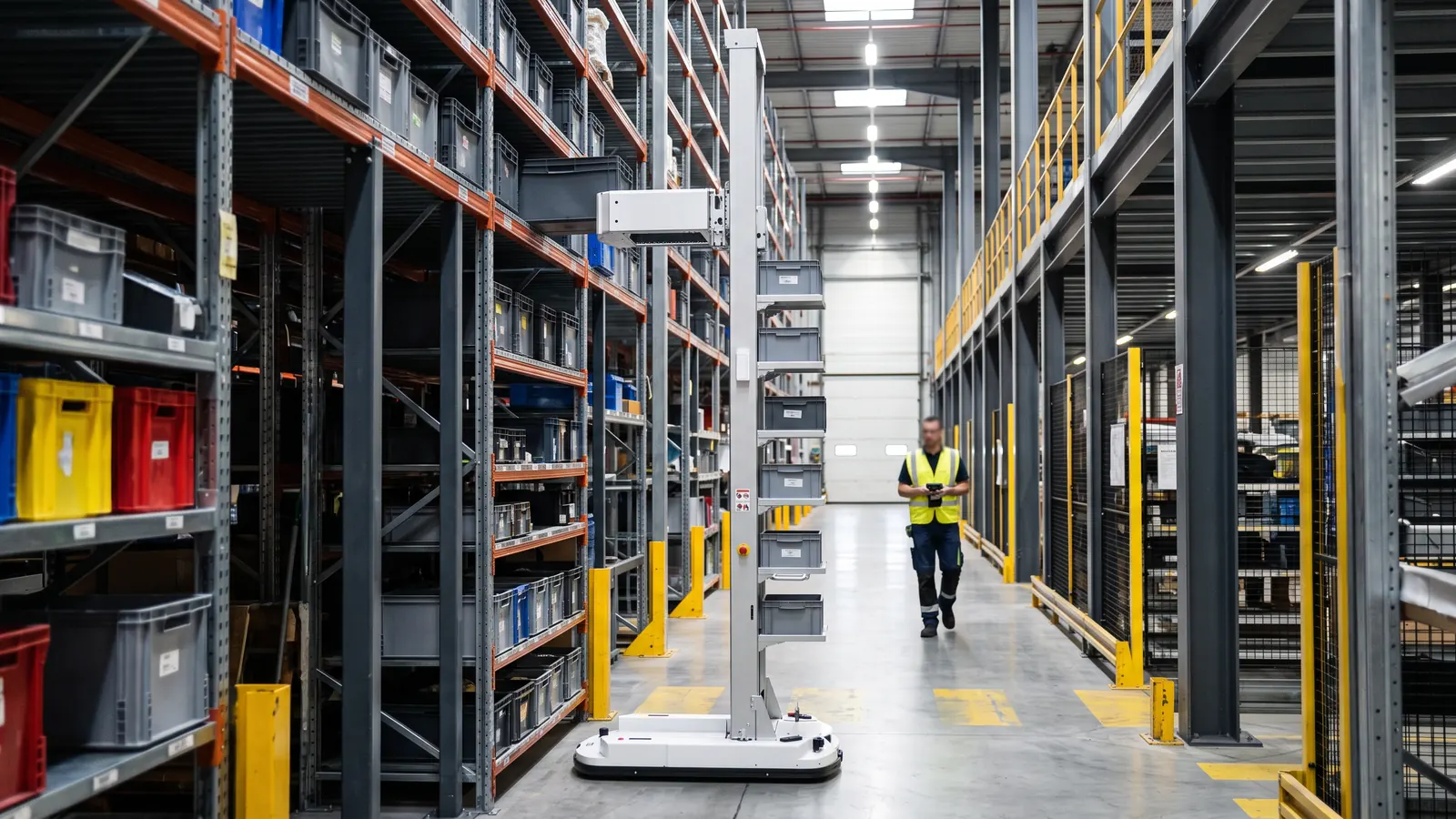 Tote storage and retrievalThe robots climb to fetch totes and cartons from the racks and bring them to the station. The picker picks, replenishes and packs without ladders or carts.
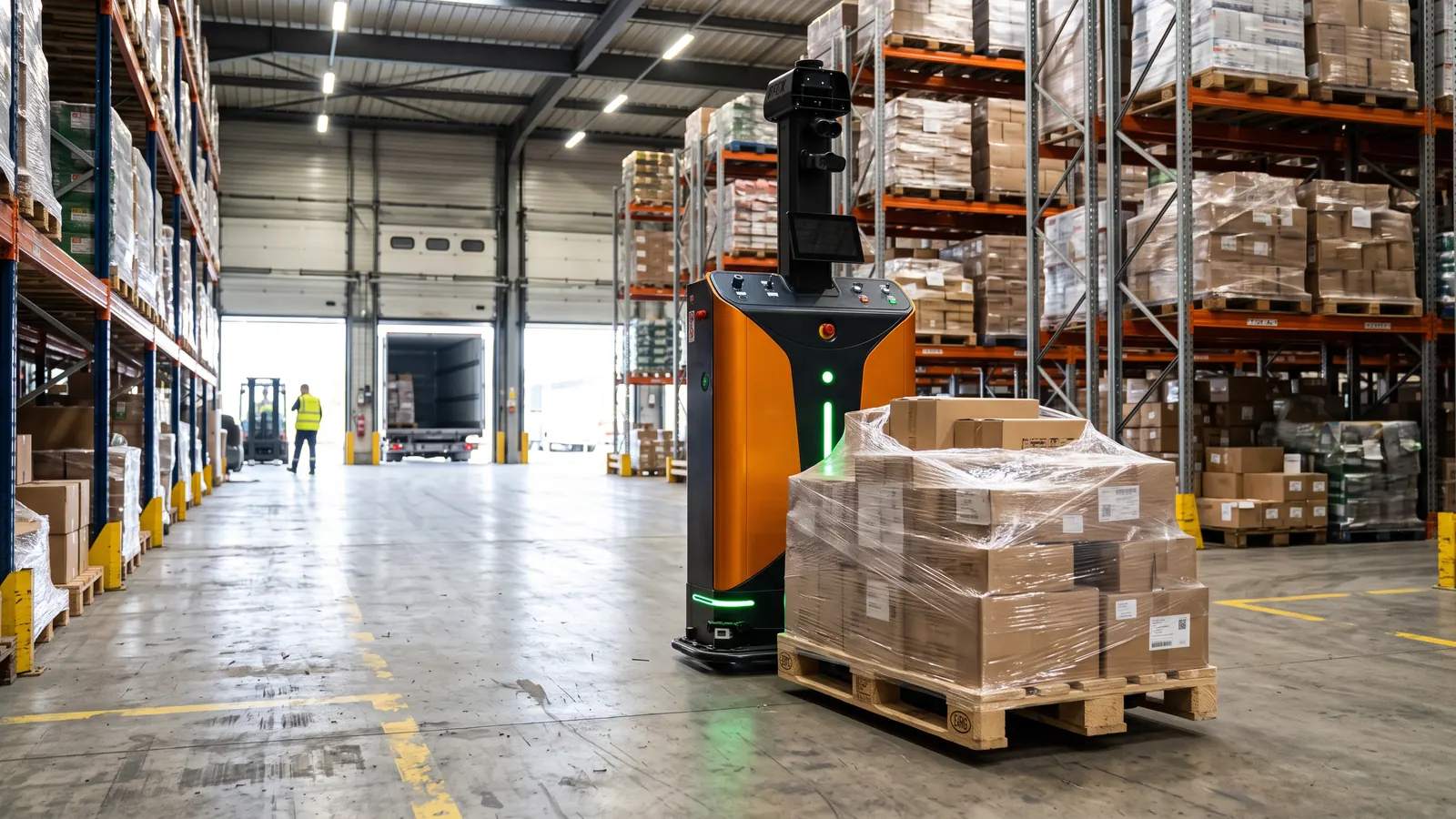 Autonomous pallet forkliftThe autonomous forklift runs the repetitive pallet shuttles between goods-in, storage and production. Drivers keep the loading, special cases and checks.
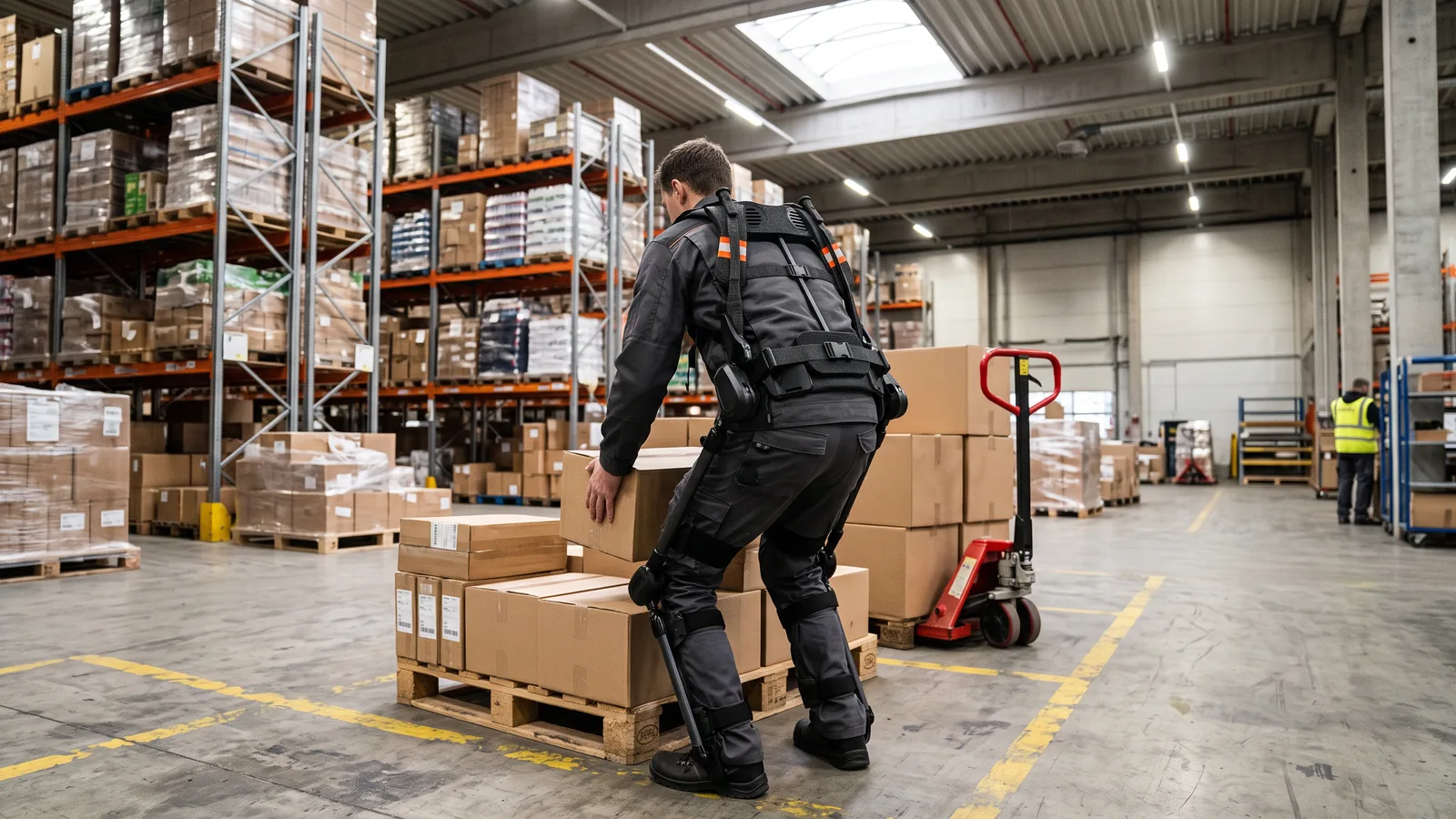 Exoskeletons for manual handlingThe exoskeleton assists the operator on every lift, without changing the workstation or the movement. The worker stays in control; the device reduces the strain on the back or shoulders.
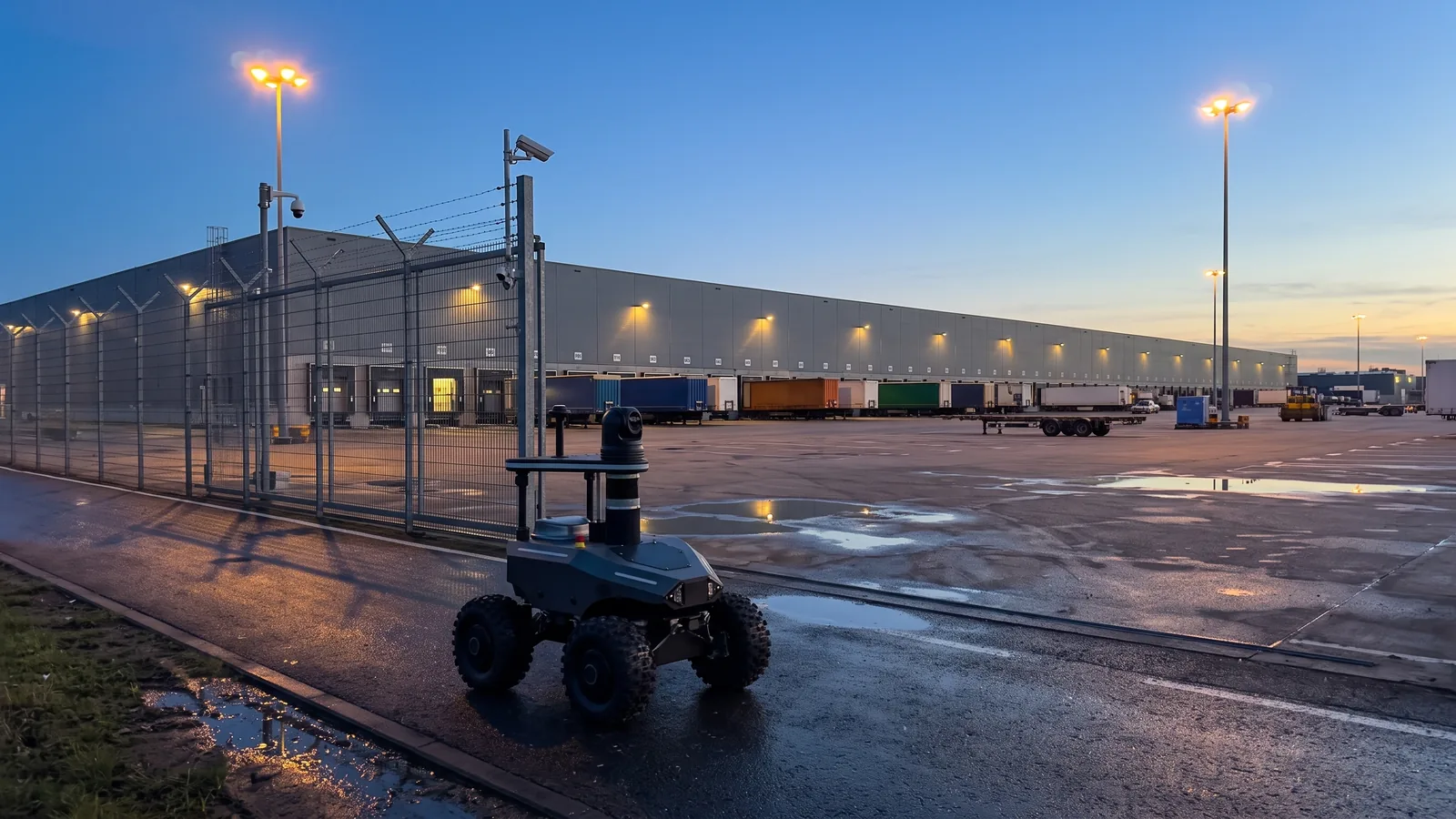 Robotic security for warehouses and logistics yardsThe robot follows the fence, passes the docks and crosses the truck yard on scheduled rounds, then alerts the gatehouse. Guards keep access control, verification and response.
Robots, acquisition mode and delivery terms, in one written proposal.