Solar panel cleaning
- Working width
- 2,400 mm
- Runtime
- 3 h
- Key feature
- 25° slope
On order
From €38,590 ex VATor €1,309/month in RaaS
Updated
USE CASE · ENERGY AND SOLAR
The robot brushes the module rows, dry or with water, remote-controlled or autonomous depending on the model. Operations teams keep monitoring, electrical checks and plant maintenance.
Updated
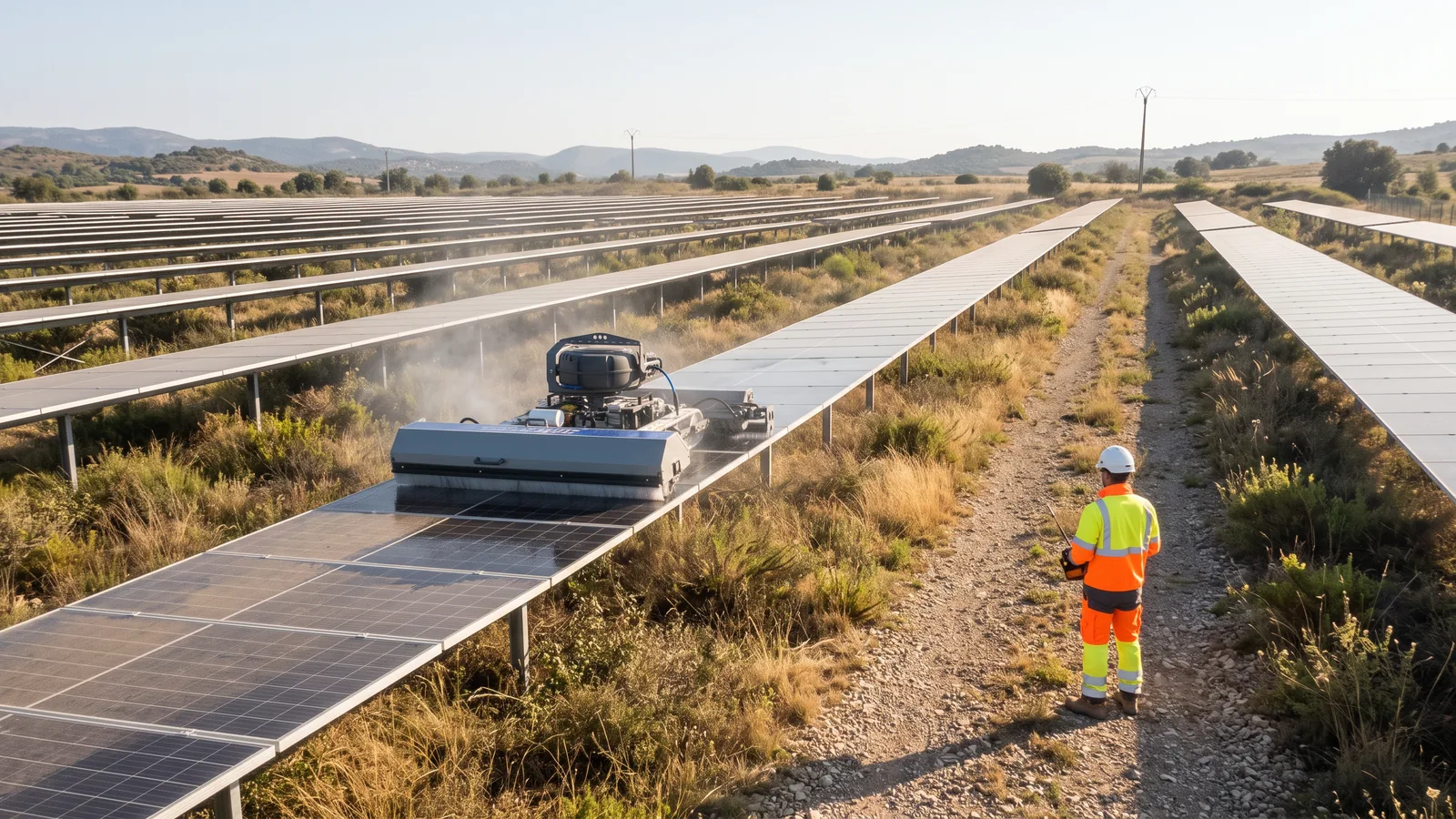
A solar panel cleaning robot removes dust, pollen and dirt from photovoltaic modules on industrial rooftops, ground-mounted plants, agri-PV installations and trackers.
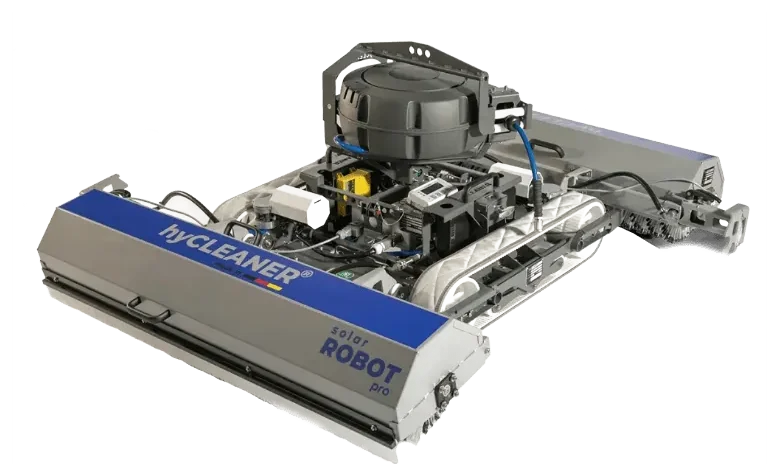
The tracked, radio-controlled hyCLEANER solarROBOT pro brushes up to 2,400 mm wide and runs up to 3 h on its 36 V battery, according to its manufacturer.
Robot Distribution delivers it, checks access to the rows, trains your technicians and maintains it, to buy, rent or as RaaS.
WHY
On an industrial rooftop or a ground-mounted plant, dust, pollen, bird droppings and farm deposits build up on the modules and reduce the light reaching the cells. Manual cleaning needs teams trained for work at height, plenty of water and repeated passes over thousands of modules.
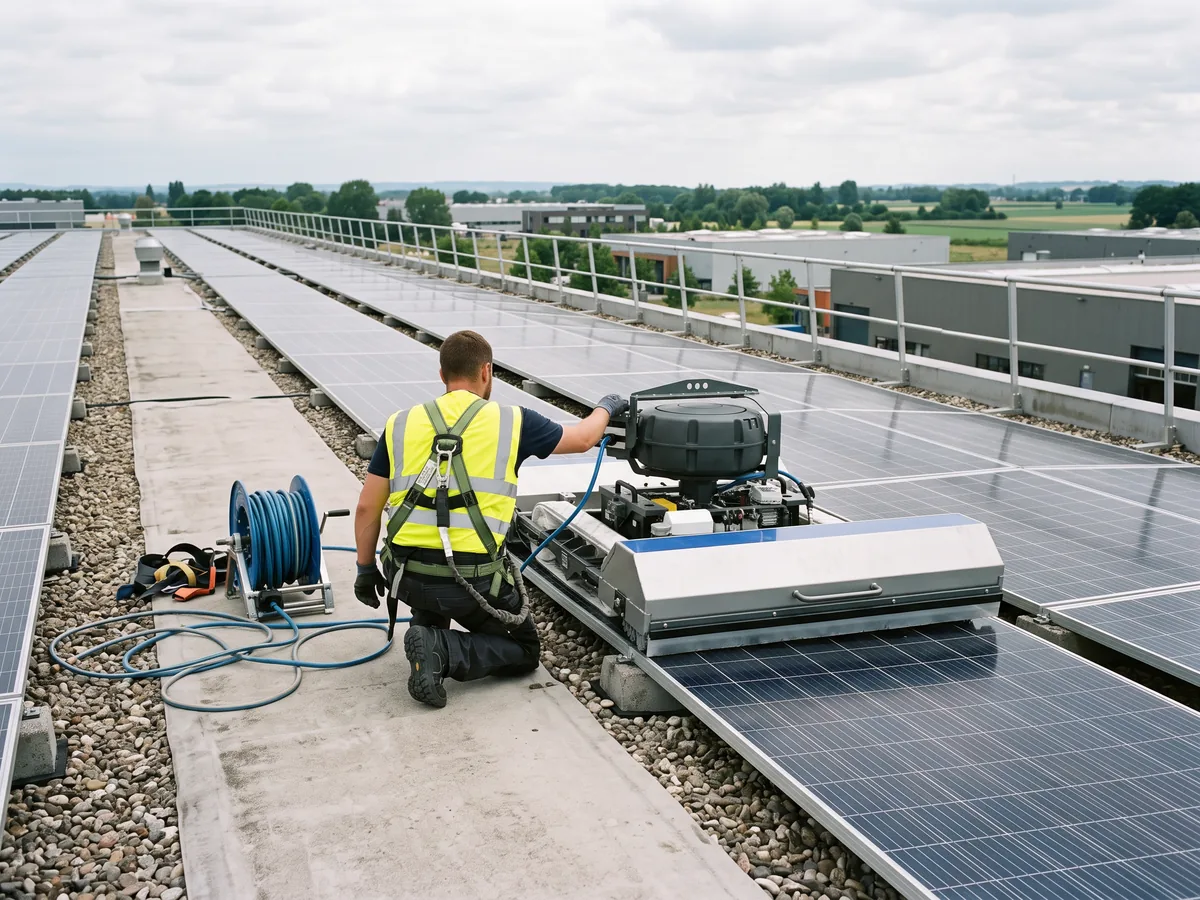
The robot does this repetitive work row after row: remote-controlled by an operator on the ground for rooftops and small plants, or installed permanently on the rows and scheduled for large plants. The operator sets the frequency according to the soiling seen on site.
HOW IT RUNS
We record the structure type (rooftop, fixed tables, trackers), row length, module tilt and access. These points lead to either a mobile remote-controlled robot or a robot installed permanently on the rows.
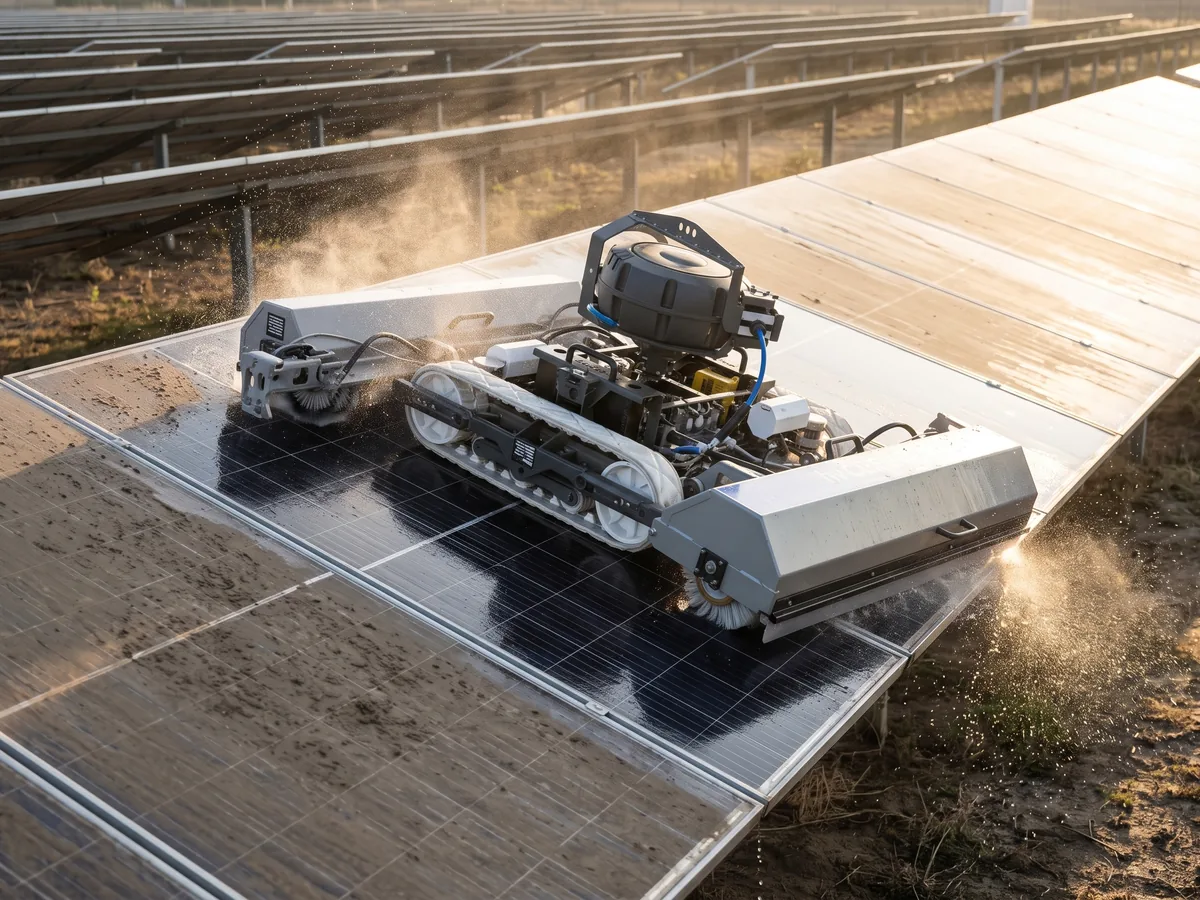
Dry brushing or soft water: the hyCLEANER solarROBOT ultimate uses 8 to 14 l/min when cleaning wet and the SolarCleano F1 connects to a standard garden hose, according to their manufacturers. The Arctech Star Shine I and Ecoppia T4 clean without water.
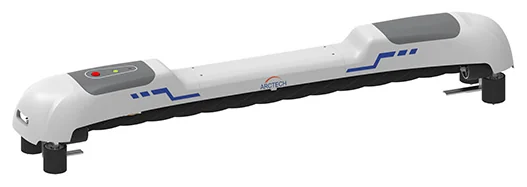
The operator drives the tracked robot along the modules, or the fixed robot travels its row at a set time and returns to its charging dock. The Arctech Star Shine I moves at 10–20 m/min and covers up to 5 km per trip, according to its manufacturer.
Technicians check brushes and batteries and follow output in the plant's monitoring system. Fixed robots report their status over the network: LoRaWAN and Modbus TCP for the Star Shine I, cloud management for the Ecoppia T4, according to their manufacturers.
THE ROBOTS
Solar panel cleaning
Solar panel cleaning
Solar panel cleaning
SolarCleano
Solar panel cleaning
BayRobot
Solar panel cleaning
Solar panel cleaning
BEFORE INSTALLING
Rooftops, fixed tables and single-axis trackers do not need the same robot: the Ecoppia T4 is designed for trackers, which it cleans in stow position, according to its manufacturer.
Module tilt and gaps between tables are measured: the hyCLEANER solarROBOT pro climbs up to 25° depending on the surface and the SolarCleano F1 crosses gaps of about 700 mm, according to their manufacturers.
We check the supply of soft water, the route for bringing the robot onto the roof or to the end of a row, and the lifting means required.
Module type (framed or frameless), surface coating and the module maker's warranty conditions are checked before choosing the brush and method.
FAQ
Yes. The Arctech Star Shine I cleans dry and the Ecoppia T4 uses microfibre and airflow, with no water, according to their manufacturers. The hyCLEANER and SolarCleano tracked robots work dry or with soft water.
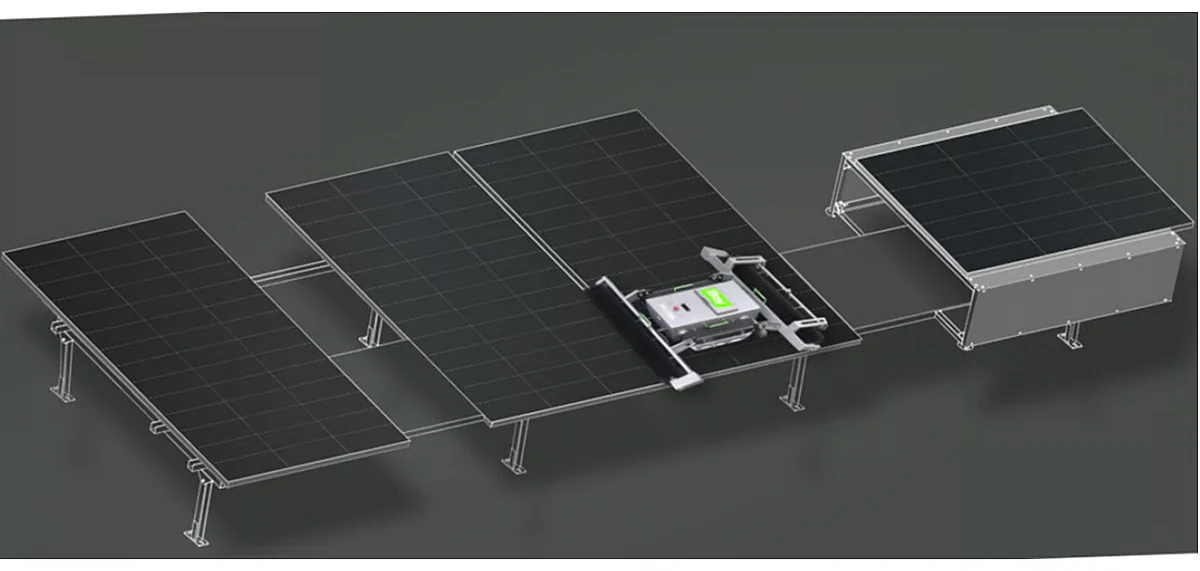
According to the manufacturer: up to 1,600 m²/h for the SolarCleano F1 and up to 1,000 m²/h for the BayRobot H1 Pro. Actual output depends on soiling, gaps between tables and moves between rows.
It depends on the model. The hyCLEANER robots and the SolarCleano F1 are radio-controlled by an operator on the ground. The BayRobot H1 Pro positions itself to ±10 mm by RTK and returns to its charging station on its own, according to its manufacturer; the Arctech Star Shine I and Ecoppia T4 are installed on the rows and scheduled.
Yes: the hyCLEANER solarROBOT pro (about 89 kg) and the BayRobot H1 Pro (23 kg) are specified for commercial and industrial rooftops by their manufacturers. The survey checks load capacity, access and fall protection.
A mobile robot moves from one roof or site to the next with an operator. A fixed robot stays on its row and cleans at set times: the Arctech Star Shine I covers up to 5 km per trip on modules tilted 10 to 30°, according to its manufacturer. Plant size and the cleaning frequency you want guide the choice.
USE CASES
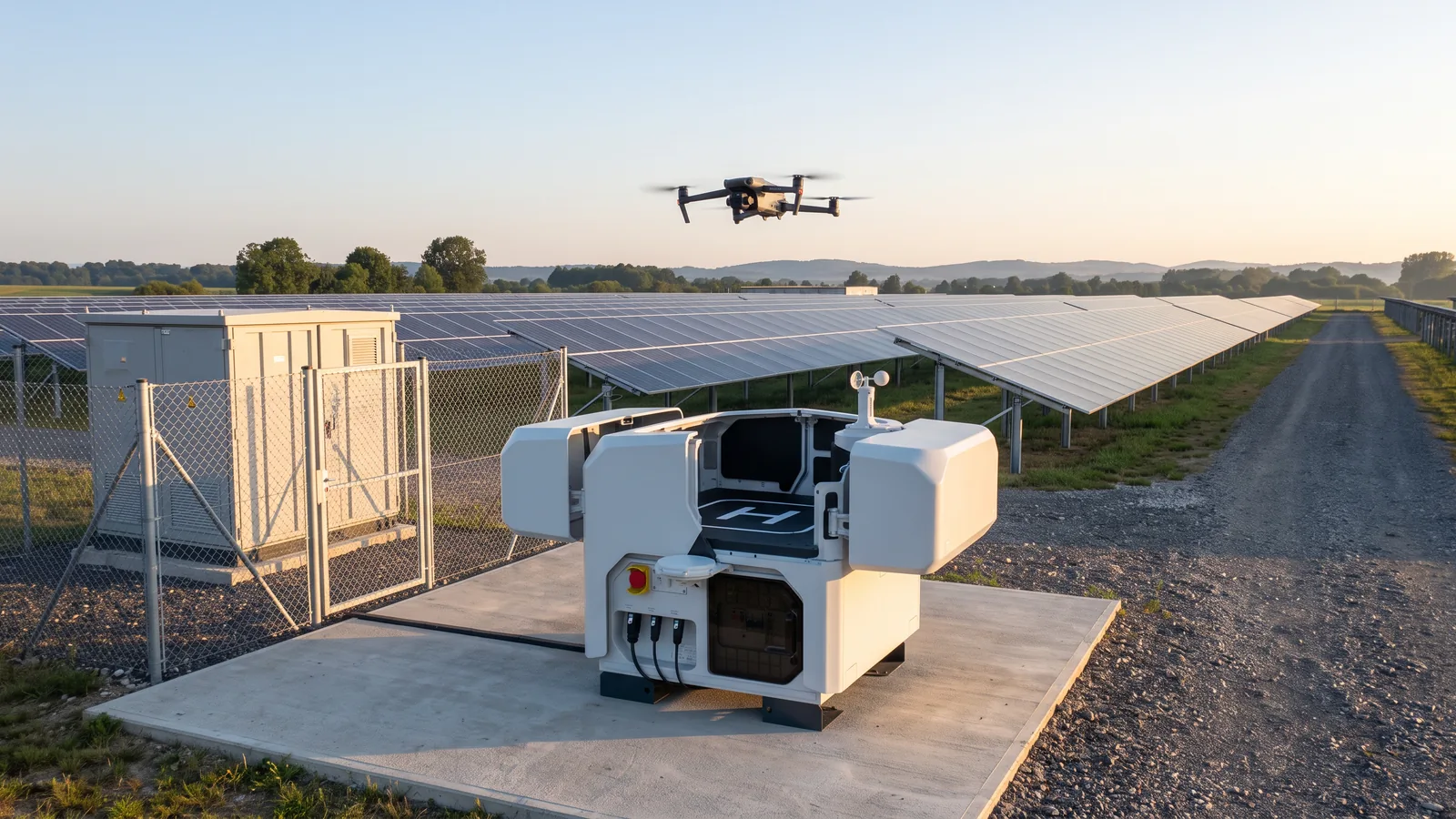 Drone inspection of solar and industrial sitesThe drone flies over modules, roofs, networks and equipment and brings back visible and thermal images, piloted on site or launched from an automated dock. Technicians keep the analysis, decisions and repairs.
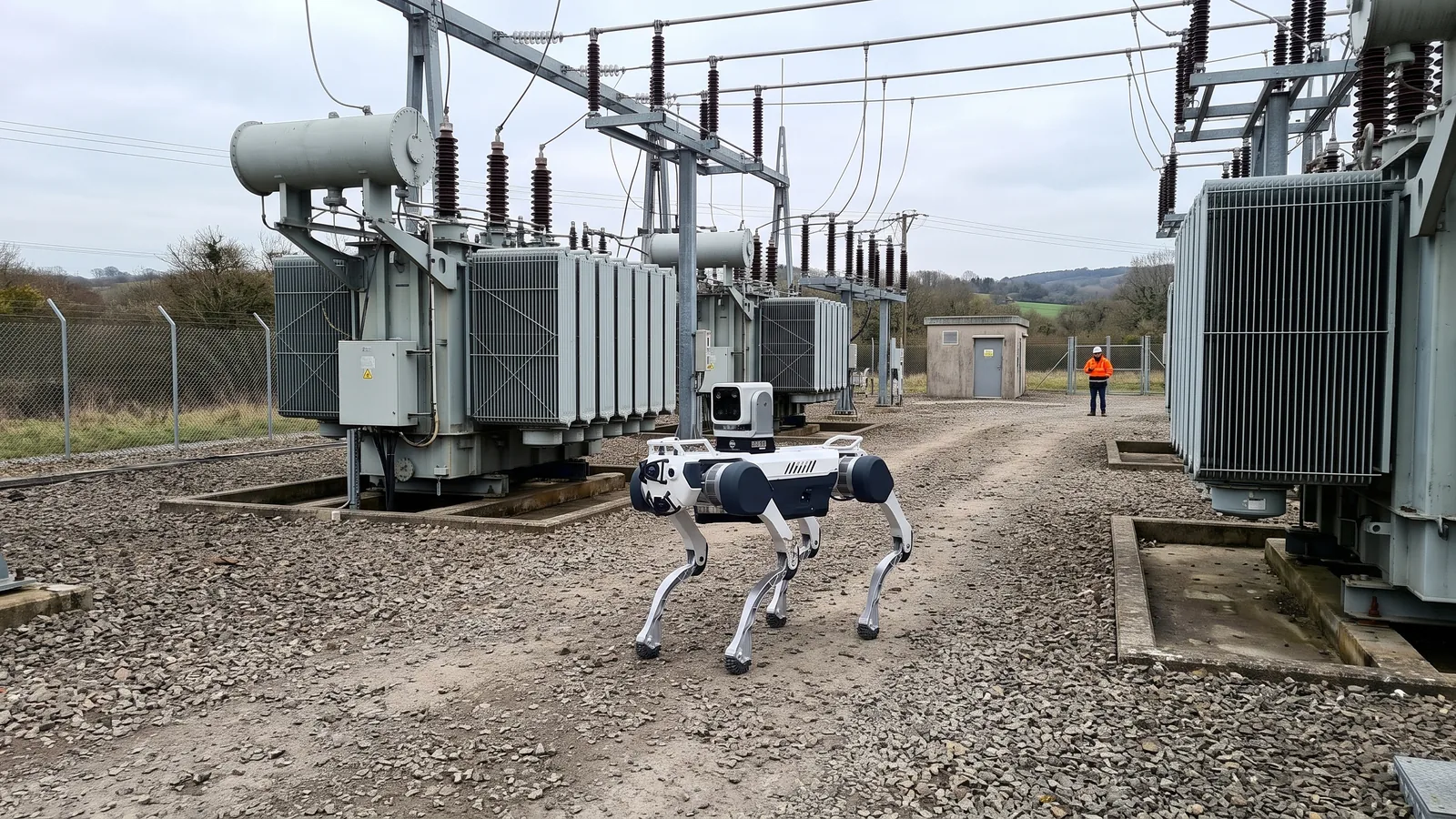 Electrical substation inspectionA ground robot patrols the substation aisles and a docked drone flies over the equipment. Together they record temperatures, gauges and visual condition, without sending someone out for every round.
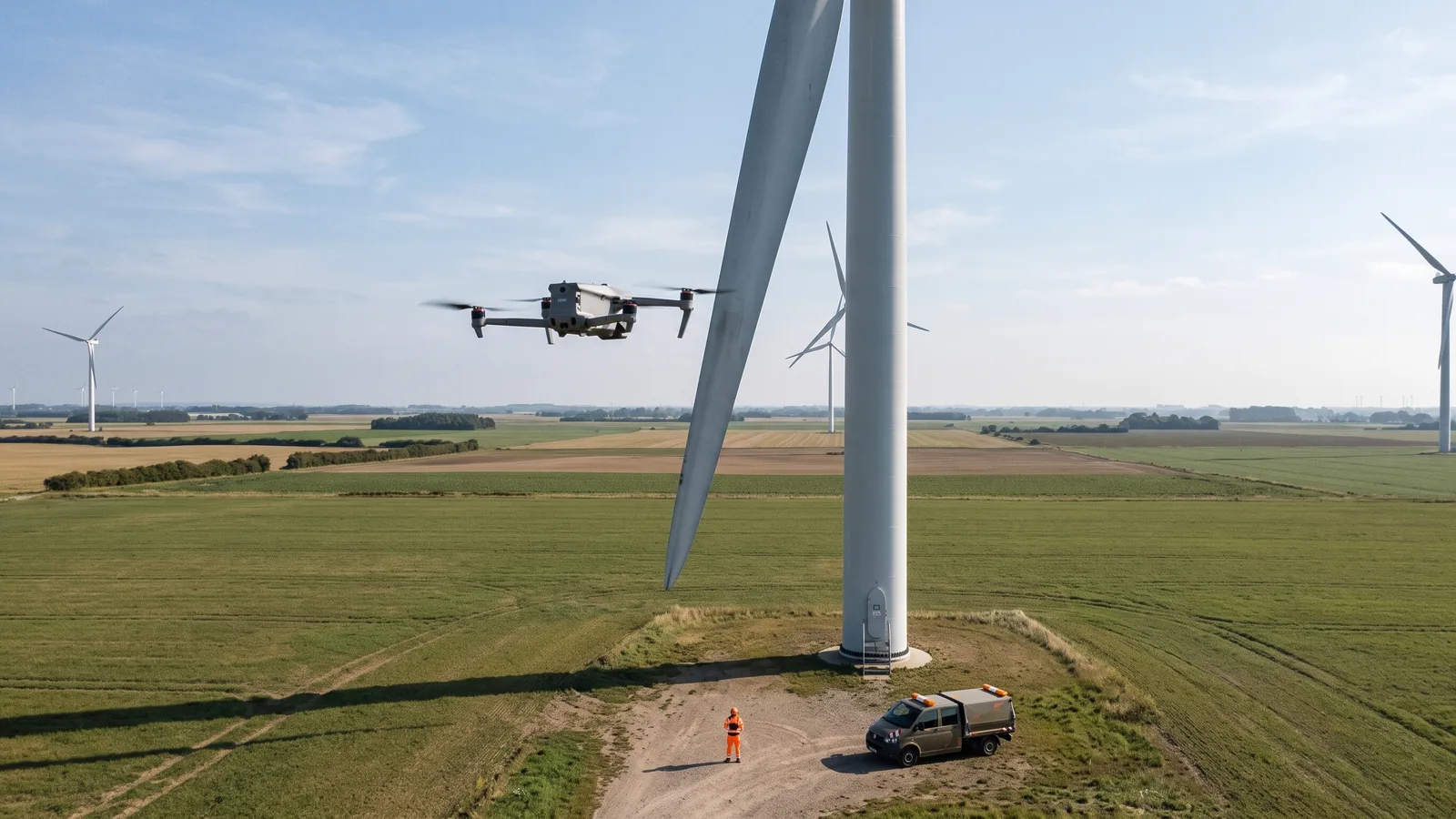 Drone inspection of power lines and wind turbinesThe drone flies along the lines and around the turbines, taking visible and thermal images of insulators, connections and blades. Maintenance crews only work at height on confirmed defects.
Robots, acquisition mode and delivery terms, in one written proposal.