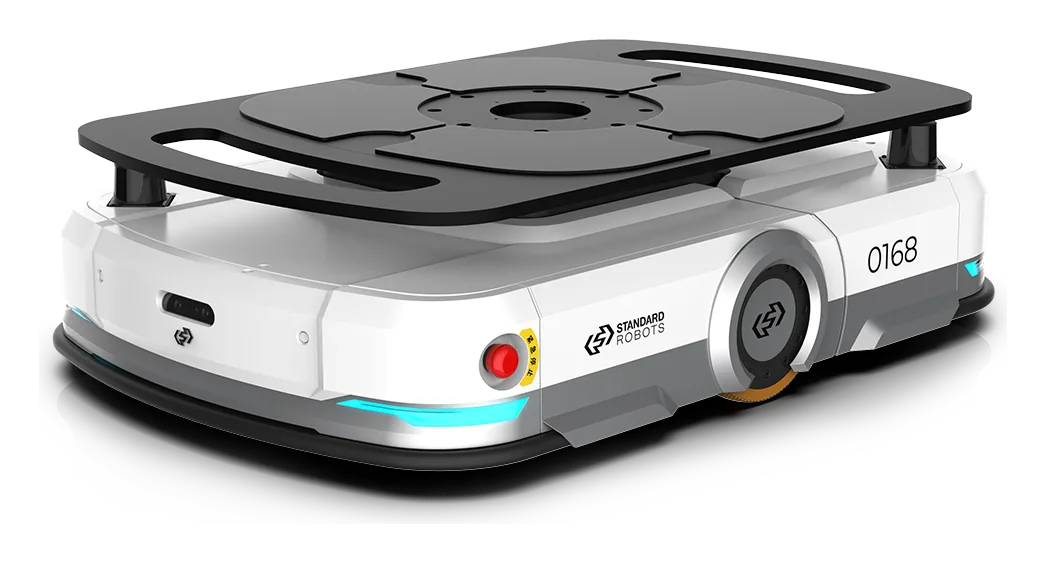
Industrial logistics
- Payload
- 600 kg
- Maximum speed
- 1.5 m/s
- Runtime
- 8 h
On order
Price on request
Updated
USE CASE · INDUSTRY
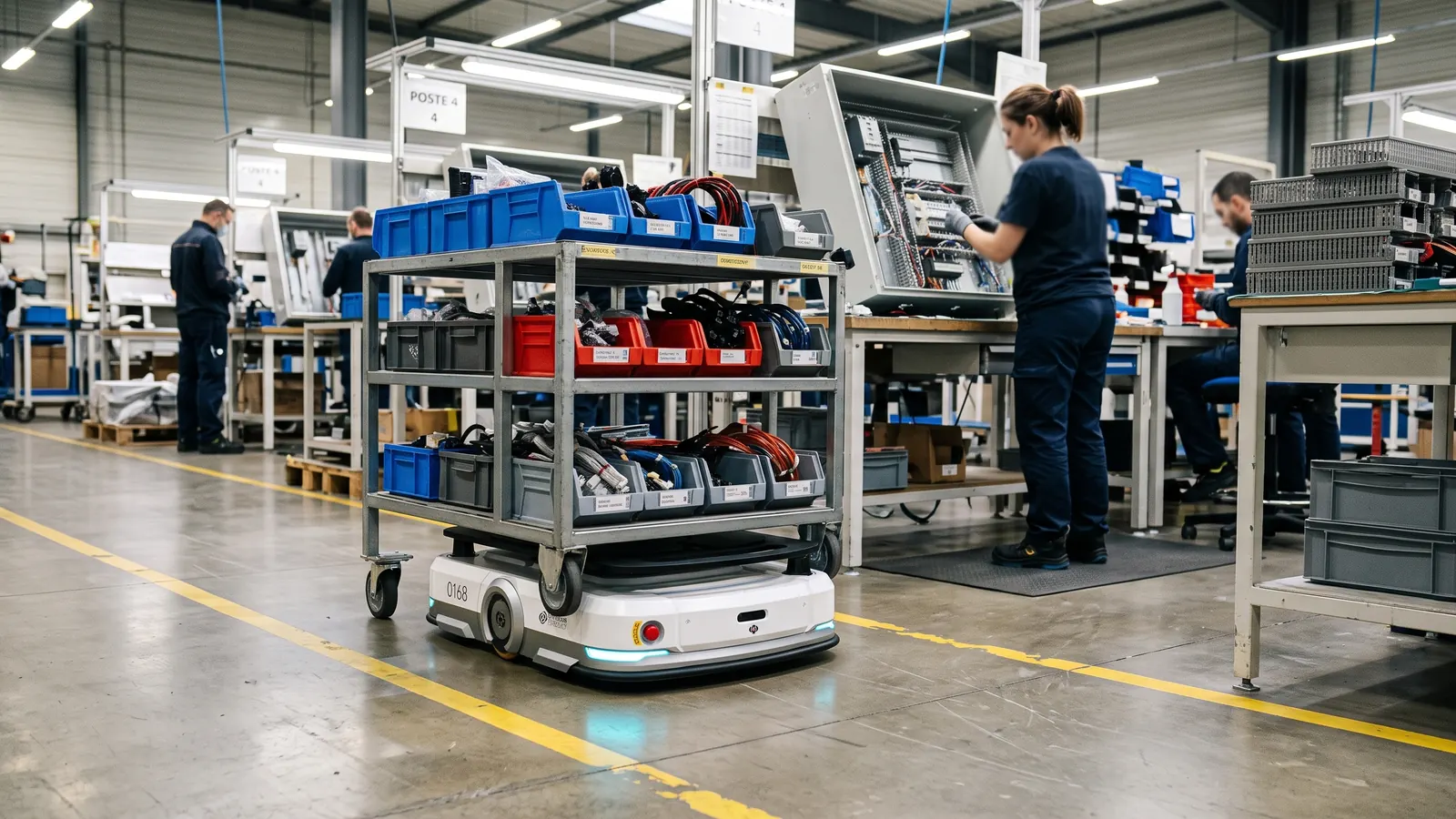
The mobile robot runs the milk run between stores and the line. Operators no longer leave their station to fetch parts, and the storekeeper prepares instead of driving.
Updated
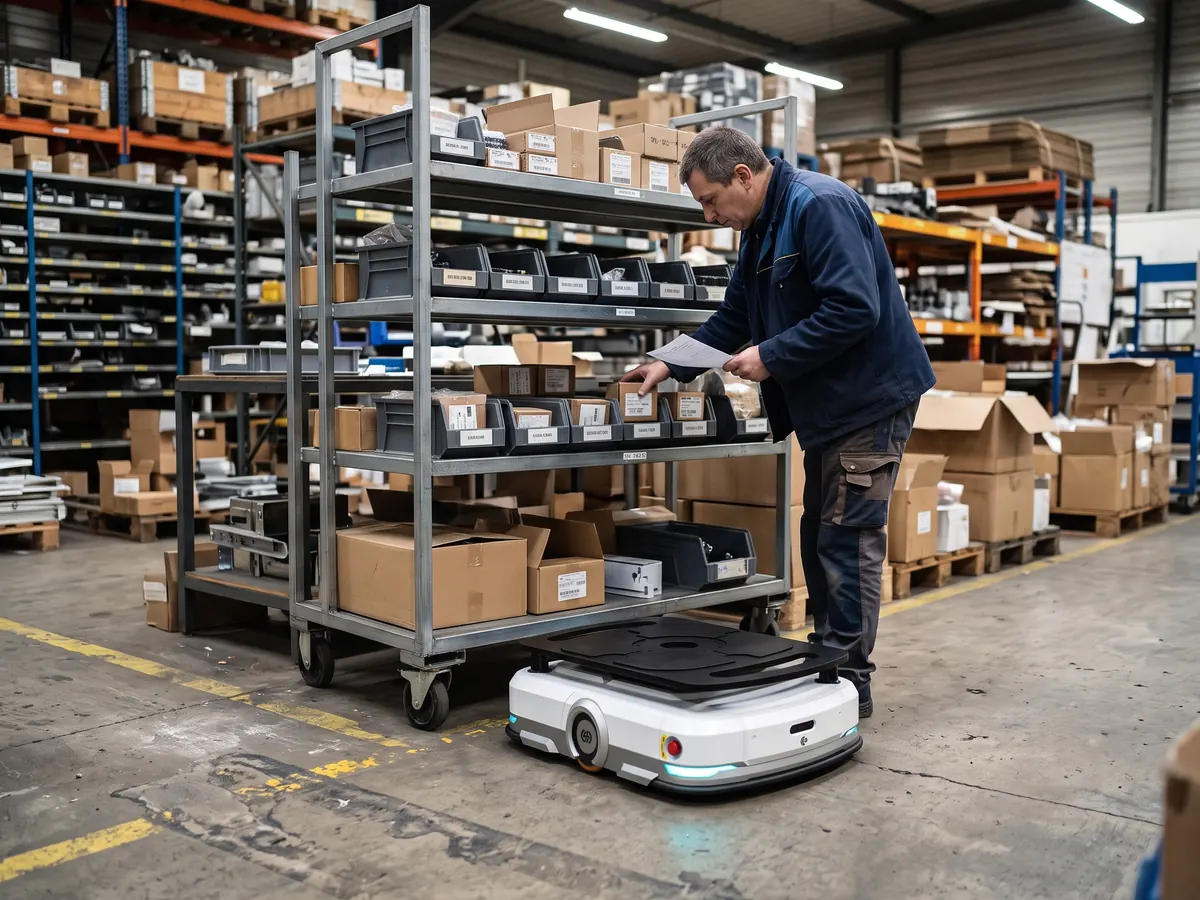
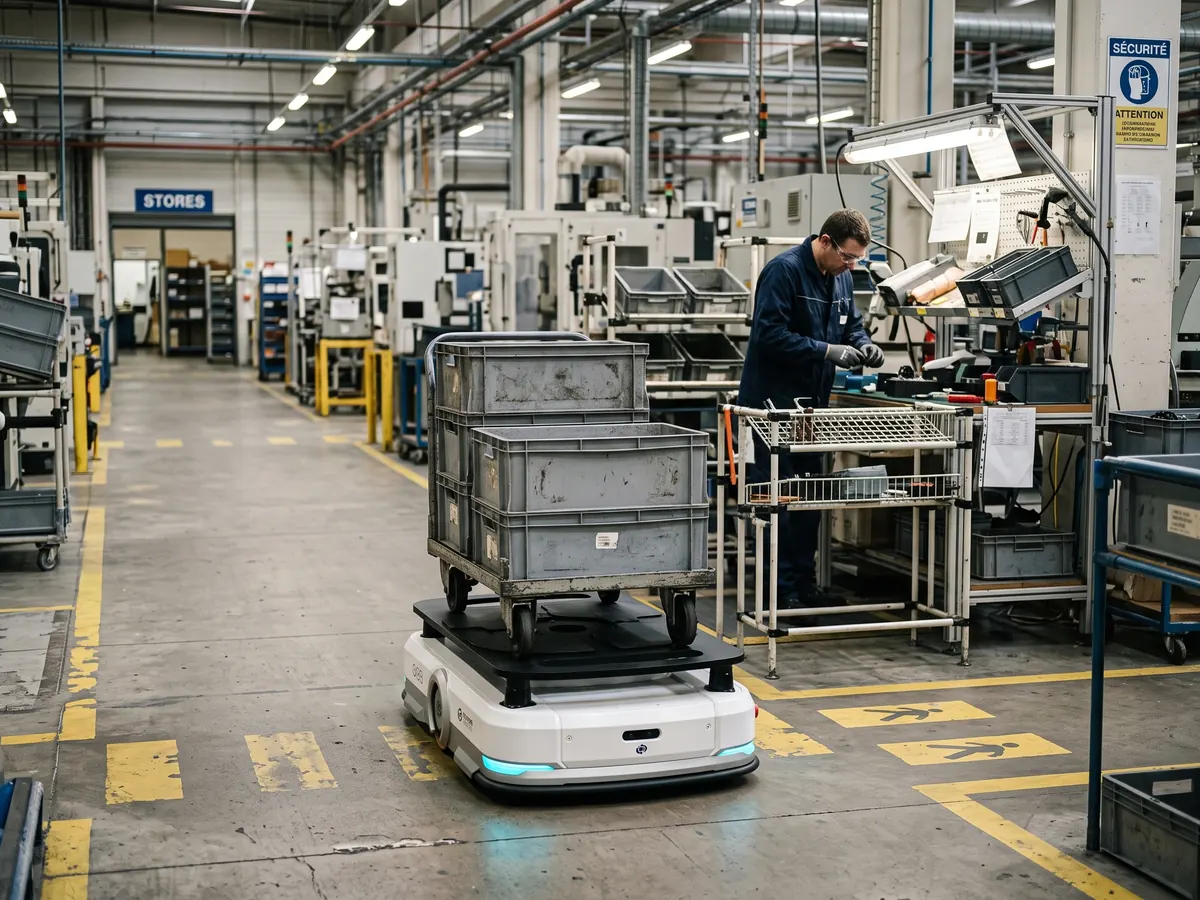
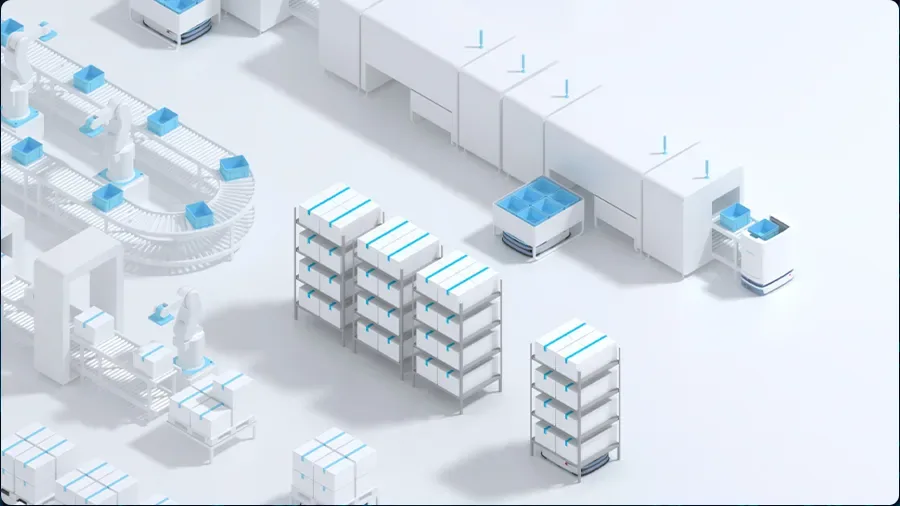
A line-feeding AMR slides under a kit or tote cart, lifts it, delivers it to the line station and brings the empty cart back to stores.
The Standard Robots OASIS-600E-SRL lifts 600 kg, travels at 1.5 m/s and runs 8 h on a charge according to its manufacturer.
Robot Distribution maps the shop floor, sets the delivery points, connects part calls to your system, trains the team and maintains it, to buy, rent or as RaaS.
WHY
On an assembly line, every shortage at a station means waiting, and every operator trip to stores costs production time. The manual milk run and pallet-truck trips tie up people in transport that adds no value.
The AMR delivers kit carts and totes to the right station, on call or at a fixed rhythm, and brings the empties back. It navigates on a map of the shop, without rails, drives around obstacles and is reconfigured when the layout changes. With an onboard cobot arm, a mobile manipulator can also pick and place the totes itself.
HOW IT RUNS
The storekeeper puts the components of the work order on a kitting cart and leaves it at the departure point.
The station calls for parts with a button, a tablet or from the ERP; the fleet software assigns the mission to a free robot.
It slides under the cart, lifts it, crosses the shop floor avoiding obstacles and drops it at the station's location.
It collects the empty cart or totes from the station and takes them back to stores for the next kit.
THE ROBOTS
Industrial logistics
Industrial logistics
Industrial logistics
Mobile platforms
BEFORE INSTALLING
Size, ground clearance and loaded weight of the carts: the robot must slide under them and lift them safely.
Aisle width, crossings, doors, slopes and floor condition between stores and stations.
Exact drop point at each station, within the operator's reach without getting in the line's way.
How calls are triggered (button, tablet, ERP or MES), Wi-Fi along the route and where the chargers go.
FAQ
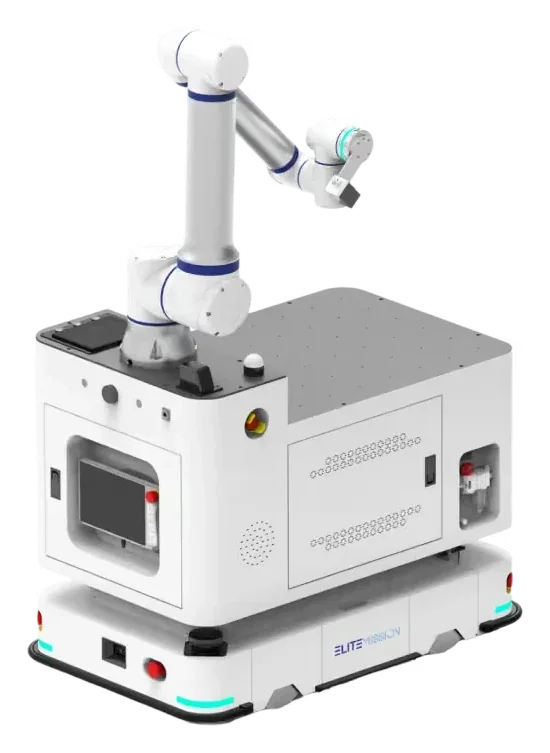
600 kg for the Standard Robots OASIS-600E-SRL, 300 kg for the UBTECH U300 AMR and for the platform of the Elite Robots MC500-12, 500 kg for the base of the ROKAE CMR Mobile Manipulator, according to their manufacturers.
Usually not: an AMR navigates on a map of the shop recorded at commissioning, and the site survey specifies whether extra markers help. Delivery points and slow zones are changed in the software when the layout changes.
Yes, with a mobile manipulator: the Elite Robots MC500-12 combines an omnidirectional platform with a 12 kg arm and positions to ±0.2 mm at the station using vision according to its manufacturer. A plain AMR delivers the cart and the operator helps himself.
8 h for the Standard Robots OASIS-600E-SRL and the Elite Robots MC500-12, which recharges in 2 h according to its manufacturer. Charging is scheduled during breaks or between missions.
USE CASES
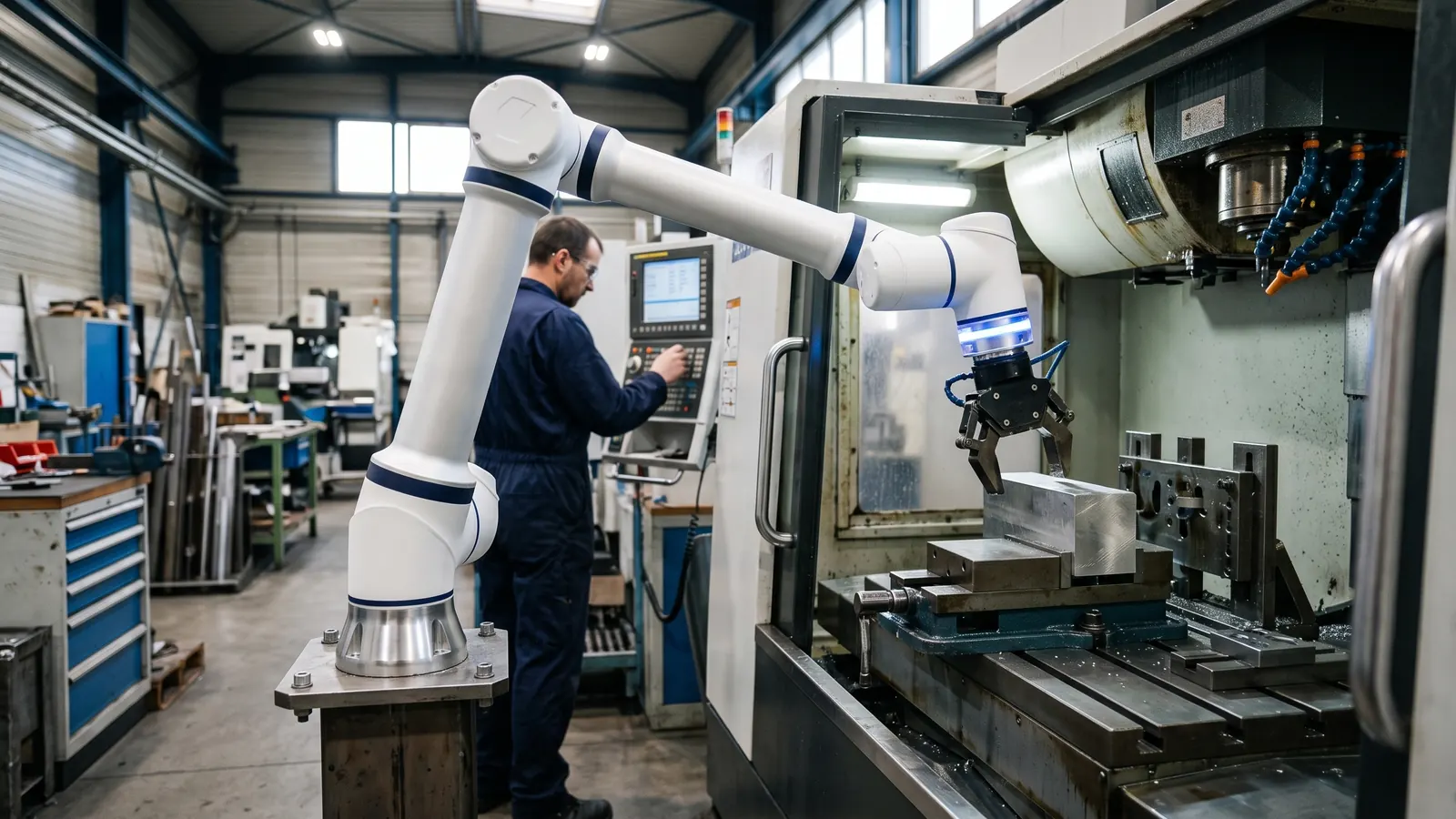 CNC machine tendingThe cobot does the repetitive move at the machine door. The setter keeps the skilled work: programs, tooling, measuring and first-off parts.
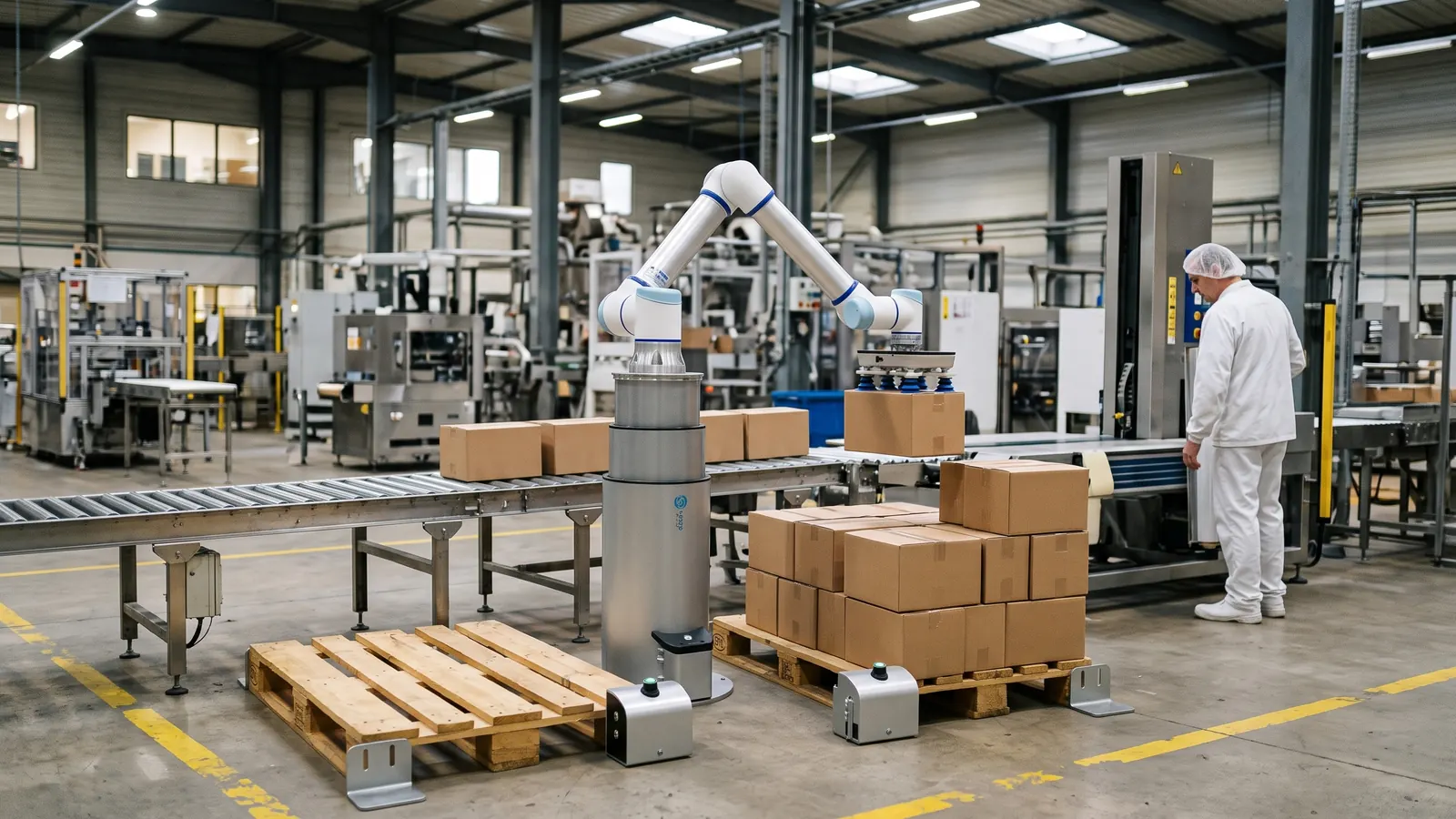 End-of-line palletizingThe cobot builds the pallets at the end of the line. The operator no longer lifts cases: he supplies, wraps, moves full pallets out and watches production.
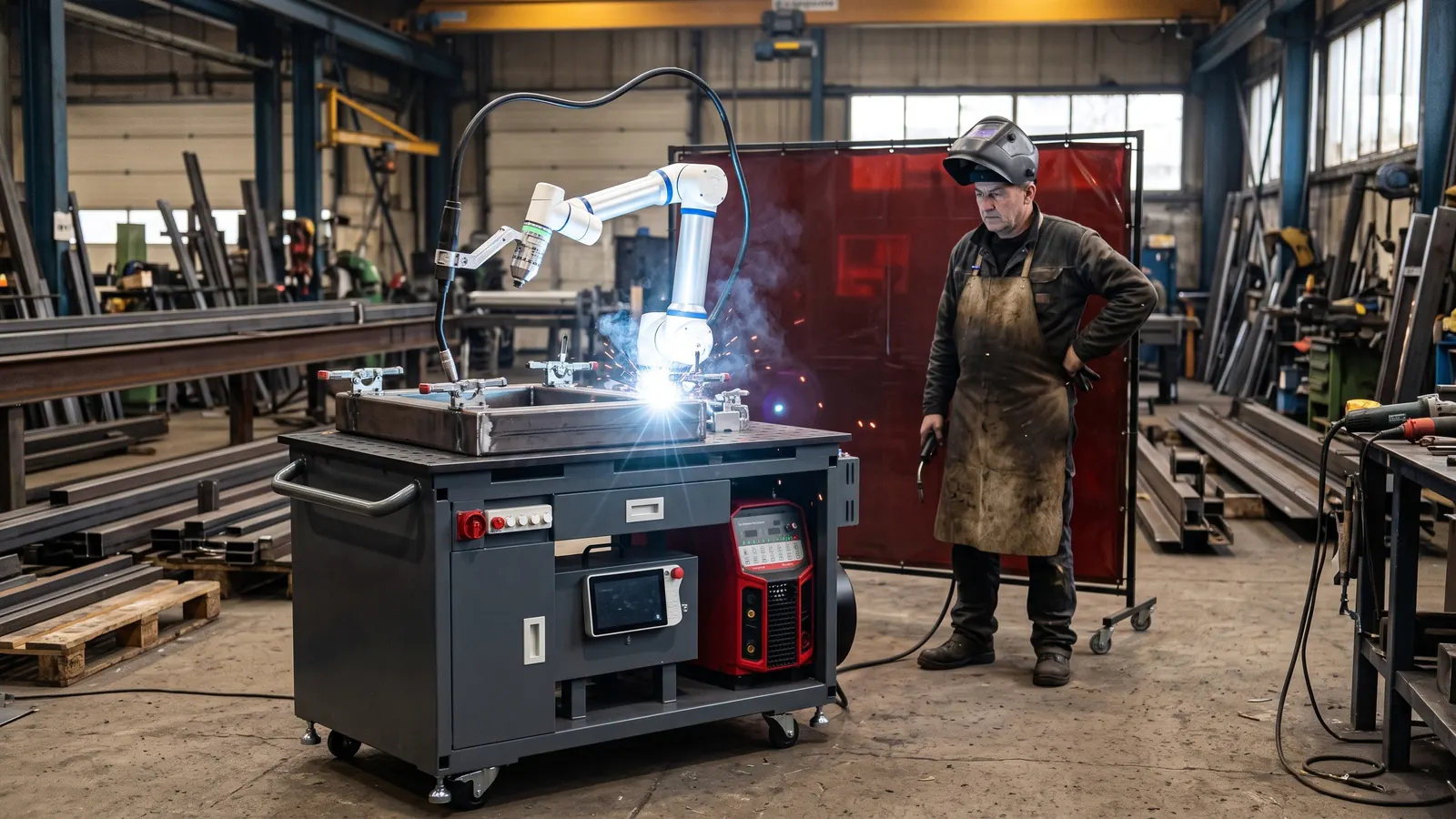 Collaborative weldingThe welder keeps the craft: preparation, tacking, setting parameters and checking the welds. The cobot takes the repetitive welds of the batch.
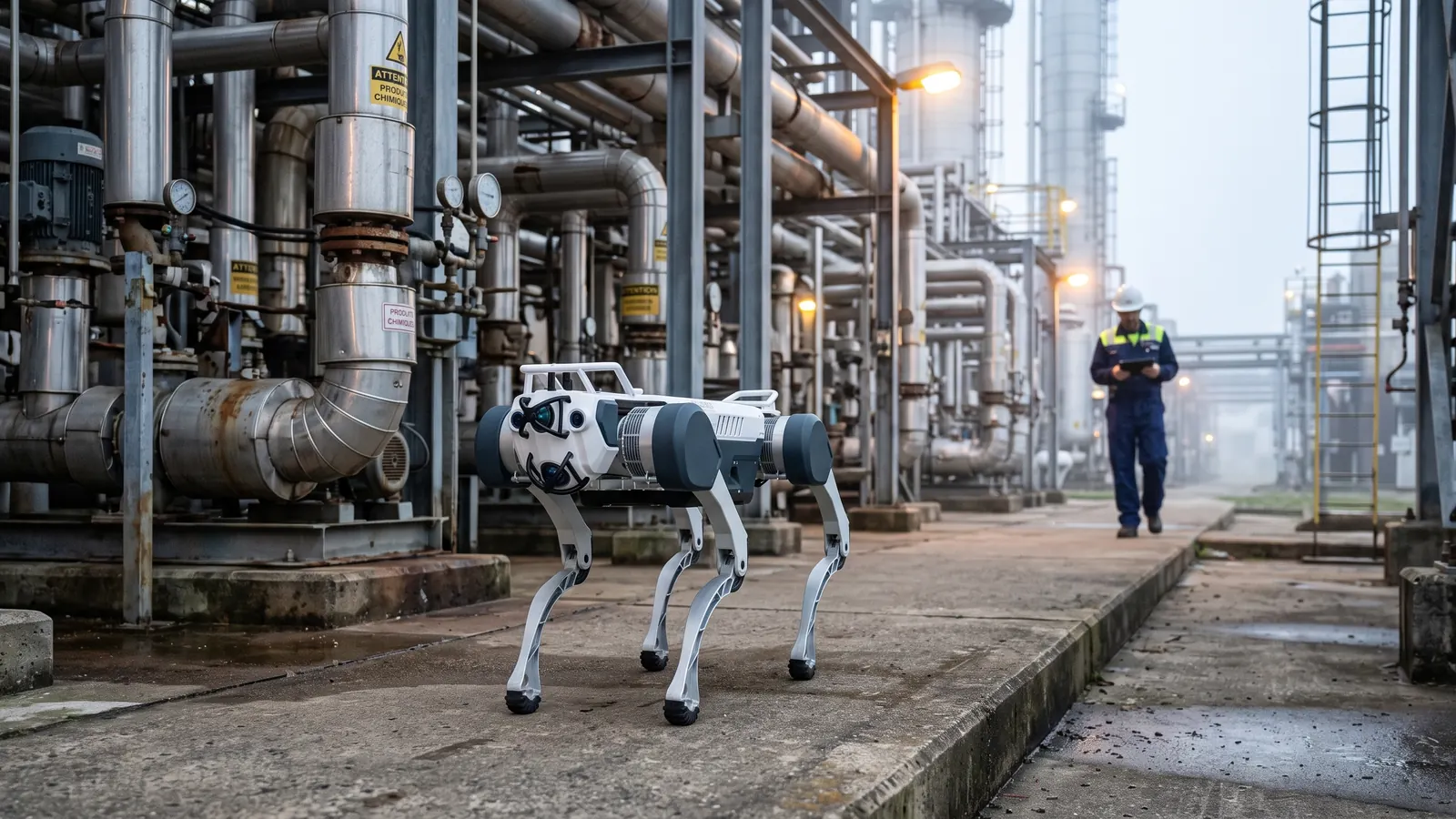 Industrial inspection roundsThe robot walks the same route every day, stops at the same points and records images, temperatures and readings. Technicians review the deviations and step in where needed.
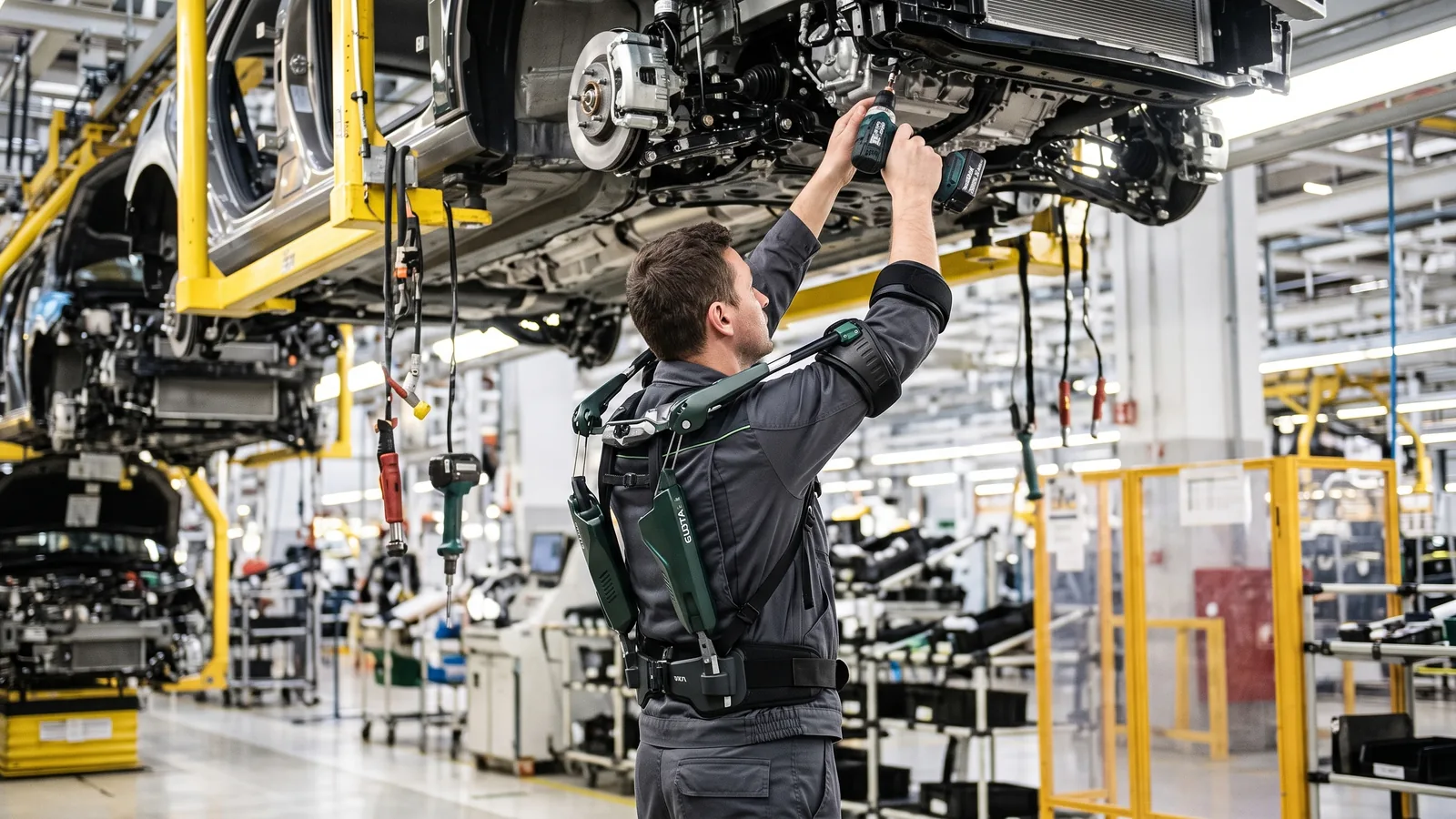 Exoskeletons for overhead workA shoulder exoskeleton supports the arms when they rise above chest height, without changing the tool or the movement. The operator keeps full precision; the device carries part of the weight of the arms.
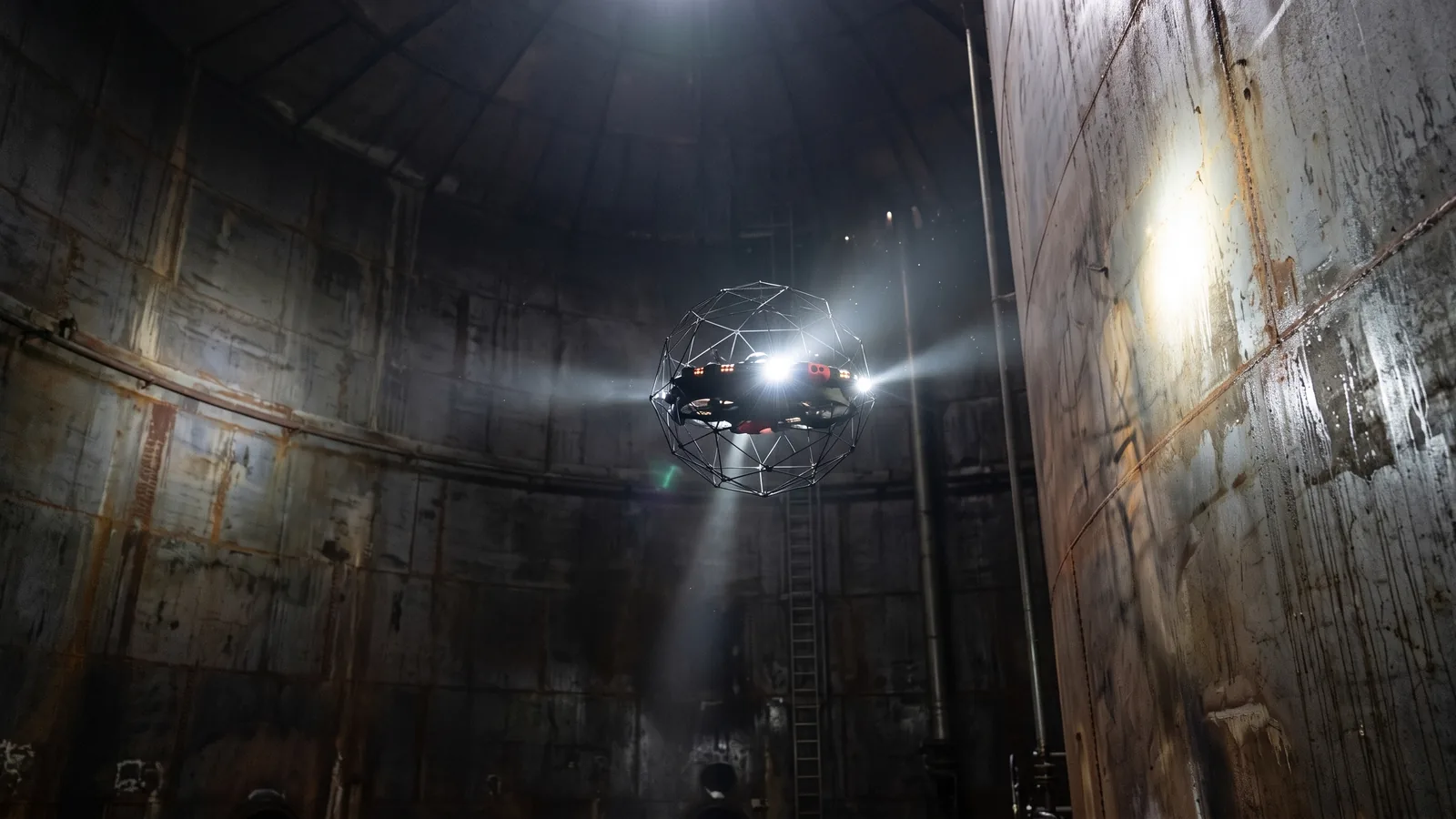 Confined-space drone inspectionThe drone goes into the tank, boiler or silo instead of the inspector and brings back images, video and 3D data. Inspectors keep the analysis, the regulatory measurements and the repair decisions.
Robots, acquisition mode and delivery terms, in one written proposal.