Collaborative robots
- Payload
- 20–30 kg
- Key feature
- Stacks up to 2.6 m
- Key feature
- 14 boxes/min
On order
Price on request
Updated
USE CASE · INDUSTRY
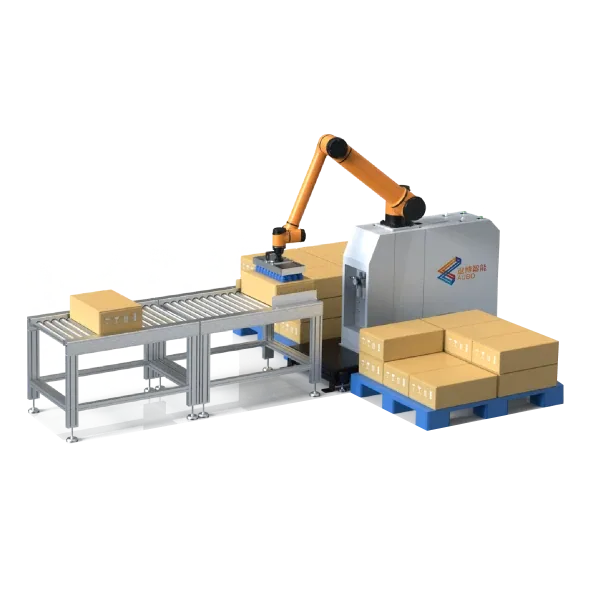
The cobot builds the pallets at the end of the line. The operator no longer lifts cases: he supplies, wraps, moves full pallets out and watches production.
Updated
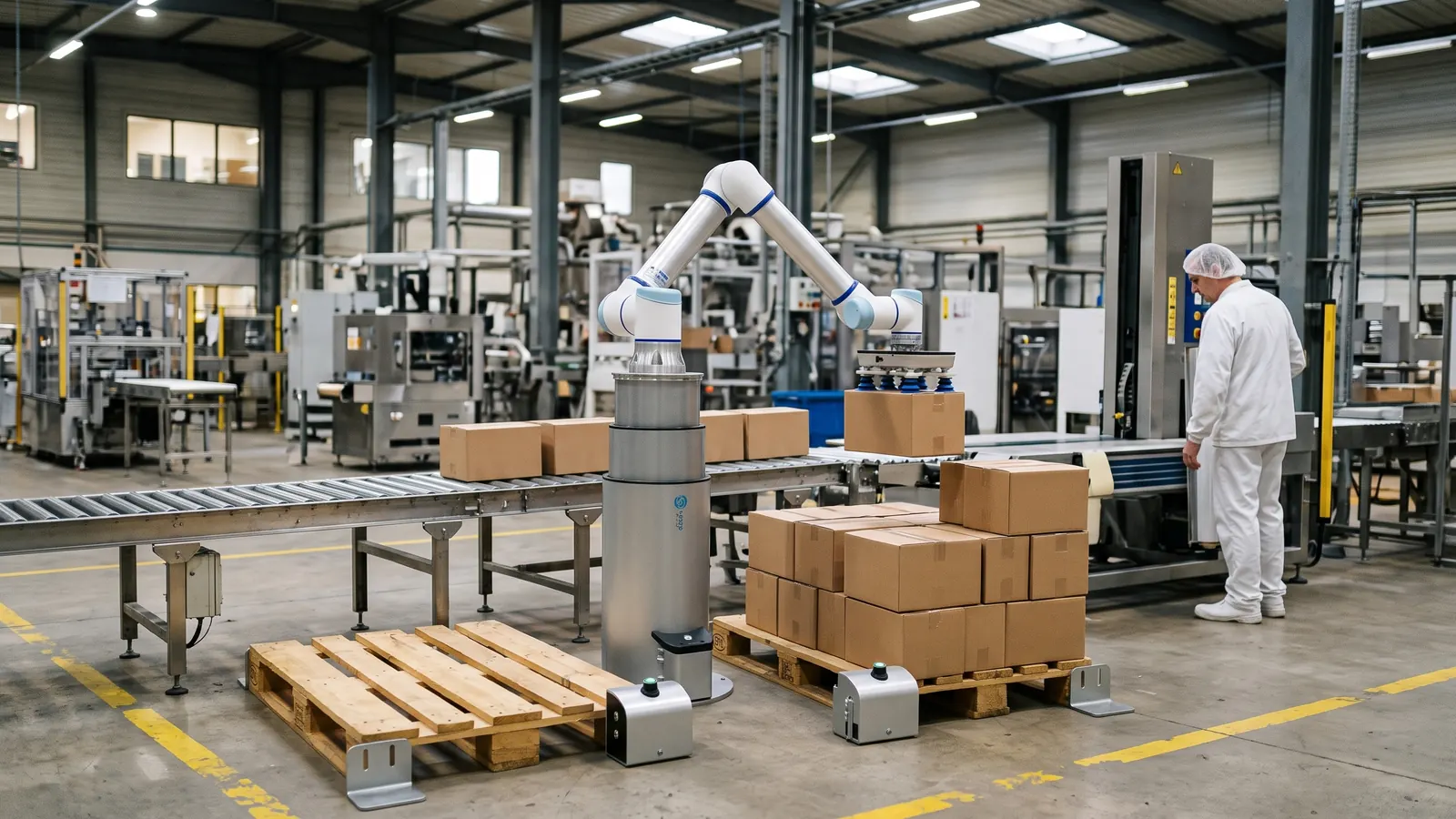
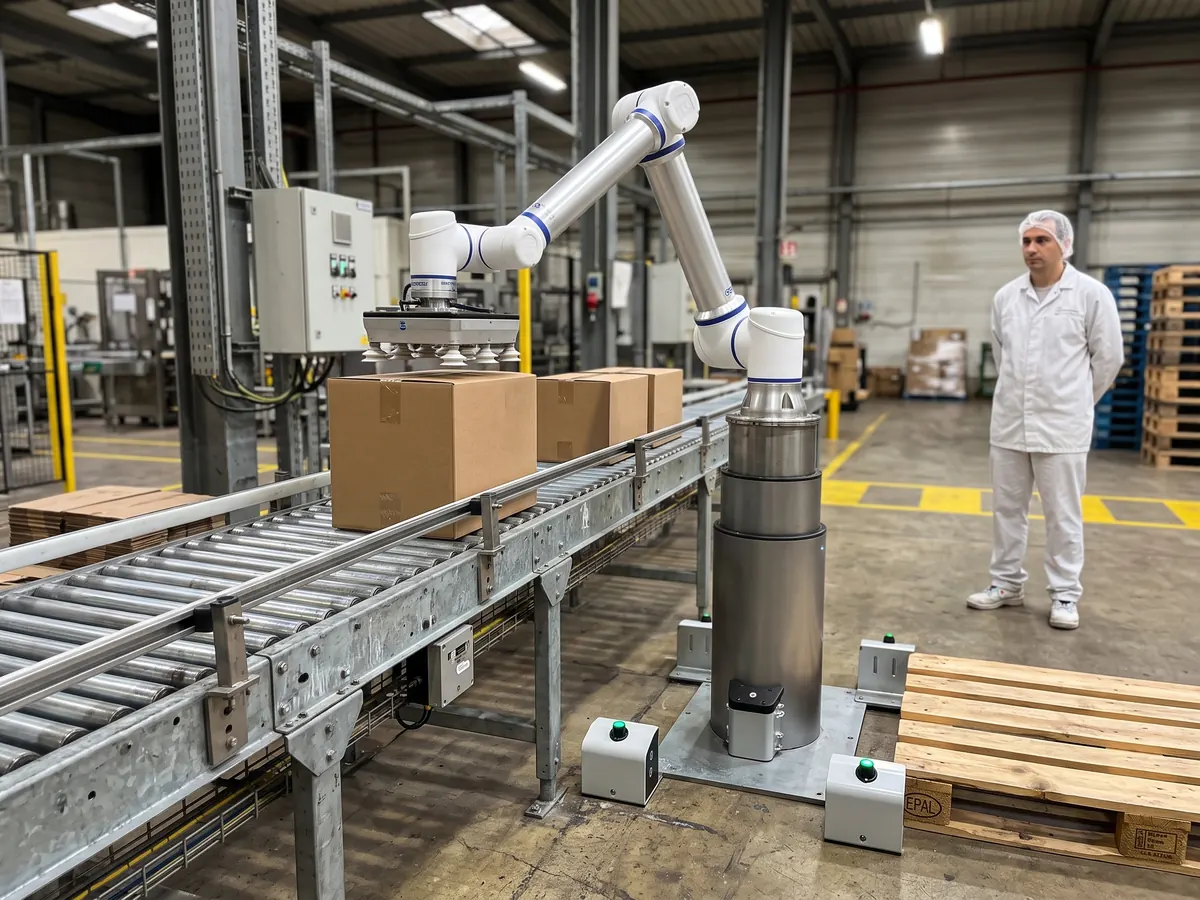
A collaborative palletizer takes each case at the end of the conveyor and places it on the pallet following a layer-by-layer pattern.
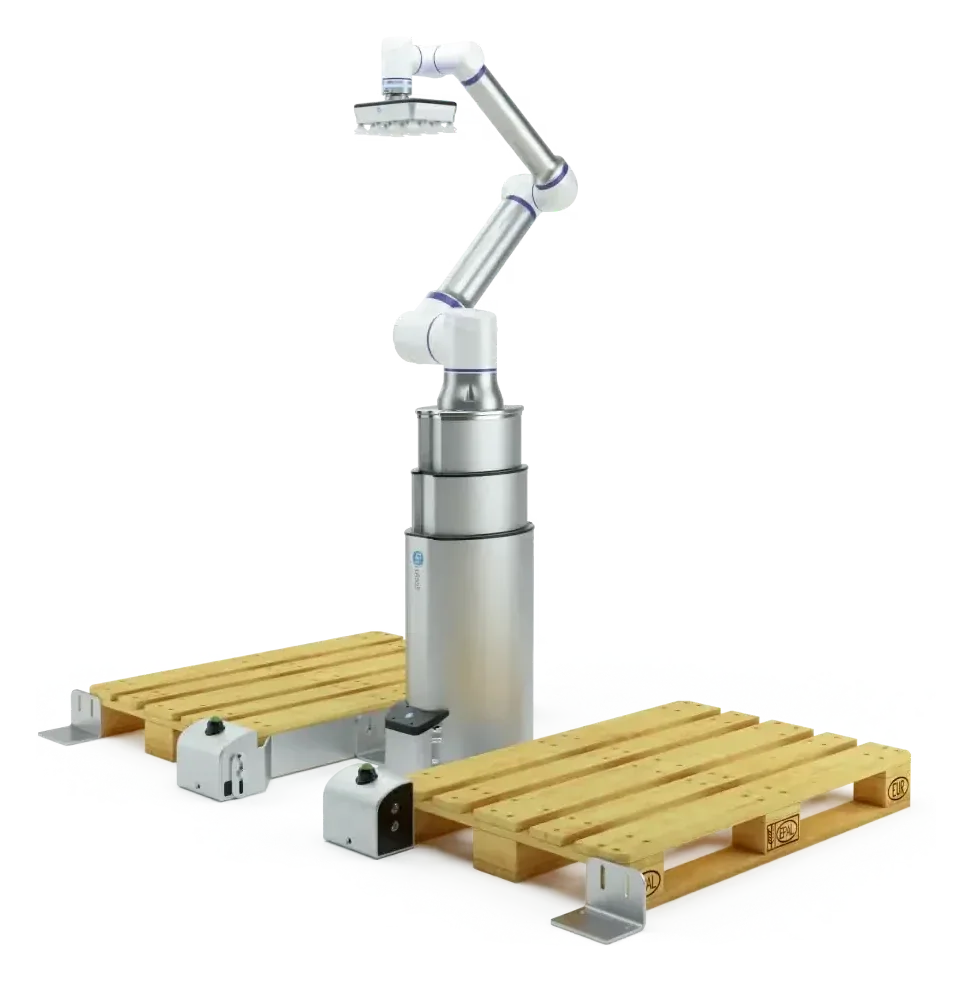
The Elite Robots CP Series Palletizer stacks up to 2.6 m with its telescopic column and handles up to 14 cases per minute with dual picking according to its manufacturer.
Robot Distribution installs it at the end of your line, sets up your pallet patterns, trains the team and maintains it, to buy, rent or as RaaS.
WHY
At the end of a line, manual palletizing means lifting, turning and placing cases of several kilos hundreds of times per shift. It is a tiring job, hard to staff, and often the one that limits throughput when the line speeds up.
The collaborative palletizer takes that job without a conventional robot cell: it fits a small footprint, moves when the line changes and takes a new case format through simple settings. It targets medium-speed lines and frequently changing products.
HOW IT RUNS
The conveyor brings the sealed case to a fixed pick point, where a sensor tells the cobot it is there.
It grips the case by vacuum, turns it and places it in the layer according to the pallet pattern chosen for the product.
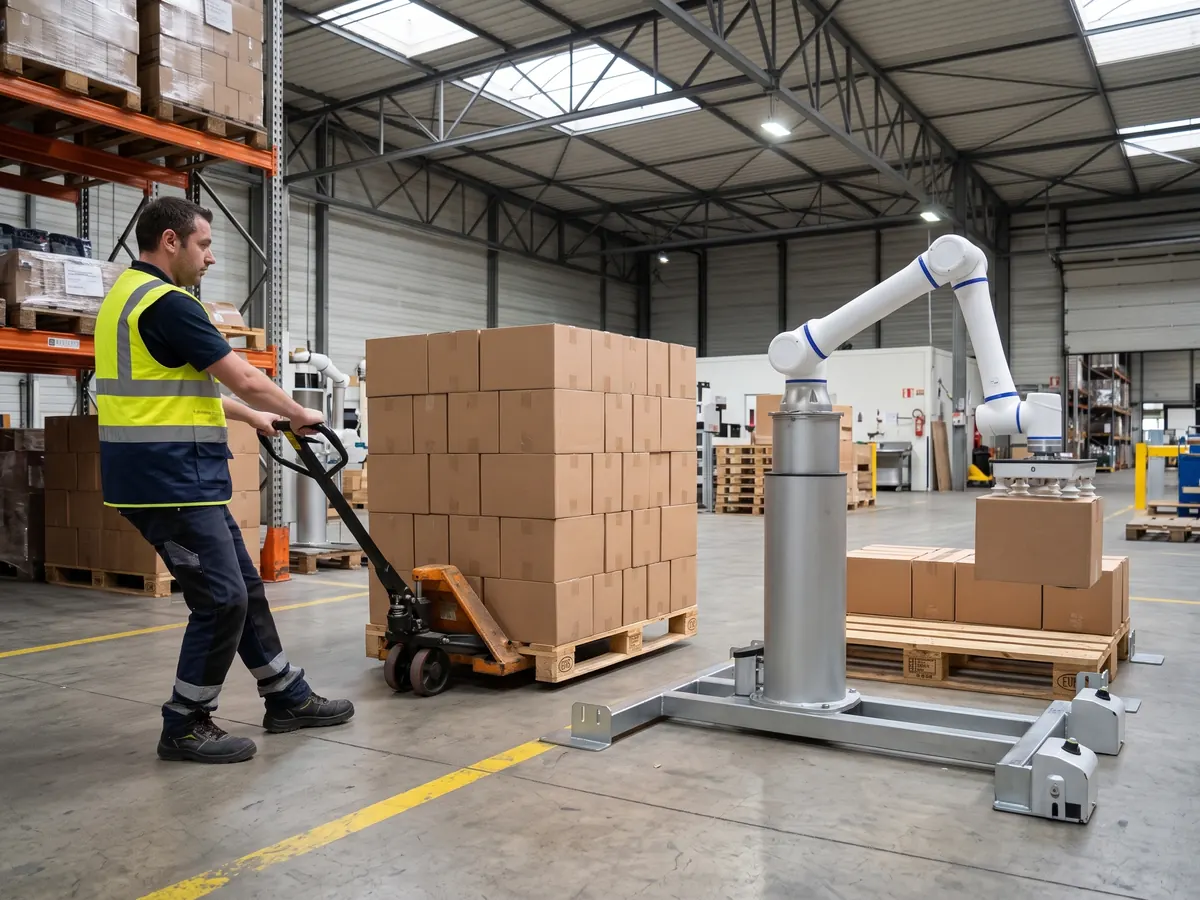
With each layer the lifting column raises the arm to keep the right placing angle up to the top row.
He takes the finished pallet away with a pallet truck while the cobot carries on with the second pallet, then puts down an empty one.
THE ROBOTS
Collaborative robots
Industrial logistics
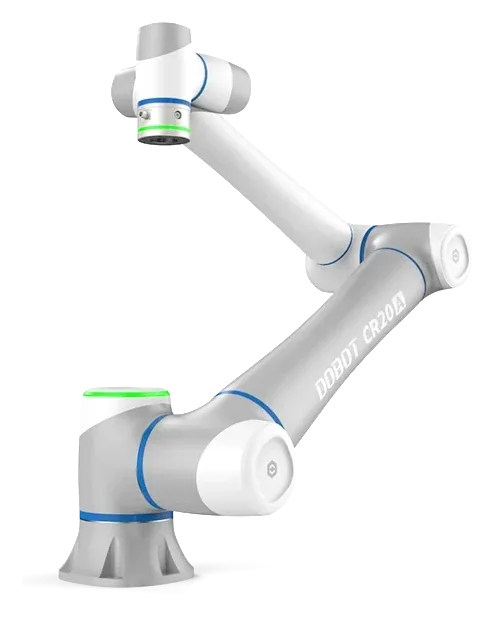
Collaborative robots
BEFORE INSTALLING
Weight, size and stiffness of the cases, surface for the vacuum cup and line output rate: these set the arm and the gripper.
Pallet format and final stacking height, compared with the column stroke and the ceiling height.
Room for the palletizer and two pallet stations, access for the pallet truck or forklift and walking routes.
Risk assessment to ISO 10218 and ISO/TS 15066: area scanner or light curtain on the pallet stations if needed.
FAQ
The Elite Robots CP Series Palletizer is rated at 7 cases per minute with single picking and 14 with dual picking according to its manufacturer. Actual throughput depends on case weight and the pallet pattern.
Up to 2.6 m with the telescopic column of the Elite CP Series and 1.7 m with its fixed pedestal; the column of the AUBO Palletizing Robot has a 2,300 mm vertical stroke according to their manufacturers.
No. The CP Series has built-in no-code palletizing software and the AUBO palletizer a dedicated process package: you enter the case and pallet dimensions, then pick the layer pattern.
Both palletizers run on single-phase 220 V according to their manufacturers. Compressed air is also needed if the gripper uses pneumatic vacuum.
USE CASES
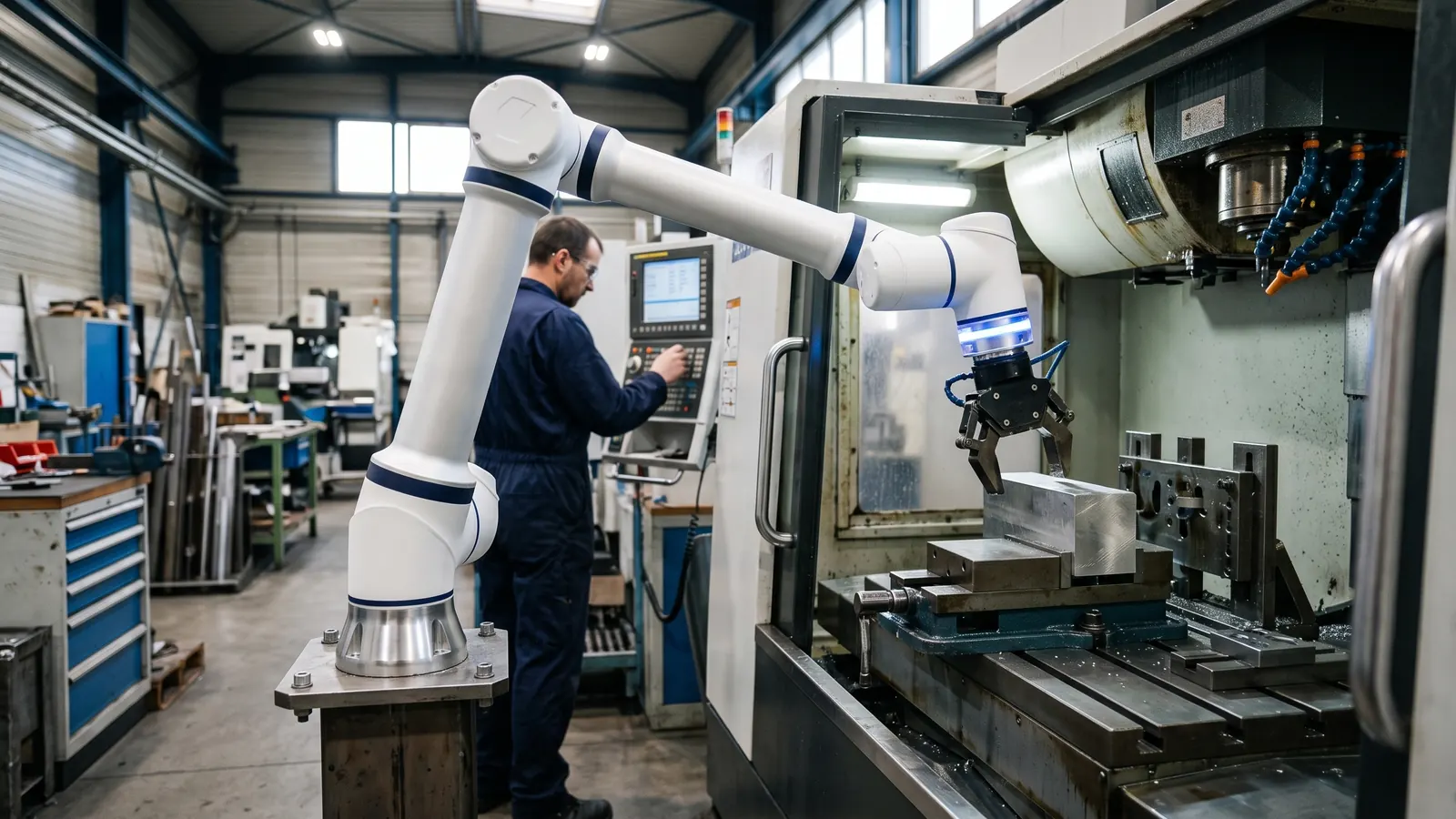 CNC machine tendingThe cobot does the repetitive move at the machine door. The setter keeps the skilled work: programs, tooling, measuring and first-off parts.
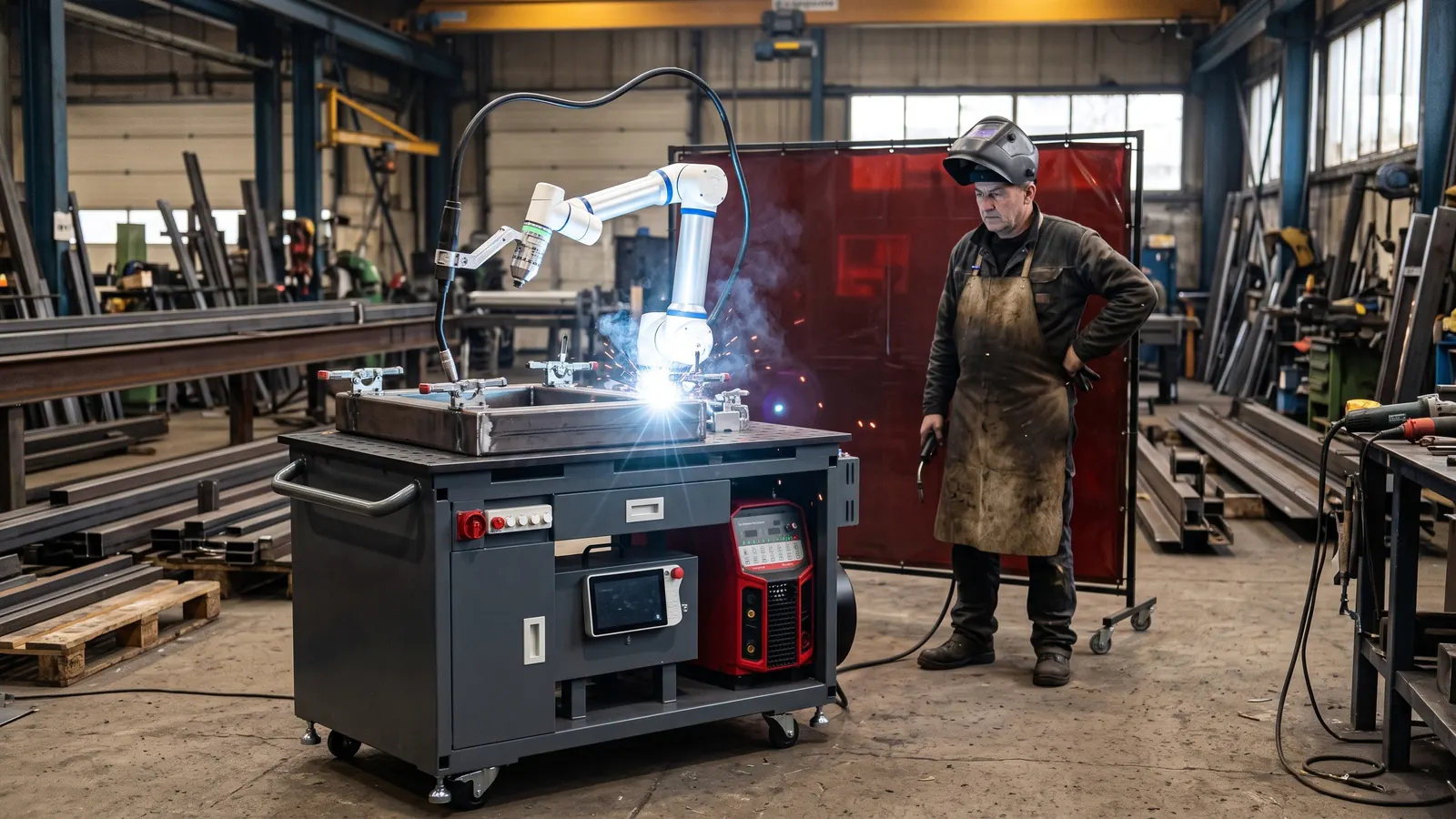 Collaborative weldingThe welder keeps the craft: preparation, tacking, setting parameters and checking the welds. The cobot takes the repetitive welds of the batch.
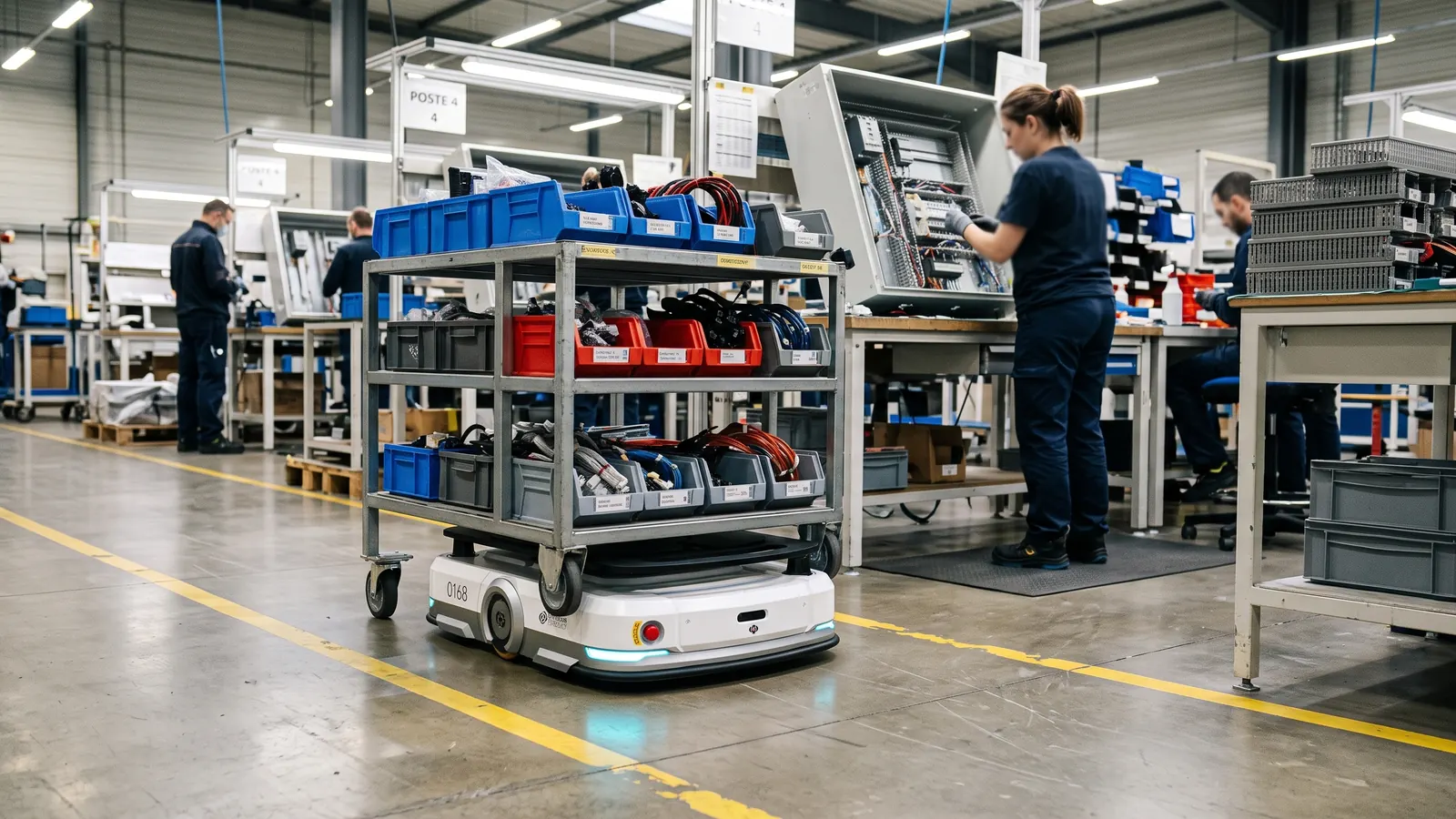 Line-side feedingThe mobile robot runs the milk run between stores and the line. Operators no longer leave their station to fetch parts, and the storekeeper prepares instead of driving.
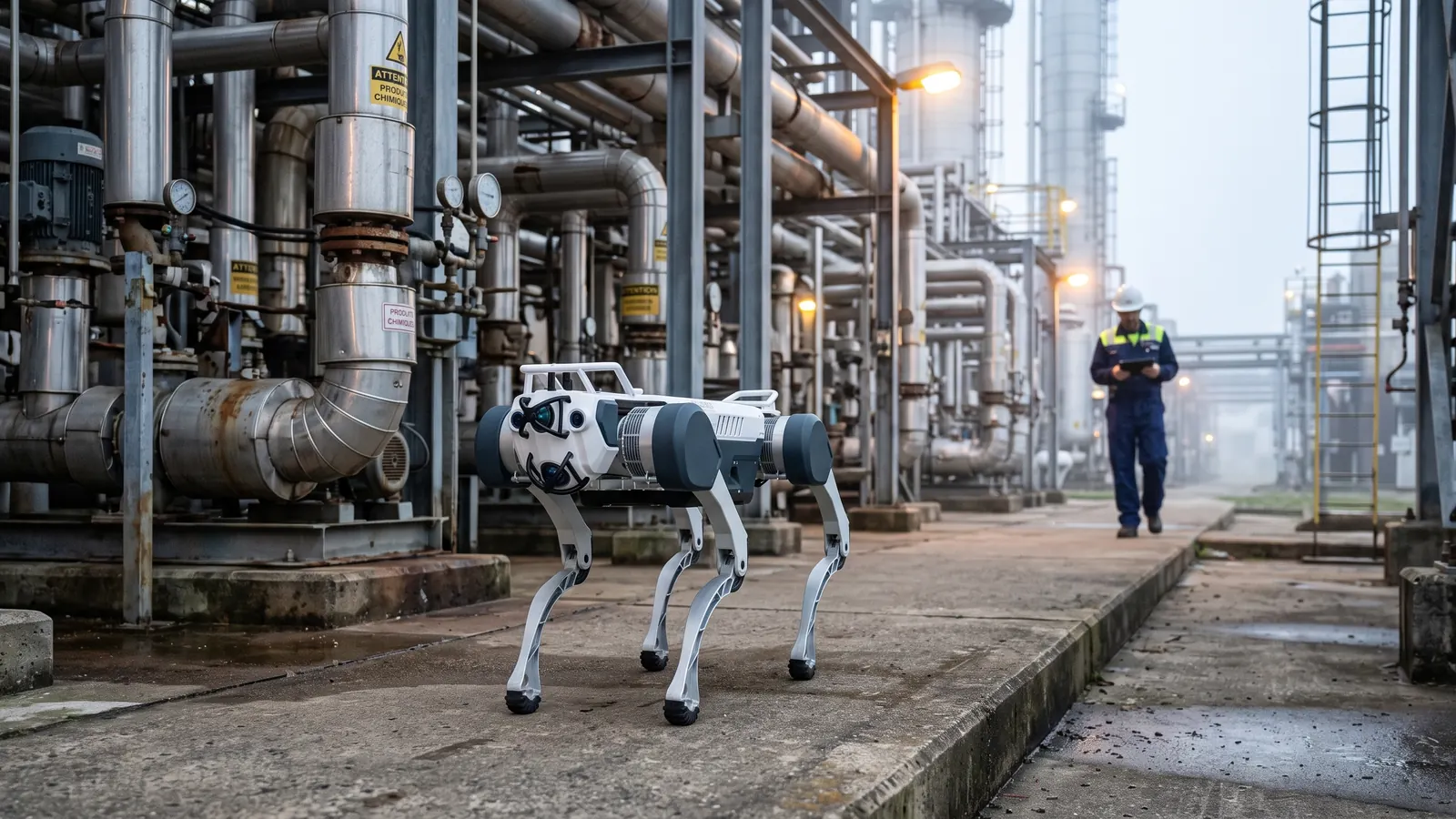 Industrial inspection roundsThe robot walks the same route every day, stops at the same points and records images, temperatures and readings. Technicians review the deviations and step in where needed.
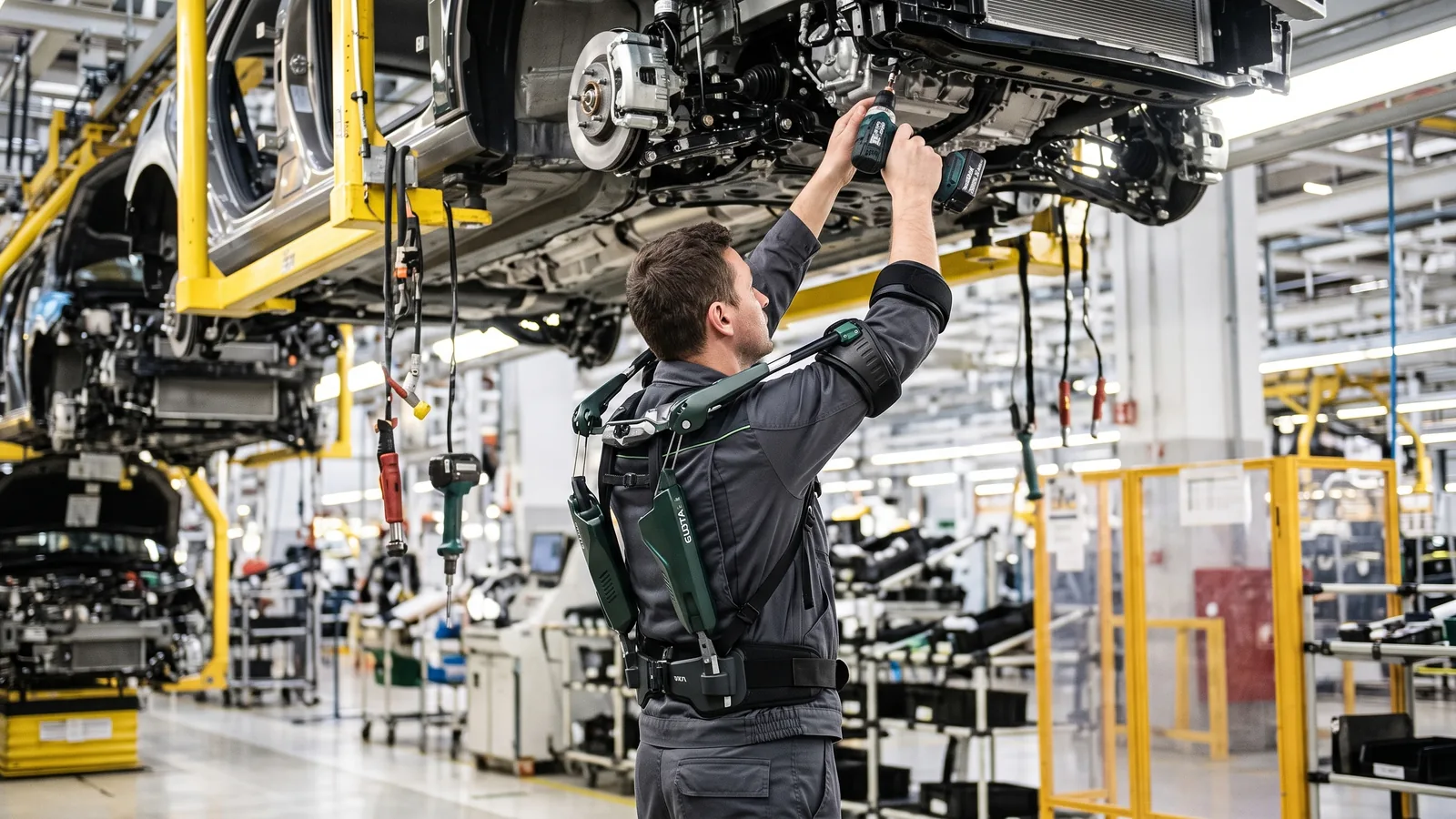 Exoskeletons for overhead workA shoulder exoskeleton supports the arms when they rise above chest height, without changing the tool or the movement. The operator keeps full precision; the device carries part of the weight of the arms.
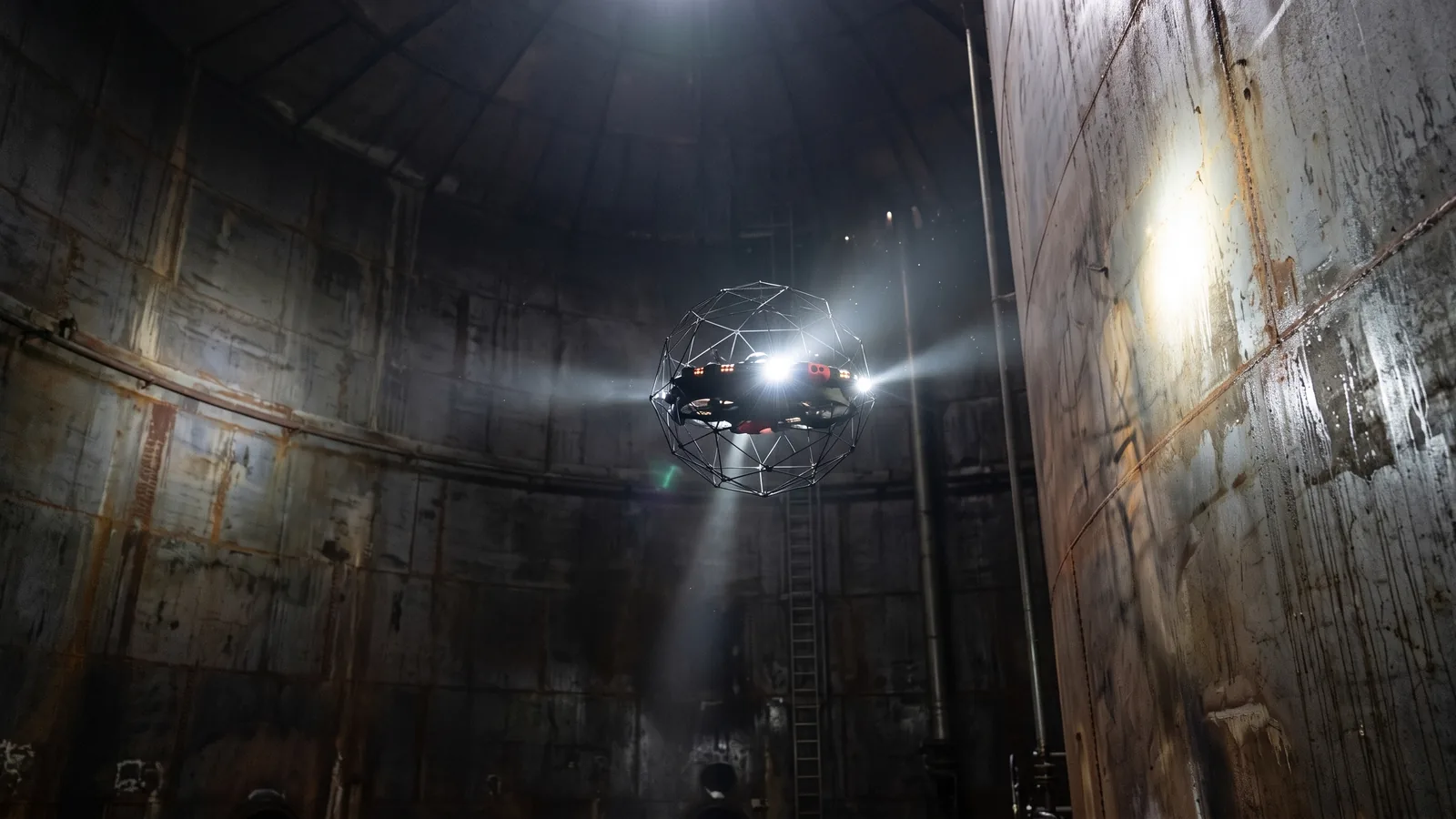 Confined-space drone inspectionThe drone goes into the tank, boiler or silo instead of the inspector and brings back images, video and 3D data. Inspectors keep the analysis, the regulatory measurements and the repair decisions.
Robots, acquisition mode and delivery terms, in one written proposal.