Collaborative robots
- Payload
- 6–20 kg
- Key feature
- Copilot teaching
- Key feature
- MIG/MAG welding
On order
Price on request
Updated
USE CASE · INDUSTRY
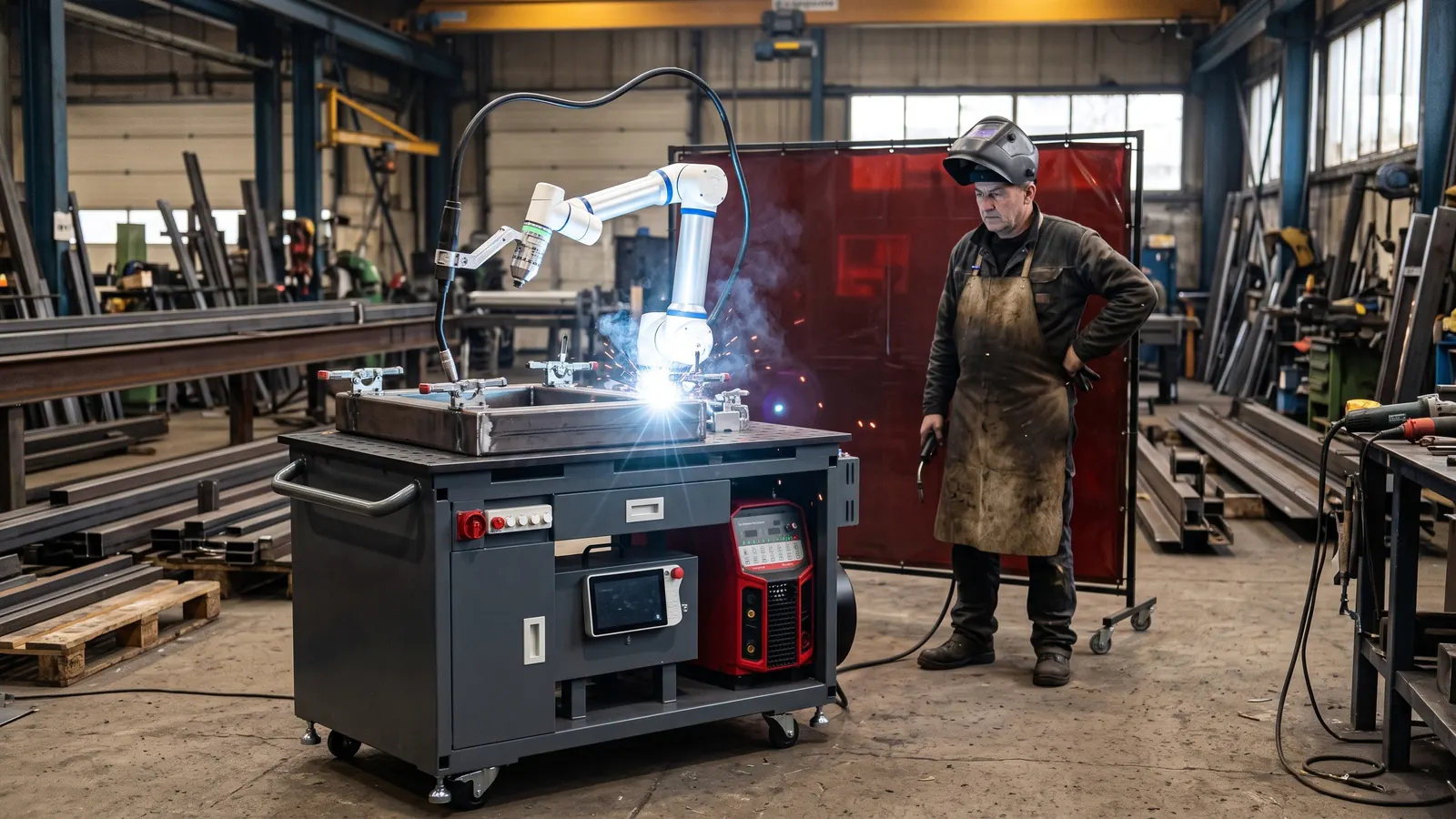
The welder keeps the craft: preparation, tacking, setting parameters and checking the welds. The cobot takes the repetitive welds of the batch.
Updated
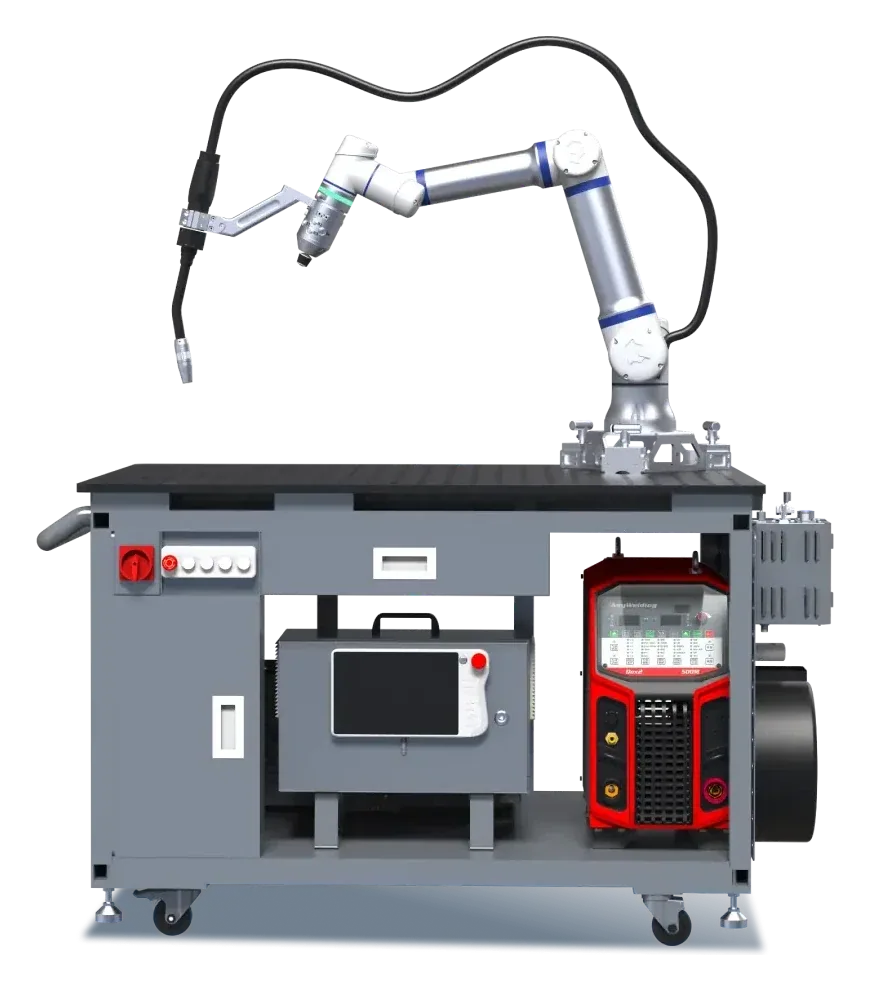
A welding cobot is a collaborative arm with a MIG/MAG torch, mounted on a mobile trolley, which the welder teaches by guiding it by hand.
The Elite Robots CW Series Welding Cobot pairs a 6, 12 or 20 kg arm with a 350 A or 500 A welding machine on a mobile workbench with a magnetic base according to its manufacturer.
Robot Distribution installs it in your shop, sets it up with your welders on your parts, trains them and maintains it, to buy, rent or as RaaS.
WHY
In metal fabrication and steelwork, skilled welders are scarce and part of their day goes on repetitive welds: plates, gussets, frames and brackets made in small batches. Conventional robot cells take long to program and only pay off on large runs.
The welding cobot changes that. The welder shows it the path points by hand, picks the parameters in a welding wizard and starts the batch. The station moves from one part to another, and the shop keeps its flexibility for batches of a few dozen parts.
HOW IT RUNS
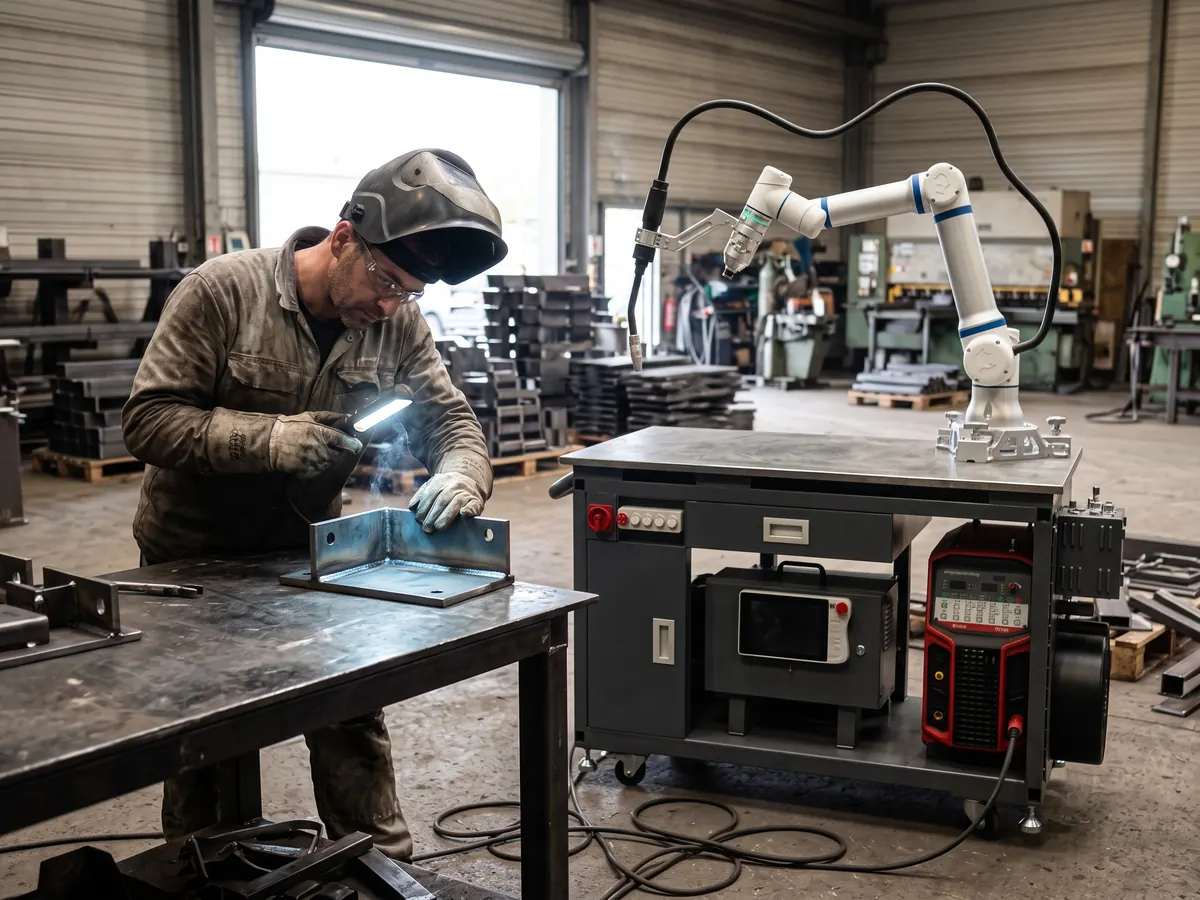
He positions and tacks the parts on the station's fixturing table, as for manual welding.
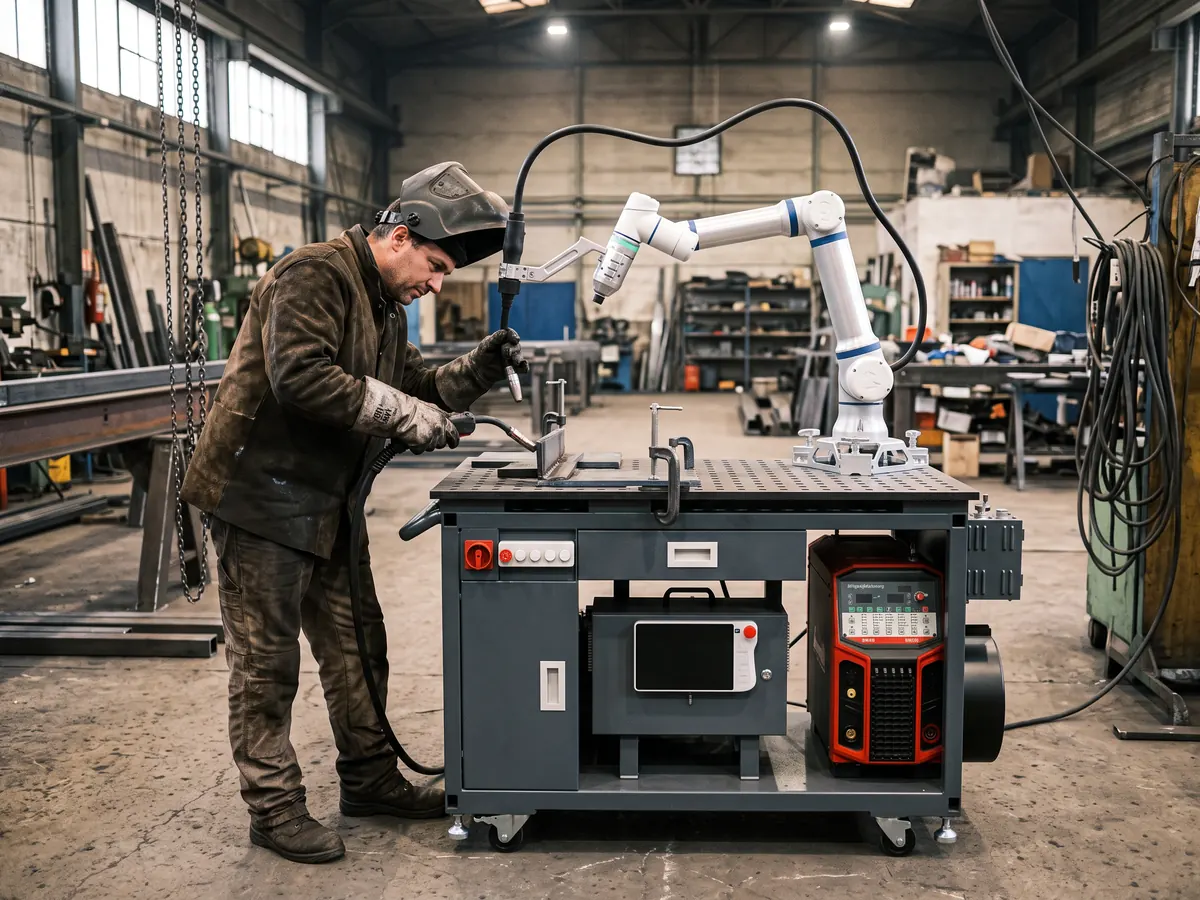
He guides the torch to the start and end points of each weld and records them, then picks the process, current and weave in the wizard.
It runs the welds at constant speed and angle while the welder prepares and tacks the next part.
The welder inspects the welds, finishes hard-to-reach areas by hand and adjusts the parameters for the next parts if needed.
THE ROBOTS
Collaborative robots
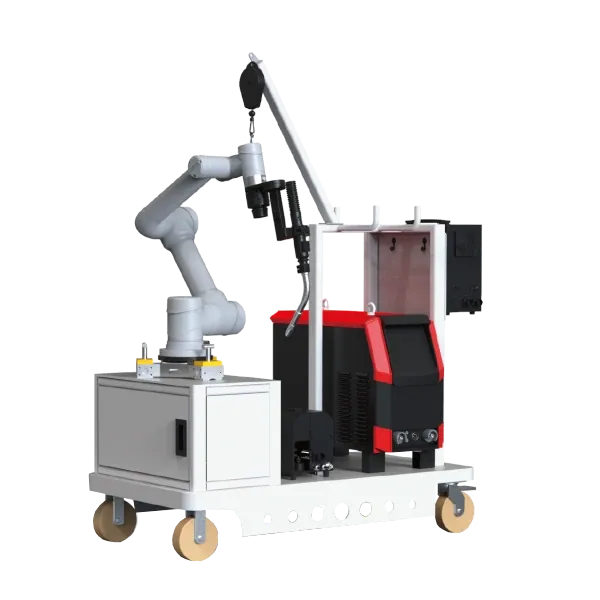
Collaborative robots
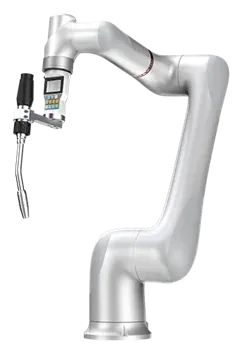
Collaborative robots
BEFORE INSTALLING
Part sizes, thicknesses, weld types and torch access: the arm's reach must cover every weld without repositioning the part.
MIG/MAG, gas, wire and current needed, and whether a compatible existing machine can be reused.
Fume extraction at source, arc screens for neighbouring stations and the welder's protective equipment.
The arm is collaborative, but the torch, the arc and spatter remain hazards: the zone and instructions are defined to ISO 10218 and ISO/TS 15066.
FAQ
No. The CW Series is taught by guiding the torch by hand with its Copilot handle and a welding wizard, the AUBO AWS500-C5 with a drag joystick and the ROKAE welding robot by hand guiding according to their manufacturers.
Gas-shielded arc welding: MIG/MAG for the CW Series, CO₂ and MAG for the AWS500-C5, with 350 A or 500 A torches according to their manufacturers.
Yes. The CW Series sits on a mobile workbench with a magnetic base and the AWS500-C5 on a trolley with a 1,320 × 650 mm footprint and a magnetic base according to their manufacturers: you bring it to the part when the part is too big for the table.
As soon as the same part comes back in batches, even short ones, and the welder can prepare the next part while the cobot welds. The site survey looks at your actual parts and batches.
USE CASES
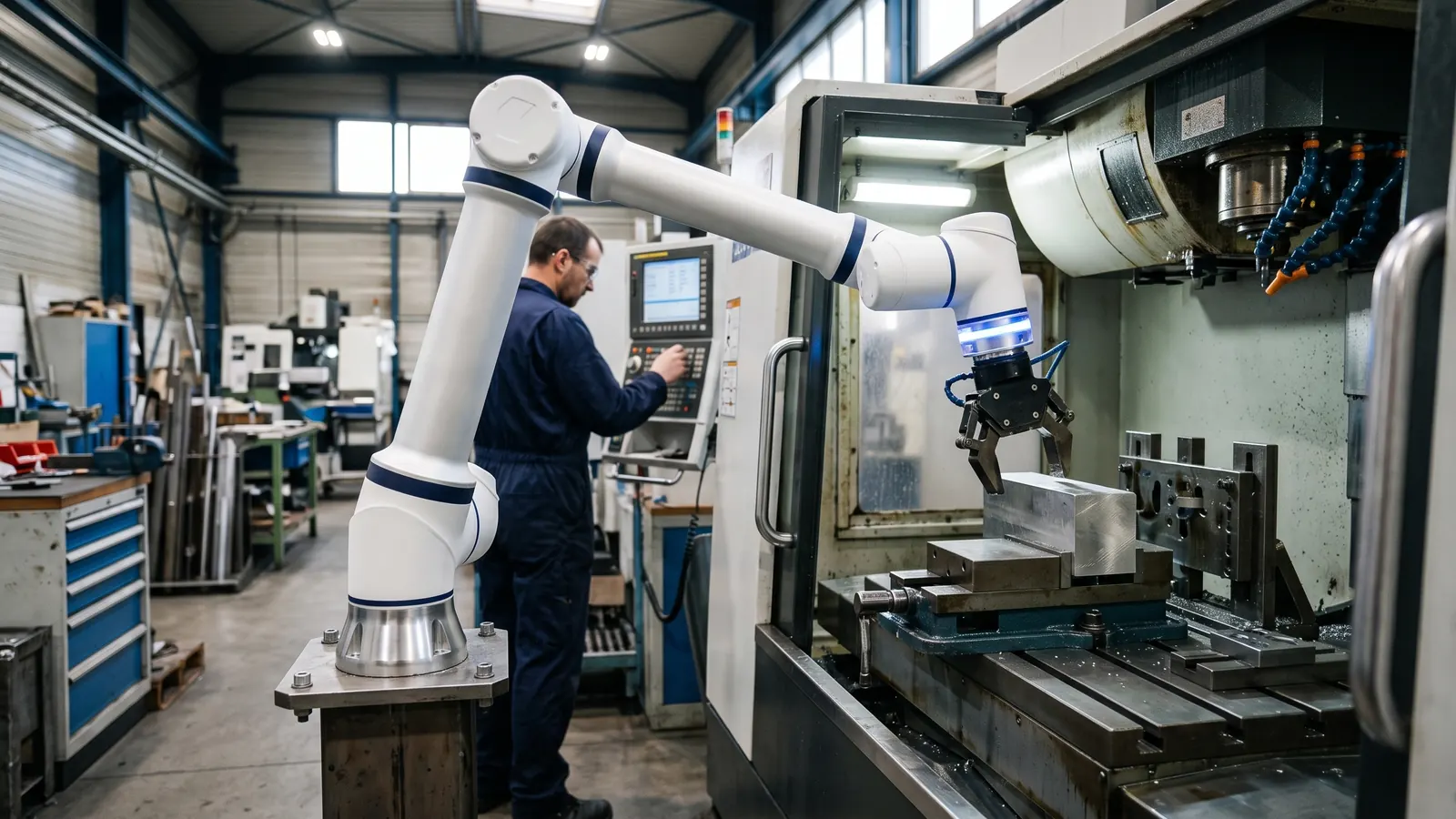 CNC machine tendingThe cobot does the repetitive move at the machine door. The setter keeps the skilled work: programs, tooling, measuring and first-off parts.
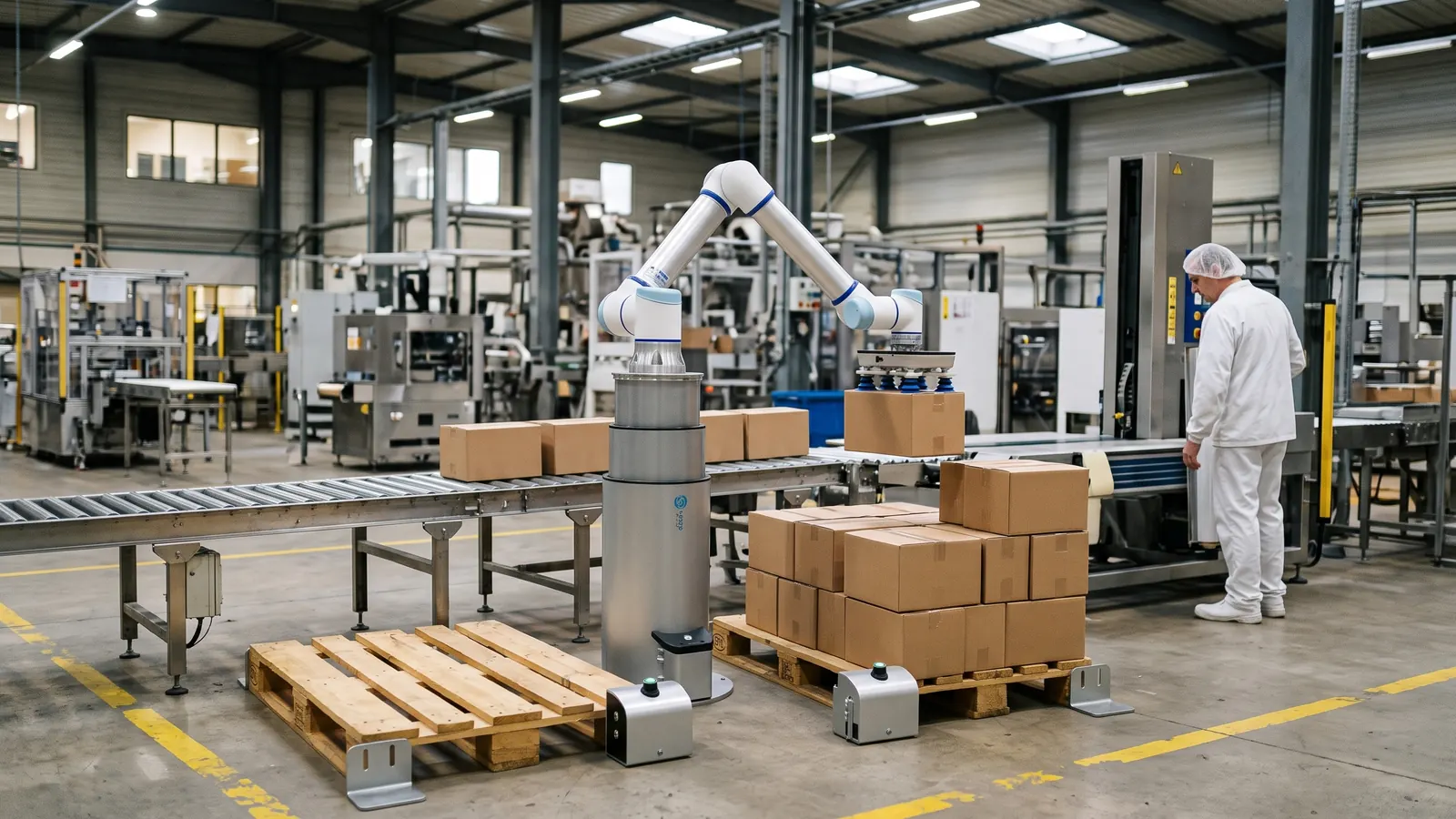 End-of-line palletizingThe cobot builds the pallets at the end of the line. The operator no longer lifts cases: he supplies, wraps, moves full pallets out and watches production.
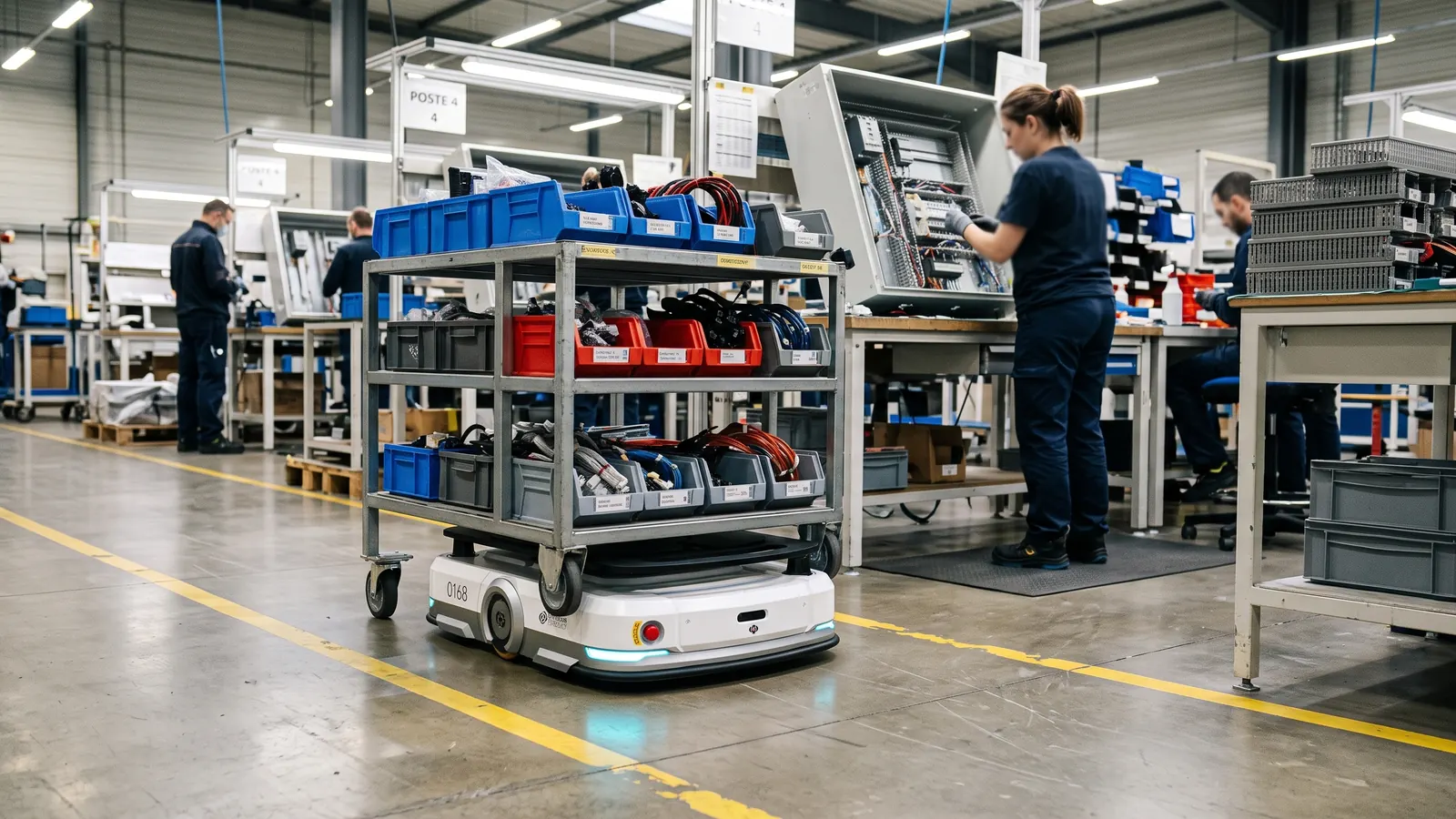 Line-side feedingThe mobile robot runs the milk run between stores and the line. Operators no longer leave their station to fetch parts, and the storekeeper prepares instead of driving.
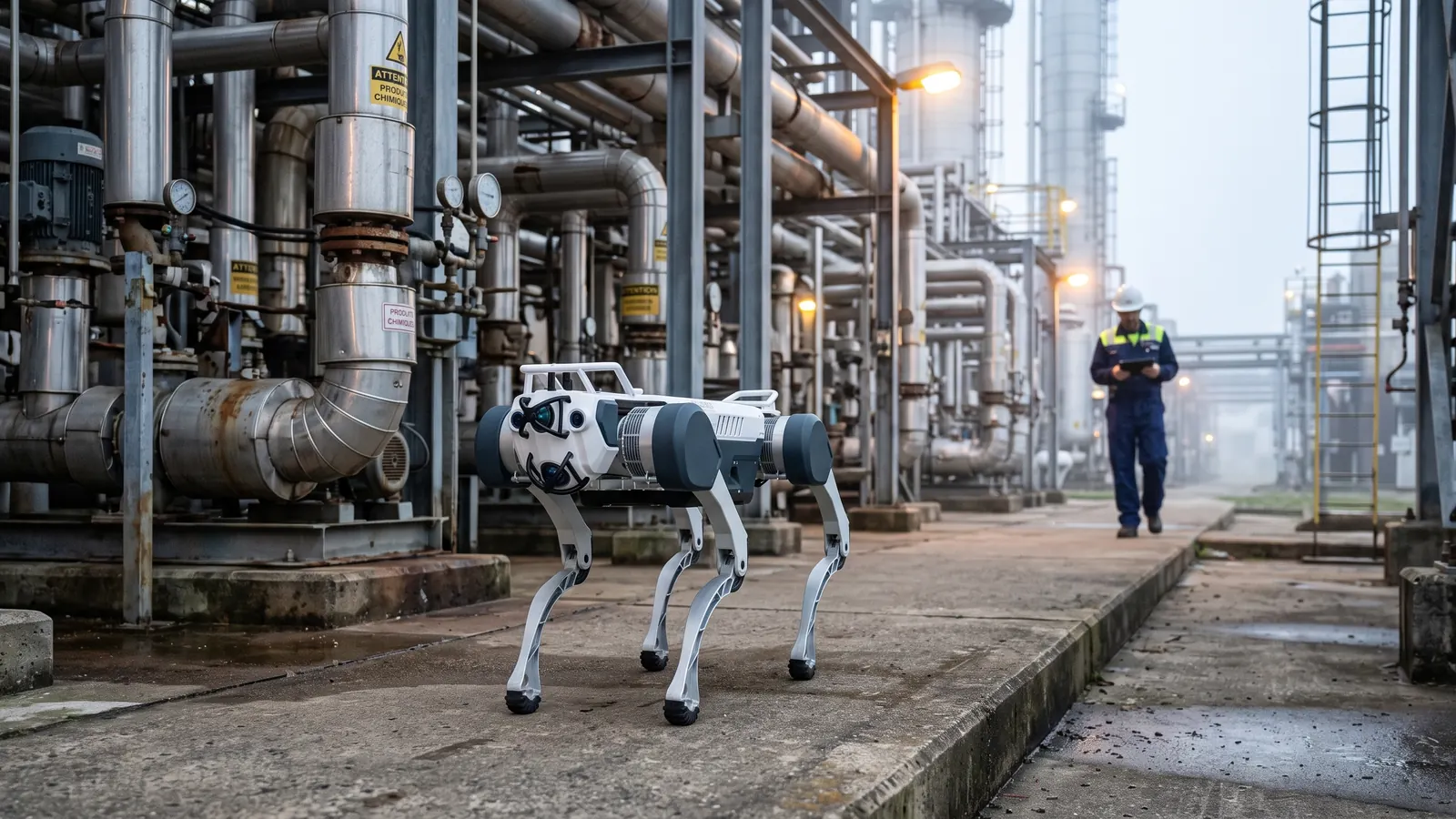 Industrial inspection roundsThe robot walks the same route every day, stops at the same points and records images, temperatures and readings. Technicians review the deviations and step in where needed.
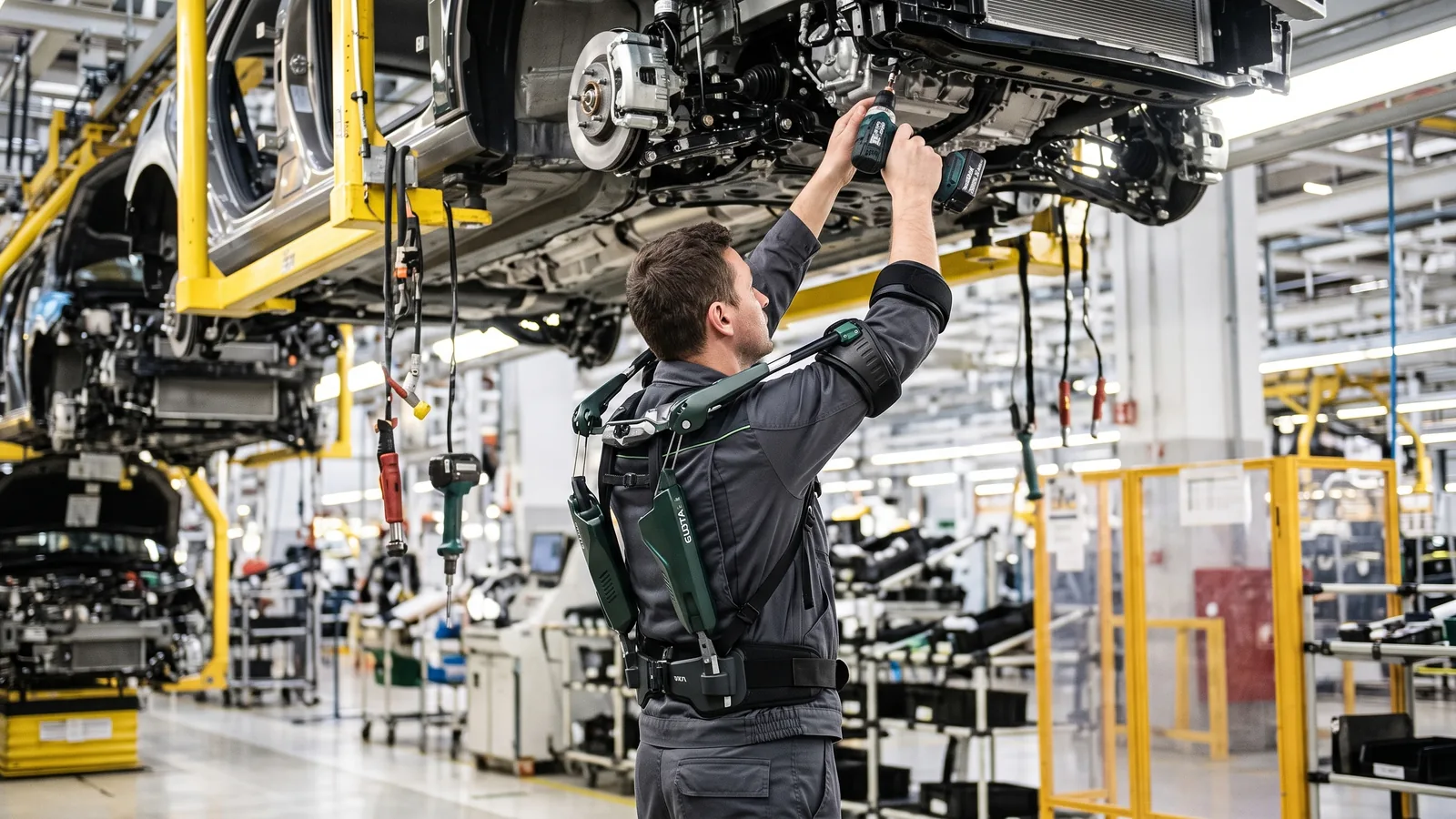 Exoskeletons for overhead workA shoulder exoskeleton supports the arms when they rise above chest height, without changing the tool or the movement. The operator keeps full precision; the device carries part of the weight of the arms.
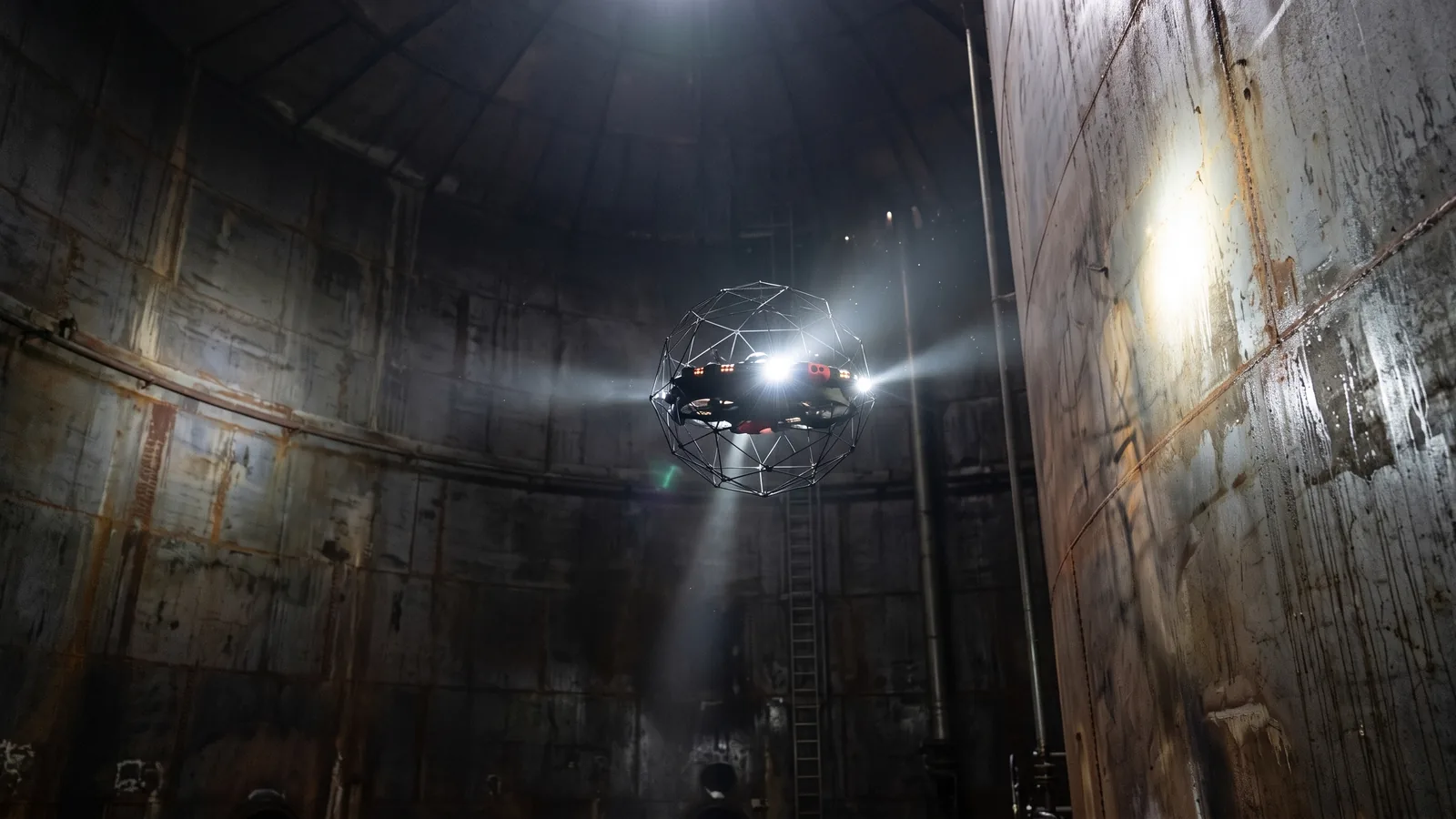 Confined-space drone inspectionThe drone goes into the tank, boiler or silo instead of the inspector and brings back images, video and 3D data. Inspectors keep the analysis, the regulatory measurements and the repair decisions.
Robots, acquisition mode and delivery terms, in one written proposal.