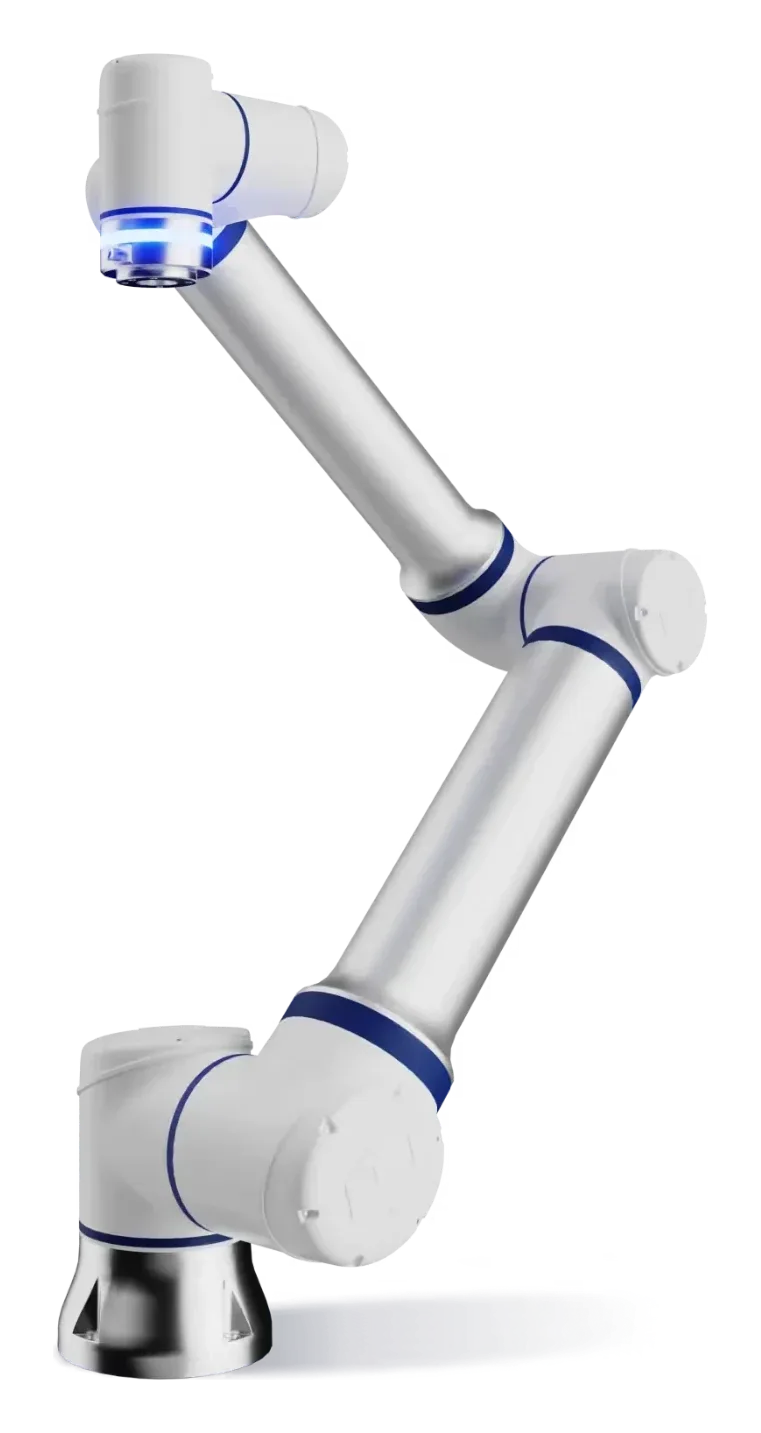
Collaborative robots
- Payload
- 12 kg
- Reach
- 1,304 mm
- Weight
- 34 kg
On order
From €28,090 ex VATor €959/month in RaaS
Updated
USE CASE · INDUSTRY
The cobot does the repetitive move at the machine door. The setter keeps the skilled work: programs, tooling, measuring and first-off parts.
Updated
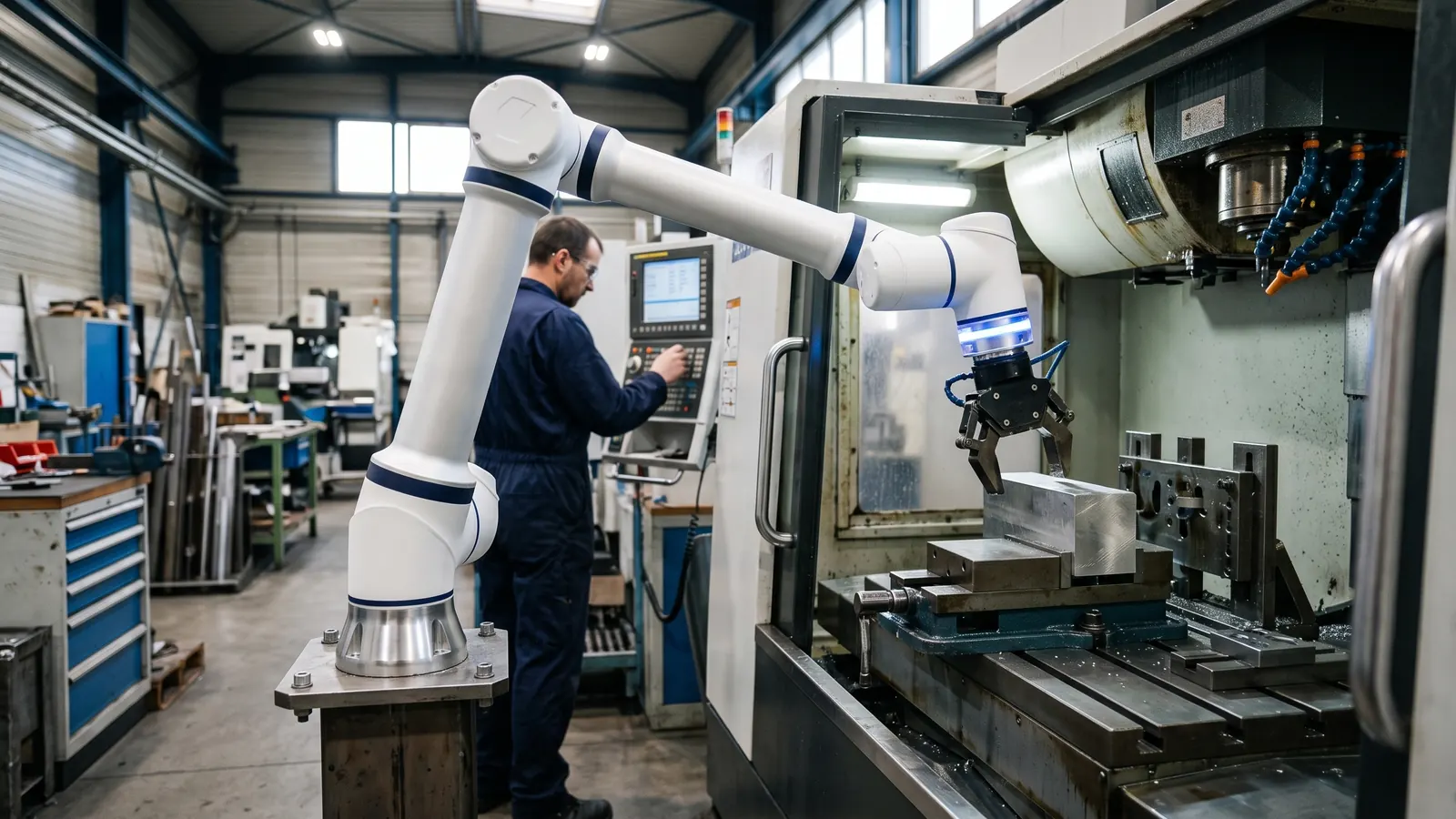
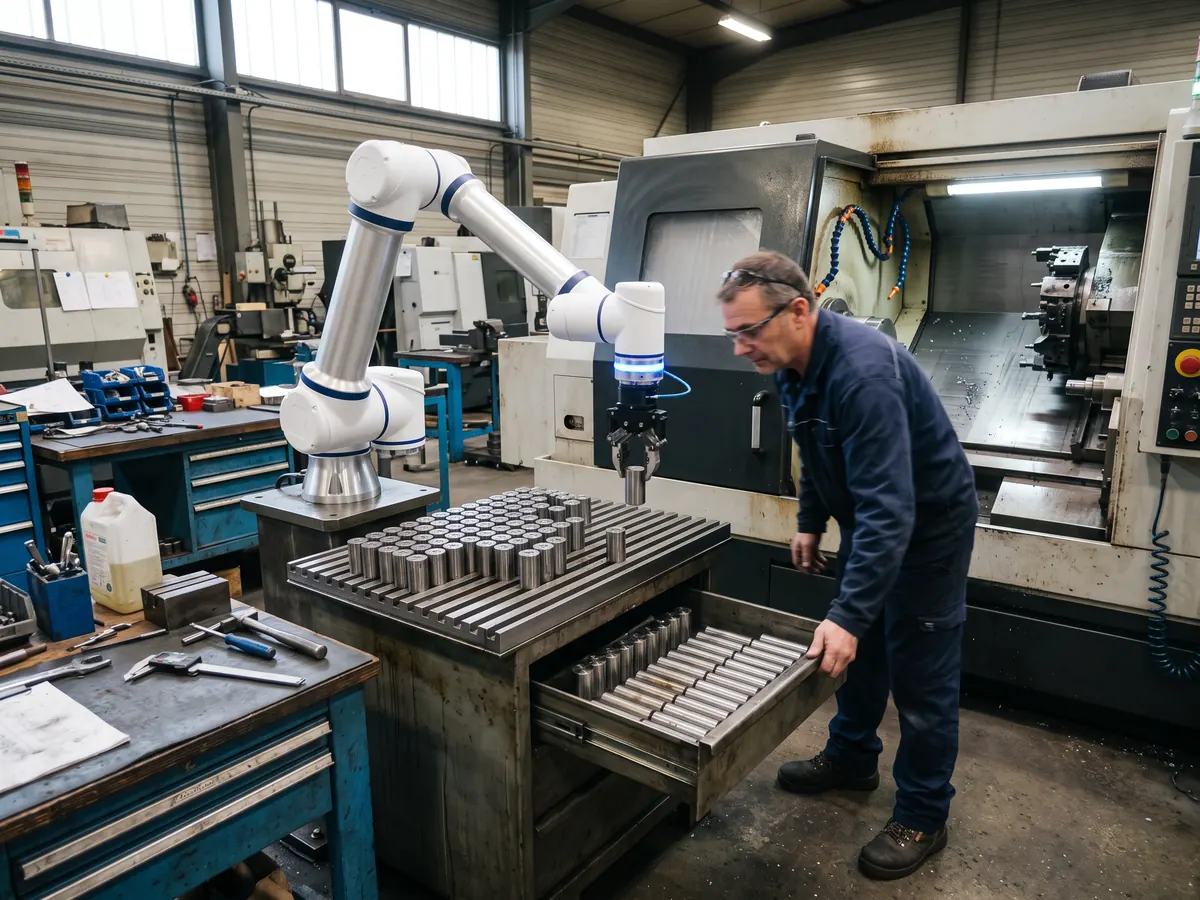
A machine tending cobot takes a blank from a grid or drawer, places it in the chuck or vice of the CNC machine, then puts the machined part on the outfeed.
The Elite Robots CS612 carries 12 kg with a 1,304 mm reach and ±0.05 mm repeatability according to its manufacturer.
Robot Distribution installs it at your machine, connects it to the CNC control, trains your setters and maintains it, to buy, rent or as RaaS.
WHY
On a lathe or machining centre the cycle often lasts a few minutes, and the operator spends much of the shift opening the door, swapping the part and pressing start. That move ties up a skilled person and leaves the spindle idle during breaks, shift changes and at night.
The cobot takes over that move. It works without a large fenced cell when the risk assessment allows, moves from one machine to another and is re-taught by hand when the batch changes: it suits the small and medium batches of a job shop.
HOW IT RUNS
He fills the infeed grid or drawer with oriented blanks, at the start of the shift or before leaving at night.
The CNC opens the door, the cobot picks a blank with its gripper, places it in the chuck or vice, moves out and starts the cycle.
At the end of the cycle it removes the finished part, blows it off if needed, puts it on the outfeed and loads the next blank.
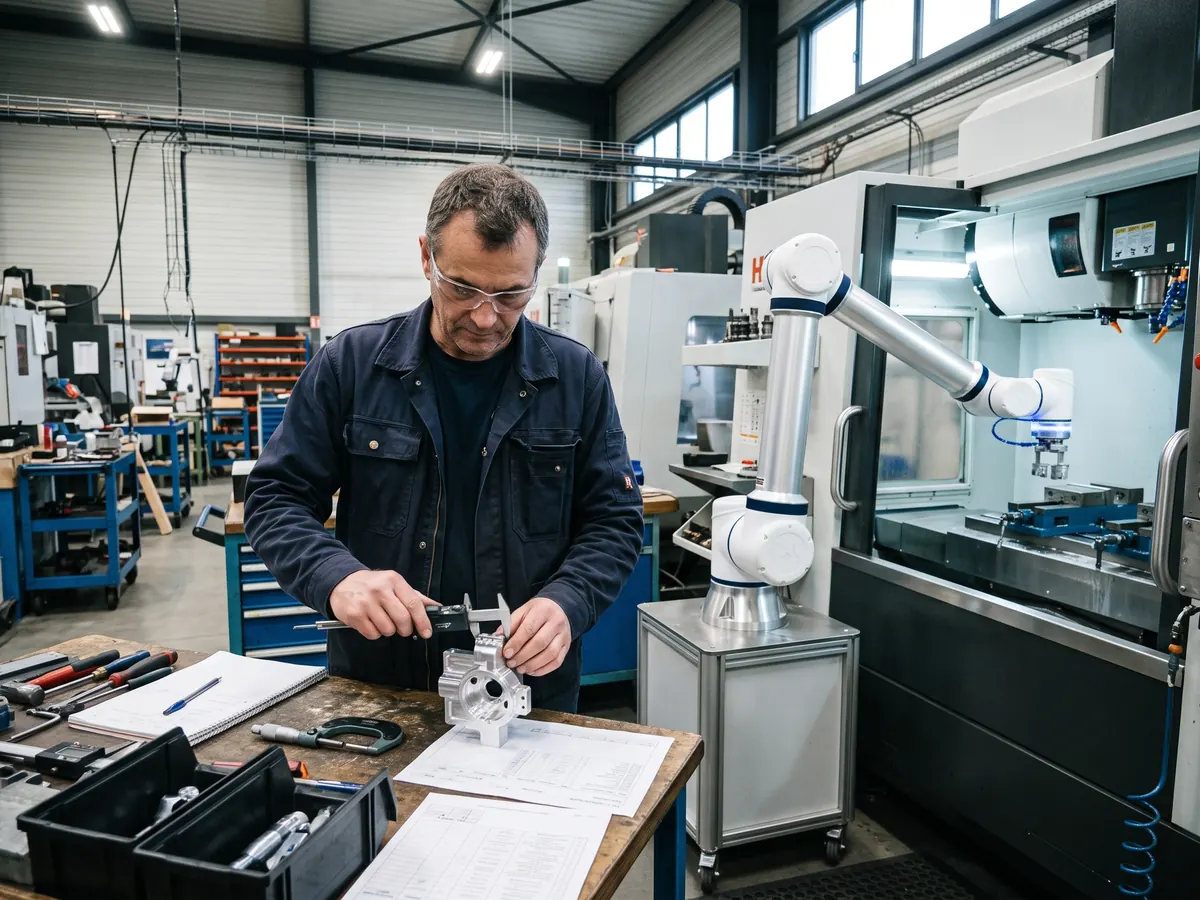
He measures sample parts, compensates tool wear and prepares the next batch while the machine keeps producing.
THE ROBOTS
Collaborative robots
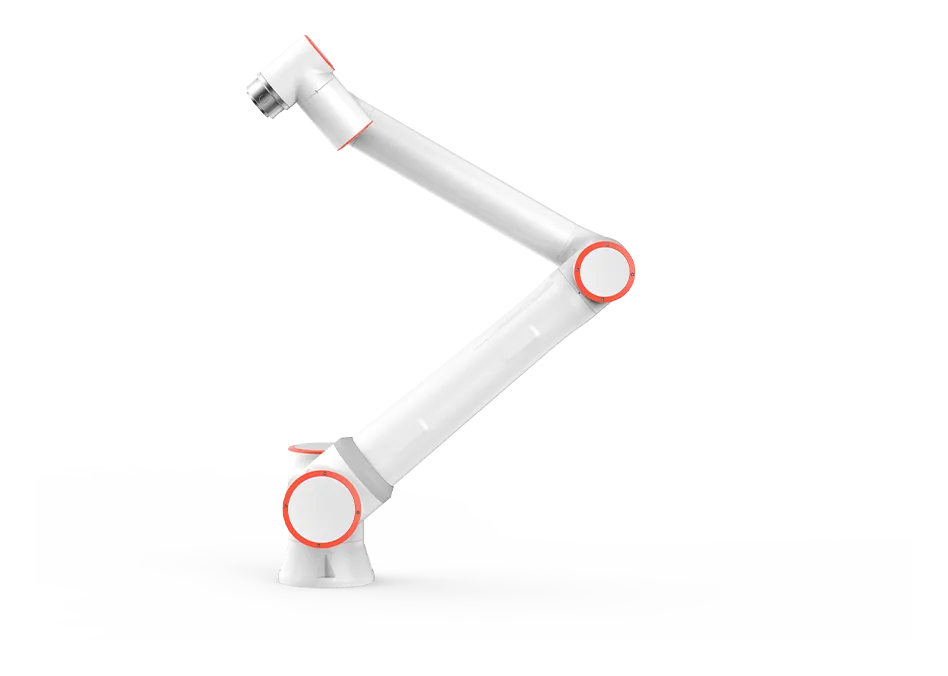
Collaborative robots
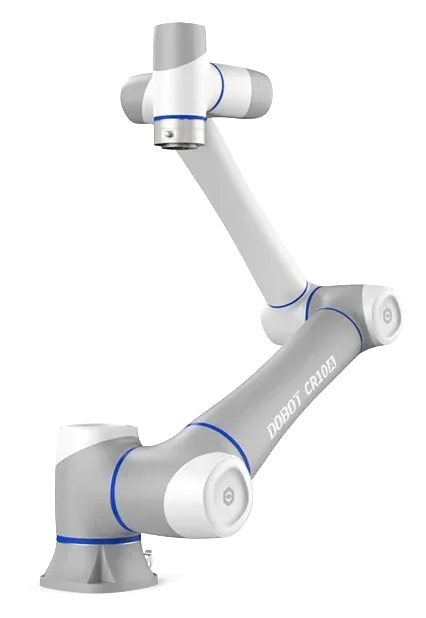
Collaborative robots
BEFORE INSTALLING
Weight and size of blanks and finished parts, gripper and fingers: the total load must stay within the arm's payload.
Automatic door, chuck or vice clamping and handshake signals with the control: this is what lets the cobot and the machine hand over to each other.
Where the base goes, access to the door, reach needed to the chuck and room left for the operator to set up.
Speed, possible contact zones and any presence sensors are defined to ISO 10218 and ISO/TS 15066 before production starts.
FAQ
The published payload includes the gripper: 12 kg for the Elite Robots CS612, 10 kg for the FAIRINO FR10 and the DOBOT CR10A according to their manufacturers. Above that, a 20 kg arm is the next step.
It needs an automatic door, controlled clamping and handshake signals with the control. Most recent machines offer them; on an older machine the site survey specifies what to add.
Not necessarily. The risk assessment, carried out to ISO 10218 and ISO/TS 15066, sets speeds, zones and sensors. A sharp-edged gripper or a heavy part may call for guarding.
The CS612 and FR10 are programmed on a touchscreen pendant and the CR10A by hand guiding according to their manufacturers: a trained setter re-teaches the pick and place points without calling a programmer.
USE CASES
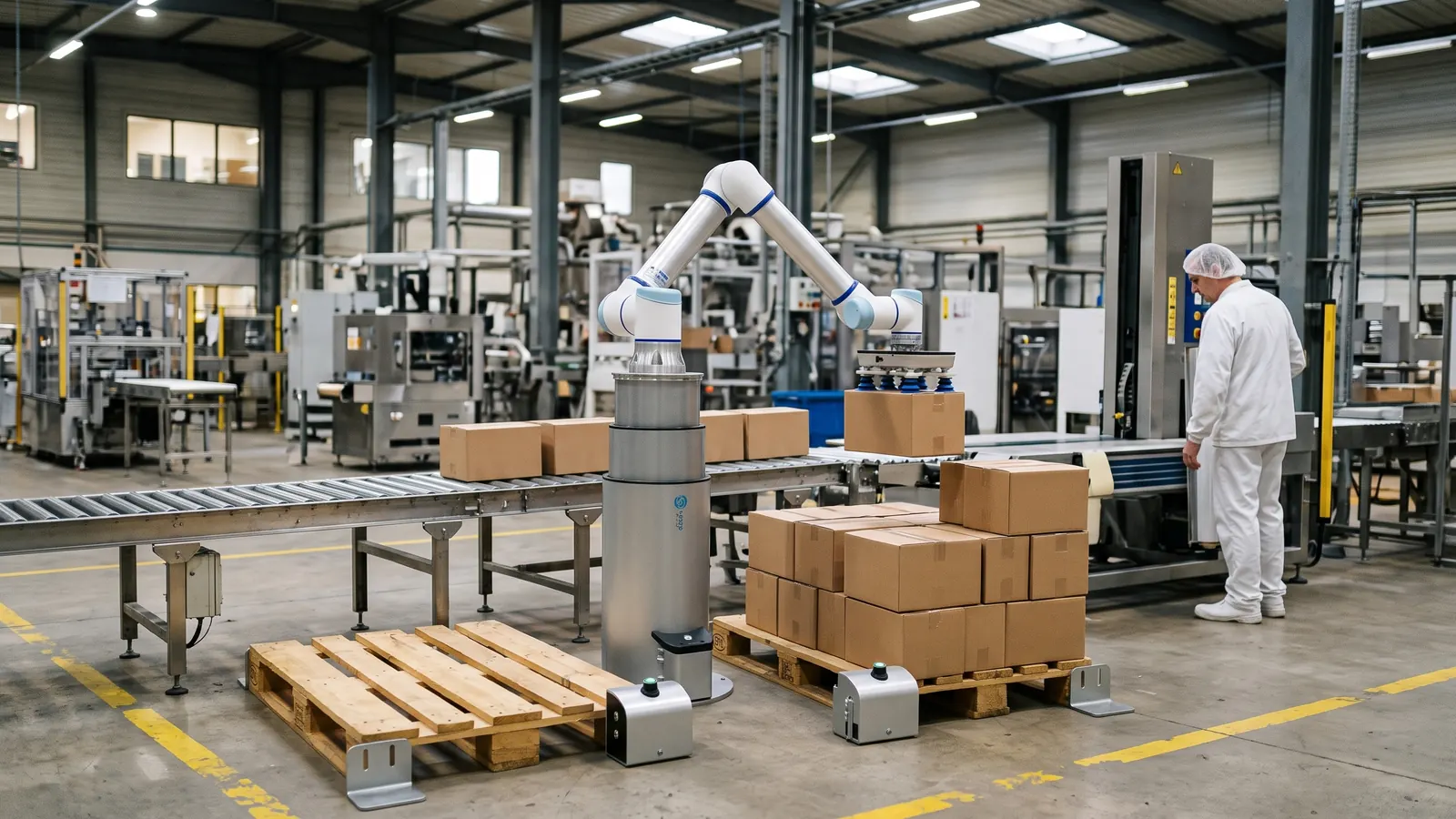 End-of-line palletizingThe cobot builds the pallets at the end of the line. The operator no longer lifts cases: he supplies, wraps, moves full pallets out and watches production.
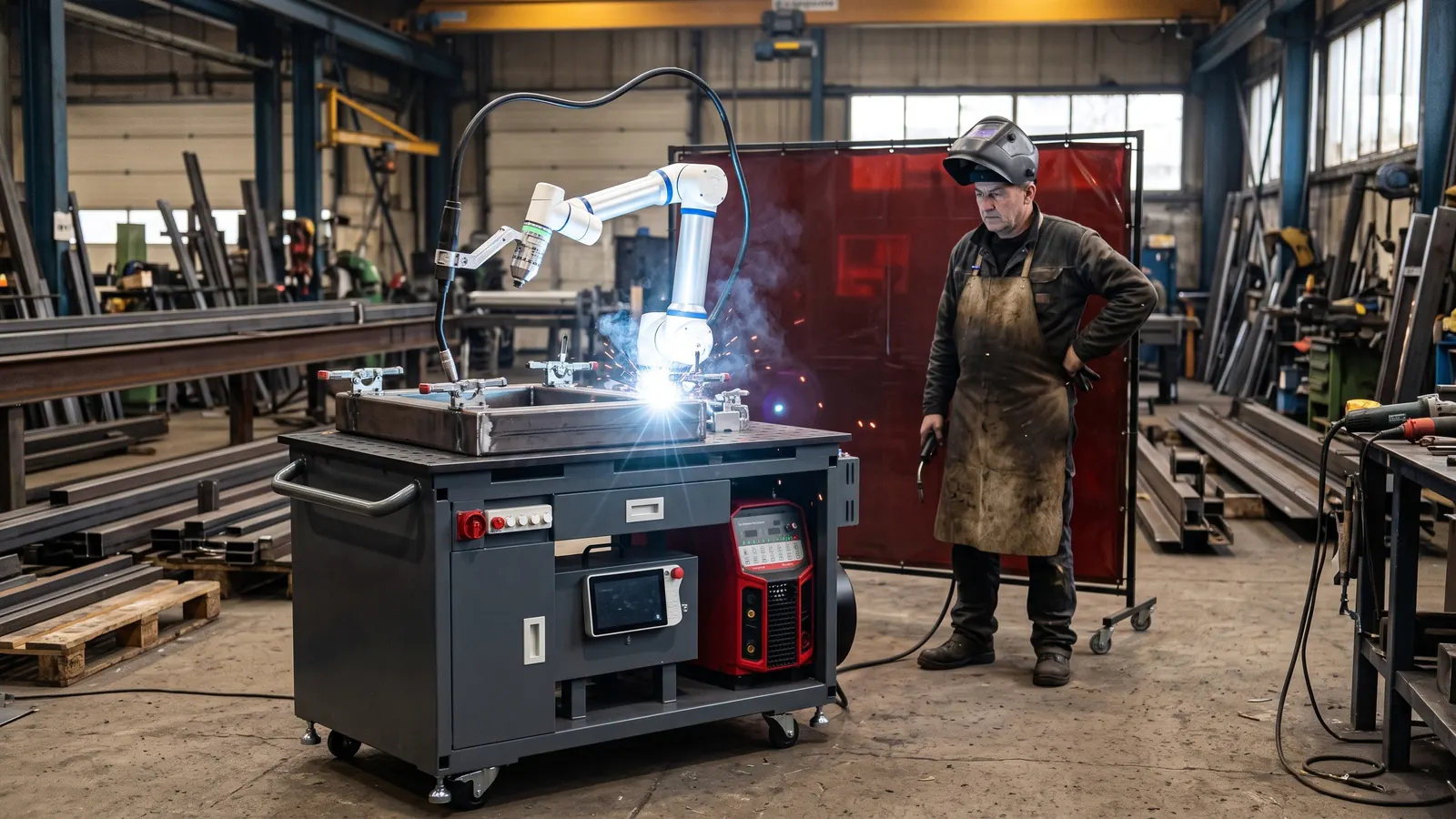 Collaborative weldingThe welder keeps the craft: preparation, tacking, setting parameters and checking the welds. The cobot takes the repetitive welds of the batch.
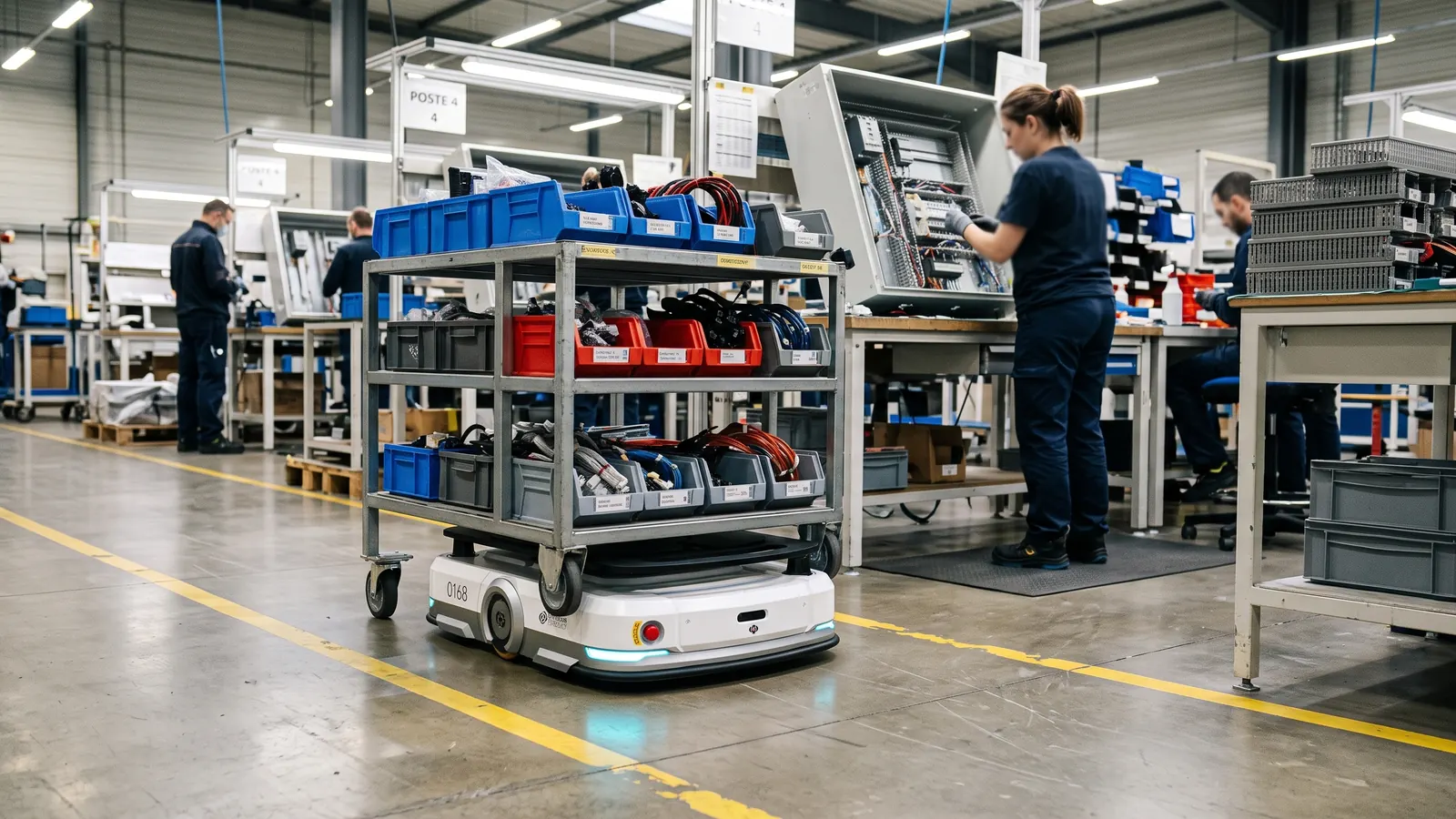 Line-side feedingThe mobile robot runs the milk run between stores and the line. Operators no longer leave their station to fetch parts, and the storekeeper prepares instead of driving.
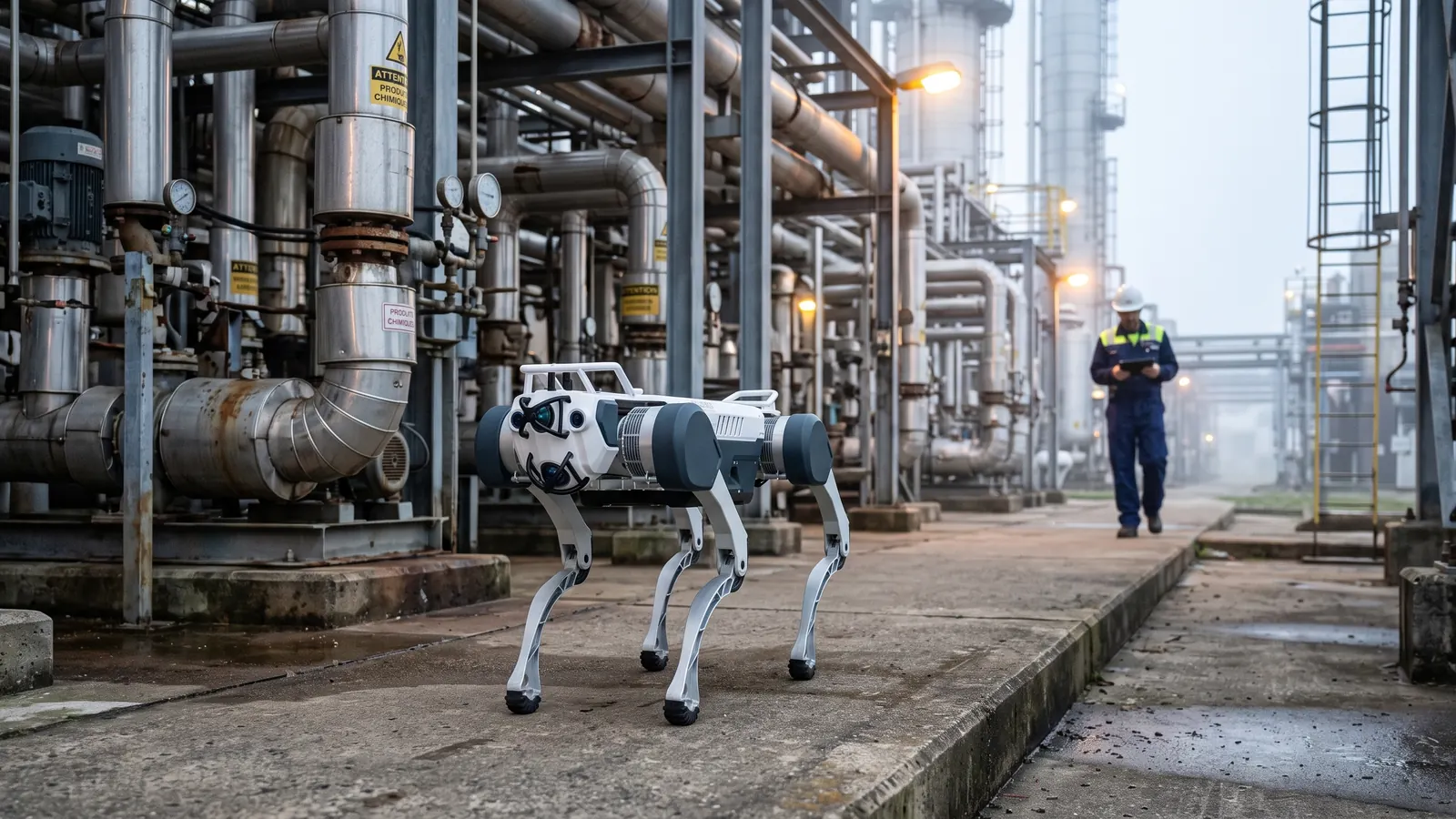 Industrial inspection roundsThe robot walks the same route every day, stops at the same points and records images, temperatures and readings. Technicians review the deviations and step in where needed.
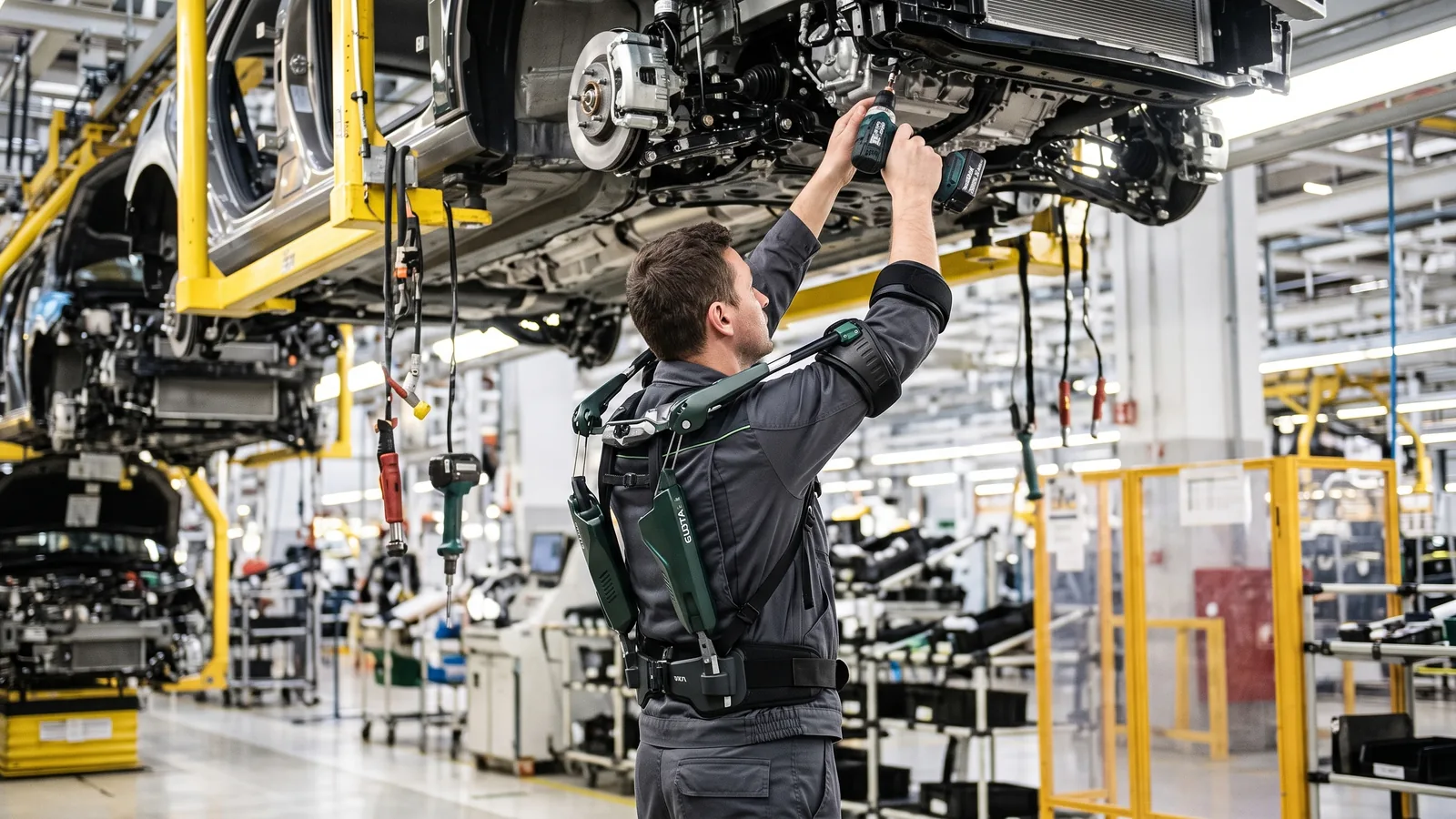 Exoskeletons for overhead workA shoulder exoskeleton supports the arms when they rise above chest height, without changing the tool or the movement. The operator keeps full precision; the device carries part of the weight of the arms.
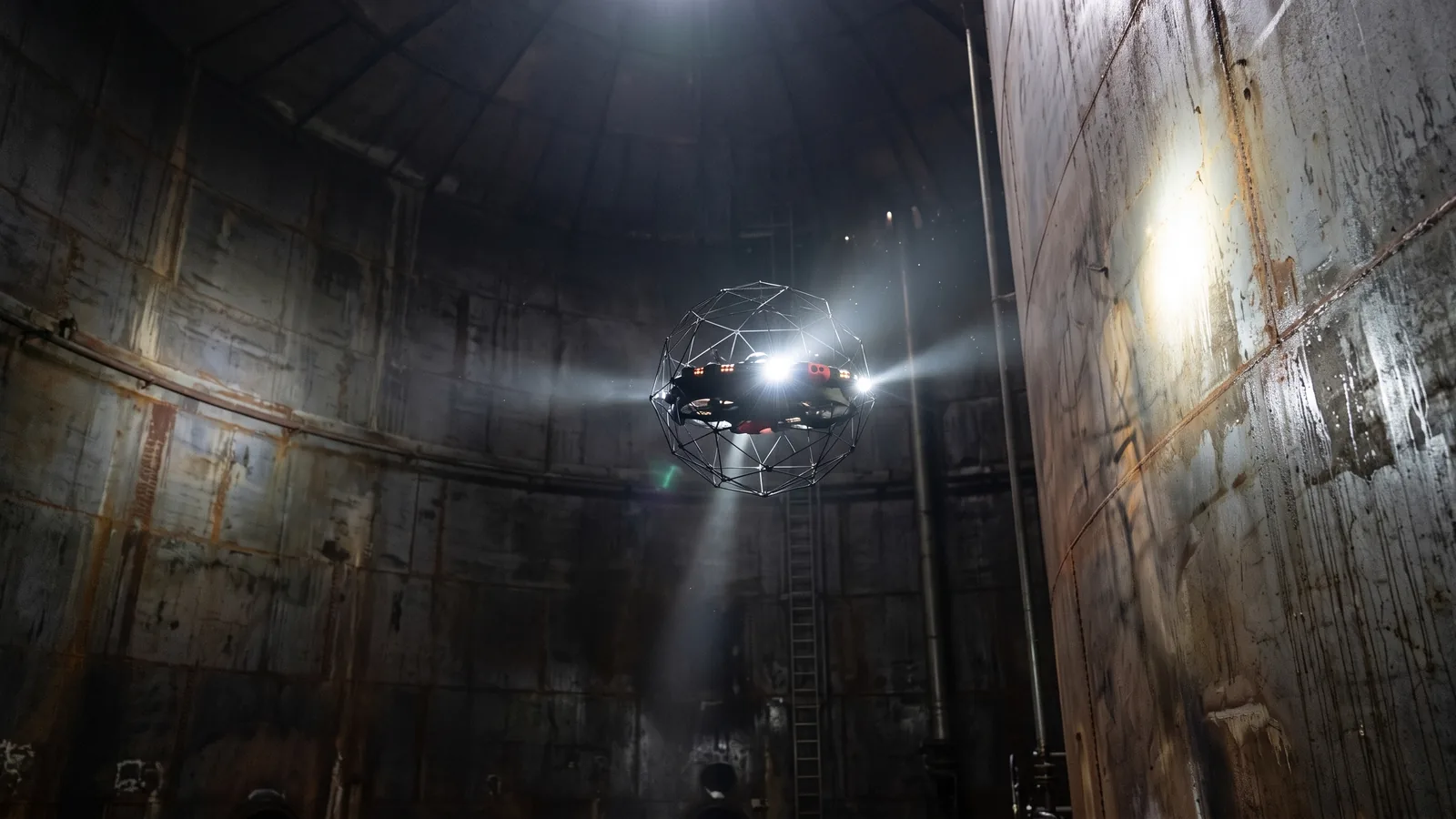 Confined-space drone inspectionThe drone goes into the tank, boiler or silo instead of the inspector and brings back images, video and 3D data. Inspectors keep the analysis, the regulatory measurements and the repair decisions.
Robots, acquisition mode and delivery terms, in one written proposal.