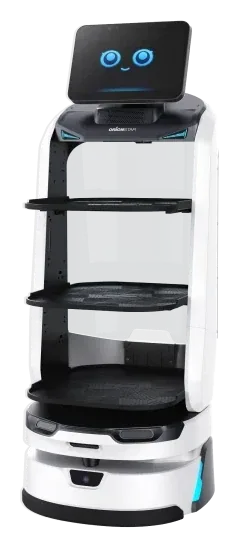
Delivery and service
- Payload
- 60 kg
- Runtime
- 12 h
- Weight
- 59 kg
On order
From €14,990 ex VATor €509/month in RaaS
Updated
USE CASE · RESTAURANTS
The robot does the walking between kitchen and dining room. Waiters stay at the tables: taking orders, advising and settling the bill.
Updated
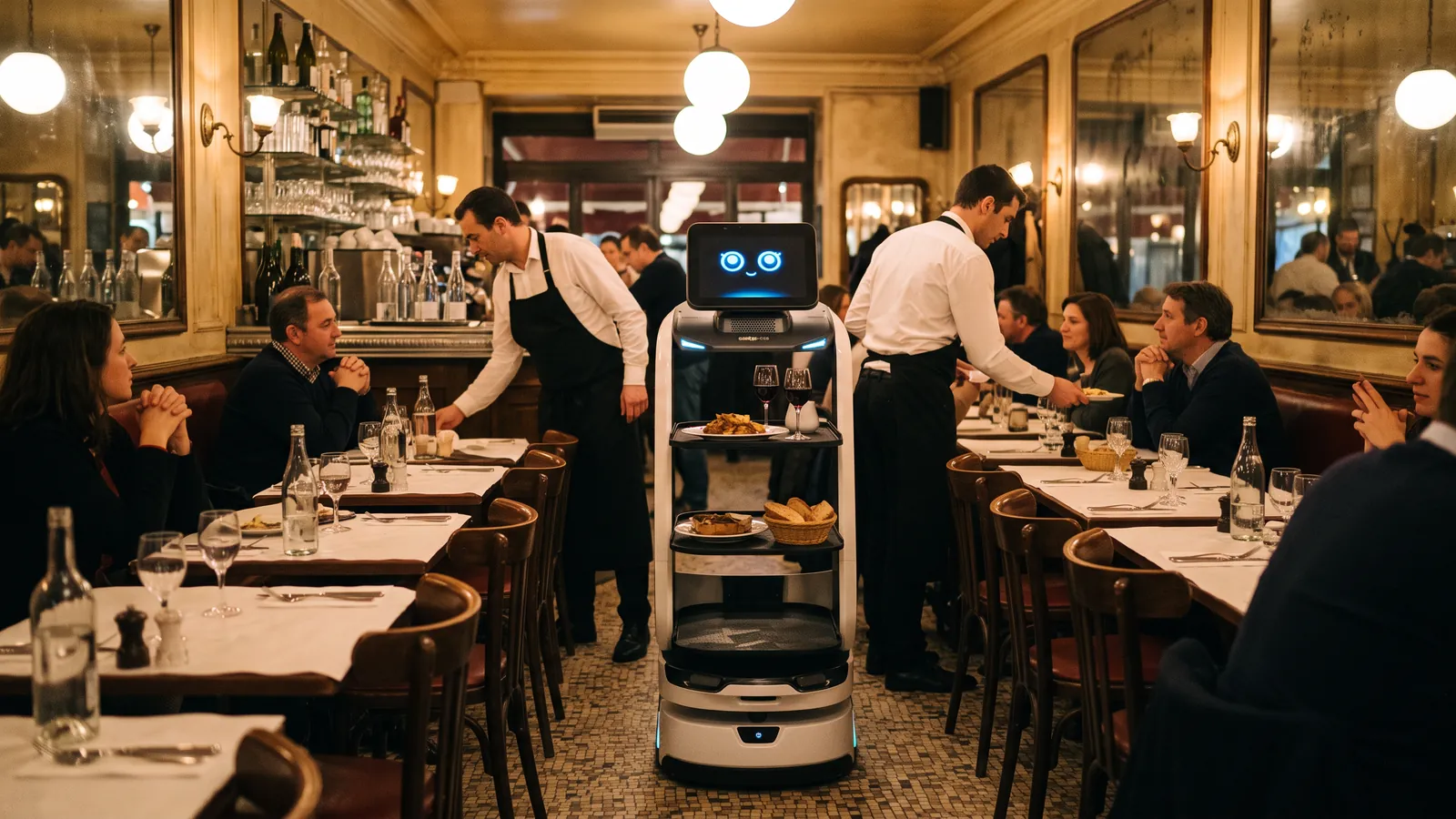
A table service robot carries dishes from the pass to the table number, then brings dirty plates back to the dish room.
The OrionStar LuckiBot Pro carries 60 kg in total, 15 kg per tray, and runs 12 h on a charge according to its manufacturer.
Robot Distribution delivers it, maps the room, trains the team and maintains it, to buy, rent or as RaaS.
WHY
In a 80 to 150-seat dining room, a large share of a waiter's time goes into walking between the pass and the tables. Those trips add nothing for the guest, and they are what wears the team out by the end of service.
The robot takes those trips. It does not replace the waiter: it gives back time for welcoming, advising on the menu and taking payment, where guests notice the difference.
HOW IT RUNS
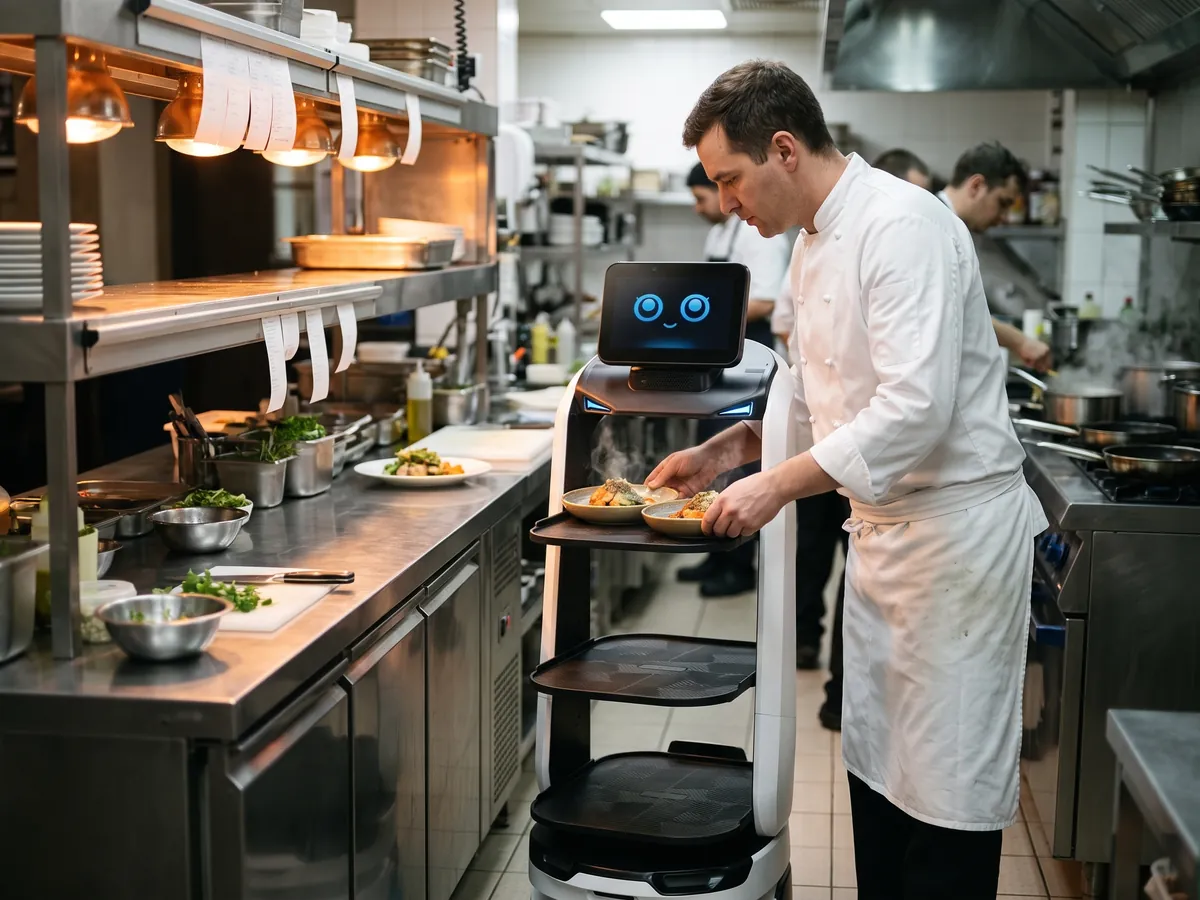
At the pass, the cook or head waiter puts the plates on the trays and picks the table number on the touchscreen.
It follows the room map recorded at commissioning, slows down and stops for people and obstacles, then announces its arrival at the table.
The waiter serves the dishes and stays with the guests. The robot returns on its own to the pass or to its waiting point.
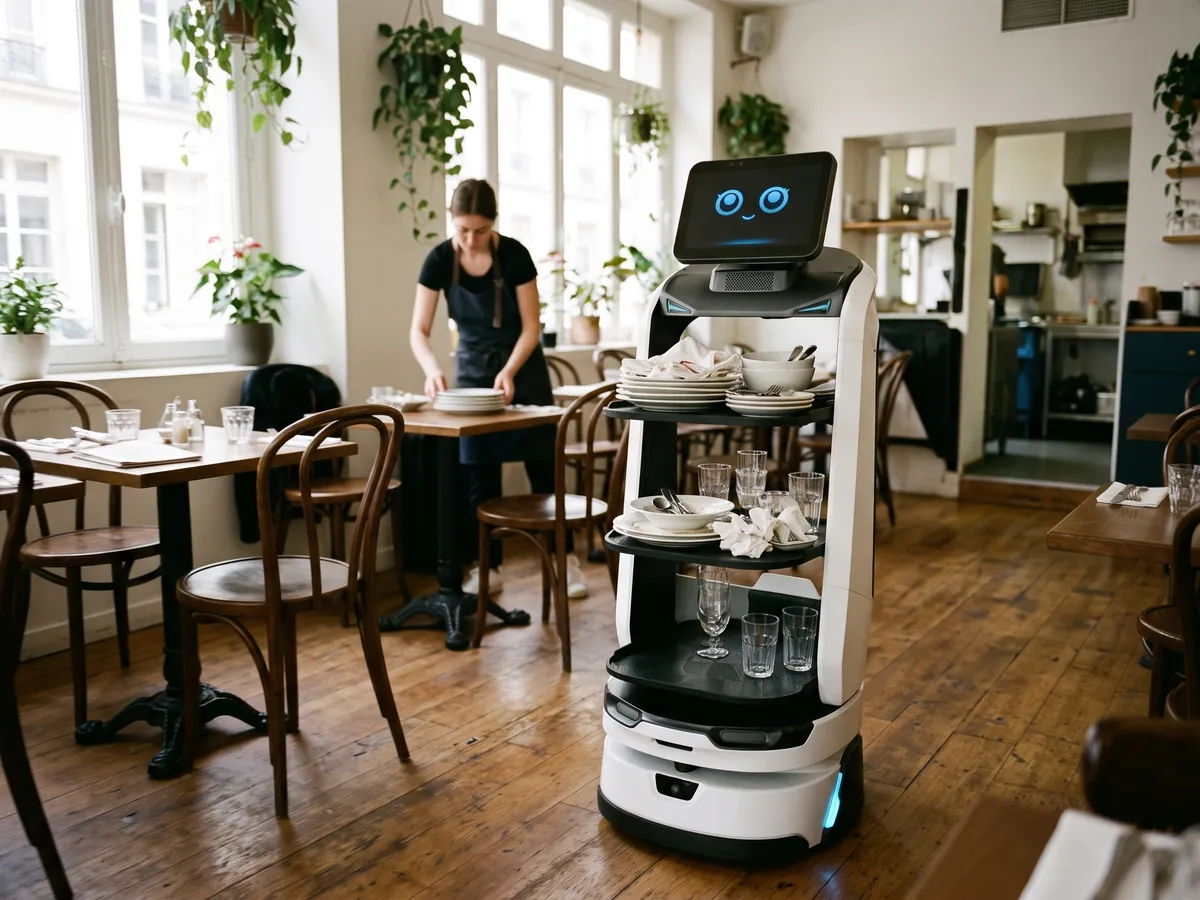
At the end of the meal the trays take dirty plates and glasses, and the robot brings them to the dish room in one trip instead of several.
THE ROBOTS
Delivery and service
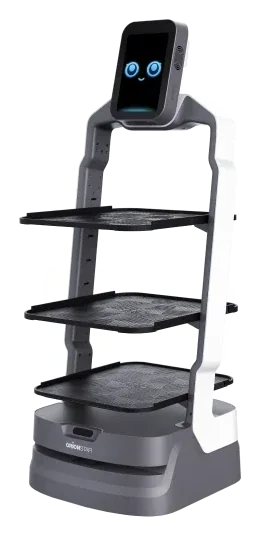
Delivery and service
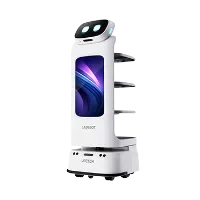
Delivery and service
BEFORE INSTALLING
Measured with the chairs occupied, not in an empty room: the robot must pass between the tables at peak time, not only before opening.
Steps, ramps, thick rugs and door sills are noted: the route between kitchen and dining room must be passable all the way.
Stable coverage along the route, and a spot for the charging dock near a socket and out of the way.
Where the robot waits, who loads it and how table numbers are assigned: set with the team on commissioning day.
RULES AND STANDARDS
Before the first service, four texts frame the purchase, the Wi-Fi link, the staff consultation and the hygiene plan.
Regulation (EU) 2023/1230 replaces Machinery Directive 2006/42/EC from 20 January 2027 and applies directly, without transposition into French law. It clarifies the rules for autonomous mobile machines. Instructions may be supplied in digital form, but a paper copy is due free of charge within one month if requested at purchase. Ask which text the EU declaration of conformity cites, and ask for the instructions in French.
A robot that talks to its tablet, the cloud or the till over Wi-Fi is radio equipment. Since 1 August 2025, Delegated Regulation (EU) 2022/30 applies the essential requirements of Article 3(3)(d), (e) and (f) of Directive 2014/53/EU to radio equipment that can communicate over the internet. Check that the declaration of conformity covers them, and ask how software updates are delivered.
Article R4121-2 of the Code du travail requires the single risk assessment document (DUERP) to be updated after any significant change affecting health, safety or working conditions, and at least yearly from 11 employees. In companies of 50 or more, article L2312-8 makes the introduction of new technologies a subject for CSE information and consultation. Include the robot's routes and crossings with staff in that update.
Regulation (EC) No 852/2004 requires equipment in contact with food to be cleaned, and disinfected where needed, often enough to avoid any risk of contamination, within a procedure based on HACCP principles. Trays carry plates, bread baskets and glasses: add them to the cleaning plan with the product and frequency, and check that the manufacturer's instructions allow those products.
General information, not legal advice.
FAQ
It depends on the payload per tray published by the manufacturer: 15 kg per tray and 60 kg in total for the OrionStar LuckiBot Pro, 10 kg per tray and 40 kg in total for the LuckiBot. The number of plates depends on your tableware.
The LuckiBot Pro is rated for 12 h and the LuckiBot for 10 h: lunch and dinner fit on one charge, with a top-up in between if needed.
Rarely. The site survey spots aisles that are too narrow, sills and Wi-Fi gaps. Moving a few tables is usually enough.
Yes: a demo in the showroom, or a short rental to test the robot during real services with your team.
USE CASES
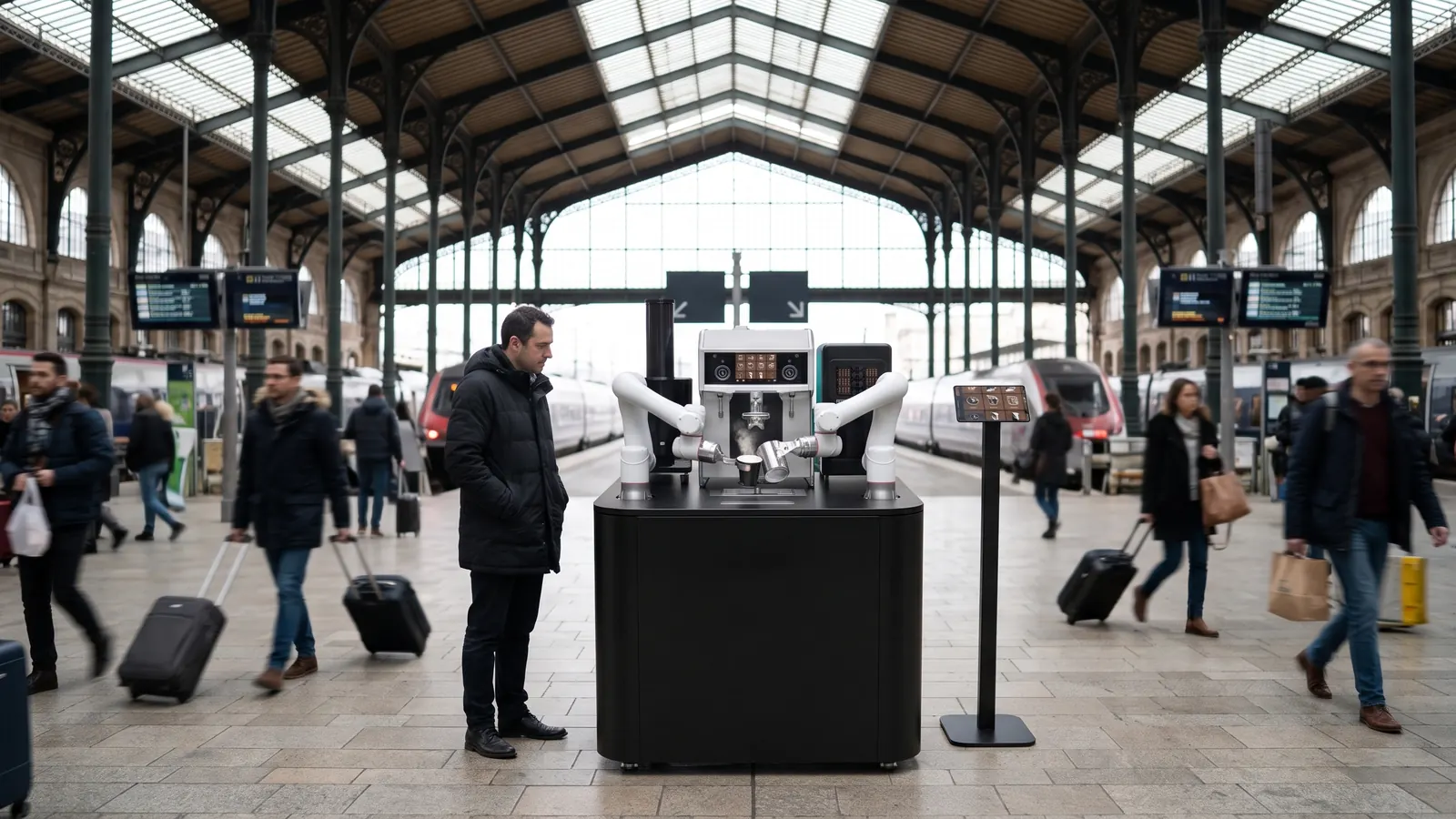 Robot baristaCustomers order on the screen, the robot arms make the drink in front of them and set it at the pick-up point. All that is left is refilling coffee, milk and cups, and monitoring the kiosk remotely.
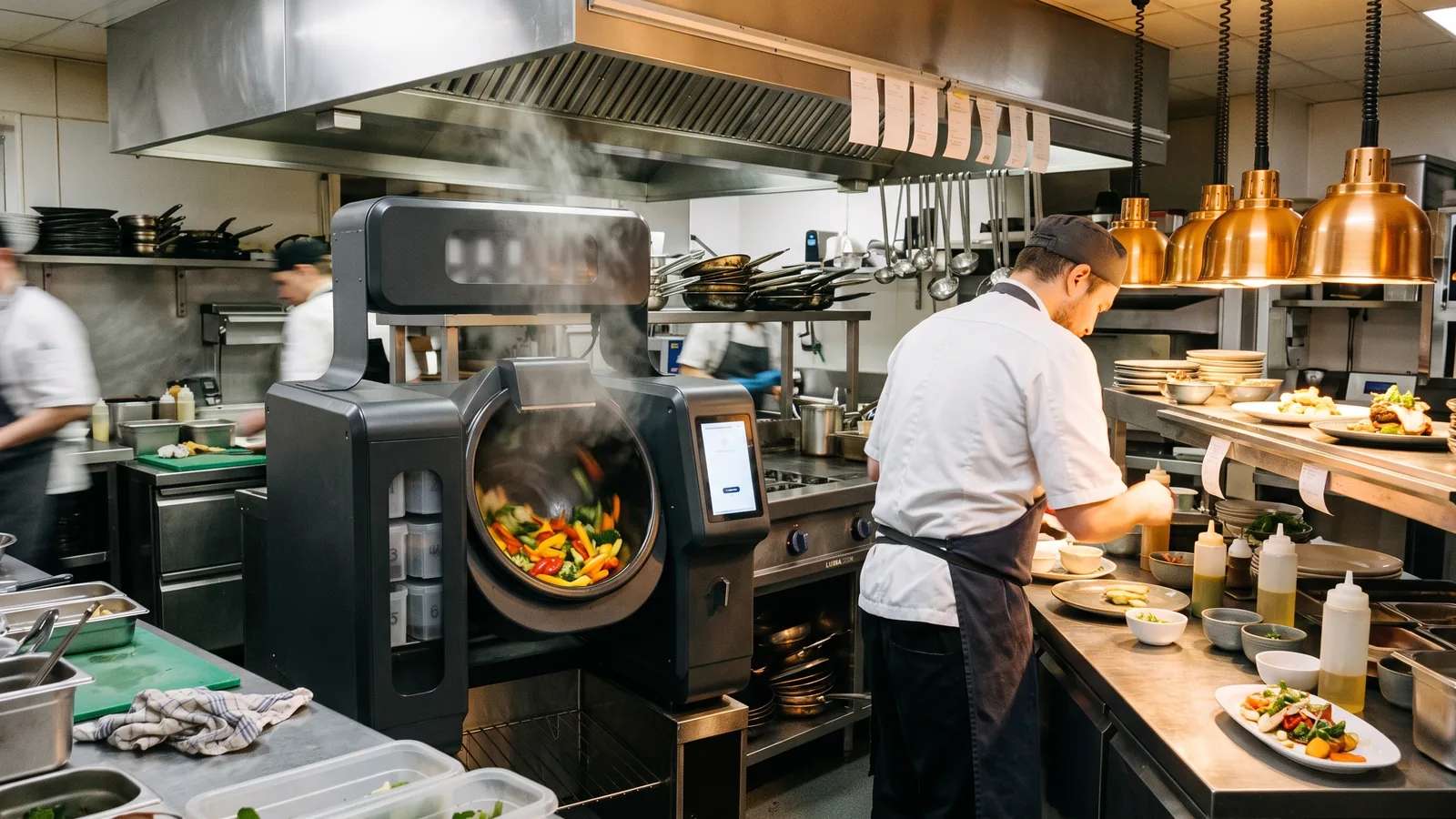 Professional kitchen robotsThe robot doses, cooks, fries or grills to the stored recipe at a steady pace. Cooks keep the prep, plating, quality checks and recipe creation.
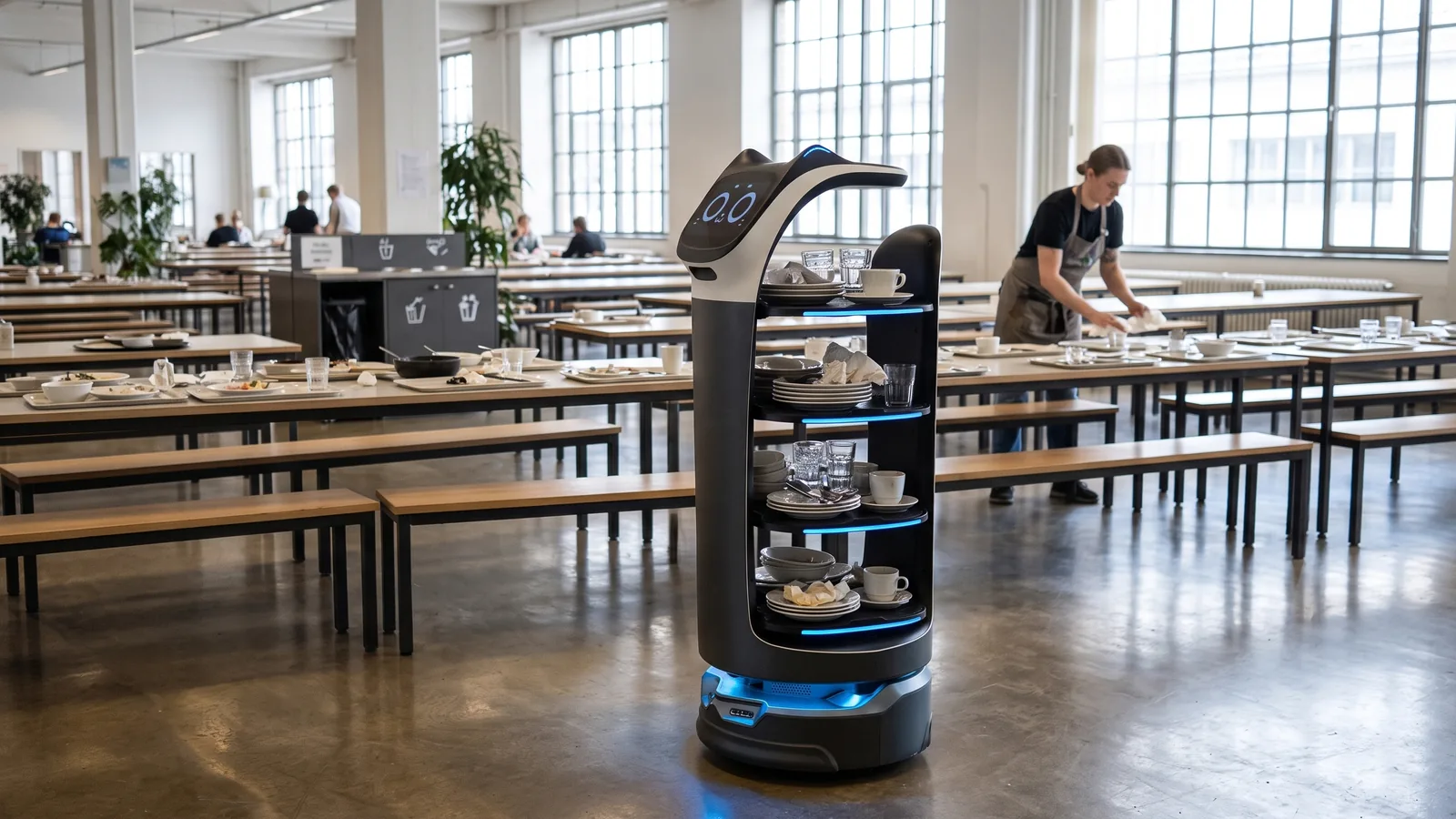 Table clearing and dish returnThe robot waits near the tables or moves around the room; staff load the dirty dishes and it takes them to the dish room. Servers stay in the room to reset tables and look after guests.
Robots, acquisition mode and delivery terms, in one written proposal.