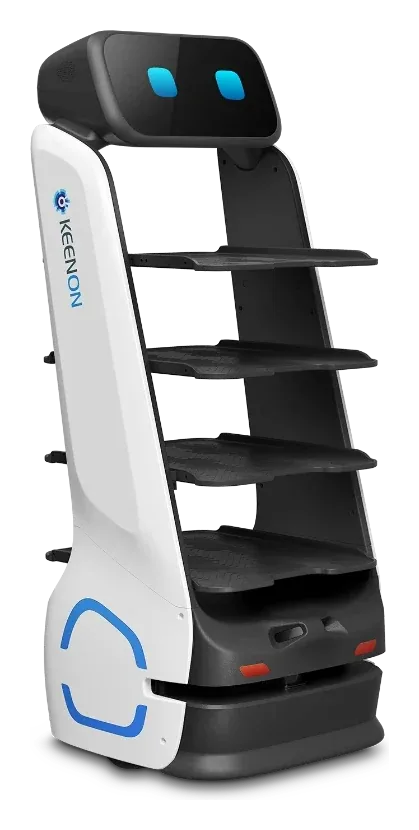
Delivery and service
- Payload
- 40 kg
- Runtime
- 18 h
- Weight
- 63 kg
On order
From €17,390 ex VATor €589/month in RaaS
Updated
USE CASE · RESTAURANTS
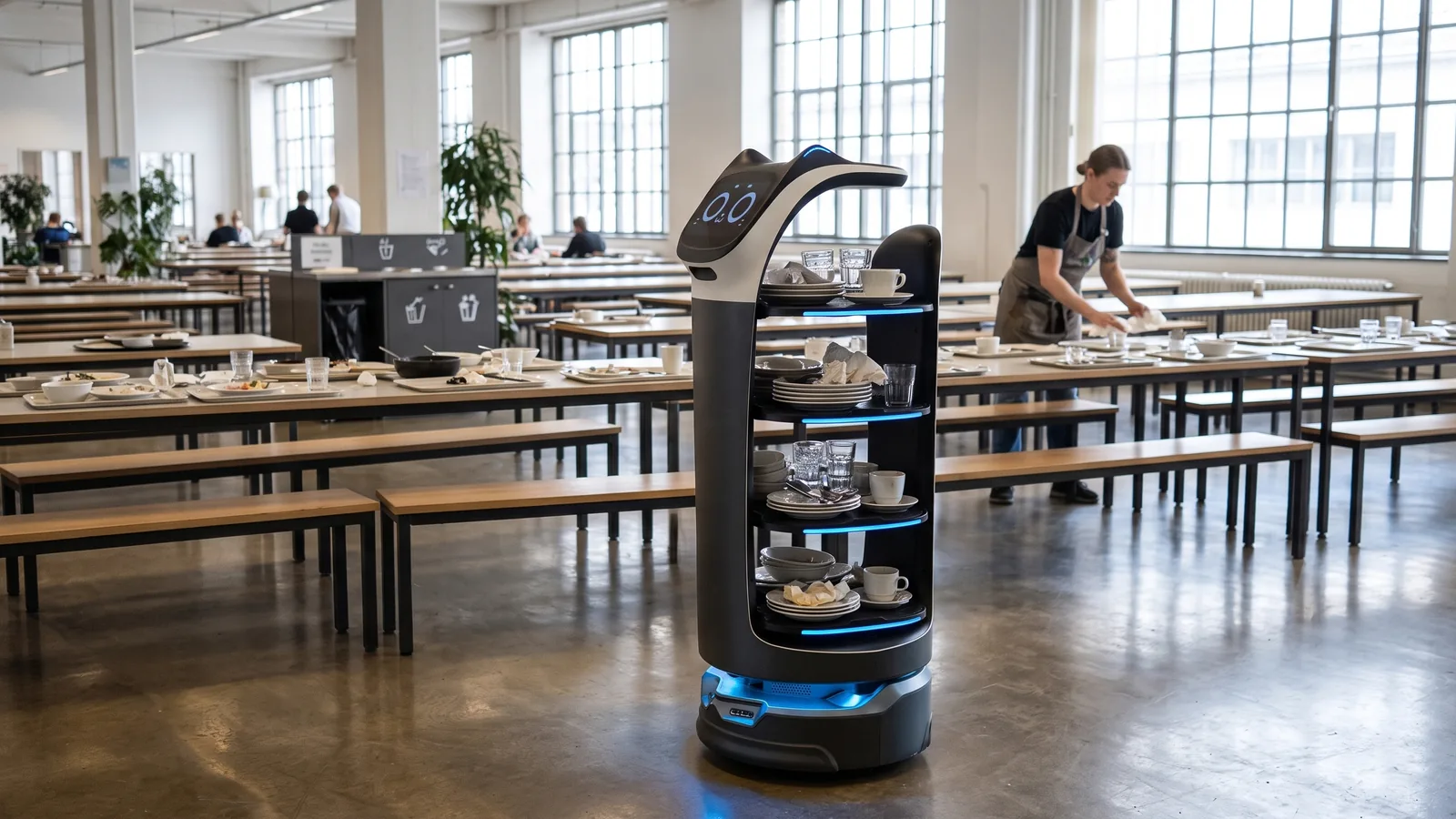
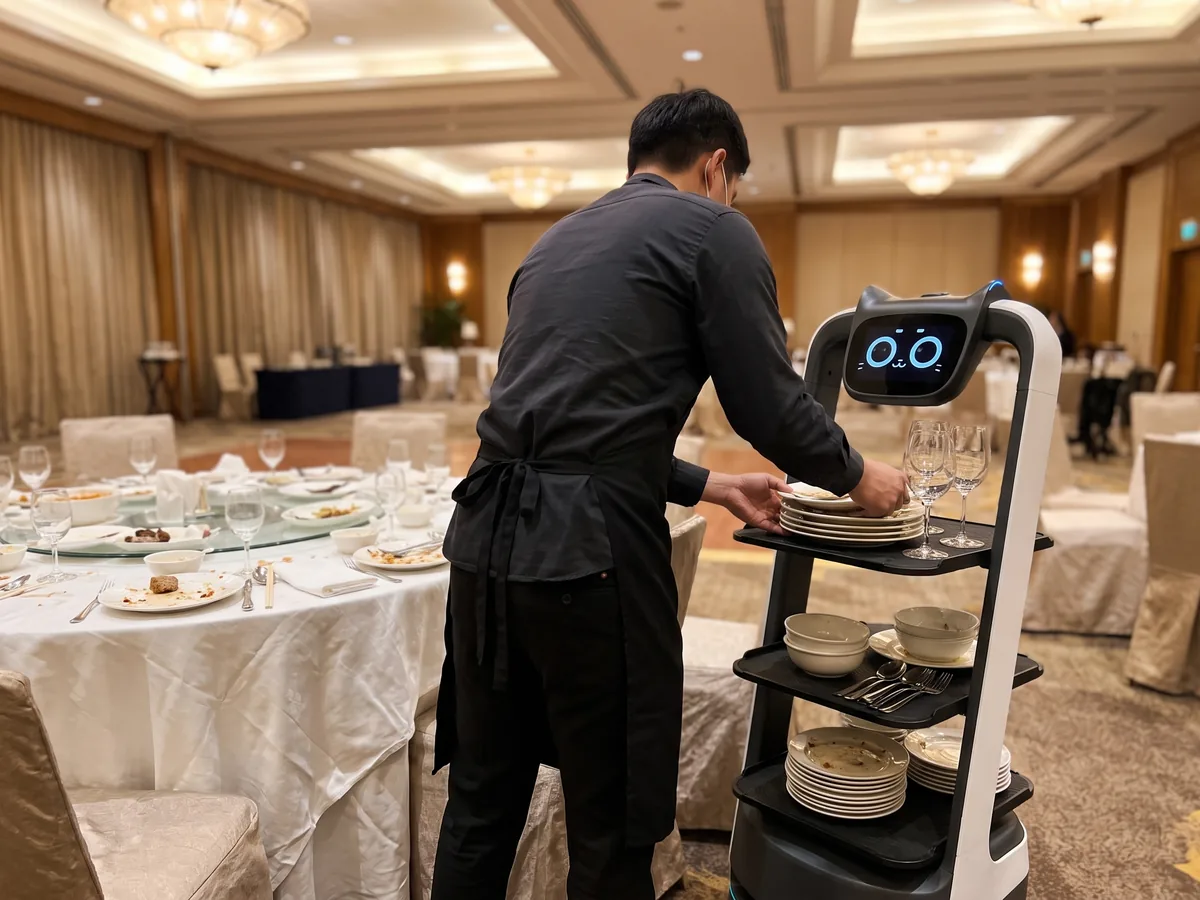
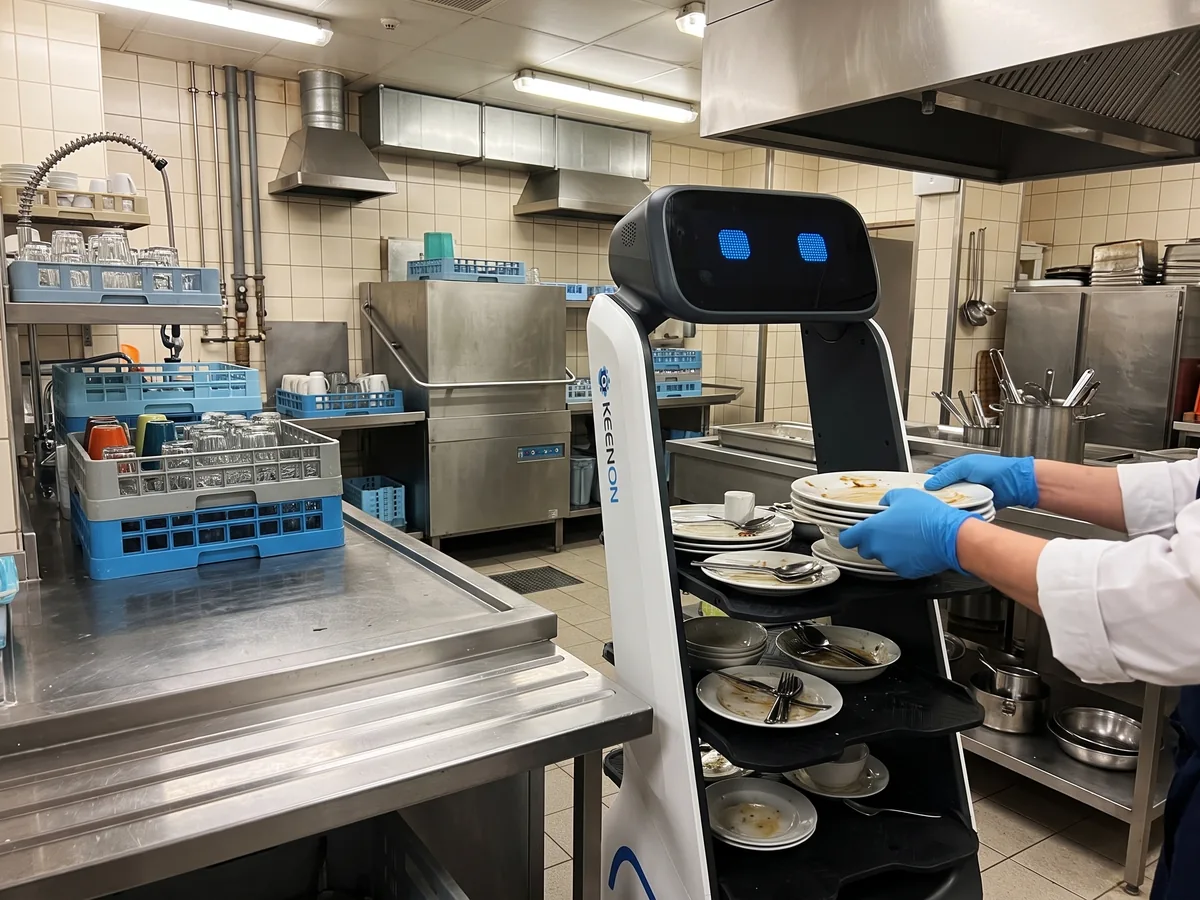
The robot waits near the tables or moves around the room; staff load the dirty dishes and it takes them to the dish room. Servers stay in the room to reset tables and look after guests.
Updated
A dish return robot collects dirty dishes in a large dining room, canteen, buffet or banquet hall and takes them to the dish room, in one trip instead of several.
The PUDU BellaBot Pro has a dedicated dish return mode and carries 40 kg, 10 kg per tray, with 11 h of runtime without load, according to its manufacturer.
Robot Distribution delivers it, maps the room and the route to the dish room, trains the team and maintains it, to buy, rent or as RaaS.
WHY
In staff canteens, hotel breakfast rooms, buffets and banquets, clearing comes in waves: dozens of tables free up at once. Servers then make loaded trips to the dish room one after another, just when the room needs resetting.
The robot takes over these heavy, repetitive trips. Depending on the set-up, one robot clears while another serves, which helps keep the dirty flow apart from the clean flow, in line with forward-flow hygiene principles.
HOW IT RUNS
At commissioning we map the room, the dish room and the robot's waiting points near table groups, buffets or the self-service exit.
A server calls the robot or the robot moves around the room; staff load plates, glasses and cutlery. The KEENON T9 carries 40 kg on four trays, according to its manufacturer.
The robot takes the set route to the dish room and stops at the unloading point. The PUDU BellaBot Pro passes through 65 cm and projects a warning onto the floor at intersections, according to its manufacturer.
The dishwasher empties the trays and the robot heads back to the room. After service it returns to its station: the OrionStar LuckiBot Pro runs 12 h and recharges in 4.5 h, according to its manufacturer.
THE ROBOTS
Delivery and service
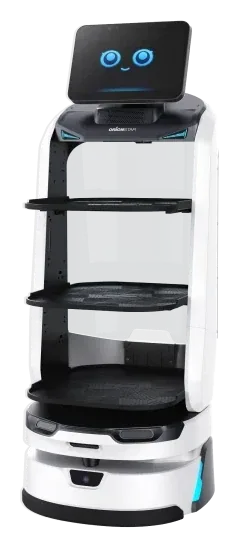
Delivery and service
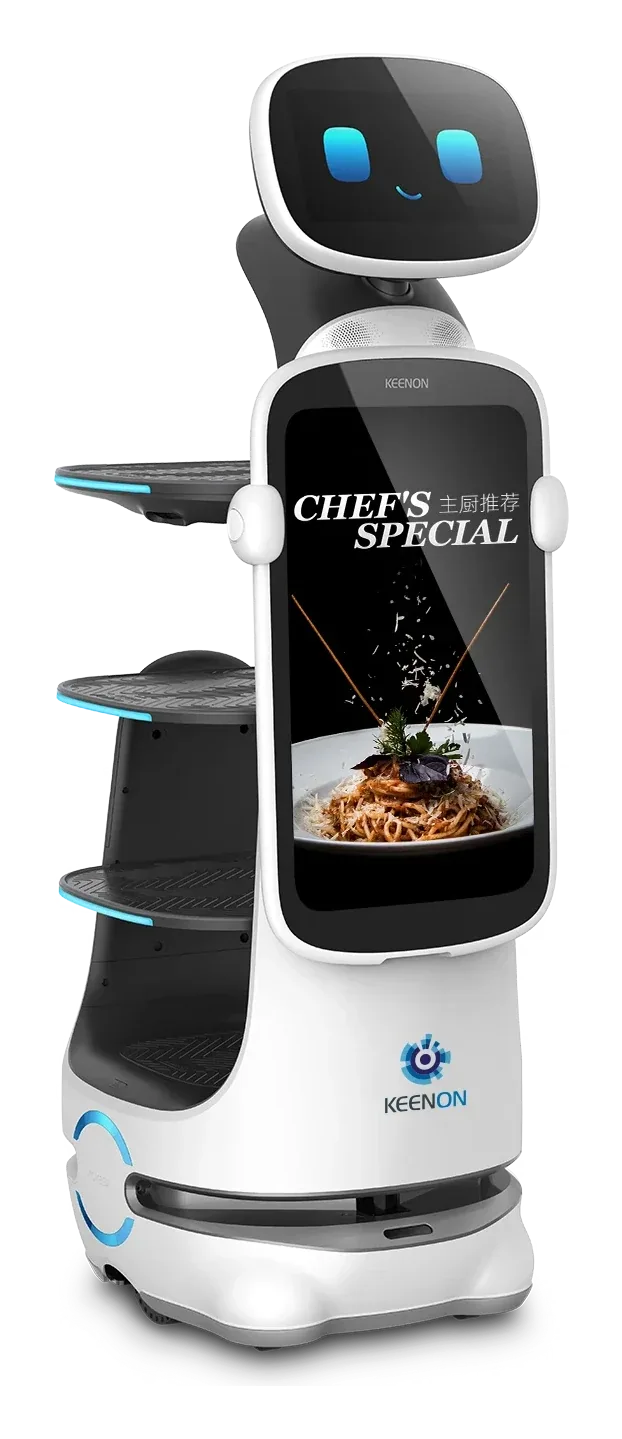
Delivery and service
BEFORE INSTALLING
Covers, turnovers and the weight of a loaded tray set the model and number of robots: the OrionStar LuckiBot Pro carries 60 kg in total, 15 kg per tray, according to its manufacturer.
Aisles between tables, self-service queues and the passage to the dish room are measured during service: 59 cm for the KEENON T10, 70 cm for the KEENON T9, 52 cm in some cases for the PUDU KettyBot Pro, according to their manufacturer.
Thresholds, ramps, wet floors near the dish room and swing doors between room and kitchen are noted; the KEENON T10 climbs up to 5°, according to its manufacturer.
The unloading point, clean and dirty separation and each person's role are agreed with the team on commissioning day.
RULES AND STANDARDS
Clearing is a handling and hygiene job: three French and EU references frame how the robot fits in.
Under articles R4541-3 and R4541-5 of the Code du travail, the employer takes organisational measures or uses appropriate means, in particular mechanical equipment, to avoid manual handling of loads; when it cannot be avoided, the risks are assessed and workstations arranged to reduce them. Article R4541-8 adds mainly practical training. Record the robot in the risk assessment as one of these means, and train staff in loading it.
The Cramif MémoPrev sheet on dish rooms in collective catering (June 2023) names musculoskeletal disorders as the main risk. It recommends mechanical means such as conveyors and constant-level trolleys, floors without sills or level changes, and pre-sorting at the tray drop-off. Use it to place the robot's unloading point: level access, room to empty the trays, and no storage on the route.
Regulation (EC) No 852/2004 requires food waste and other refuse to be removed from rooms where food is present as quickly as possible, and premises to permit good hygiene practices, including protection against contamination. The HACCP-based procedure should show the robot's dirty route, where it crosses clean flows, and how its trays are cleaned after each clearing round.
General information, not legal advice.
FAQ
It is often the same type of robot, used differently: it waits for dirty dishes and takes them to the dish room instead of serving food. The PUDU BellaBot Pro has a dedicated dish return mode, according to its manufacturer.
According to the manufacturer: 40 kg on four trays for the KEENON T9, 40 kg for the PUDU BellaBot Pro and the KEENON T10, 60 kg for the OrionStar LuckiBot Pro. In practice, loading follows how stable the plate stacks are.
According to the manufacturer: up to 18 h for the KEENON T9, 12 h for the OrionStar LuckiBot Pro, 11 h without load for the PUDU BellaBot Pro, 9 h without load for the PUDU KettyBot Pro.
Yes, especially at the self-service exit or near the tables, where diners leave their dishes. Queue widths and peak times are checked to place the robot without blocking the flow.
The PUDU KettyBot Pro reports its tray load status automatically and the OrionStar LuckiBot Pro detects the dishes placed on it, according to their manufacturer.
USE CASES
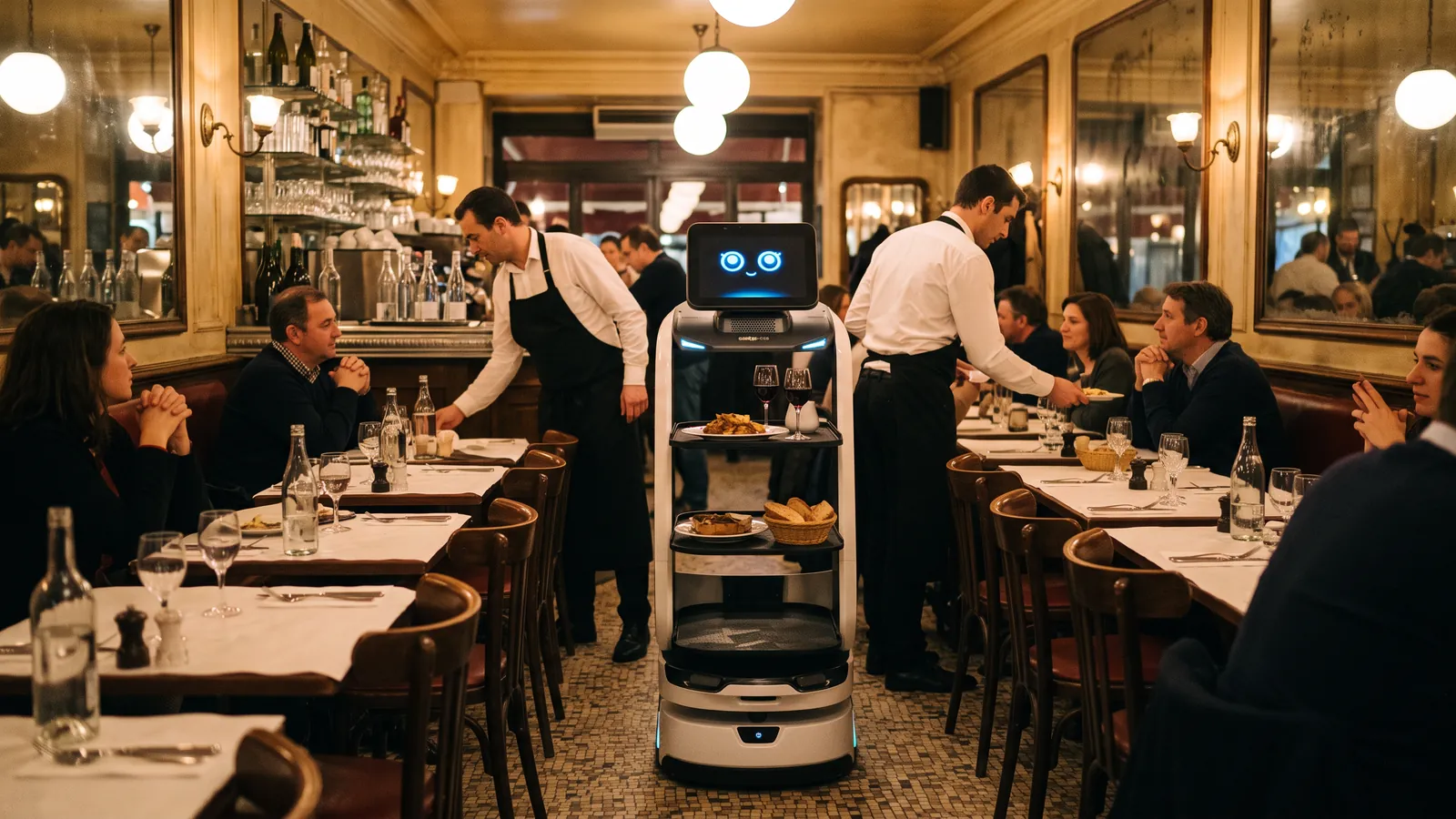 Table serviceThe robot does the walking between kitchen and dining room. Waiters stay at the tables: taking orders, advising and settling the bill.
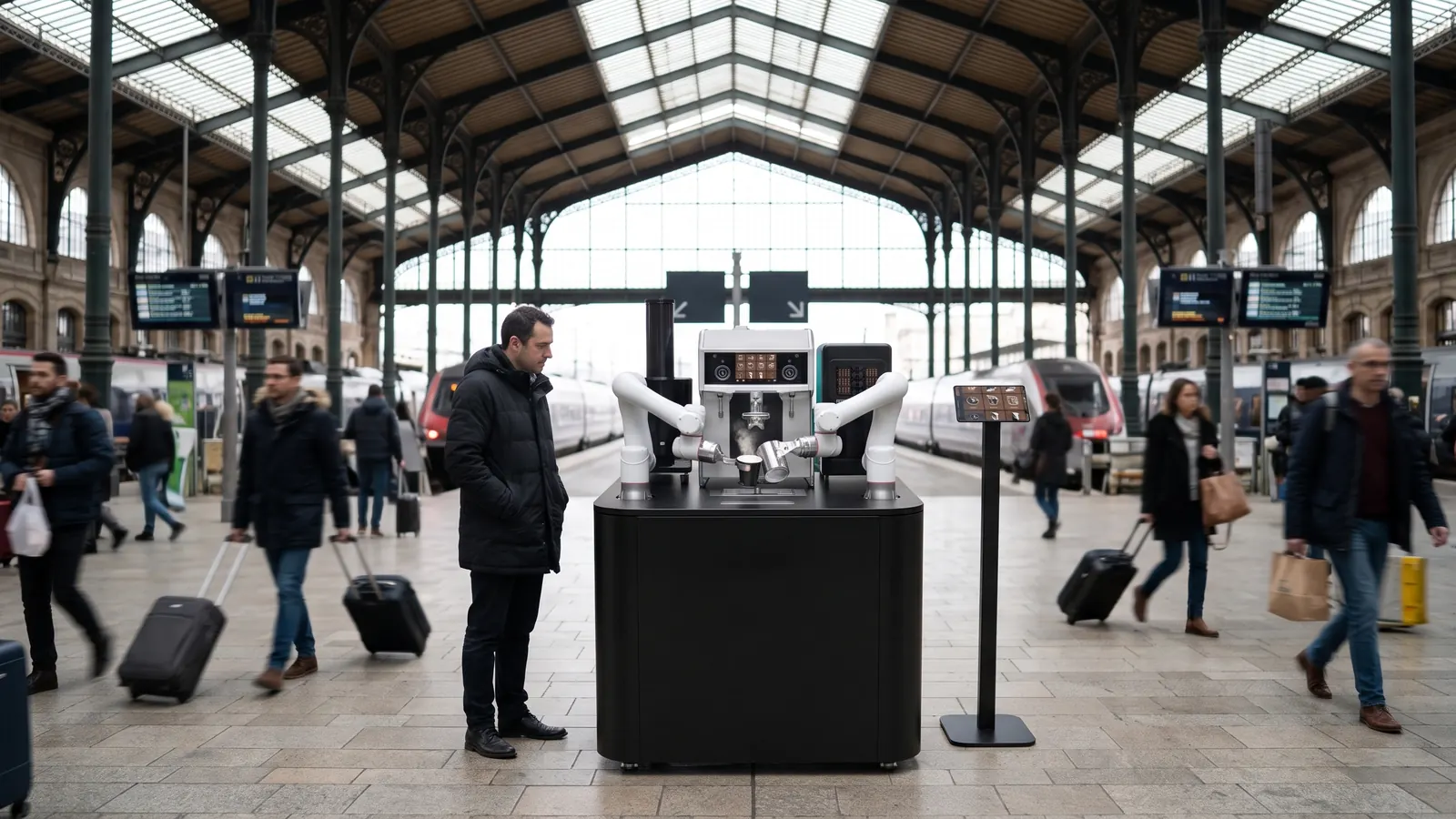 Robot baristaCustomers order on the screen, the robot arms make the drink in front of them and set it at the pick-up point. All that is left is refilling coffee, milk and cups, and monitoring the kiosk remotely.
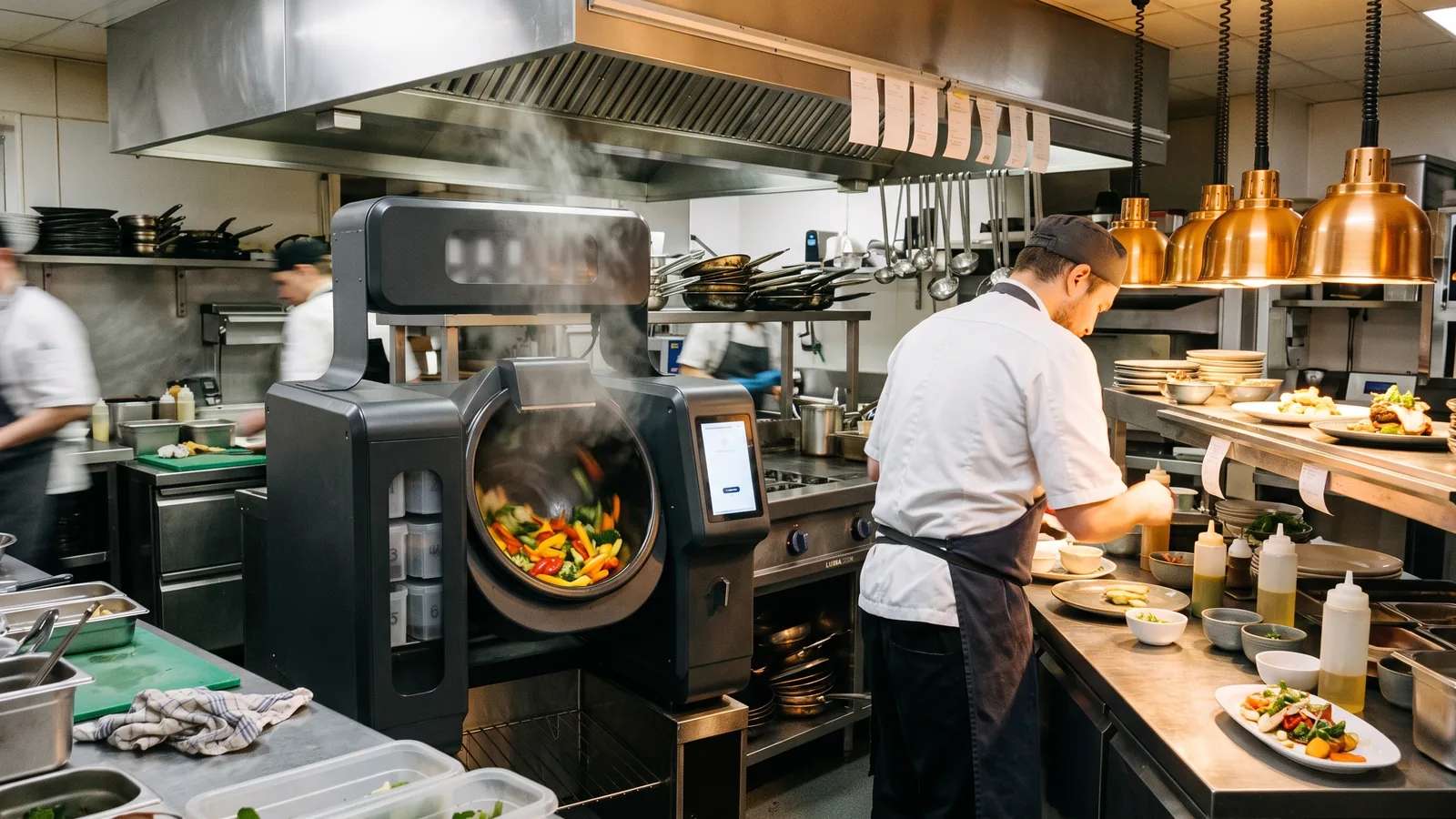 Professional kitchen robotsThe robot doses, cooks, fries or grills to the stored recipe at a steady pace. Cooks keep the prep, plating, quality checks and recipe creation.
Robots, acquisition mode and delivery terms, in one written proposal.