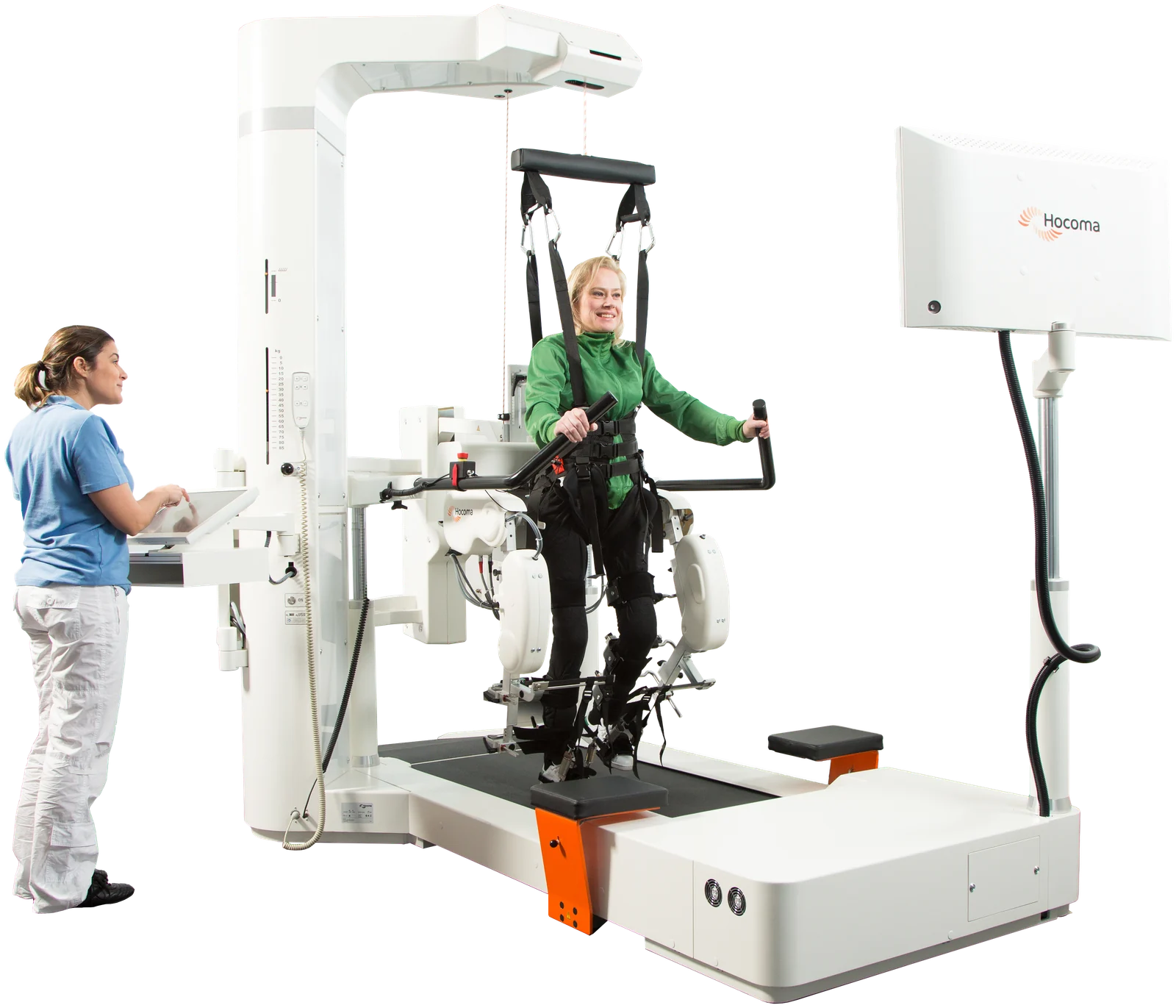
Rehabilitation robots
- Key feature
- 0.5–3.2 km/h
- Key feature
- Patients 10–135 kg
- Key feature
- Paediatric orthosis option
On order
Price on request
Updated
USE CASE · HEALTHCARE AND ELDERLY CARE
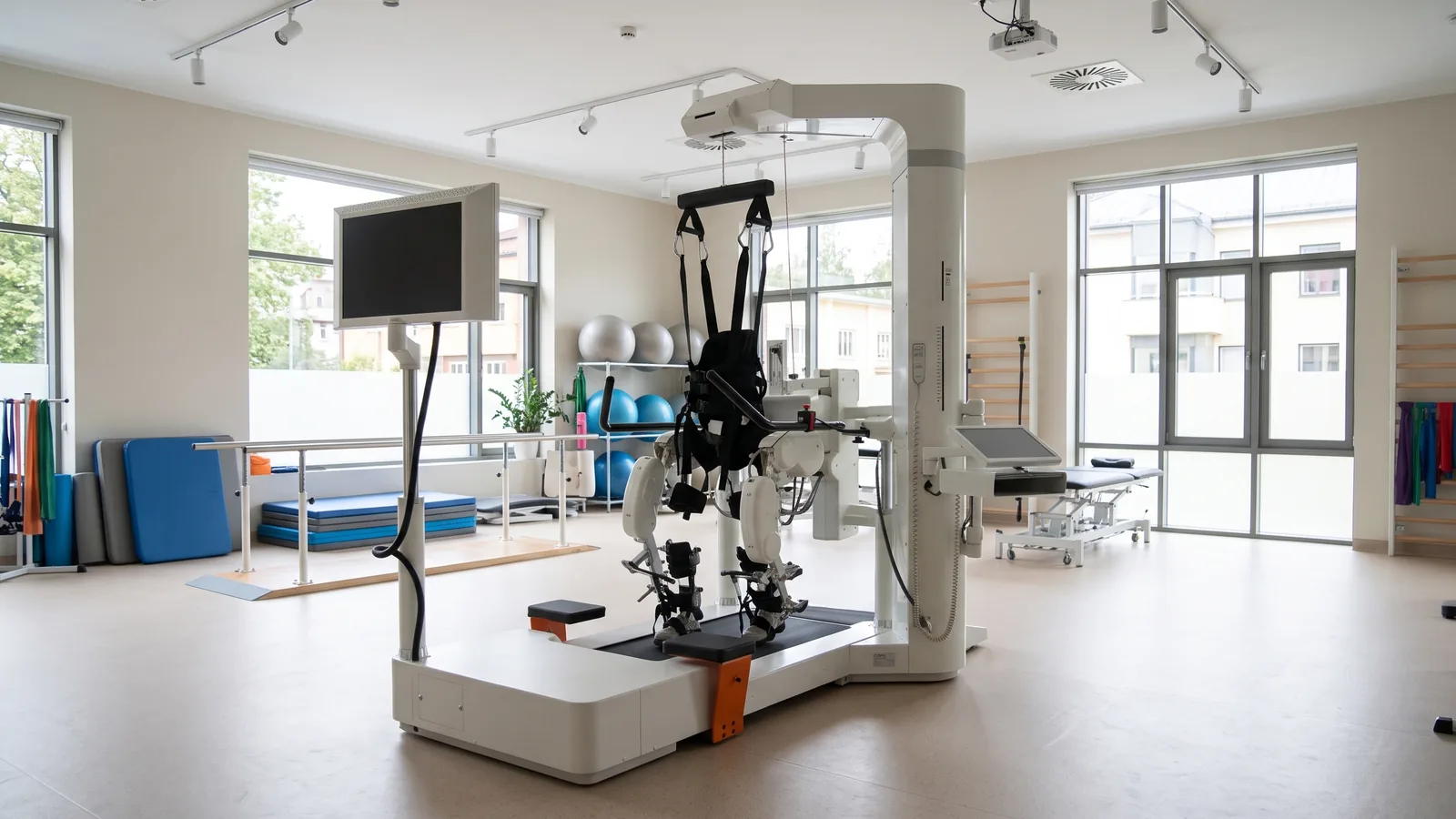
The robot carries part of the patient's weight and repeats the movement. The physiotherapist sets the goals, adjusts the assistance and leads the session.
Updated
A rehabilitation robot guides walking or arm and hand movements of neurological patients, repeating the motion with adjustable assistance, under the supervision of a physiotherapist.
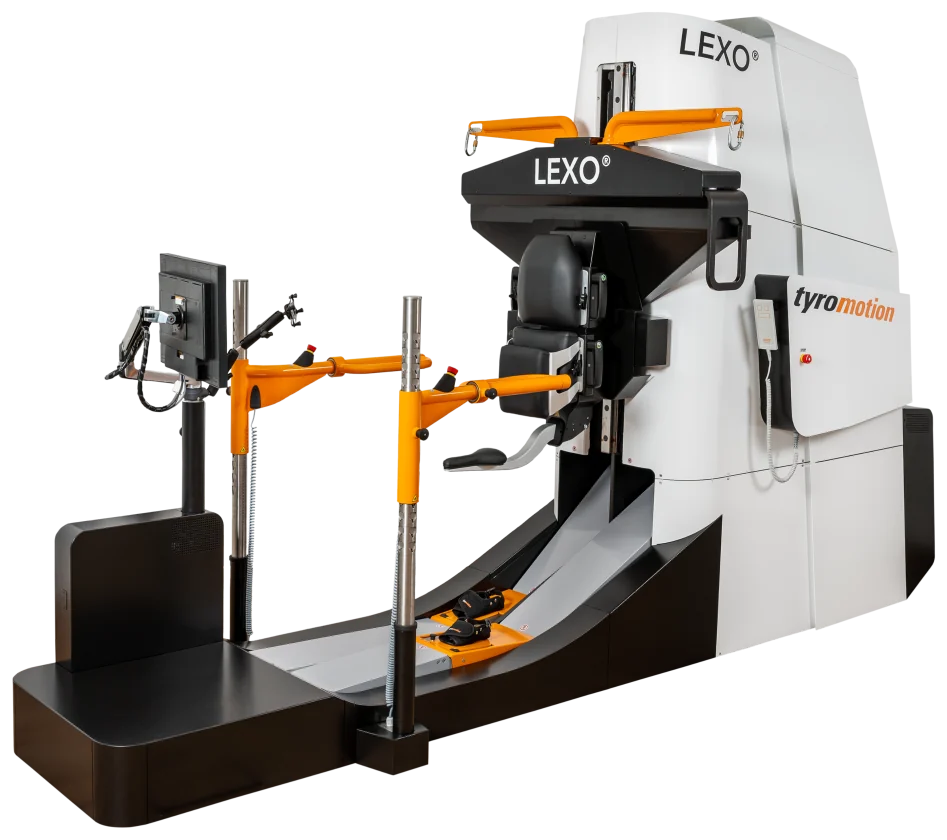
The Tyromotion Lexo, an end-effector gait trainer with motorised foot plates, takes patients from 15 to 180 kg and 100 to 200 cm and is an MDR Class IIa device under Regulation (EU) 2017/745, according to its manufacturer.
Robot Distribution delivers it, installs it, trains your therapy teams and maintains it, to buy, rent or as RaaS.
WHY
After a stroke or spinal cord injury, or for children with cerebral palsy, recovering gait and hand function takes a large number of repetitions. By hand, supporting the patient, guiding the legs or moving the fingers is physically demanding for the physiotherapist and limits how long exercises can last.
The robot takes over weight support and movement repetition. The physiotherapist keeps assessment, exercise choice, assistance settings and patient monitoring throughout the session: these devices are used under their supervision, on medical prescription.
HOW IT RUNS
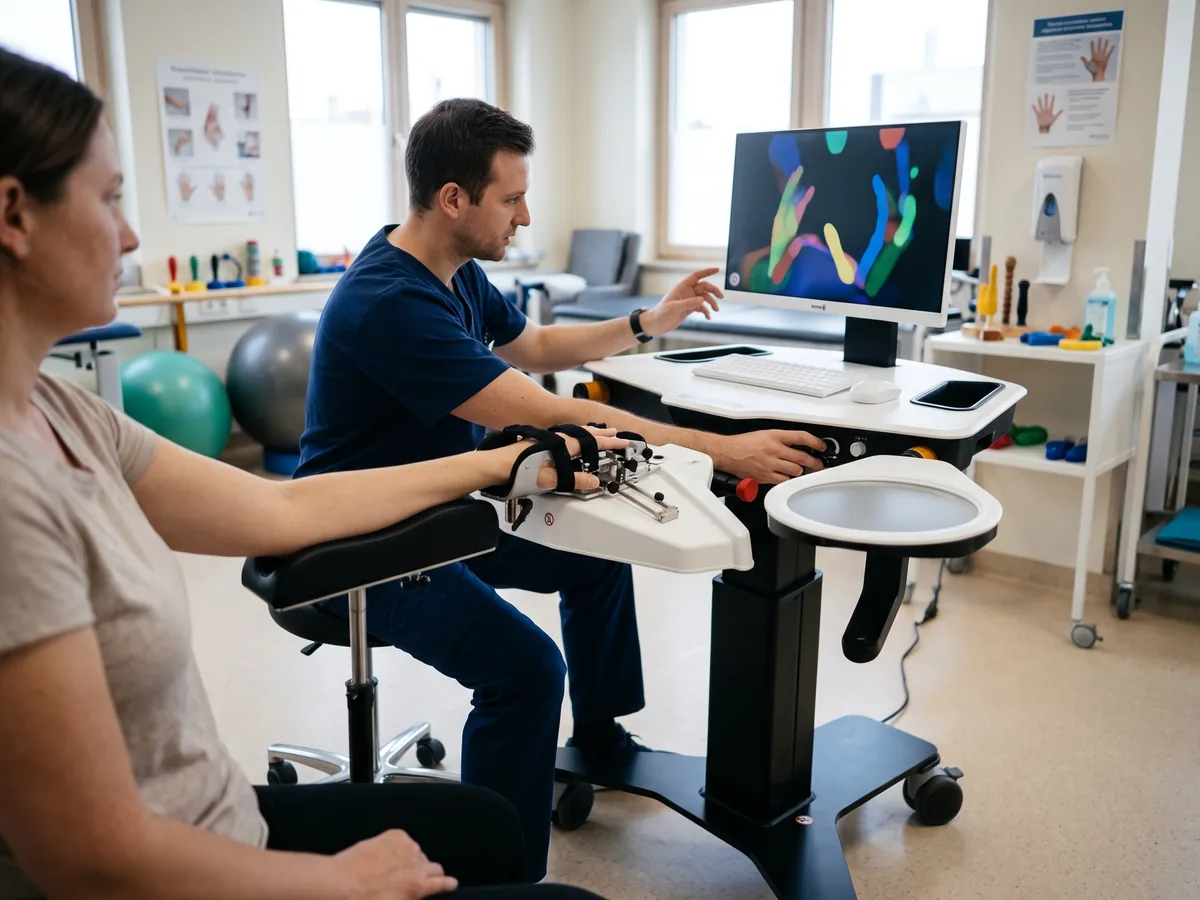
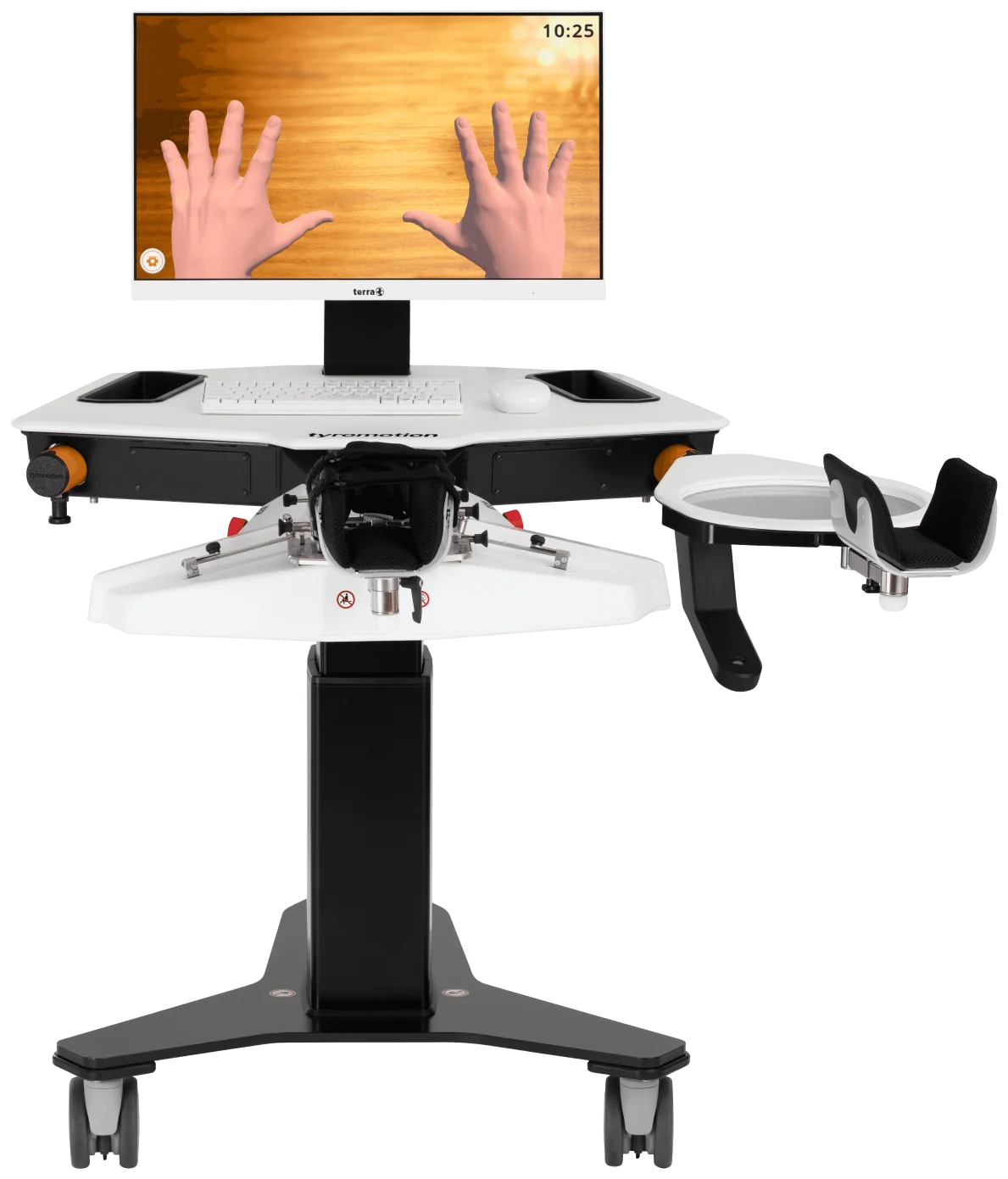
The physician prescribes, the physiotherapist assesses the patient and chooses the device: treadmill gait orthosis, end-effector trainer, wearable exoskeleton or hand robot. The Tyromotion Amadeo measures finger range of motion, force and spasticity, according to its manufacturer.
The therapist fits the harness, adjusts the orthosis or foot plates to the patient's size and sets body-weight support. The Hocoma Lokomat has adult and paediatric orthoses, according to its manufacturer.
The robot repeats the movement at the set speed, from 0.5 to 3.2 km/h on the Hocoma Lokomat treadmill according to its manufacturer, while the physiotherapist adjusts guidance and the effort asked of the patient.
Each session's parameters are recorded: the physiotherapist adjusts the assistance, moves from passive to active mode and adapts the programme as rehabilitation progresses.
THE ROBOTS
Rehabilitation robots
Rehabilitation robots
Rehabilitation robots
CYBERDYNE
Rehabilitation robots
Rehabilitation robots
Rehabilitation robots
BEFORE INSTALLING
These devices are large: the Hocoma Andago V2.0 needs an operating area of at least 1.5 × 5 m and the Tyromotion Lexo stands 231 cm high, according to their manufacturers. Doors, corridors and lifts are checked for delivery.
Floor flatness and load capacity, sockets and the therapy room's electrical circuit are recorded before installation.
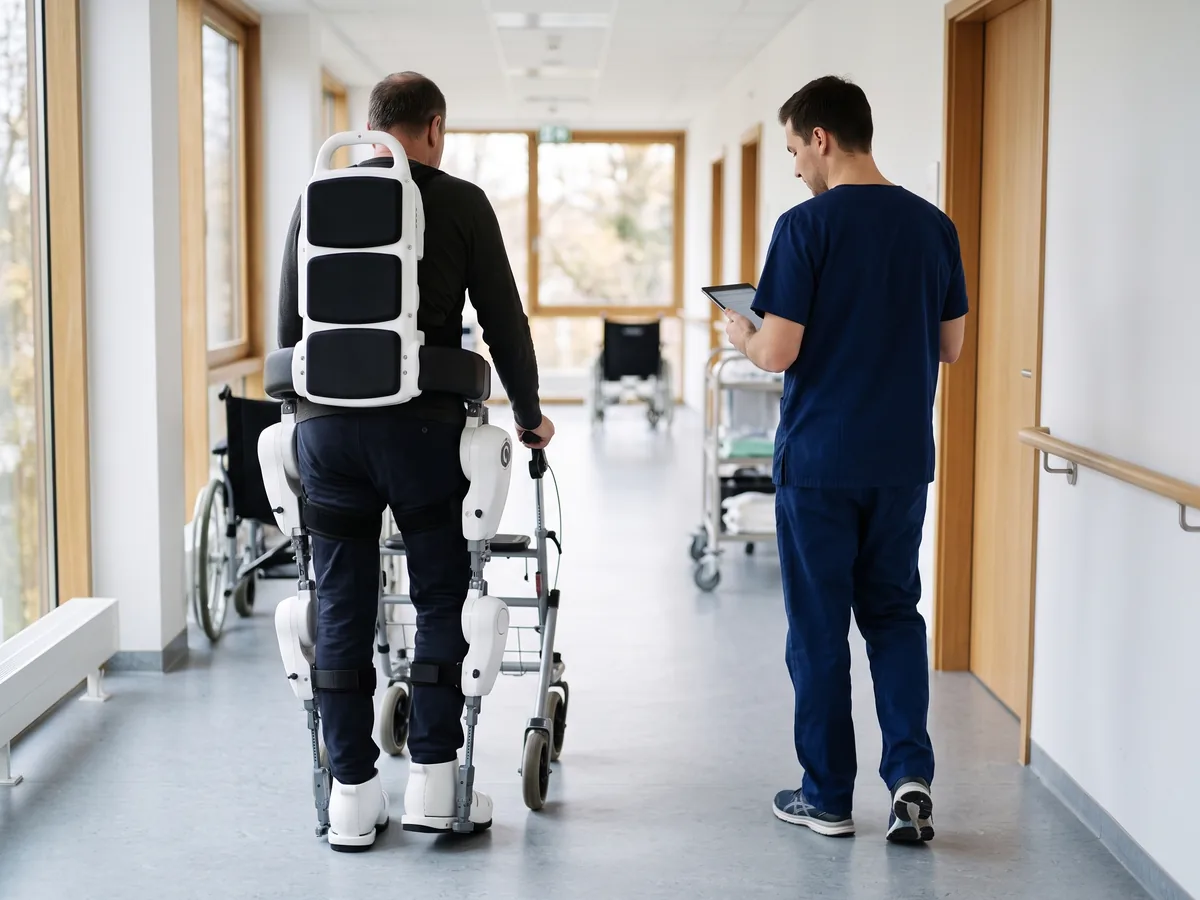
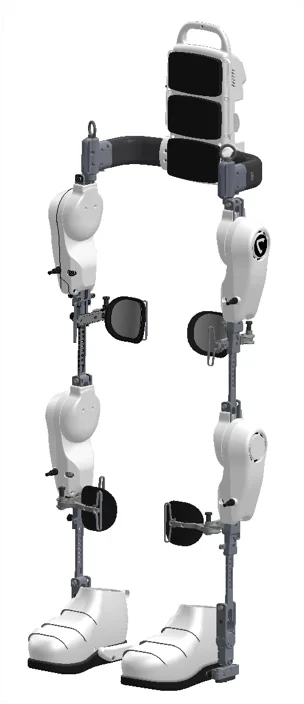
Conditions, ages, heights and weights of patients guide the choice: the CYBERDYNE Medical HAL Lower Limb Type HAL-ML08 fits people from 150 to 190 cm and 40 to 100 kg, according to its manufacturer.
Trained physiotherapists, session time and each device's status under Regulation (EU) 2017/745 (MDR) are agreed with the facility before commissioning.
FAQ
No. These devices are used under the supervision of a physiotherapist, who assesses the patient, sets the assistance and monitors the whole session. The robot takes over weight support and movement repetition.
According to the manufacturers: 10 to 135 kg for the Hocoma Lokomat, 15 to 180 kg and 100 to 200 cm for the Tyromotion Lexo, 10 to 135 kg and 1.35 to 2 m for the Hocoma Andago V2.0. The Lokomat has a paediatric orthosis and the Lexo a paediatric kit.
The Tyromotion Lexo, Tyromotion Amadeo and CYBERDYNE Medical HAL Lower Limb Type HAL-ML08 are MDR Class IIa devices under Regulation (EU) 2017/745, according to their manufacturers; the HAL-ML08 is CE marked on that basis. For the other models, we send you the European regulatory status before any offer.
Yes. The Tyromotion Amadeo moves each finger individually, in passive, active-assisted or active mode, up to 700 repetitions per session, for adults and children, according to its manufacturer.
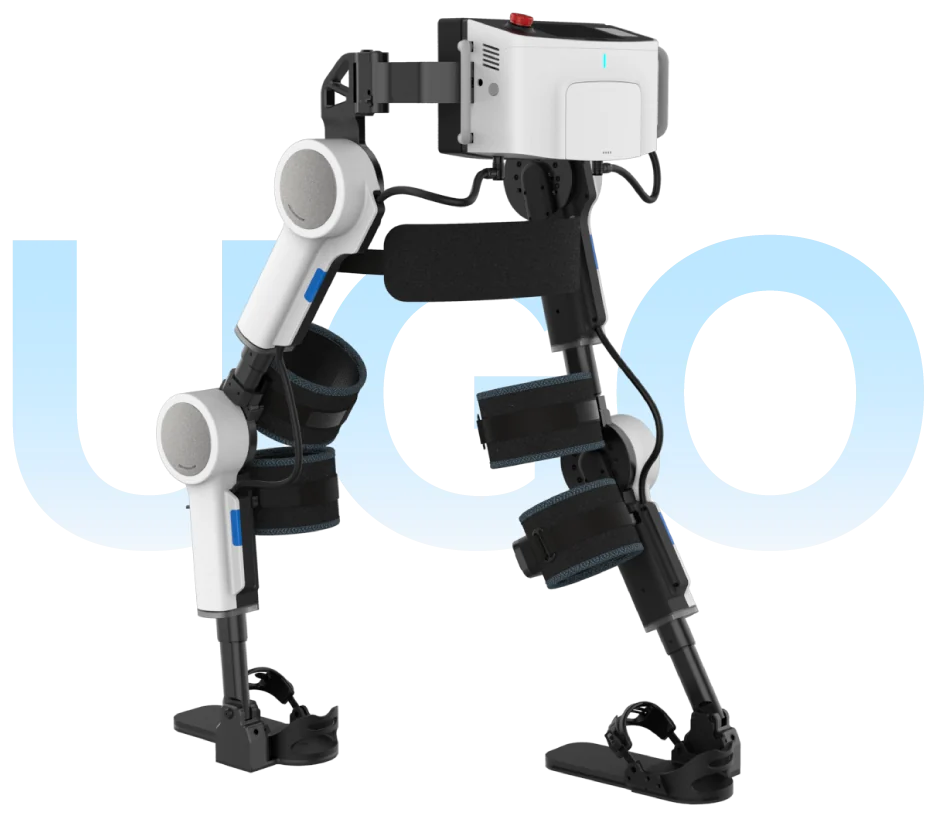
A gait orthosis such as the Hocoma Lokomat guides the legs on a treadmill with body-weight support. An exoskeleton is worn and supports walking over ground: the CYBERDYNE HAL-ML08 weighs about 13 kg and runs about 1 hour per battery, according to its manufacturer. The RoboCT UGO 220 offers active and active-passive modes.
USE CASES
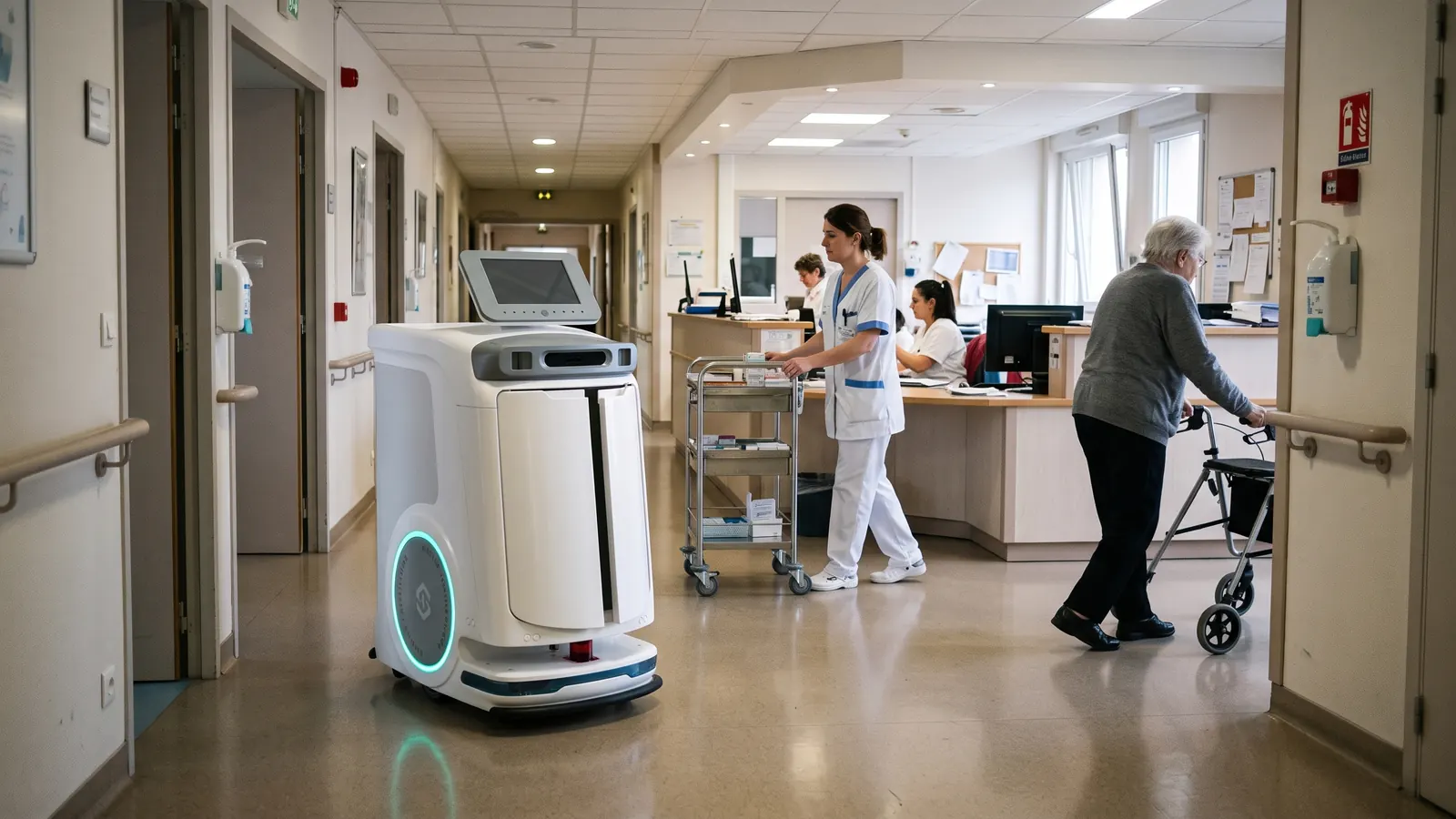 Hospital deliveryMedicines to the wards, samples to the lab, supplies and linen between floors: the robot runs the shuttles, locks its compartments and logs every delivery.
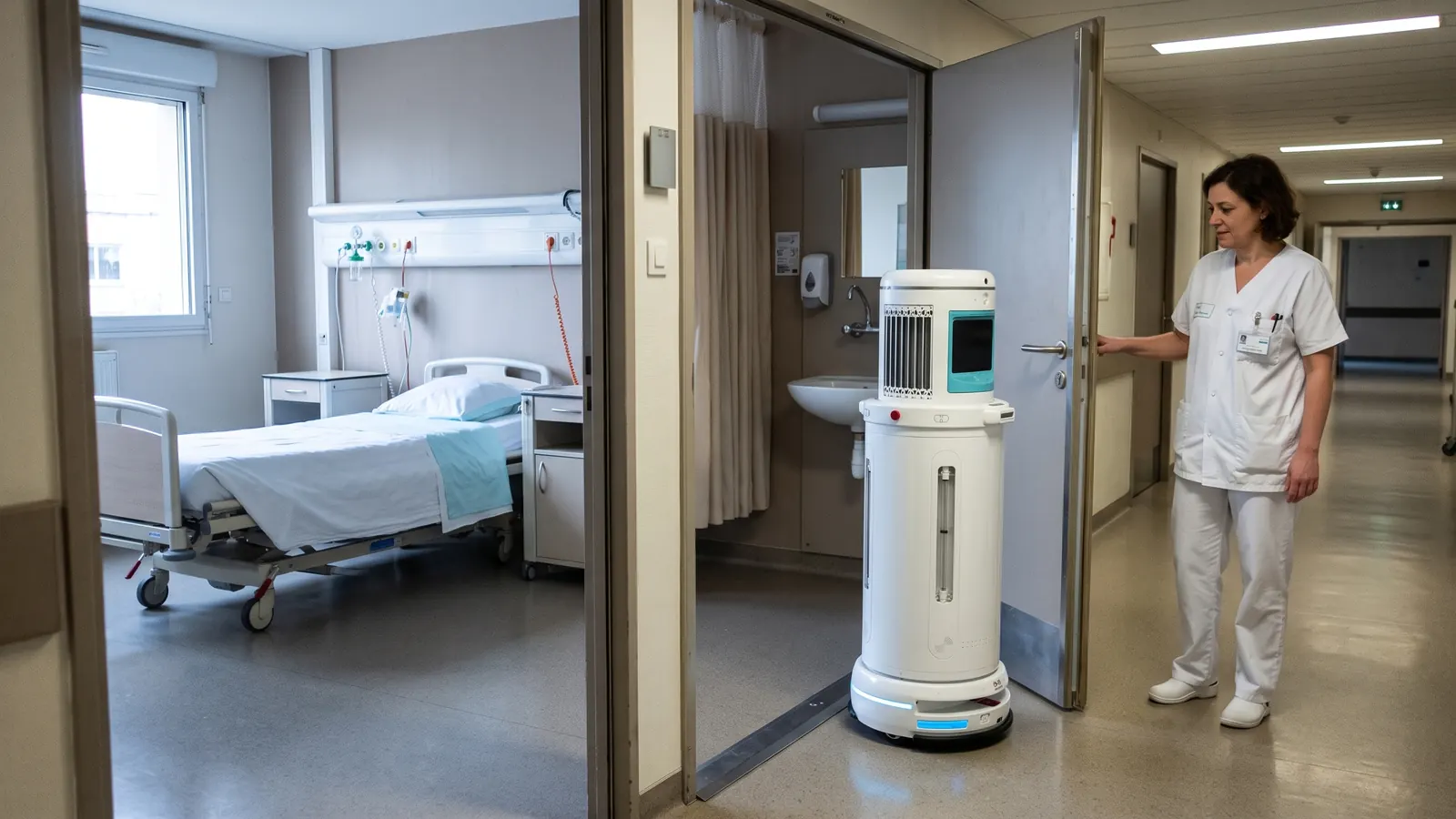 Hospital disinfectionThe robot disinfects rooms by airborne dry fog and UV, following the hospital's protocol. Cleaning staff still clean surfaces by hand; the robot adds a regular, scheduled step.
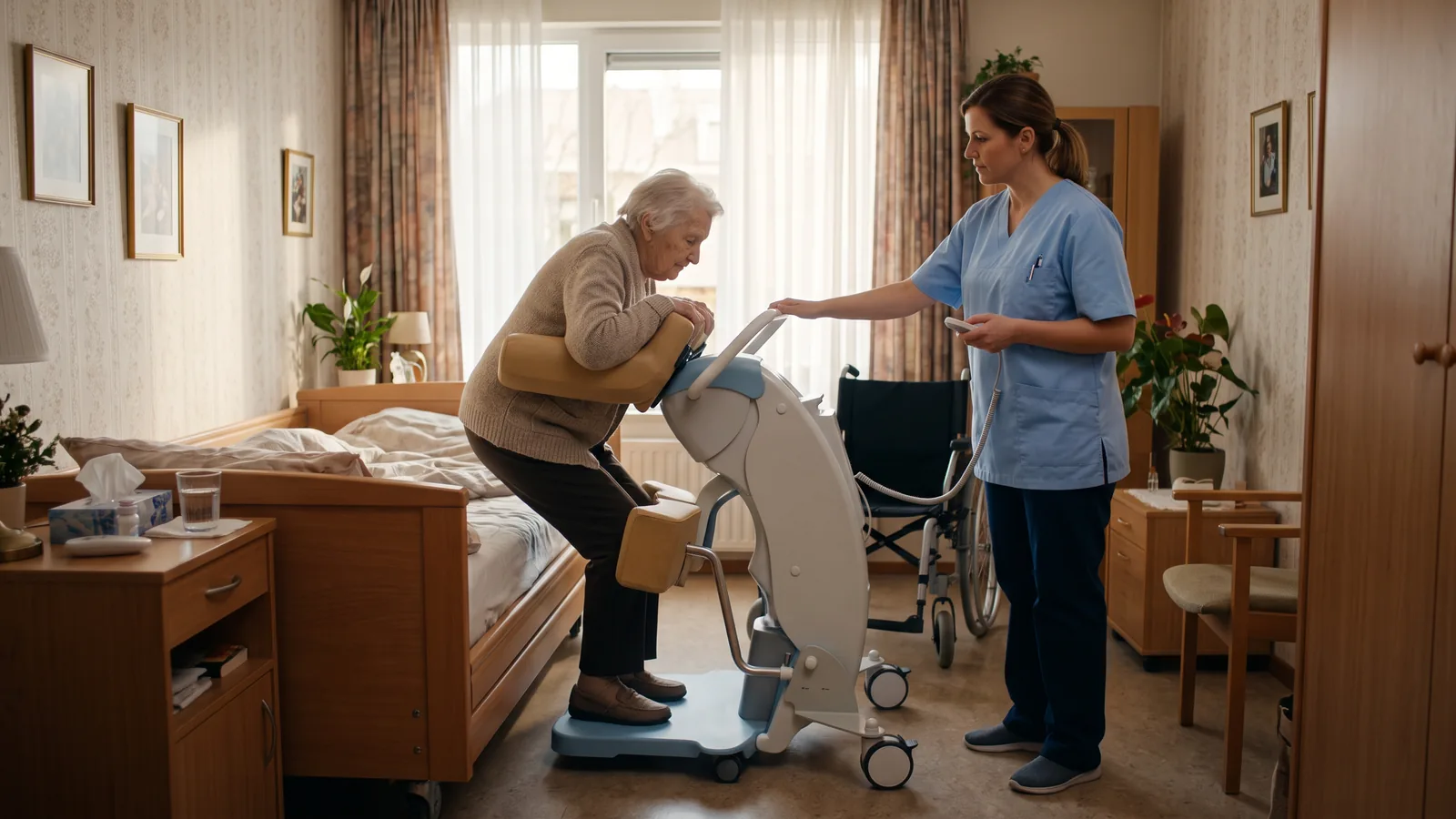 Robot-assisted patient transferThe robot lifts and moves the person between bed, wheelchair and toilet. The carer guides the transfer and keeps their attention on the person.
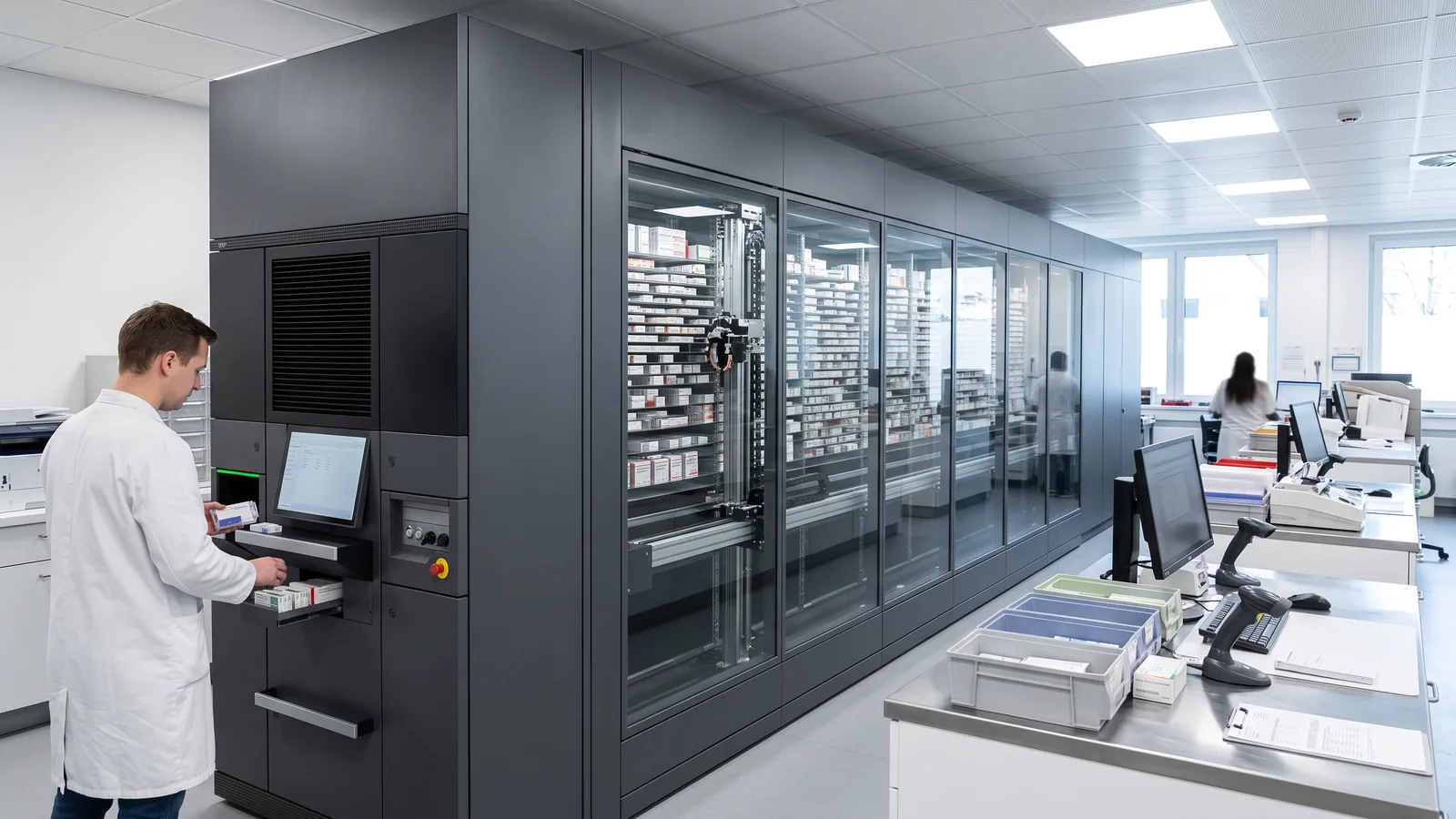 Hospital pharmacy automationThe robot stores packs, prepares doses and carries medicines to the wards. Pharmacists and technicians keep validation, advice and control.
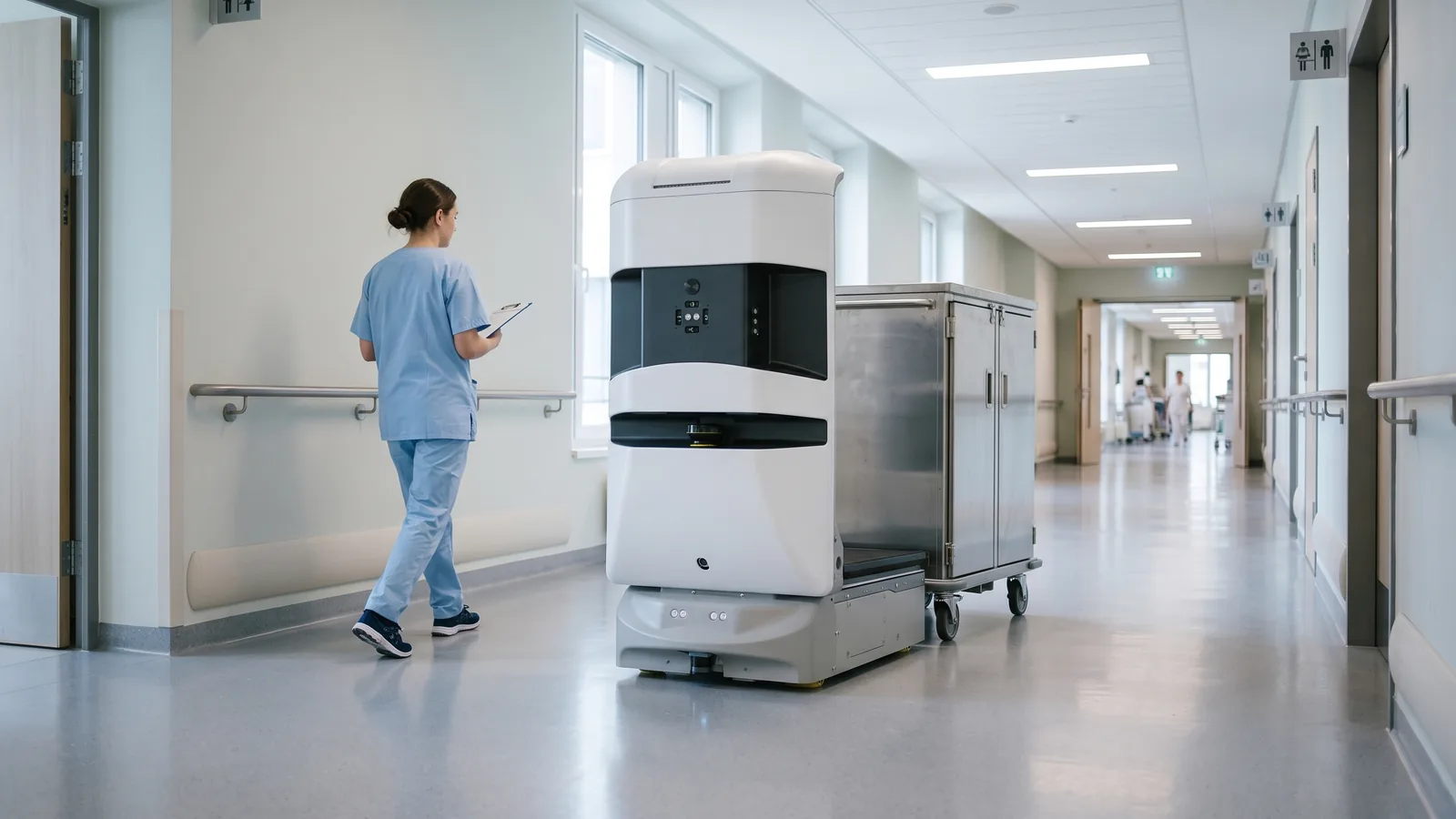 Robotic transport of hospital cartsThe robot takes the heavy kitchen, laundry and waste carts, calls the lift and delivers them to the wards. Logistics staff keep loading, checks and urgent requests.
Robots, acquisition mode and delivery terms, in one written proposal.