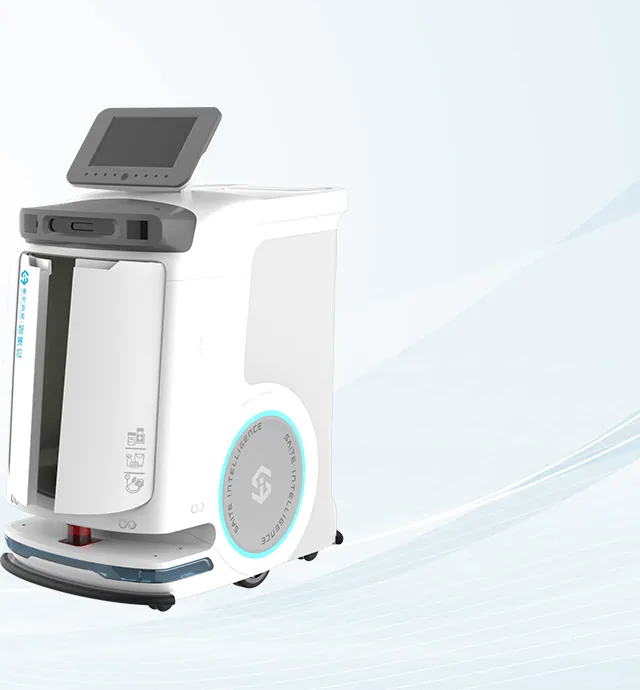
Healthcare logistics
- Payload
- 200 kg
- Key feature
- 210 L capacity
- Maximum speed
- 2 m/s
On order
Price on request
Updated
USE CASE · HEALTHCARE AND ELDERLY CARE
Medicines to the wards, samples to the lab, supplies and linen between floors: the robot runs the shuttles, locks its compartments and logs every delivery.
Updated
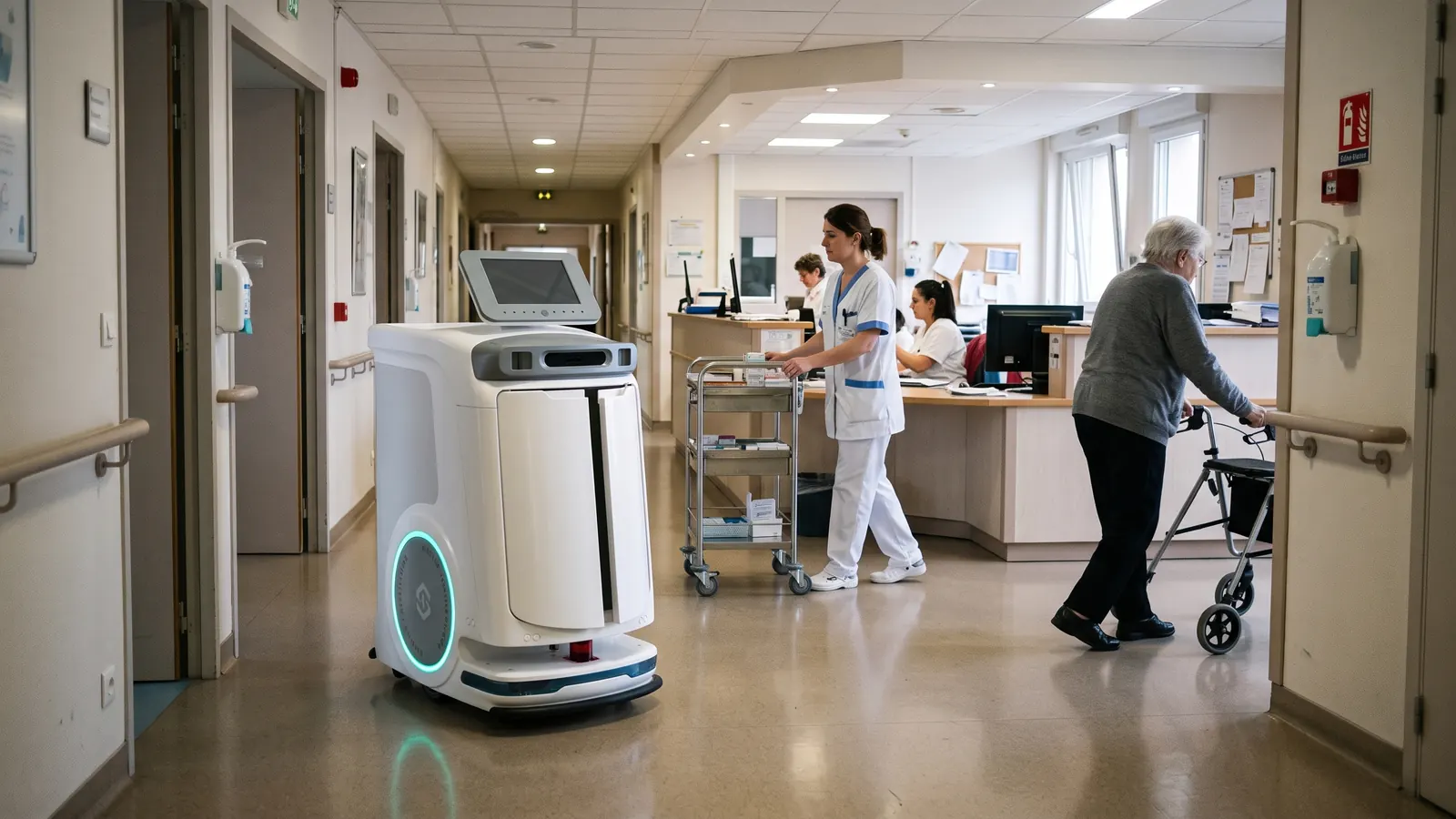
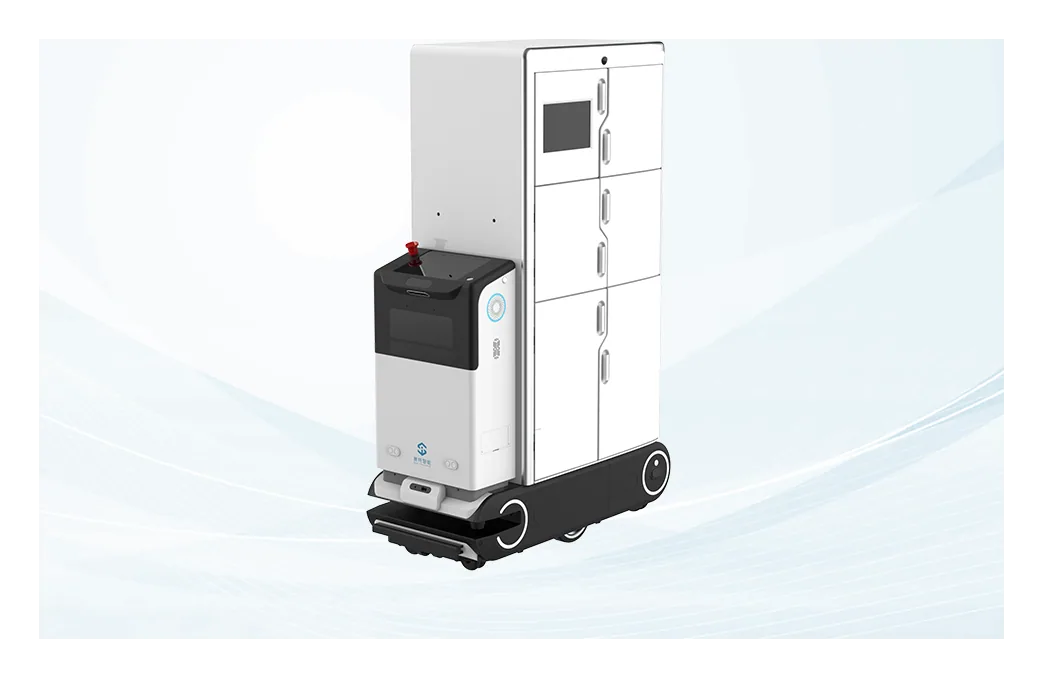
A hospital delivery robot carries medicines, samples, devices and linen between the pharmacy, the laboratory and the wards, in closed compartments.
The Saite B Series carries up to 200 kg in a 210 L cabinet, calls lifts and passes doors on its own, according to its manufacturer.
Robot Distribution delivers it, maps the routes, prepares the lift and door interfaces, trains the teams and maintains it, to buy, rent or as RaaS.
WHY
In a care facility, part of the time of nurses, care assistants and porters goes into shuttles: fetching a treatment from the pharmacy, taking a tube to the lab, bringing supplies up. Those trips interrupt care and weigh more at night and at weekends, when teams are smaller.
The robot runs those shuttles on a schedule or on demand. Compartments open only for authorised staff and every delivery is logged: the pharmacy and the lab know what left, when and for which ward.
HOW IT RUNS
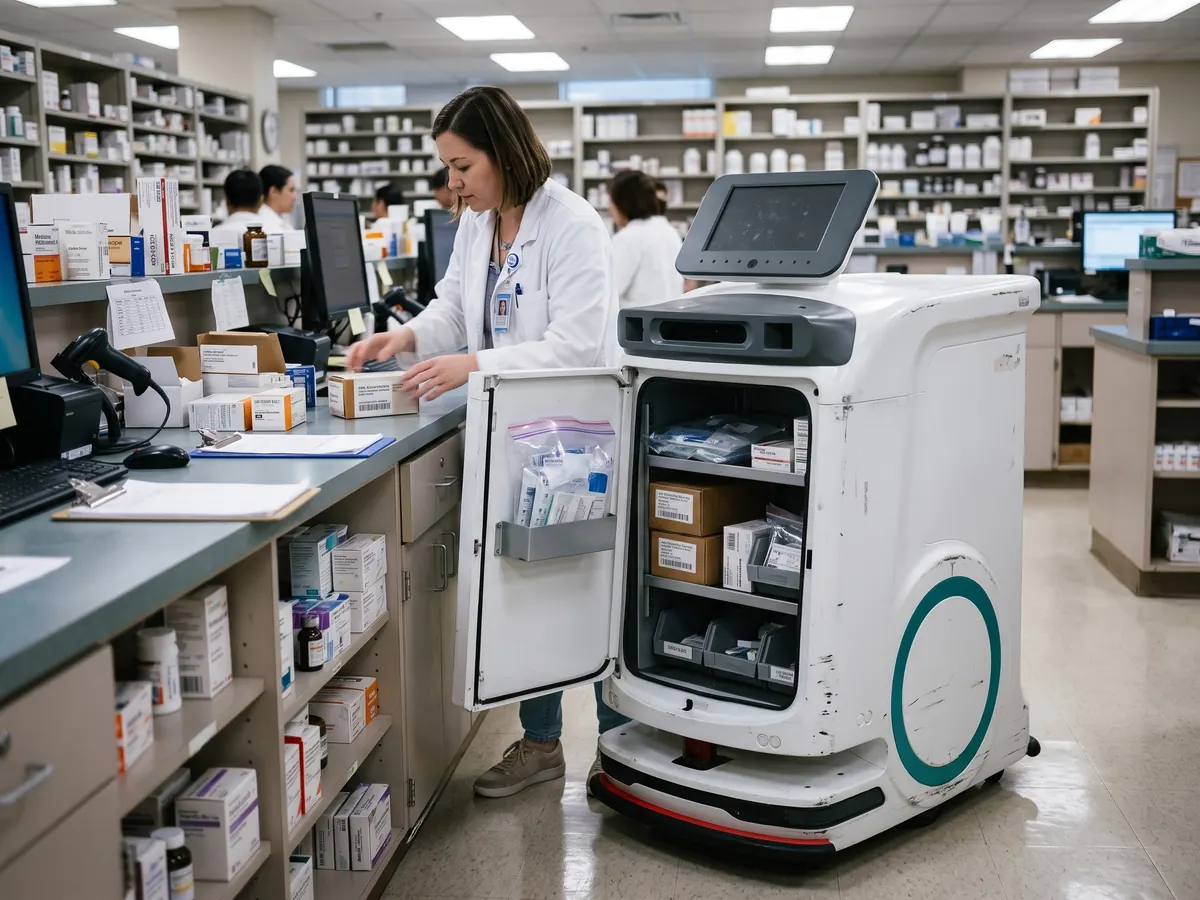
The pharmacy technician puts the treatments in a compartment, signs in by badge or face recognition and picks the destination ward on the touchscreen.
It uses service corridors and lifts, passes equipped doors and stops for patients, beds and trolleys.
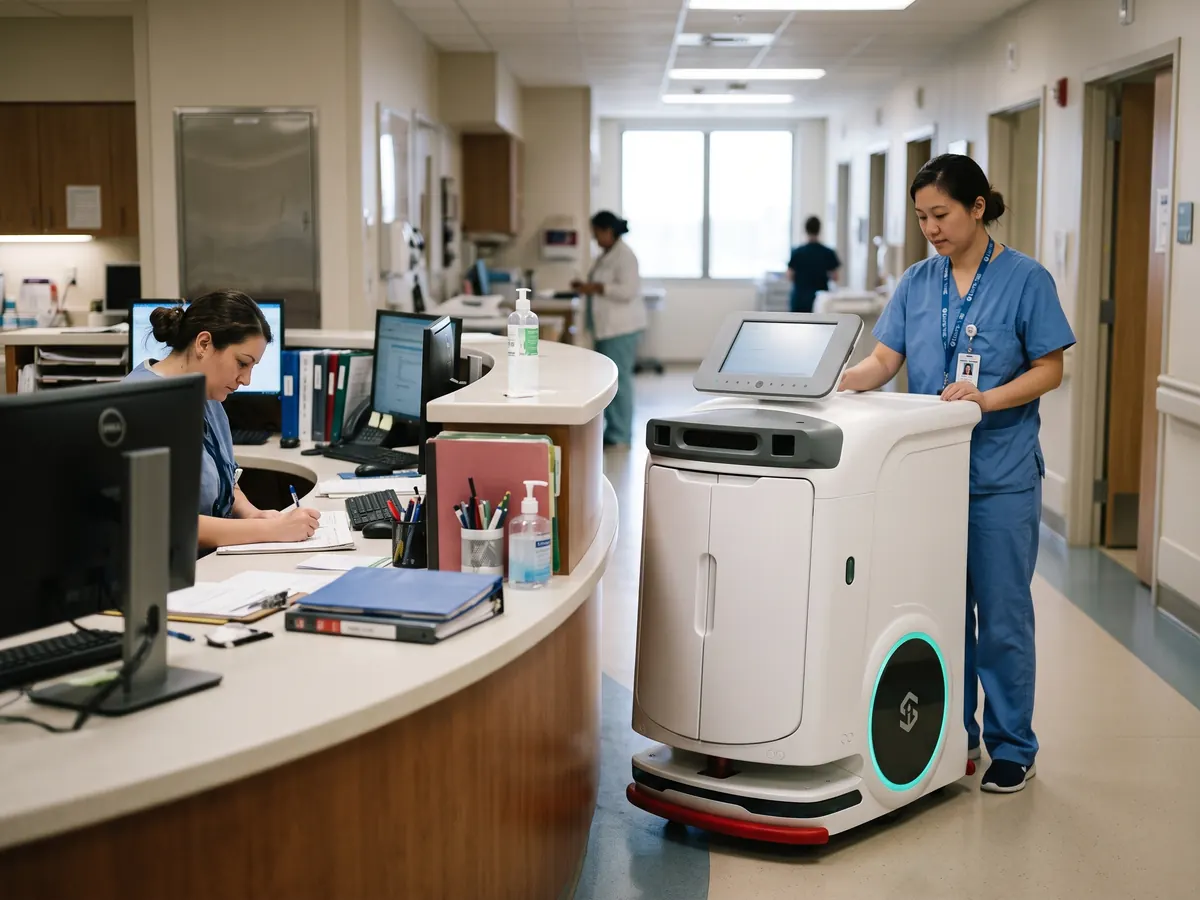
On arrival, only authorised staff open the compartment meant for them, by badge or face recognition. The handover is logged.
On the way back, the robot takes samples to the laboratory, or equipment to be processed, in a compartment separate from the treatments.
THE ROBOTS
Healthcare logistics
Healthcare logistics
Healthcare logistics
BEFORE INSTALLING
Pharmacy, ward and laboratory routes are mapped with the lifts to be used: the call interface is prepared with the lift company and the technical services.
Fire doors, automatic doors, badge-controlled areas: each must open for the robot, which is set up with the facility's security team.
Wi-Fi or mobile coverage along the routes, and the IT department's rules for connecting the robots and their supervision platform.
Who opens which compartment, when the rounds run, which urgent requests stay manual: agreed with the pharmacy, the lab and the nurse managers.
FAQ
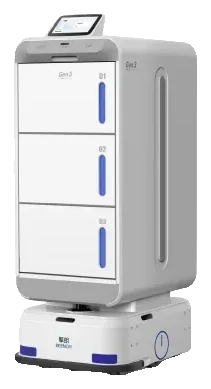
Yes. According to their manufacturer, the Saite B Series compartments open by fingerprint, face recognition or badge, the Saite C Series ones by face recognition or badge, and every delivery is traced. The KEENON M102 carries treatments in three drawers.
According to their manufacturer: up to 200 kg in 210 L for the Saite B Series, suited to bulky loads; 200 kg in 310 L, or 300 kg in 350 L for the Plus version, for the Saite C Series and its configurable compartments. The KEENON M102 specifications are not published: we obtain them on request.
The Saite B Series calls lifts and passes doors on its own according to its manufacturer. Each lift and each powered door must be connected: the site survey lists the equipment involved.
Yes, and we recommend it: a first route between the pharmacy and one or two wards, then extension to the lab and other floors once the routine is in place.
USE CASES
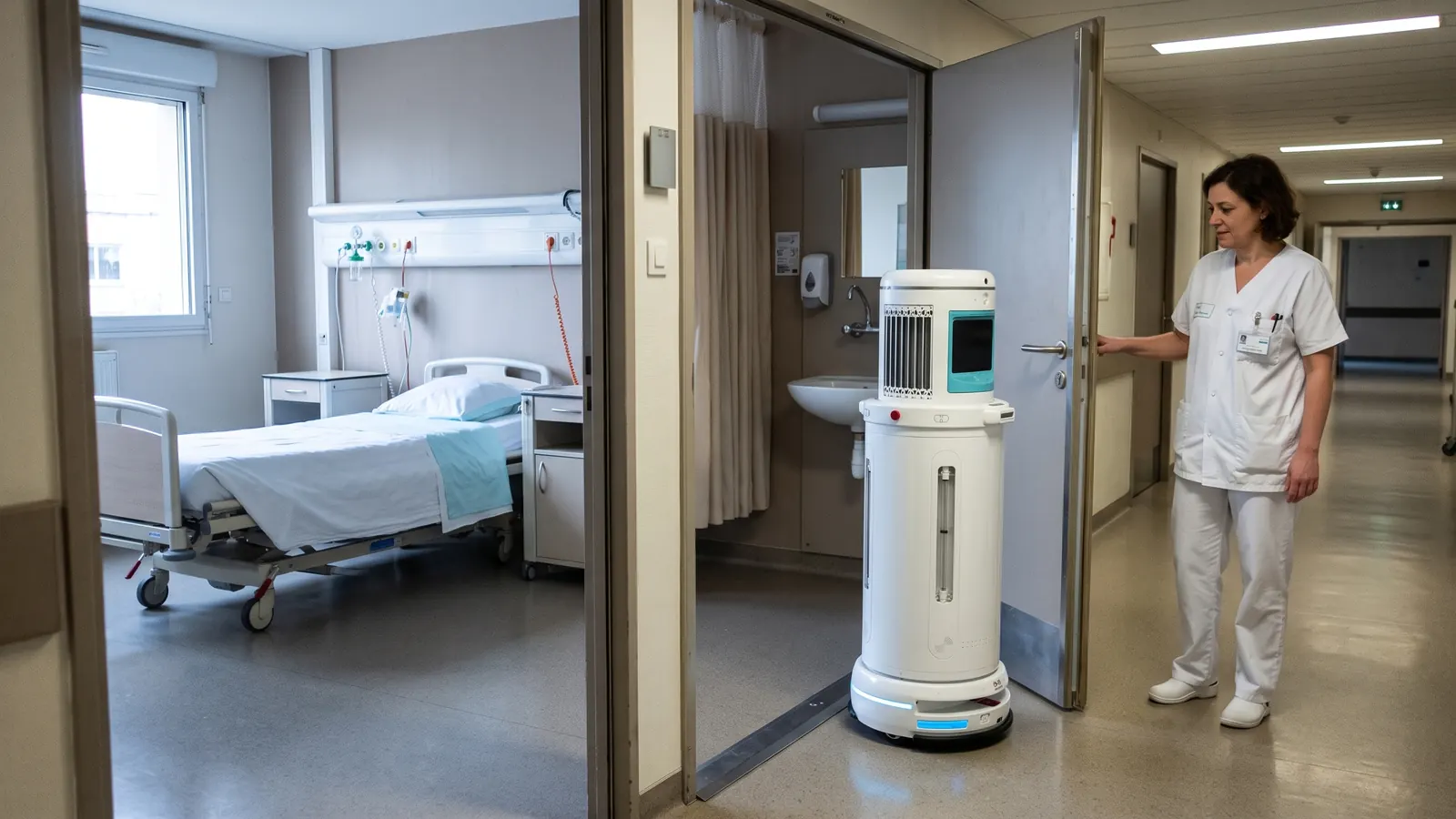 Hospital disinfectionThe robot disinfects rooms by airborne dry fog and UV, following the hospital's protocol. Cleaning staff still clean surfaces by hand; the robot adds a regular, scheduled step.
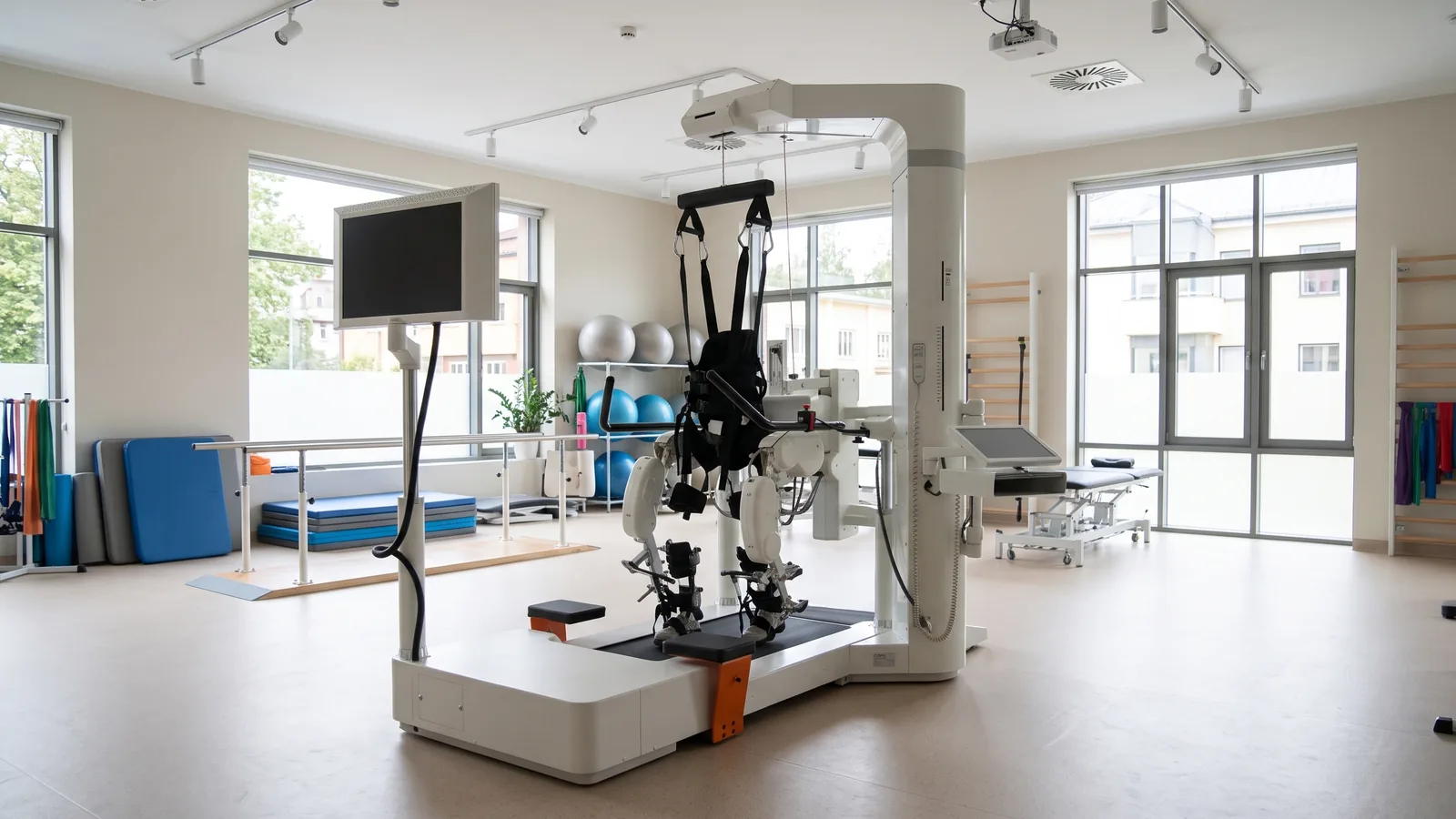 Robotic gait and upper-limb rehabilitationThe robot carries part of the patient's weight and repeats the movement. The physiotherapist sets the goals, adjusts the assistance and leads the session.
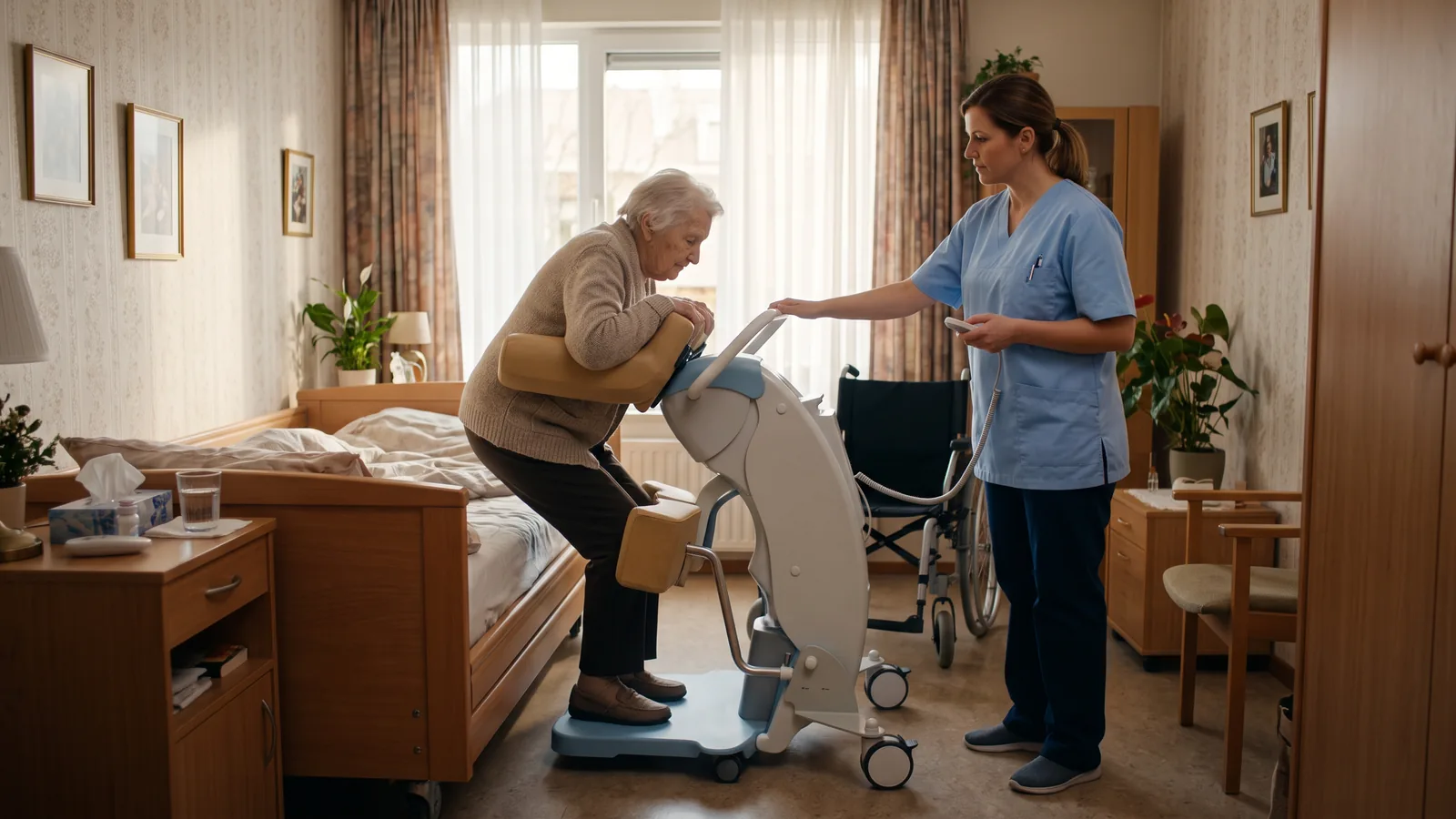 Robot-assisted patient transferThe robot lifts and moves the person between bed, wheelchair and toilet. The carer guides the transfer and keeps their attention on the person.
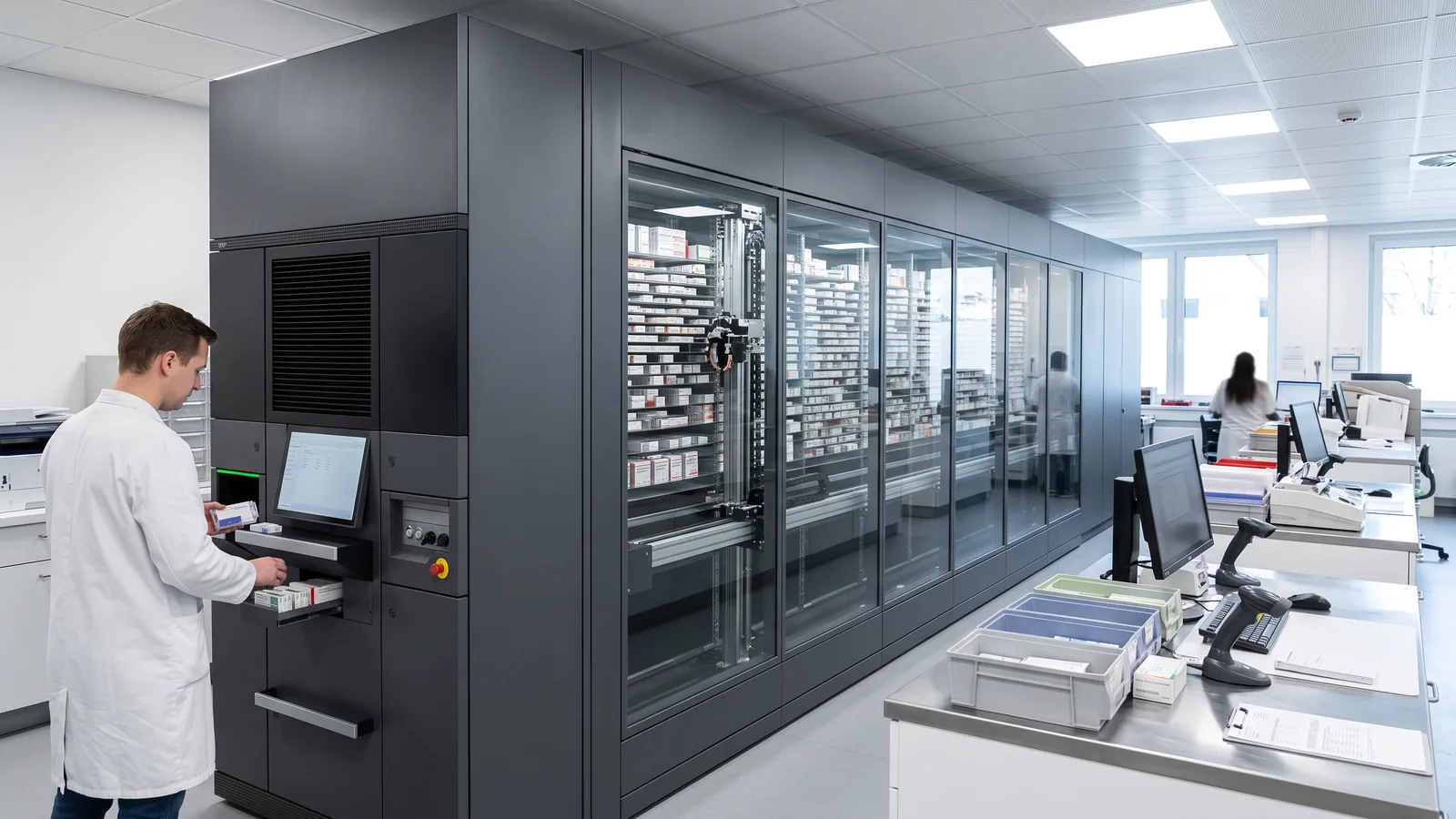 Hospital pharmacy automationThe robot stores packs, prepares doses and carries medicines to the wards. Pharmacists and technicians keep validation, advice and control.
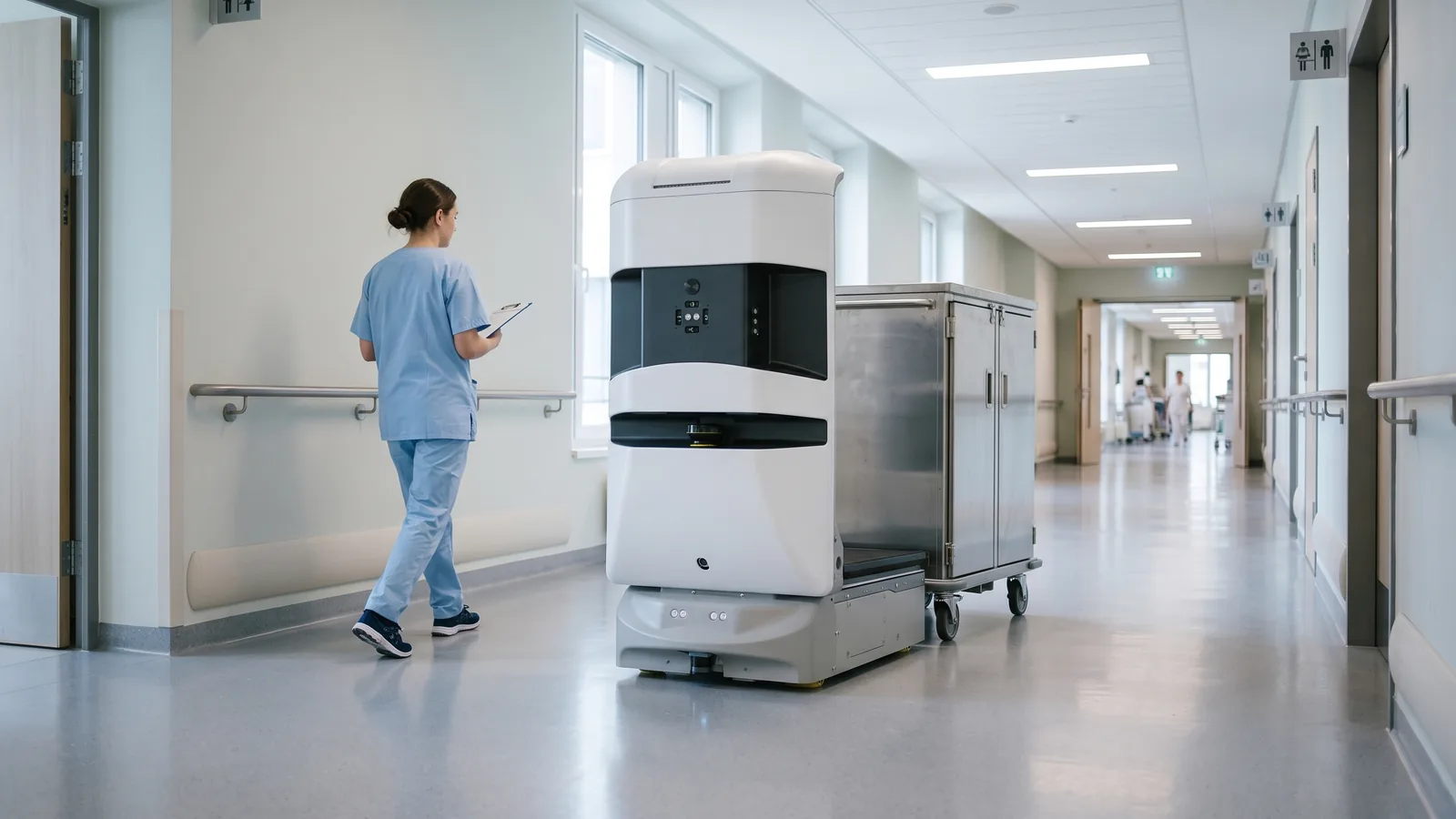 Robotic transport of hospital cartsThe robot takes the heavy kitchen, laundry and waste carts, calls the lift and delivers them to the wards. Logistics staff keep loading, checks and urgent requests.
Robots, acquisition mode and delivery terms, in one written proposal.