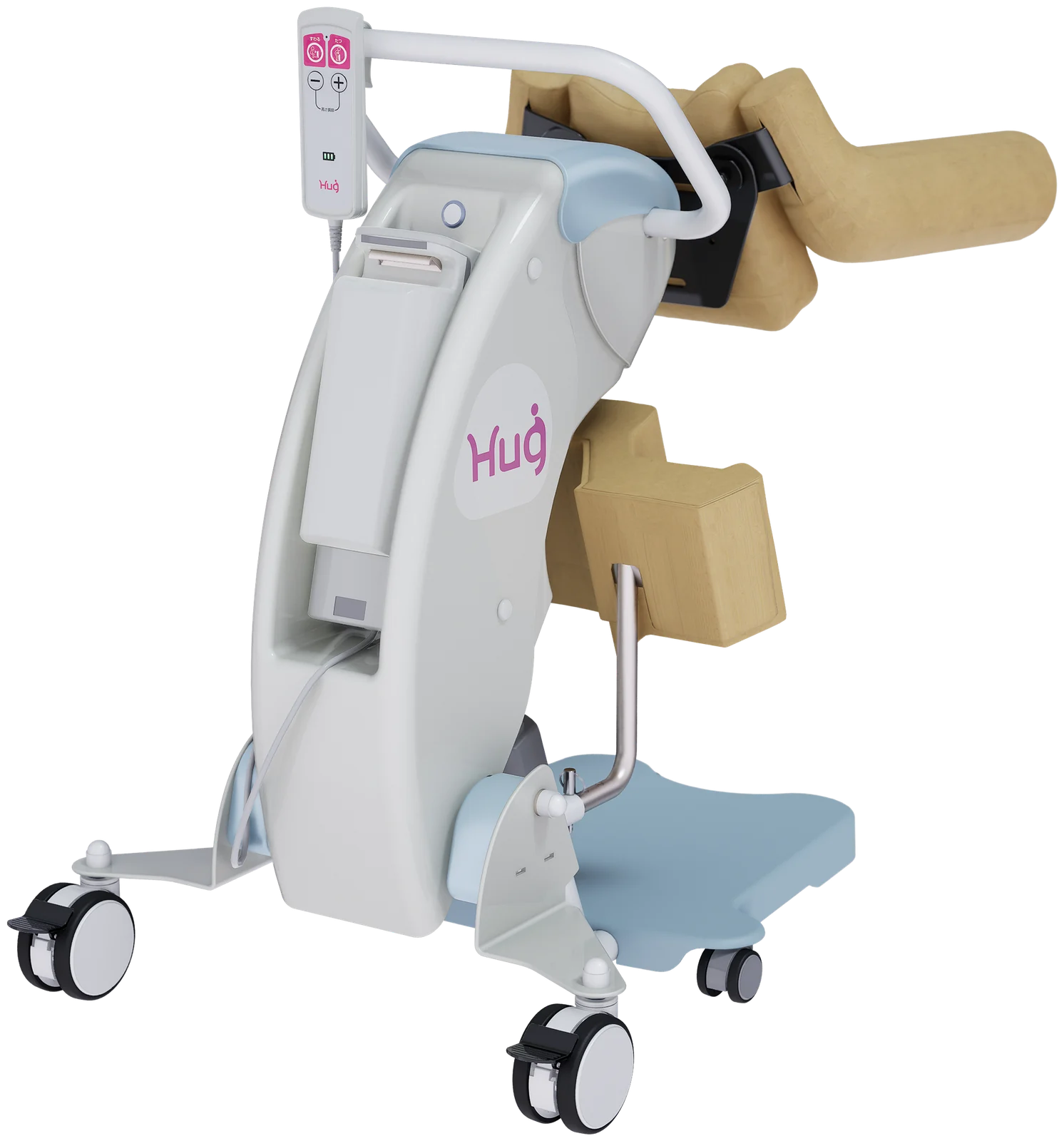
Rehabilitation robots
- Weight
- 35 kg
- Key feature
- Users up to 100 kg
- Key feature
- About 100 lifts per charge
On order
From €7,590 ex VATor €259/month in RaaS
Updated
USE CASE · HEALTHCARE AND ELDERLY CARE
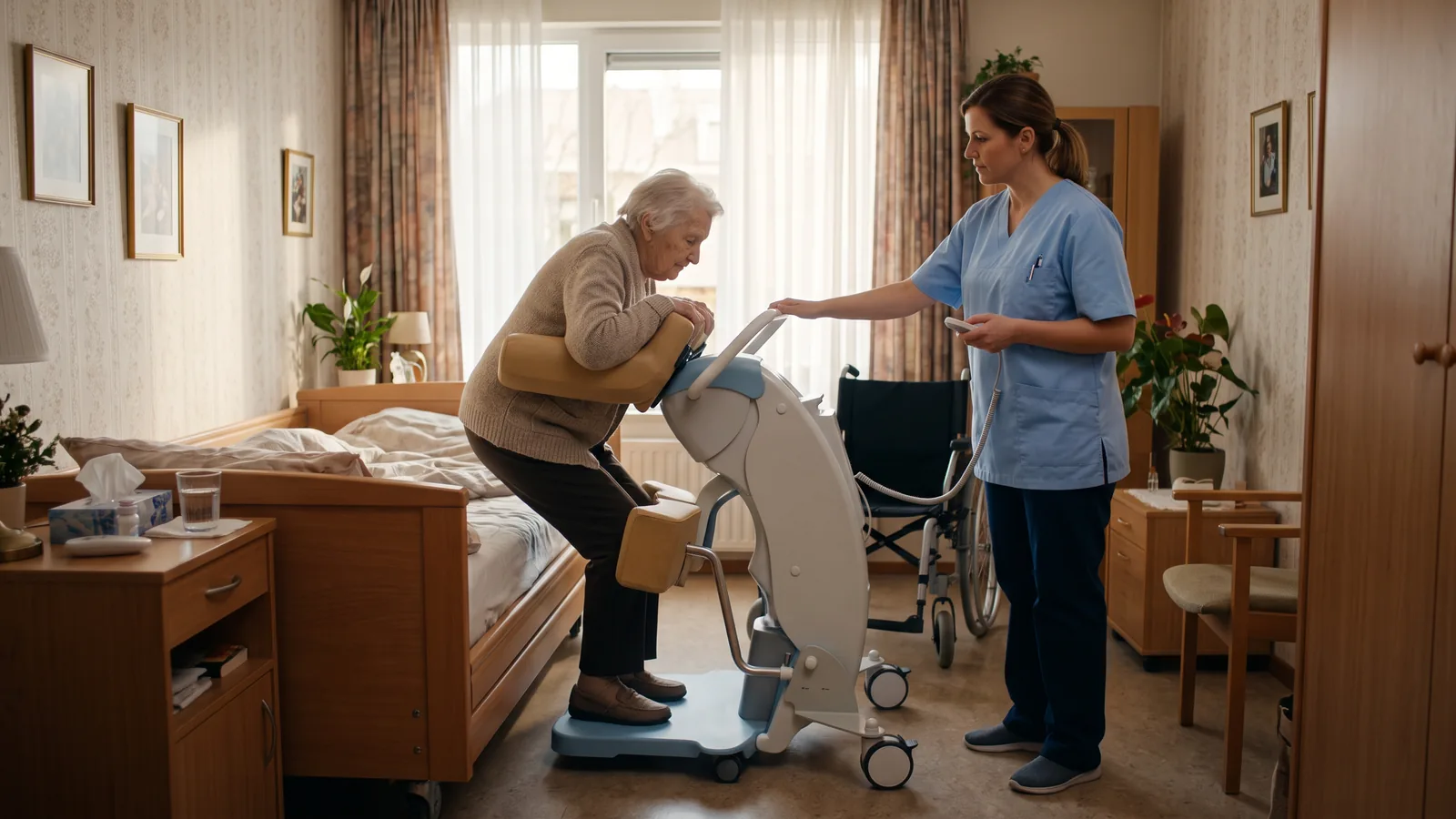
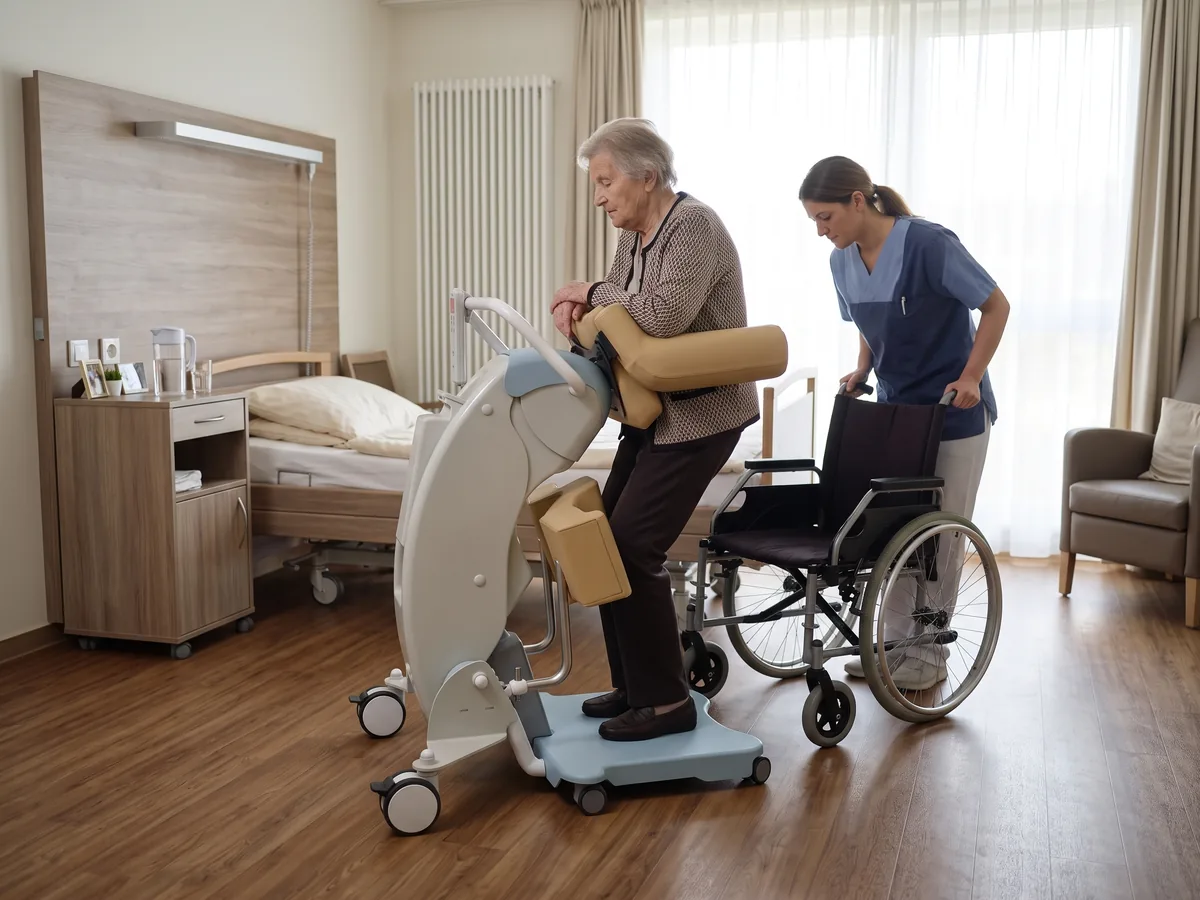
The robot lifts and moves the person between bed, wheelchair and toilet. The carer guides the transfer and keeps their attention on the person.
Updated
A transfer robot helps a person with reduced mobility stand up or move from bed to wheelchair, toilet or shower, without the carer lifting them.
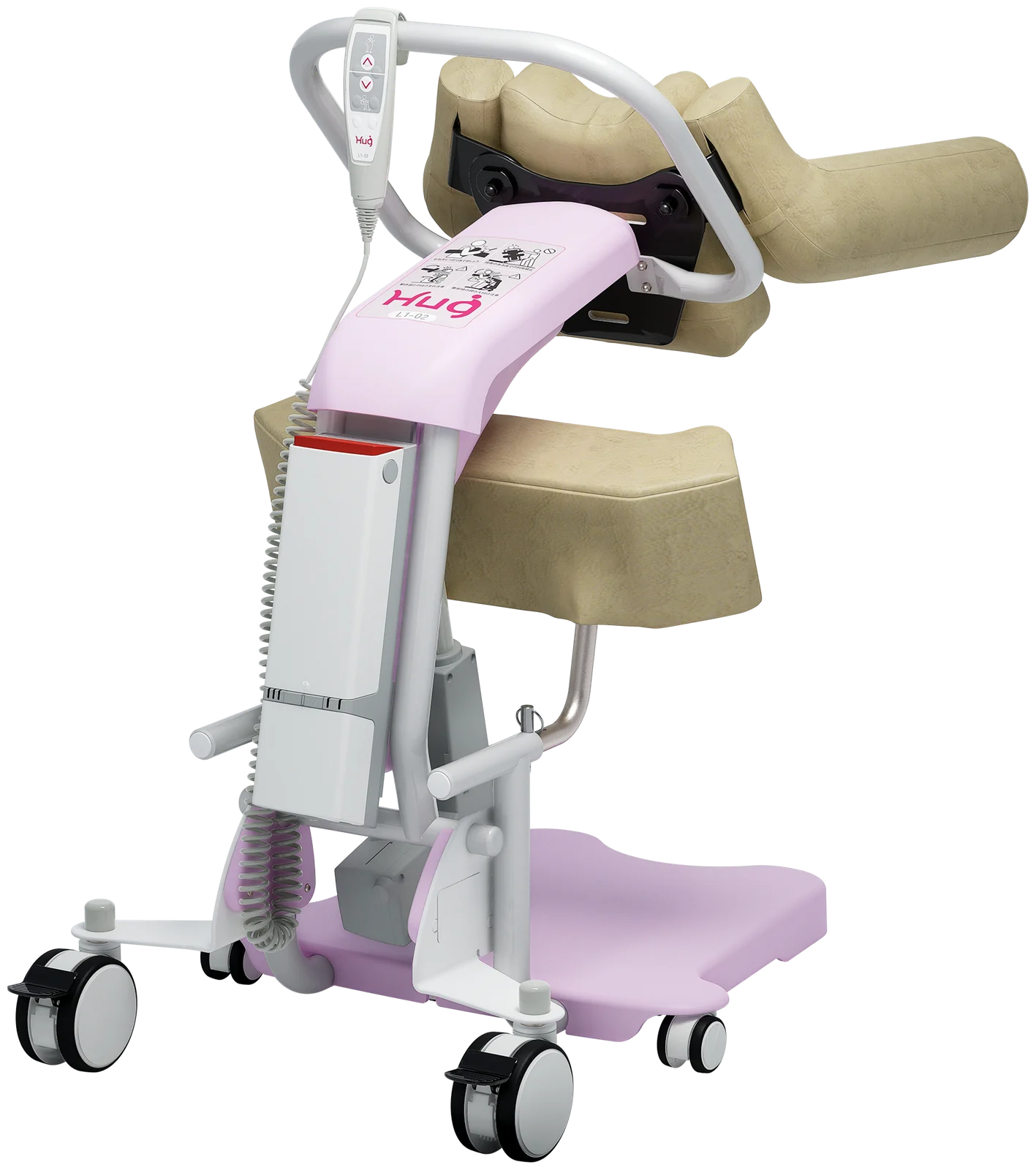
The FUJI Hug T1, the version for facilities and hospitals, assists people of 140 to 180 cm and up to 100 kg to stand, for about 100 transfers per charge, according to its manufacturer.
Robot Distribution delivers it, trains your care teams and maintains it, to buy, rent or as RaaS.
WHY
In a care home, a hospital ward or at home, bed-to-chair and chair-to-toilet transfers are repeated several times a day for each dependent person. Done by hand, they put heavy strain on carers' backs and can be uncomfortable for the person being helped.
The robot carries the load and reproduces a steady movement. The carer stays present at every transfer: they position the person, start the movement and accompany them until they are seated.
HOW IT RUNS
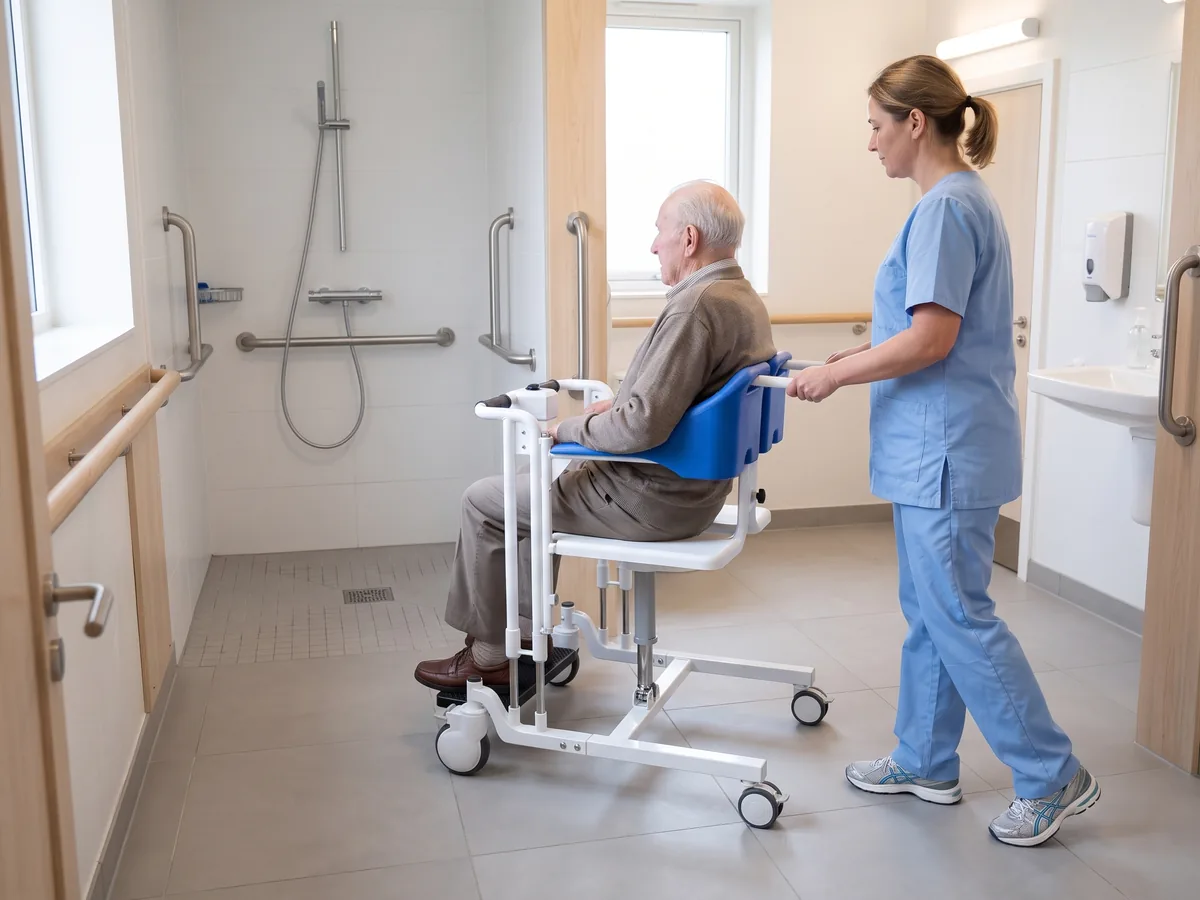
The care team checks whether the person can lean on a support and use their legs, as the FUJI Hug robots require according to their manufacturer, or must stay seated, in which case a Zuowei lift chair is used.
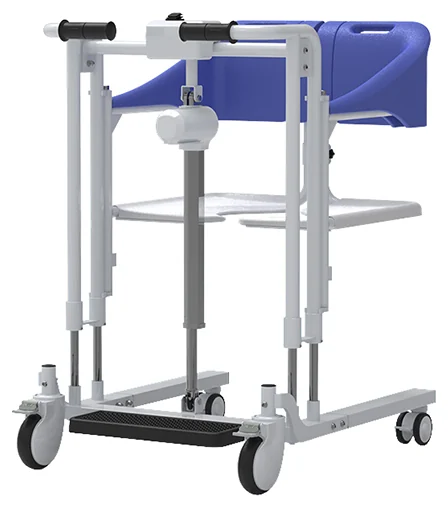
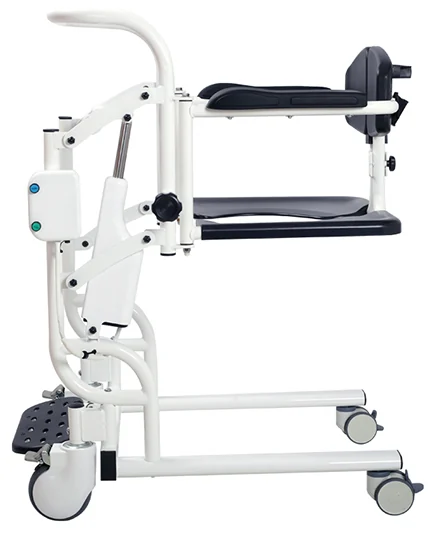
The person leans on the Hug's chest support. With a lift chair, they sit in the seat, which slides under the bed: the Zuowei ZW365D needs a 12 cm clearance, according to its manufacturer.
The carer starts the lift with the Hug's two-button remote, or sets the Zuowei ZW365D seat height between 40 and 70 cm, according to their manufacturers, then guides the person to the wheelchair, toilet or shower.
The robot recharges between rounds: about 100 transfers per charge for the FUJI Hug robots, 3 hours' charging for the Zuowei ZW388D, according to their manufacturers. The team cleans and disinfects contact surfaces.
THE ROBOTS
Rehabilitation robots
Rehabilitation robots
Rehabilitation robots
Rehabilitation robots
BEFORE INSTALLING
Each resident's height, weight and ability to stand guide the model: the Zuowei ZW365D carries up to 150 kg and the ZW388D up to 120 kg, according to their manufacturers.
Door widths, space around the bed, clearance under the bed and access to toilets and showers are measured: the FUJI Hug T1 takes up 950 × 620 mm of floor, according to its manufacturer.
Transfers per day, rounds, storage and charging locations are agreed with the nursing managers.
Each model's European status, medical device or not, is checked before the offer, and carers are trained in the device's use and limits.
RULES AND STANDARDS
A transfer device is judged on its regulatory status, its test standard, its upkeep and the protection of carers' backs.
Under Regulation (EU) 2017/745, a product is a medical device when its manufacturer intends it, among other purposes, for the alleviation of or compensation for a disability. ANSM states that patient lifts are medical devices. A transfer robot's status follows the purpose its manufacturer declares: ask for the EU declaration of conformity and check whether it cites the medical device regulation or the machinery rules.
ISO 10535:2021, Assistive products — Hoists for the transfer of persons — Requirements and test methods, covers mobile hoists, including stand-up types and solid-seat types, stationary hoists and body-support units. It excludes devices that move people between floors. Ask whether the model was tested to this standard, and with which body-support unit.
ANSM reports that over half of patient-lift incidents are linked to a lack of preventive maintenance. Its guidance asks for an inventory, maintenance to the manufacturer's instructions, at least yearly checks of structure, emergency stop, batteries, wheels and brakes, and use only by trained staff. Serious incidents are reported to ANSM under materiovigilance.
Article R4541-5 of the Code du travail applies when manual handling cannot be avoided: the employer assesses the risks and fits out workstations to prevent back injuries, in particular with mechanical aids. Article R4541-8 requires mainly practical training. Record the robot in the risk assessment and plan how new carers are trained on it.
General information, not legal advice.
FAQ
For people who can use their legs, the FUJI Hug robots help them stand without a sling by reproducing a natural sit-to-stand movement, according to their manufacturer. For others, a lift chair or hoist is still needed: the care team decides case by case.
According to the manufacturers: up to 100 kg for the FUJI Hug L1 and Hug T1 (people of 140 to 180 cm), 120 kg for the Zuowei ZW388D and 150 kg for the Zuowei ZW365D.
The FUJI Hug T1 is the facility and hospital version: 35 kg, lead-acid battery charged in 8 hours. The more compact Hug L1 targets home care and small facilities: 30 kg, lithium-ion battery charged in 4 hours. Both do about 100 transfers per charge, according to their manufacturer.
Yes, with the lift chairs: the Zuowei ZW365D is waterproof for shower use and the ZW388D has a removable commode and a seat that opens 180° forward, according to their manufacturer.
Yes. The robot carries the load, but a carer positions the person, starts the movement and stays with them throughout the transfer.
USE CASES
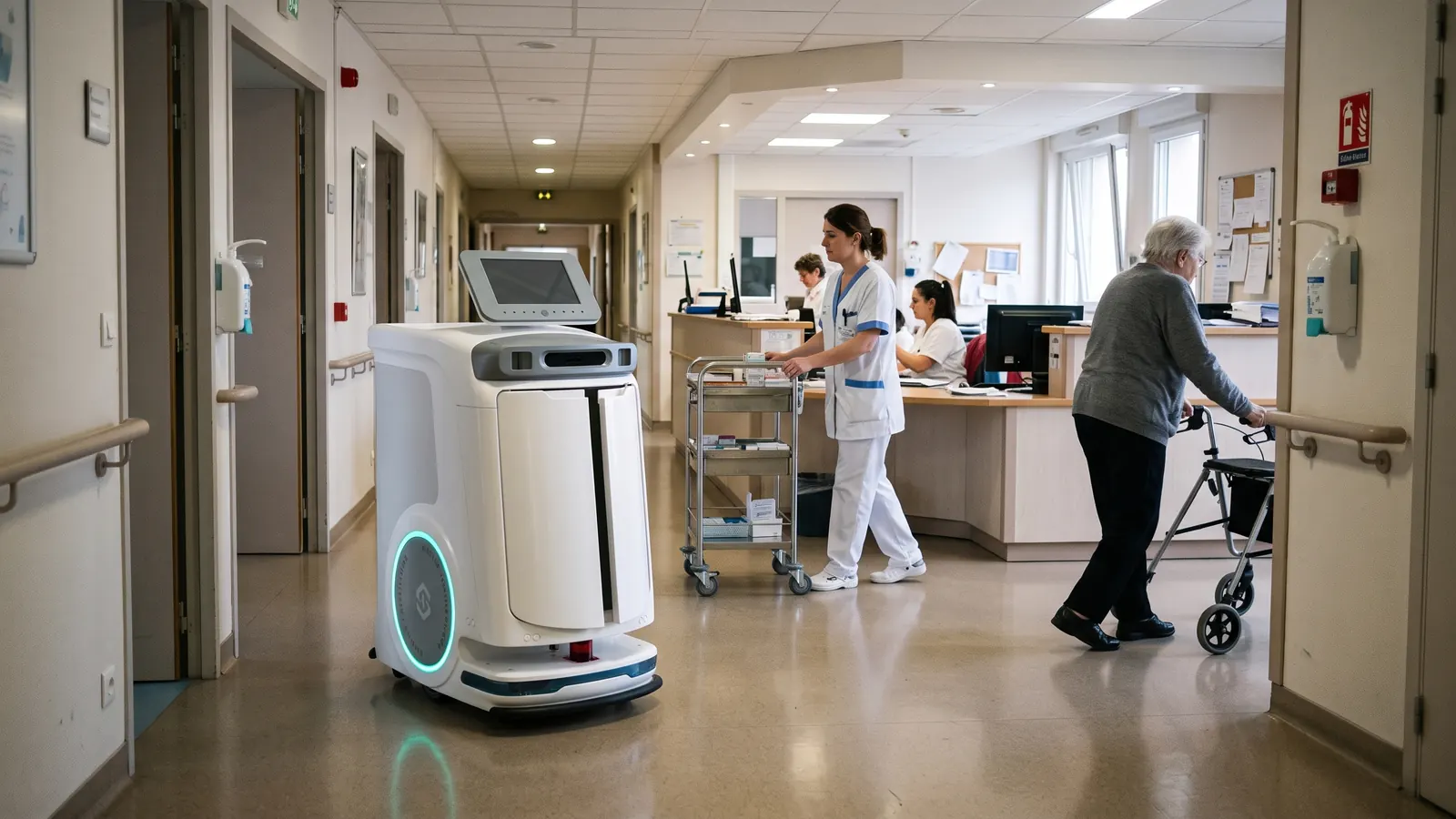 Hospital deliveryMedicines to the wards, samples to the lab, supplies and linen between floors: the robot runs the shuttles, locks its compartments and logs every delivery.
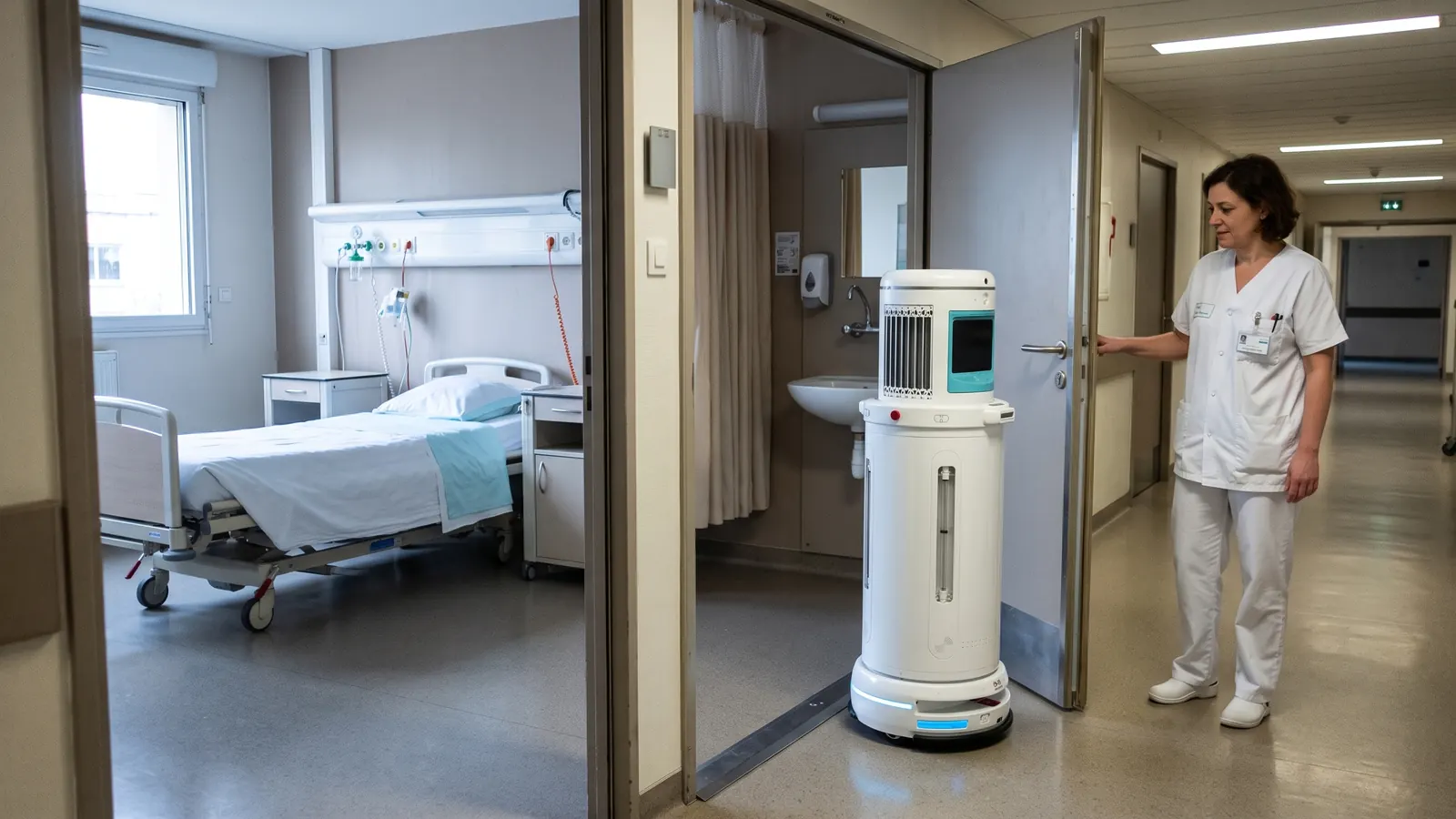 Hospital disinfectionThe robot disinfects rooms by airborne dry fog and UV, following the hospital's protocol. Cleaning staff still clean surfaces by hand; the robot adds a regular, scheduled step.
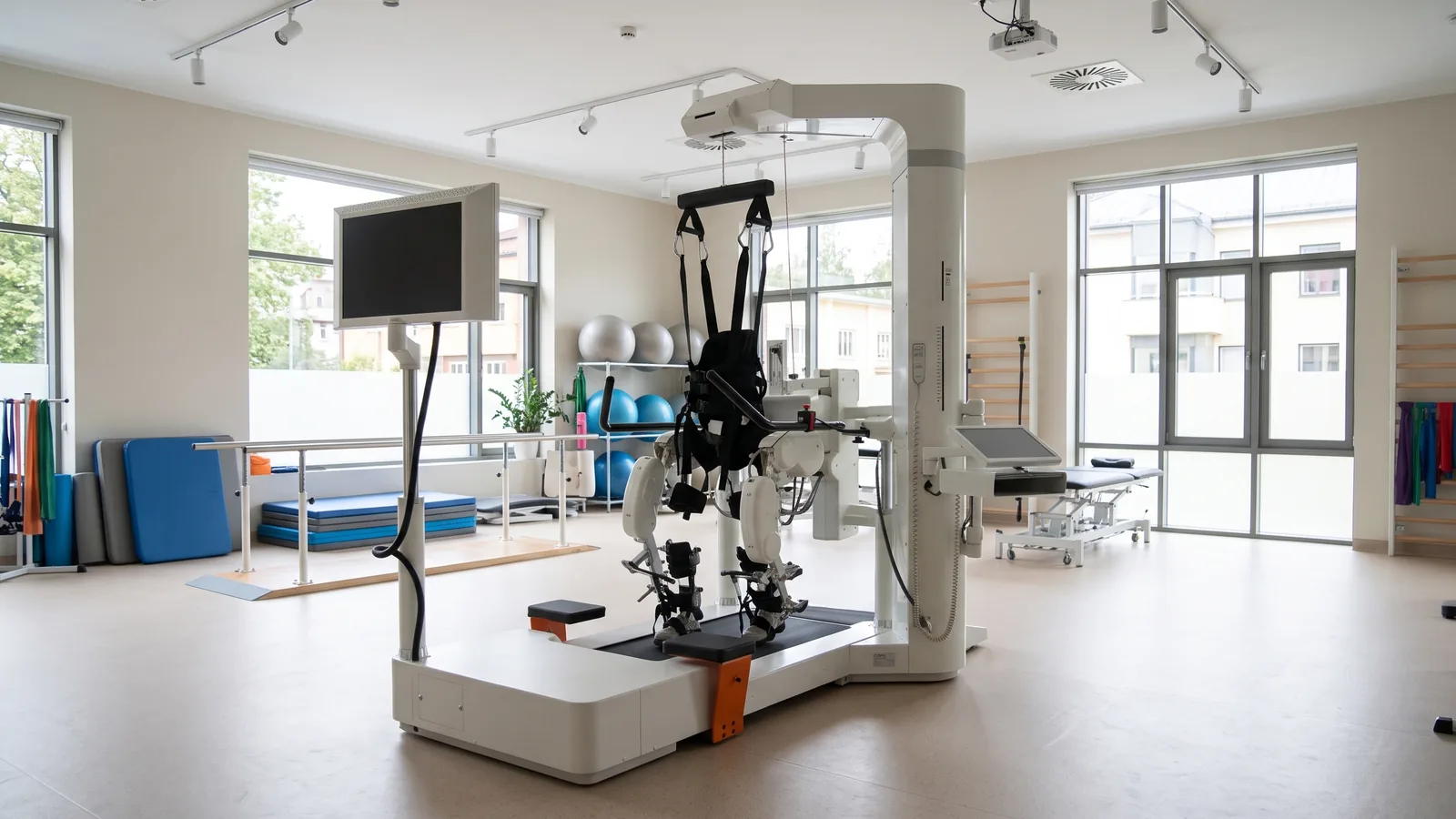 Robotic gait and upper-limb rehabilitationThe robot carries part of the patient's weight and repeats the movement. The physiotherapist sets the goals, adjusts the assistance and leads the session.
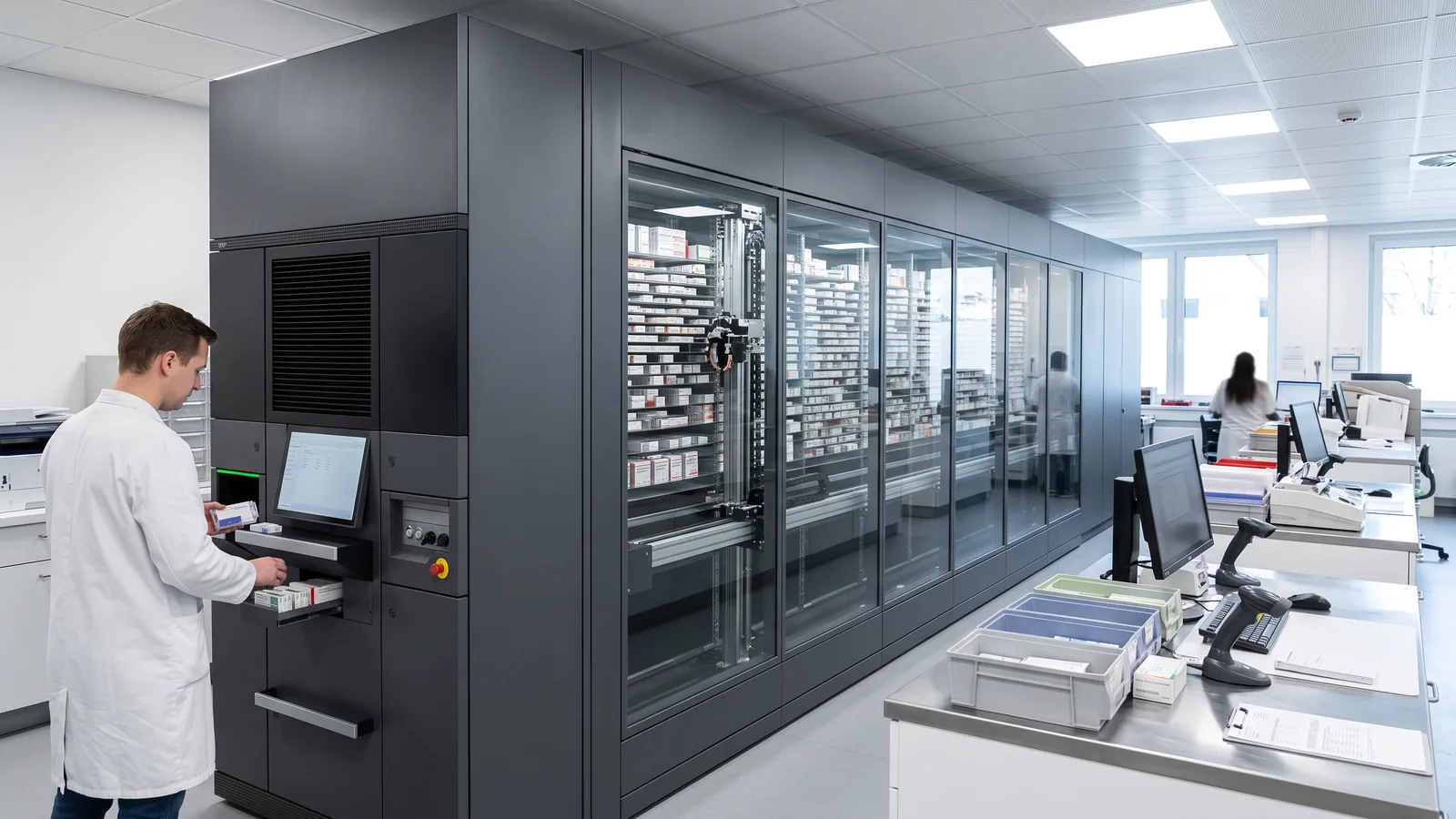 Hospital pharmacy automationThe robot stores packs, prepares doses and carries medicines to the wards. Pharmacists and technicians keep validation, advice and control.
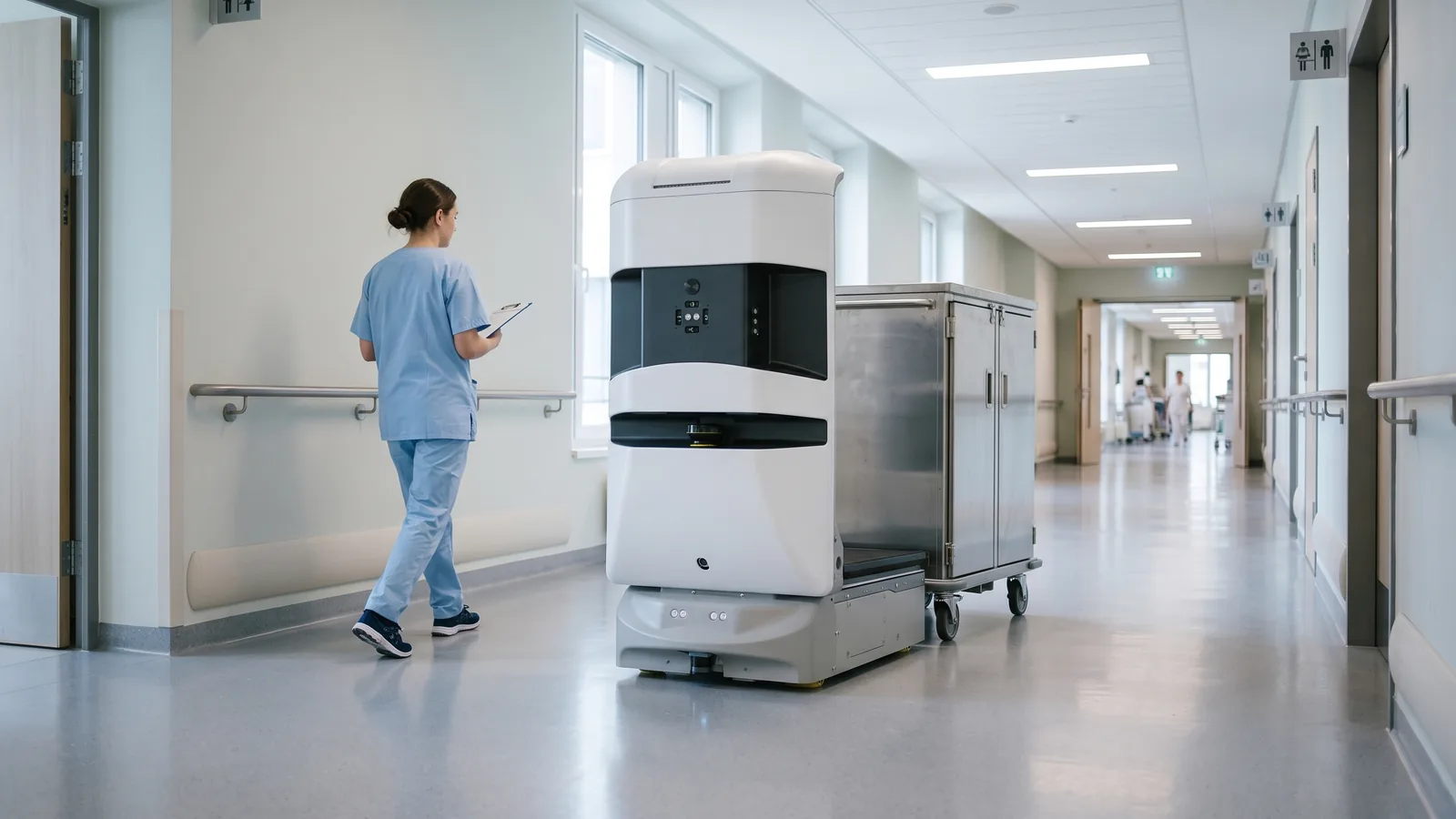 Robotic transport of hospital cartsThe robot takes the heavy kitchen, laundry and waste carts, calls the lift and delivers them to the wards. Logistics staff keep loading, checks and urgent requests.
Robots, acquisition mode and delivery terms, in one written proposal.