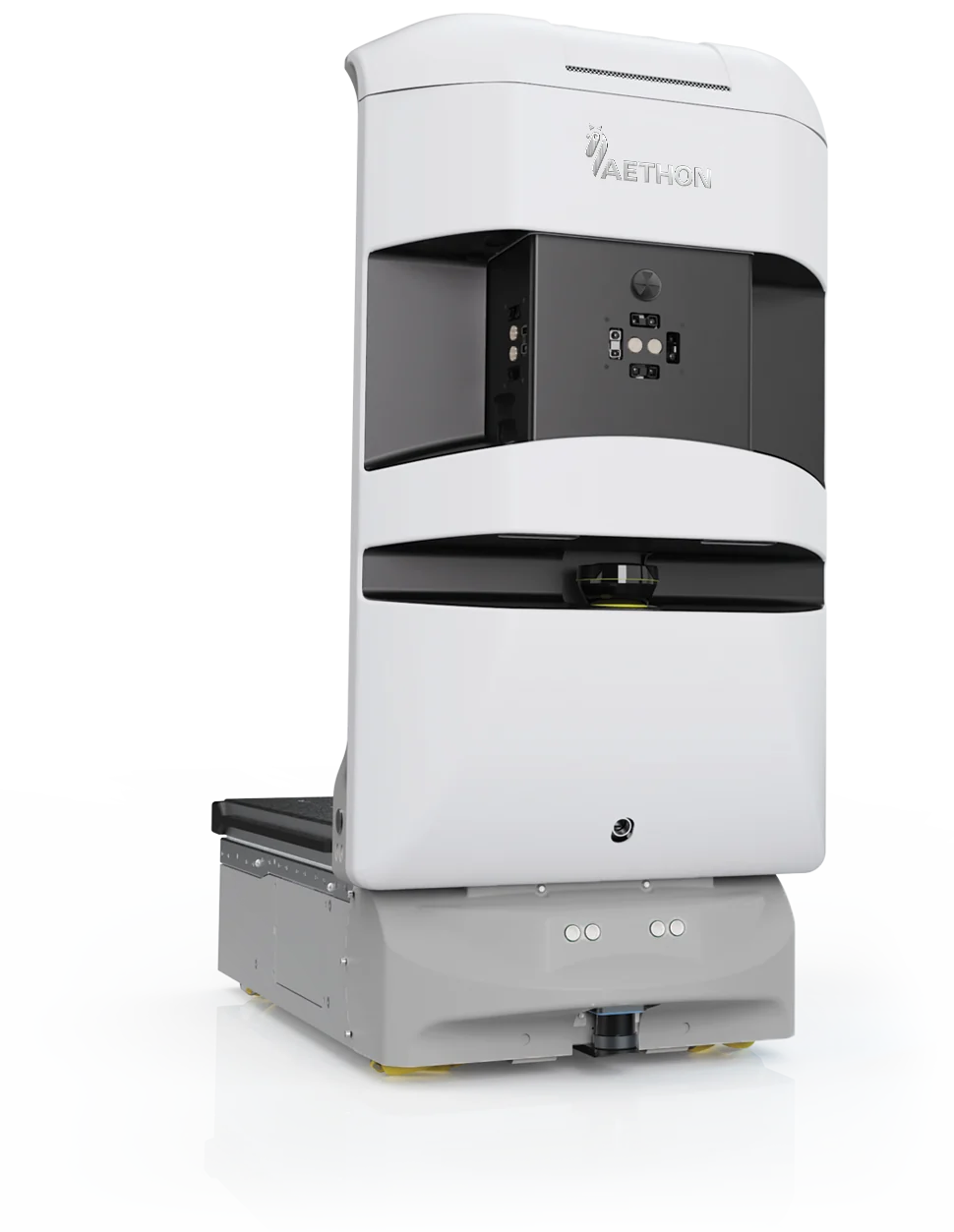
Healthcare logistics
- Payload
- 340 kg
- Runtime
- 12 h
- Key feature
- Omnidirectional drive
On order
Price on request
Updated
USE CASE · HEALTHCARE AND ELDERLY CARE
The robot takes the heavy kitchen, laundry and waste carts, calls the lift and delivers them to the wards. Logistics staff keep loading, checks and urgent requests.
Updated
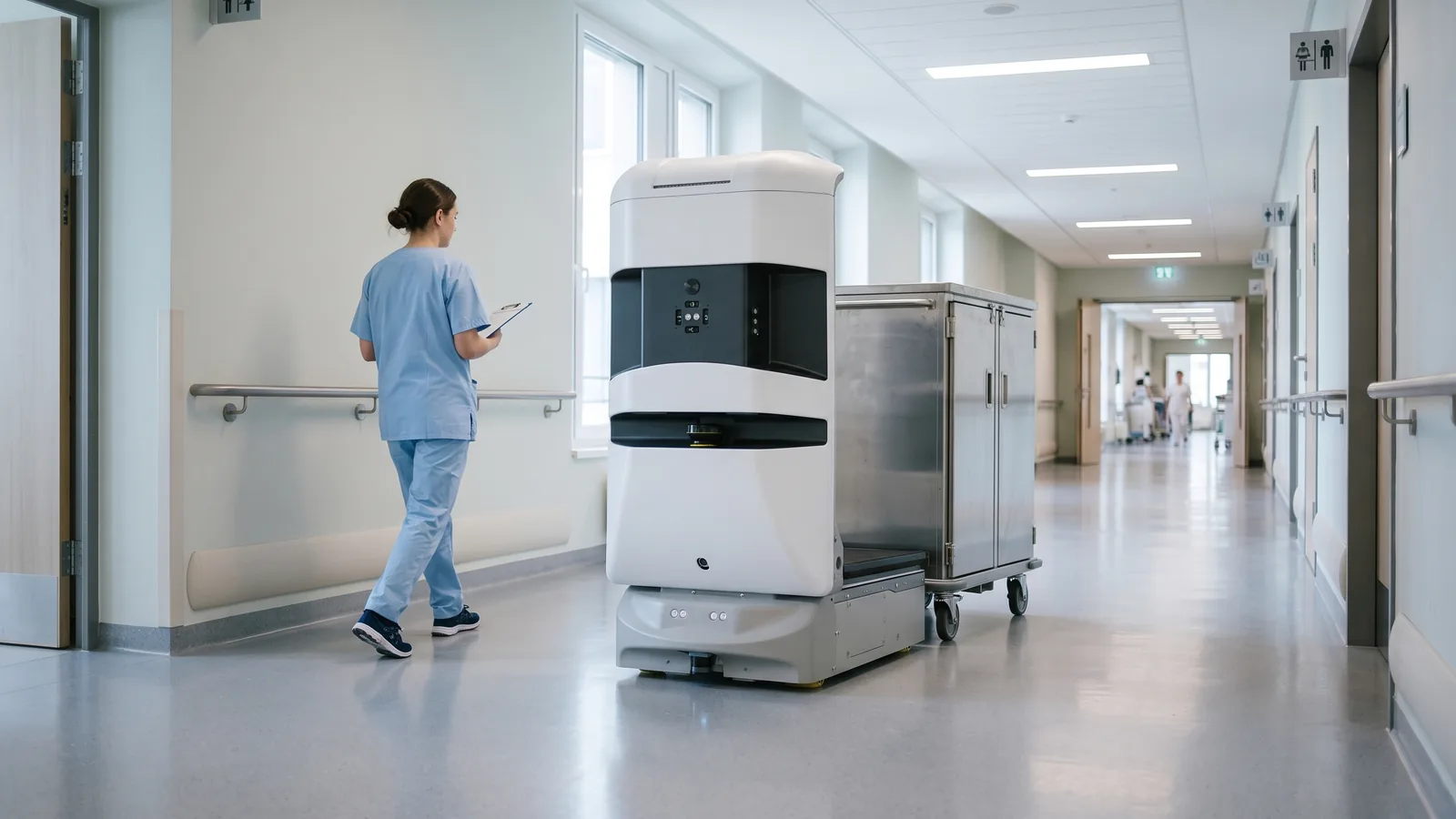
A hospital cart transport robot moves meal, linen, supply and waste carts between the kitchen, laundry, stores and wards, using corridors and lifts on its own.
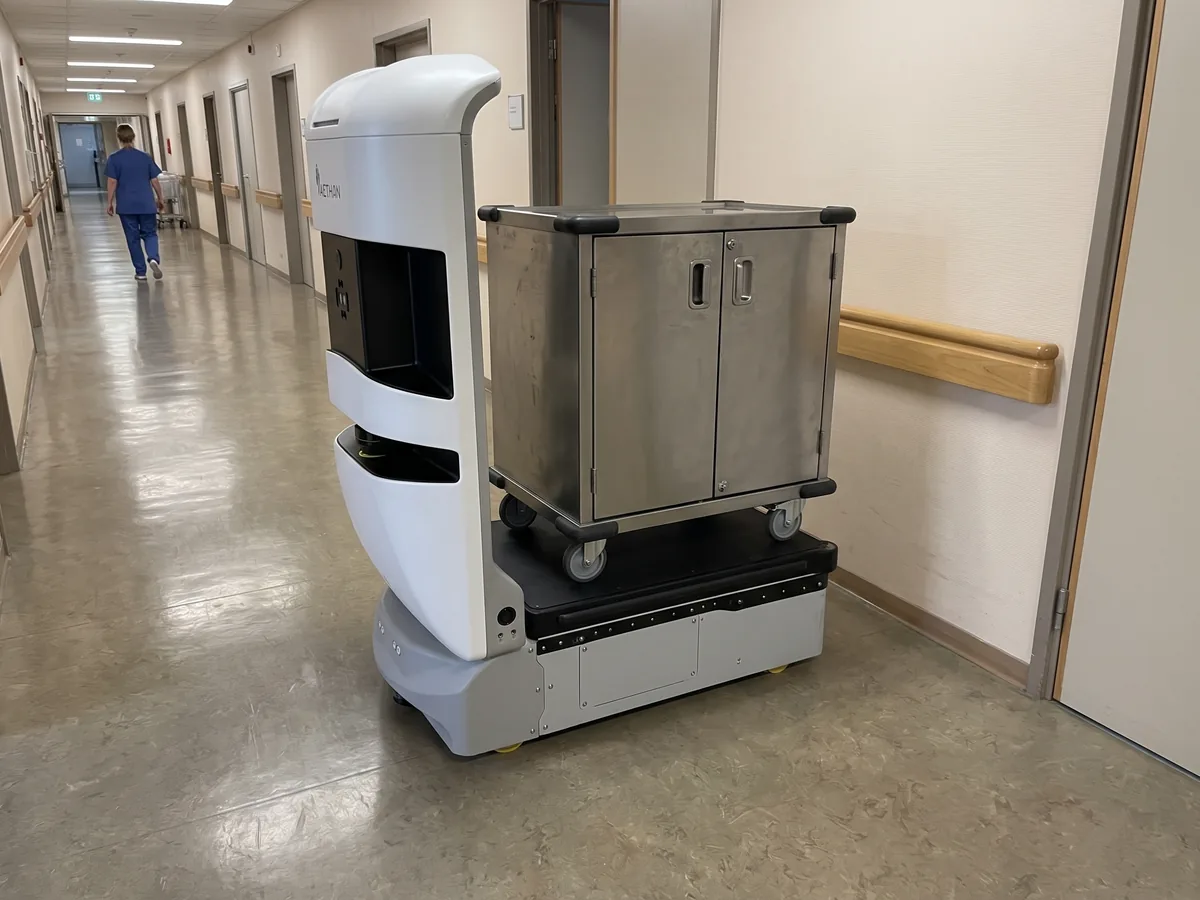
The Aethon T3 picks up carts up to 44 inches (about 112 cm) long, hauls up to 750 lb (about 340 kg) and runs 12 h with automatic charging, according to its manufacturer.
Robot Distribution delivers it, maps the routes, studies lift and door integration, trains your teams and maintains it, to buy, rent or as RaaS.
WHY
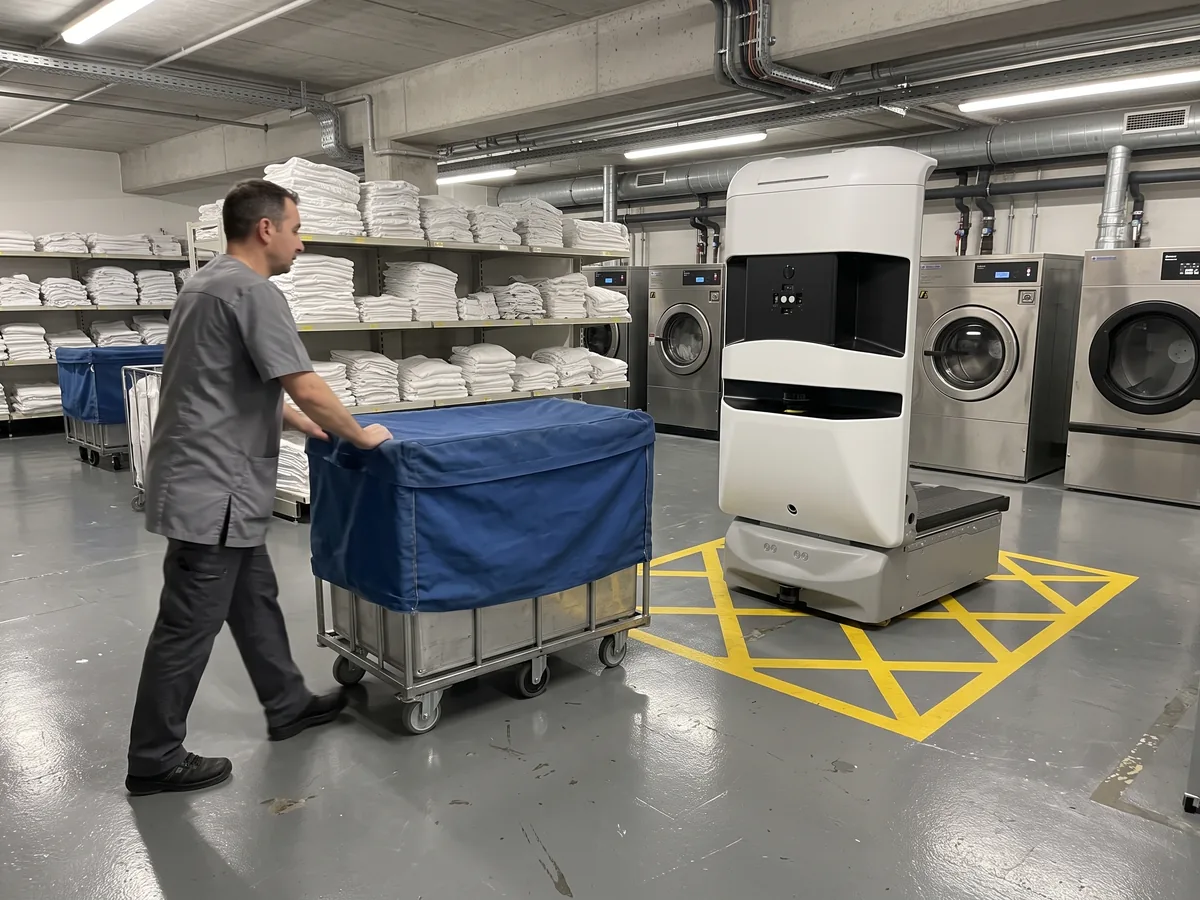
In a hospital, meal carts, clean and soiled linen carts and waste carts travel every day between the basement logistics areas and the floors. These heavy, repetitive runs keep staff walking long corridors at the fixed times of meals and waste collections.
The carrying or towing robot takes these trips on a schedule, lifts included. Staff keep loading the carts, checking on arrival and handling urgent requests. Unlike a small locker delivery robot, it moves the whole cart.
HOW IT RUNS
At commissioning we map the corridors, lifts and pick-up and drop-off points: kitchen, laundry, waste room, ward pantries. The Yujin GoCart robots navigate by SLAM on 3D LiDAR, according to their manufacturer.
Staff place the cart in its waiting bay or load it onto the robot. The Aethon T3 collects the cart and takes it away; the Yujin GoCart250 offers a loading surface of up to 840 × 640 mm, according to their manufacturers.
The robot calls the lift and passes automatic doors through the interfaces provided by its manufacturer, drops the cart at the ward pantry and sets off again.
It brings empty carts or soiled linen back to the basement, then returns to its station. The Yujin GoCart250 recharges from 10 to 90% in about 3 h, according to its manufacturer.
THE ROBOTS
Healthcare logistics
Yujin Robot
Healthcare logistics
Yujin Robot
Healthcare logistics
Yujin Robot
Healthcare logistics
BEFORE INSTALLING
The weight and size of full carts guide the choice: the Yujin GoCart250 carries 250 kg on flat floors but 200 kg on slopes or thresholds, according to its manufacturer. We weigh the heaviest carts.
Ramps, lift thresholds and floor joints are noted: the Yujin GoCart250 is rated for a 4.76° slope and a step of up to 15 mm at 200 kg, according to its manufacturer.
Lift models and controllers, fire doors and automatic doors: integration is studied with the lift contractor and the technical department before ordering.
Meal and collection times, corridors shared with patients and beds, crossing points: routes, priorities and waiting bays are agreed with ward managers and logistics.
FAQ
According to the manufacturers: up to 750 lb (about 340 kg) for the Aethon T3, 250 kg on flat floors for the Yujin GoCart250, 200 kg for the Yujin GoCart200 Omni and 180 kg for the Yujin GoCart180. On slopes or thresholds, the GoCart250 and GoCart180 are limited to 200 and 120 kg.
Yes, once integrated: the Aethon T3 calls and directs the lift without pushing buttons, and the Yujin GoCart robots have a lift and automatic-door interface in their fleet manager, according to their manufacturers. Feasibility depends on your lifts.
A locker robot carries small secured items such as medicines or samples. A cart transport robot moves the whole meal, linen or waste cart, up to about 340 kg for the Aethon T3, according to its manufacturer.
According to the manufacturers, the Aethon T3 runs 12 h with automatic charging, and the Yujin GoCart robots about 8 h loaded and 10 h unloaded. The schedule places charging between meal peaks.
The Yujin GoCart250 and GoCart180 are CE marked and certified to ISO 13482, the safety standard for service robots, according to their manufacturer. Like any machine, they fall under the Machinery Directive 2006/42/EC, replaced by Regulation (EU) 2023/1230 from 20 January 2027.
USE CASES
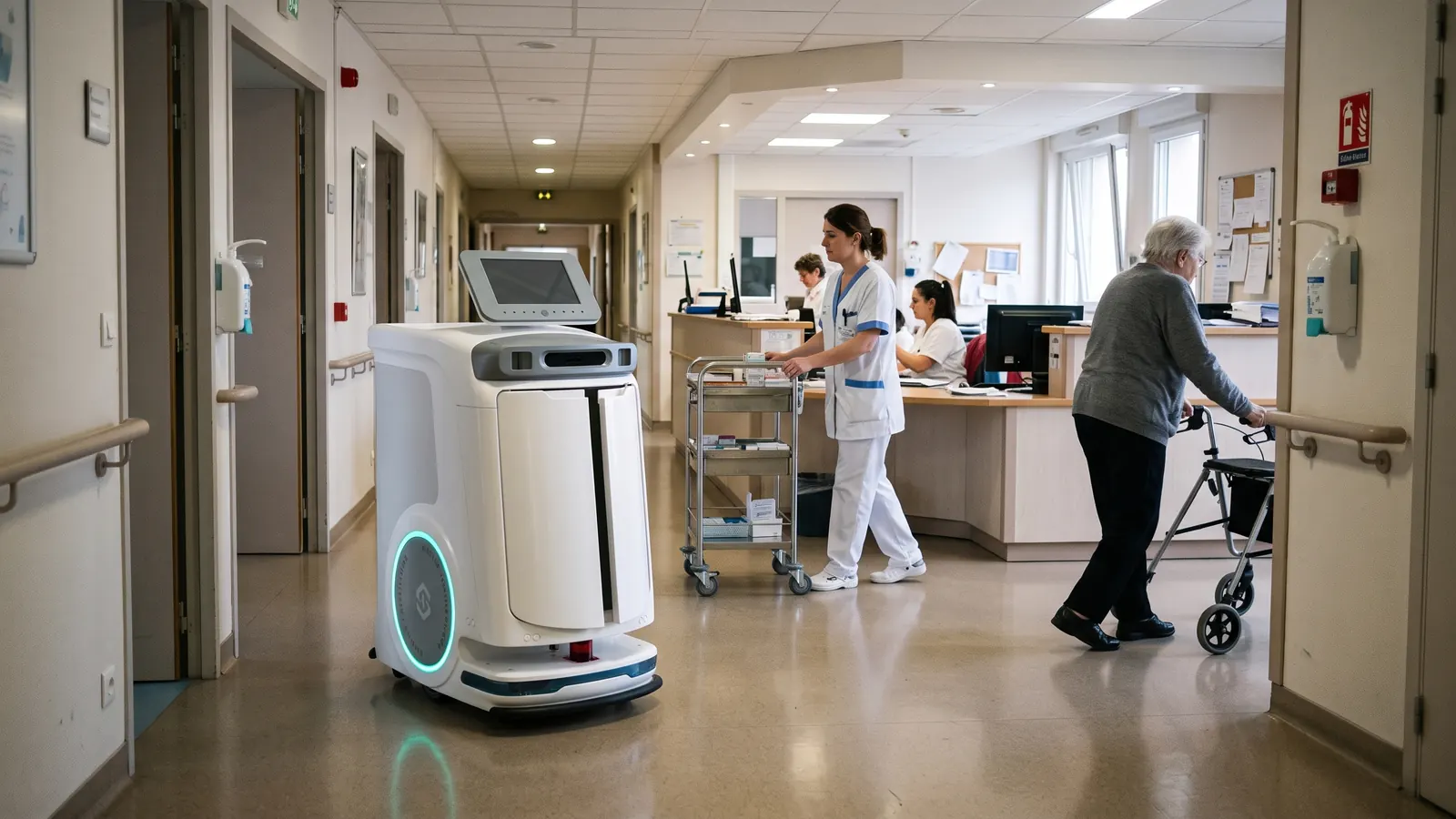 Hospital deliveryMedicines to the wards, samples to the lab, supplies and linen between floors: the robot runs the shuttles, locks its compartments and logs every delivery.
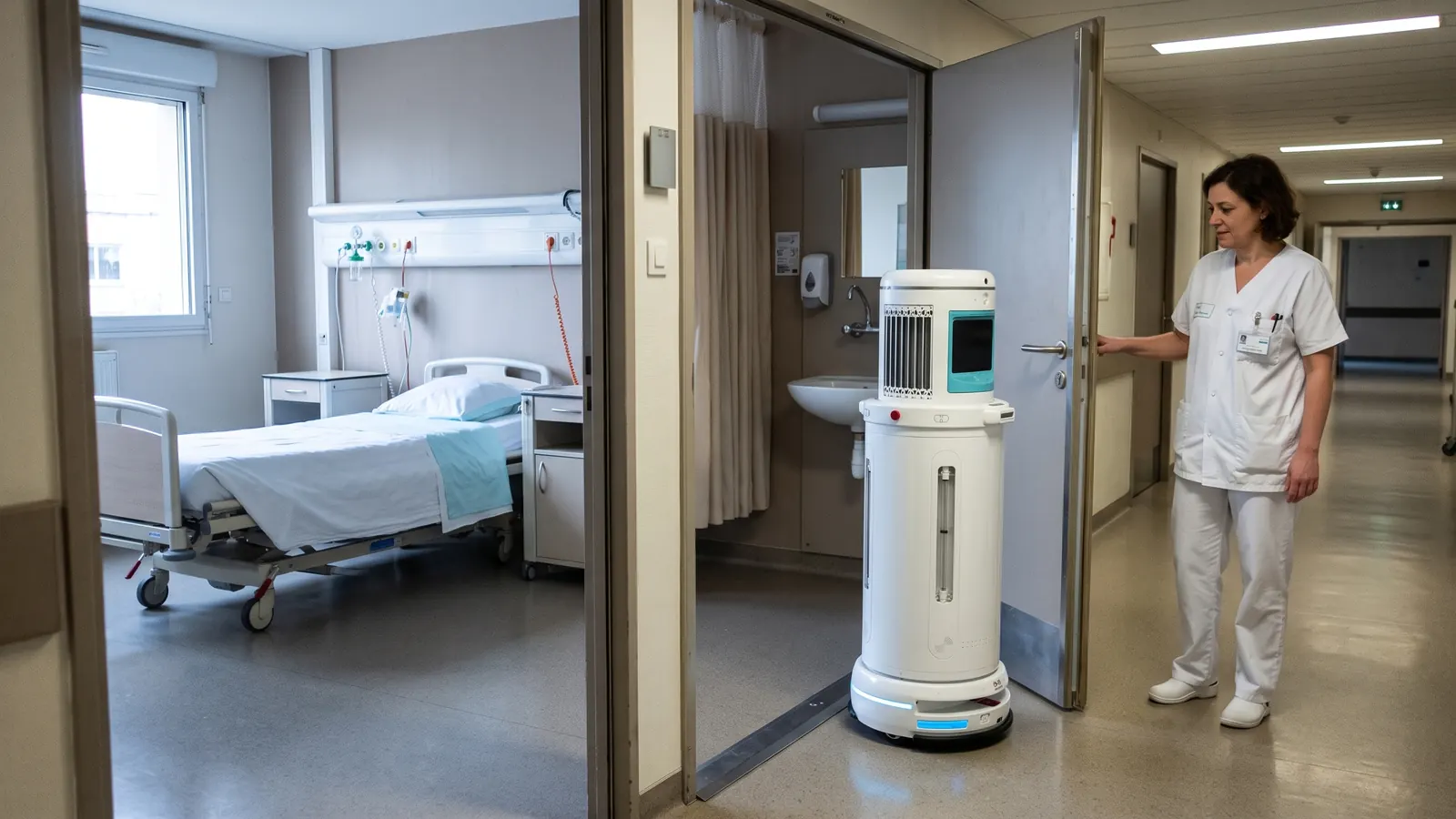 Hospital disinfectionThe robot disinfects rooms by airborne dry fog and UV, following the hospital's protocol. Cleaning staff still clean surfaces by hand; the robot adds a regular, scheduled step.
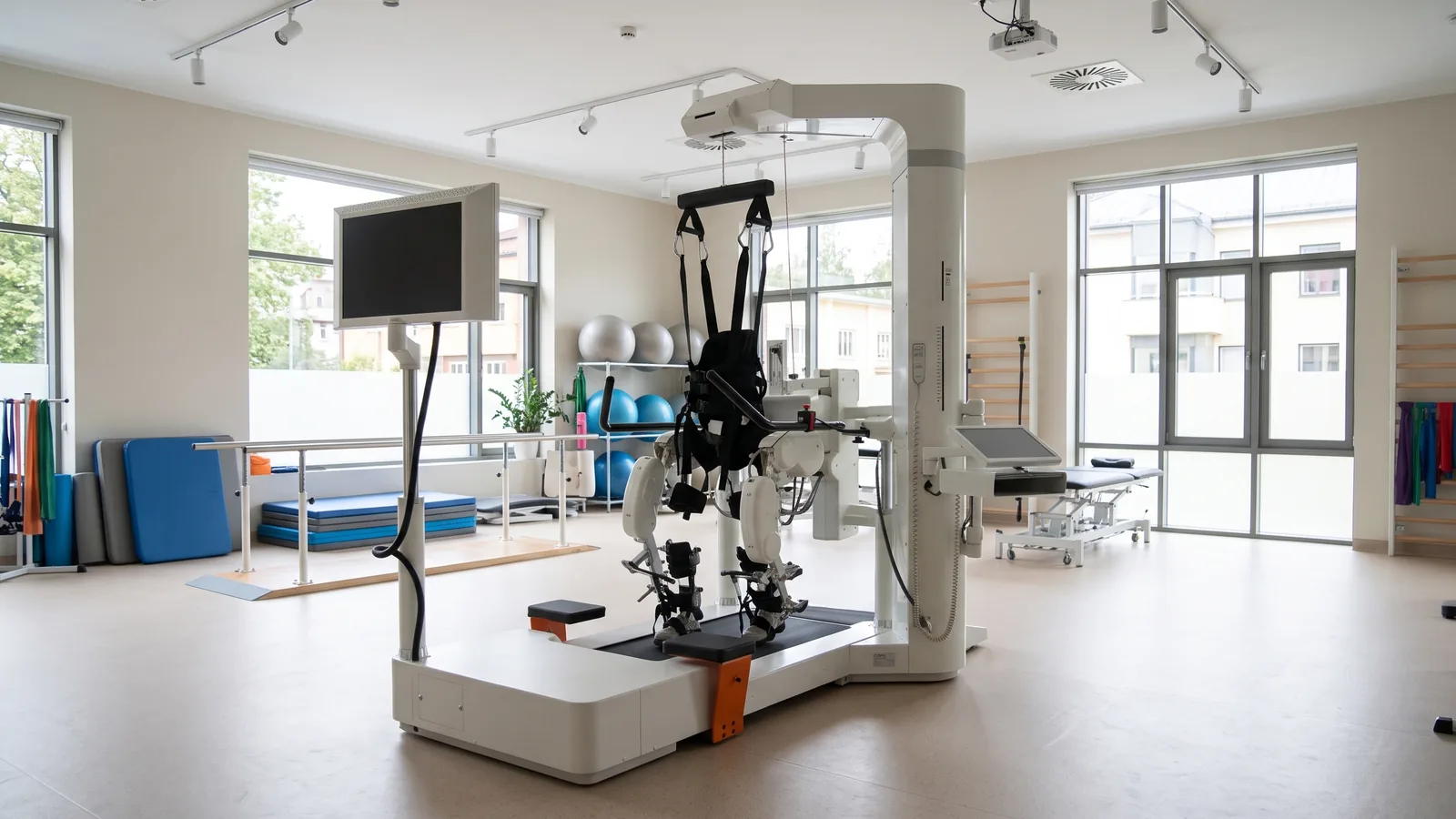 Robotic gait and upper-limb rehabilitationThe robot carries part of the patient's weight and repeats the movement. The physiotherapist sets the goals, adjusts the assistance and leads the session.
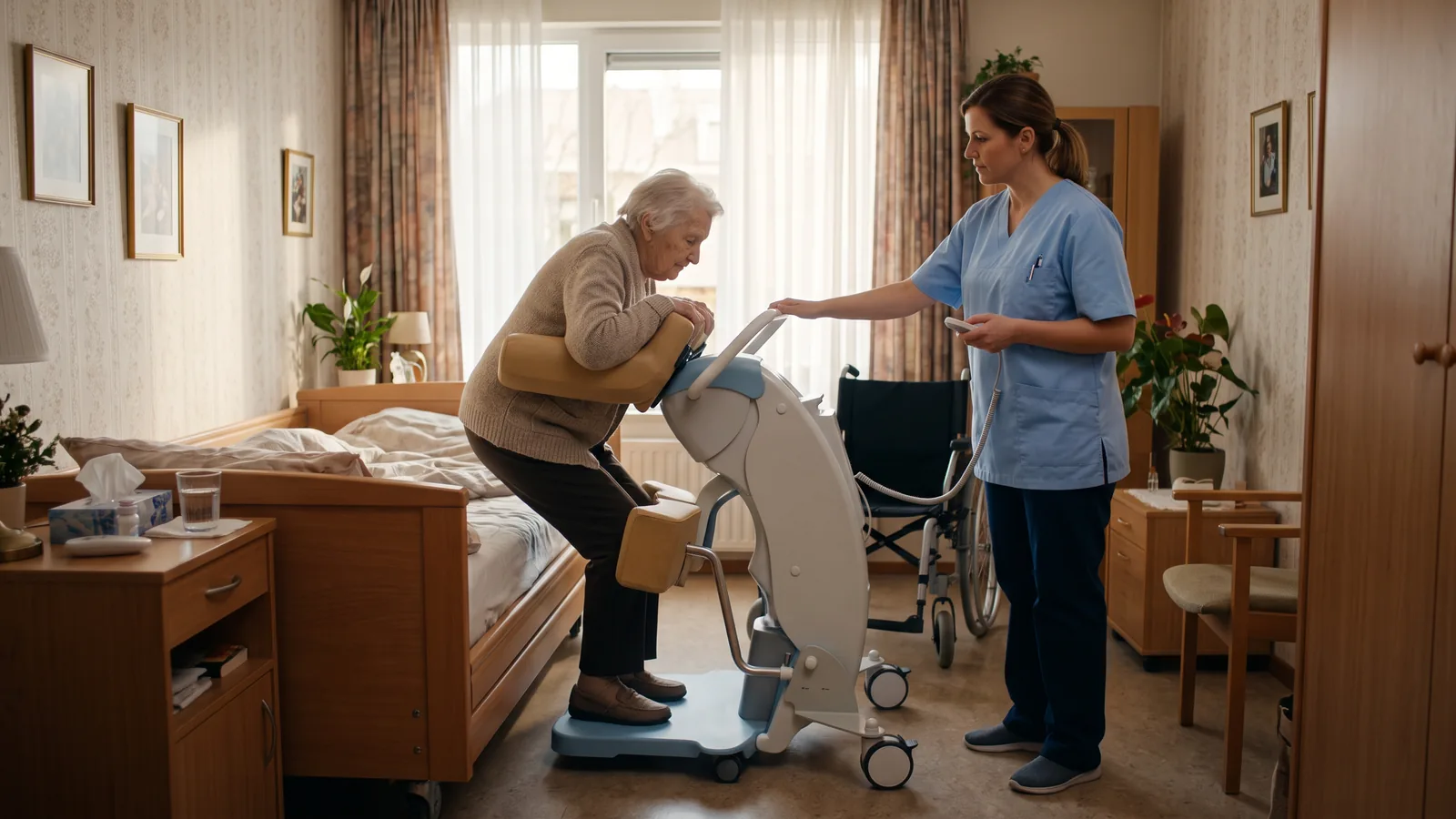 Robot-assisted patient transferThe robot lifts and moves the person between bed, wheelchair and toilet. The carer guides the transfer and keeps their attention on the person.
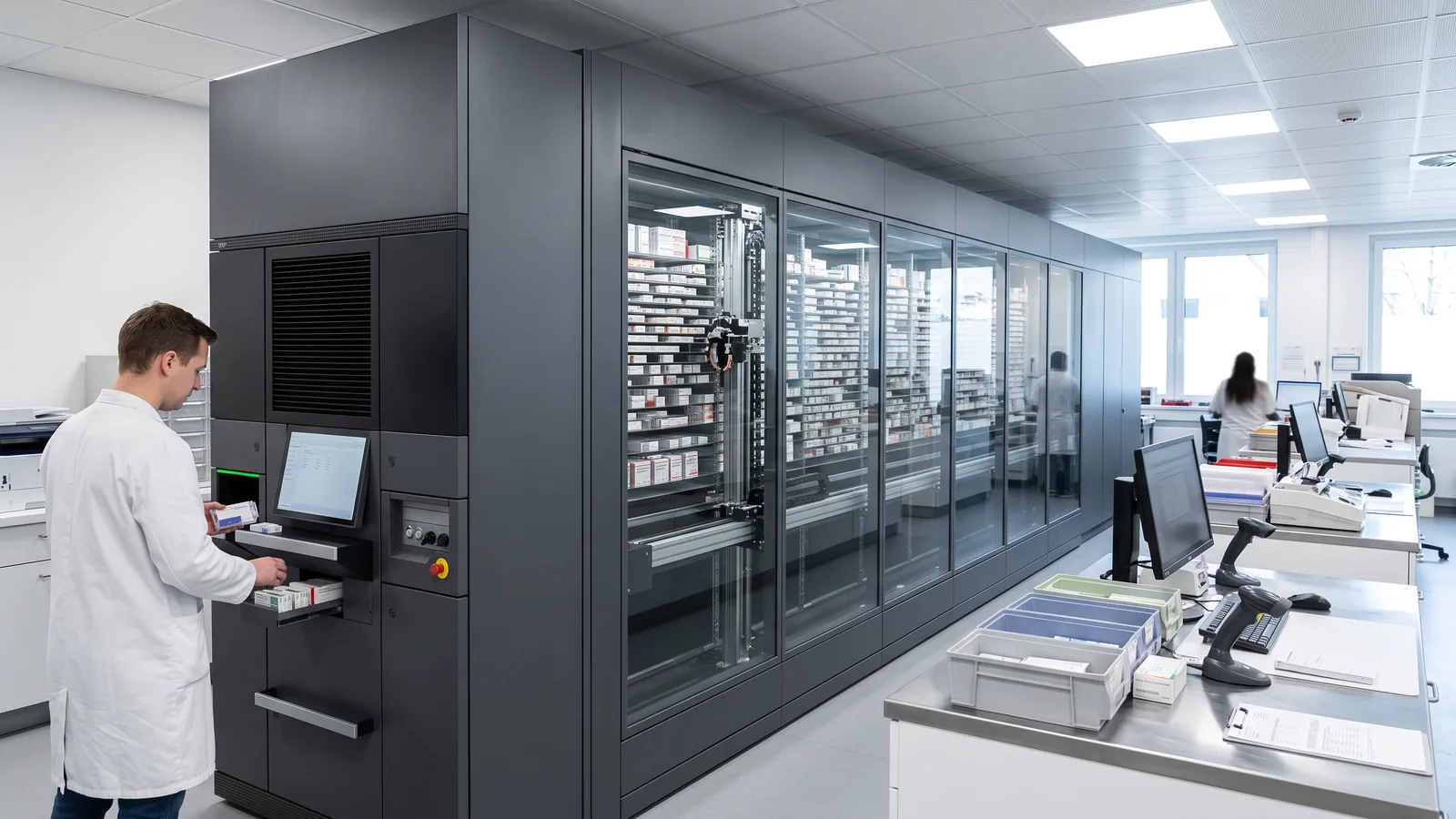 Hospital pharmacy automationThe robot stores packs, prepares doses and carries medicines to the wards. Pharmacists and technicians keep validation, advice and control.
Robots, acquisition mode and delivery terms, in one written proposal.