Healthcare logistics
- Key feature
- Dry fog + UV
- Key feature
- Self-disinfection
- Key feature
- 10.1-inch screen
On order
Price on request
Updated
USE CASE · HEALTHCARE AND ELDERLY CARE
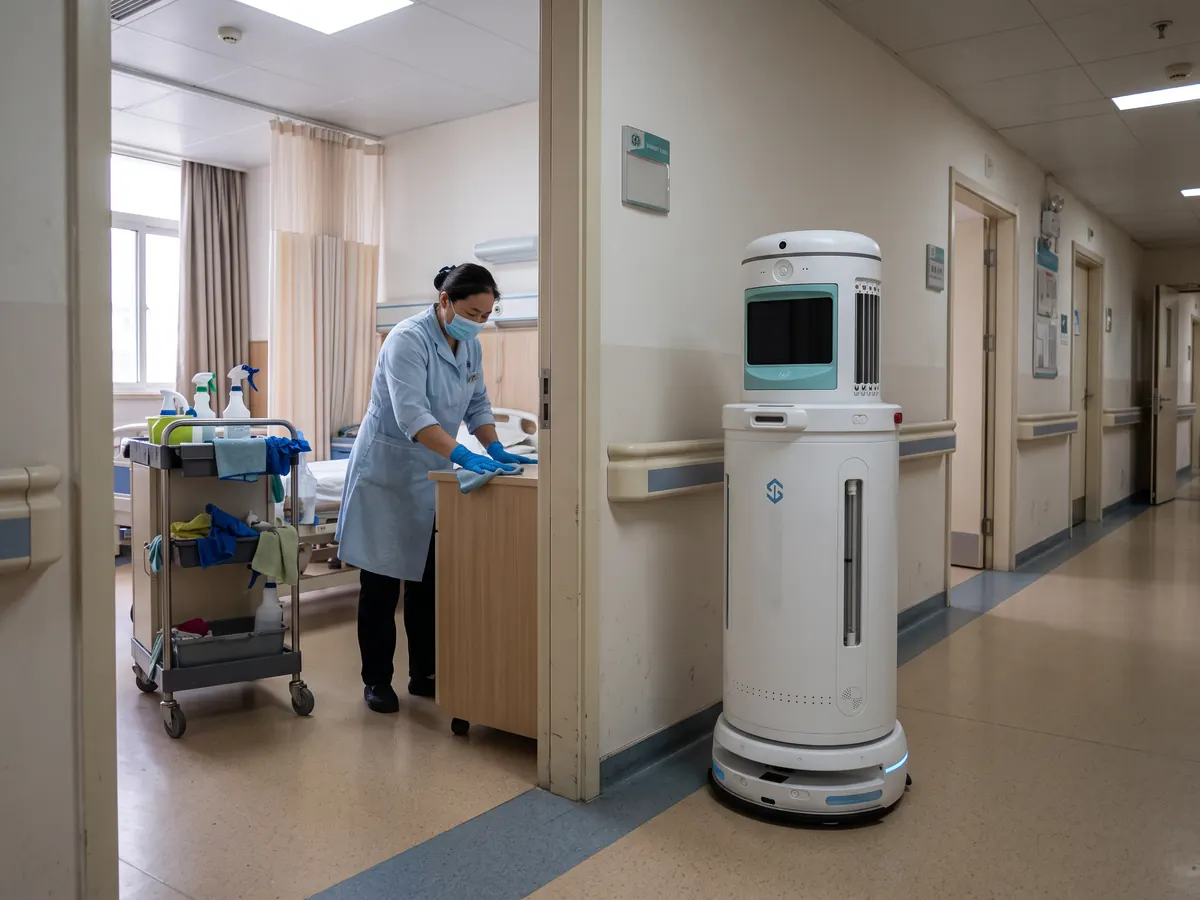
The robot disinfects rooms by airborne dry fog and UV, following the hospital's protocol. Cleaning staff still clean surfaces by hand; the robot adds a regular, scheduled step.
Updated
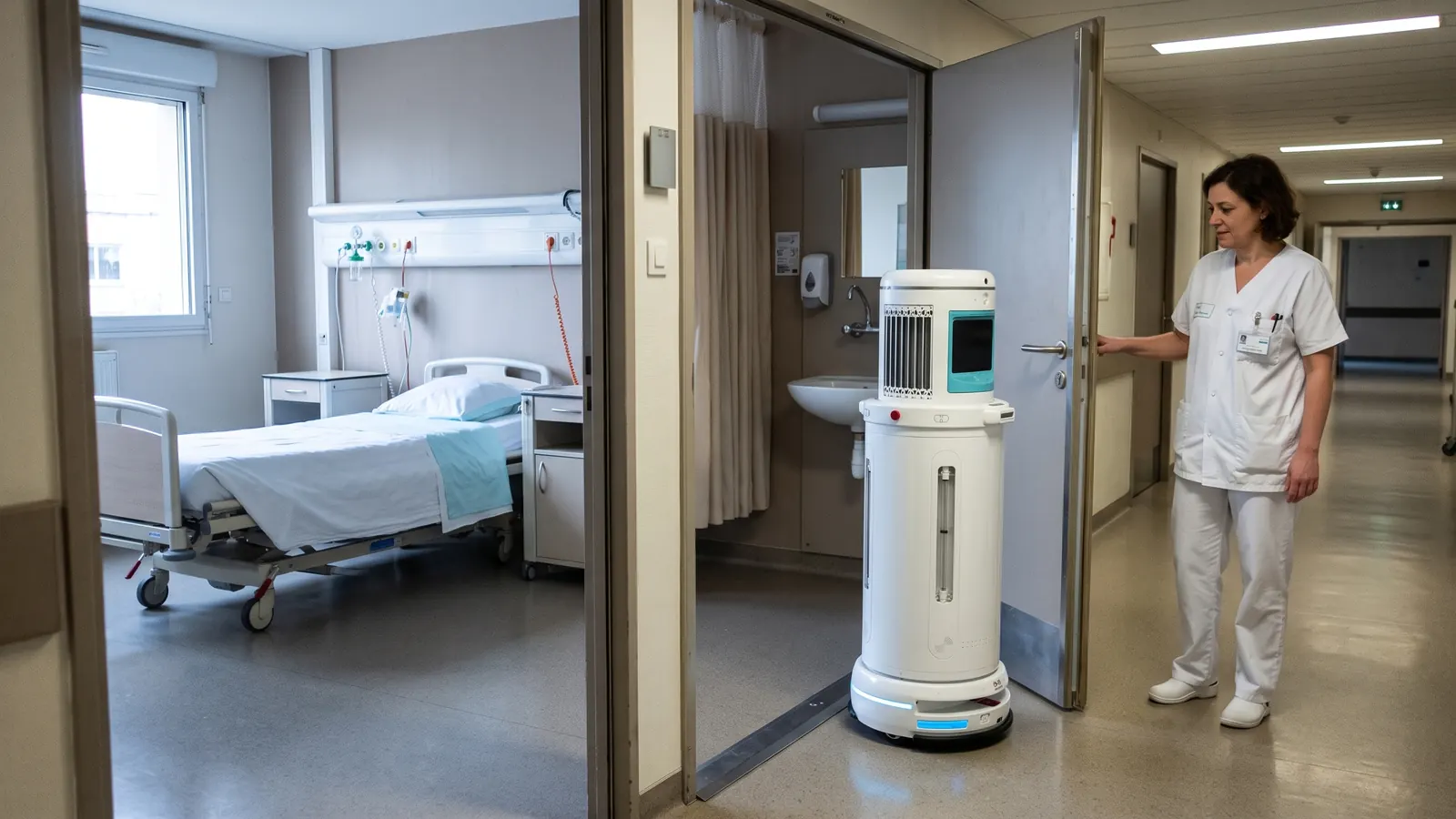
A disinfection robot treats patient rooms, corridors and high-risk areas with dry fog and UV light, after surface cleaning and under the protocol set with the infection control team.
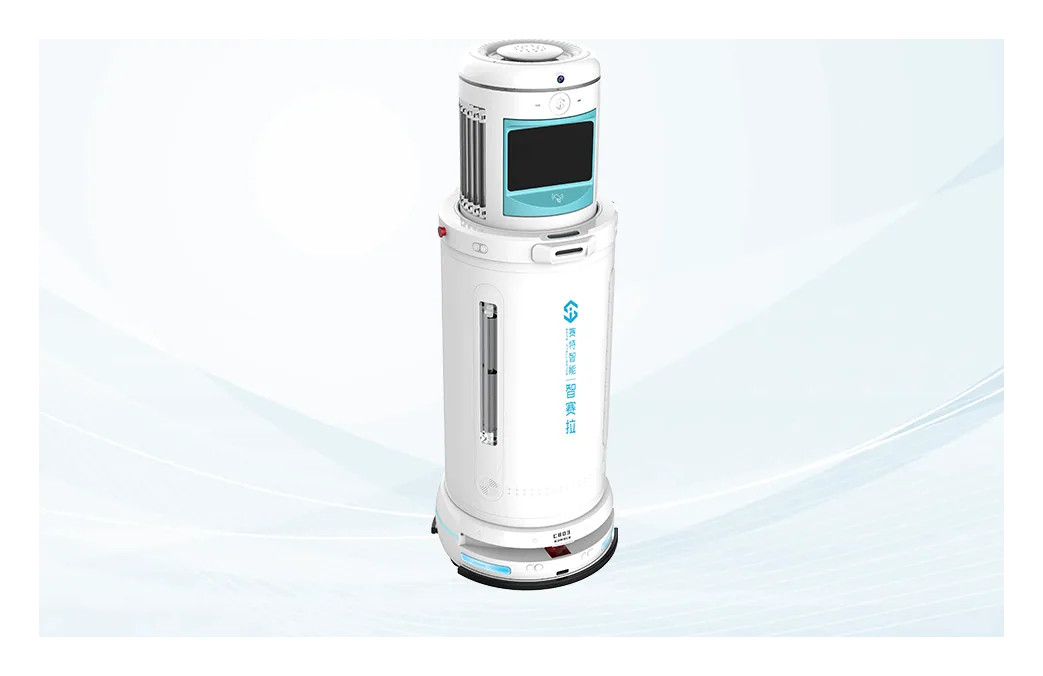
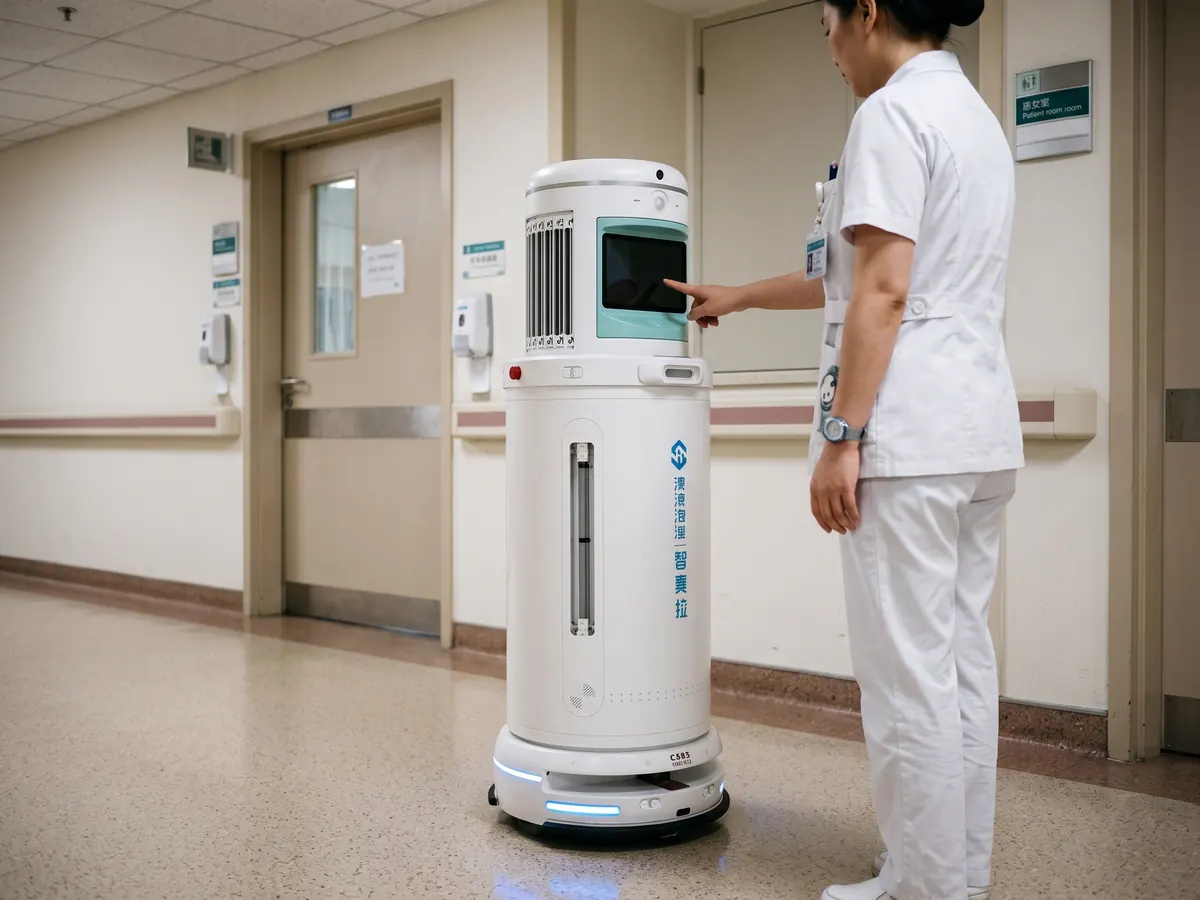
The Saite Disinfection Robot combines dry fog and UV, comes in a version that disinfects its own body, and unlocks by face recognition or ID card, according to its manufacturer.
Robot Distribution delivers it, maps the wards, trains the teams and maintains it, to buy, rent or as RaaS.
WHY
In hospitals and clinics, preventing healthcare-associated infections relies first on cleaning surfaces and floors by hand. Airborne room disinfection adds to that work when an isolated patient is discharged or in high-risk areas.
The robot carries out that step on a programmed route at agreed times, while staff focus on cleaning and patients. The protocol, product, rooms, contact time, delay before reopening, remains the infection control team's.
HOW IT RUNS
Staff clean the room's surfaces and floor: airborne disinfection does not replace removing soil.
Patient and staff leave, doors and windows are closed, fire detection is handled per hospital instructions. An authorised carer signs in on the screen and starts the cycle.
It reaches the room on its recorded route and releases dry fog or runs the UV pass. In its infection-control version it also disinfects its own body between contaminated and clean areas.
After the delay set by the protocol, the team airs the room if needed and reopens it. For corridor and ward floors, a cleaning robot such as the KEENON C40 handles daily scrubbing.
THE ROBOTS
Healthcare logistics
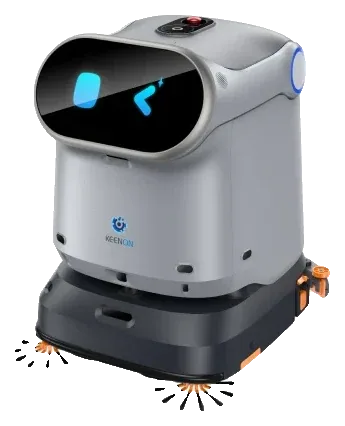
Cleaning
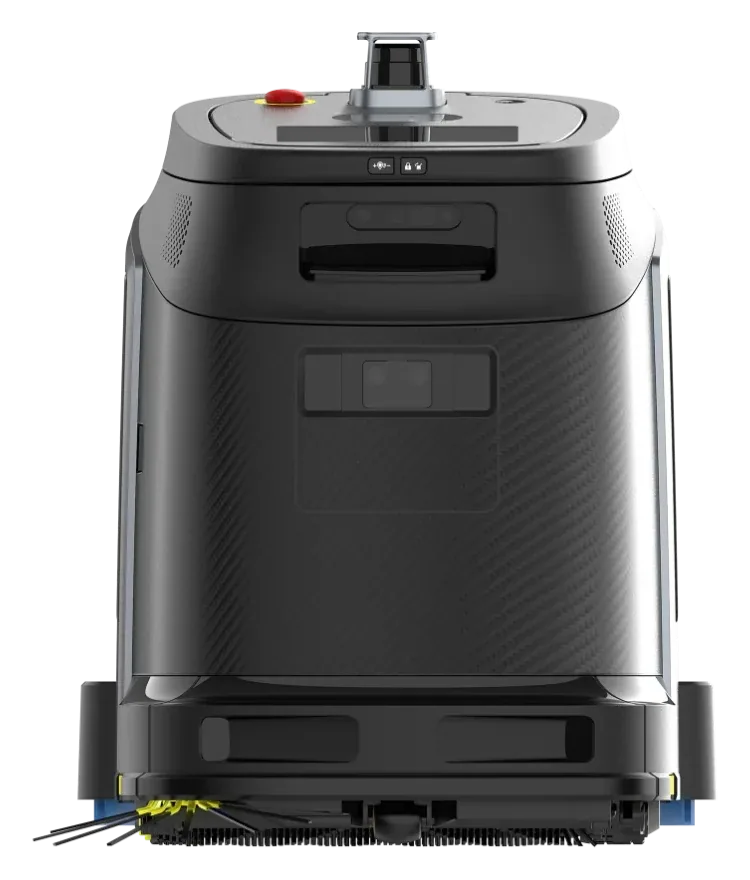
Cleaning
BEFORE INSTALLING
Product, rooms, contact time and reopening delay are set with the infection control team before commissioning.
The robot's route respects the separation of clean and dirty flows and restricted areas; card or face access rights go to the right staff profiles.
Wi-Fi or cellular coverage in the wards, automatic doors and lifts on the route: each point is noted.
Detector types and room ventilation are checked with the technical services, so the release does not set off alarms and airing stays under control.
FAQ
No. It comes after surface cleaning, which remains essential. It adds a regular disinfection step in the rooms and areas named in the protocol.
No. Dry fog and UV are used in an empty room with the doors closed, per the protocol. The robot is scheduled when the room is free, for example after a patient is discharged.
It can be part of the theatre disinfection protocol outside procedures, if the infection control team approves it. Access, routes and the delay before reuse are set with them.
The KEENON C40 sweeps, scrubs, vacuums and dust-mops, fits 65 cm passages and scrubs for up to 5 h, according to its manufacturer. The Gausium Phantas is rated at 60 dB or less in quiet mode, useful near patient rooms.
USE CASES
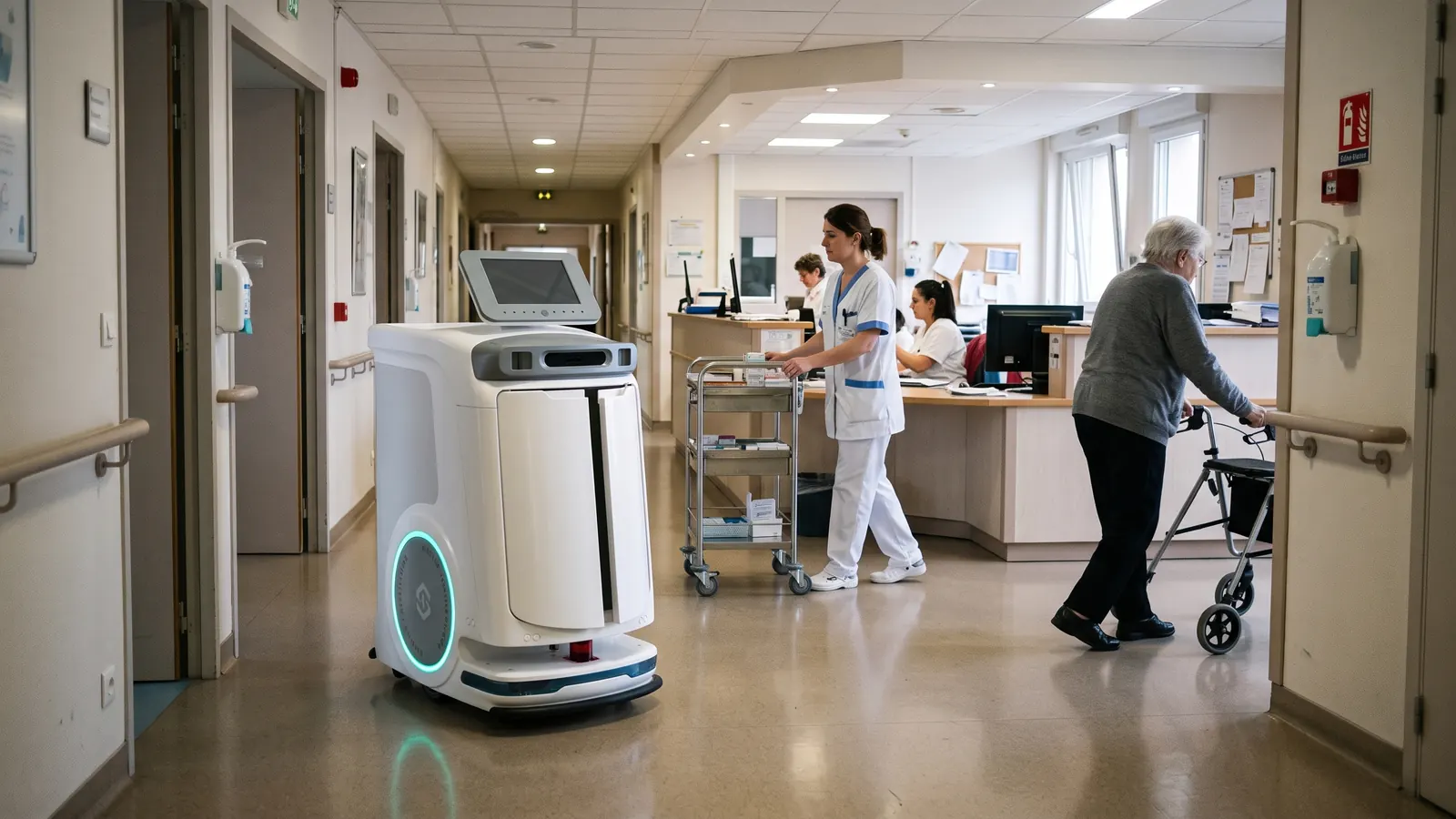 Hospital deliveryMedicines to the wards, samples to the lab, supplies and linen between floors: the robot runs the shuttles, locks its compartments and logs every delivery.
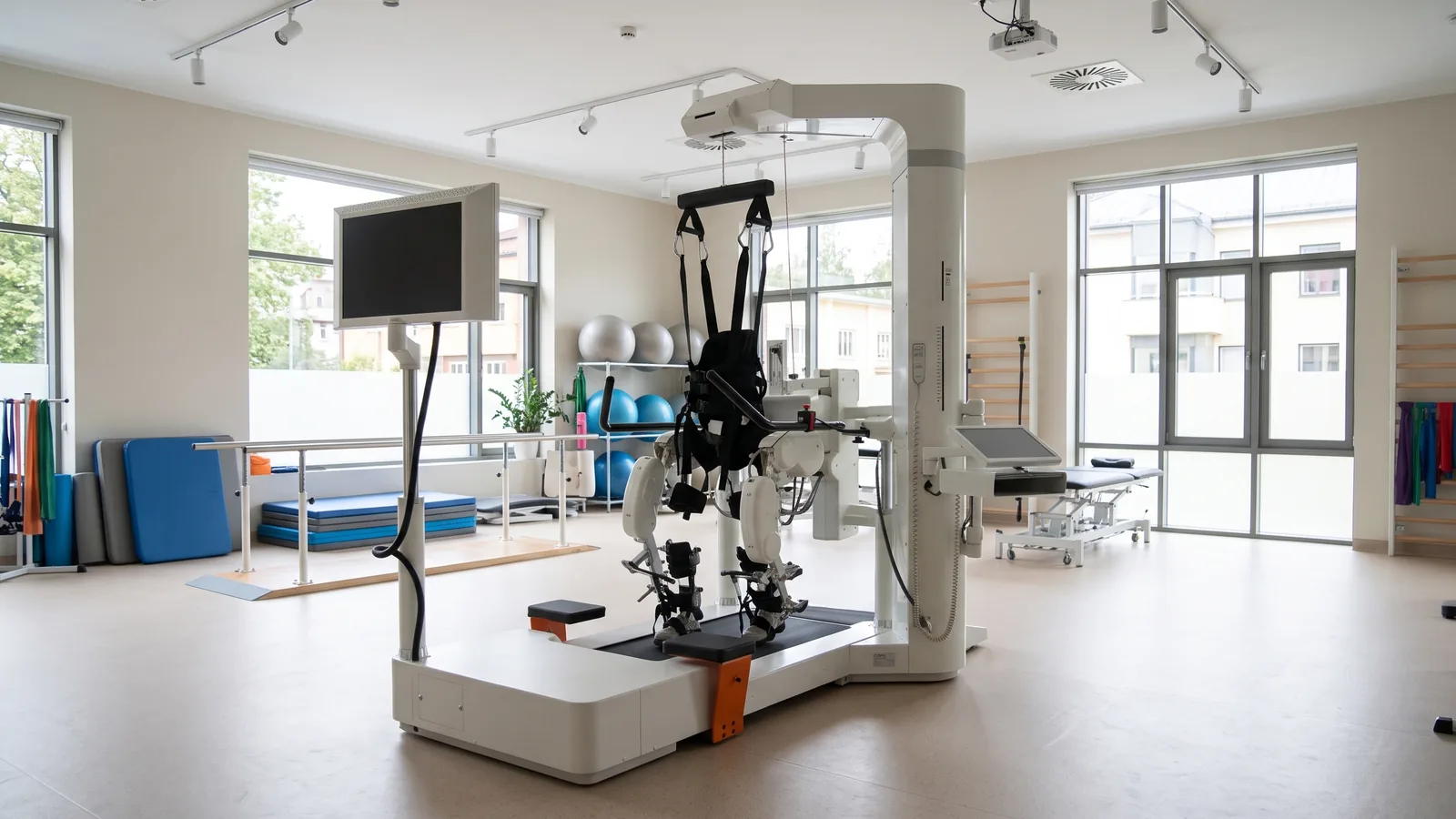 Robotic gait and upper-limb rehabilitationThe robot carries part of the patient's weight and repeats the movement. The physiotherapist sets the goals, adjusts the assistance and leads the session.
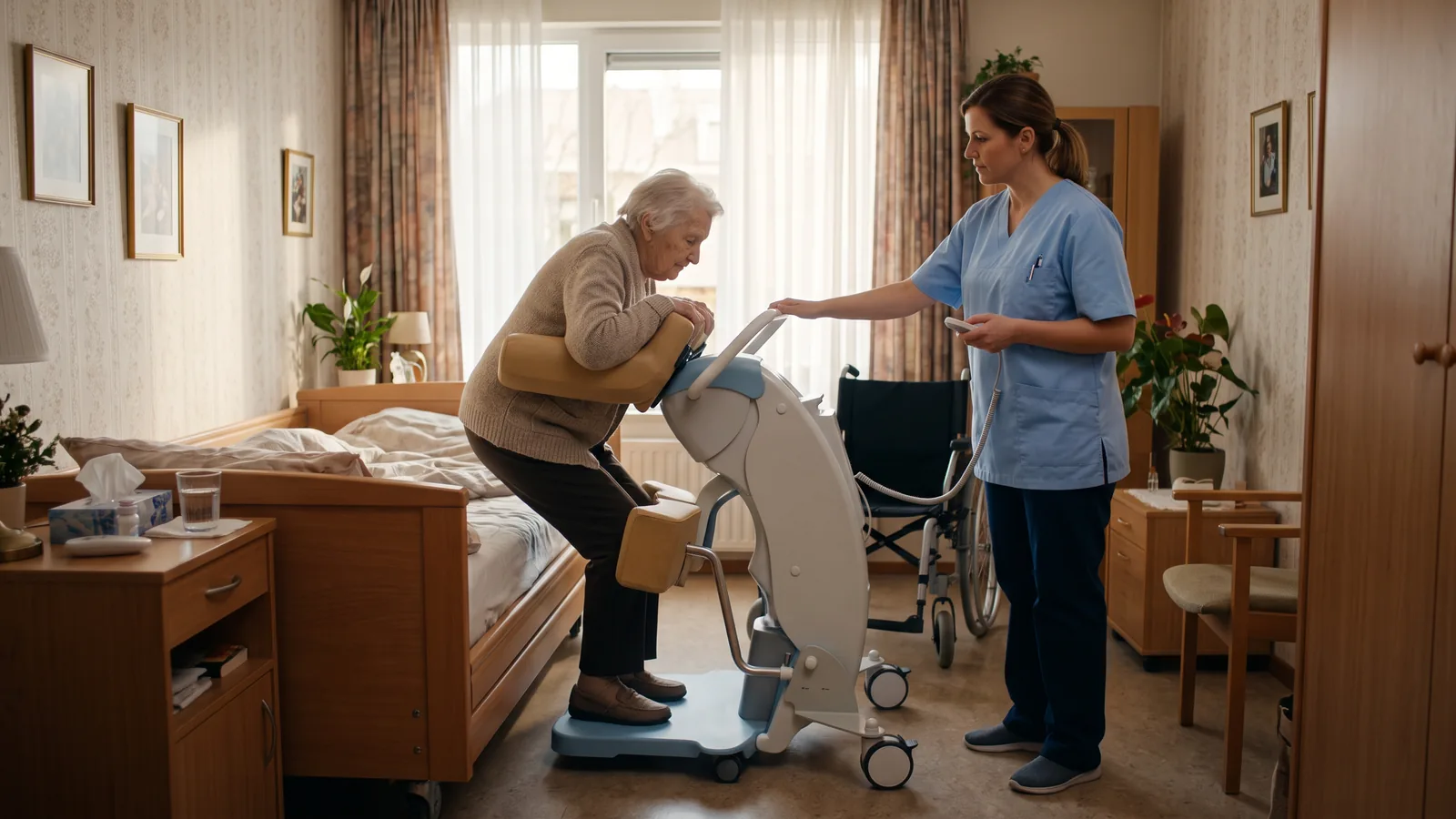 Robot-assisted patient transferThe robot lifts and moves the person between bed, wheelchair and toilet. The carer guides the transfer and keeps their attention on the person.
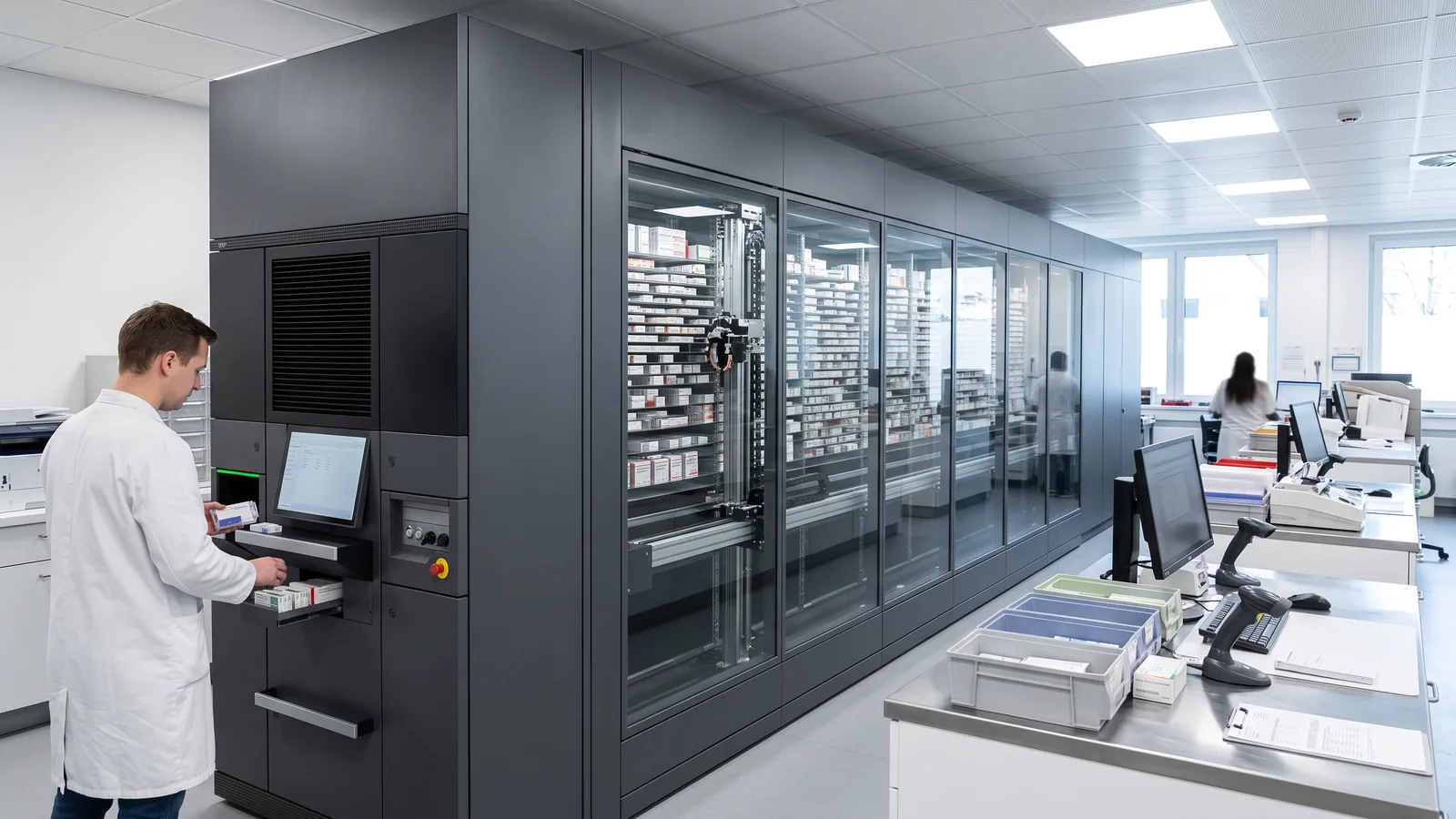 Hospital pharmacy automationThe robot stores packs, prepares doses and carries medicines to the wards. Pharmacists and technicians keep validation, advice and control.
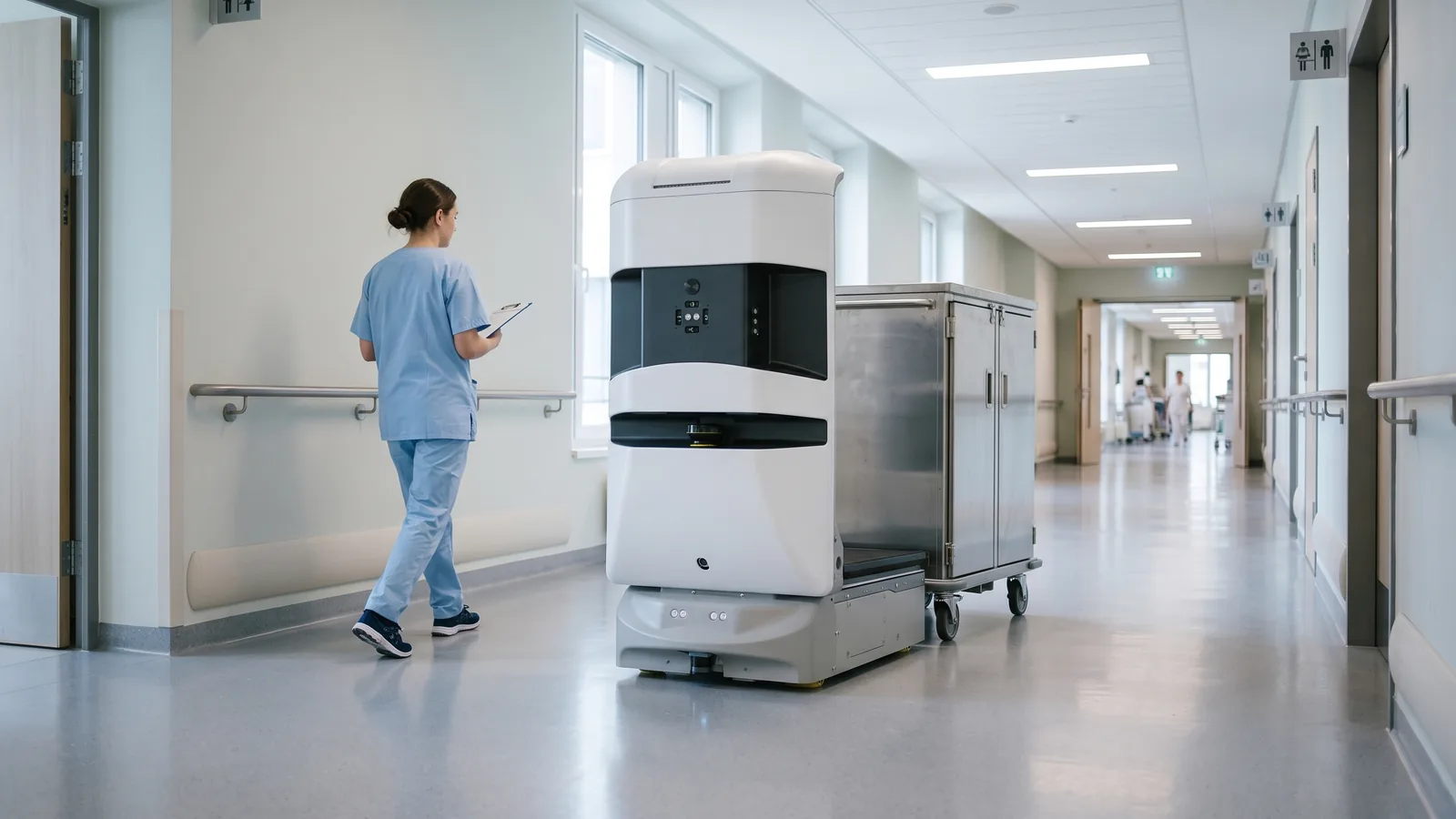 Robotic transport of hospital cartsThe robot takes the heavy kitchen, laundry and waste carts, calls the lift and delivers them to the wards. Logistics staff keep loading, checks and urgent requests.
Robots, acquisition mode and delivery terms, in one written proposal.