Snowbotix
Outdoor
- Runtime
- 6 h
- Battery capacity
- 400 Ah
- Key feature
- 9 attachments
On order
Price on request
Updated
USE CASE · LOCAL AUTHORITIES
The robot clears snow and treats ice on recorded routes, early in the morning or during the snowfall. Staff keep the steps, awkward access points, monitoring and emergency call-outs.

Updated
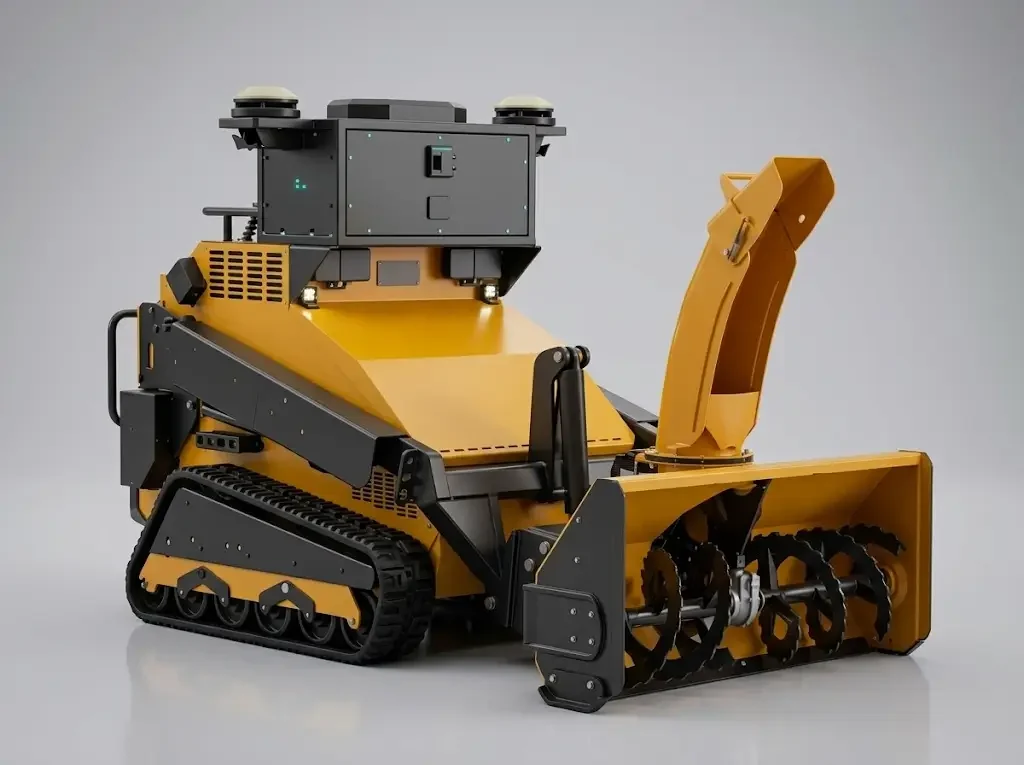
A snow clearing robot is an autonomous electric tracked machine that clears and grits footpaths, car parks and the approaches to public buildings along mapped routes.
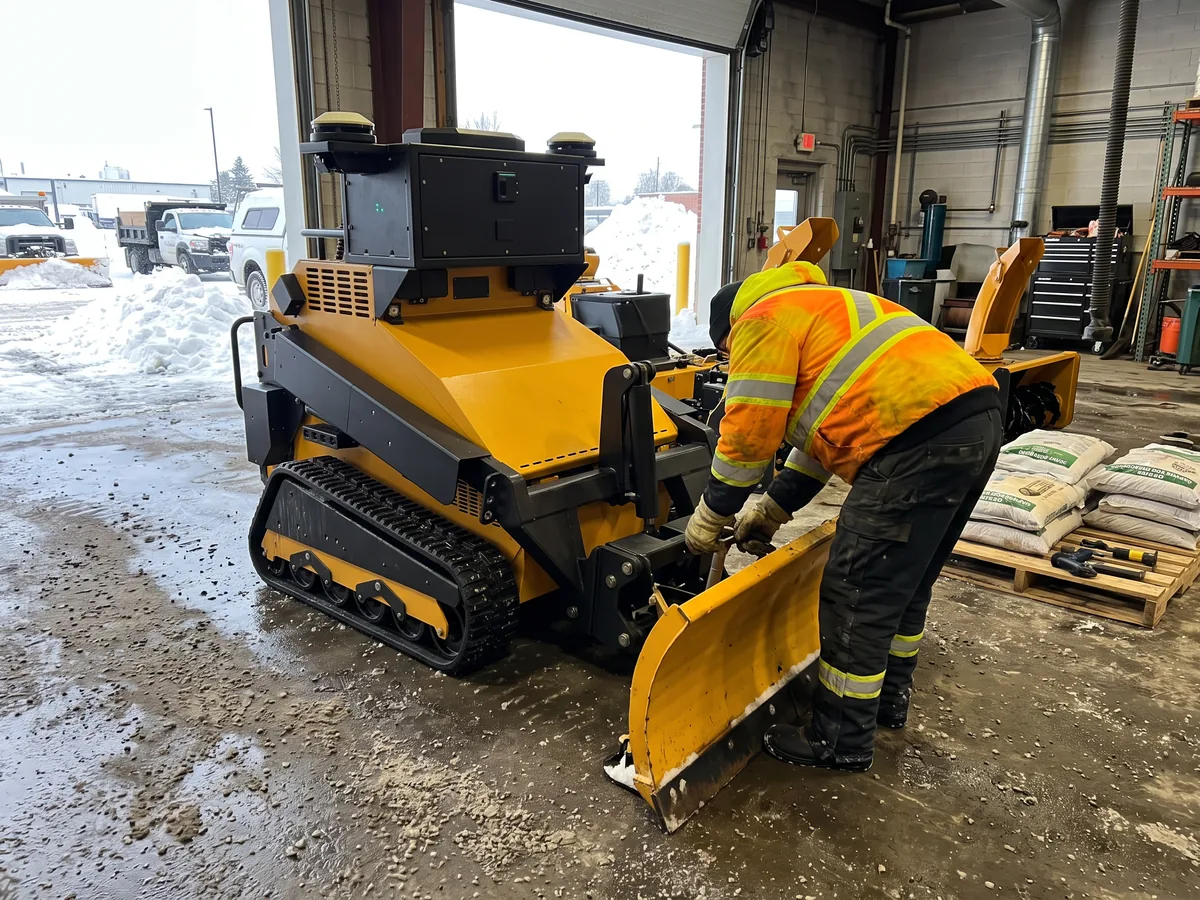
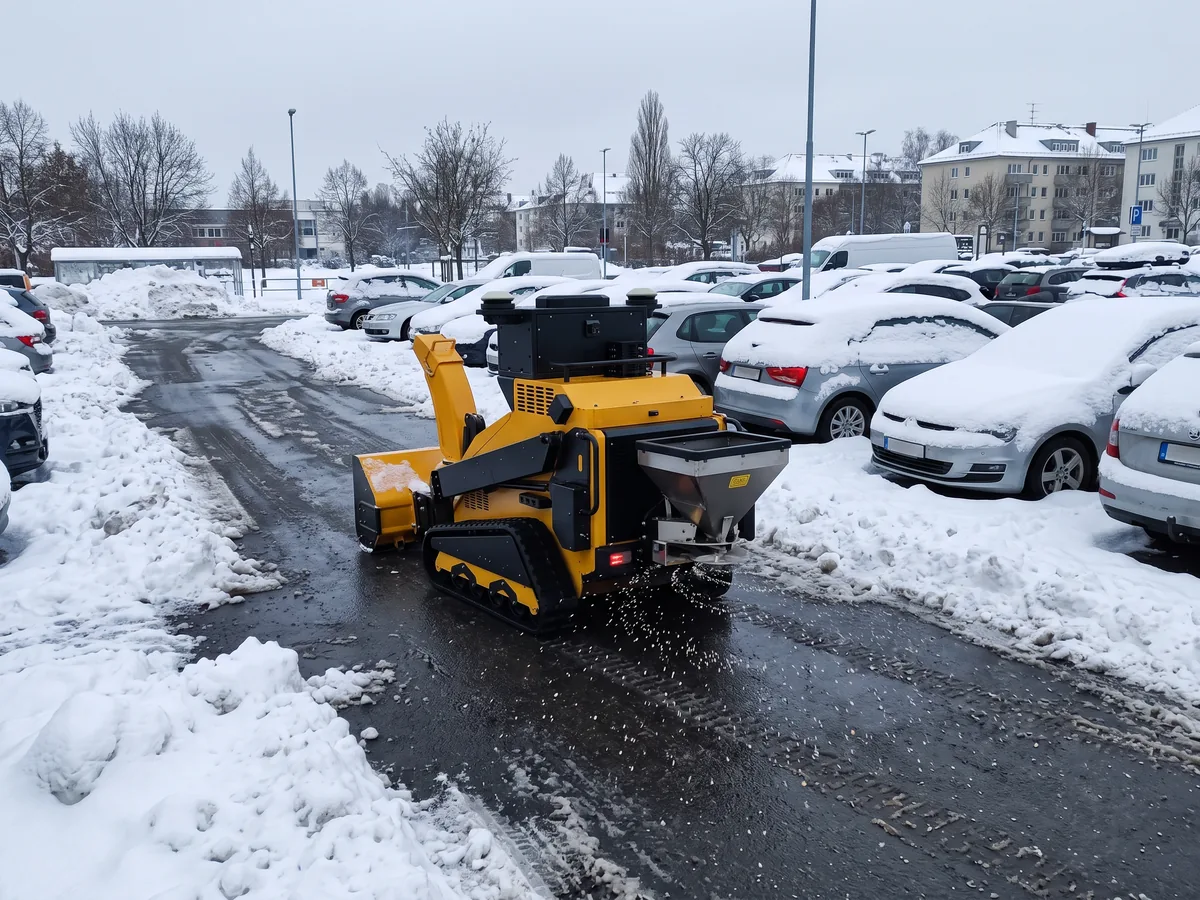
The Snowbotix SMUR X1 works down to −40 °C, runs up to 5 h with its snow blower and takes nine tools, including a V-plough and a salt spreader, according to its manufacturer.
Robot Distribution delivers it, maps the routes, trains your staff and maintains it, to buy, rent or as RaaS.
WHY
During a snowfall, technical services must first clear footpaths, access to schools, town halls and facilities, and car parks, often before dawn. This keeps on-call staff on repetitive tasks, in the cold, on several sites at the same time.
The robot clears recorded routes with no driver and can go round several times during the snowfall. Out of season, the Snowbotix SMUR X1 changes tools to sweep or mow, according to its manufacturer.
HOW IT RUNS
Before winter we record the paths, car parks and no-go zones. The Snowbotix SMUR X1 positions itself to about 2.5 cm by RTK, with LiDAR, radar and stereo vision, according to its manufacturer.
Plough, snow blower, salt spreader or sprayer are fitted according to the expected snow: on the SMUR X1 a tool change takes under 5 min, without tools, according to its manufacturer.
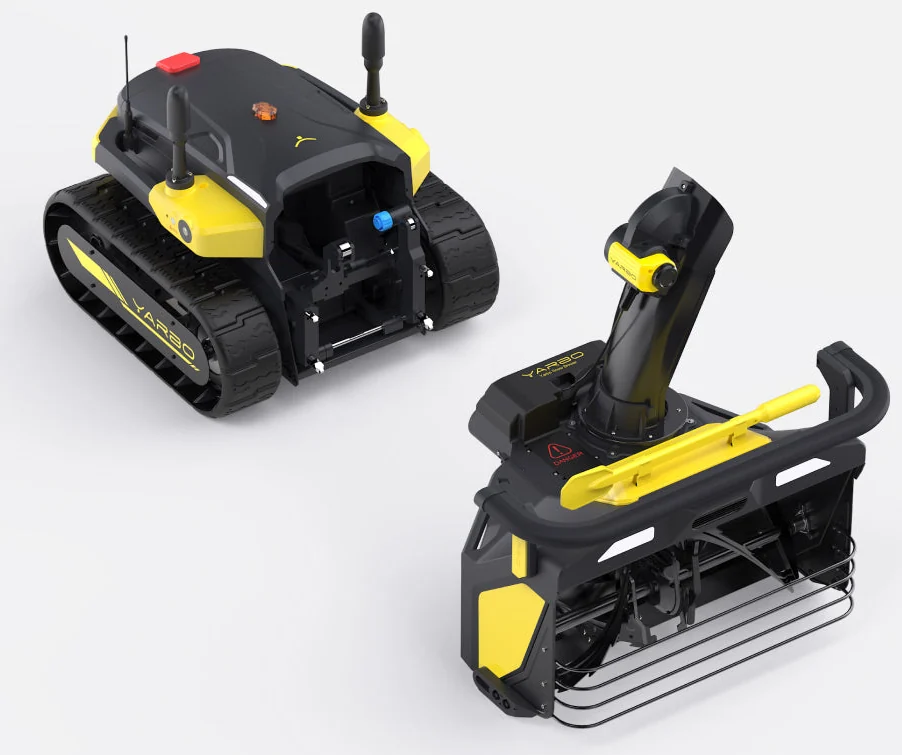
The robot clears its route and throws the snow to the side. The Yarbo Y40P Core with snow blower module clears a 61 cm strip and throws snow about 2 to 12 m, according to its manufacturer.
Between runs the robot returns to its station. The SMUR X1 charges on a wireless dock, in up to 9 h for a full charge, with a self-heating LFP battery, according to its manufacturer.
THE ROBOTS
Snowbotix
Outdoor
Yarbo
Outdoor
BEFORE INSTALLING
Path length, car park area and passage widths set the model and number of robots: the Yarbo Y40P Core clears up to 650 m² per charge at 2.5 cm of snow, according to its manufacturer.
Ramps, kerbs, steps and street furniture are recorded; the Yarbo Y40P Core climbs up to 20° (36%), according to its manufacturer.
Buildings and trees can block the RTK signal: reception is checked along the whole route, along with network coverage.
We choose a sheltered spot for the charging station, storage for tools and salt, and run times in relation to when the public arrives.
RULES AND STANDARDS
Snow clearing on pavements mixes municipal police powers, winter-service machine standards and de-icing salt rules.
Under Article L2212-2 of the French local authorities code, municipal police cover the safety and ease of passage on streets and public roads, including cleaning. Case law allows a mayor to require residents to clear the pavement in front of their homes, snow included. Before mapping routes, check the local order: it sets which pavements the commune treats and which are left to residents.
Since 2021, EN 17106-3-1 covers snow clearing machines with rotating tools and snow ploughs, and EN 17106-3-2 covers spreading machines, both alongside the common part EN 17106-1. They replace EN 13021+A1:2008. They were written for road operation machinery, so ask which clauses the manufacturer applied to a compact autonomous robot and how the rest was covered by its risk assessment.
EN 16811-1 sets requirements and test methods for road de-icing salt (sodium chloride), with properties that vary by use, storage and whether it is spread dry or sprayed as brine. Check that the salt bought for the robot's spreader matches the method chosen, and that the dosing settings suit footpaths used by pedestrians and close to planted areas.
Self-propelled snow-removing machines with rotating tools, attachments excluded, are listed under Article 13 of Directive 2000/14/EC. No EU noise limit applies, but the machine must carry the CE marking and its guaranteed sound power level, with an EC declaration of conformity. For pre-dawn runs near housing, schools or hospitals, ask for this value before planning the timetable.
General information, not legal advice.
FAQ
Yes: the Snowbotix SMUR X1 is rated down to −40 °C with a self-heating battery, and the Yarbo Y40P Core from −25 to 45 °C, according to their manufacturers.
The Yarbo Y40P Core with snow blower module takes in up to 30 cm of snow across 61 cm, according to its manufacturer. For heavy falls, several runs are scheduled during the snowfall rather than one at the end.
Yes: the Snowbotix SMUR X1 takes a salt spreader and a liquid sprayer among its nine tools, according to its manufacturer.
The Snowbotix SMUR X1 is a year-round platform: with brushes it sweeps, with its 60 in (152 cm) mower deck it mows, according to its manufacturer. The Yarbo Y40P Core also takes other modules.
By satellite and sensors rather than ground markings: RTK, LiDAR, radar and stereo vision for the Snowbotix SMUR X1, RTK and stereo vision for the Yarbo Y40P Core, according to their manufacturers.
USE CASES
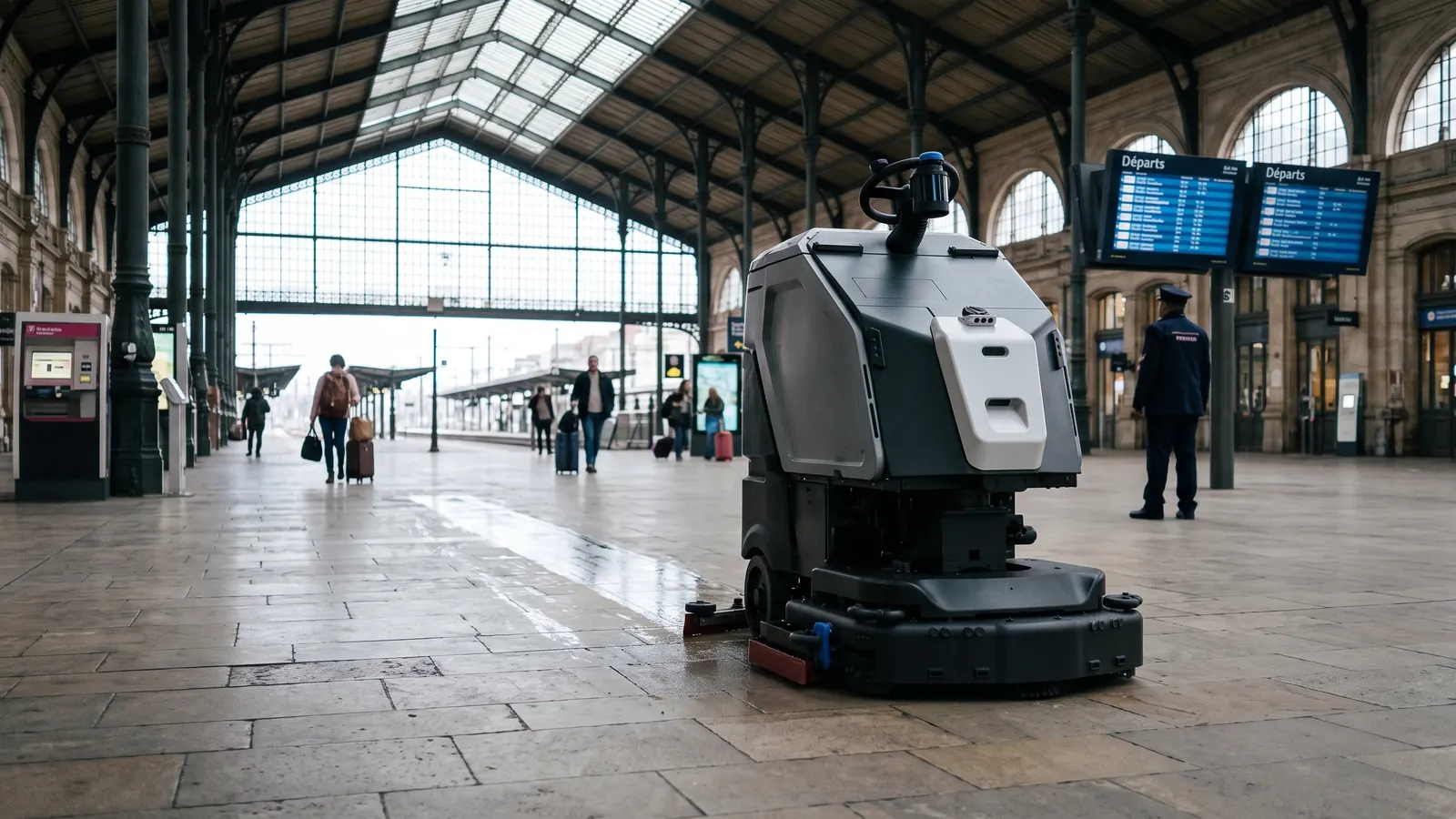 Public space cleaningRobots scrub large concourses and sweep forecourts on programmed routes. Staff keep washrooms, furniture, bins and the welcome of the public.
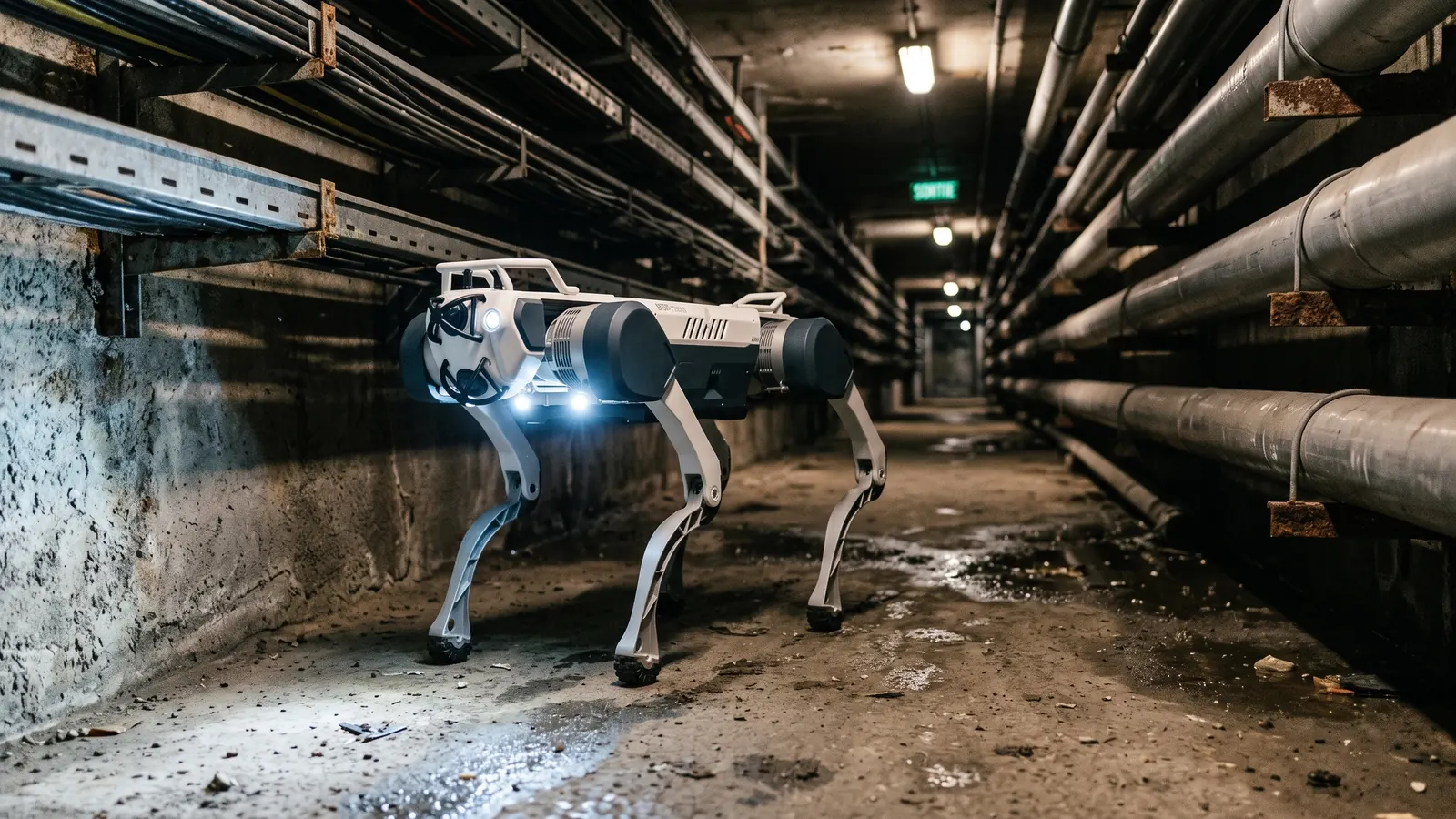 Tunnel and utility inspectionThe robot walks utility tunnels, road tunnels and underground car parks and brings back dated images and readings. Staff keep their descents for repairs.
 Autonomous road sweepingThe autonomous sweeper follows its routes by night or day, electrically, and returns on its own at the end of the cycle. Street cleaning staff keep manual litter picking, bins, fly-tipping and supervision.
Robots, acquisition mode and delivery terms, in one written proposal.