Cleaning
- Working width
- 1,600 mm
- Key feature
- 95% less water
- Key feature
- Autonomous, all-electric
On order
Price on request
Updated
USE CASE · LOCAL AUTHORITIES
The autonomous sweeper follows its routes by night or day, electrically, and returns on its own at the end of the cycle. Street cleaning staff keep manual litter picking, bins, fly-tipping and supervision.
Updated
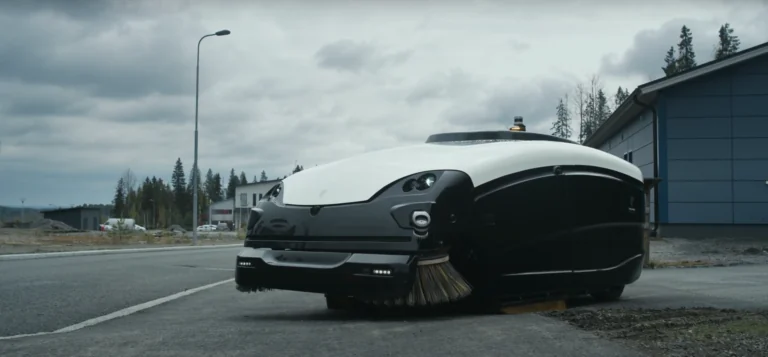
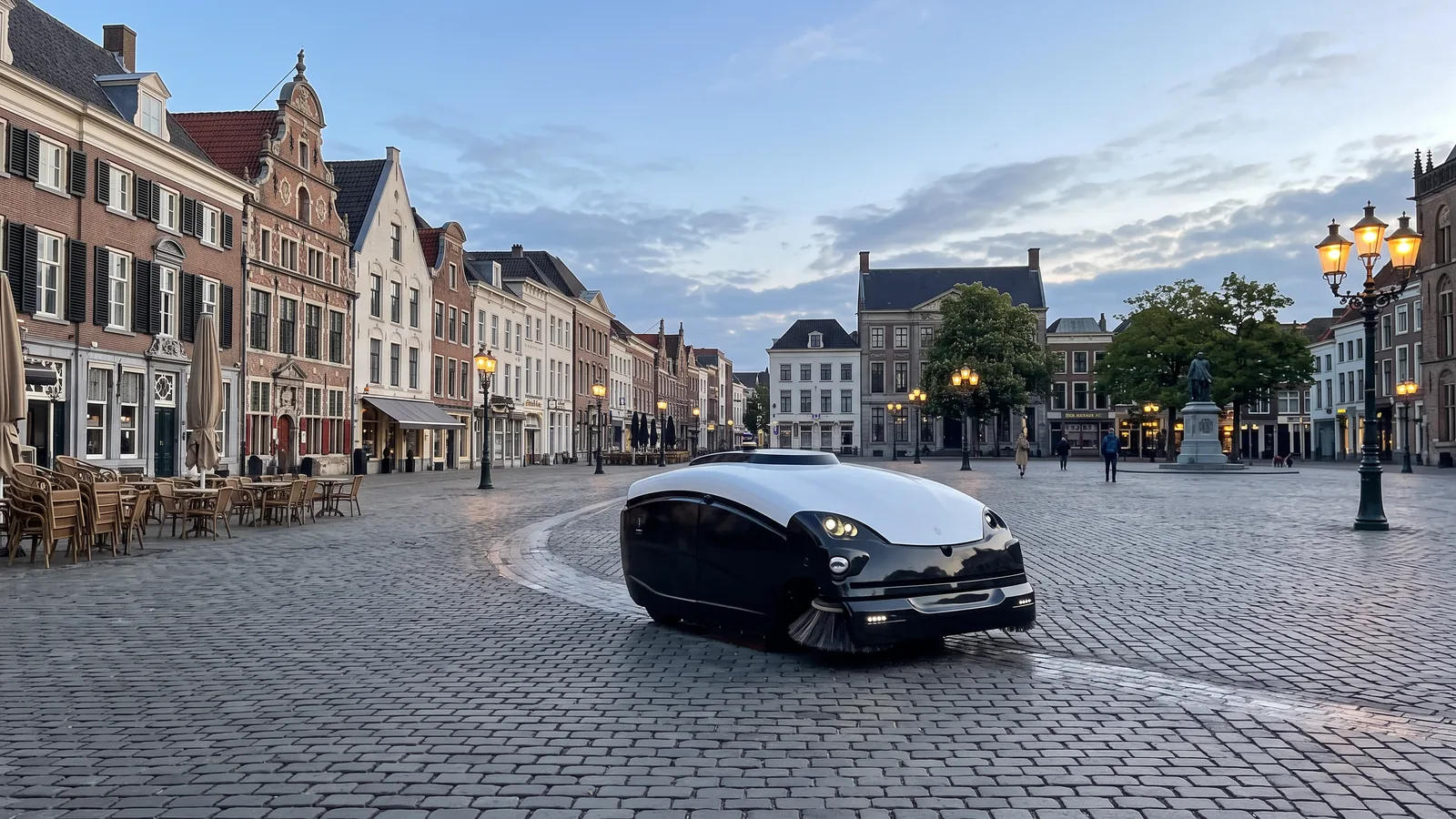
An autonomous road sweeper is an electric cleaning vehicle that sweeps streets, squares, pedestrian zones and industrial site roads with no driver on board, guided by LiDAR, cameras and GNSS.
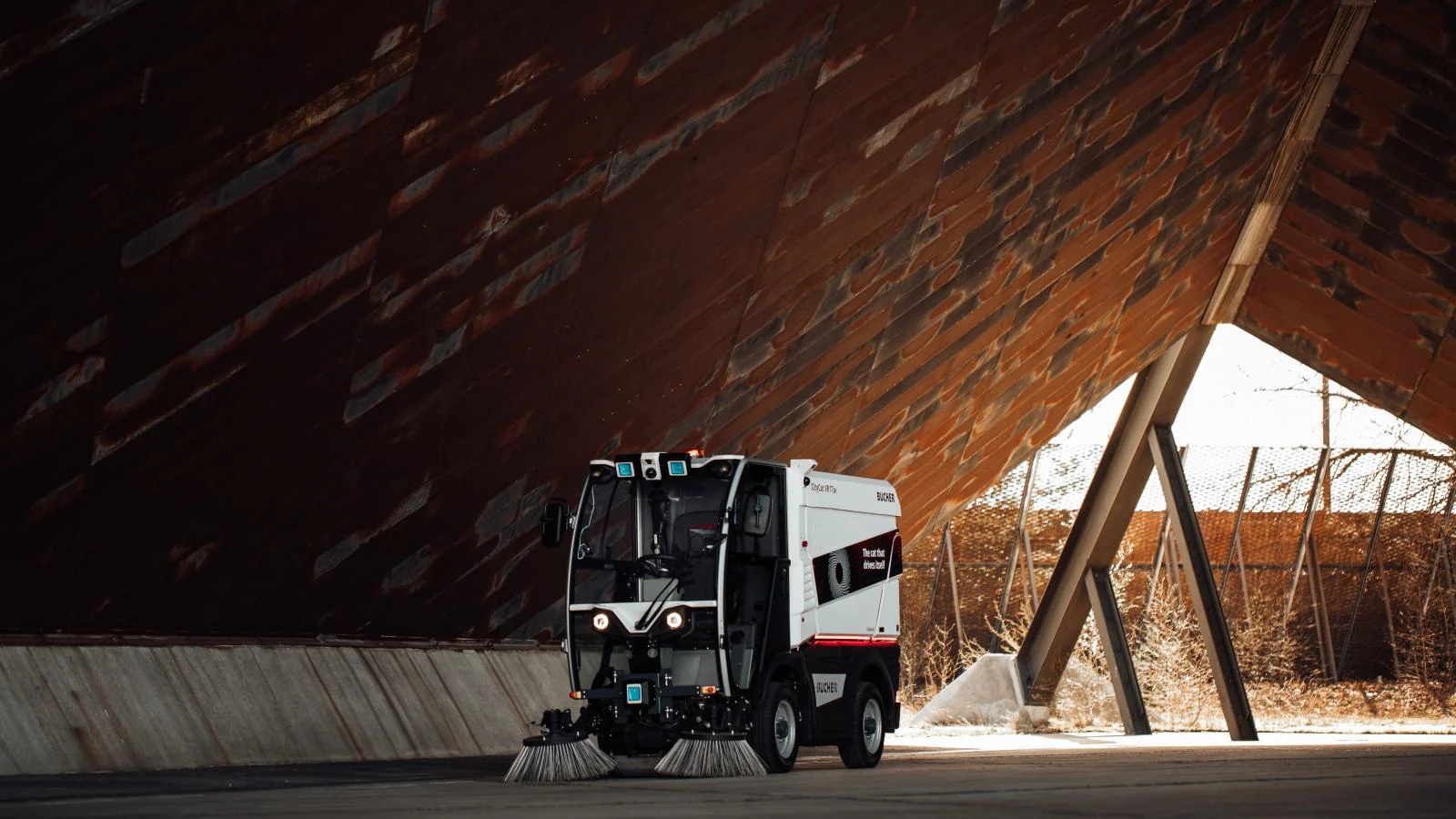
The Bucher CityCat VR17ae sweeps 1,200 to 2,400 mm wide and runs a 7 h autonomous sweeping cycle followed by a 60 min autonomous service cycle, according to its manufacturer.
Robot Distribution delivers it, maps the routes, trains your staff and maintains it, to buy, rent or as RaaS.
WHY
Sweeping streets, squares and pedestrian zones comes round every day, often early in the morning or at night, with sweeper drivers hard to recruit and noisy diesel machines in town centres. Business parks, ports and industrial sites have the same needs over large paved areas.
The autonomous sweeper runs mapped routes electrically, detects pedestrians and obstacles and, depending on the model, can switch back to manual driving. First deployments take place on closed sites, pedestrian zones or supervised routes: driverless operation on public roads remains subject to national rules.
HOW IT RUNS
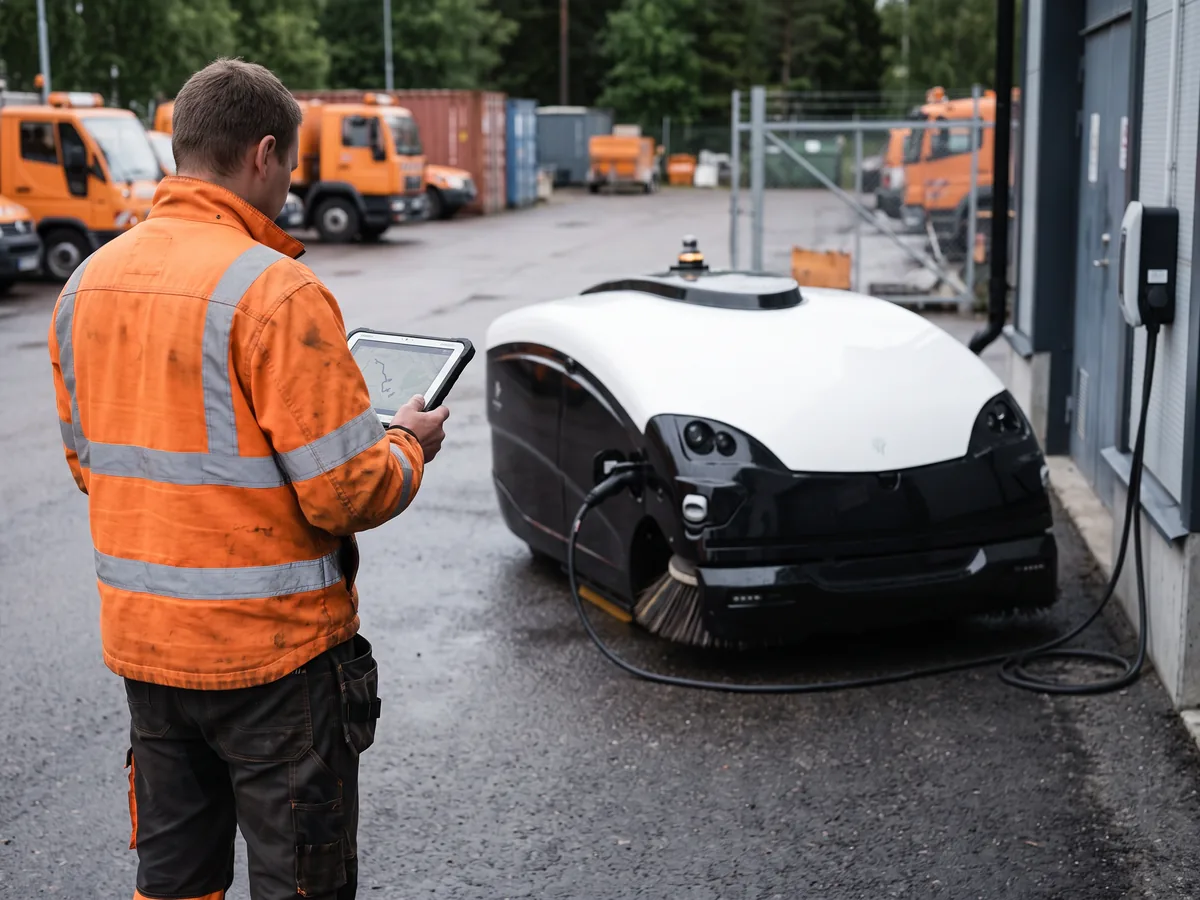
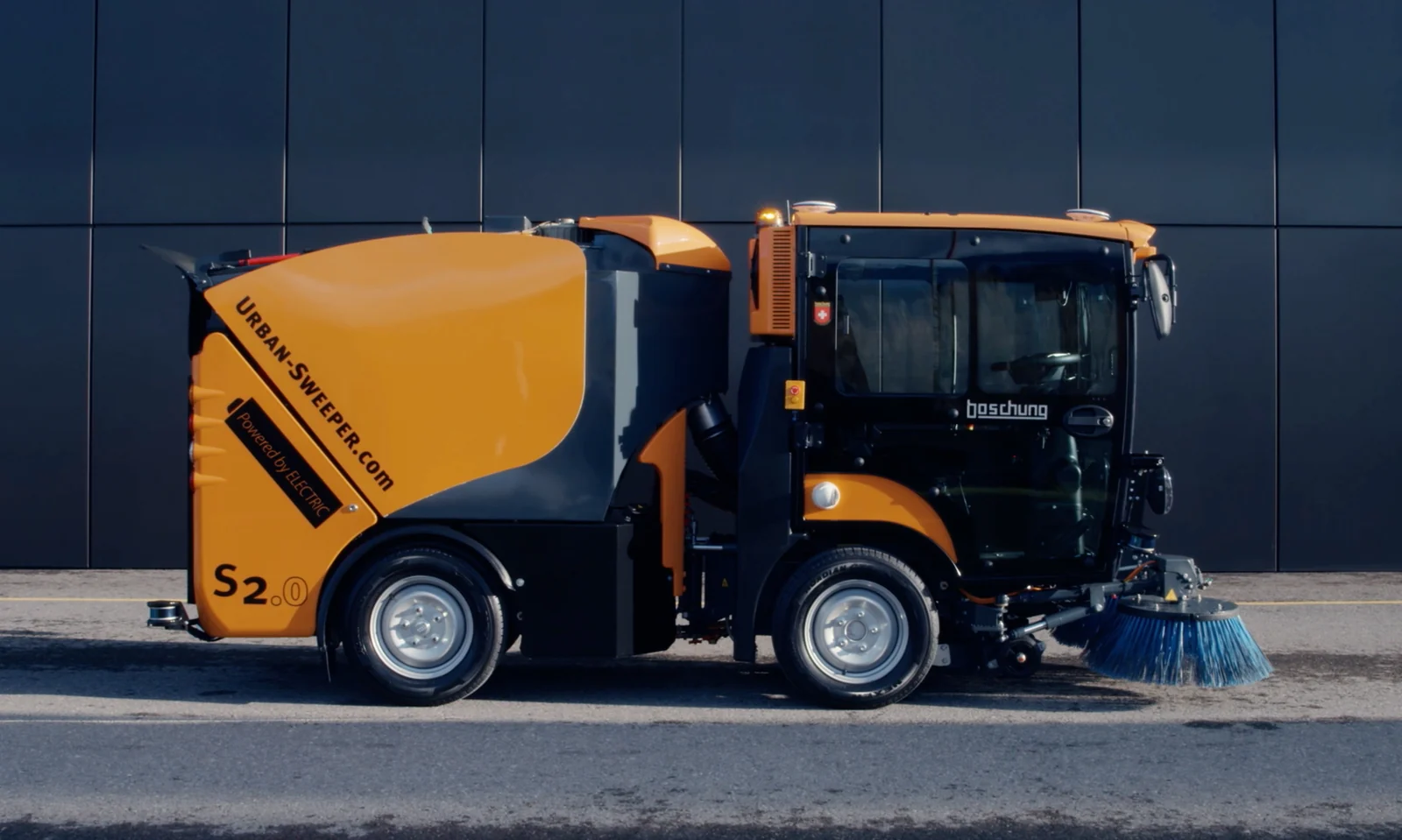
At commissioning we record the routes, no-go zones and emptying and charging points. The Boschung Urban-Sweeper S2.0 Autonomous wakes up, sweeps and parks on its own, according to its manufacturer.
We set the days, hours and order of routes, for example at night in a pedestrian zone or outside delivery hours in a business park.
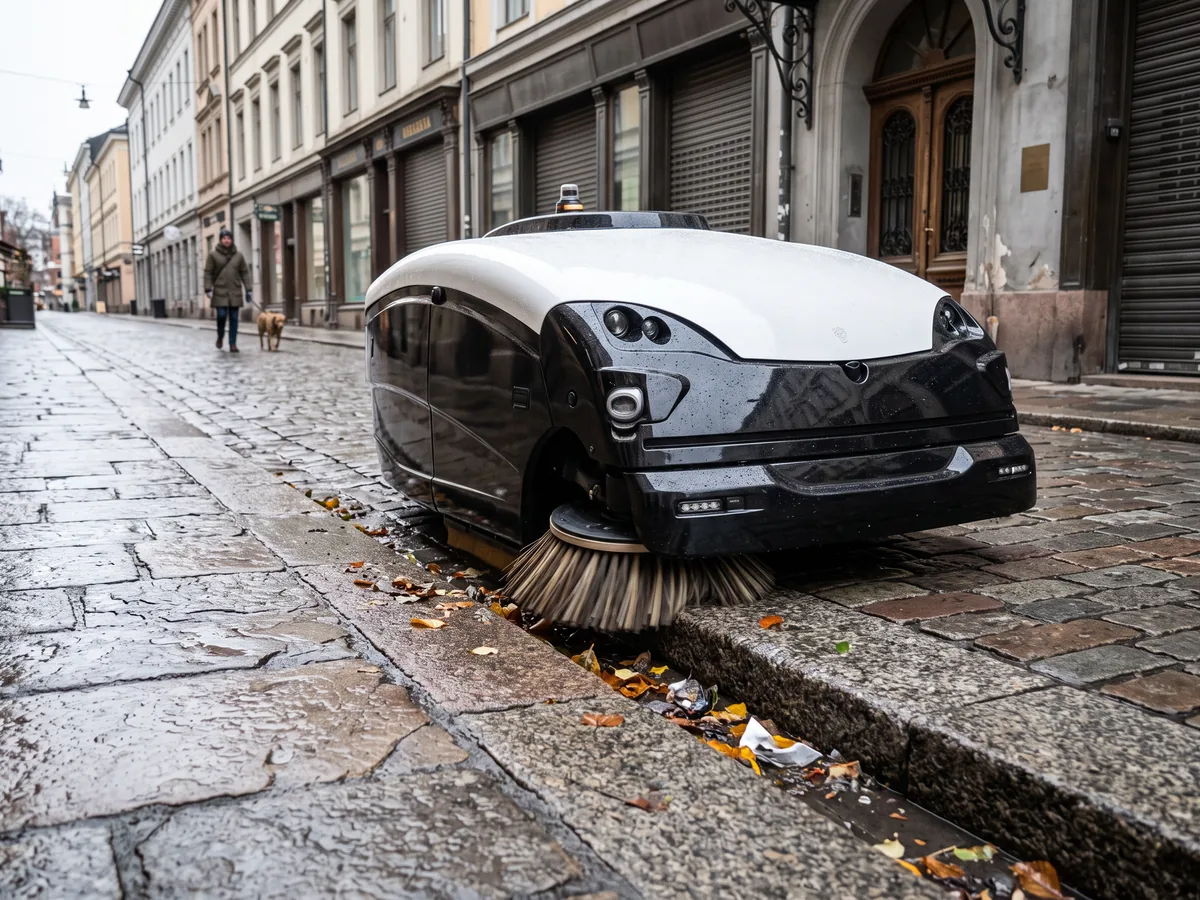
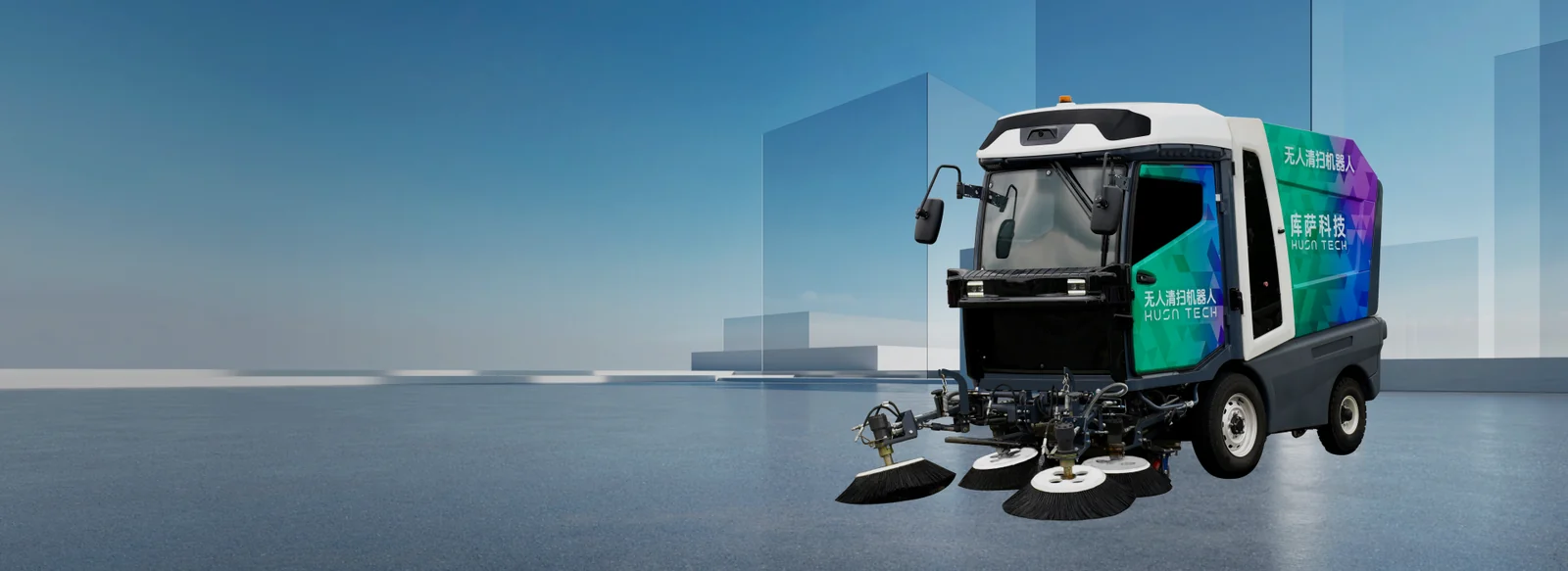
The sweeper follows its route, runs along kerbs and steers around obstacles and pedestrians. The KUSA StarSweep works at up to 10 km/h and recognises traffic lights, according to its manufacturer.
At the end of the cycle the machine empties its hopper, recharges and reports its run data. The Boschung Urban-Sweeper S2.0 Autonomous recharges in 100 min, according to its manufacturer; staff check brooms and filters.
THE ROBOTS
Cleaning
Cleaning
Bucher Municipal
Cleaning
Cleaning
Cleaning
Cleaning
BEFORE INSTALLING
Carriageway width, pavements, gutters and kerbs guide the choice: the compact COOWA X1 Unicorn sweeps lanes and kerbs 1,260 mm wide, the KUSA StarSweep sweeps main roads 1,300 to 2,200 mm wide, according to their manufacturers.
Open road, pedestrian zone or private site: road status, traffic and hours determine autonomous use and whether a supervising operator is needed.
Gradients, paving and speed bumps are recorded: the COOWA X1 Unicorn climbs 26% and the KUSA StarSweep 20%, according to their manufacturers.
We locate the depot, the available electrical power and the emptying and water-filling points. The KUSA StarSweep recharges in 1.5 h on a DC fast charger, according to its manufacturer.
RULES AND STANDARDS
Before an autonomous sweeper leaves the depot, four texts frame where it may run, how it is built and what it must declare.
Driverless running on an open public road falls under Decree No. 2018-211 of 28 March 2018 on experimenting with delegated-driving vehicles. The application goes through the Ministry of Transport, which consults the road manager and, where specific measures are needed, the traffic police authority. A person must be able to take control, on board or not, and the vehicle runs under a WW DPTC certificate.
The regulation replaces Directive 2006/42/EC and applies directly from 20 January 2027. For autonomous mobile machinery, INRS points to two key requirements: a supervision function that lets a remote supervisor only start, stop or move the machine to a safe state (3.2.4), and travel in an enclosed space or with person and obstacle detection (3.3.3). Ask how the sweeper meets both on sites without a road authorisation.
EN 17106-1:2021 sets common safety requirements for road operation machinery; EN 17106-2:2021 adds the specific requirements for road surface cleaning machines. Together they replace EN 13019+A1:2008. They cover the hazards of operation, adjustment, hopper discharge and maintenance. Ask the manufacturer which edition its risk assessment used and how the autonomous functions were added to it.
Power sweepers are listed under Article 13 of Directive 2000/14/EC: no EU noise limit applies, but each machine must carry the CE marking and its guaranteed sound power level, backed by an EC declaration of conformity. For night or early-morning routes near homes, ask for this guaranteed level and compare it with the noise rules set by the municipality.
General information, not legal advice.
FAQ
It depends on the national framework and the site. The machines in our catalogue detect pedestrians and obstacles with sensors; the Bucher CityCat VR17ae combines cameras, 3D LiDAR, radars and ultrasonic sensors with redundant brake-by-wire, according to its manufacturer. First uses are often in pedestrian zones or on closed sites, with supervision.
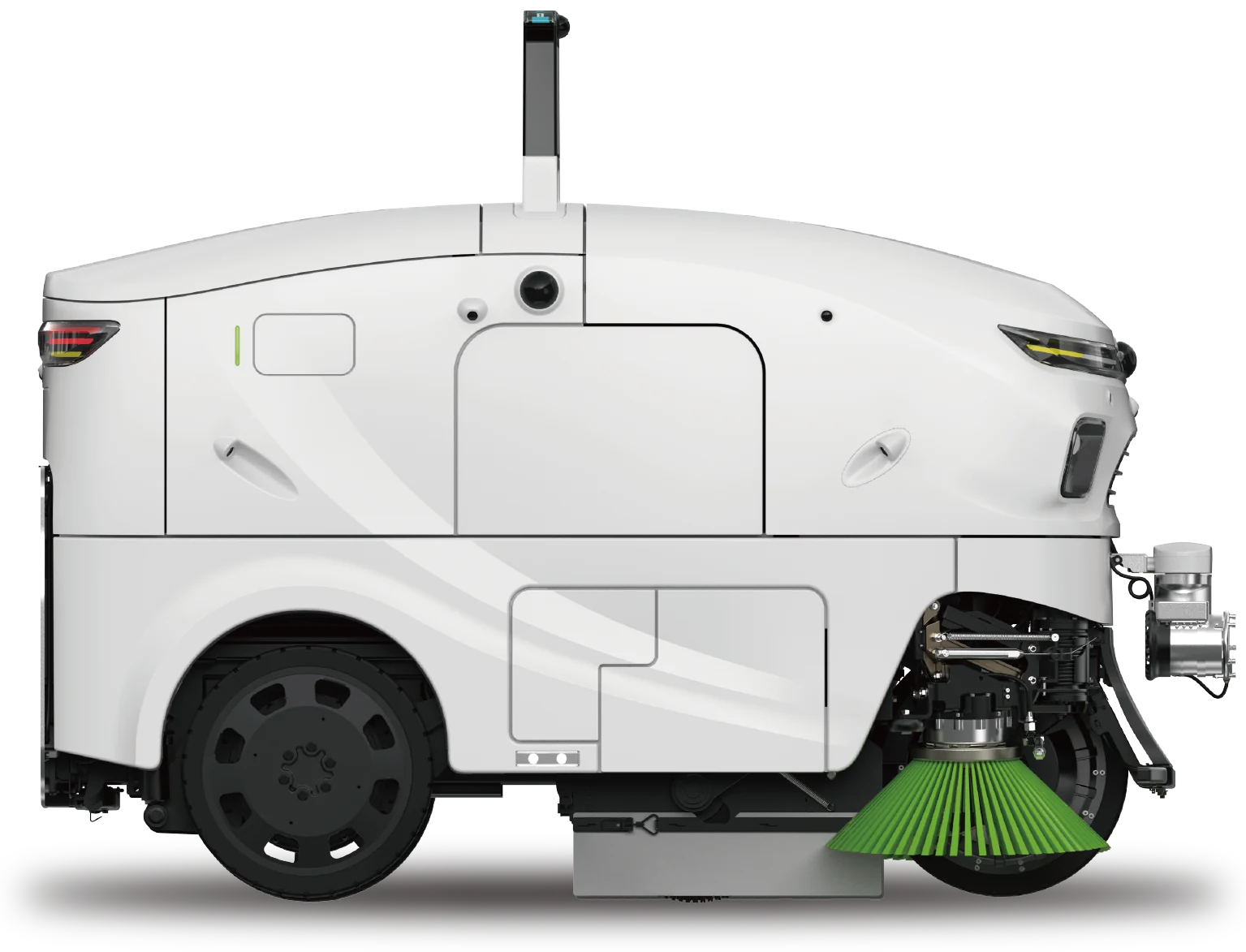
According to the manufacturer: up to 6,300 m²/h for the COOWA X1 Unicorn. The Trombia Free sweeps 1,600 mm wide and the Bucher CityCat VR17ae 1,200 to 2,400 mm. Actual output depends on the route, turns and how dirty the surface is.
It is electric and designed to limit noise: the COOWA X1 Unicorn works at 70 dB or less, and the Trombia Free is stated to be more than 20 dB quieter than a conventional sweeper, according to their manufacturers.
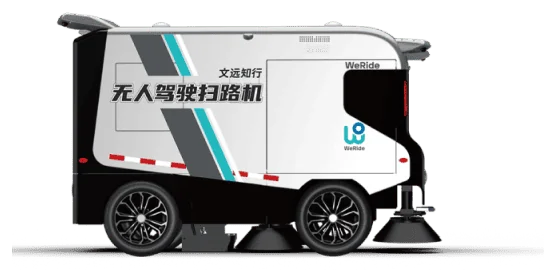
The Trombia Free uses about 95% less water and 85% less energy than a conventional high-performance sweeper, according to its manufacturer. By contrast, the WeRide Robosweeper S6 sweeps, sprays and disinfects main roads with a 3.5 m³ water tank.
Yes for the dual-mode models: the Bucher CityCat VR17ae and the Boschung Urban-Sweeper S2.0 Autonomous switch to manual driving, according to their manufacturers. Staff use this for one-off jobs outside the routes.
USE CASES
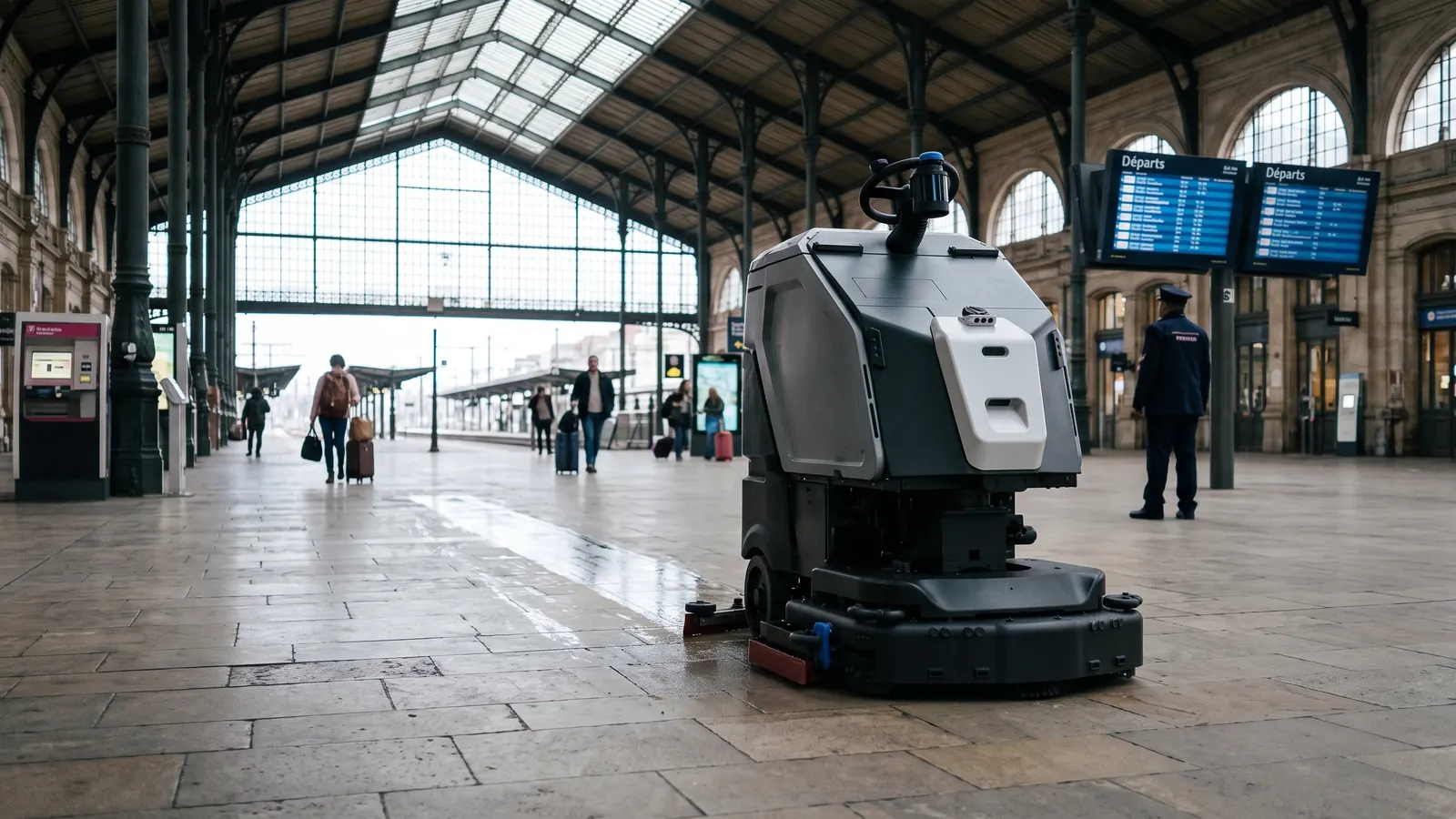 Public space cleaningRobots scrub large concourses and sweep forecourts on programmed routes. Staff keep washrooms, furniture, bins and the welcome of the public.
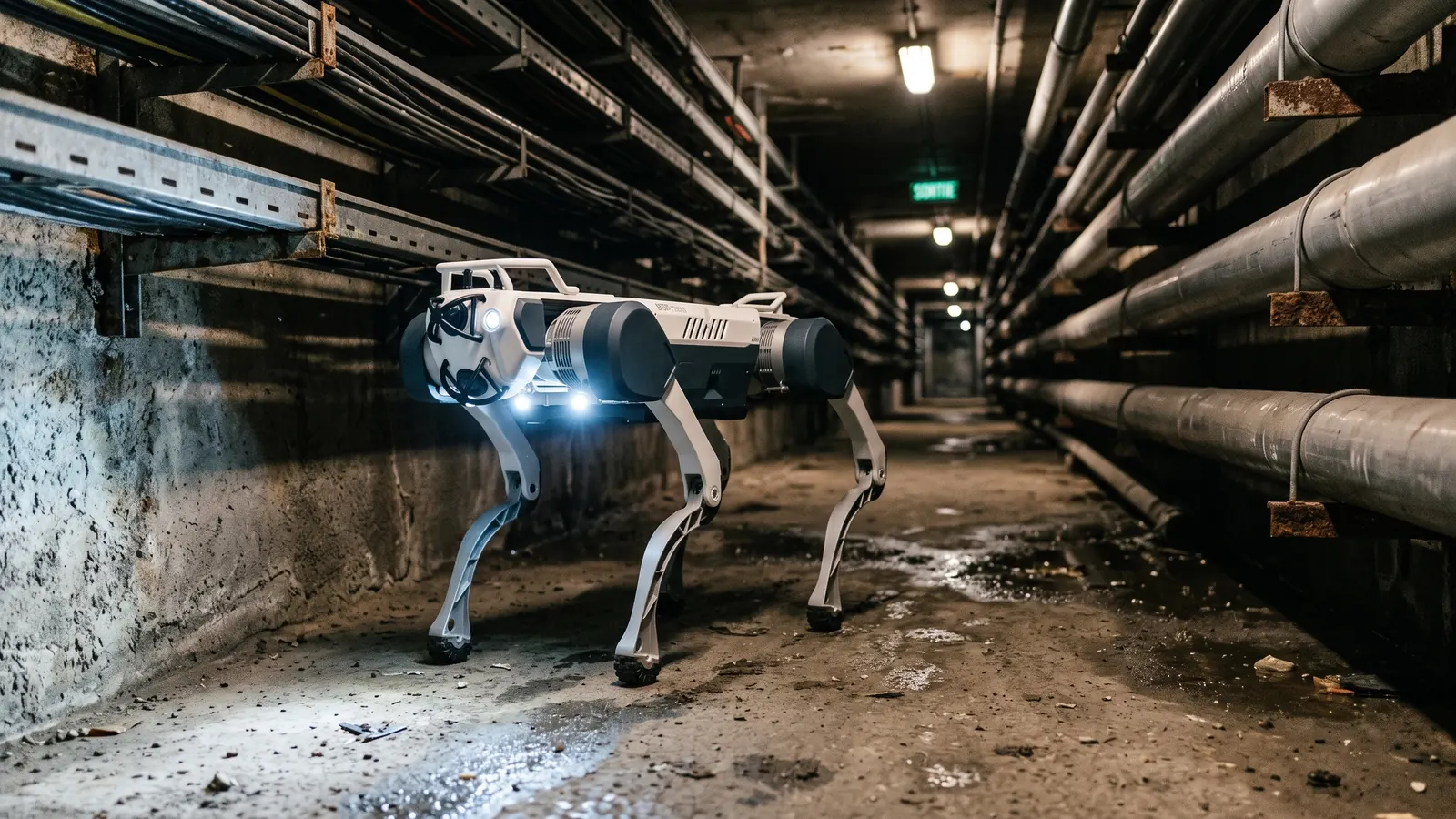 Tunnel and utility inspectionThe robot walks utility tunnels, road tunnels and underground car parks and brings back dated images and readings. Staff keep their descents for repairs.
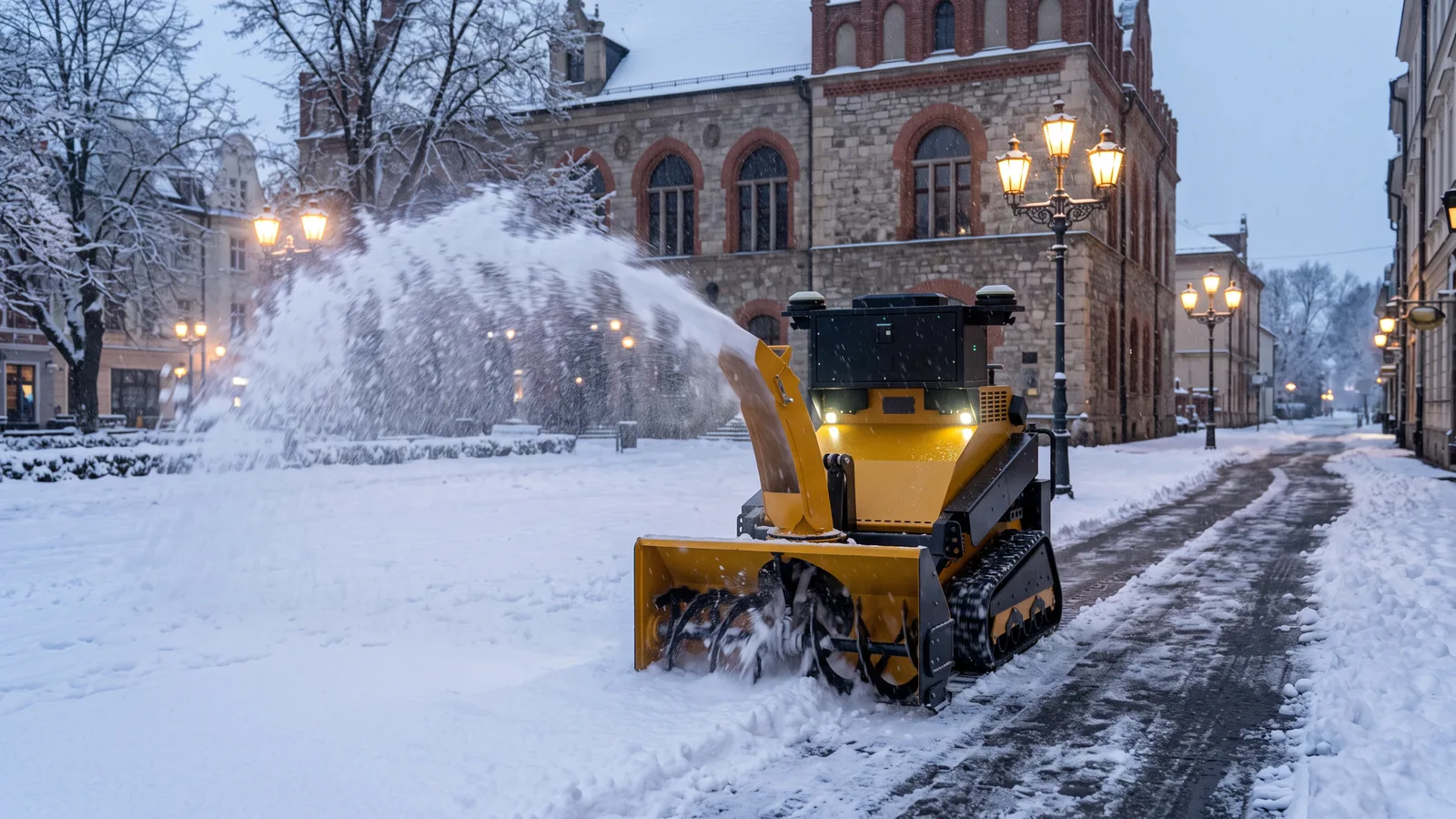 Robotic snow clearing of paths and car parksThe robot clears snow and treats ice on recorded routes, early in the morning or during the snowfall. Staff keep the steps, awkward access points, monitoring and emergency call-outs.
Robots, acquisition mode and delivery terms, in one written proposal.