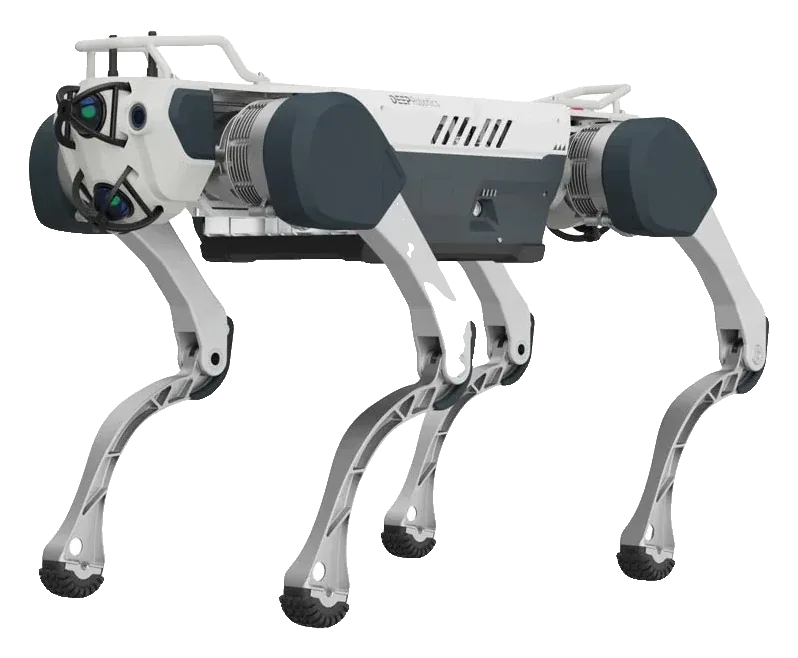
Quadrupeds
- Weight
- 56 kg
- Runtime
- 2.5–4 h
- Ingress protection
- IP67
On order
From €94,990 ex VATor €3,229/month in RaaS
Updated
USE CASE · SECURITY AND SURVEILLANCE
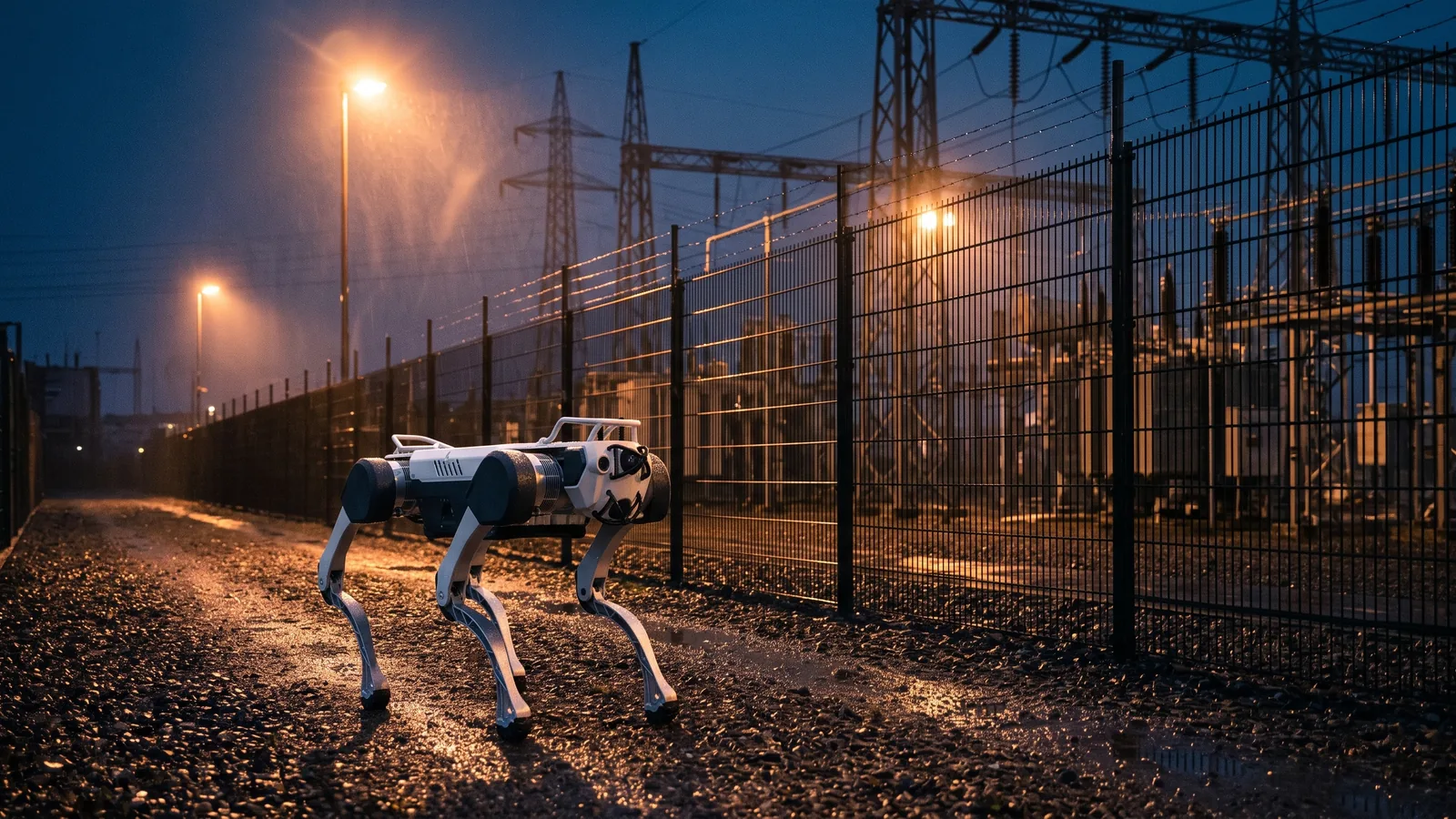
The legged robot follows the fence, climbs stairs and crosses banks, gravel and steps, at night and in bad weather. Guards keep alarm verification and response.
Updated
A security quadruped robot patrols the perimeter of sensitive sites (energy, water, chemicals, logistics) over ground a wheeled robot cannot cross: stairs, banks, gravel, walkways.
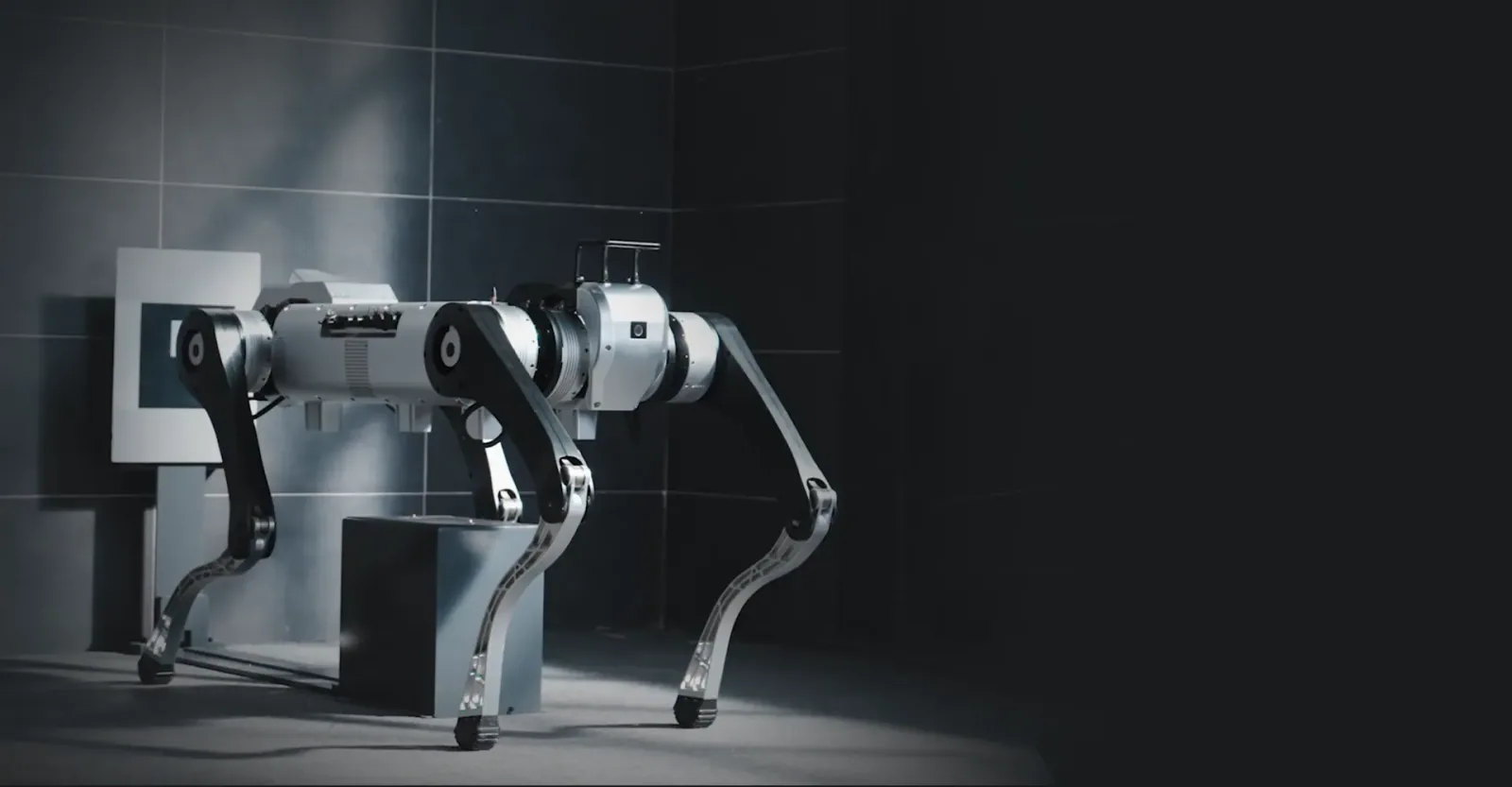
The IP67-rated DEEP Robotics X30 climbs 45° stairs and slopes, works from -20 to 55 °C and in darkness, according to its manufacturer.
Robot Distribution delivers it, fits the cameras the site needs, programmes the patrols, connects it to your monitoring, trains your teams and maintains it, to buy, rent or as RaaS.
WHY
On an electrical substation, a water treatment plant, a chemical site or a logistics platform, the perimeter is made of fences, banks, ditches and metal stairs. Night patrols there are long, repetitive and often done in bad weather.
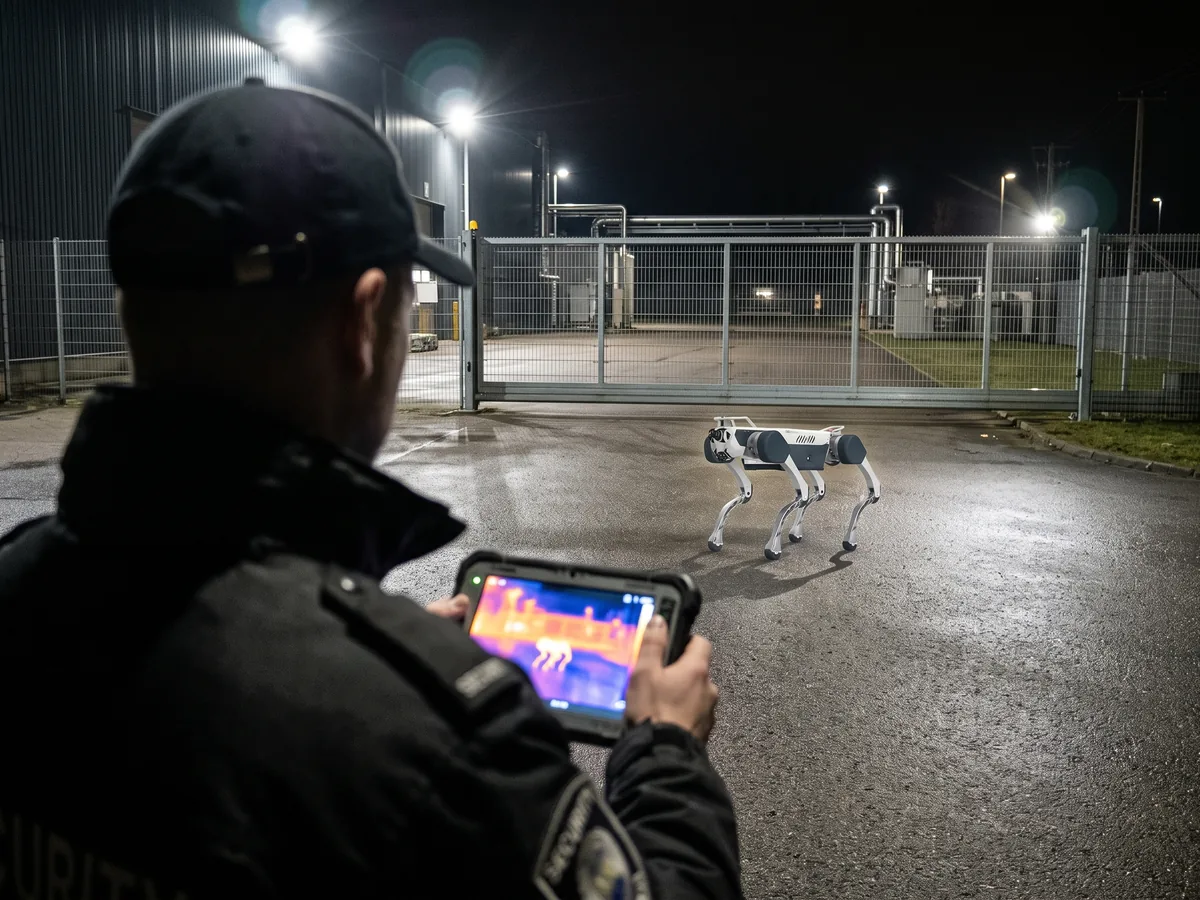
The legged robot follows these routes without any ground works and carries cameras, including a thermal camera depending on the configuration. Guards focus on alarm verification and response. Footage remains subject to the GDPR and video surveillance rules.
HOW IT RUNS
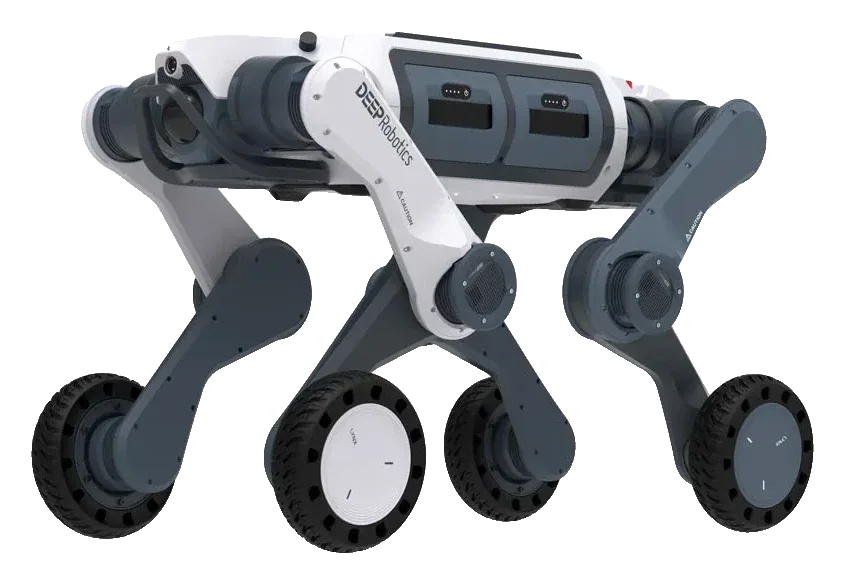
At commissioning the robot maps the site with its LiDARs. We set the patrols, the stops in front of gates and sensitive areas, and the schedule. The DEEP Robotics LYNX M20 carries two 96-line LiDARs, according to its manufacturer.
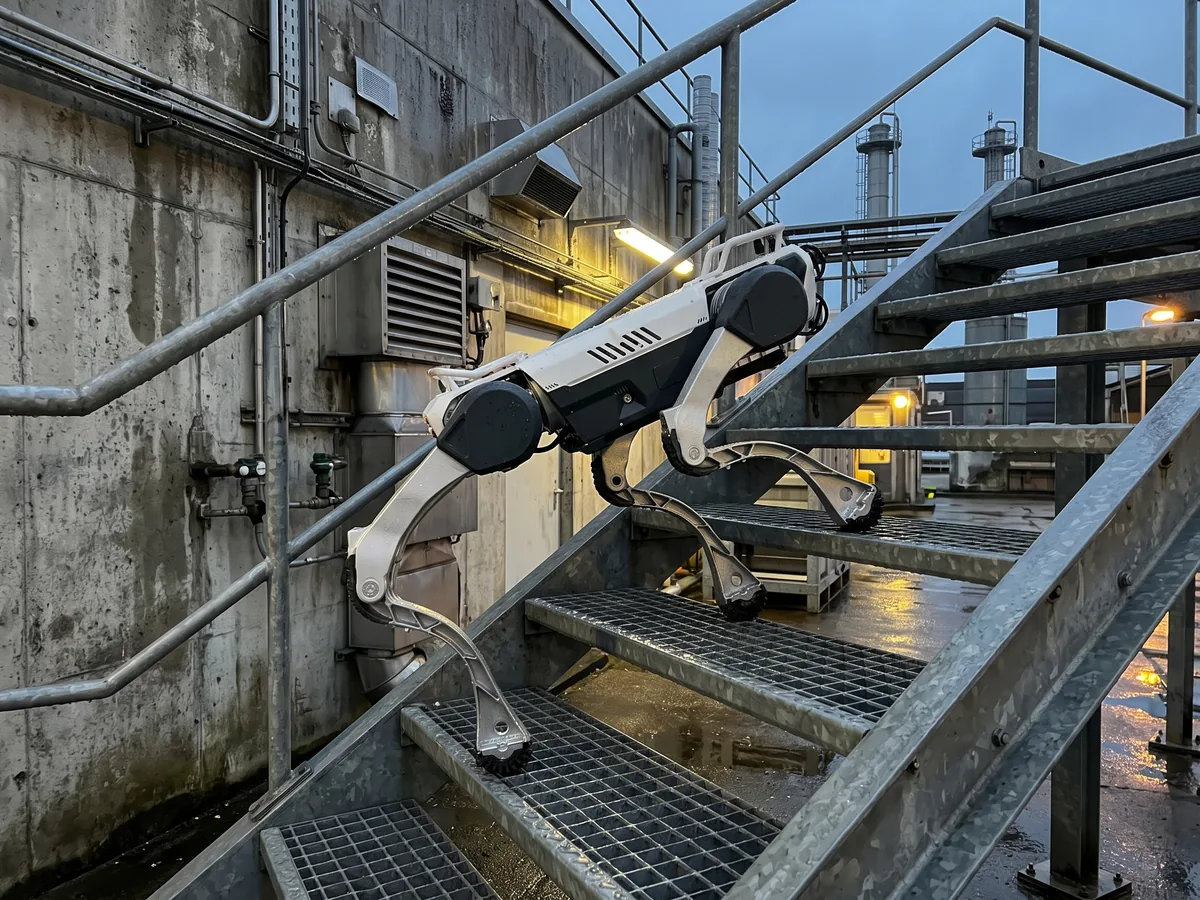
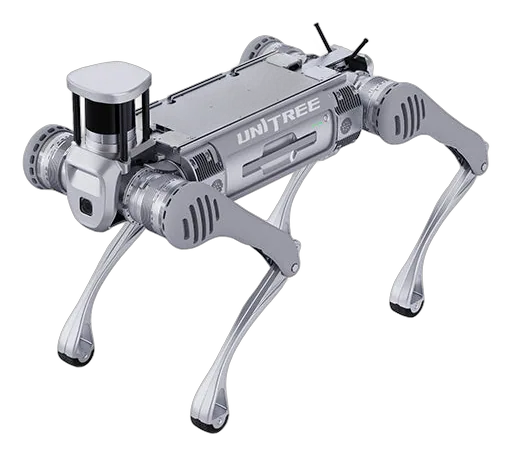
The robot follows the fence, climbs stairs and crosses obstacles. The Unitree B2 handles continuous 20 to 25 cm steps, crosses a single 40 cm obstacle and climbs slopes above 45°, according to its manufacturer.
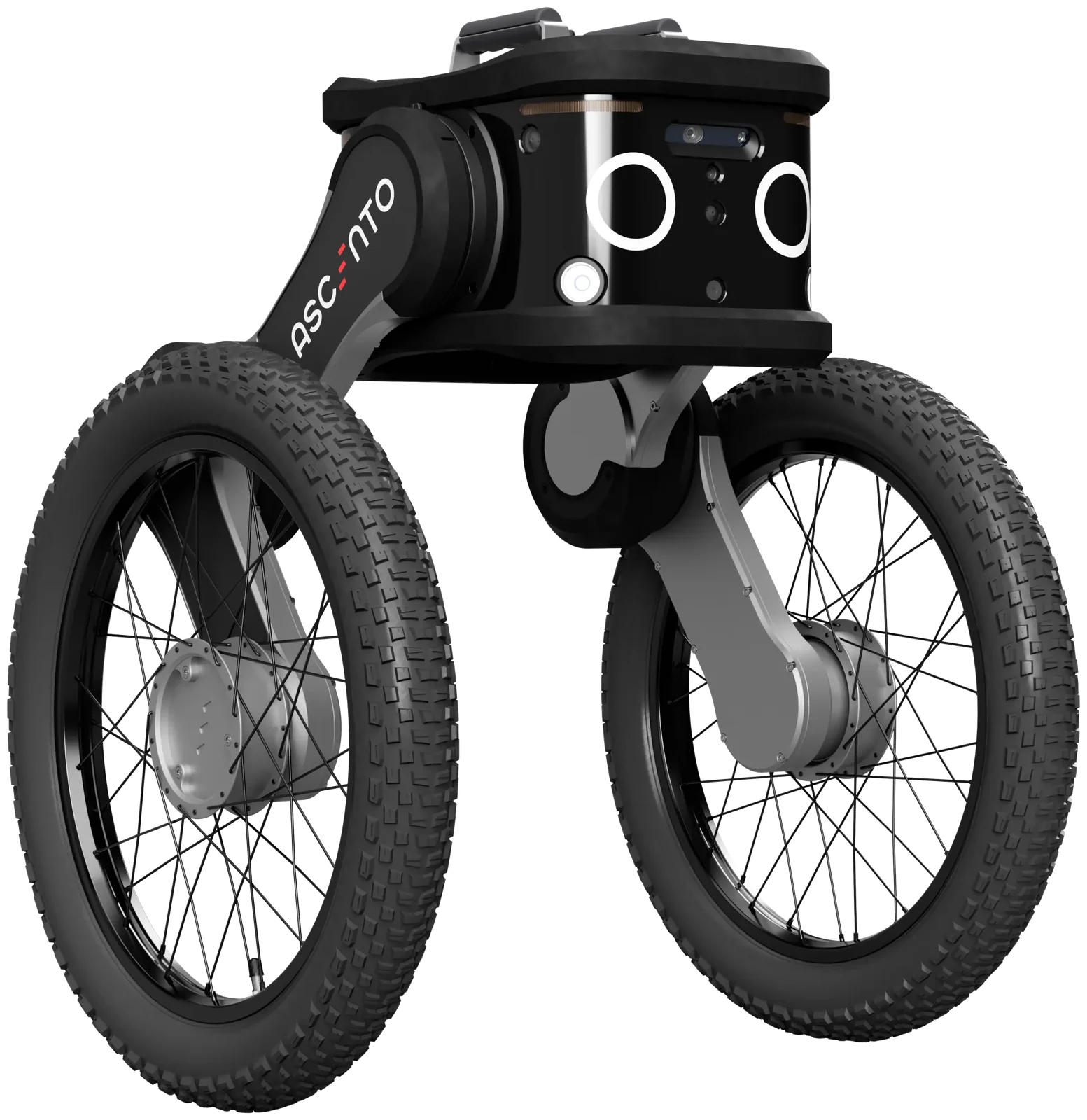
Visible and thermal cameras spot a person, an open gate or a damaged fence. The Ascento Guard, a self-balancing two-wheeled robot, detects these events with AI and sends them to the existing video management system, according to its manufacturer.
The operator reviews the images remotely and decides whether to respond. After the patrol, the battery is swapped or the robot returns to its station: the DEEP Robotics X30 and the AGIBOT D1 MaxPro have quick-swap batteries, according to their manufacturer.
THE ROBOTS
Quadrupeds
Quadrupeds
Ascento
Security and patrol
Quadrupeds
Quadrupeds
BEFORE INSTALLING
Step heights, open-riser stairs, slopes, gravel, mud and puddles are noted: the AGIBOT D1 MaxPro climbs 30 cm steps and wades through 20 cm of water, according to its manufacturer.
Rain, dust, frost and heat set the required ingress protection and temperature range: IP67 and -20 to 55 °C for the DEEP Robotics X30, according to its manufacturer.
The perimeter length and patrol frequency set the number of batteries: the Unitree B2 runs more than 5 h and 20 km unloaded, according to its manufacturer.
Wi-Fi, 4G or private network coverage is measured along the whole route, and integration with the control room's video management software is agreed with the operator.
FAQ
Because it goes where wheels get stuck: stairs, steps, banks, rails and gravel. The wheel-legged DEEP Robotics LYNX M20 climbs 25 cm stairs and a single 80 cm step, according to its manufacturer. On paved roads, a wheeled robot is often simpler.
Yes, with the right configuration. The DEEP Robotics X30 is designed to work in darkness and the Ascento Guard carries thermal, RGB and infrared cameras, according to their manufacturer. On quadrupeds, the thermal camera is a payload chosen for the site.
According to the manufacturer: 2.5 to 4 h for the DEEP Robotics X30, about 3 h and 15 km unloaded for the LYNX M20, 5.5 h unloaded for the AGIBOT D1 MaxPro, up to 8 h per shift for the Ascento Guard. Swappable batteries allow back-to-back patrols.
The DEEP Robotics X30, Unitree B2 and AGIBOT D1 MaxPro are rated IP67, the LYNX M20 IP66, and the Ascento Guard is specified for rain, snow and wind, according to their manufacturer.
The robot is a machine under the Machinery Directive 2006/42/EC, replaced by Regulation (EU) 2023/1230 from 20 January 2027. Footage falls under the GDPR and national video surveillance rules, which are settled with your data protection lead before commissioning.
USE CASES
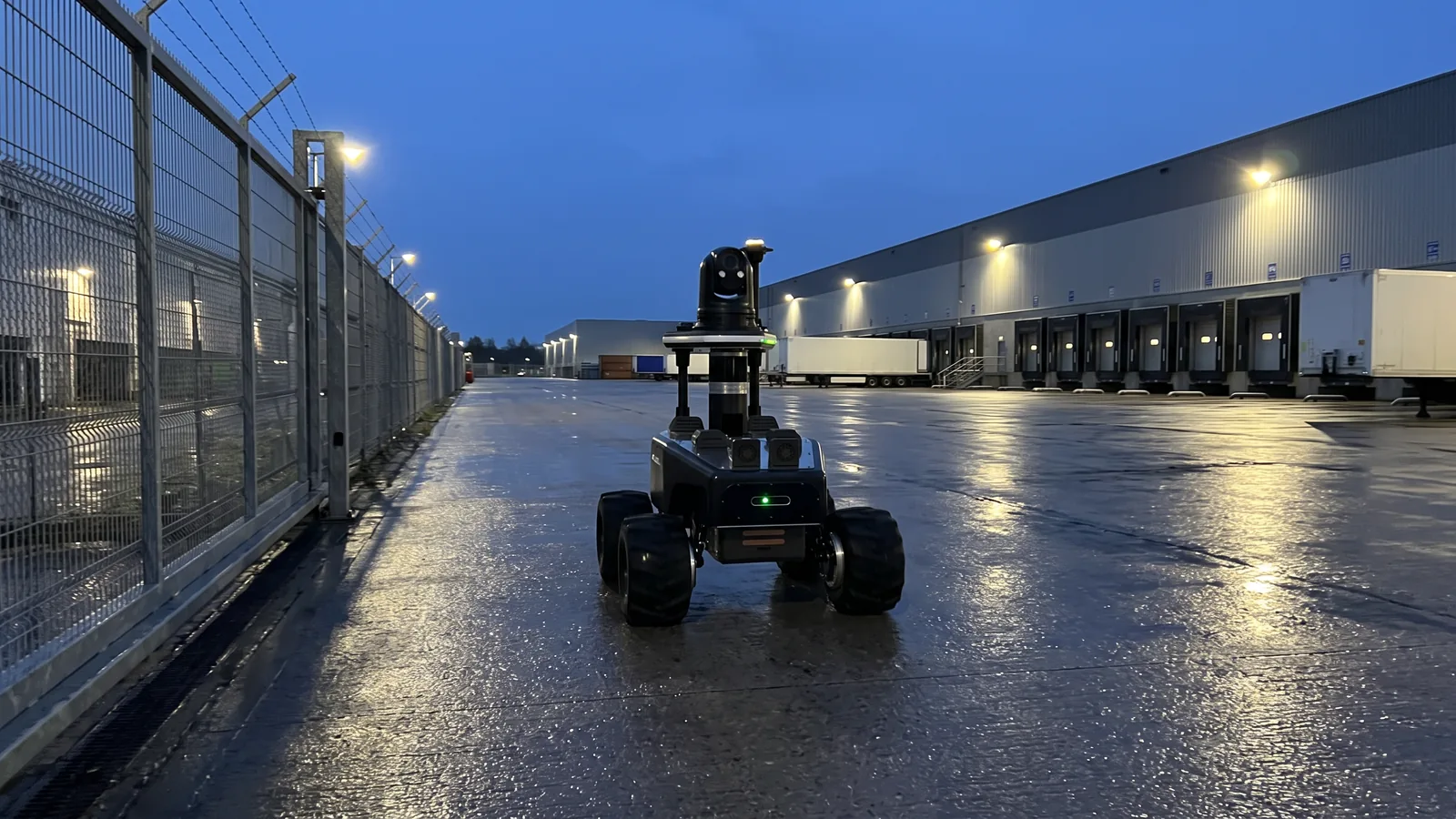 Robotic security patrolsThe robot runs scheduled rounds, films in visible and thermal light and alerts the security control room. Guards keep alarm verification and response.
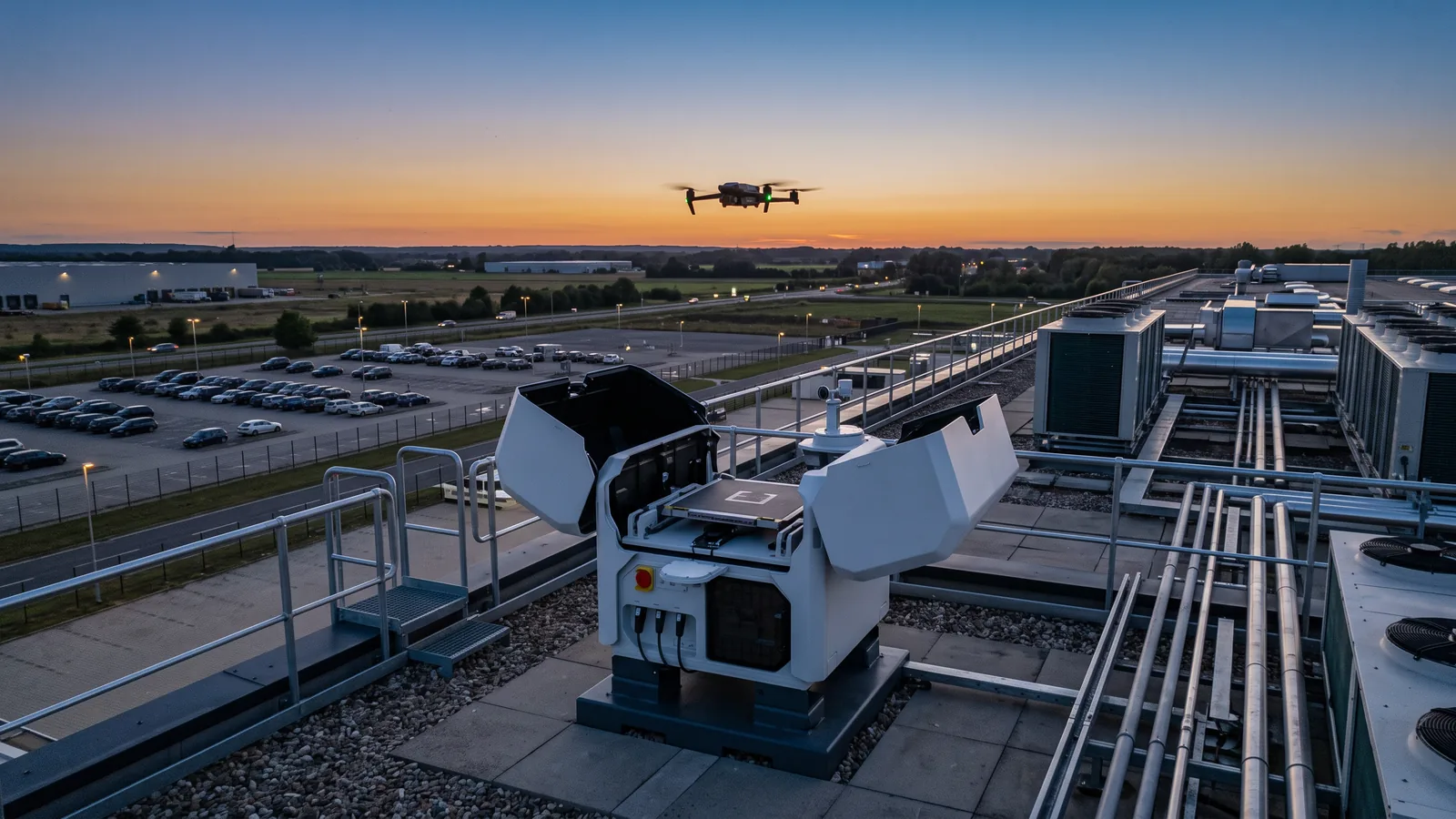 Site surveillance by automated droneThe drone lives in a dock on site, takes off on its own for a patrol or an alarm check, then returns to recharge. The operator follows the flight remotely.
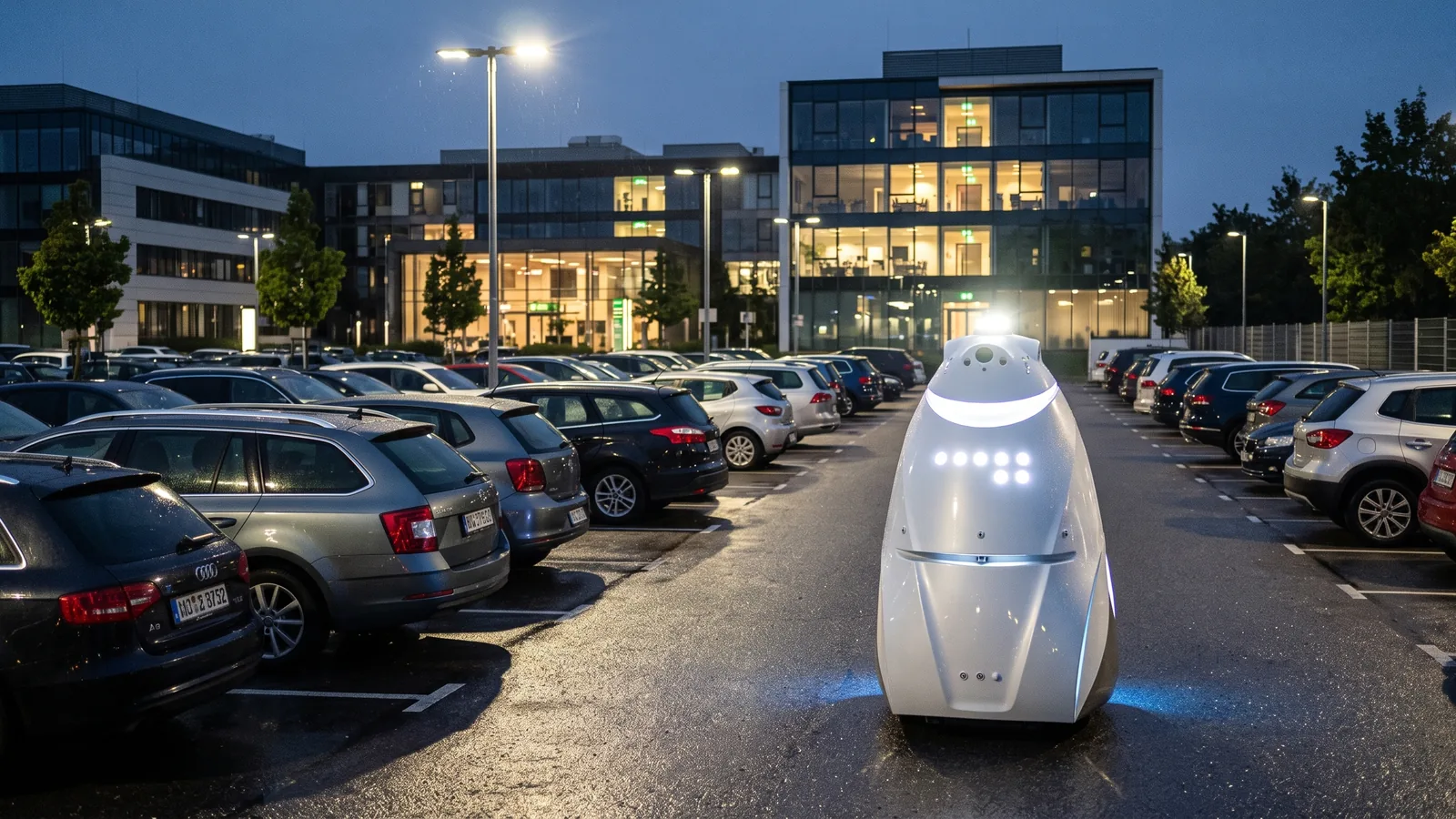 Robotic patrols of car parks and campusesThe robot drives the aisles of the car park or campus, is seen, records and talks. It sends events to the security control room, which keeps verification and response.
Robots, acquisition mode and delivery terms, in one written proposal.