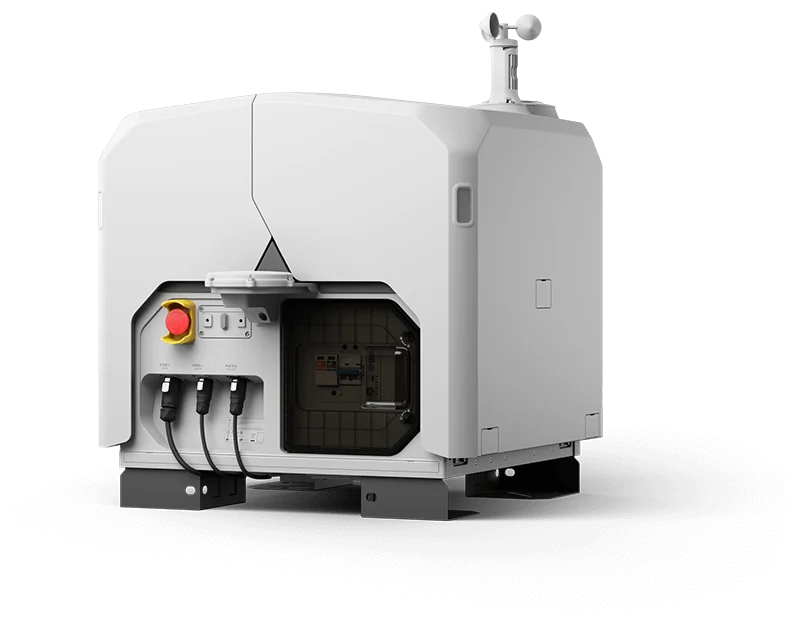
Professional drones
- Ingress protection
- IP56
- Key feature
- 54 min flight time
- Key feature
- 10 km operating radius
On order
From €16,790 ex VATor €569/month in RaaS
Updated
USE CASE · SECURITY AND SURVEILLANCE
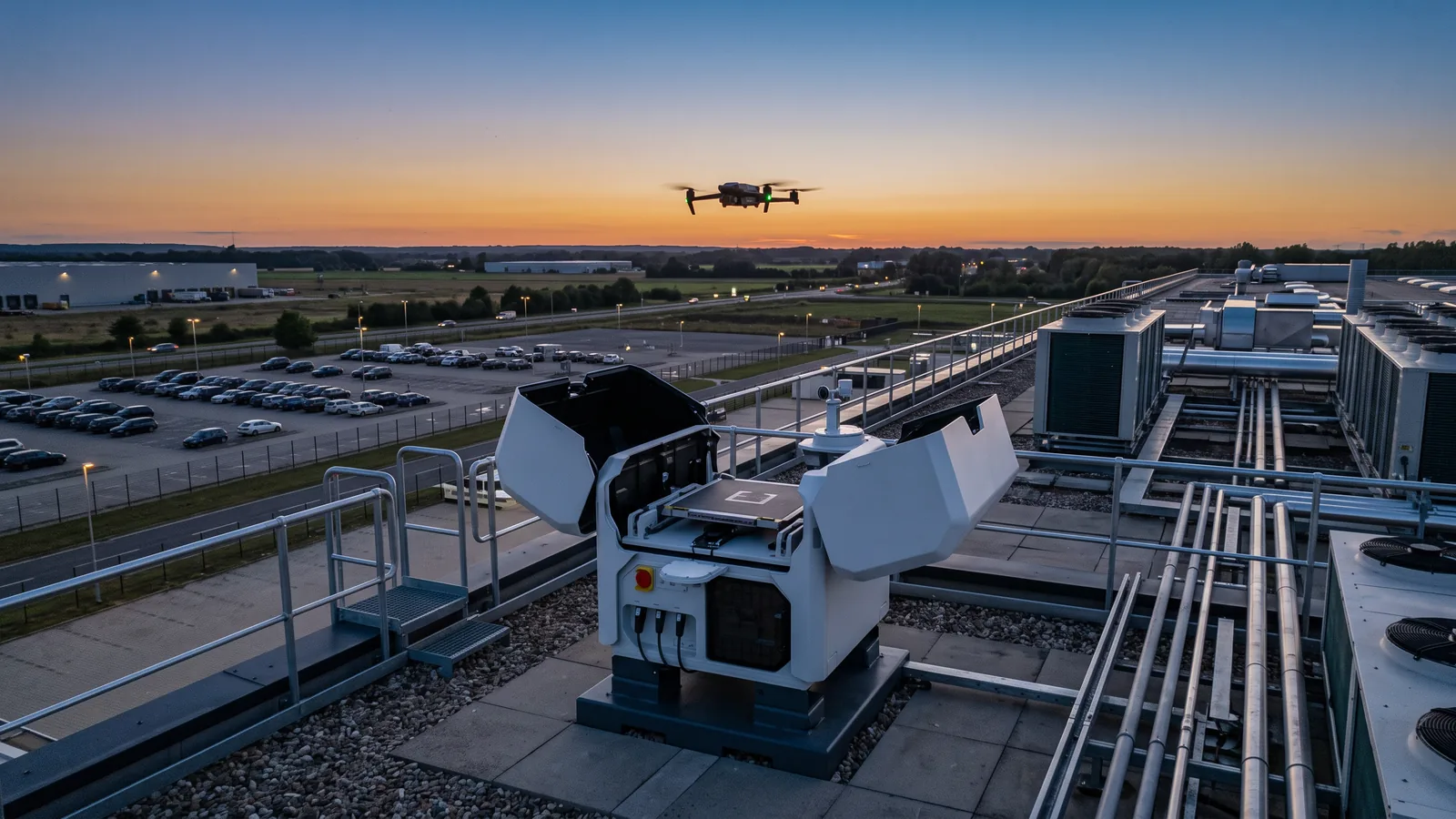
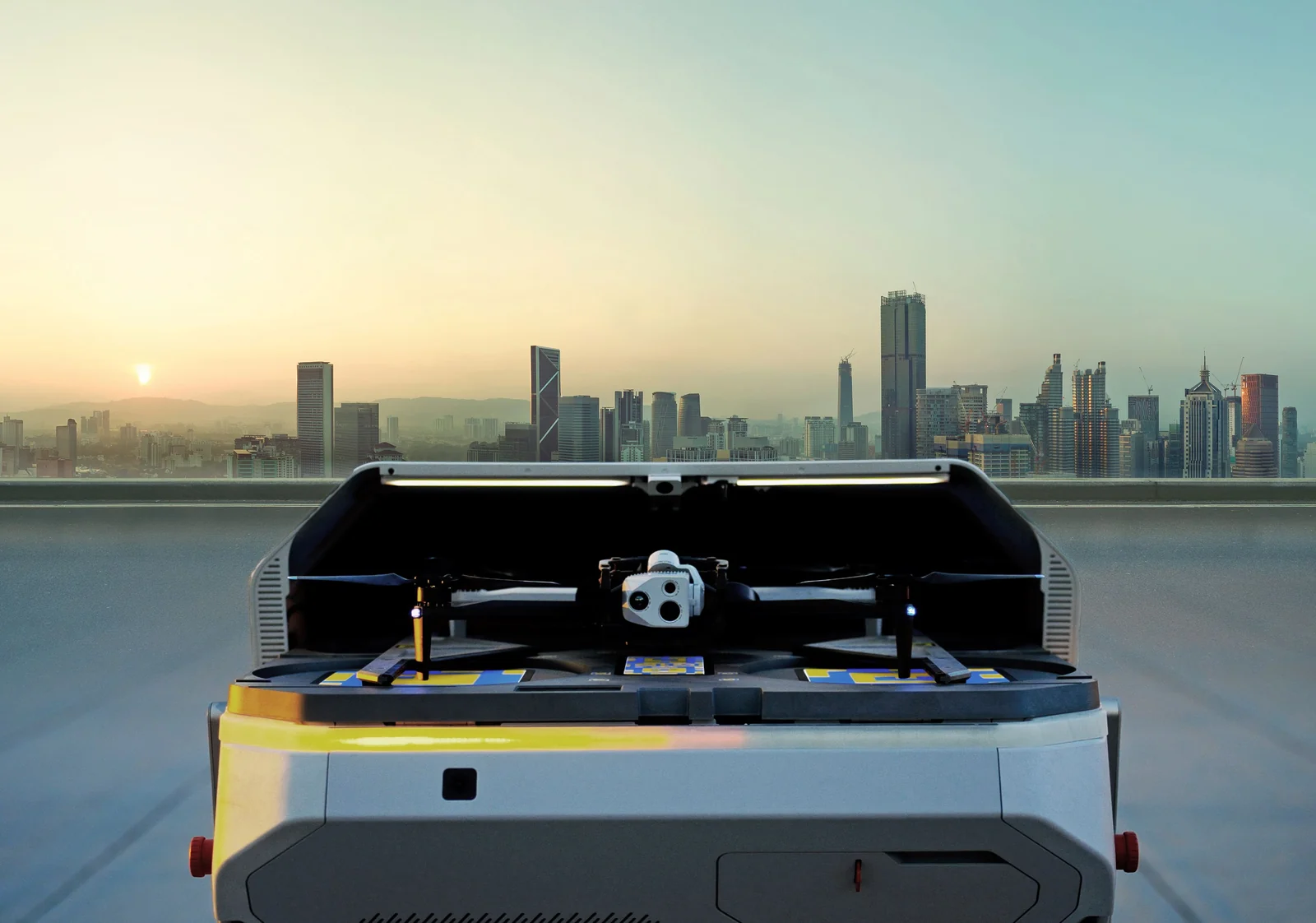
The drone lives in a dock on site, takes off on its own for a patrol or an alarm check, then returns to recharge. The operator follows the flight remotely.
Updated
A drone-in-a-box is a drone housed in a weatherproof dock installed on site, which takes off, flies, lands and recharges without anyone on hand, operated and supervised remotely.
The IP56-rated DJI Dock 3 recharges its drone from 15 to 95% in 27 minutes and covers a 10 km radius; the drone flies up to 54 minutes, according to its manufacturer.
Robot Distribution delivers and installs it, helps you prepare the flight authorisation file, trains your operators and maintains it, to buy, rent or as RaaS.
WHY
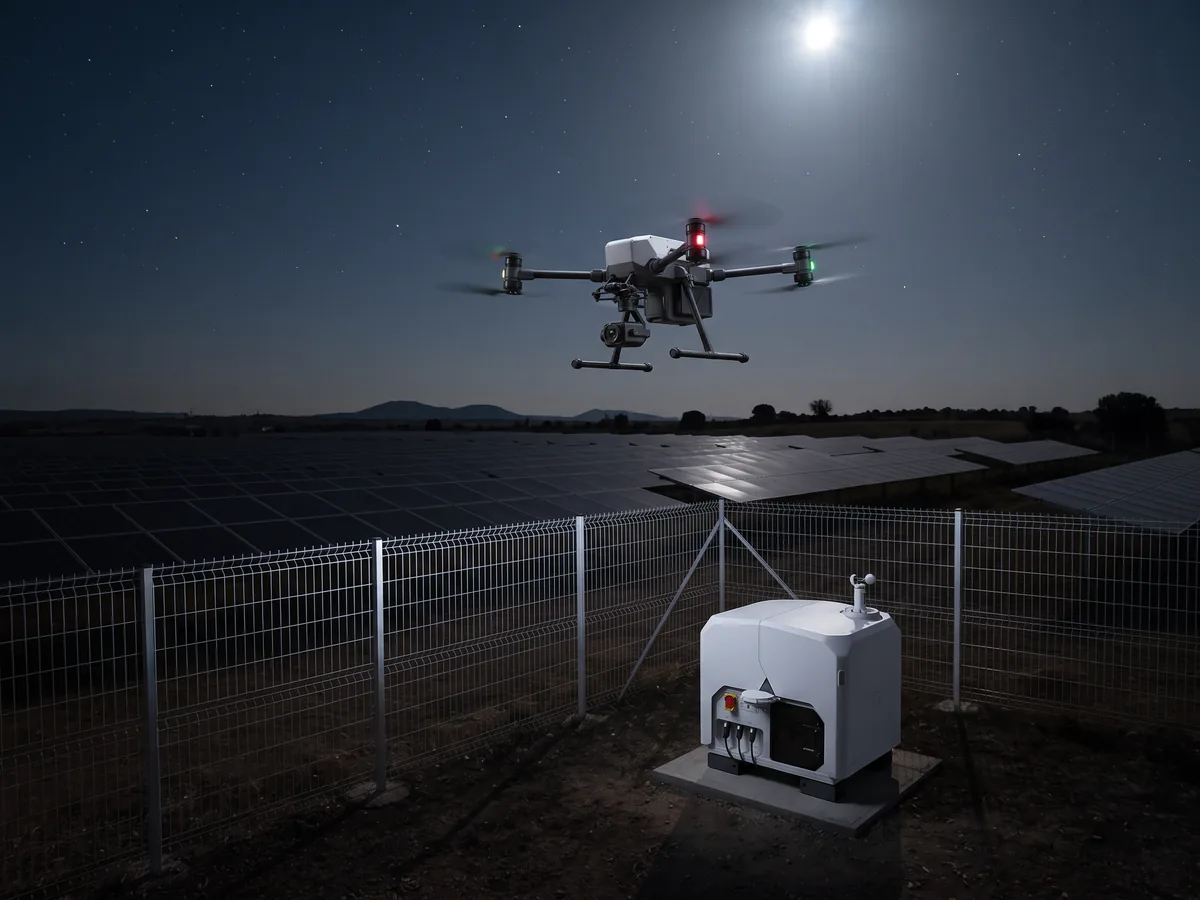
On a large industrial site, a solar farm or a long perimeter, a night alarm often means sending a guard to check. Ground rounds cover large areas and hard-to-reach zones poorly.
The docked drone takes off within seconds towards the alarm zone and sends visible and thermal video to the control room. Automated flights beyond visual line of sight fall under the 'specific' category of Regulation (EU) 2019/947: the operator needs an operational authorisation from the national aviation authority.
HOW IT RUNS
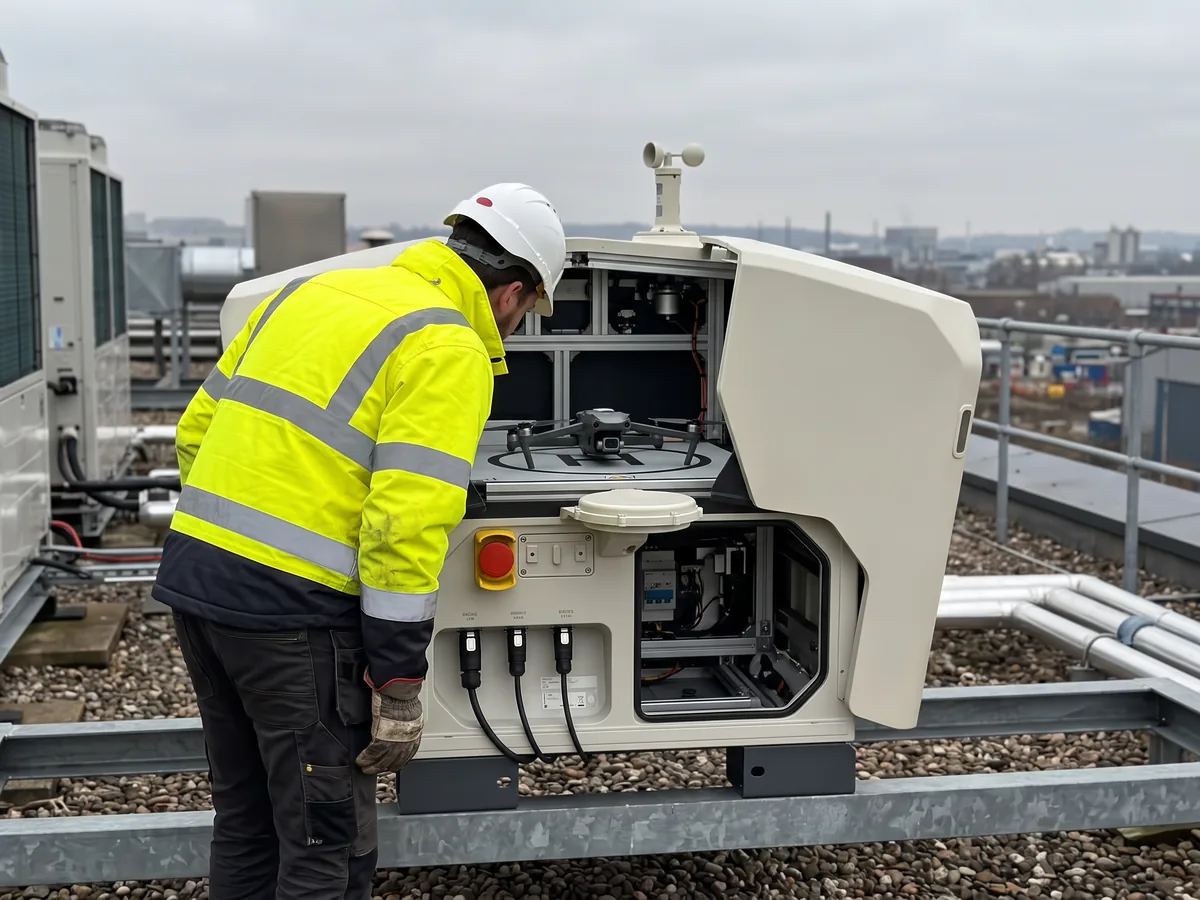
We install the dock on a roof or mast, with power and network, and prepare the flight authorisation file with the operator.
We set aerial patrols, observation points and times. The Skydio Dock for X10 gets its drone airborne in 20 seconds, according to its manufacturer.
On alarm, the drone flies to the zone and streams live video. The DJI Dock 3's Matrice 4TD carries a 640 × 512 thermal camera and a laser rangefinder, according to its manufacturer.
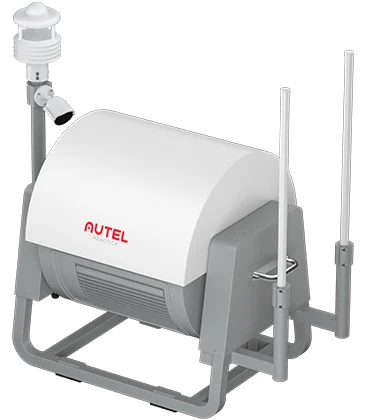
The drone returns to its dock on its own and recharges. The Autel EVO Nest charges its drone from 10 to 90% in 25 minutes, according to its manufacturer.
THE ROBOTS
Professional drones
Skydio
Professional drones
Professional drones
Professional drones
Professional drones
BEFORE INSTALLING
Restricted zones, airports, heliports and built-up areas around the site shape the authorisation and flight paths.
A clear roof or mast, power supply and maintenance access. The DJI Dock 3 weighs 55 kg without the drone, according to its manufacturer.
Site wind, rain and temperatures are compared with the dock ratings: –30 to 50 °C for the DJI Dock 3, –20 to 50 °C for the Skydio Dock for X10, according to their manufacturers.
Network or fibre link, radio coverage across the site and integration with the control room are checked.
RULES AND STANDARDS
A docked security drone flies at night, files an authorisation and films people: each point has its own French rules.
The operator registers on the AlphaTango portal, then files on the DSAC's METEOR platform: a SORA risk assessment, an emergency response plan, an operations manual, and a declaration that the operation complies with rules on privacy, data protection, insurance and security. Authorisations are granted for a set period, so renewal belongs in the service plan.
French guidance requires a request to the territorially competent prefect at least 30 days before night flights, or flights above the maximum height, on form R5-UAS-DEROG. Since 1 January 2024, drones flown in the specific category must also carry a European electronic identification device. Ask for both to be covered before night rounds start.
CNIL guidance on workplace video surveillance applies: no constant surveillance of staff or workstations, the works council (CSE) informed and consulted beforehand (Labour Code art. L2312-38), permanent signs, authorised viewers only, and retention generally not beyond one month. A data protection impact assessment is required for large-scale systematic monitoring of a publicly accessible area.
The ministry states that people present must at least be informed when a drone carries a camera, and that publishing images identifying people or vehicles needs their consent, or the owner's for private property. Remote pilots are strictly liable for damage on the ground under the Transport Code. Keep flight paths and camera angles inside the site.
General information, not legal advice.
FAQ
Yes. Automated flights beyond visual line of sight fall under the 'specific' category of Regulation (EU) 2019/947: the operator obtains an operational authorisation from the national aviation authority, based on a risk assessment. Regulation (EU) 2019/945 sets the requirements for the drones themselves.
According to the manufacturer: 7 km for the Autel EVO Nest, a 10 km radius for the DJI Dock 3, up to 12 km for the Skydio Dock for X10 in rural areas. For long corridors, the JOUAV VTOL Hangar pairs a fixed-wing drone that flies 120 minutes.
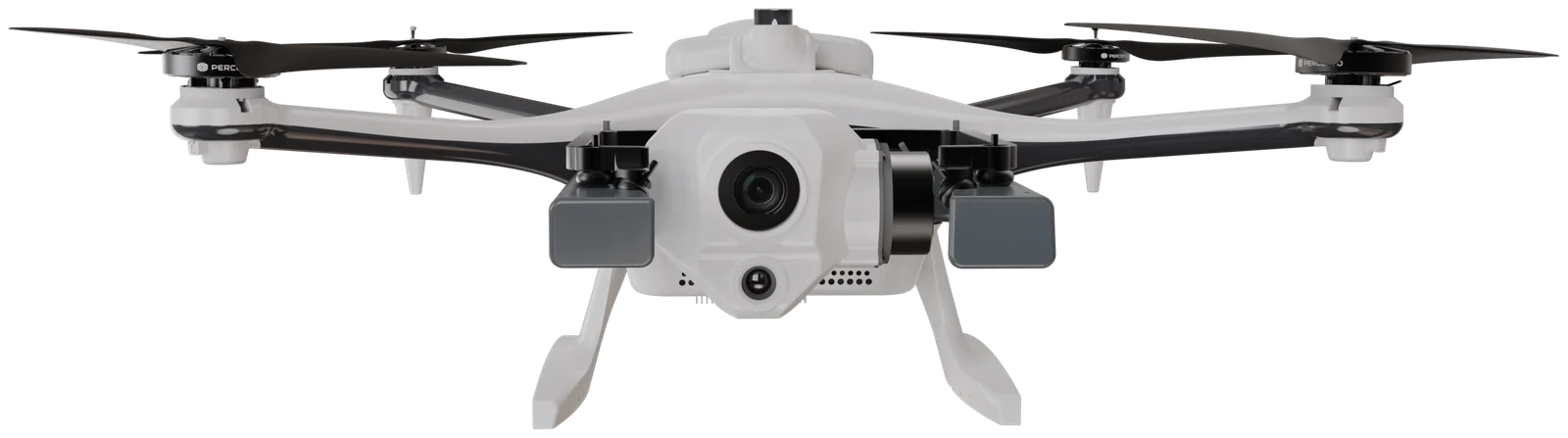
Yes, with a thermal camera: the DJI Dock 3's Matrice 4TD carries a 640 × 512 thermal sensor, and the Percepto Air Max a radiometric thermal camera, according to their manufacturers.
The DJI Dock 3 is rated IP56, the Skydio Dock for X10 and the Autel EVO Nest IP55, according to their manufacturers.
USE CASES
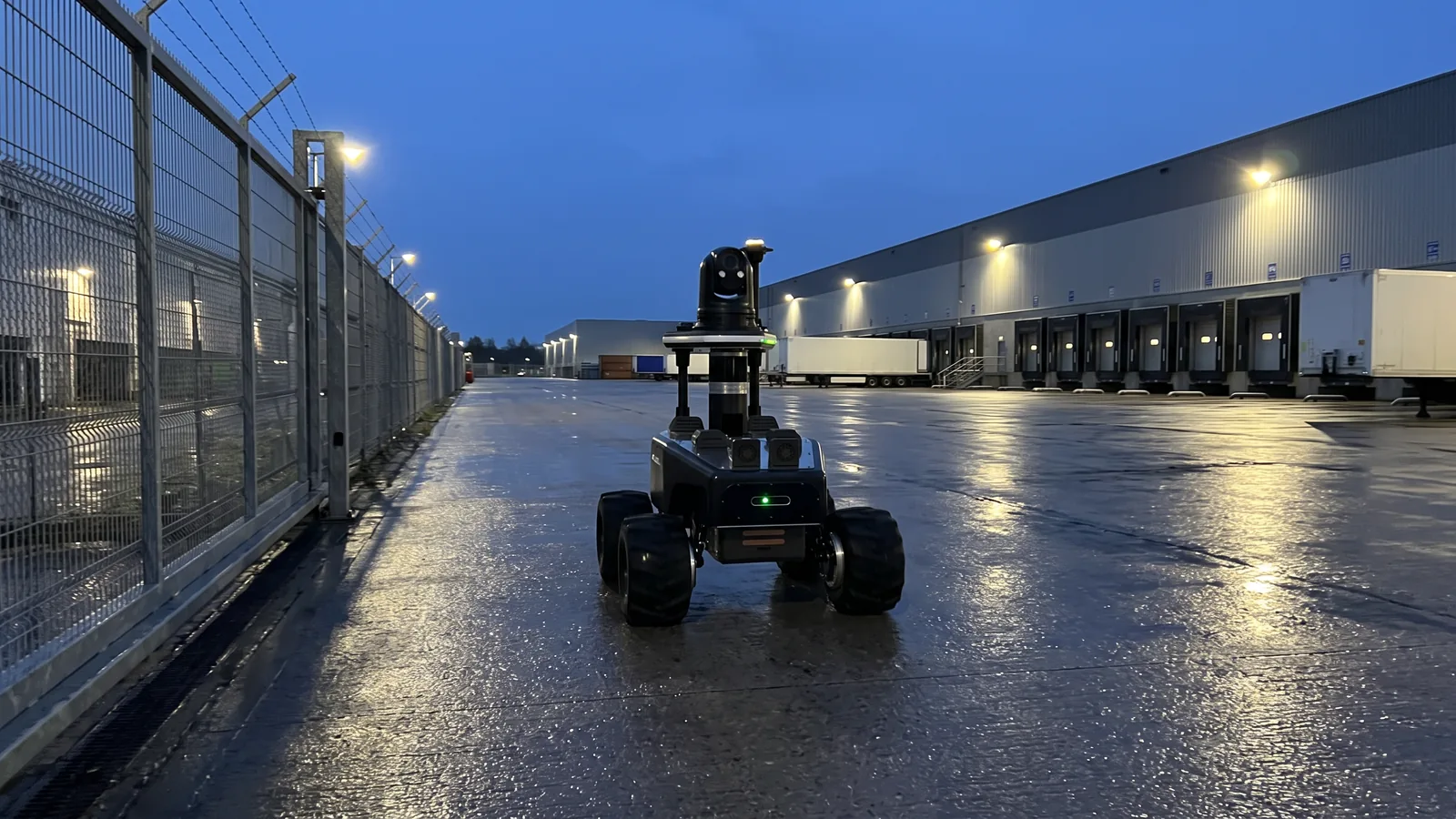 Robotic security patrolsThe robot runs scheduled rounds, films in visible and thermal light and alerts the security control room. Guards keep alarm verification and response.
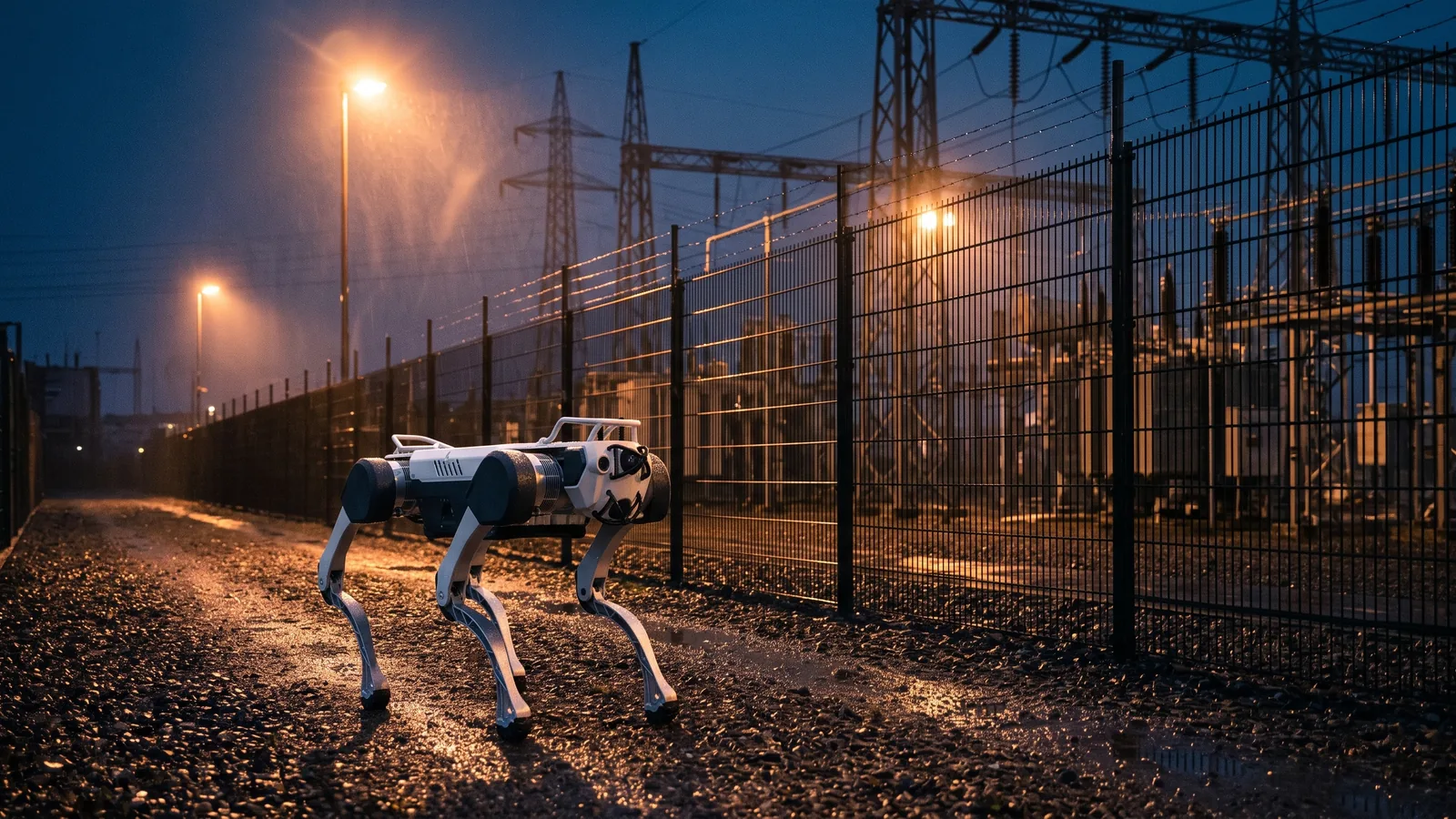 Perimeter security with quadruped robotsThe legged robot follows the fence, climbs stairs and crosses banks, gravel and steps, at night and in bad weather. Guards keep alarm verification and response.
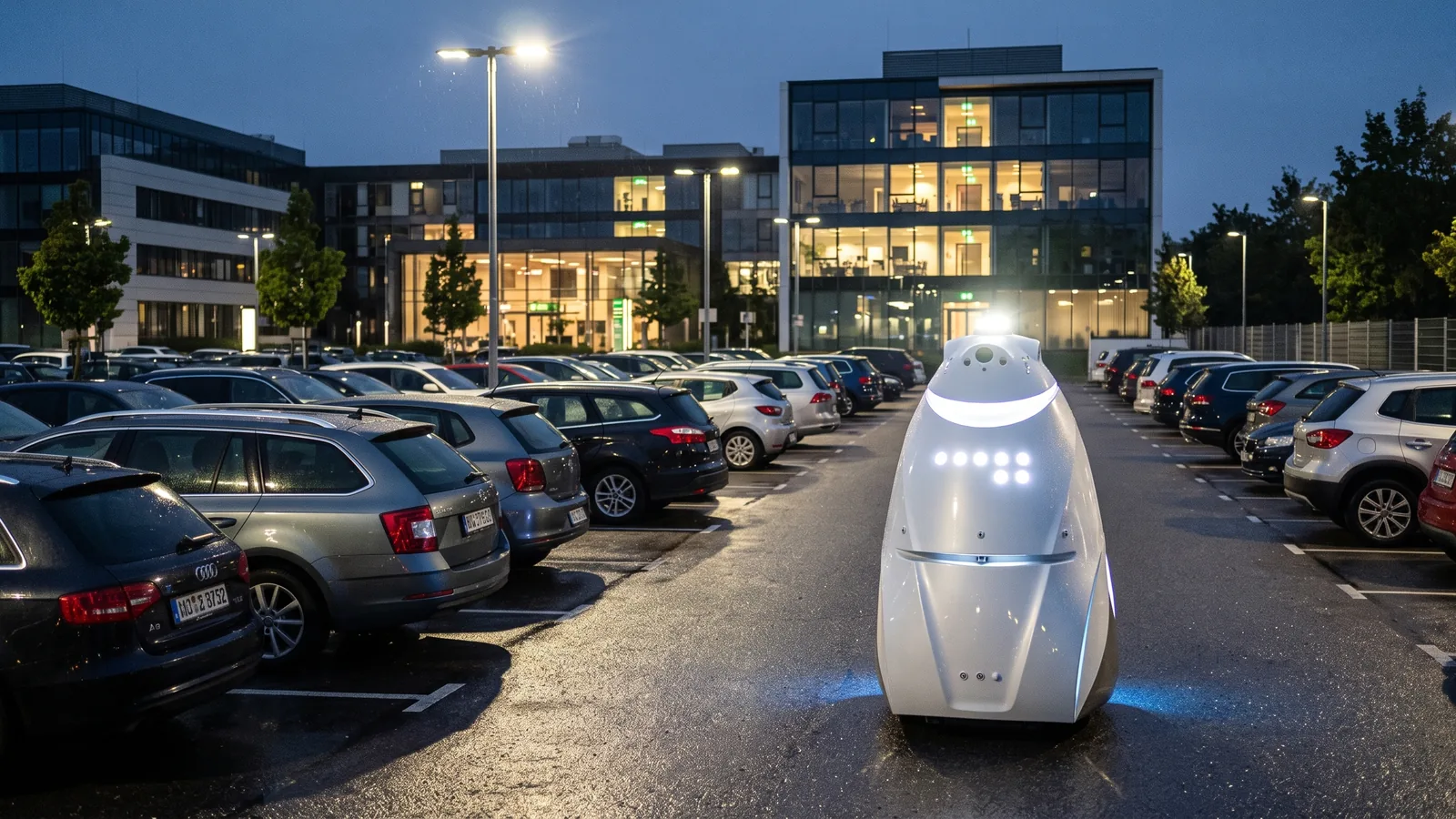 Robotic patrols of car parks and campusesThe robot drives the aisles of the car park or campus, is seen, records and talks. It sends events to the security control room, which keeps verification and response.
Robots, acquisition mode and delivery terms, in one written proposal.