MARKET
Weeding robots in field crops: what the 2026 trials mean for the 2027 season
By Robot Distribution editorial teamPublished 5 min read
IN BRIEF
In 2026 sugar beet trials by the French beet institute ITB, a weeding robot removed about two thirds of in-row weeds from the two-leaf stage, when no conventional mechanical tool can pass. Weeds remained under high pressure. A larger field-crop model ships from January 2027, so test before committing.
Why the decision is made now
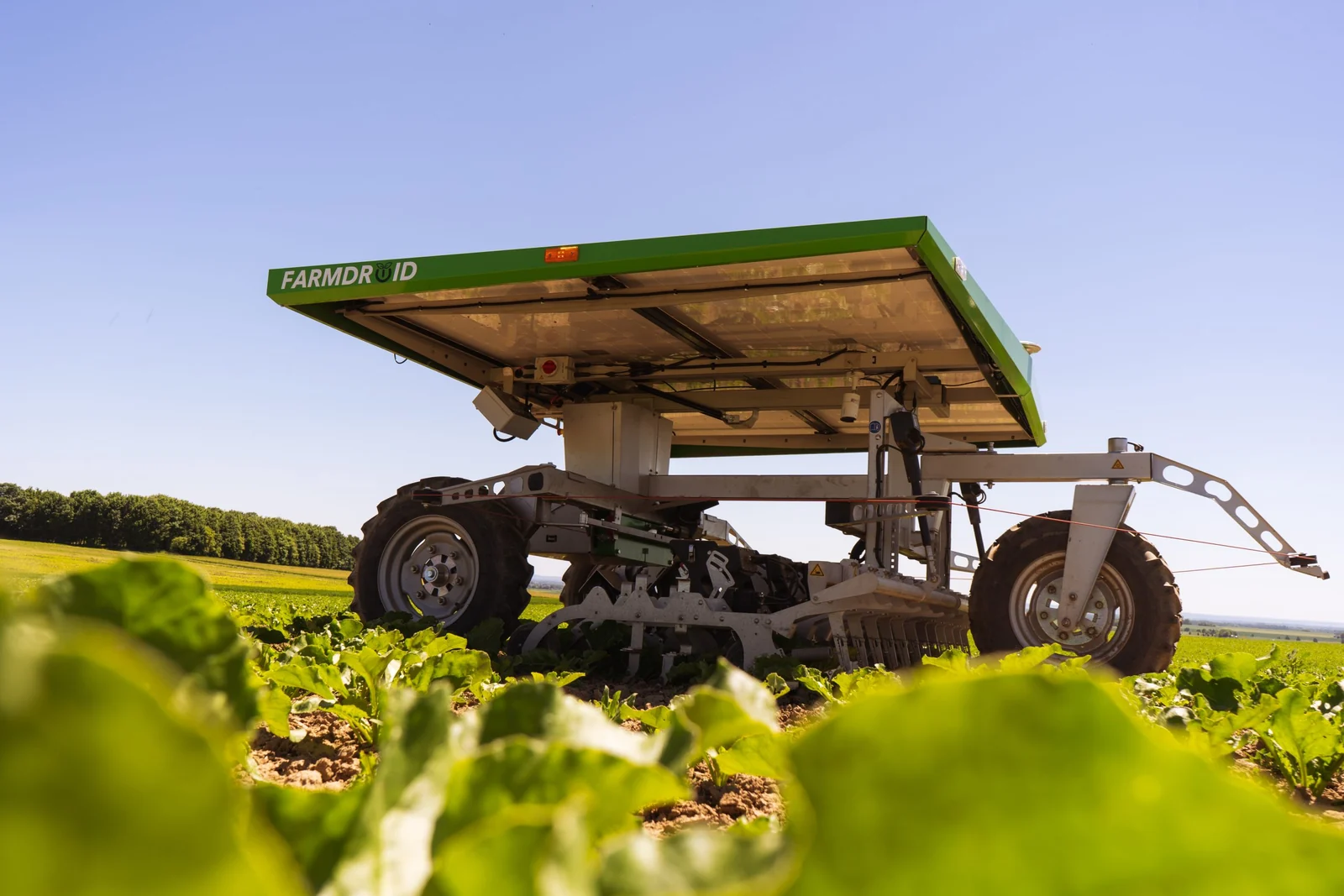
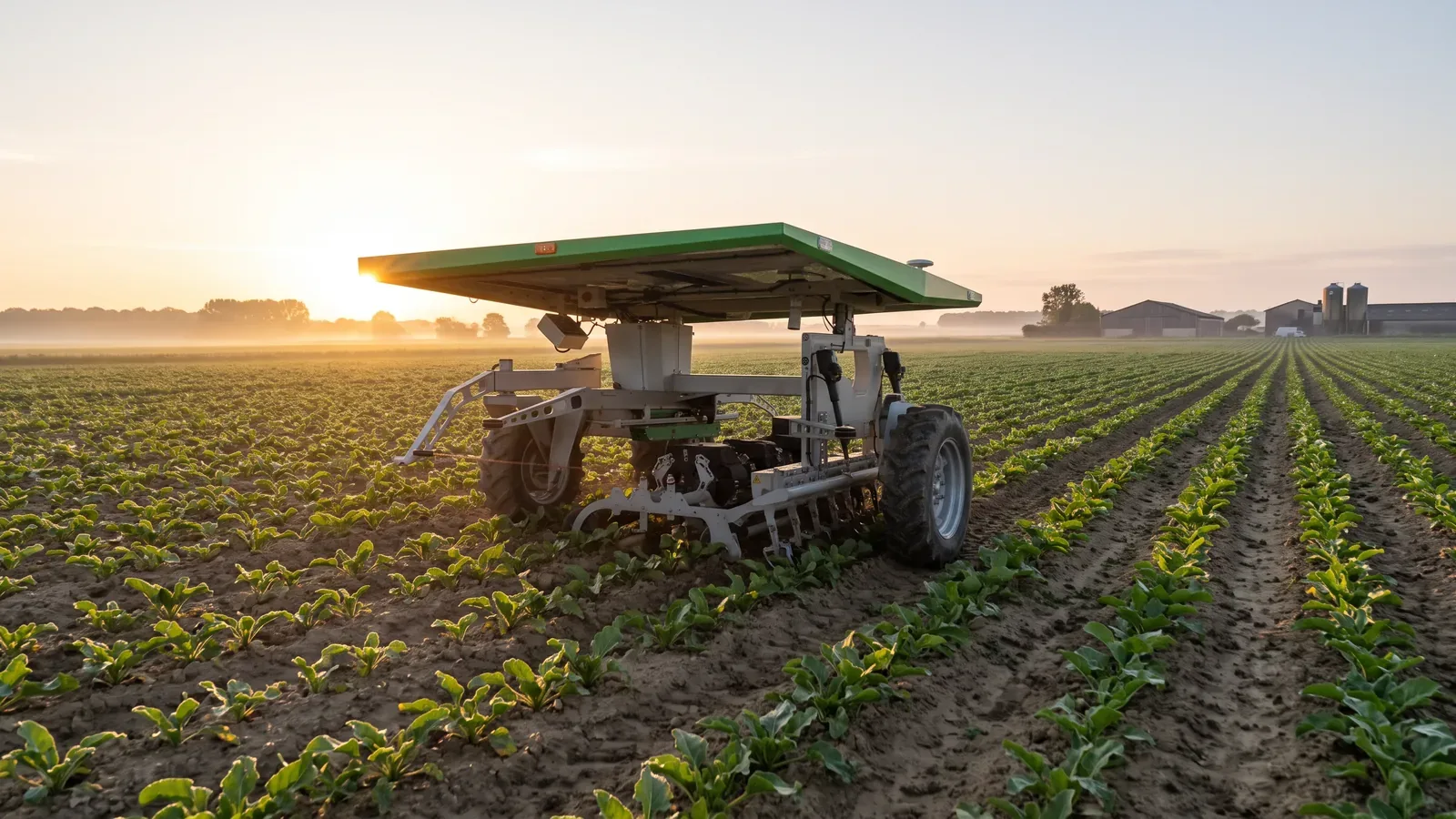
On 26 October 2026, Terre-net reported that FarmDroid, a Danish maker of solar-powered seeding and weeding robots, has opened orders for the FD60, a wider model for field crops, with deliveries from January 2027 according to its manufacturer.
Sugar beet and maize are sown in spring: in the 2026 trial described below, sowing took place around 22 March. A farm that wants a weeding robot working in its fields next season therefore has to choose, budget and plan the site set-up over the winter.
What the 2026 sugar beet trials show
The Institut technique de la betterave (ITB), the French sugar beet technical institute, published the results of its 2026 robotic weeding trials on 18 August 2026. It tested two robots that weed both within and between the rows.
| Robot | Site | Result reported by the ITB |
|---|---|---|
| FarmDroid (seed position recorded at sowing) | Organic farm, 10 ha, loam soil, Île-de-France | About two thirds of in-row weeds removed at the 2-leaf stage, a comparable result at the 4-leaf stage; about 23 weeds/m² left on the row after the 4-leaf pass under high weed pressure |
| Cyclair (camera-guided in-row tool) | Experimental site north of Reims, chalk soil | Weeds well controlled between the rows; too few weeds on the row to conclude; the in-row tool is still being developed and trials continue in 2027 |
The ITB points out that weeding at the 2-leaf stage is the real strength of the robot, because no conventional mechanical weeding tool can work at that stage. To avoid destroying beets about the size of a 2-euro coin, the robot was set to 400 m/h with wider safety margins, and passing in both directions (the direction of sowing, then the opposite) improved its efficiency.
Adoption in France is still slow
Field robots remain rare on French farms. Terre-net reported on 1 October 2026 that AgXeed, a Dutch maker of autonomous field robots, has sold 15 machines in France in four years of sales, against about forty in operation in Germany and 160 across Europe. Its sales manager for southern Europe cites a more cautious attitude towards the unknown in France.
- For that heavy robot, the maker sets a threshold of 300 hectares and grouped plots so that it runs at least 600 hours a year.
- The target profiles it cites are short of time, short of qualified labour, or want to free time spent on low-value work such as stubble cultivation.
- Robotics has been added to the exam framework of the French BTS in agricultural equipment engineering (Génie des équipements agricoles), which Terre-net sees as a sign that attitudes are changing.
Before ordering for 2027: six questions to settle
- Crop, row spacing and the stage of the first pass: a robot that weeds from the 2-leaf stage covers a window that no hoe can reach.
- Guidance principle: weeding from the seed position recorded at sowing implies that the same robot sows the crop; a camera-guided tool can work on a crop sown by a conventional drill.
- Area per day against the weather window: compare the robot's daily output with the number of days available between emergence and canopy closure.
- Weed pressure: under high pressure the ITB still counted about 23 weeds/m² on the row, so plan a complementary pass where needed.
- RTK correction signal, transport between plots and supervision: check the coverage of each field and who moves the robot.
- Commitment: a first season on rental is a way to measure the robot on your own soils before buying.
Our page on the autonomous weeding robot details the use case, the site survey and the applicable rules. To prepare a 2027 project, send us your crops, areas and plot layout through the quote request.
Weeding robots available from Robot Distribution
| Robot | Principle | Key figures |
|---|---|---|
| FarmDroid FD20 | Solar-powered, sows then weeds from the recorded position of each seed | RTK GPS, 8 mm; 2 to 12 rows over 3.5 m; about 6 ha per day |
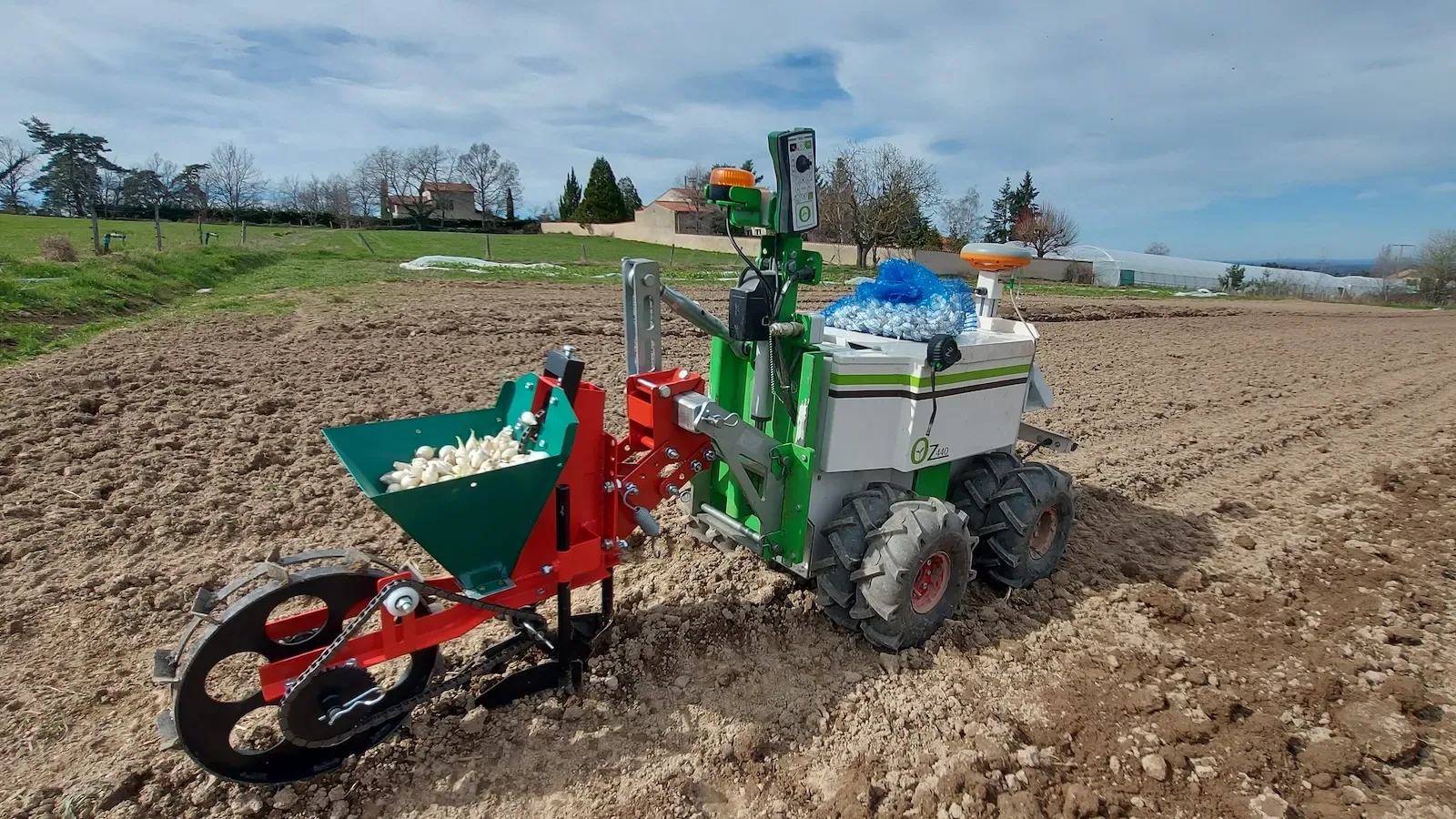
| Naïo Oz | Compact electric robot for market gardening, carries hoeing tools | RTK GNSS, 2.5 cm receiver accuracy; up to 1.8 km/h; up to 8 h of work |
| Carbon Robotics LaserWeeder G2 600 | Tractor-pulled implement, cameras detect weeds and lasers destroy them | 6.1 m working width; two 240 W lasers per module |
The FD60 is not yet in our catalogue. All the robots for field crops, vineyards and green spaces are on the agriculture and viticulture page, and laser weeding has its own use-case page.
Sources
- Essais désherbage robotique de 2026 (18 août 2026) · Institut technique de la betterave (ITB) · accessed
- Le robot FarmDroid, calibré jusqu'à 100 hectares, passe en mode grandes cultures (26 octobre 2026) · Terre-net · accessed
- Les débuts timides d'AgXeed témoignent des résistances à la robotique en France (1er octobre 2026) · Terre-net · accessed