REGULATION
Robot super-depreciation in France: what the 2027 budget bill provides for robots and cobots
By Robot Distribution editorial teamPublished 6 min read
IN BRIEF
France's 2027 budget bill would let industrial SMEs and mid-caps deduct an extra 40% to 80% of the value of new robots and cobots acquired between 1 January 2027 and 31 December 2029, on firm orders placed from 1 October 2026. MPs adopted the article on 27 October. It is not yet law.
Article 9 of the 2027 budget bill: an industry 4.0 super-depreciation
The 2027 budget bill (projet de loi de finances, no. 3210) was registered at the Assemblée nationale on 1 October 2026. Its article 9, "Soutien à l'industrie" (support for industry), creates a new article 39 decies H in the French tax code: an extra deduction from taxable profit for companies that invest in industry 4.0 equipment, according to Légifiscal and KPMG Avocats.
The deduction is calculated on the original value of the asset, excluding financial costs. It is spread on a straight-line basis over the normal useful life of the asset and comes on top of normal depreciation. It is lost for the remaining years if the asset is sold or no longer used for the eligible activity.
| Company size | Outside regional aid (AFR) zones | In regional aid (AFR) zones |
|---|---|---|
| Small enterprise (fewer than 50 employees) | 80% | 120% |
| Medium-sized enterprise (fewer than 250 employees) | 40% | 80% |
| Mid-cap (ETI) | 40% | 40% |
Company size is assessed at the close of the financial year before the one in which the asset is acquired. AFR zones are the areas where EU rules allow higher regional aid; check whether your site is in one with your accountant.
Which companies and which equipment
The scheme targets small and medium-sized enterprises in the EU sense and mid-caps (ETI) taxed under a real regime, whether subject to corporate or income tax. The equipment must be new and used for an industrial activity: one that contributes directly to the manufacture or processing of goods and in which machinery and tooling play a predominant role, in KPMG's reading of the bill.
- Robots and cobots.
- Additive manufacturing equipment.
- Design, production or maintenance software.
- Sensors collecting data on the production site.
- Data hosting and processing equipment.
- Wireless connection equipment.
- Programmable or numerically controlled production machines.
- Immersive technologies.
The goods must be acquired new between 1 January 2027 and 31 December 2029, under a firm order placed from 1 October 2026, the date the bill was presented. Goods taken under a finance lease (crédit-bail) can also qualify. The scheme must comply with the EU General Block Exemption Regulation and, for mid-caps, with the de minimis ceiling. The sources reviewed do not mention simple rental.
What MPs added
During the debate on the first part of the bill, MPs adopted twelve identical amendments from several groups that add software and equipment using artificial intelligence for the design, manufacture, processing, maintenance or optimisation of production, by 144 votes to 76, according to Légifiscal. Two other amendments add cybersecurity software and equipment that protect information systems.
The Assemblée nationale then adopted article 9 on 27 October by 160 votes to 4, with 16 abstentions. The formal vote on the whole first part of the bill is scheduled for 3 November, according to Légifiscal. The text must then go through the rest of the parliamentary process, so the list, the rates and the dates can still change until the finance law is finally adopted.
The 2019-2020 precedent
France already ran a robotics and digital super-depreciation for SMEs in 2019 and 2020, with an extra deduction of 40% of the value of eligible goods. In a study published on 8 April 2026, the Directorate General for Enterprise (DGE) found that about 2,400 companies declared it over 2019-2024, for an estimated 350 million euros of investment and a budget cost of 30 million euros.
According to the same study, the scheme increased the productive investment of industrial SMEs by 12% to 14% a year over 2019-2022. The DGE adds that its effect on labour productivity remains uncertain in the short term.
What industrial buyers can do now
- Ask your accountant whether your company is small, medium-sized or a mid-cap for the scheme, and whether your site is in an AFR zone.
- Check that the robot will be used for an industrial activity as defined in the bill.
- Date your firm orders: the bill refers to orders placed from 1 October 2026 and acquisitions from 1 January 2027.
- If you plan to rent or use a robot as a service (RaaS), ask your adviser how the scheme would apply, as the sources only mention purchase and finance leases.
- Follow the final vote: nothing is certain until the 2027 finance law is published.
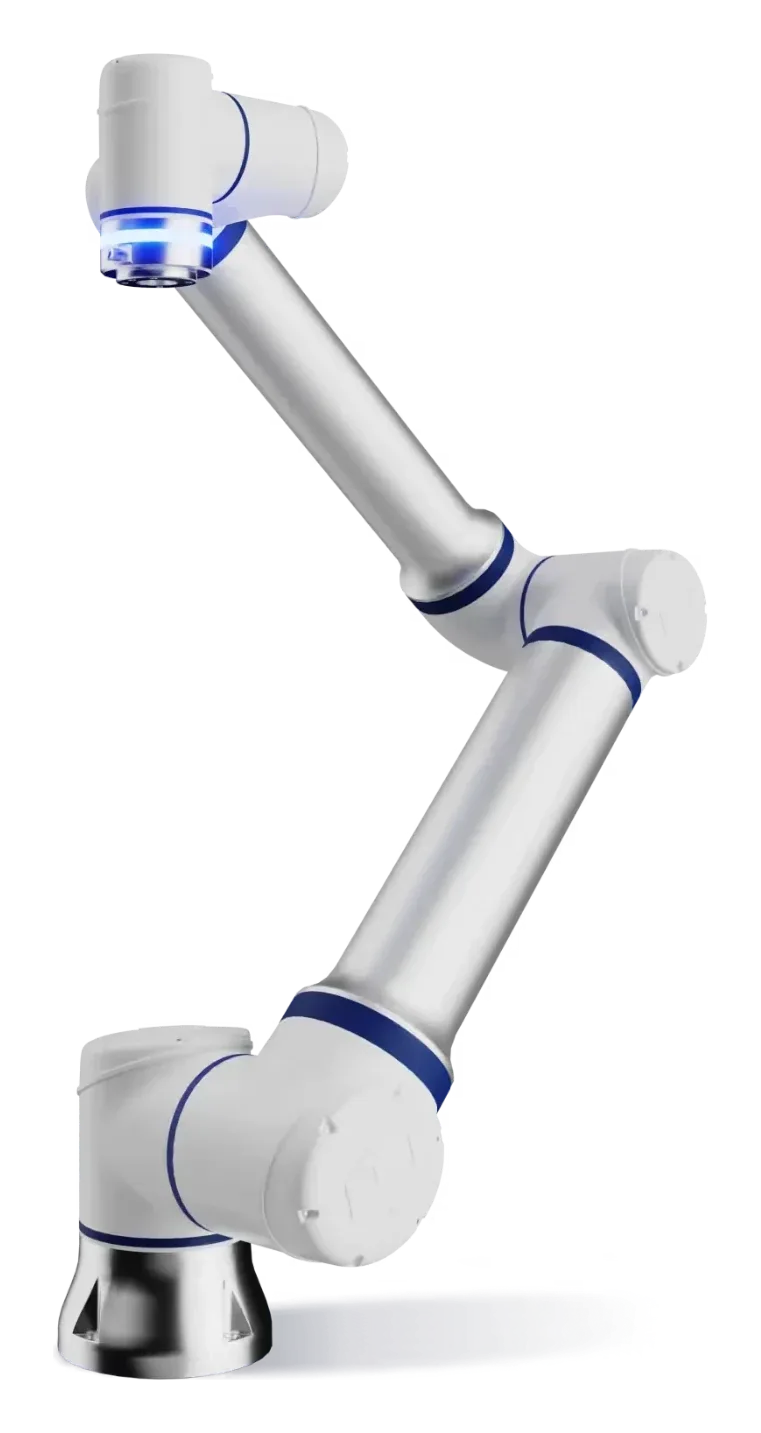
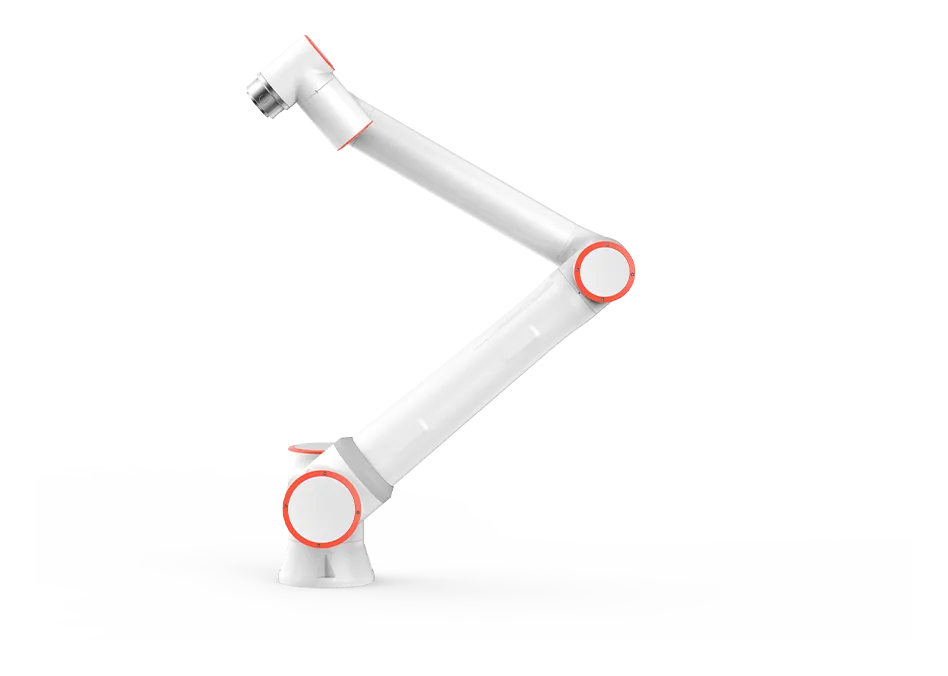
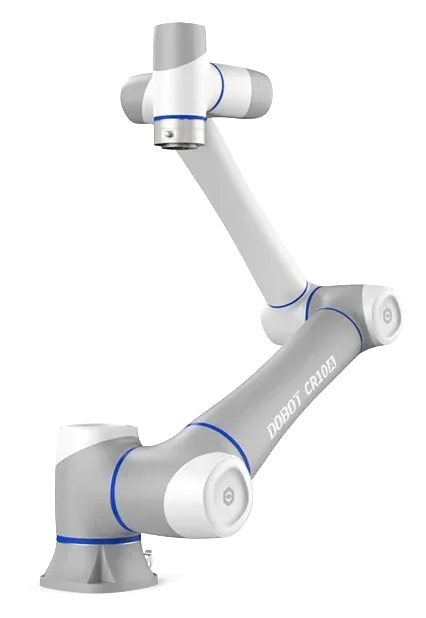
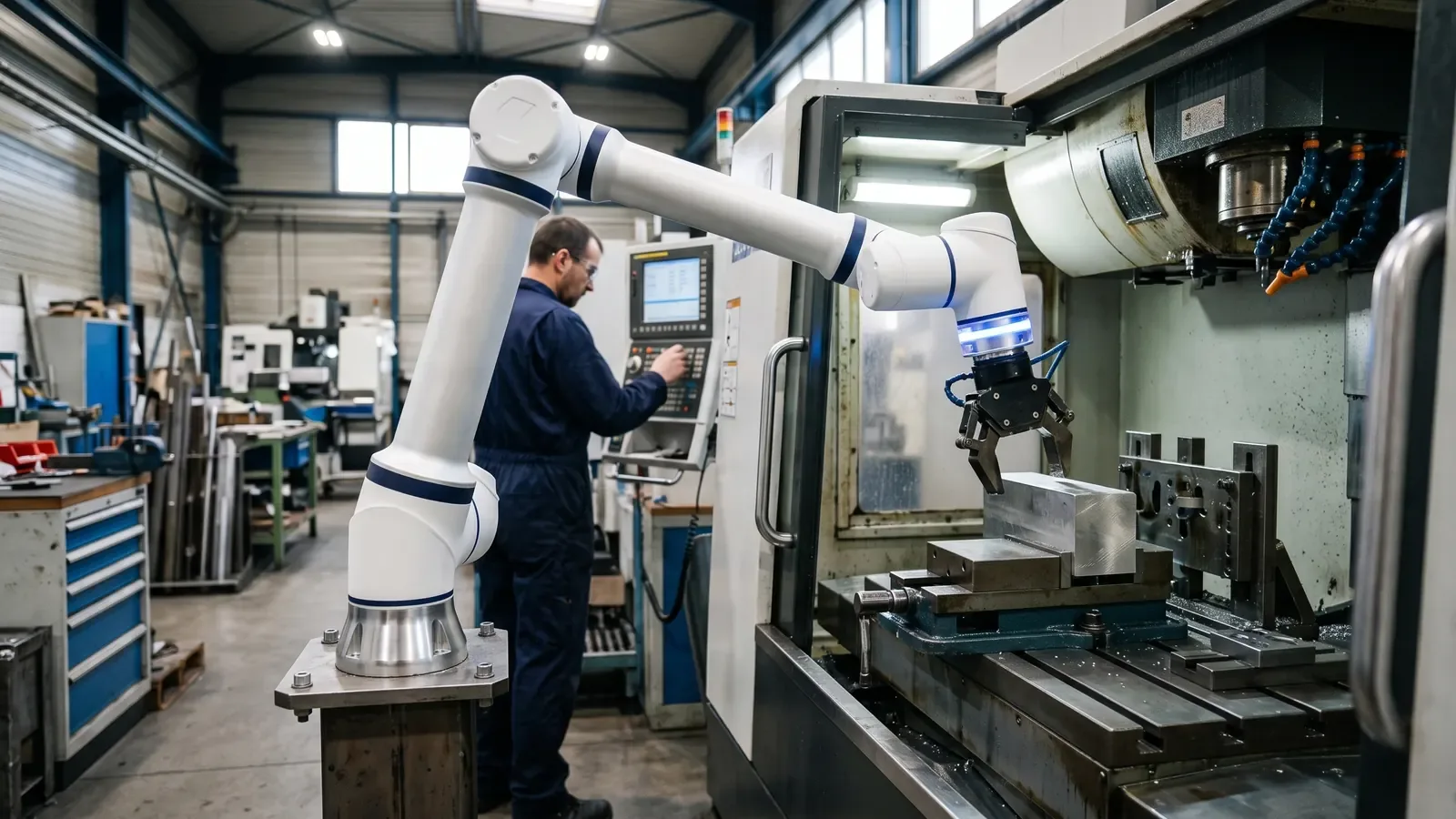
Typical cases are CNC machine tending, collaborative welding and end-of-line palletising. For machine tending, our catalogue lists the Elite Robots CS612 (12 kg payload, 1,304 mm reach), the FAIRINO FR10 (10 kg, 1,400 mm) and the DOBOT CR10A (10 kg, 1,300 mm), according to their manufacturers. See all our robots for industry.
Robot Distribution sells, rents and installs professional robots in Europe. We do not give tax advice, but our quotes state the equipment, the delivery date and the order date your accountant will need. Request a quote.
Sources
- Projet de loi de finances pour 2027, n° 3210 (enregistré le 1er octobre 2026) · Assemblée nationale · accessed
- Suramortissement « industrie 4.0 » : l'Assemblée y ajoute l'IA et la cybersécurité (29 octobre 2026) · Légifiscal · accessed
- PLF 2027 : suramortissement élargi, surtaxe d'IS supprimée, JEI assouplie (28 octobre 2026) · Légifiscal · accessed
- PLF 2027 : un suramortissement « industrie 4.0 » et un crédit d'impôt industrie verte élargi (2 octobre 2026) · Légifiscal · accessed
- Projet de loi de finances 2027 : entreprises et particuliers · KPMG Avocats · accessed
- Le suramortissement : un levier efficace pour la modernisation industrielle des PME françaises ? (Théma n° 40, 8 avril 2026) · Direction générale des Entreprises (DGE) · accessed
General information, not legal advice.