Facade and window cleaning
- Key feature
- 54 m working height
- Key feature
- 4,500 psi max pressure
- Key feature
- Up to 8 h tethered flight
On order
From €48,390 ex VATor €1,649/month in RaaS
Updated
USE CASE · HOSPITALITY
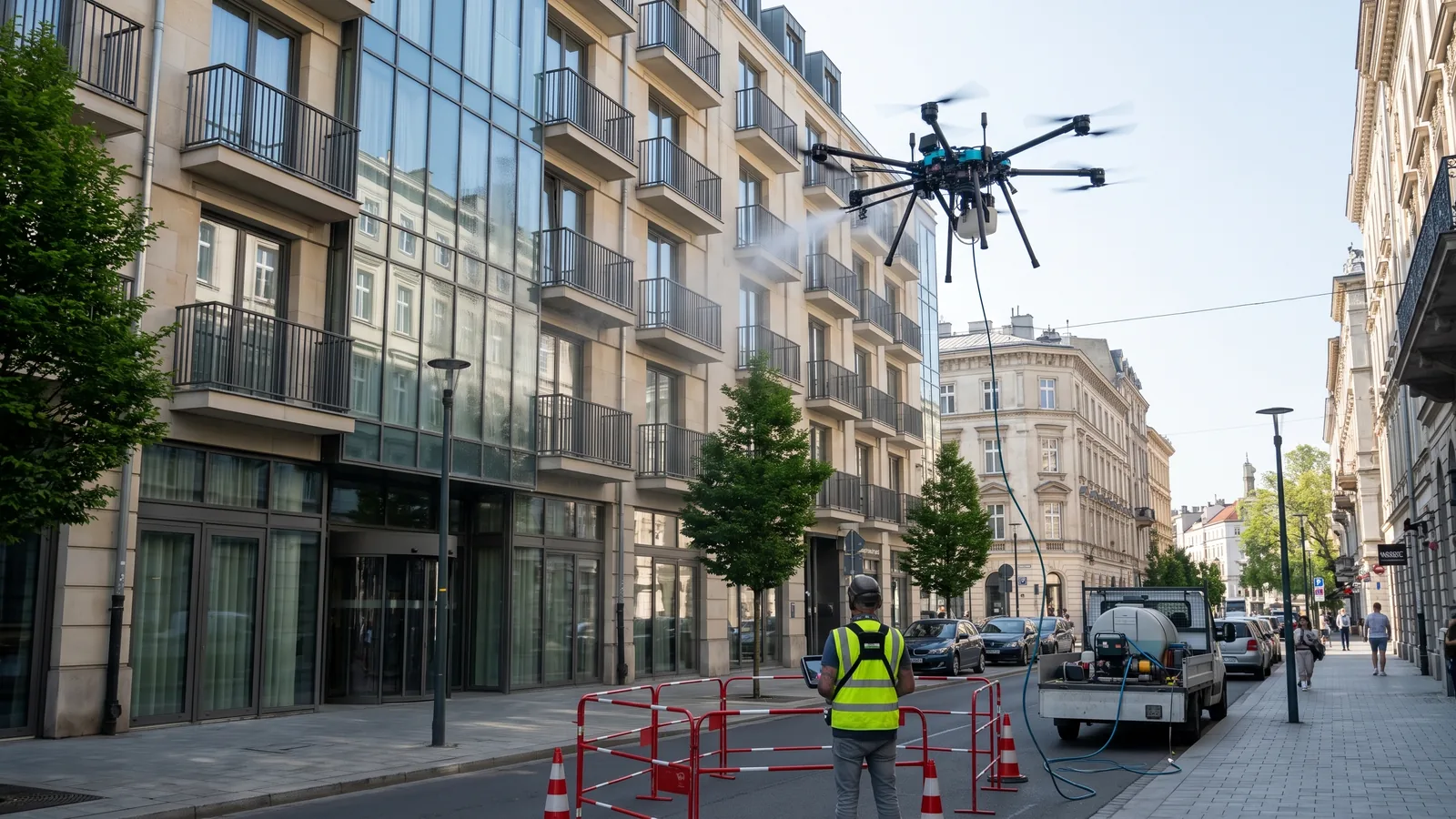
The drone washes the facade from the ground, the robot drives over the atrium glass roof or travels the tower on its cables, in short slots agreed with the hotel. Teams keep the barriers, guest information and finishing.
Updated
A hotel facade cleaning robot washes windows, facades, atriums and glass roofs without a gondola rigged for days: a drone fed with water from the ground, a cable-driven robot or a robot that drives over the glass.
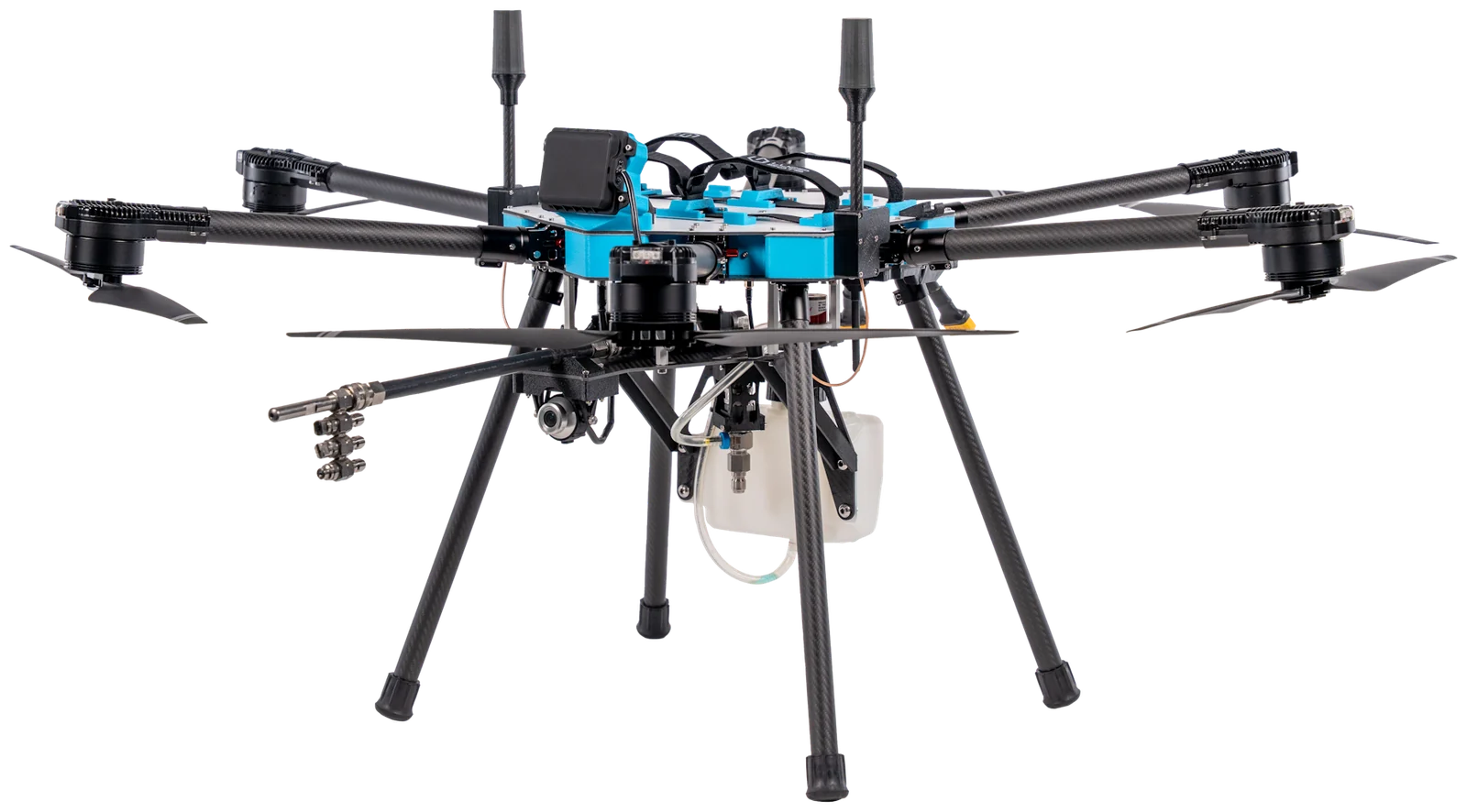
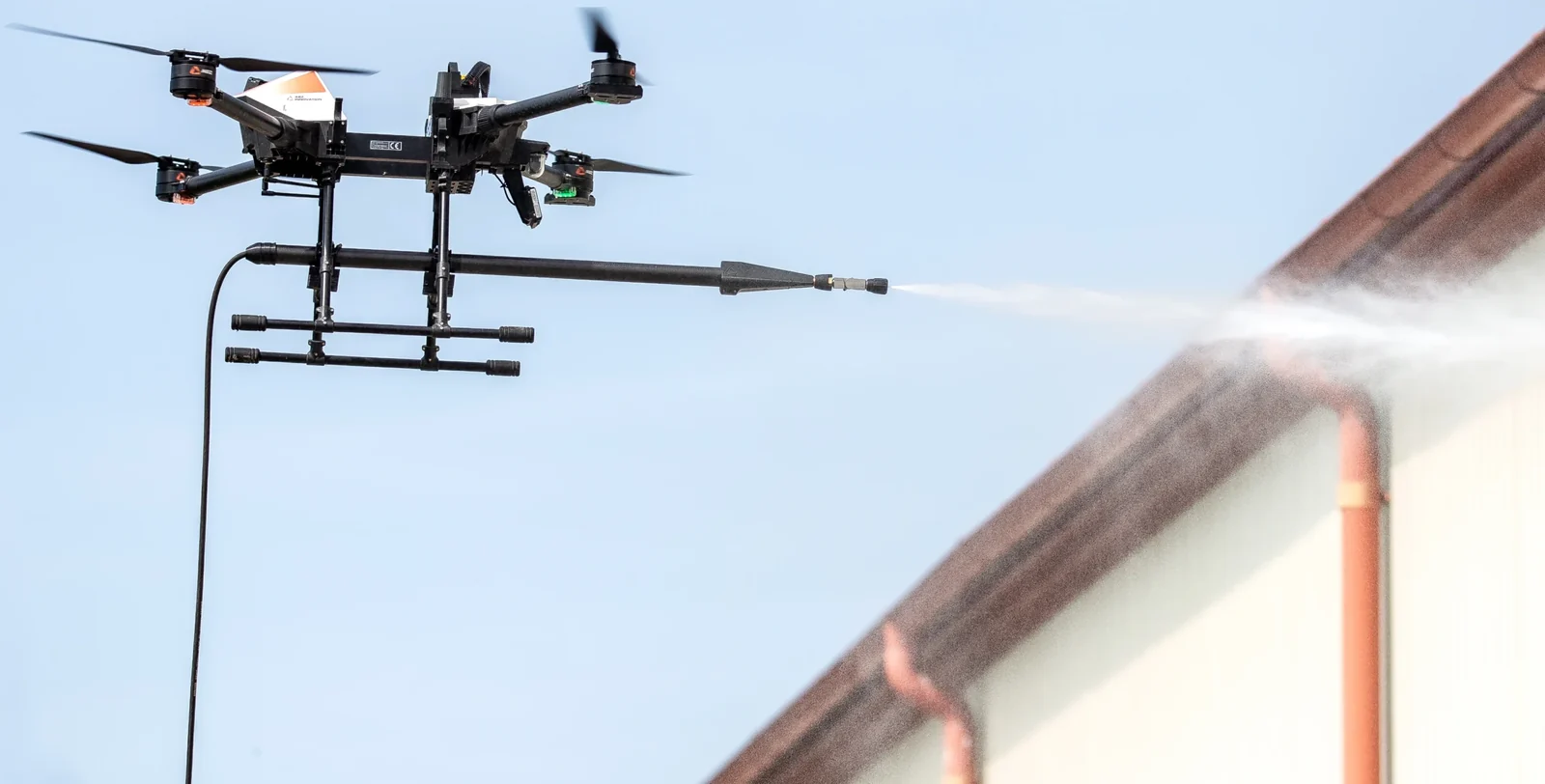
The Lucid Bots Sherpa 1.5 drone works up to 54 m high and flies for more than 8 h with its optional power tether, according to its manufacturer.
Robot Distribution delivers it, studies the facade, the hotel's schedule and the regulatory framework, trains your operators and maintains it, to buy, rent or as RaaS.
WHY
In a hotel, dirty windows show from every room and from the lobby. Gondola or rope-access cleaning ties up a facade for several days, passes in front of occupied rooms and forces terraces and entrances to be moved.
The drone or robot works in short slots, facade by facade, with nobody hanging in front of the windows. The hotel picks the hours according to occupancy, reception informs guests, and the team keeps the ground barriers and hand finishing.
HOW IT RUNS
We note height, materials, terraces and entrances, then agree with hotel management the slots for each facade: low occupancy, before guest arrivals, outside terrace service.
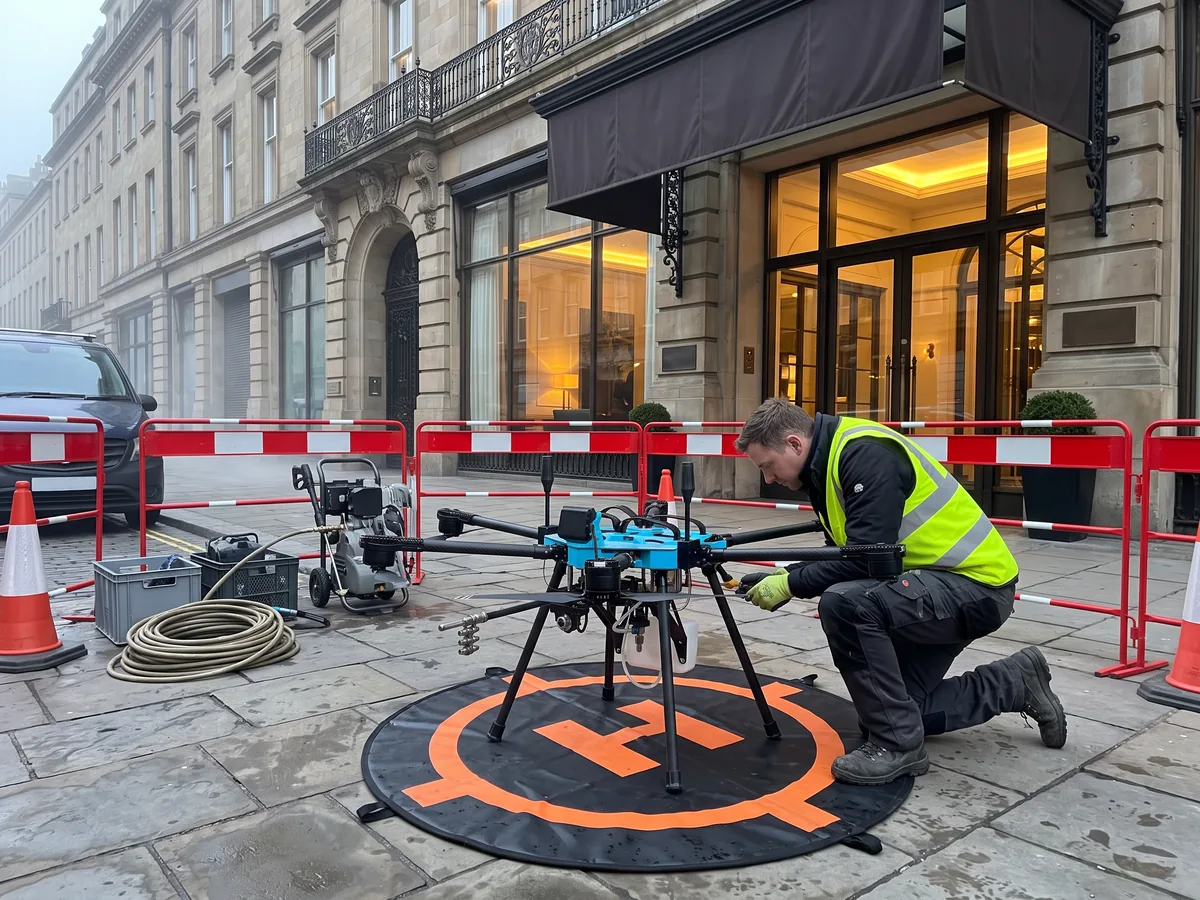
Reception informs guests in the rooms concerned and the team cordons off the work area on the ground. Curtains drawn on the room side limit disturbance during the pass.
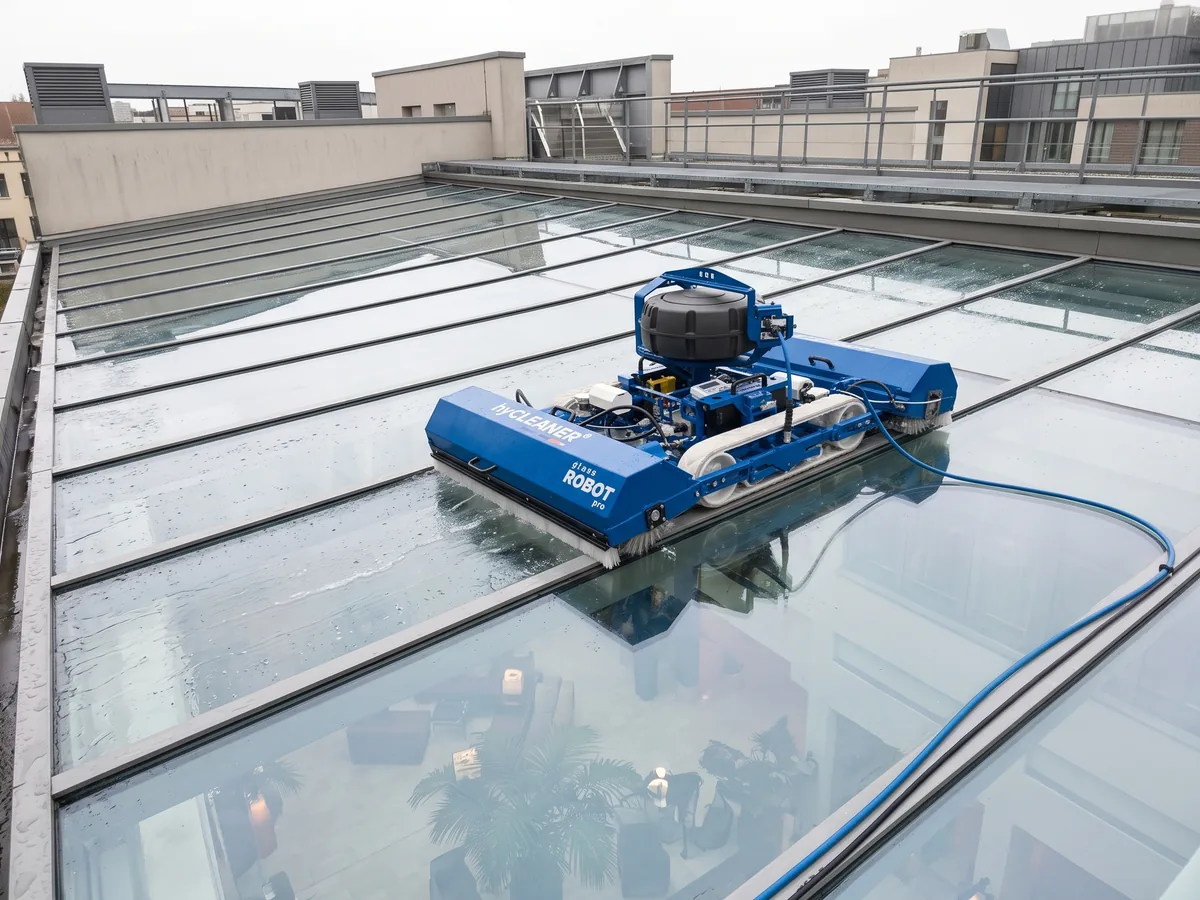
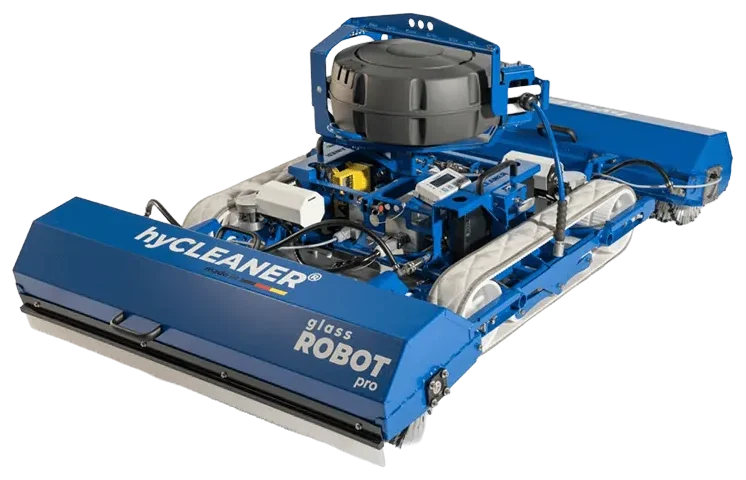
The drone washes with water fed from the ground; the ABZ C10 holds its position to ±10 cm with RTK, according to its manufacturer. On the atrium glass roof, the hyCLEANER glassROBOT pro cleans 1,100 to 2,400 m²/h with about 0.5 l of water per m² and no chemicals, according to its manufacturer.
The team checks the glazing from the rooms and the ground, finishes corners and frames by hand, then packs away and rinses the equipment before guests return.
THE ROBOTS
Facade and window cleaning
Facade and window cleaning
Facade and window cleaning
Facade and window cleaning
Joyance
Facade and window cleaning
BEFORE INSTALLING
Height guides the choice: up to 60 m for the ABZ C10 and Joyance JTC10, up to 200 m as standard for the cable-driven KITE Robot, according to their manufacturers.
Slope, load-bearing capacity and access to the glass roof are checked: the hyCLEANER glassROBOT pro weighs about 70 kg, works on wet glass up to 25° and stops on its edge sensors, according to its manufacturer.
Water point, drainage and the type of glazing and frames are noted to set the pressure; the KITE Robot cleans with reverse-osmosis water and no chemicals, according to its manufacturer.
The drone flies in the specific category of European Regulations 2019/947 and 2019/945; wind, surroundings, public roads and local permits are also checked. The ABZ C10 handles winds of 10 m/s, according to its manufacturer.
FAQ
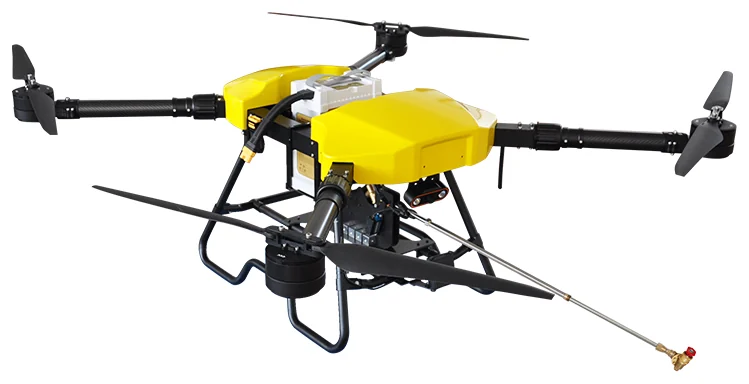
Yes, by working in short slots, facade by facade: the drone washes from the ground, with no gondola or rope access in front of the windows. The Joyance JTC10 cleans about 500 m² per flight, according to its manufacturer, which helps split the schedule.
According to the manufacturers: 54 m for the Lucid Bots Sherpa 1.5, 60 m for the ABZ C10 and Joyance JTC10, and up to 200 m as standard for the KITE Robot, which moves on four cables anchored at the corners of the facade, with no gondola.
With a robot that drives over the glass: the hyCLEANER glassROBOT pro works on wet surfaces up to a 25° slope, cleans 1,100 to 2,400 m²/h and runs up to 3 h per charge, according to its manufacturer. It is remote-controlled or runs in AutoDrive mode.
The KITE Robot and hyCLEANER glassROBOT pro clean without chemicals, the former with reverse-osmosis water, according to their manufacturers. Drones are fed from the ground: the ABZ C10 works at up to 200 bar through a 30 or 60 m hose, according to its manufacturer.
Yes: the flight falls under the specific category of European Regulations 2019/947 and 2019/945, with a declaration or authorisation depending on the scenario and surroundings. The ABZ C10 carries the EASA C5 class marking, according to its manufacturer; Robot Distribution helps you prepare the file.
USE CASES
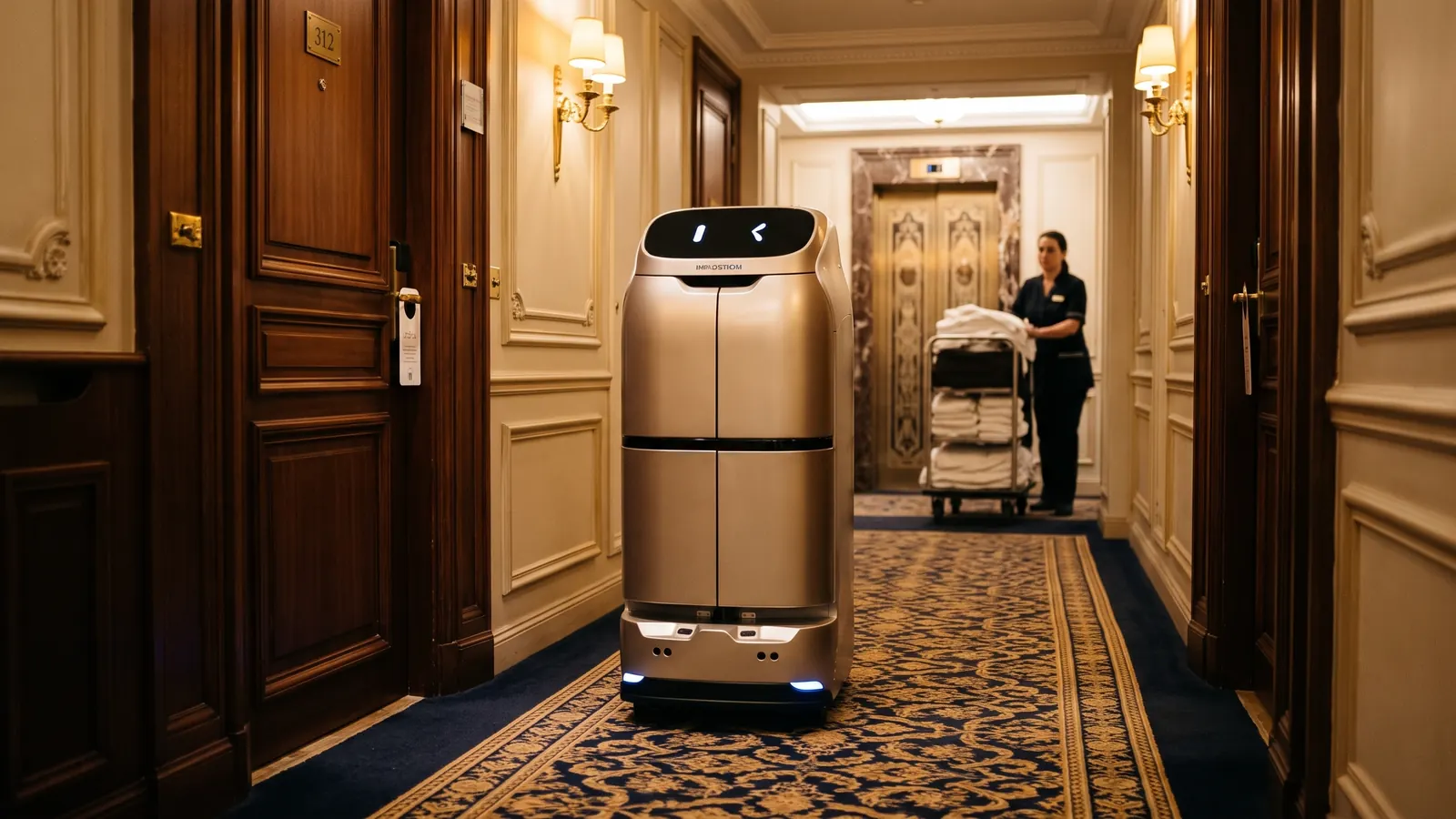 Room deliveryA guest asks for towels, a toothbrush or a room service tray: the robot takes the order to the room door, lift included. The receptionist never leaves the desk.
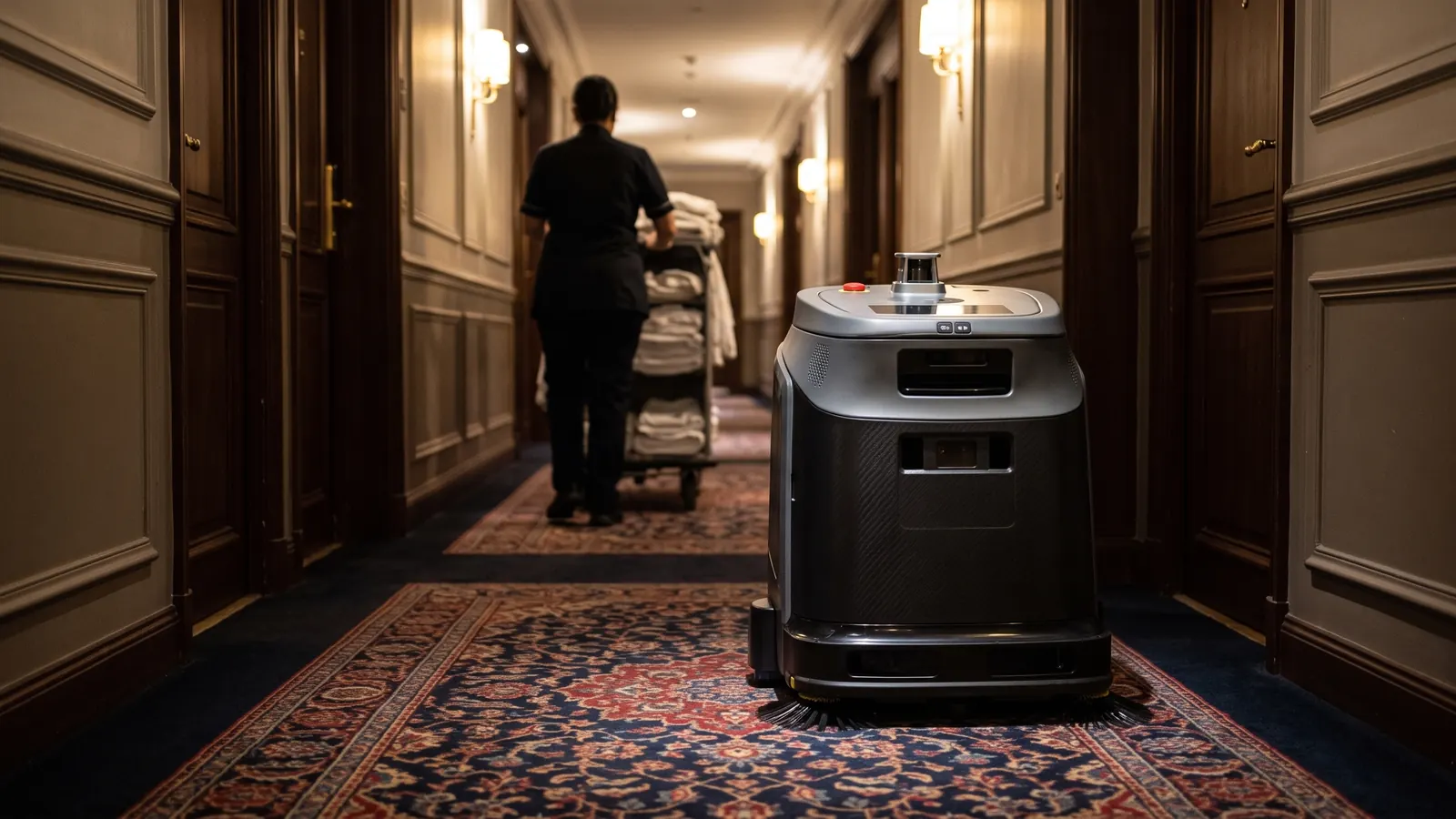 Night cleaning of offices and hotelsThe robot takes the large, repetitive areas, corridor carpets, the lobby, office floors, while the cleaning team handles what needs a hand: washrooms, guest rooms, finishing.
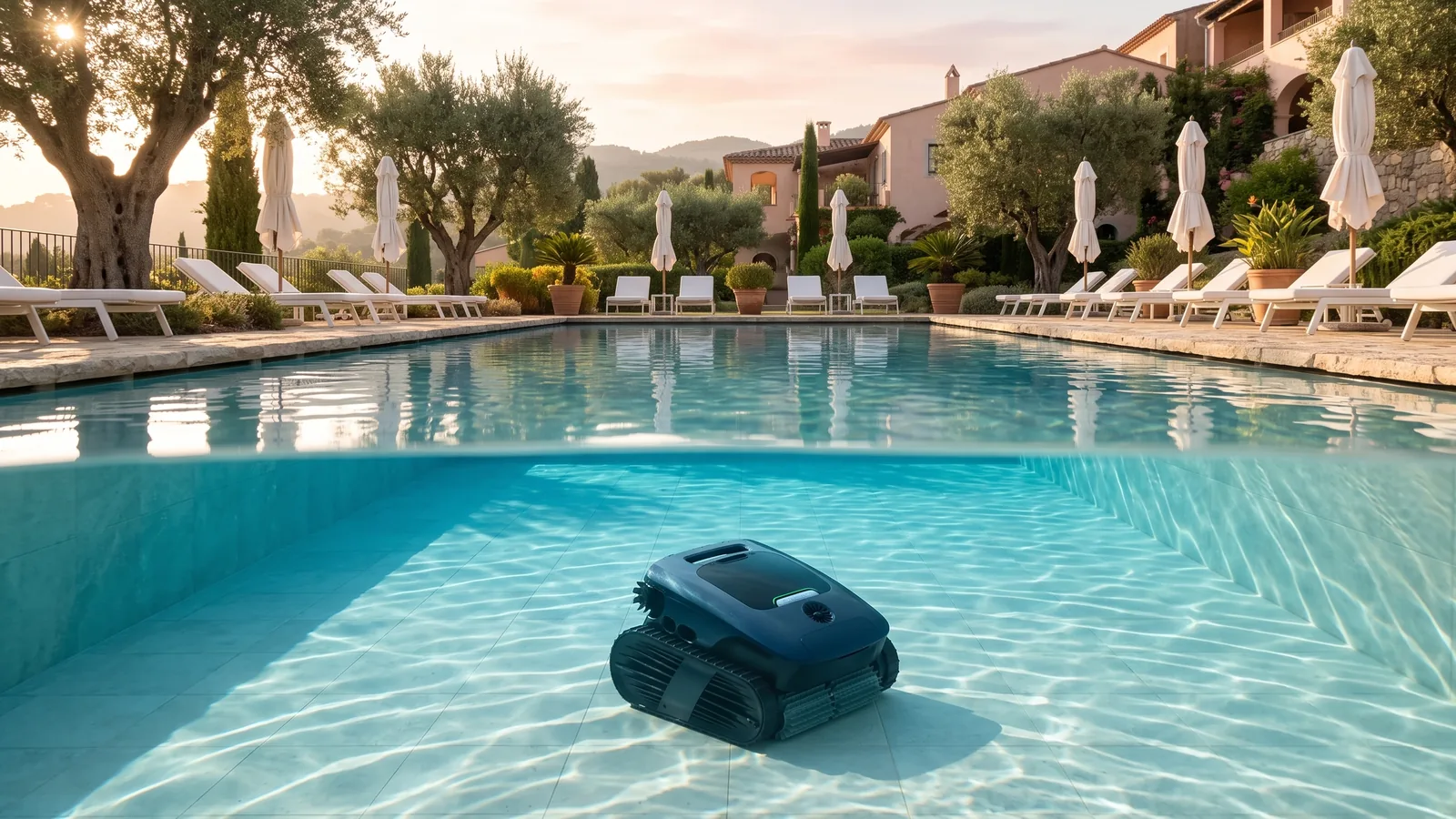 Robotic cleaning of hotel poolsThe robot cleans the pool overnight or early in the morning, with no cable. Staff keep water treatment, testing and care of the pool deck.
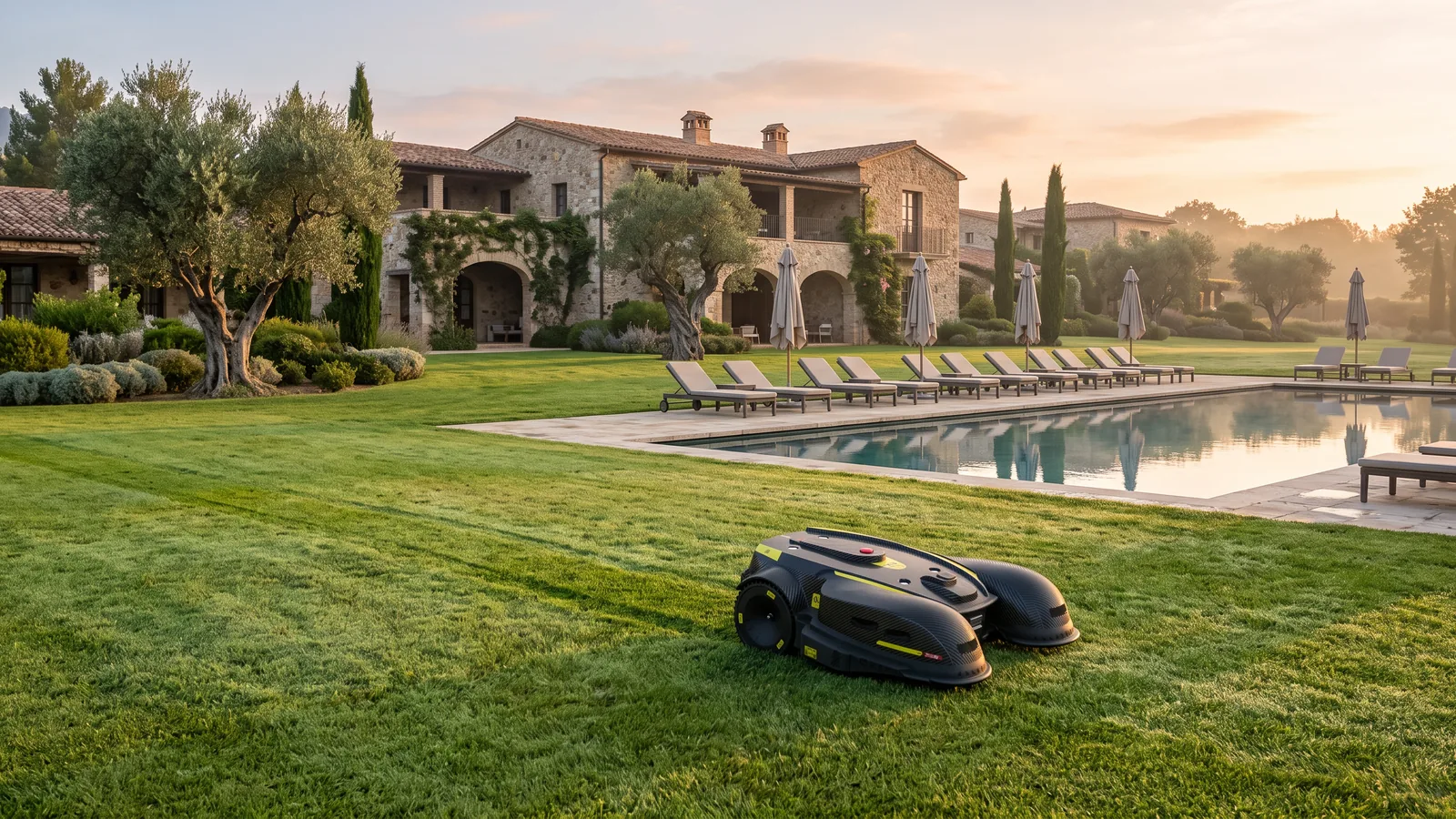 Hotel and resort grounds robotsThe robot mows the hotel lawns at hours when guests are not in the garden, and can clear the paths in winter. Gardeners keep the planting, pruning and presentation of the grounds.
Robots, acquisition mode and delivery terms, in one written proposal.