Facade and window cleaning
- Weight
- 17.3 kg
- Key feature
- Up to 60 m working height
- Key feature
- EASA C5 and CE certified
On order
From €17,590 ex VATor €599/month in RaaS
Updated
USE CASE · CONSTRUCTION
The drone or robot washes the façade from the ground or from the gondola, without a rope access technician on every pass. The team keeps piloting, cordoning off and finishing.
Updated
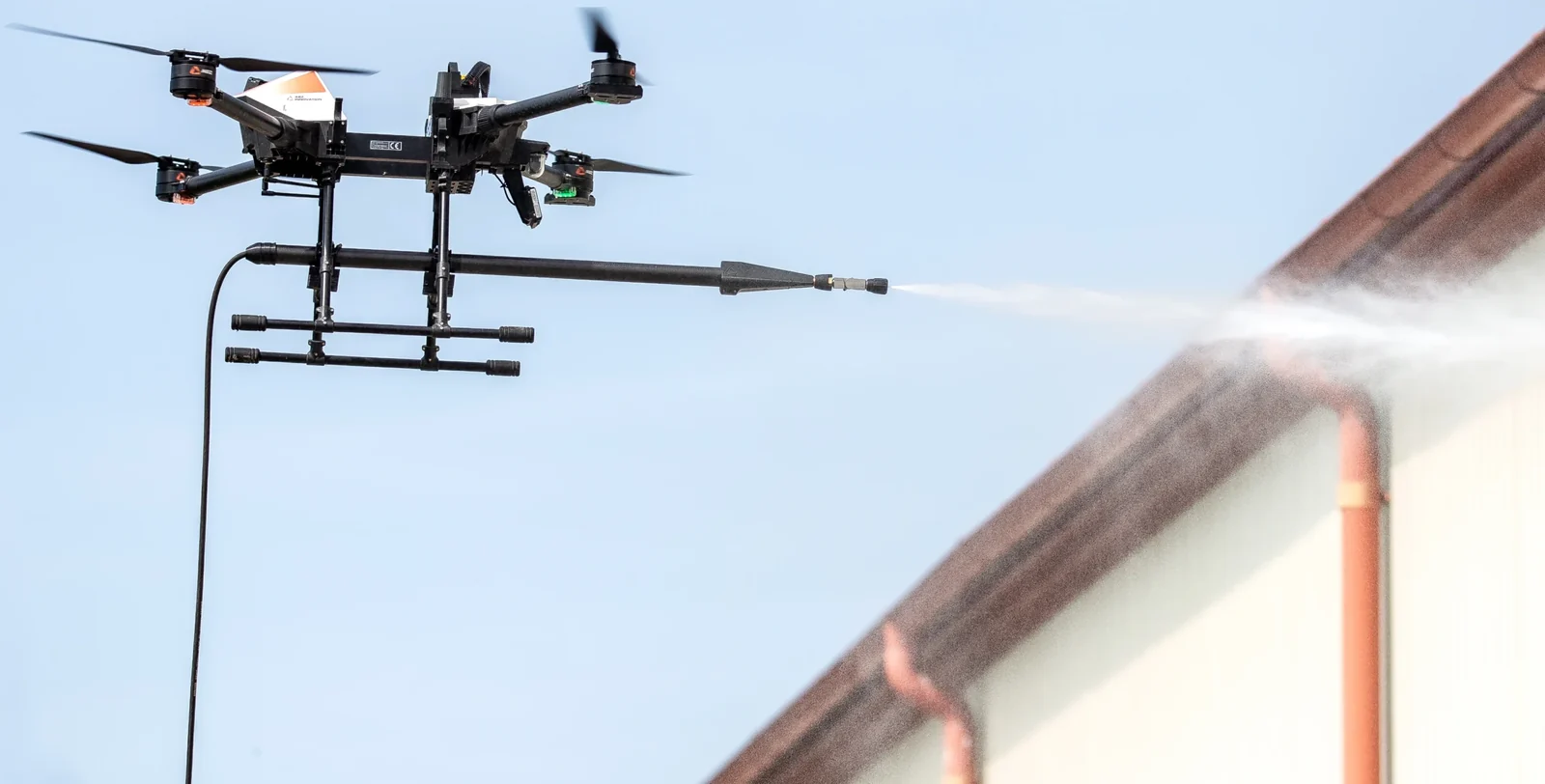
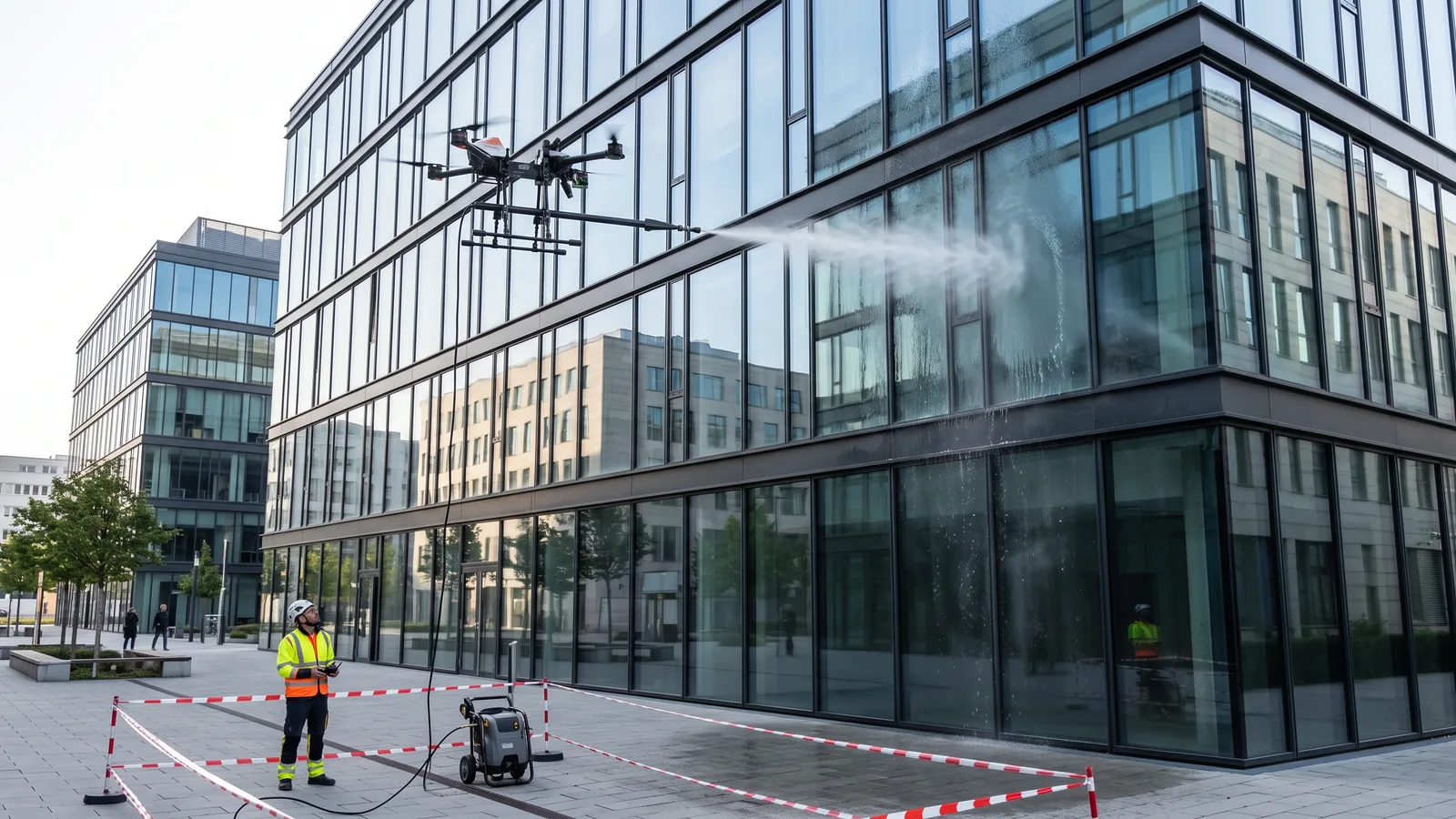
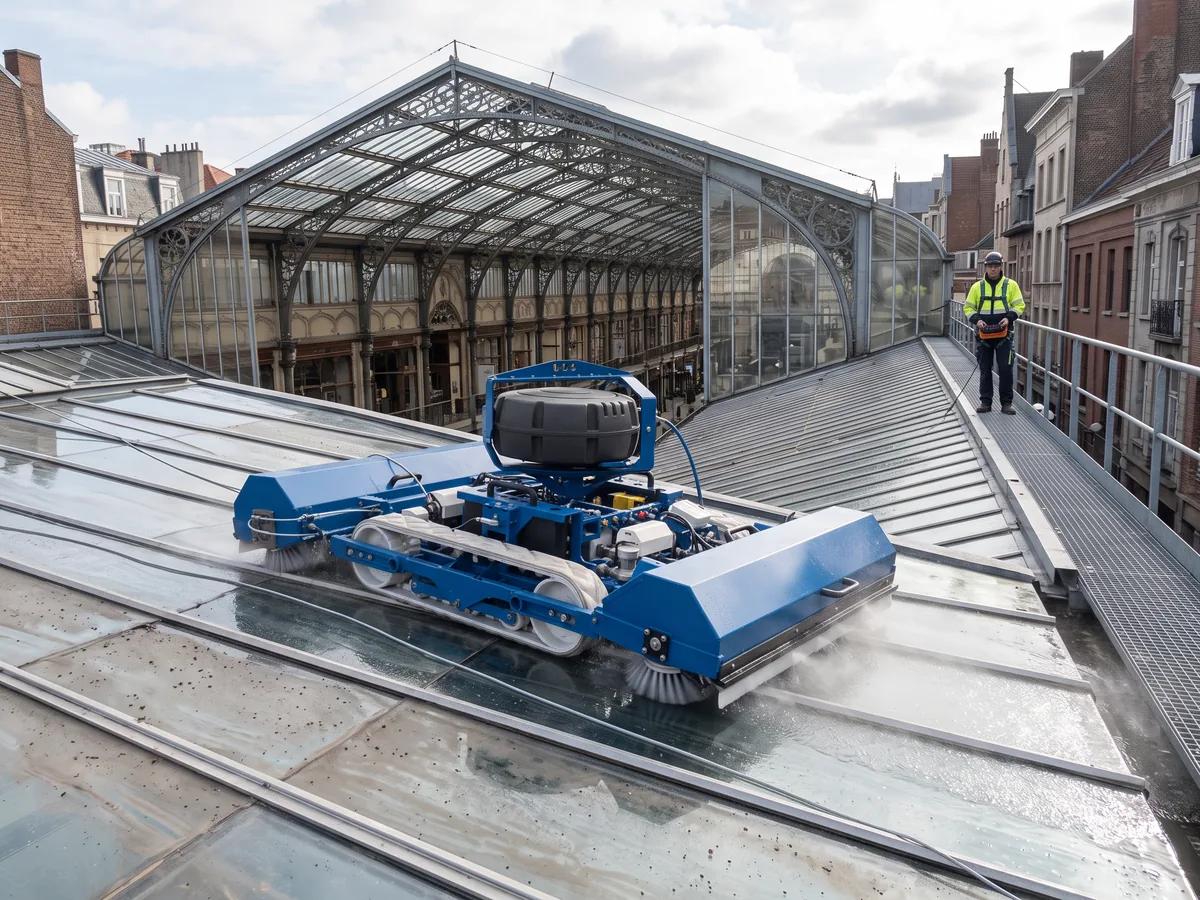
A façade cleaning robot washes windows, cladding, roofs and glass roofs: a drone fed with water from the ground, a robot that drives on the glass roof, or a brush mounted on a gondola.
The ABZ C10 drone weighs 17.3 kg with battery and works up to 60 m high, at a maximum pressure of 200 bar, according to its manufacturer.
Robot Distribution delivers it, studies the site and the regulatory framework, trains your pilots and operators and maintains it, to buy, rent or as RaaS.
WHY
Washing a glass façade, cladding or a glass roof today takes rope access technicians, a gondola or scaffolding. Working at height requires trained teams, set-up time and a cordoned-off area for every job.
The drone sprays water in flight, fed by a hose from a pressure washer on the ground; the glass-roof robot drives on the glazing; the brush fits on the existing gondola. Operators stay on the ground or in the gondola and control the machine. Drone flights fall under EU Regulations 2019/947 and 2019/945.
HOW IT RUNS
We define the surfaces to wash, the heights and the water points. For a drone, the operator prepares the flight within the applicable rules and cordons off the area on the ground.
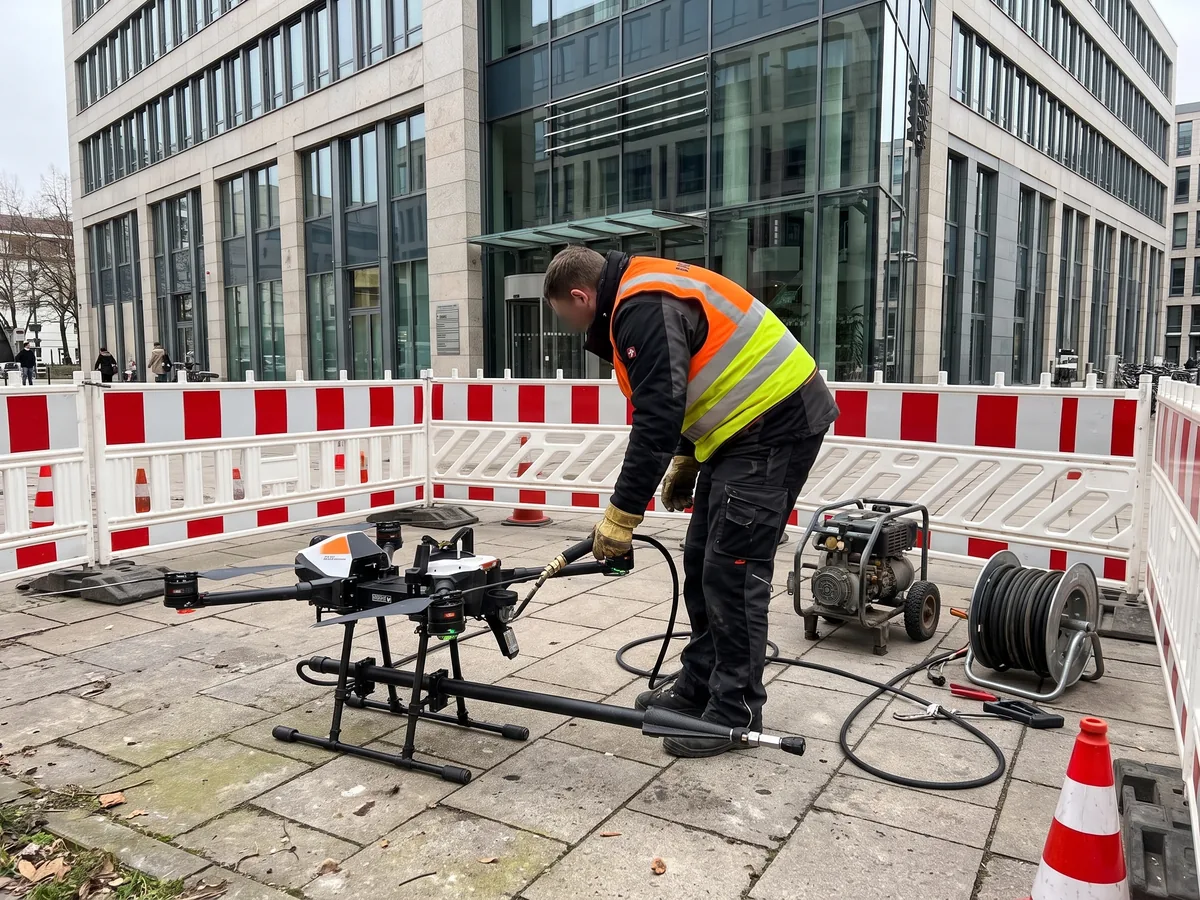
The ABZ C10 drone is connected by a 30 or 60 m hose to a high-pressure washer on the ground, according to its manufacturer. The hyCLEANER facadeBRUSH v-line mounts on a gondola, a BMU or an aerial work platform.
The drone follows the façade from top to bottom; the Lucid Bots Sherpa 1.5 treats up to 300 sq ft (about 28 m²) per minute, according to its manufacturer. On glass roofs, the hyCLEANER glassROBOT pro washes with water, without chemicals, using about 0.5 l per m², according to its manufacturer.
The operator checks the result, swaps batteries between flights, rinses the water circuit and logs the job.
THE ROBOTS
Facade and window cleaning
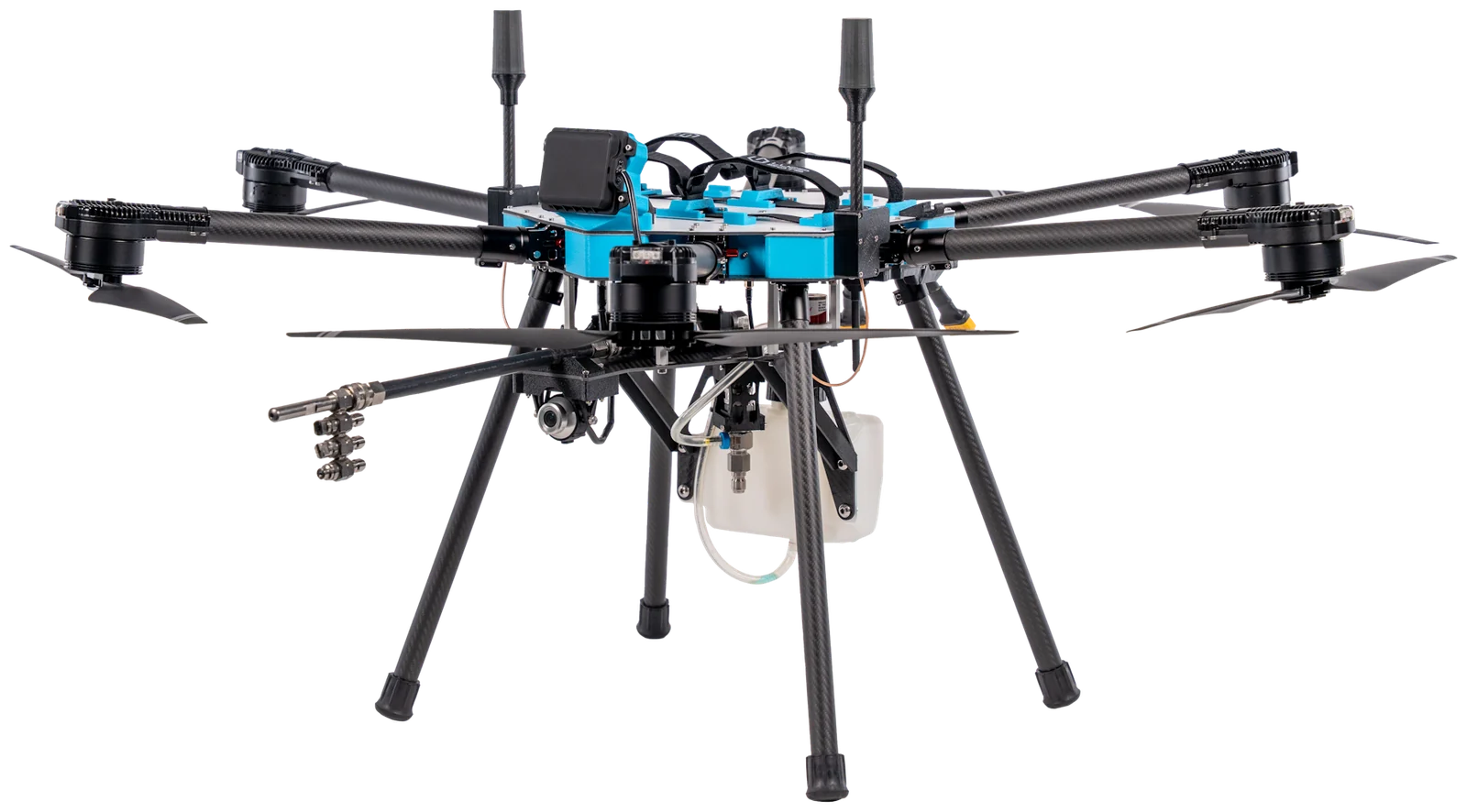
Facade and window cleaning
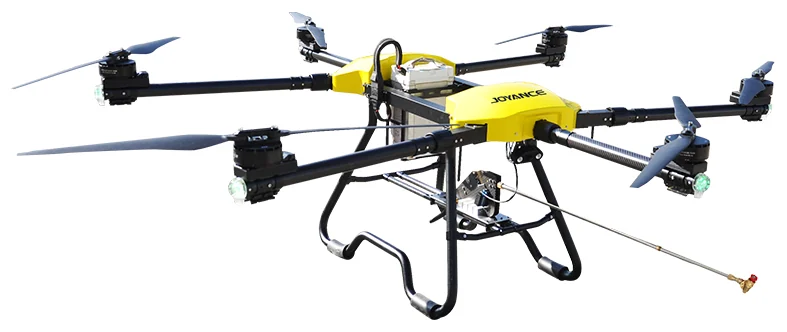
Joyance
Facade and window cleaning
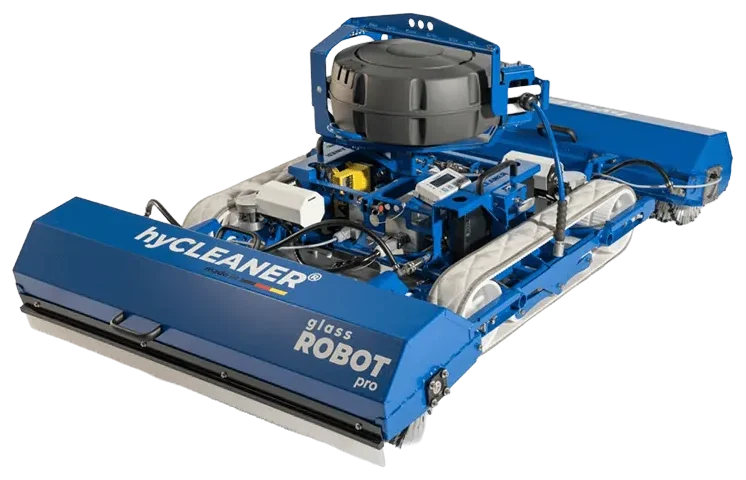
Facade and window cleaning
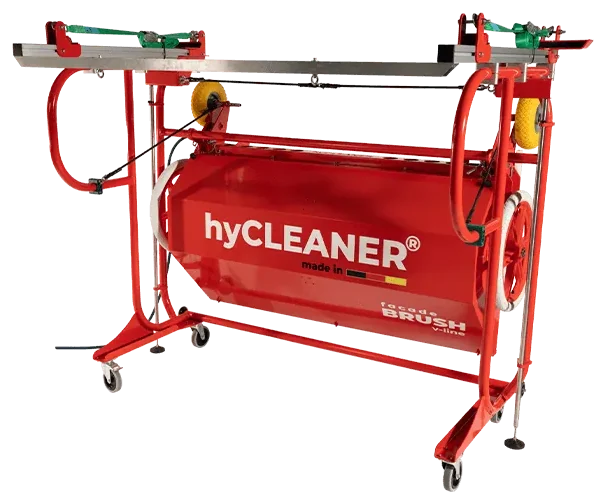
Facade and window cleaning
BEFORE INSTALLING
Building height, projections, balconies and sun shades guide the choice: the Joyance JTC30 states a 150 m flying height and the Sherpa 1.5 a 54 m working height, according to their manufacturers.
Proximity to an airport, a restricted zone or a public road is checked, along with ground space for take-off and cordoning off.
Water point, flow, washer power supply and battery charging are located; the facadeBRUSH v-line needs water at 120–160 bar and 9–12 l/min, according to its manufacturer.
Wind exposure and surface types (glass, metal, composite) are noted: the ABZ C10 is rated for winds up to 10 m/s by its manufacturer.
FAQ
Yes. Flights fall under EU Regulations 2019/947 and 2019/945 and, in towns, under the "specific" category, with a declaration to or authorisation from the national authority (the DGAC in France). The ABZ C10 carries EASA class C5, according to its manufacturer. We study the framework of each site before the job.
According to the manufacturer: 1,100 to 2,400 m²/h for the hyCLEANER glassROBOT pro on glass roofs, about 500 m²/h for the facadeBRUSH v-line, about 600 m² per flight for the Joyance JTC30. Actual output depends on geometry and how dirty the surface is.
The ABZ C10 flies up to 18 minutes per battery and the Sherpa 1.5 up to 19 minutes, or more than 8 hours with its optional Power Tether, according to their manufacturers. Without a tether, several battery sets are planned.
Yes: the hyCLEANER glassROBOT pro drives on glass roofs up to a 25° slope, with edge sensors that stop it, and assembles without tools from seven modules, according to its manufacturer.
It takes over the repetitive washing of large surfaces. Rope access and gondolas remain useful for complex areas, repairs and close inspections.
USE CASES
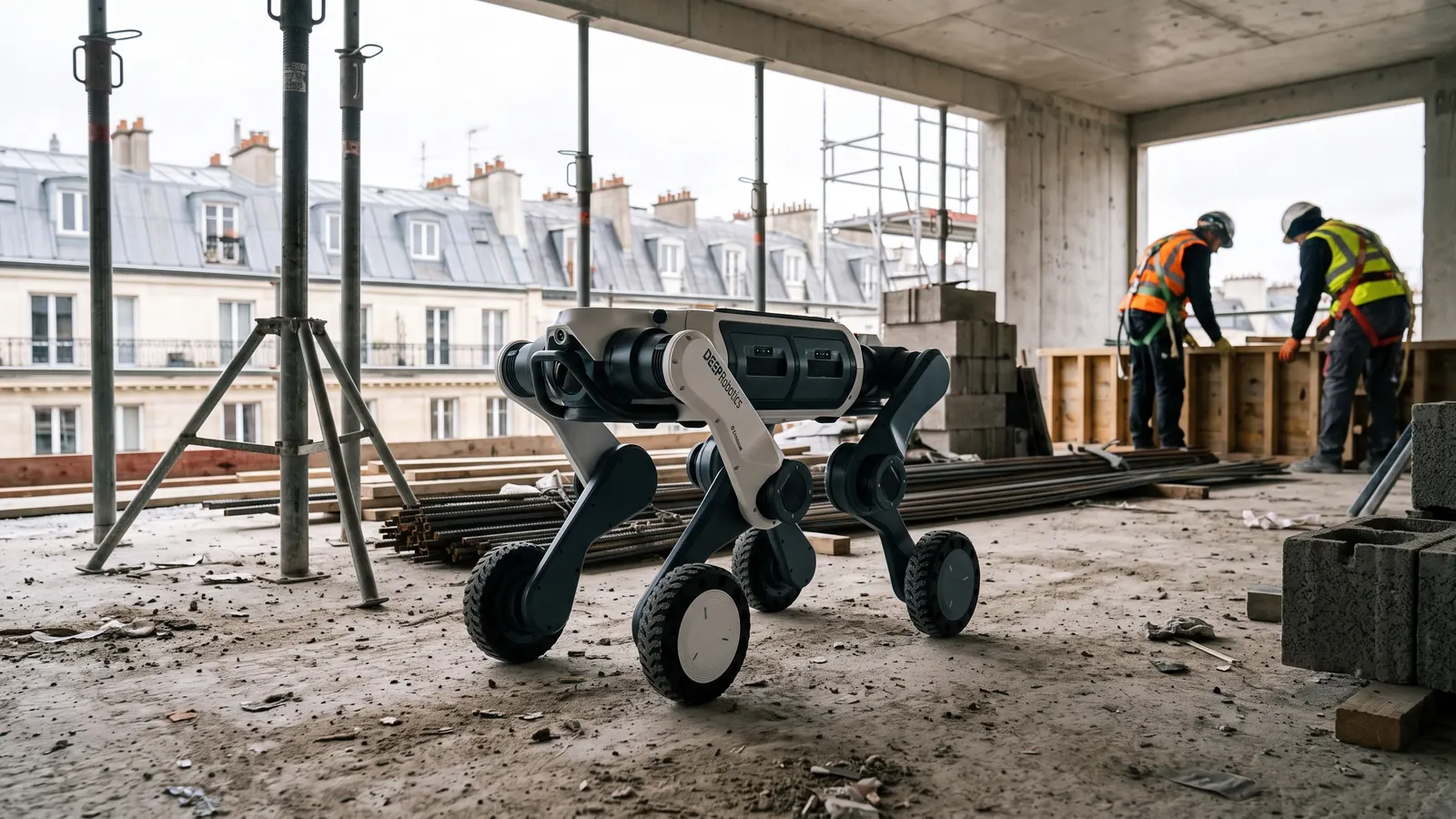 Construction site monitoringThe robot walks the site on a fixed route and brings back point clouds, photos and video. The site manager compares progress week by week without walking the whole site again.
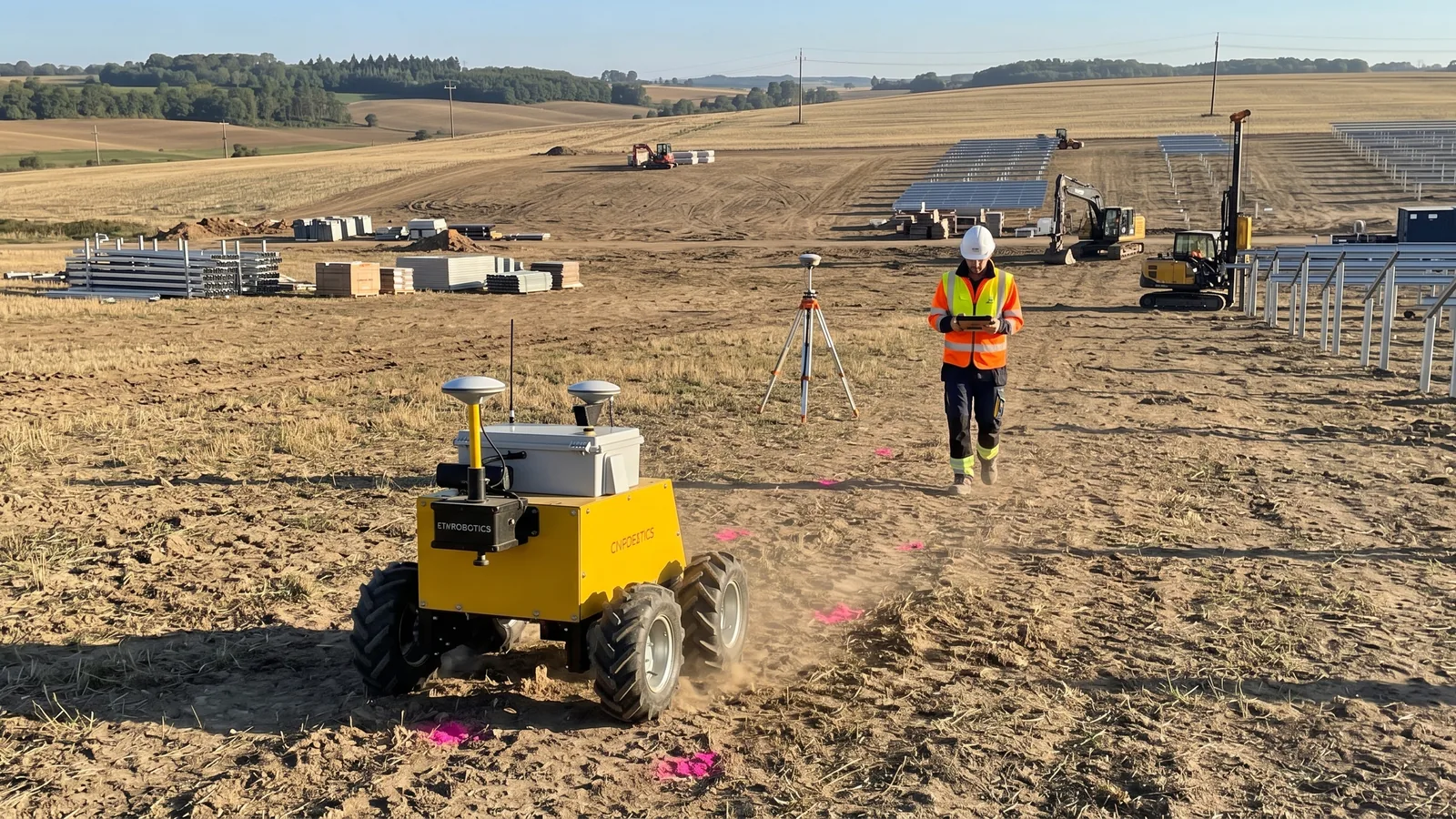 Robotic layout and set-out on construction sitesThe robot transfers axes, partitions, openings and set-out points from the digital plan to the ground. The surveyor and site manager keep control of the references and the sign-off.
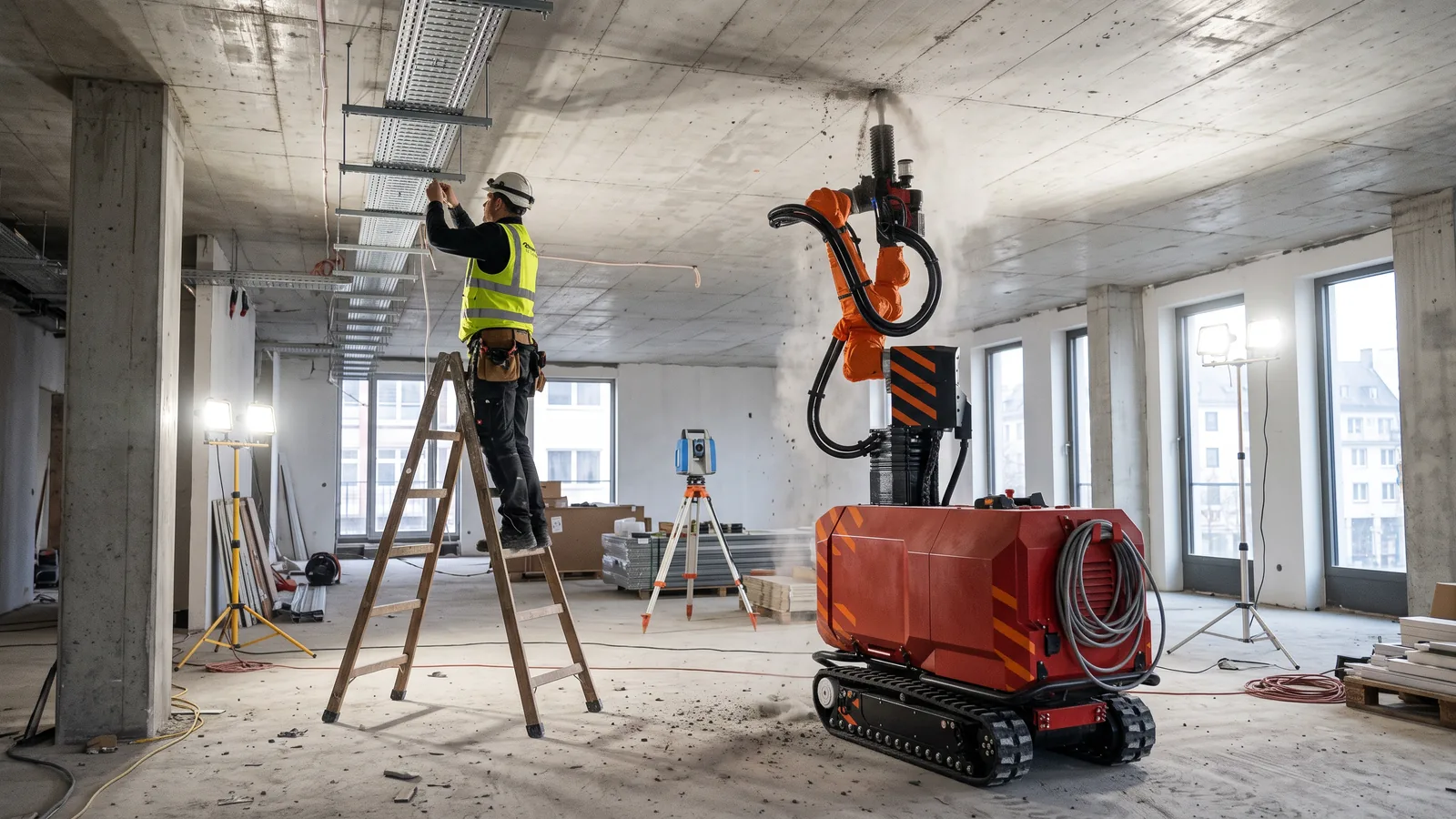 Robotic drilling and finishing on construction sitesThe robot takes on repetitive, strenuous site tasks: ceiling drilling, plastering, painting, tiling and block lifting. Tradespeople keep the preparation, touch-ups and quality control.
Robots, acquisition mode and delivery terms, in one written proposal.