Construction robots
- Runtime
- 8 h
- Key feature
- 5 m reach
- Key feature
- BIM-driven drilling
On order
Price on request
Updated
USE CASE · CONSTRUCTION
The robot takes on repetitive, strenuous site tasks: ceiling drilling, plastering, painting, tiling and block lifting. Tradespeople keep the preparation, touch-ups and quality control.
Updated
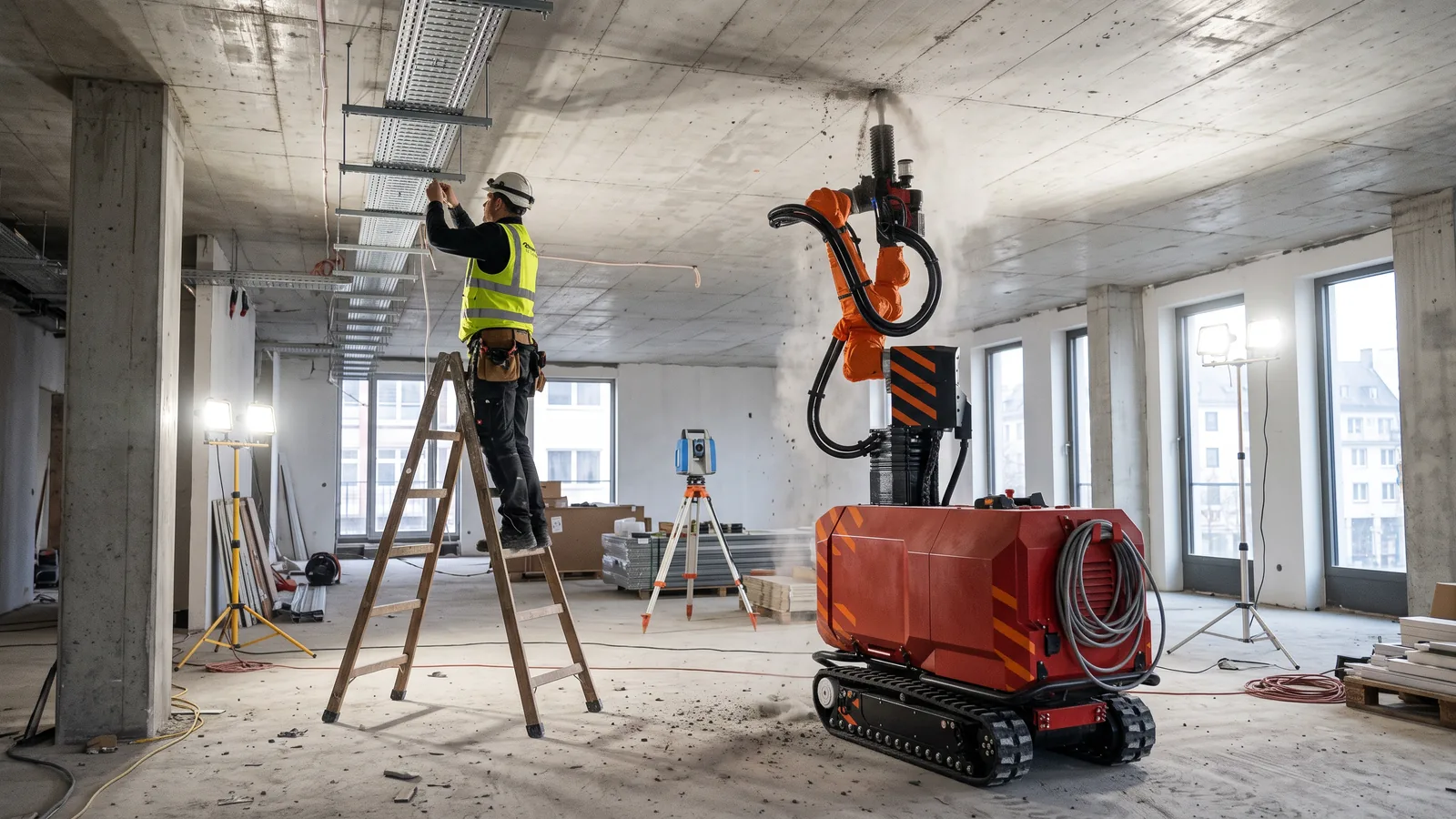
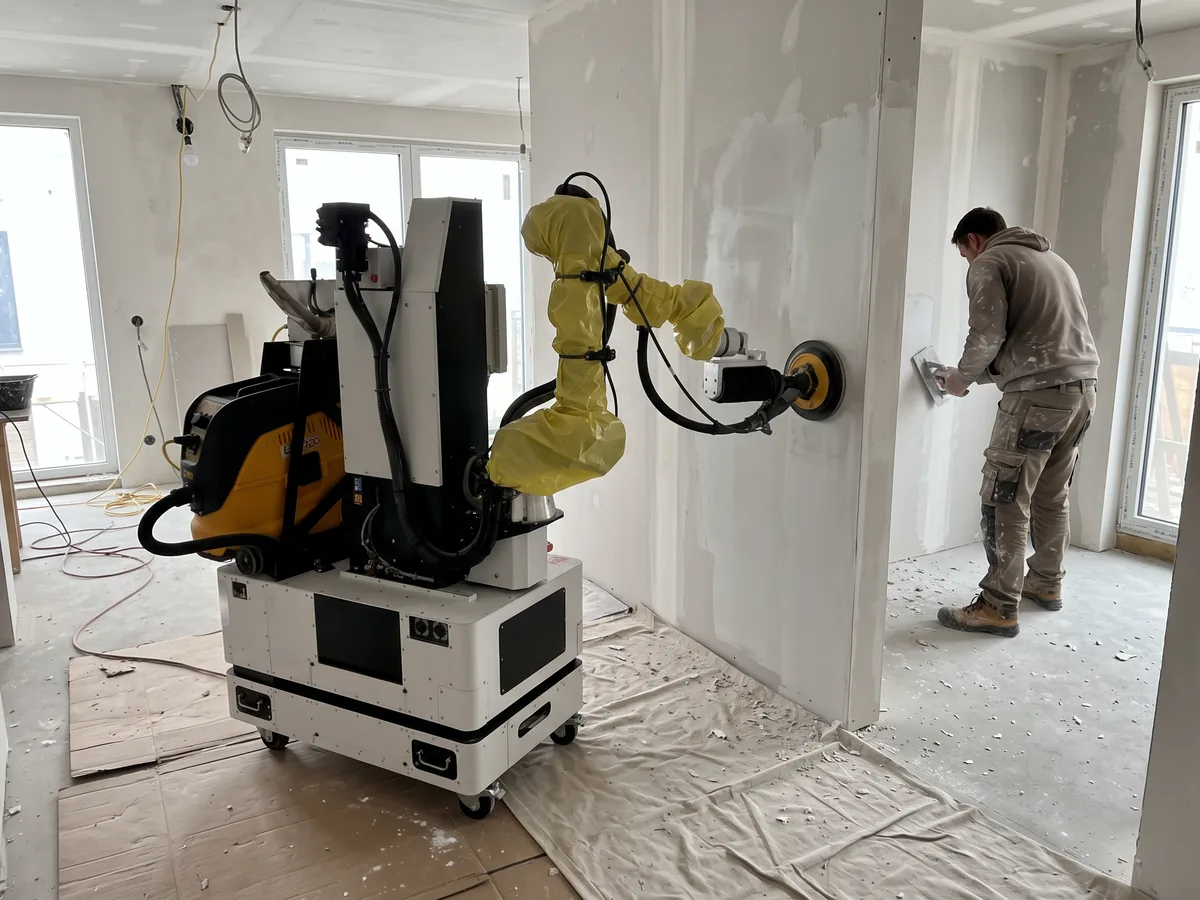
A construction robot carries out repetitive structural and finishing tasks: drilling ceilings from the digital model, plastering and painting walls, laying tiles and lifting blocks.
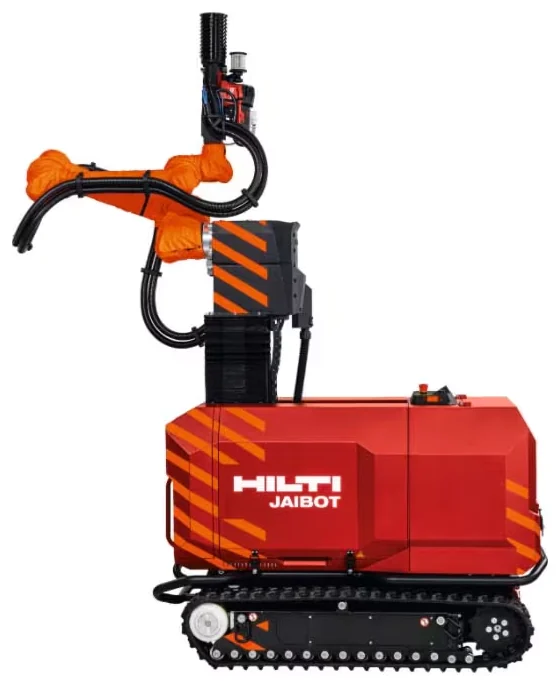
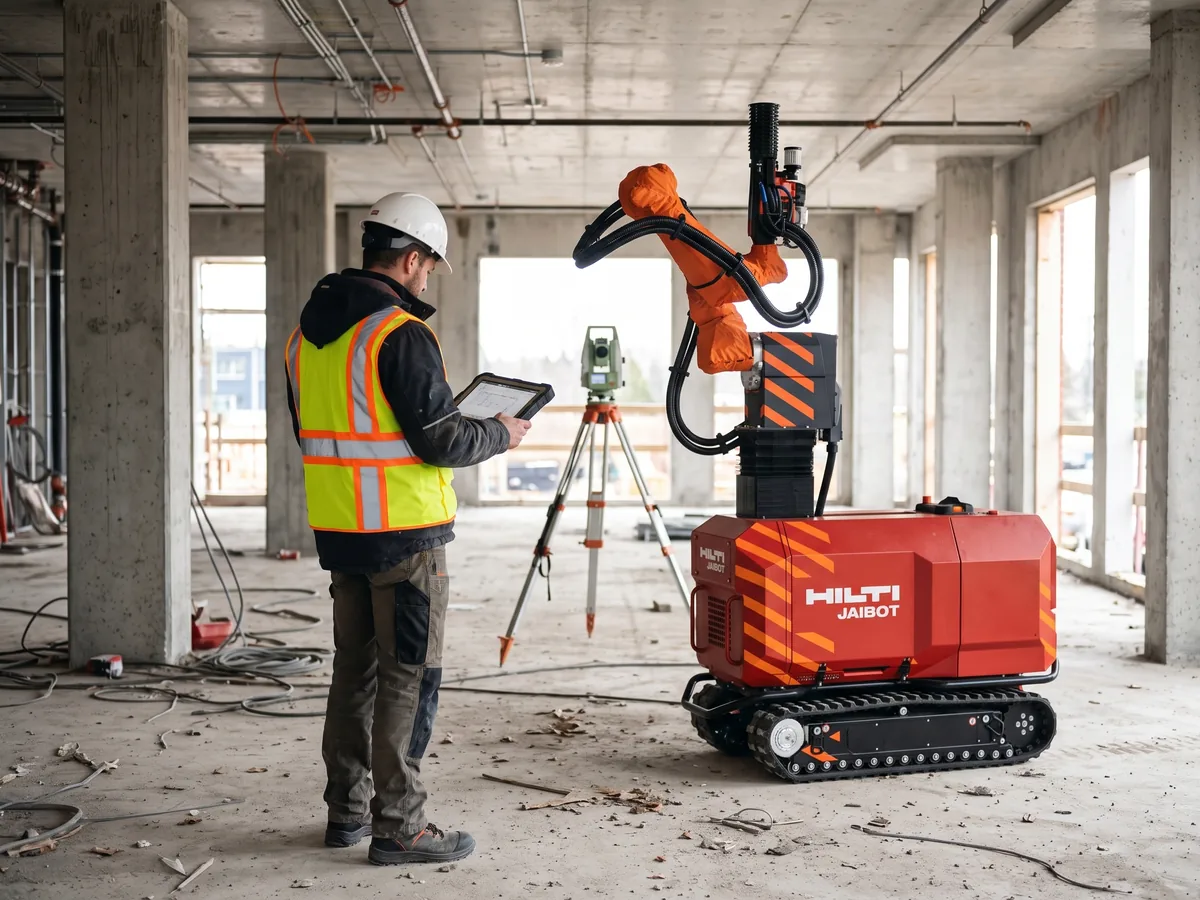
The Hilti Jaibot drills holes for building services from an AutoCAD or Revit plan, positions itself with a Hilti PLT 300 total station and works up to 8 hours, according to its manufacturer.
Robot Distribution delivers it, prepares commissioning with your site teams, trains the operators and maintains it, to buy, rent or as RaaS.
WHY
Drilling hundreds of ceiling holes, plastering and sanding partitions or laying large-format tiles are long, physical and dusty tasks. They strain the shoulders, backs and knees of tradespeople, on sites where skilled labour is short.
The robot takes over the repetitive movement, guided by the digital model or by its own scan of the room. Tradespeople prepare the surface, control the machine, finish the corners and check the result. These machines fall under the Machinery Directive 2006/42/EC, replaced by Regulation (EU) 2023/1230 from 20 January 2027.
HOW IT RUNS
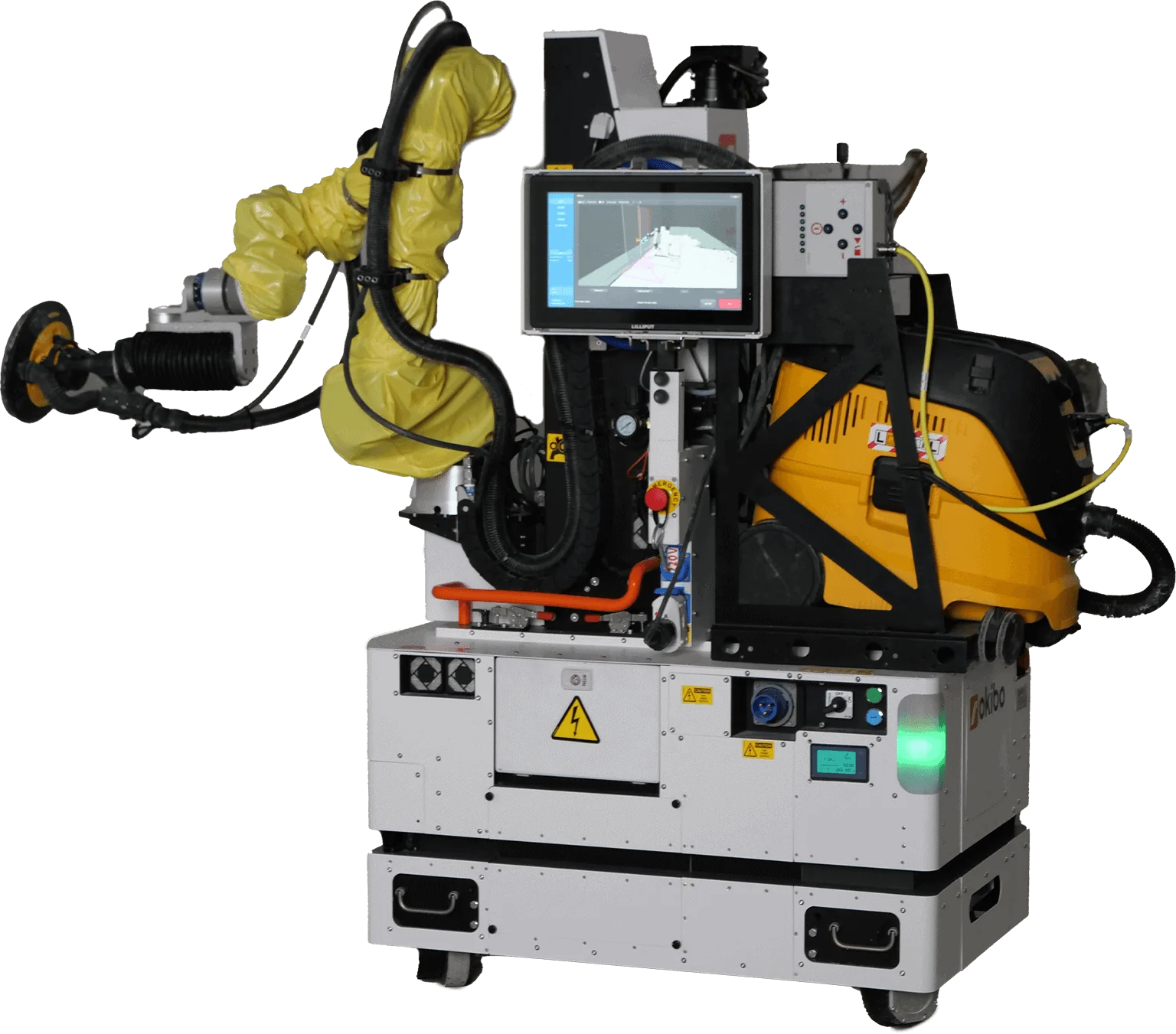
For drilling, the drilling plan is exported from AutoCAD or Revit to the Hilti cloud, according to its manufacturer. The Okibo EG7 needs neither BIM nor markers: it scans the room in 3D, according to its manufacturer.
The robot is brought up to the floor, aligned to the site references or its own scan, and loaded with material: filler, paint, mortar or tiles.
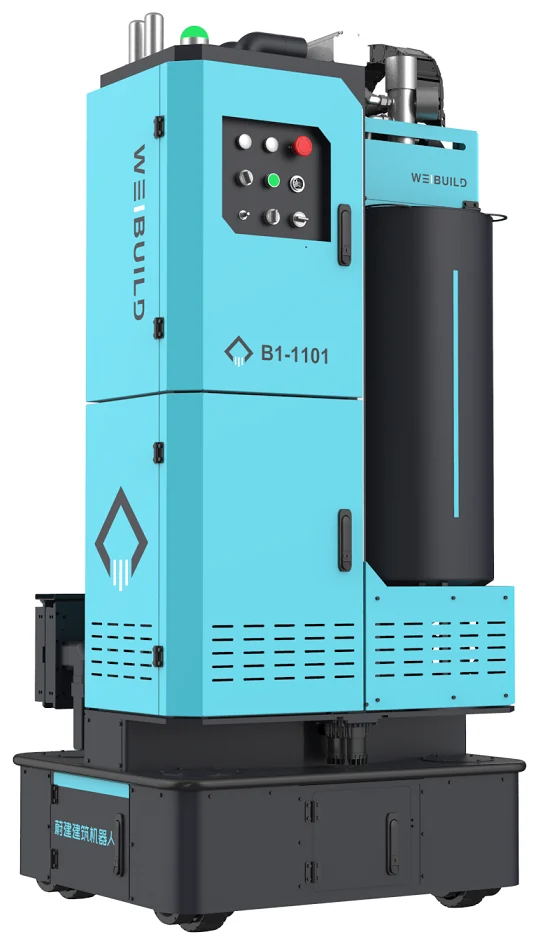
The robot drills, plasters, paints or lays. The WEIBUILD PNP-3000iC sprays filler and paint over a 1.8 m width and up to 3.2 m high, according to its manufacturer.
Tradespeople finish corners, edges and areas the robot cannot reach, check flatness and finish, then clean the machine.
THE ROBOTS
Construction robots
Construction robots
Construction robots
Construction robots
Partner Robotics
Construction robots
Construction Robotics
Construction robots
BEFORE INSTALLING
Hoists, door widths and permissible floor loads are checked: the Okibo EG7 weighs 362 kg for a 685 mm width and the WEIBUILD PNP-3000iC 600 kg, according to their manufacturers.
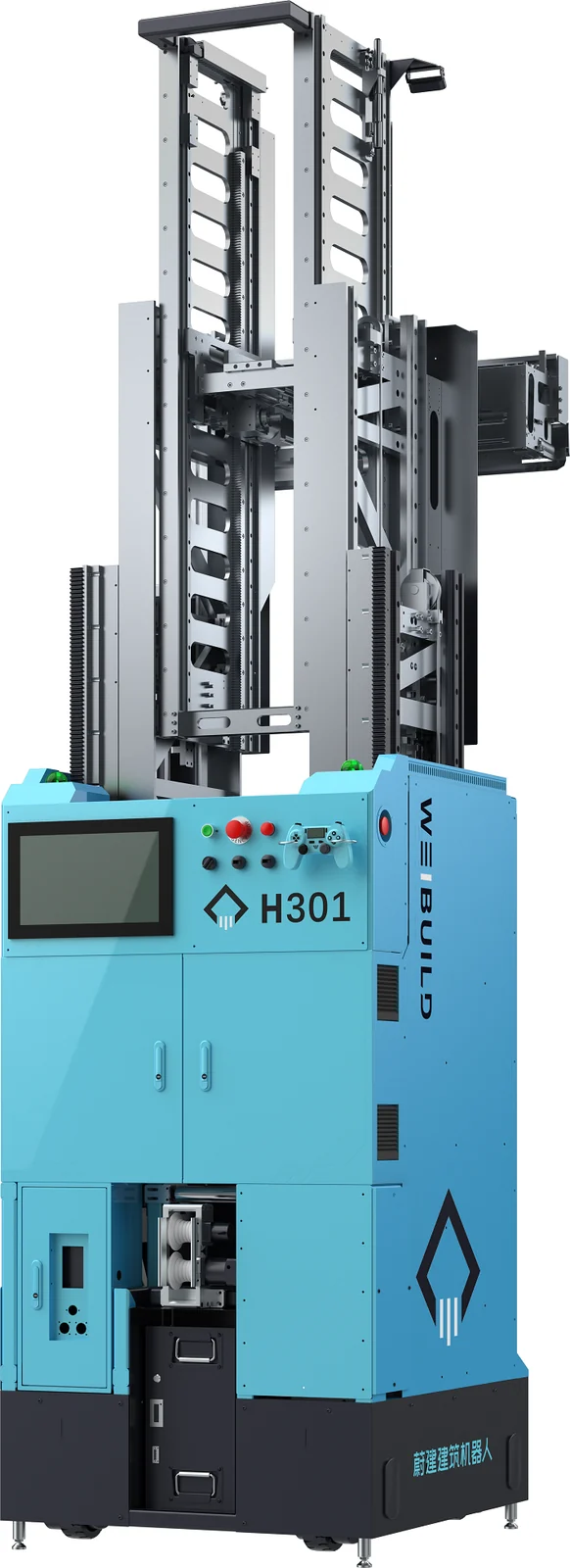
Wall and ceiling heights guide the model: 3.3 m walls for the WEIBUILD PMC-3000iE, wall drilling from 1.2 to 4.8 m for the Hilti Jaibot, according to their manufacturers.
We check that an up-to-date BIM or CAD plan and the site reference points are available for the robots that rely on them.
Battery charging, supply of filler, paint or mortar and dust control are organised; the Hilti Jaibot removes drilling dust with a built-in vacuum, according to its manufacturer.
FAQ
Yes for the Hilti Jaibot, which follows a drilling plan exported from AutoCAD or Revit and positions itself with a total station, according to its manufacturer. The Okibo EG7, for plastering and painting, scans the room and works without BIM.
According to the manufacturer: about 93 m²/h for the Okibo EG7; up to 200 m²/h per filler coat and 300 m²/h per paint coat for the WEIBUILD PNP-3000iC; 50 m²/h of cement plaster for the WEIBUILD PMC-3000iE, with ±3 mm flatness over 2 m.
Yes for large formats: the Partner Robotics P900 handles tiles up to 30 kg and lays up to 18 m²/h, with more than 6 hours of runtime, according to its manufacturer.
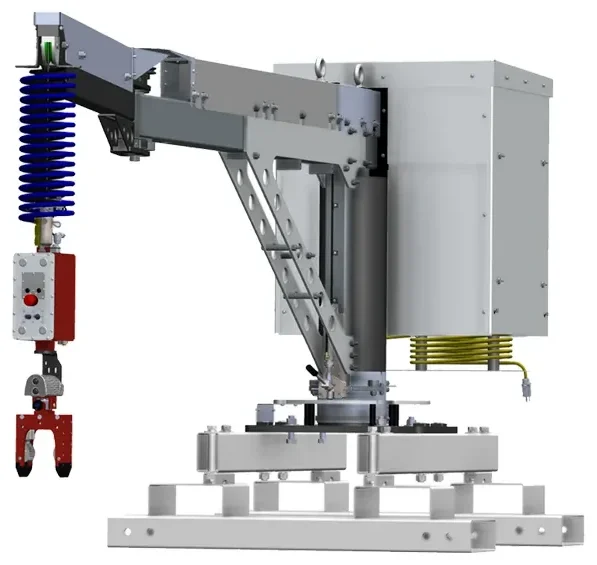
The MULE ML150 carries loads up to about 90 kg with vacuum grippers while the mason guides the block by hand. It mounts on mast-climbing platforms and scaffolding, according to its manufacturer.
These robots are machinery under Directive 2006/42/EC, replaced by Regulation (EU) 2023/1230 from 20 January 2027. The Okibo EG7 is CE certified, according to its manufacturer. Their inclusion in the site health and safety plan is prepared with your teams.
USE CASES
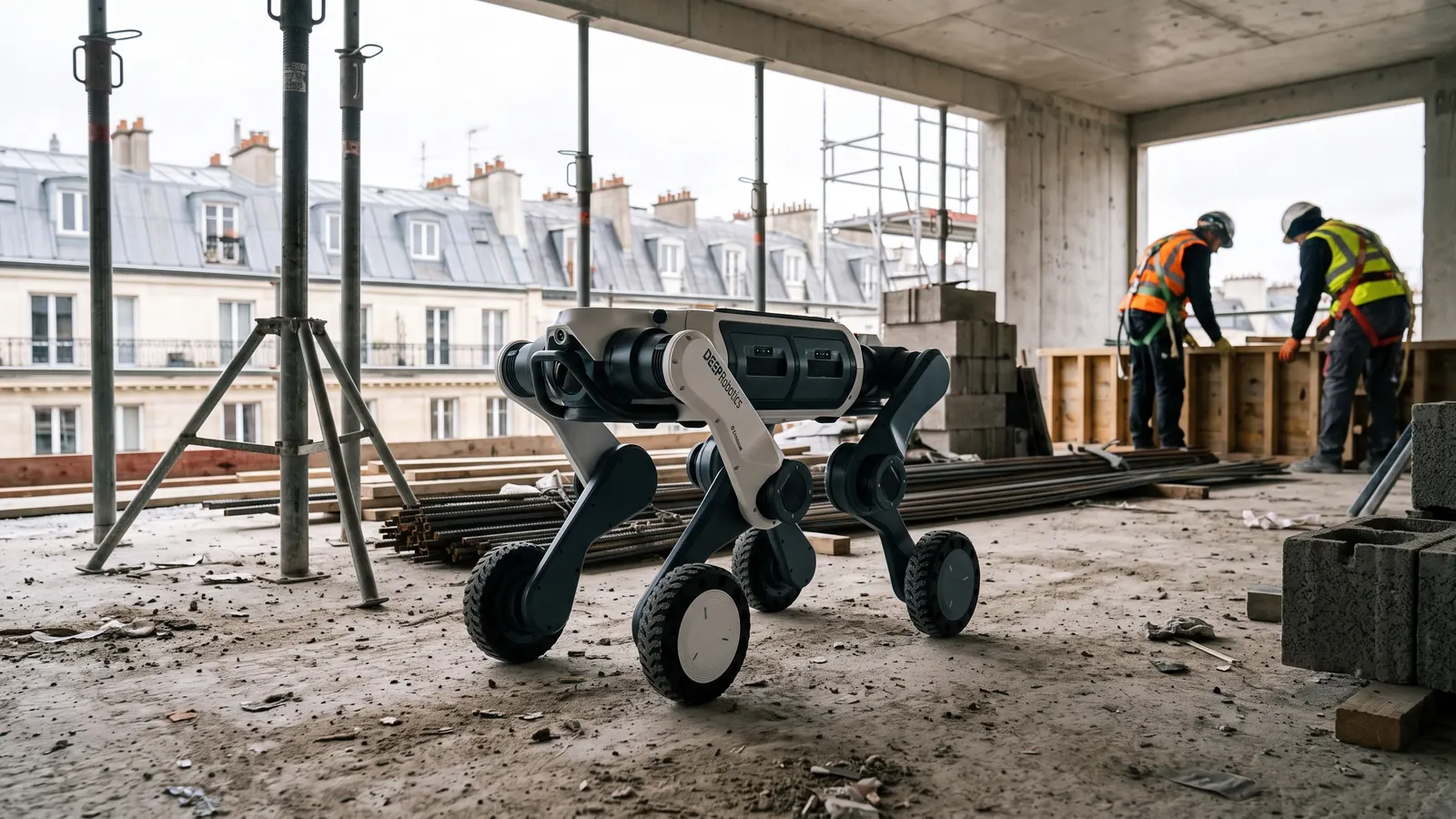 Construction site monitoringThe robot walks the site on a fixed route and brings back point clouds, photos and video. The site manager compares progress week by week without walking the whole site again.
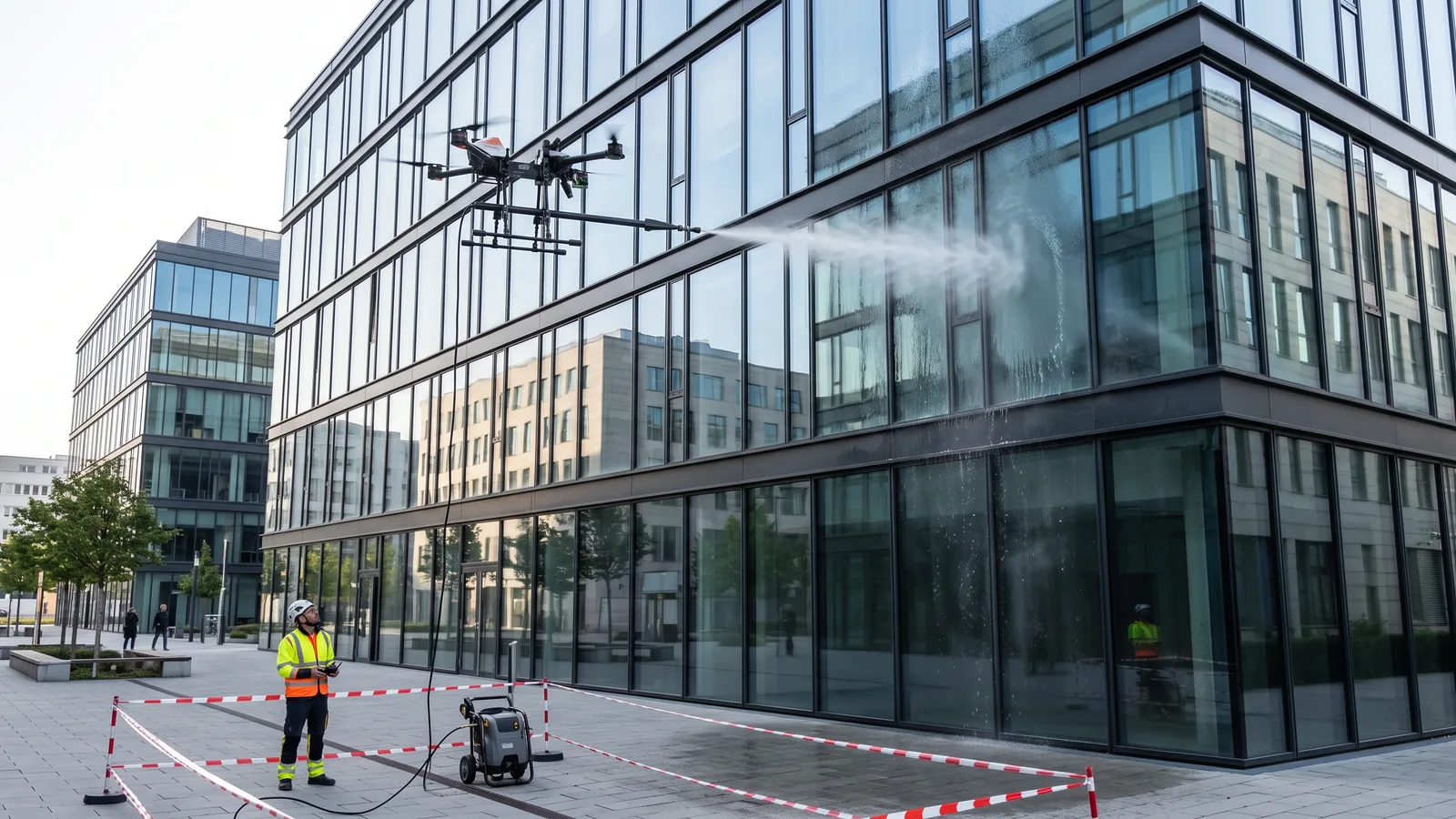 Robotic façade and window cleaningThe drone or robot washes the façade from the ground or from the gondola, without a rope access technician on every pass. The team keeps piloting, cordoning off and finishing.
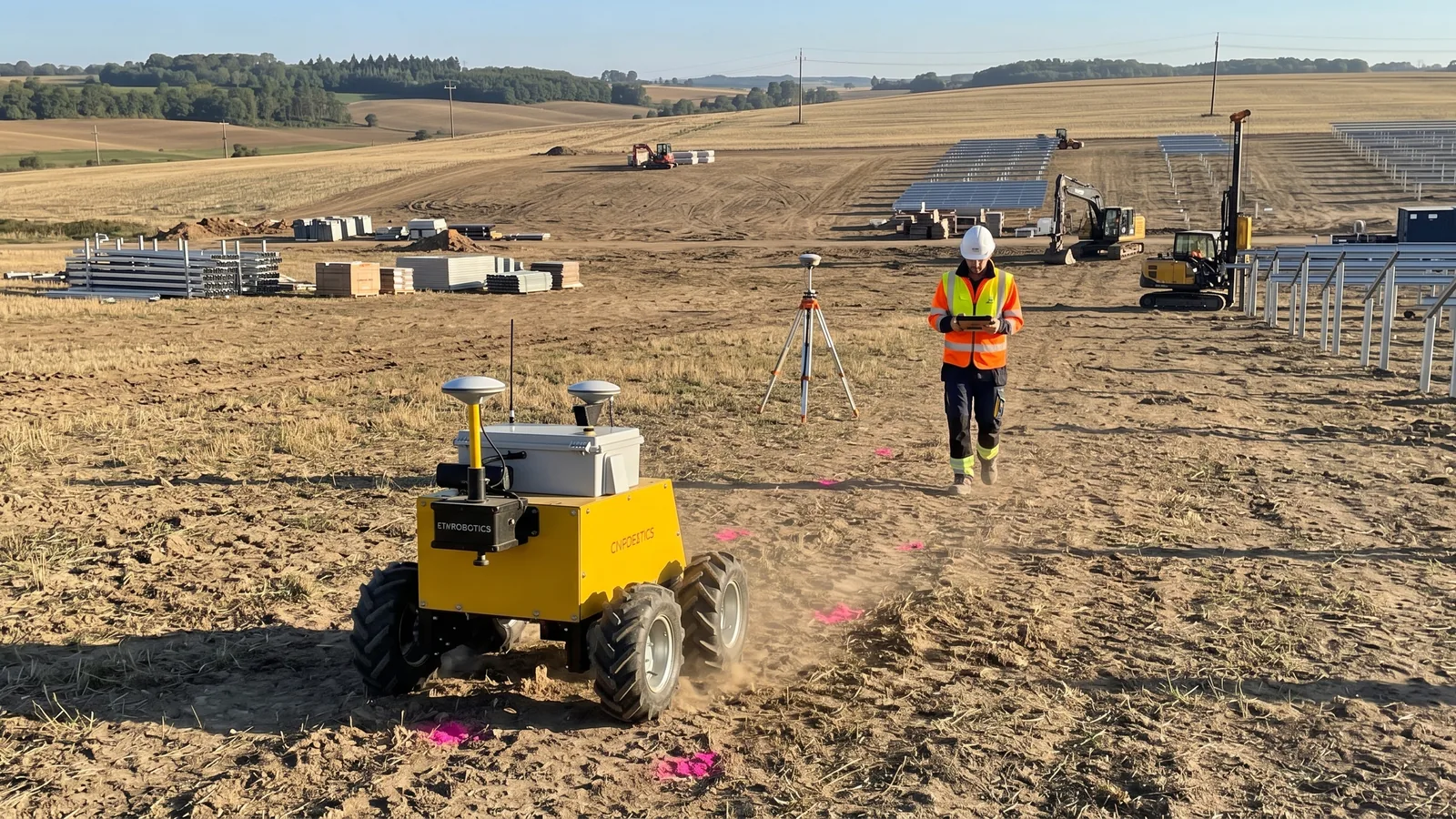 Robotic layout and set-out on construction sitesThe robot transfers axes, partitions, openings and set-out points from the digital plan to the ground. The surveyor and site manager keep control of the references and the sign-off.
Robots, acquisition mode and delivery terms, in one written proposal.