CATALOGUE · FAMILY
Delivery robot: last-mile autonomous delivery robots compared
13 robotsUpdated
IN BRIEF
Last-mile delivery robots in the Robot Distribution catalogue: 13 robots from Zelos, Neolix, White Rhino, Clevon, Ottonomy, Starship Technologies, Coco Robotics and ROBOT.COM, with specifications taken from the manufacturers' official pages and checked on 29 Oct 2026. Each robot is sold on a written quote: prices are on request.
13 robots
Sort by
13 robots match your filters.
Address of this list: /en/robots/last-mile-delivery
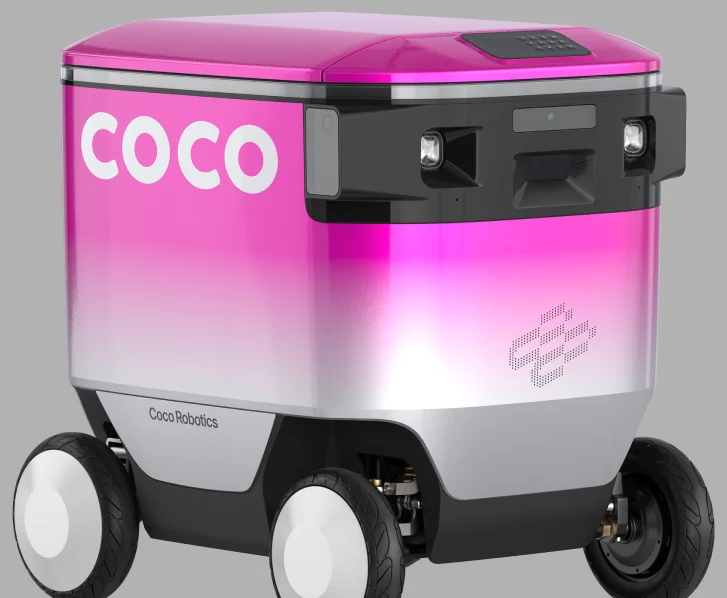
Coco Robotics
Last-mile delivery
- Maximum speed
- 21 km/h
- Key feature
- 32 km range
- Key feature
- 30 % max grade
On orderPrice on requestNeolix
Last-mile delivery
- Maximum speed
- 50 km/h
- Ingress protection
- IP55
- Max speed
- 50 km/h
On orderPrice on requestNeolix
Last-mile delivery
- Maximum speed
- 60 km/h
- Key feature
- 6 m³ cargo
- Max speed
- 60 km/h
On orderPrice on request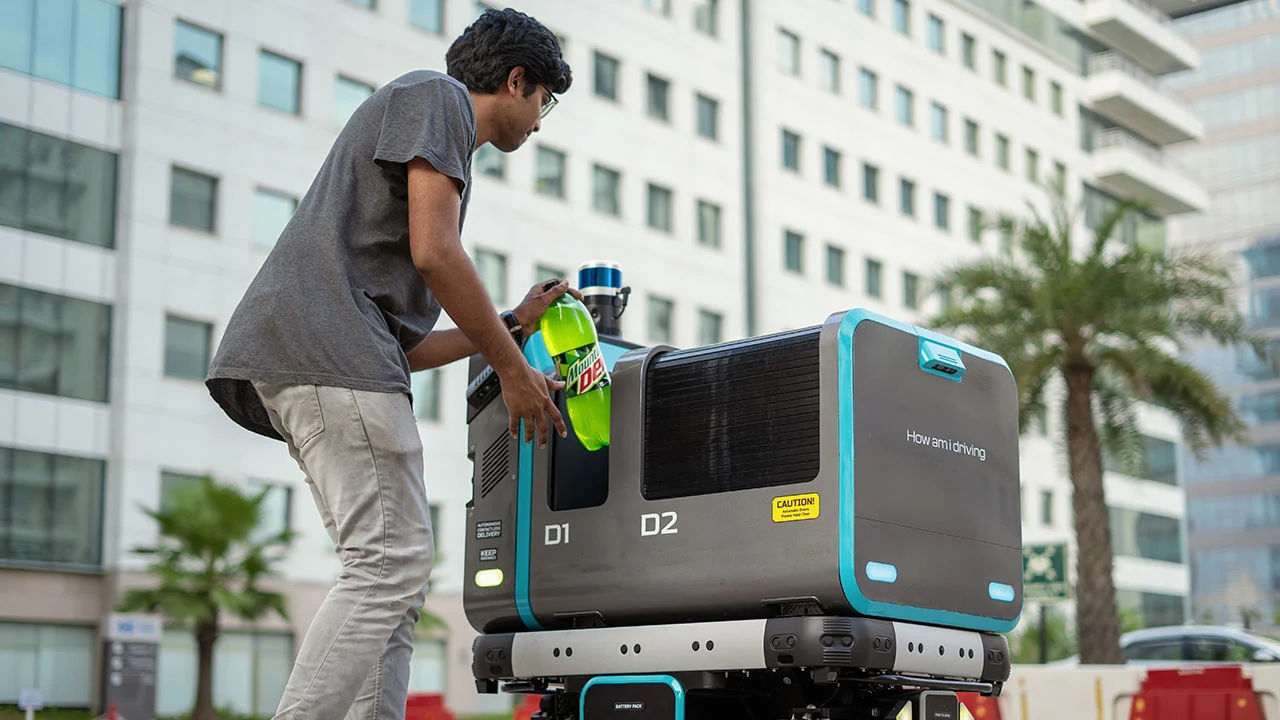
ROBOT.COM
Last-mile delivery
- Runtime
- 10–12 h
- Key feature
- 19 L cargo
- Autonomy
- SAE Level 4
On orderPrice on request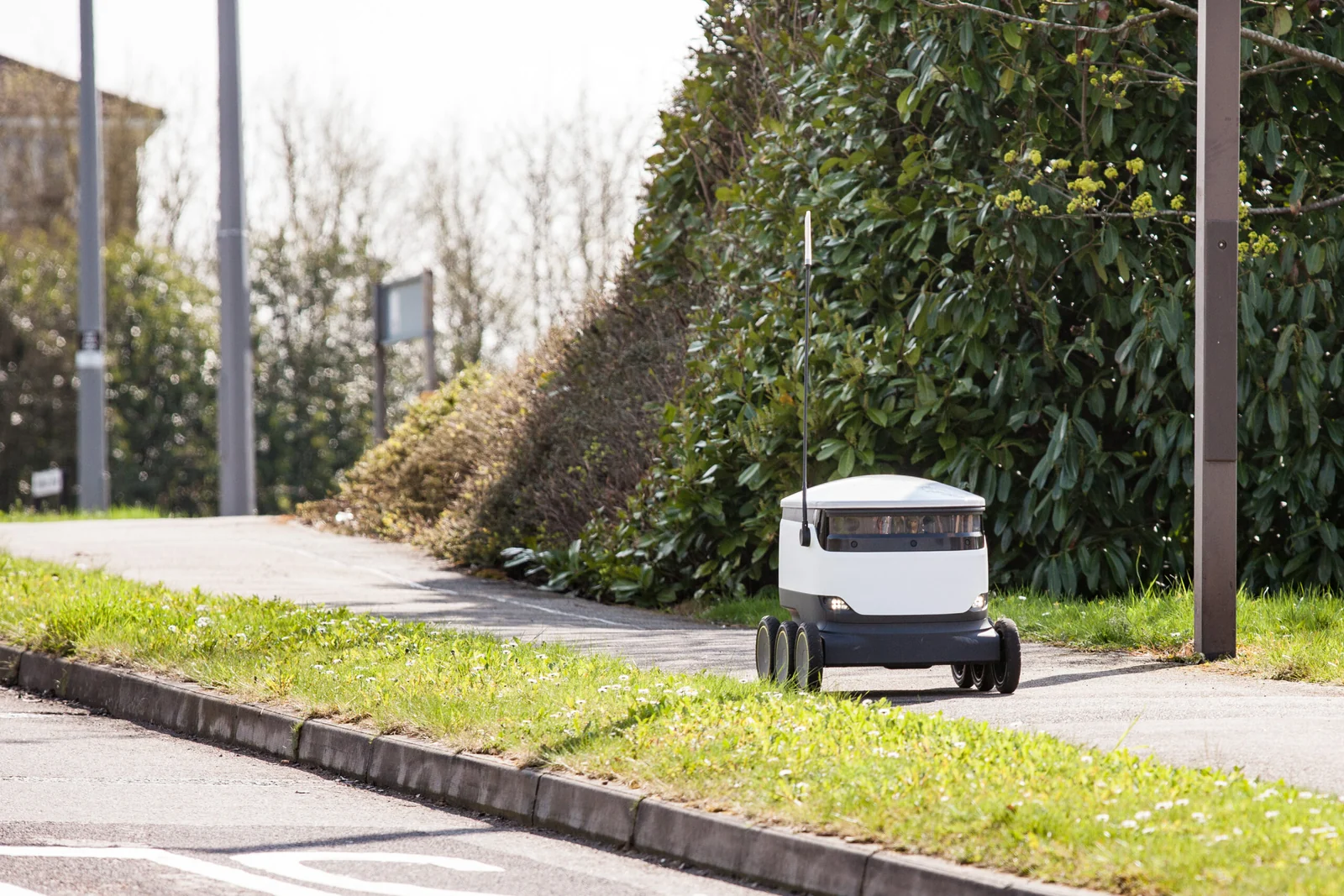
Starship Technologies
Last-mile delivery
- Runtime
- 18 h
- Maximum speed
- 6 km/h
- Weight
- 25 kg
On orderPrice on request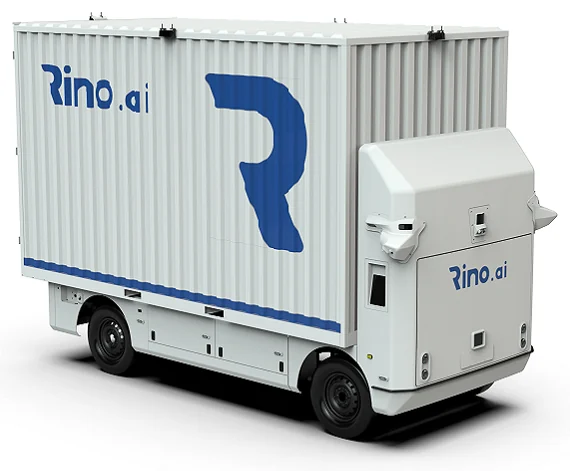
Last-mile delivery
- Payload
- 2,400 kg
- Key feature
- 24 m³ cargo
- Maximum speed
- 60 km/h
On orderPrice on request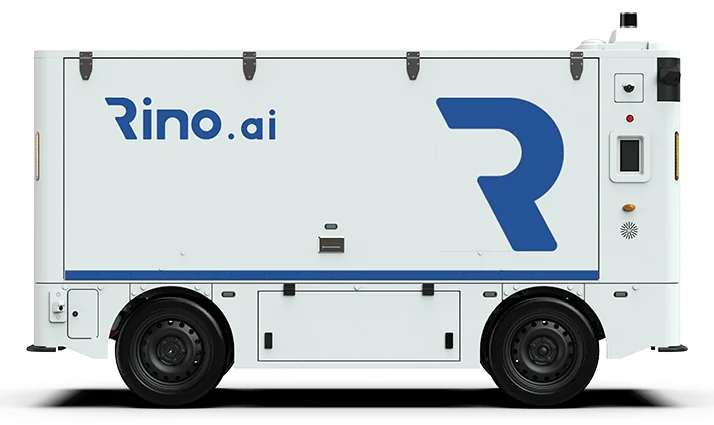
Last-mile delivery
- Payload
- 800 kg
- Key feature
- 5 m³ cargo
- Maximum speed
- 45 km/h
On orderPrice on request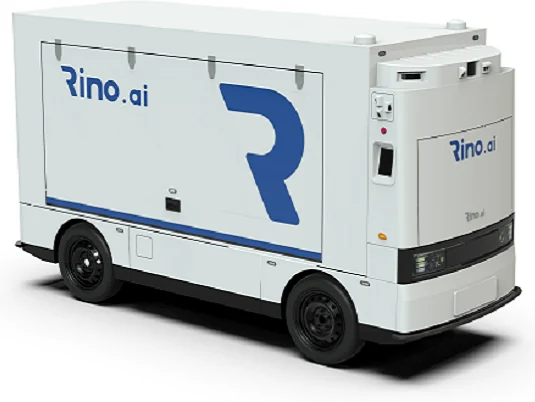
Last-mile delivery
- Payload
- 1,200 kg
- Key feature
- 6 m³ cargo
- Maximum speed
- 45 km/h
On orderPrice on request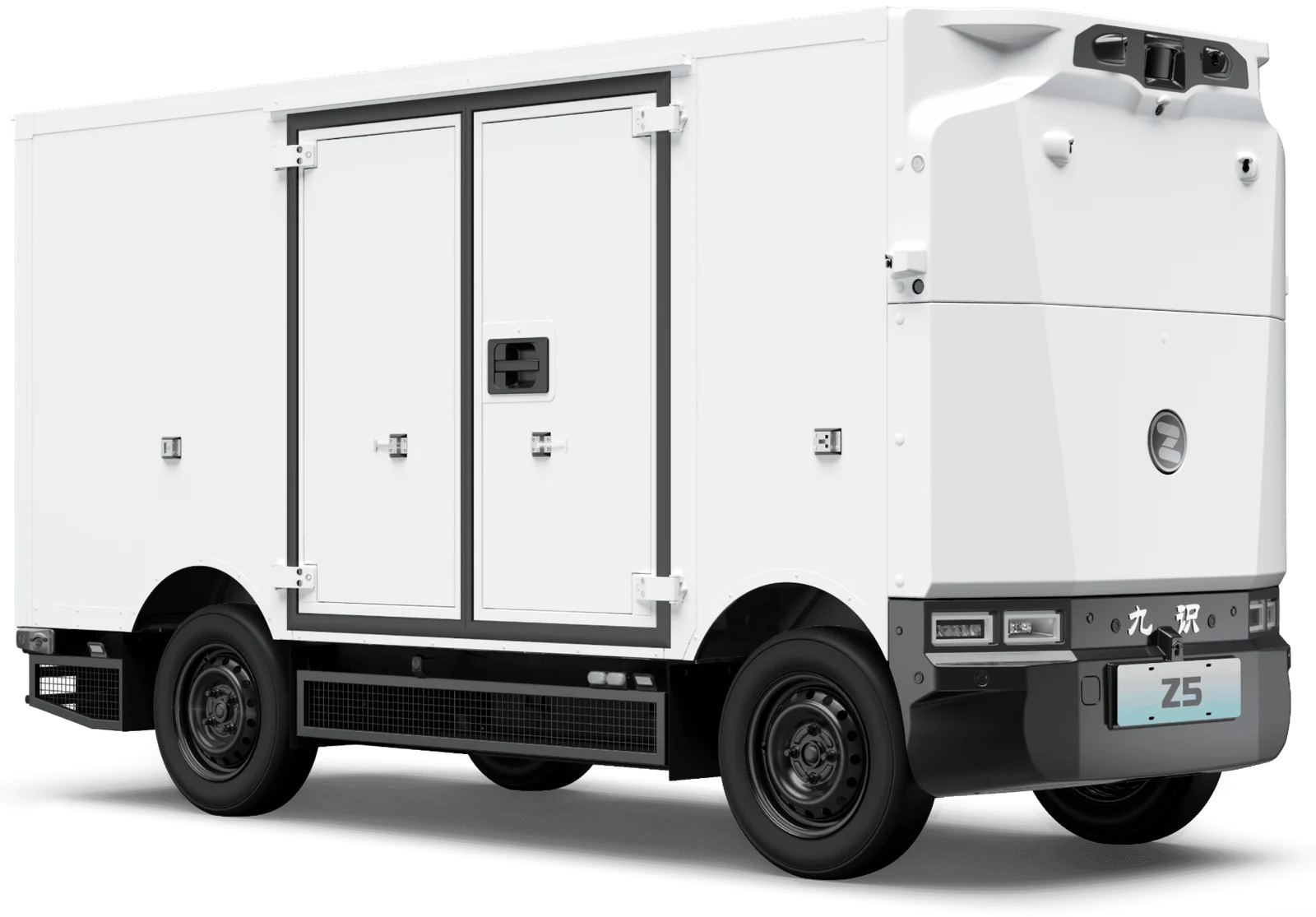
Zelos
Last-mile delivery
- Payload
- 1,000 kg
- Key feature
- 6.5 m³ cargo
- Autonomy
- SAE Level 4
On orderPrice on request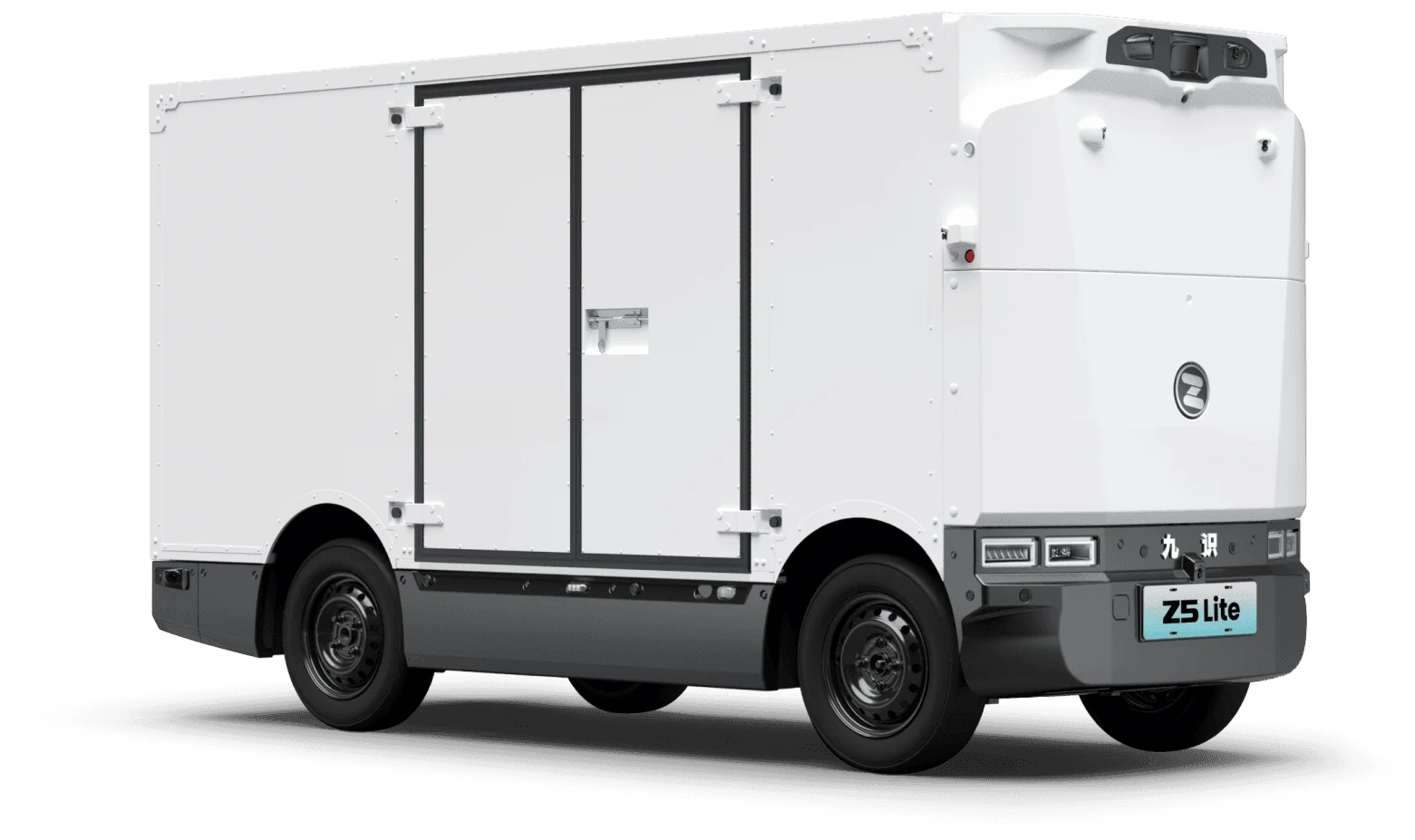
Zelos
Last-mile delivery
- Payload
- 500 kg
- Key feature
- 6.5 m³ cargo
- Key feature
- 130 km range
On orderPrice on request
Showing 1 to 12 of 13 robots · 12 per page
Buying guide
Outdoor delivery robots: choose, compare, budget
Updated
What is a delivery robot?
An outdoor delivery robot is an autonomous electric vehicle that carries goods over the last mile: from a store, a kitchen, a warehouse or a hub to the recipient. It drives itself with cameras, lidar or radar, follows a mapped route and opens its compartment for the right person at arrival.
The catalogue covers two very different worlds. On one side, compact robots the size of a suitcase that move at walking pace or slightly faster: the Starship delivery robot weighs 25 kg and runs at 6 km/h. On the other, autonomous delivery vans: the White Rhino R24 carries 2,400 kg in 24 m³ at up to 60 km/h.
Indoor delivery robots for hotels, restaurants and hospitals are a different family: they ride lifts and corridors, not curbs and car parks. The guide choosing a delivery robot covers indoor models; this page covers outdoor ones.
Sidewalk robot, site robot or road vehicle
| Class | Examples | Speed published | Capacity published | Typical ground |
|---|---|---|---|---|
| Compact robot | Starship, ROBOT.COM R Kiwi, Coco 2 | 6 to 21 km/h | 19 L to four 18-inch pizzas | Pedestrian paths, campuses, residential areas |
| Site robot | Ottobot 2.0, CLEVON 1 | Up to 29 km/h (CLEVON 1) | Up to 120 kg (Ottobot 2.0) | Private sites, industrial estates, campuses |
| Autonomous delivery vehicle | Neolix, White Rhino, Zelos | 45 to 60 km/h | 500 to 2,400 kg, 5 to 24 m³ | Roads, logistics zones, closed sites |
Compact robots carry one order at a time. The Starship robot rolls on six wheels with a bogie that climbs curbs, and keeps the goods in an insulated, lockable compartment. Coco 2 reaches 21 km/h, climbs 30 % grades and turns 360° in place. ROBOT.COM R Kiwi has a 19 L compartment, six HD cameras and a 3D lidar.
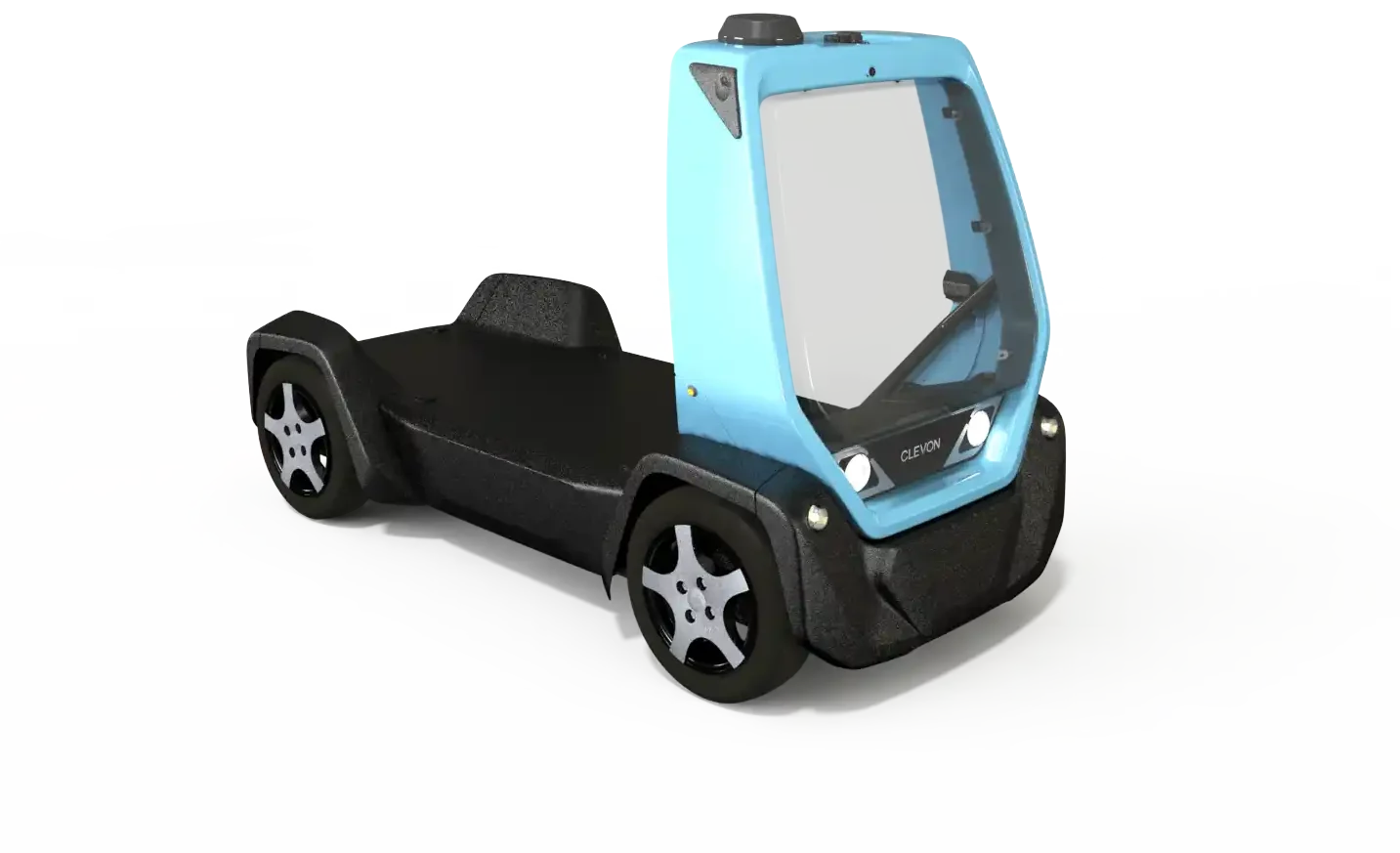
Site robots move heavier loads inside a defined perimeter. Ottonomy Ottobot 2.0 is 132 cm tall, carries 120 kg and has four-wheel drive with a crab mode. CLEVON 1 takes interchangeable top modules: CargoBox, parcel locker, MultiBox, truck bed or flat bed.
Autonomous delivery vehicles replace a van on fixed rounds. All of them are announced at SAE Level 4. The Neolix X6 takes 800 to 1,000 parcels per trip, the Zelos Z5 Pro carries 1,800 kg.
Use cases: campuses, private sites, last mile
The most mature use cases are on private or controlled ground, where the operator decides the routes and the speed. Six situations come up in most projects:
- Universities and business campuses: meals, coffee and parcels between a central kitchen or mailroom and buildings. A compact robot such as Starship (18 h runtime) or R Kiwi (10 to 12 h) covers a full day of service.
- Factories and industrial estates: spare parts, tools and samples between warehouse, workshops and labs. A site robot like Ottobot 2.0 (120 kg) or a vehicle like the Zelos Z5 Lite (500 kg, 6.5 m³) avoids tying up a driver for short internal trips.
- Hospitals and care campuses: samples, medicines, linen and meals between buildings. The lockable compartment and identification at delivery matter more than speed here.
- Residences, holiday parks and gated communities: groceries and parcels from a reception or a locker to each home. CLEVON 1, with its parcel locker module, serves several recipients on one round.
- Urban last mile from a hub: autonomous vehicles shuttle between a depot and relay points. The Neolix X3 carries 400 to 500 parcels per trip; the White Rhino RX 1,200 kg in 6 m³.
- Food delivery from restaurants and dark kitchens: Coco 2 holds four 18-inch pizzas and has a swappable battery to stay in service between peaks.
Start where the route is short, repeated and on ground you control. A pilot on a campus or a factory site shows actual delivery times, the share of trips that need remote help and the reaction of staff and visitors before any extension.
Comparison of 12 outdoor delivery robots
| Robot | Class | Payload or capacity | Cargo volume | Max speed | Range or runtime | Price excl. VAT |
|---|---|---|---|---|---|---|
| Starship delivery robot | Compact | — | — | 6 km/h | 18 h | On quote |
| ROBOT.COM R Kiwi | Compact | — | 19 L | — | 10–12 h | On quote |
| Coco 2 | Compact | Four 18-inch pizzas | — | 21 km/h | 32 km | On quote |
| Ottonomy Ottobot 2.0 | Site | 120 kg | — | — | 5 h | On quote |
| CLEVON 1 | Site | — | — | 29 km/h | About 70 km, 5 h | On quote |
| Neolix X3 | Vehicle | 400–500 parcels | — | 50 km/h | — | On quote |
| Neolix X6 | Vehicle | 800–1,000 parcels | 6 m³ | 60 km/h | — | On quote |
| White Rhino R5 | Vehicle | 800 kg | 5 m³ | 45 km/h | 120 km | On quote |
| White Rhino RX | Vehicle | 1,200 kg | 6 m³ | 45 km/h | 180 km | On quote |
| White Rhino R24 | Vehicle | 2,400 kg | 24 m³ | 60 km/h | 200 km | On quote |
| Zelos Z5 | Vehicle | 1,000 kg | 6.5 m³ | — | 180 km (260 km long range) | On quote |
| Zelos Z5 Pro | Vehicle | 1,800 kg | 6.2 m³ | — | 180 km (230 km long range) | On quote |
A dash means the manufacturer does not publish the figure. Range in kilometres and runtime in hours are not comparable: compact robots publish hours of service, vehicles publish kilometres per charge. The Zelos Z5 exists with an 18.4 kWh or a 28.3 kWh battery; the Zelos Z5 Pro with 29 or 40.8 kWh. The Zelos Z5 Lite (500 kg, 6.5 m³, 13.3 kWh) announces 130 km empty. The White Rhino R5 recharges in 1.5 h on DC, the RX and the R24 in 1 h.
How to choose a delivery robot
- Ground and route: pedestrian paths, private roads, open roads, slopes, curbs, gates. Coco 2 climbs 30 % grades; Starship has a bogie for curbs.
- What you deliver: one meal, a crate of parts or a full round of parcels. That decides the class, from 19 L (R Kiwi) to 24 m³ (White Rhino R24).
- Speed against the environment: 6 km/h is walking pace, among pedestrians; 45 to 60 km/h only makes sense on roads or large closed sites.
- Range and charging: hours of service for robots, kilometres for vehicles. Check charging time (CLEVON 1: 20 to 80 % in about 45 minutes) and wireless charging (Starship on site, R Kiwi as an option).
- Weather and protection rating: rain, snow, heat and dust. In the catalogue only the Neolix X3 publishes a rating, IP55; ask the manufacturer for the others before a winter pilot.
- Sensors and supervision: lidar, cameras, radar, ultrasonic sensors. Ask how remote supervision works when the robot is stuck, and who handles it.
- Compartment and handover: insulated, lockable, modular, identification of the recipient by code or app.
- Operation and support: fleet software, integration with your ordering or WMS system, spare parts and maintenance in Europe.
Then run a pilot on a real route. A few weeks on your site tell you more about the delivery rate, the interventions needed and acceptance by the public than any datasheet.
Regulations, safety and personal data: points to check
Rules for autonomous robots and vehicles on public roads differ from one European country to another and are still evolving. In France, as in several neighbouring countries, driving on public roads or sidewalks without a driver remains largely a matter of experiments and specific authorisations. Check the situation with the competent authorities before planning any route outside a private site.
- Public roads and sidewalks: which status applies to the robot or vehicle, which authorisation is needed, which local authority to involve.
- Private sites: internal traffic plan, speed limits, separation from forklifts and pedestrians, site rules.
- Machinery Regulation (EU) 2023/1230: it replaces Machinery Directive 2006/42/EC and applies from 20 January 2027 to machinery placed on the market from that date. See our Machinery Regulation 2027 guide.
- Insurance: civil liability for the robot in operation, damage to goods carried, theft.
- GDPR: delivery robots film their surroundings. Check what is recorded, how long, where the images are stored and how people are informed.
This section lists points to check. It is not legal advice: the company that operates the robot is responsible for its compliance and for the authorisations required.
Delivery robot prices: buy, rent or RaaS
Outdoor delivery robots are priced on quote. The price depends on the class (compact robot, site robot or vehicle), the battery option, the compartment or top module, the fleet software, the number of units and the support level. For an autonomous vehicle, the battery version alone changes the range: 180 or 260 km on the Zelos Z5.
The robot is only part of the budget. Plan the site mapping, charging points, connectivity, remote supervision, integration with your ordering system, insurance and staff training.
Robot Distribution supplies outdoor delivery robots across Europe:
- Purchase, with a written quote per configuration.
- Rental, to run a pilot on your site before investing.
- Monthly RaaS over 36 months, on quote.
- Visit to the Tourcoing showroom, in northern France, to discuss your project.
- European after-sales service and spare parts.
- Sourcing on request of brands and models that are not in the catalogue.
See rental and RaaS, book a visit to the showroom or request a quote.
How much does a delivery robot cost?
All outdoor delivery robots in the catalogue are on quote. The price depends on the class, from a 25 kg sidewalk robot to a 2,400 kg autonomous vehicle, plus the battery, the compartment, the software and the support. Rental and RaaS over 36 months are also on quote.
What is the difference between an indoor and an outdoor delivery robot?
An indoor robot serves rooms and tables in hotels, restaurants or hospitals and rides lifts. An outdoor robot crosses car parks, paths and roads, with sensors and a body designed for weather, curbs and slopes.
Can a delivery robot drive on the sidewalk in France?
Driving on public sidewalks and roads without a driver is still largely experimental in France and requires specific authorisations. Check with the competent authorities. On a private site, the operator sets the rules. This is not legal advice.
How fast does a delivery robot go?
From 6 km/h for the Starship robot, at walking pace, to 21 km/h for Coco 2 and 29 km/h for CLEVON 1. Autonomous delivery vehicles reach 45 km/h (White Rhino R5, RX) to 60 km/h (Neolix X6, White Rhino R24).
How much can a delivery robot carry?
Compact robots carry one order: 19 L for R Kiwi, four 18-inch pizzas for Coco 2. Ottobot 2.0 carries 120 kg. Autonomous vehicles carry 500 kg (Zelos Z5 Lite) to 2,400 kg (White Rhino R24).
What is the range of a delivery robot?
Compact robots run 10 to 12 h (R Kiwi) or 18 h (Starship) per day. Coco 2 announces 32 km, CLEVON 1 about 70 km. Autonomous vehicles cover 120 km (White Rhino R5) to 260 km (Zelos Z5 long range).
Do delivery robots work in the rain?
They are designed for outdoor use, but protection ratings are rarely published. In the catalogue only the Neolix X3 states IP55. Ask the manufacturer for rain, snow and temperature limits before a pilot.
Can I test a delivery robot before buying?
Yes. Robot Distribution offers rental for a pilot on your site and monthly RaaS over 36 months, both on quote. You can discuss your project at the Tourcoing showroom.
Which last-mile delivery robots does Robot Distribution supply?
Robot Distribution lists 13 robots in this family, from Zelos, Neolix, White Rhino, Clevon, Ottonomy, Starship Technologies, Coco Robotics and ROBOT.COM. Every model on this page shows the specifications published by its manufacturer, with the source and the date they were checked.
Can I rent last-mile delivery robots before buying?
Robot Distribution offers short rental (1 to 30 days), medium rental (1 to 12 months) and Robotics-as-a-Service contracts (24 to 60 months). The written quote states which acquisition modes apply to each robot.
Are these robots delivered with an EU declaration of conformity?
Yes. Robot Distribution supplies an EU declaration of conformity with every robot. The Machinery Regulation (EU) 2023/1230 applies from 20 January 2027 and replaces Directive 2006/42/EC; the catalogue is being reviewed model by model.
Tell us about your site. We will size the fleet.
A written proposal in 2 working days: robots, acquisition mode, delivery time.