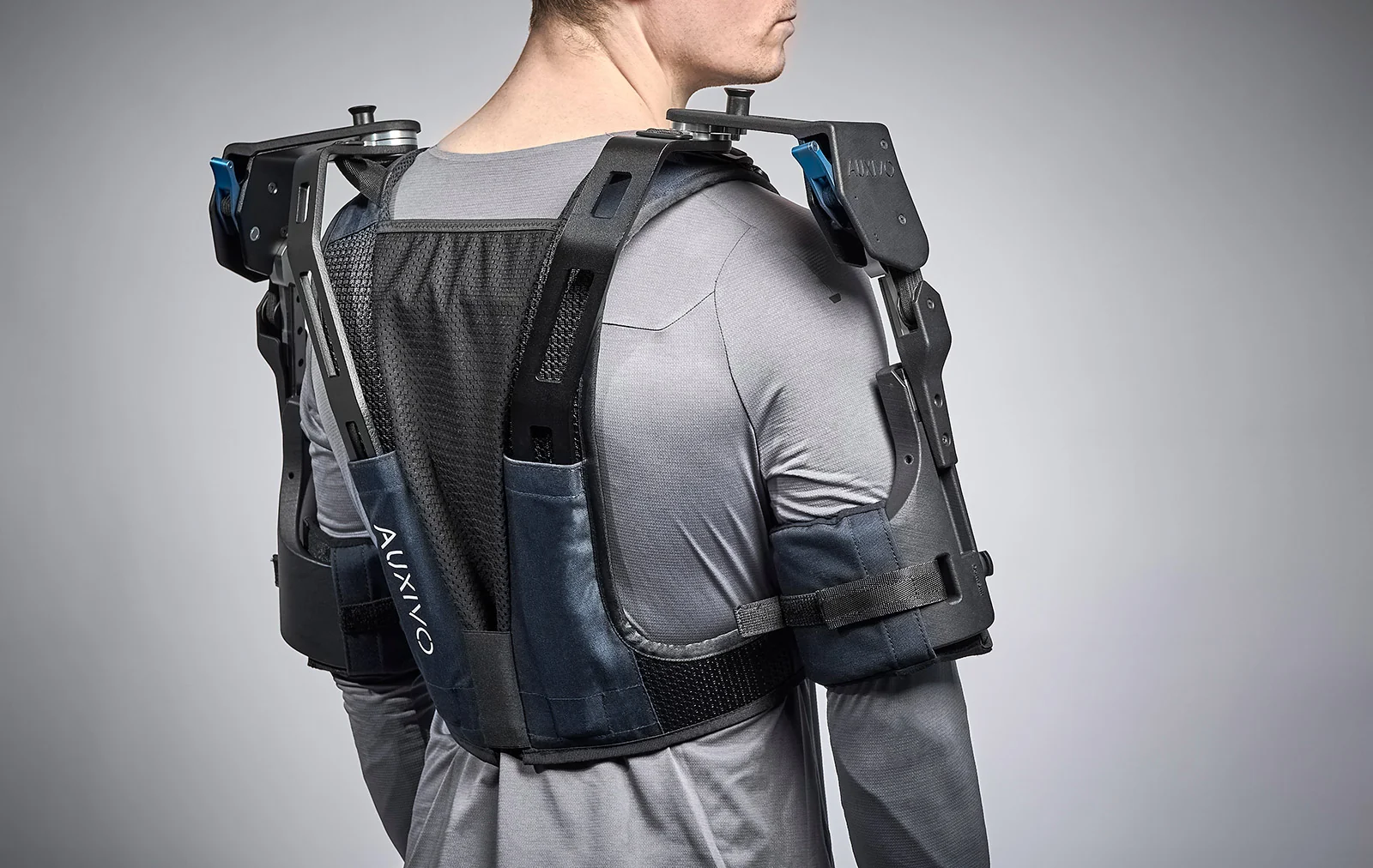
Exoskeletons
- Key feature
- 6.6 N·m support
- Weight
- 2.2 kg
- Key feature
- 2 support levels
On order
From €2,440 ex VAT
CATALOGUE · FAMILY
21 robotsUpdated
IN BRIEF
Exoskeletons in the Robot Distribution catalogue: 21 robots from ULS Robotics, Kenqing, SUITX by Ottobock, German Bionic, Comau, Hypershell, Japet, Auxivo and Laevo, with specifications taken from the manufacturers' official pages and checked on 29 Oct 2026. Each robot is sold on a written quote: prices are on request.
21 robots match your filters.
Address of this list: /en/robots/exoskeletons
Exoskeletons
Exoskeletons
Comau
Exoskeletons
Comau
Exoskeletons
German Bionic
Exoskeletons
German Bionic
Exoskeletons
Exoskeletons
Exoskeletons
Exoskeletons
Exoskeletons
Kenqing
Exoskeletons
Showing 1 to 12 of 21 robots · 12 per page
Buying guide
Updated
An industrial exoskeleton is a wearable device that supports the back, shoulders, arms or hips of a worker during lifting, bending or overhead tasks. It does not lift the load in the worker’s place: it takes part of the strain off muscles and joints, and the worker keeps control of every movement.
Exoskeletons are used where people still handle loads by hand: parcel and pallet handling in logistics, assembly lines, overhead installation, construction finishing, agriculture and airport ground handling. They complement lifting aids and workstation redesign. They do not replace them.
The word exoskeleton also covers medical devices used in rehabilitation. This guide covers occupational models. Rehabilitation needs are covered in a short section below.
Exoskeletons fall into two groups, defined by their source of energy.
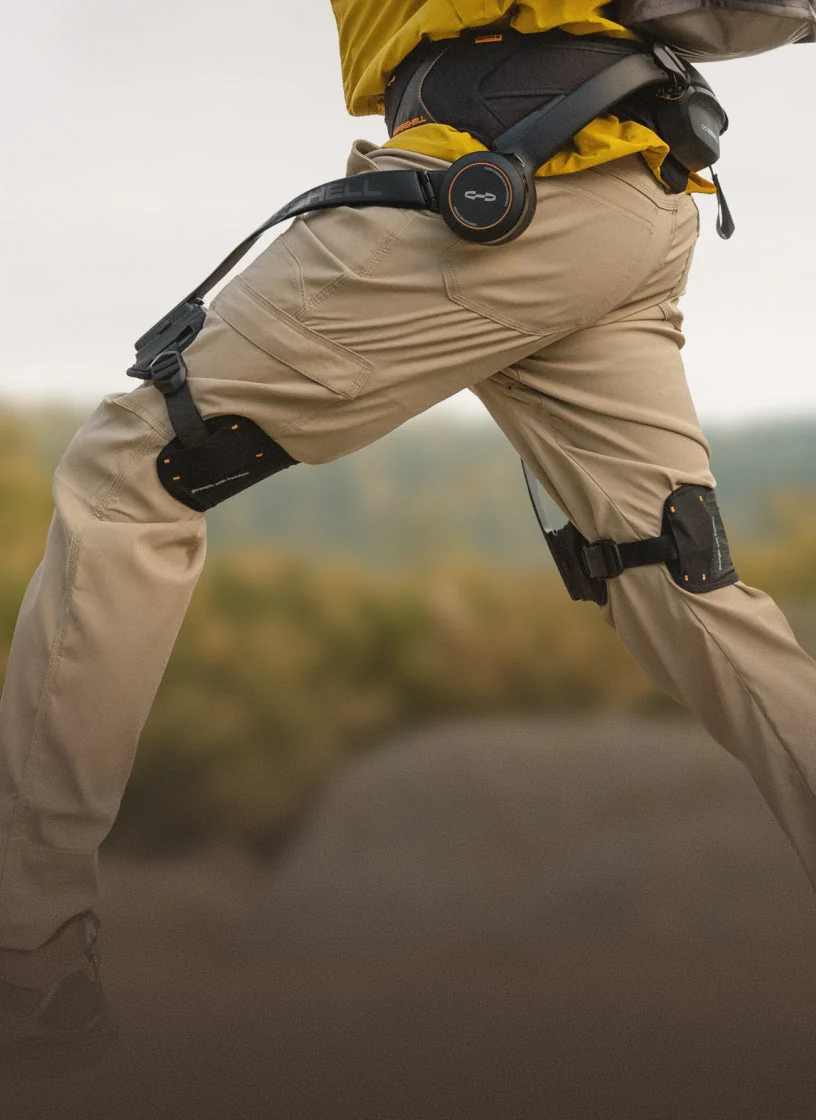
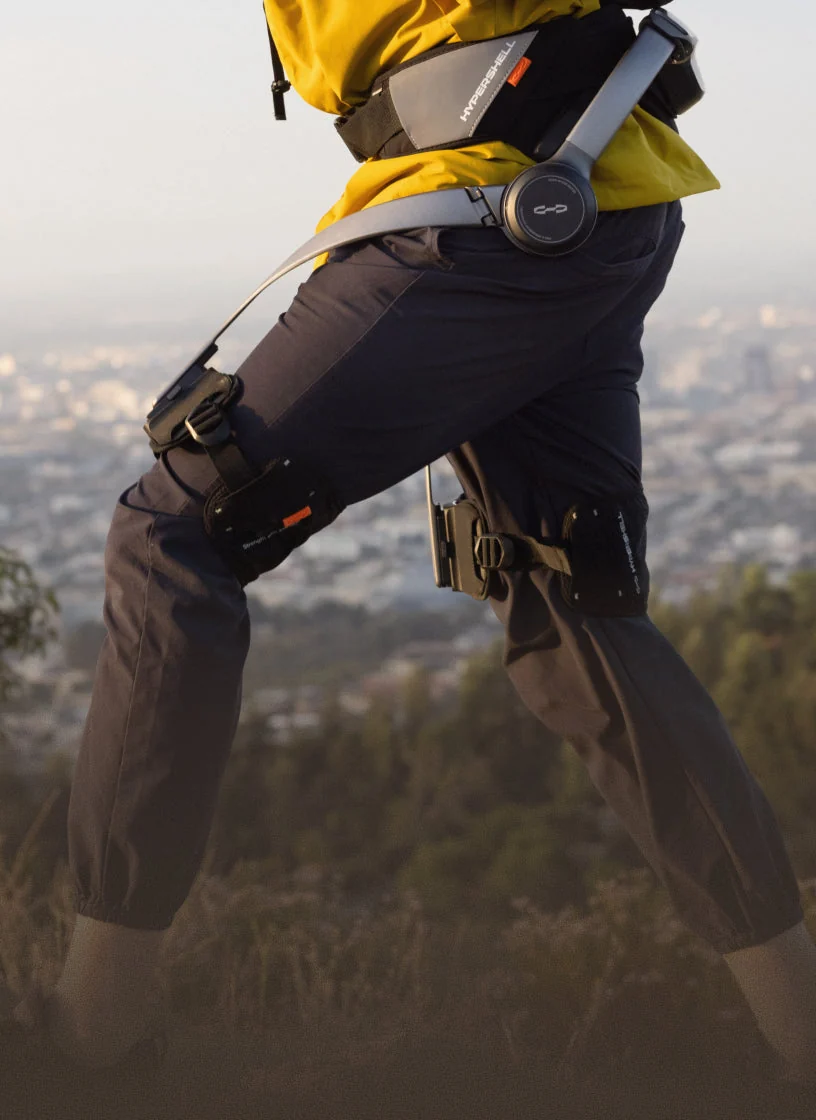
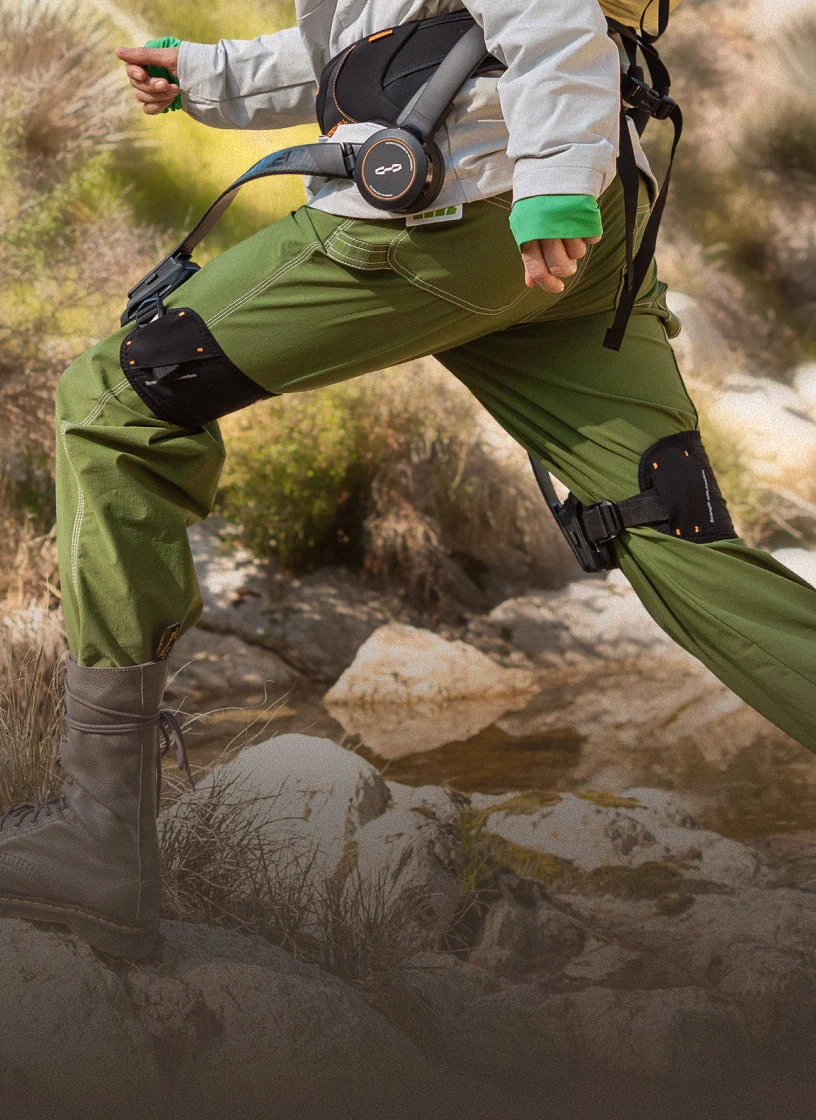
The second distinction is the body area. Back and lumbar exoskeletons support lifting and bending. Shoulder and arm exoskeletons support work above shoulder height. Hip exoskeletons support walking: Hypershell designs its X series for walking and hiking and lists field inspection rounds among its uses.
Start from an ergonomic assessment of the workstation: which movement, how many times per shift, which weight, in which posture. That list points to the body area and then to the type.
Then run a trial with the operators who will wear the device. Acceptance by the wearer decides whether an exoskeleton is still used after the first month.
| Model | Type and area | Published assistance | Weight | Runtime | Price |
|---|---|---|---|---|---|
| ULS FIT-HV Pro | Powered, lumbar | 30 kg lift assist | 5.6 kg | 3–8 h | On quote |
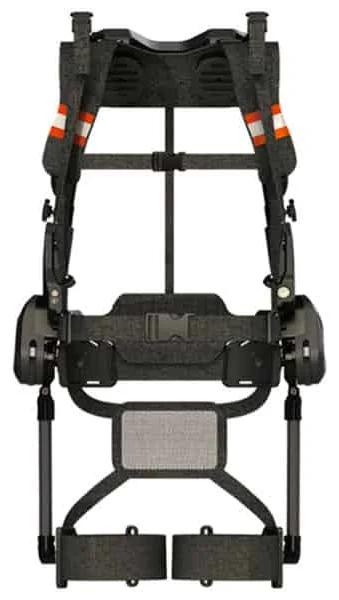
| Kenqing Ant-W1 | Powered, back and shoulders | Up to 40 kg lift assist | 8.5 kg with battery | 4–6 h or 2,000 lifts | On quote |
| Kenqing A10 | Powered, arms | 8 kg per arm, 16 kg both arms | 3.2 kg | 6 h or 1,500 lifts | On quote |
| SUITX IX BACK VOLTON | Powered, back | Up to 17 kg lift support | 5.7 kg with battery | Up to 10 h | On quote |
| German Bionic Exia | Powered, back | Up to 38 kg lift assist | — | Hot-swappable battery | On quote |
| Japet.W+ | Powered, lumbar | 4 assistance levels | 2 kg | 7 h | From 4,690 € |
| SUITX IX BACK AIR | Passive, back | Up to 56 % or up to 15 kg | Under 3 kg | No battery | On quote |
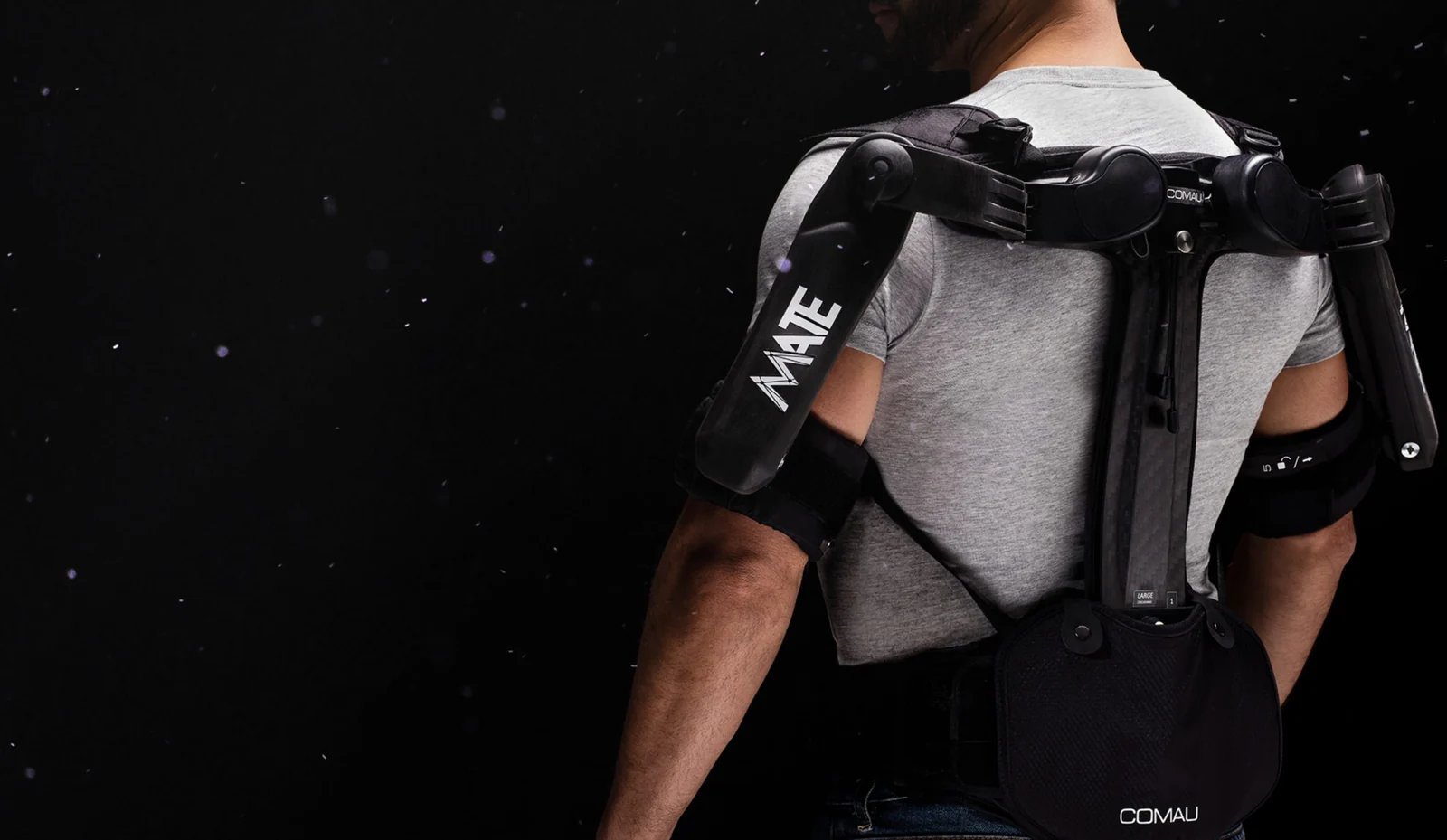
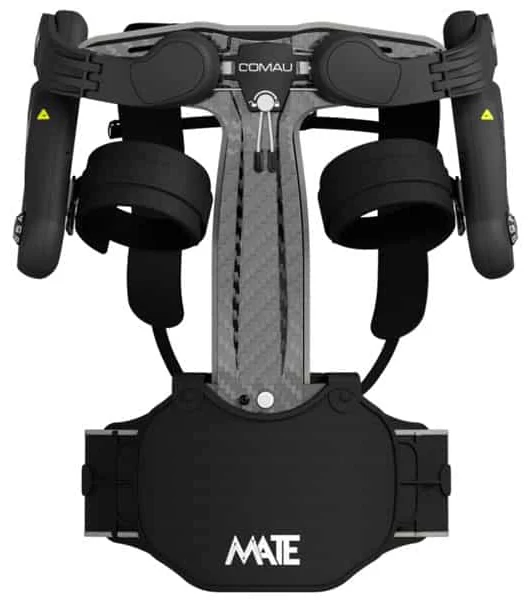
| Comau MATE-XT GO | Passive, shoulders | Up to 50 % effort reduction, 8 levels per arm | Under 3 kg | No battery | On quote |
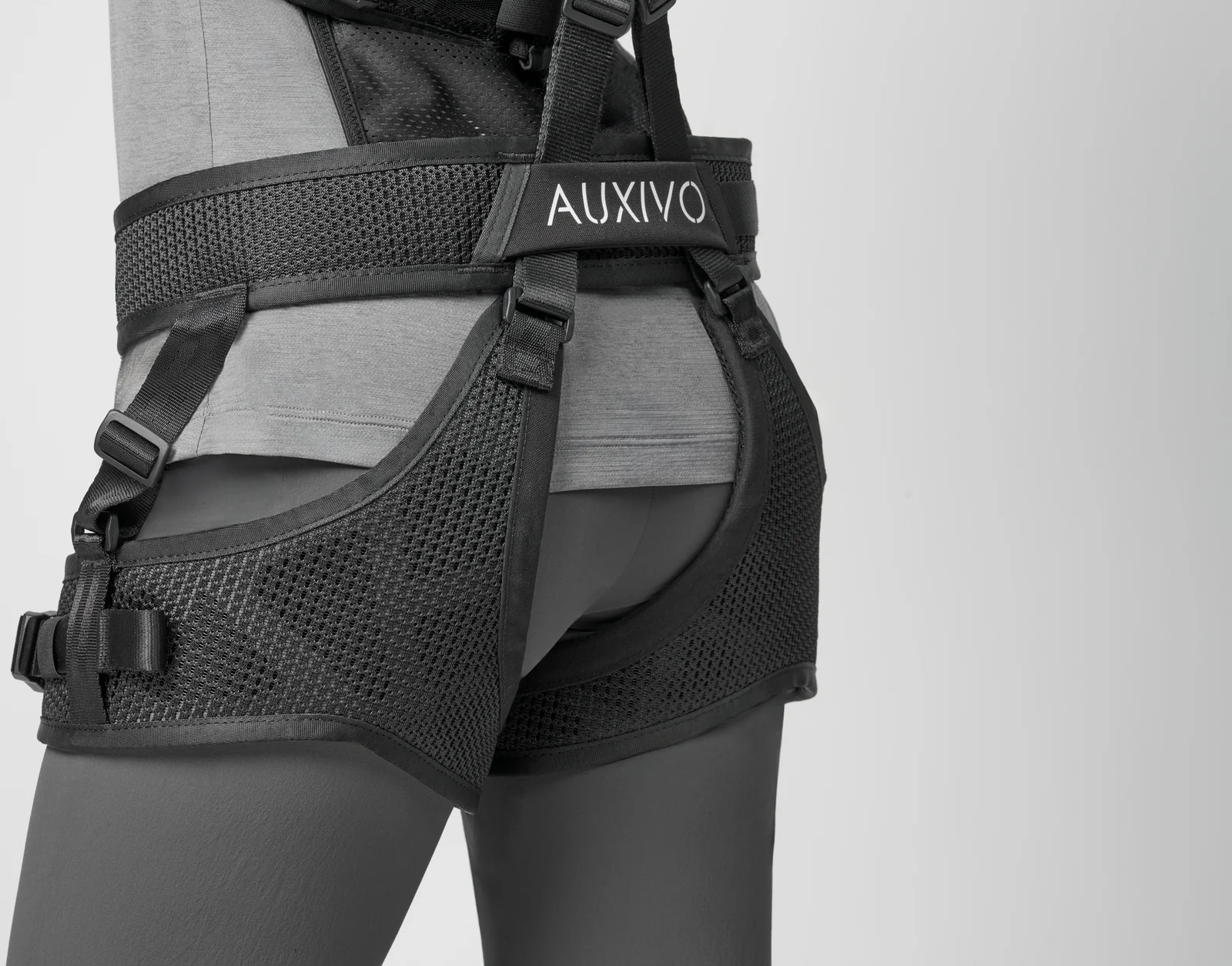
| Auxivo LiftSuit 2.0 | Passive textile, back | Up to 15 kg lift support | — | No battery | From 990 € |
| Laevo V2 | Passive, back | Static bending support | 3 kg | No battery | From 2,540 € |
A dash means the value is not published by the manufacturer or not yet confirmed. Each manufacturer measures assistance its own way: the figures rank models within a type, not across types.
Other public prices, excl. VAT: Hypershell X Pro S from 829 €, Auxivo DeltaSuit from 2,440 €, Comau MATE-XT from 4,490 €. These are starting prices, before options, delivery and training.
Rehabilitation exoskeletons help patients relearn to walk or to move a limb, under medical supervision, in hospitals and rehabilitation centres. They are medical devices and follow their own selection process. Robot Distribution lists them in a separate family: see rehabilitation robots.
Some occupational models also hold a medical certification. Japet.W+ is a CE Class IIa medical device, according to Japet, and is used in manufacturing plants, logistics and the food industry. The manufacturer’s declaration of conformity states the legislation under which each model is sold.
An exoskeleton sold in the European Union carries the CE marking under the legislation that applies to its design and intended use: machinery legislation, the Personal Protective Equipment Regulation (EU) 2016/425 or the Medical Devices Regulation (EU) 2017/745. Comau states PPE Category II under Regulation (EU) 2016/425 for MATE-XT GO, and Laevo certifies its exoskeletons as personal protective equipment.
Machinery rules are changing. The Machinery Regulation (EU) 2023/1230 applies from 20 January 2027 and replaces the Machinery Directive 2006/42/EC. Our guide to the Machinery Regulation 2027 explains what changes for buyers.
Ask for these documents before ordering:
An exoskeleton does not replace the employer’s risk assessment. Include it in the assessment of the workstation and train the wearers.
Robot Distribution sells and rents occupational exoskeletons and offers them on a monthly subscription (RaaS) across Europe.
See rental and RaaS, book a visit to the showroom or request a quote.
A powered exoskeleton uses motors and a battery and gives a stated lifting assist, for example 30 kg for ULS FIT-HV Pro. A passive exoskeleton uses springs or elastic elements, needs no battery and weighs less, from 0.8 kg for ULS PES-B.
Public prices at Robot Distribution start at 990 € excl. VAT for Auxivo LiftSuit 2.0, 2,540 € for Laevo V2 and 4,690 € for the powered Japet.W+. Most powered back models are priced on quote. RaaS starts at 149 € excl. VAT per month for Comau MATE-XT.
No device removes the risk on its own. An exoskeleton reduces part of the load on the back or shoulders during the tasks it is designed for; SUITX states up to 56 % for IX BACK AIR. It works alongside workstation design, lifting aids and training, within the employer’s risk assessment.
Not necessarily. Occupational models can be sold as personal protective equipment, such as Comau MATE-XT GO (PPE Category II), or under other legislation. Some are medical devices: Japet.W+ is a CE Class IIa medical device, according to Japet. The declaration of conformity states the legislation applied.
A shoulder or arm exoskeleton. Passive options include Comau MATE-XT GO, Auxivo DeltaSuit (up to 6.6 N·m) and ULS PES-U (up to 10 kg arm support). For heavier tools, the powered Kenqing A10 states 8 kg per arm.
From 3 to 10 hours depending on the model: 3 to 8 h for ULS FIT-HV Pro, 7 h for Japet.W+, up to 10 h for SUITX IX BACK VOLTON. Passive exoskeletons have no battery.
Yes. You can try models in the Robot Distribution showroom in Tourcoing, then rent one for a trial with your operators before ordering several units.
The Machinery Regulation (EU) 2023/1230 applies from 20 January 2027 to machinery placed on the EU market. Whether a given exoskeleton falls within it depends on its design: the declaration of conformity of each model states the legislation applied.
Robot Distribution lists 21 robots in this family, from ULS Robotics, Kenqing, SUITX by Ottobock, German Bionic, Comau, Hypershell, Japet, Auxivo and Laevo. Every model on this page shows the specifications published by its manufacturer, with the source and the date they were checked.
Robot Distribution offers short rental (1 to 30 days), medium rental (1 to 12 months) and Robotics-as-a-Service contracts (24 to 60 months). The written quote states which acquisition modes apply to each robot.
Yes. Robot Distribution supplies an EU declaration of conformity with every robot. The Machinery Regulation (EU) 2023/1230 applies from 20 January 2027 and replaces Directive 2006/42/EC; the catalogue is being reviewed model by model.
A written proposal in 2 working days: robots, acquisition mode, delivery time.